Overview of the Report
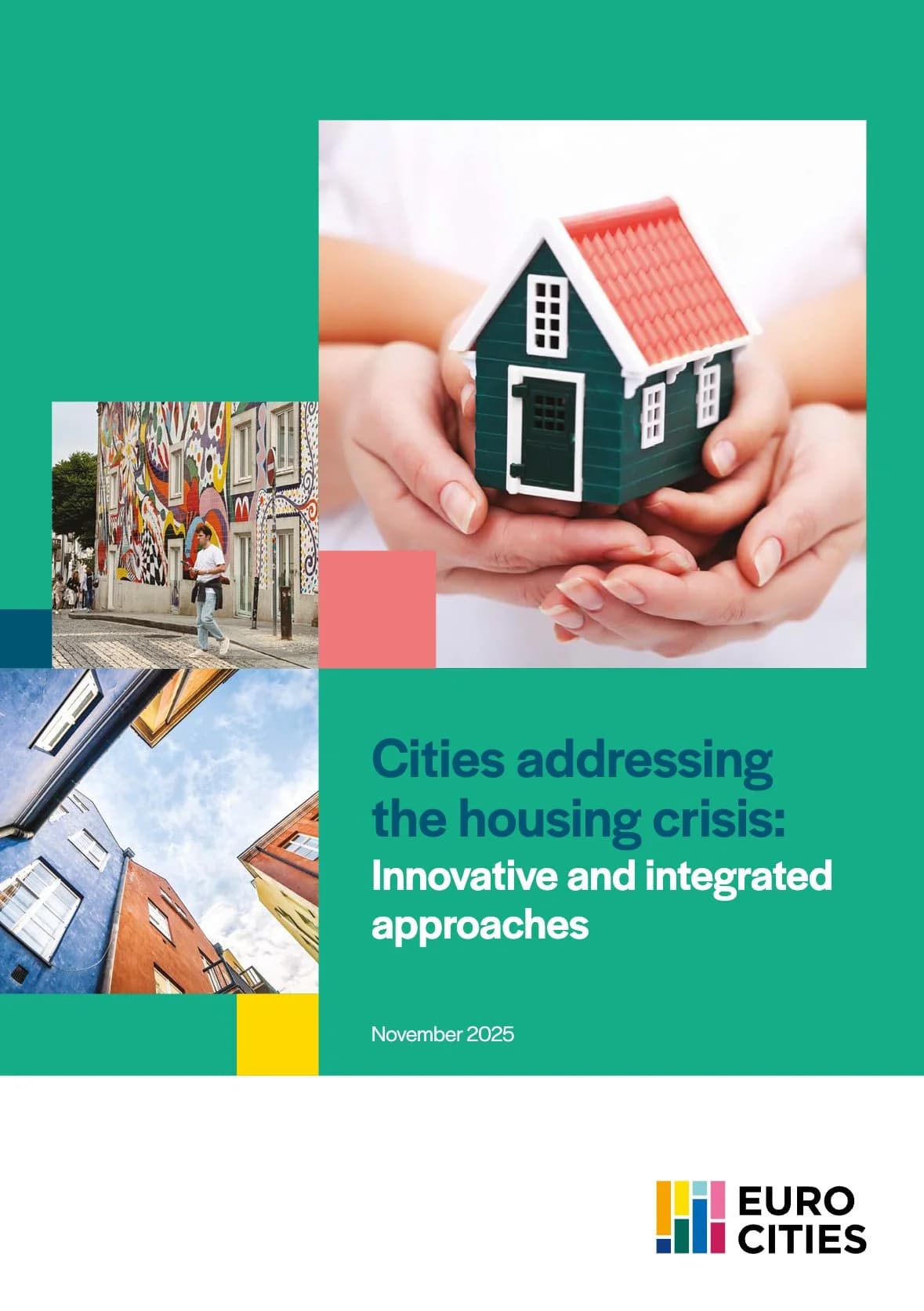
The study “Cities addressing the housing crisis: Innovative and integrated approaches” is published by Eurocities, a network representing more than 200 cities across 39 European countries. Authors Anna Iafisco, Carolina Picot and Sylwia Slomiak are policy advisors within Eurocities, and the work was edited by Andrew Kennedy. The publication, released in November 2025, analyses the drivers of housing unaffordability, identifies the most affected population groups, and presents innovative governance, financing and urban regeneration strategies from 20 European cities and four detailed case studies (Barcelona, Manchester, Rennes Metropole and Stockholm).
Key Findings on the Crisis
Across the surveyed cities, one‑in‑ten urban residents spend over 40 % of their income on housing; the figure rises to nearly 25 % among 18‑ to 29‑year‑olds. Low‑income households, single‑parent families, migrants, refugees and young people are consistently the most impacted groups. Housing costs have outpaced income growth, with EU house prices rising 48.1 % between 2015 and 2023 (a 172.5 % surge in Hungary). Rental prices increased 18 % from 2010 to 2022, with especially sharp rises in Lithuania ( 144 %). Short‑term rentals, financialisation of housing assets and limited public investment further tighten supply.
Tenure Patterns and Supply Gaps
Social housing shares vary widely: Vienna (≈ 42 %), Utrecht (≈ 29 %), Manchester (≈ 27 %) and Rennes Metropole (≈ 17.9 %) have relatively large stocks, while Barcelona (≈ 2 %), Braga (≈ 5 %) and Florence (≈ 5 %) have minimal social provision. Private rental dominates in many cities, e.g., Barcelona (≈ 40 % of stock) and Berlin, leading to higher rent burdens. Waiting times for social housing exceed 10 years in several locations (Utrecht > 11 years, Manchester 2‑36 months depending on priority). Population growth, tourism‑driven short‑term rentals and speculative investment exacerbate shortages.
Innovative Governance Models
Cities employ diverse governance tools: Vienna uses municipal land and cost‑rent models with interest‑free loans; Zurich relies on long‑term leaseholds for cooperatives; Barcelona mandates 30‑40 % affordable units in new developments and uses framework agreements with non‑profit entities; Rennes Metropole applies binding land‑sale conditions, density bonuses and the Real Solidarity Lease (BRS) to keep prices affordable. Public‑private partnerships, land trusts and cooperative ownership structures are highlighted as mechanisms to retain long‑term affordability.
Financing Mechanisms and Incentives
Financing approaches include low‑interest municipal loans (Vienna), interest‑free or subsidised loans covering up to 80 % of investment costs (Germany’s Housing Funding Regulations 2023), value‑capture tools and land banking (Brittany Public Land Agency for Rennes Metropole), and EU‑linked funding such as Cohesion Policy, European Social Fund+ and the Social Climate Fund. Vacancy taxes, tax reductions for social landlords and targeted subsidies for energy‑efficient retrofits are also employed to reduce costs and stimulate supply.
Integrated Urban Regeneration Strategies
Many cities combine new construction with adaptive reuse and energy‑efficient renovation. Barcelona’s modular, cross‑laminated timber construction cuts delivery time by ≥ 30 % and CO₂ emissions by ≈ 35 %. Berlin’s Schumacher Quartier integrates timber building, biodiversity corridors and 35‑40 % price‑controlled rentals. Stockholm’s “Stockholmshusen” programme uses serial production to halve construction times and deliver affordable rental units with green roofs and solar panels. Rennes Metropole links housing development to public‑transport nodes, ensuring 65 % of new units lie within 500 m of high‑capacity transit.
Policy Context and EU Alignment
The report situates city actions within broader EU developments: the European Affordable Housing Plan, the appointment of the first European Commissioner for Housing, revisions to State‑Aid rules, the Renovation Wave, and the Fit‑for‑55 package. EU instruments such as the Cohesion Policy, InvestEU and the European Investment Bank are identified as crucial for scaling city‑level initiatives. The EU’s revised Energy Efficiency Directive (effective May 2026) mandates a 16 % primary‑energy reduction in residential buildings by 2030, reinforcing the link between climate goals and affordable housing.
Transferable Lessons for Sustainable Housing
Key transferable lessons include: securing municipal control of land to set affordability conditions; employing cost‑rent or mission‑oriented rent models to decouple affordability from market fluctuations; leveraging public‑private partnerships while preserving public oversight; using modular and industrialised construction to lower costs and carbon footprints; integrating housing with transit‑oriented development; and aligning financing with EU climate and social funds to ensure both sustainability and affordability.
Conclusion
The evidence shows that while the housing affordability crisis is severe across Europe, a range of innovative, integrated approaches—spanning governance, financing, land policy and urban regeneration—are already delivering measurable improvements. Scaling these practices, supported by coordinated EU policy and funding, offers a viable pathway to sustainable, inclusive housing for European cities.