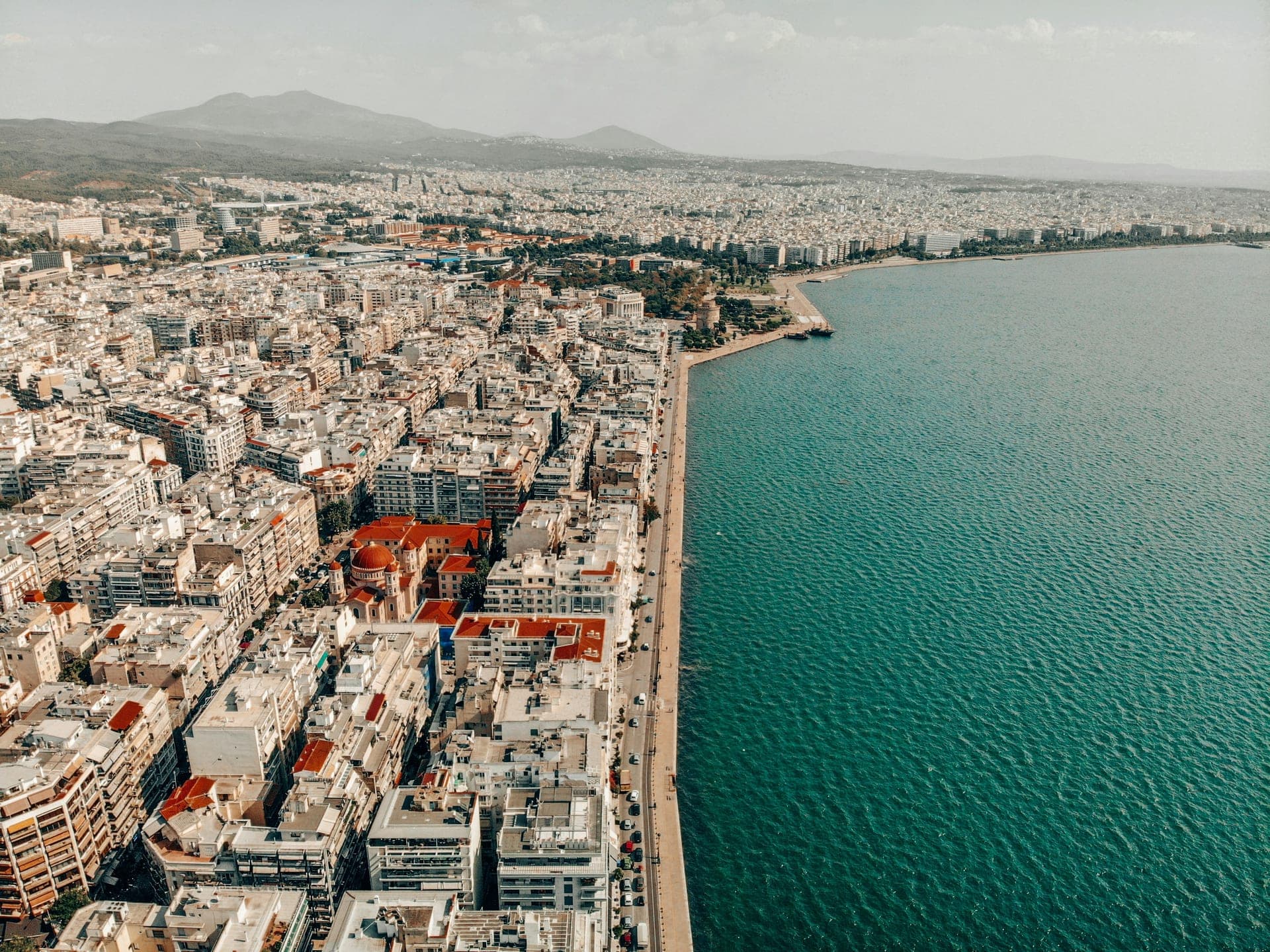
Rebuilt by refugees and owners, now short of homes to rent
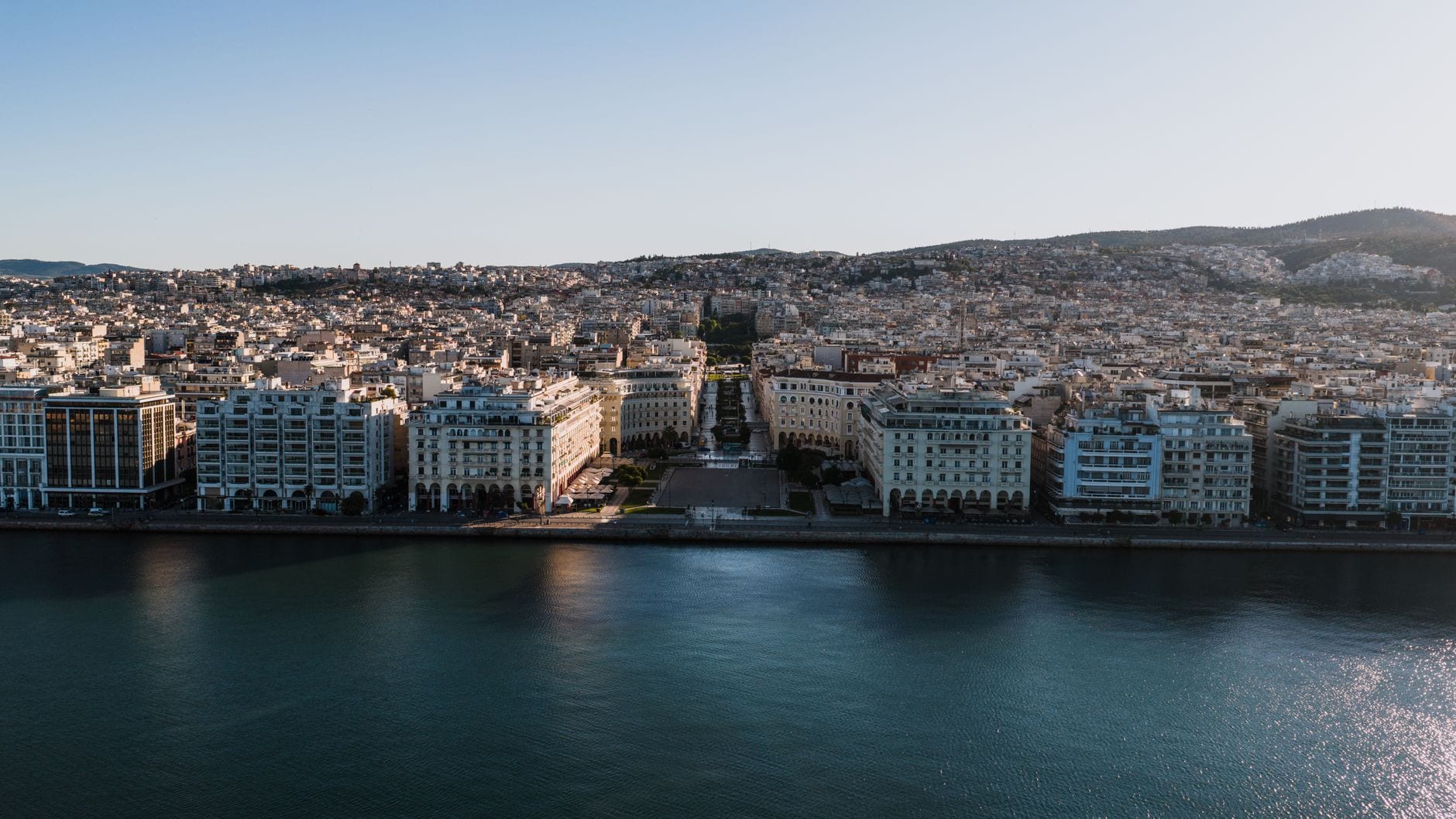
Thessaloniki has had to rebuild itself more than once. A fire in August 1917 destroyed 9,500 houses and left more than 70,000 people homeless. A few years later nearly 100,000 refugees from Asia Minor arrived and built districts such as Toumba and Kalamaria almost from scratch. Both shocks were answered by families rather than by the state, and today's city of 309,617 people still lives inside that answer.
Owning is the norm. About 62.8% of households own their home, and 30.2% rent. Nearly all renting happens in the open market, where private landlords hold about 30% of the stock. Public housing is a sliver: 0.4% of dwellings, or some 1,800 homes. Most of it was left behind by the OEK (the Workers' Housing Organisation, a payroll-funded agency that built homes for workers to buy), abolished in 2012. There is no cooperative housing at all. The remaining 7% or so of households mostly live rent-free, typically in a flat lent to them by relatives.
- Owners
- Owner-occupier62.8%
- Renters
- Public & non-profit rental0.40%
- Cooperative0.00%
- Private rental29.8%
- Other7.0%
- Rent-free / provided free7.0%
Social housing, meaning homes reserved by rule for lower-income tenants, is thinner still. It covers about 0.5% of the stock, and it is a label laid across the tenures rather than a tenure in itself. Help arrives as cash instead of homes. Around 22.4% of residents of Central Macedonia would qualify for the means-tested housing allowance, which is a measure of how far need outruns any bricks-and-mortar supply.
Rents depend on when a lease was signed. The city's new social rental agency charges about €3.60 per square metre. The median across the whole stock is around €6.60, and RE/MAX puts rents actually paid in the wider regional unit at €7.70. A new lease in the municipality asks €10.40, while a furnished flat let for a few months costs an estimated €17.70. Between 2016 and 2023 rents in the city rose by 65%. Greece has no rent cap, so each new tenancy resets the price.
- Social rental agency (MDAT)
- Median, all stock
- Rent actually paid (regional unit)
- New contracts (asking)
- Furnished mid-term let (estimate)
Monthly rent per square metre by tier (net cold, furnished is all-in). A tiny social tier sits far below the market; a new lease costs almost three times the social rent, and a furnished let about five times. There is no cooperative tier.
The shortage sits beside a surplus. The 2021 census found 22.5% of dwellings empty, some 68,000 homes. In the central municipality alone there were 51,472 empty flats, one home in four. Many are 1960s and 1970s flats that nobody has modernised, inheritances split between heirs, or second homes. Offices are fuller, with vacancy at 8.5%. Holiday letting takes its own bite: an estimated 2,566 homes operate as full-time short-term rentals, and reporting on how Airbnb is redrawing Thessaloniki's property map shows them packed into the historic centre.
At a time when the need for decent, affordable and adequate housing is more urgent than ever, Thessaloniki faces an oxymoron: thousands of homes remain empty while tens of thousands of citizens live in ageing buildings.Demand keeps arriving. Roughly 8,500 people a year move into the area, and Aristotle University, the largest in Greece, enrols about 88,000 students. Its four halls of residence house 1,700 of them. New supply is aimed high: building costs run to €1,050 per square metre and flats sell for around €1,959 per square metre. Prices rose 11.7% in 2024, the fastest of any Greek city, just as the metro that opened in November 2024 made new districts easier to reach.
The squeeze has long since reached beyond the poorest. Greece has the EU's highest housing-cost overburden: in 2024, 28.9% of Greeks spent 40% or more of their disposable income on housing, against 8.2% across the Union. Students feel it first. Renovated studios near the universities rent for €400-450 a month, and the September scramble for student housing is now an annual news story. The middle class is in the queue too. In a 2026 survey, 62% of Greeks aged 25 to 35 called their housing costs borderline or unsustainable. Asked by Eurobarometer, Greeks named the lack of affordable housing as their most urgent concern. Lefteris Potamianos, president of POSMAS (the Hellenic Federation of Realtors), put it plainly: “The housing problem is real, but its causes run deeper.” A study of housing as investment in Greece and Southern Europe names those causes: a market that rewards holding property over housing people. After the debt crisis, institutional investors and financialisation sharpened it.
Against all of this, the cooperative share of Thessaloniki's housing is zero, and that blank is where the story of the alternatives begins.
Building cooperatives that made owners, and a pilot that could make a co-op
Thessaloniki has no housing cooperatives of the kind Zurich or Vienna would recognise. What Greece had instead was the oikodomikos synetairismos (the building cooperative), a way of buying land together. Members pooled savings, bought a plot and built houses or flats. Each unit was then handed over as private property and the cooperative was wound up. Nothing stayed in common. There was no lasting member share, the stake that a resident of a continuing co-op buys on joining and gets back on leaving. The Heinrich Böll Foundation's analysis of whether cooperative housing is possible in Greece describes exactly this dissolve-on-completion model.
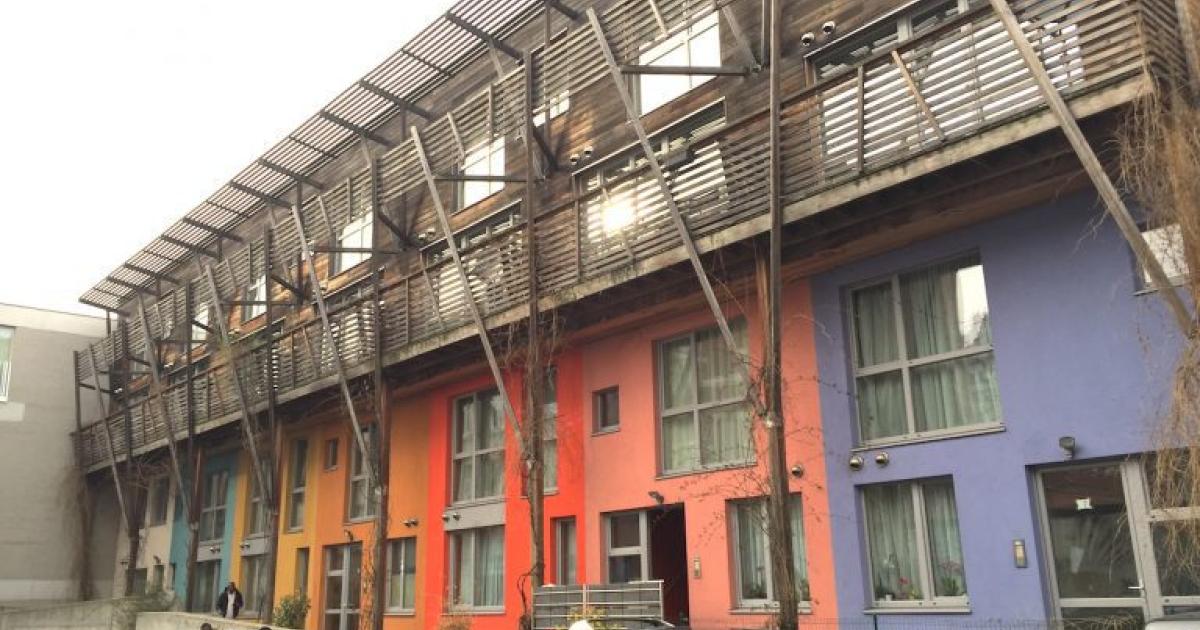
The form flourished in the post-war suburbs. After 1948 the state granted plots of 1,000 m² in the hills of Panorama to army officers, who founded the Neo Panorama building cooperative. Once the villas were handed over the cooperative vanished, and Panorama became what the city magazine Parallaxi calls Thessaloniki's Beverly Hills. Other groups, including one for veterans of the wartime resistance, followed. A history in Efimerida ton Syntakton concludes that most of them were, in the end, little more than land businesses. Nationally, more than 200 cooperatives with over 150,000 members still sit frozen, many on land later protected from building.
Today's sector is three small clusters, and they face different problems. The first is that dormant legacy of building cooperatives, stuck in planning disputes and tainted by speculation. The second is municipal. The development agency MDAT (the Major Development Agency of Thessaloniki) drives the city's housing work and carries it into European networks. The city belonged to NETCO, the Network of Cities for Collaborative Housing, and now to Cities 4 Co-Housing, an URBACT network led by Brussels Housing that adapts the Brussels community land trust model. The third cluster is civic: researchers, architects and the CoHab platform, which by 2020 already had members in Thessaloniki alongside Athens. The legacy cooperatives are blocked by land law. The new pilots are blocked by the absence of any legal form: there is no explicit legal framework for community land trusts or social housing cooperatives in Greece. And while local government law lets councils lend buildings to social-economy groups, a cooperative needs a concession lasting decades, 60 years in Zurich and 75 in Barcelona.
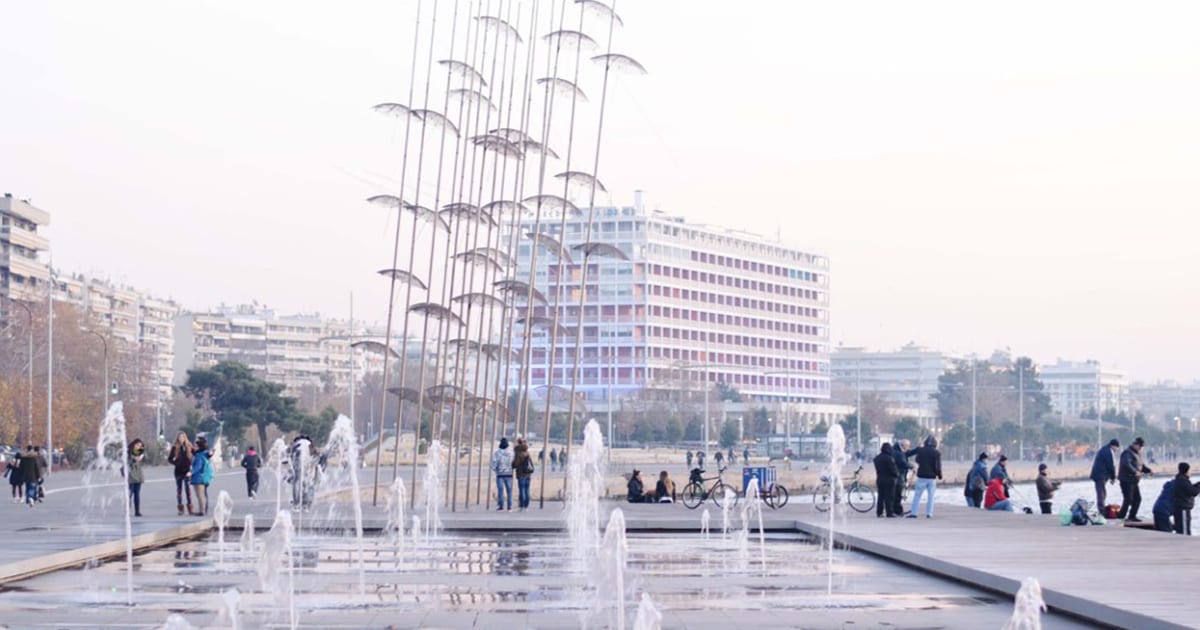

That is why the state still gives cooperatives no place in its housing mix. National programmes back individual buyers and private developers, and the municipality treats co-housing as an experiment inside its social rental agency. The Cities 4 Co-Housing investment plan for Thessaloniki is the first Greek document to cost a pilot on cost-rental principles, with rents set to cover costs rather than track the market. It draws on the European evidence gathered in Housing Cooperatives in Europe and names the legal gaps national law would have to close first.
Rent refunds, a freeze on Airbnb and an army camp for 1,034 homes
Greek housing policy is written in Athens, by the Ministry of Social Cohesion and Family under Domna Michailidou. Its package now counts more than 45 measures worth over €6.5bn. The largest is Spiti mou II (My Home II), which lends to buyers under 50 with half of each loan interest-free from the EU Recovery Fund. It has approved 15,026 loans from a €2bn budget, and the last contracts had to be signed by 31 August 2026. Tenants now get a month's rent back every November, a refund paid to 877,267 beneficiaries in its first round. A tax exemption rewards landlords who return a long-empty flat or a holiday let to long-term tenants.
The newer tools try to build a non-market tier on public land. Law 5229/2025 created koinoniki antiparochi (social land-for-flats), in which a private builder develops public land and hands at least 30% of the new homes back for social use. In western Thessaloniki the former Ziaka army camp in Eleftherio-Kordelio is due to become 1,034 homes, paid for by the Social Climate Fund, with a tender this year and first keys in 2027. Michailidou calls it the government's flagship housing intervention.
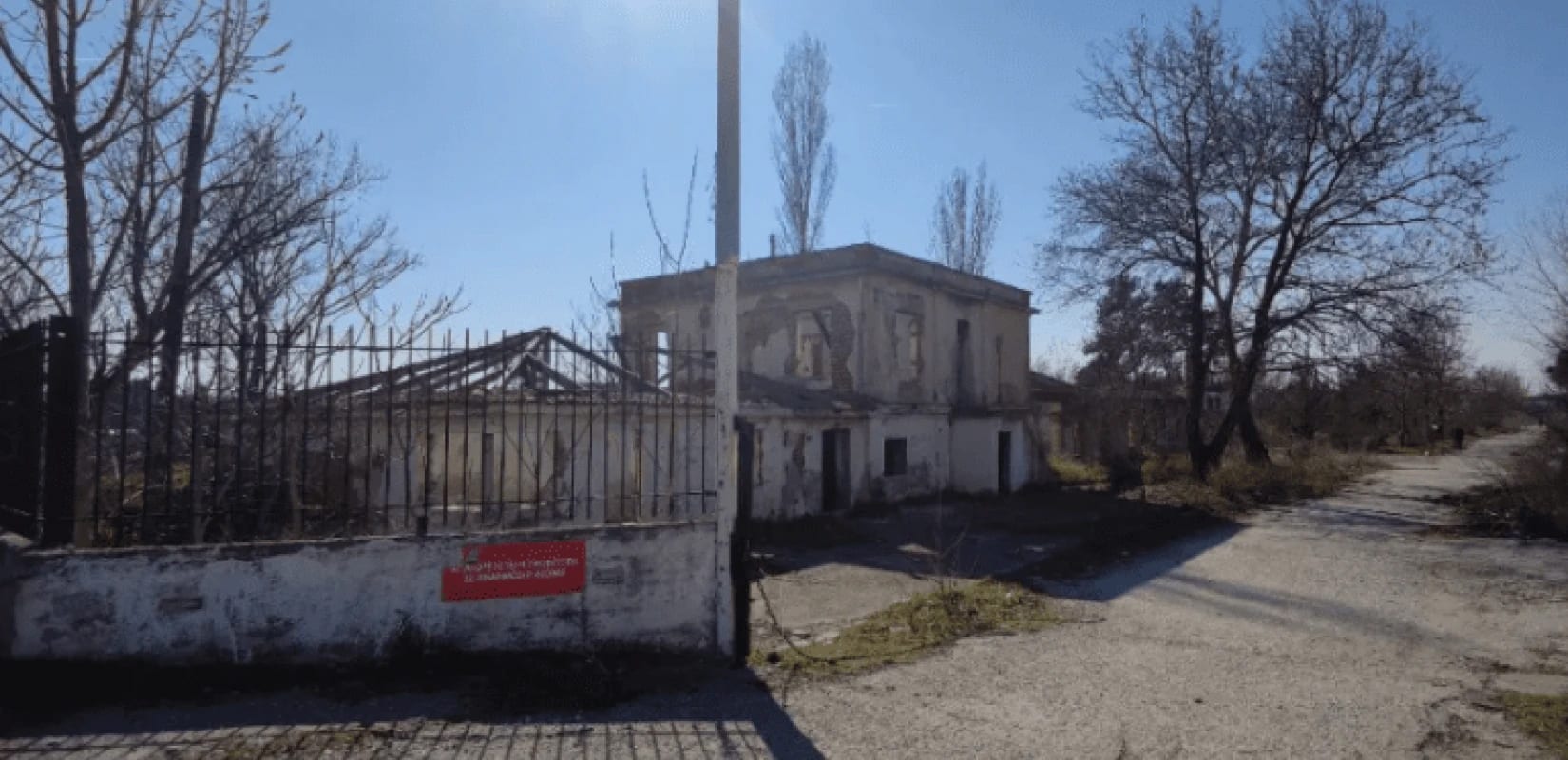
The city itself holds buildings rather than money. Under Mayor Stelios Angeloudis, in office since January 2024, it has started to use them. MDAT runs a social rental agency that renovates empty, publicly owned flats and lets them on leases of at least 8 years at rents well below the market. Pressure from below is growing. The Thessaloniki Tenants' Union wants the council to put at least 2% of its budget into social housing. Meriç Özgüneş, who coordinates the city's social rental agency, co-wrote a policy brief for the Foundation for European Progressive Studies that sets out the progressive case for permanent affordable stock.
Empty homes get a mix of incentives and one restriction. Since 1 July 2026 no new short-term rental registrations are issued in the city's central municipal district, covering the historic centre, the waterfront and Ladadika. At the International Fair in September the prime minister extended the freeze to the end of 2027. A new Anakainizo (Renovate) scheme pays up to 95% of the cost of repairing an empty pre-1990 flat if the owner lets it long-term for five years. A penalty tax on vacant homes has been considered but not adopted. The European case for reclaiming vacant spaces as homes is well made; in Thessaloniki the social rental agency is the working local version.
Climate policy points the same way. Thessaloniki holds the EU Mission Label as one of the EU's climate-neutral and smart cities. In 2026 the European Investment Bank lent it €30m for an investment programme framed by its Climate Neutrality Plan 2030. The Exoikonomo (Energy Saving) grants have upgraded the homes of more than 100,000 households nationwide. Reusing the empty stock rather than building on open land is the lower-carbon route. In homes that are costly to heat, energy poverty and the housing crisis are the same problem.
The argument splits along a familiar line. The government bets on helping people buy, rent and renovate in the market, adding targeted supply on public land. The opposition and the tenants' movement argue that subsidising demand in a market this tight mostly lifts prices, and that Greece needs a permanent non-market tier. The Housing Market Pulse, a study of Greek demand and supply rigidities, weighs the two sides in market terms.
I know how difficult it is for our fellow citizens who rent a house. That is why we decided that every year, and specifically in November, the state will refund a full monthly rent to tenants, in order to alleviate their expenses.Housing is not a business, but the right of a generation to live with dignity.- Aug 1917[source]
The Great Fire
A fire burning for 32 hours destroys 9,500 houses and leaves more than 70,000 people homeless. Ernest Hébrard's new plan reshapes the centre.
- 1922–23[source]
Refugees rebuild the city
Nearly 100,000 refugees from Asia Minor settle in Thessaloniki, founding districts such as Toumba and Kalamaria.
- 1948[source]
Building cooperatives take off
Officers granted 1,000 m² plots in Panorama found the Neo Panorama building cooperative, a model that builds owners and then dissolves.
- 2012[source]
The OEK is abolished
Greece's Workers' Housing Organisation is closed under the bailout, ending the last public housing channel.
- May 2016[source]
REACT houses refugees in the city
The municipality launches REACT with UNHCR, targeting 888 accommodation places in private apartments across the metropolitan area.
- Sep 2025[source]
Social land-for-flats law
Law 5229/2025 lets private builders develop public land in return for handing back homes for social rent.
- Jan 2026[source]
First social rental lease
The social rental agency signs its first lease, a municipal flat for a single-parent family.
- Feb 2026[source]
Co-housing network meets in the city
Thessaloniki hosts the fourth Cities 4 Co-Housing transnational meeting.
- Jul 2026[source]
Short-term-rental freeze begins
No new short-term rental registrations in the central municipal district.
- Dec 2027[source]
Freeze due to expire
The extended ban on new short-term rental registrations runs to 31 December 2027.
- 2027[source]
First Ziaka homes
First homes of the 1,034 planned on the former Ziaka army camp are due.
- 2030[source]
Climate-neutrality target
The city's Climate Neutrality Plan 2030 frames its 2025–2030 investment programme.
From fire and refugee settlement to the first social rental leases, a short-term-rental freeze and the conversion of an army camp into homes.
From Alexandrias Street to Siatistis Street: Thessaloniki's first non-market homes
Housing Thessaloniki, the social rental agency run by MDAT, is the city's clearest proof that empty homes can become affordable ones. With €1.1m from the Recovery Fund it is renovating 40 vacant flats owned by public bodies and letting them to vulnerable households at an average rent of €225 a month. Energy upgrades come with the renovation, which is why Horizon magazine singled it out among Europe's answers to energy poverty. A further 60 flats are planned, and the approach won MDAT a European Housing Innovation Award.
Housing is a right, not a privilege. Today we are using our municipal property for the benefit of our socially vulnerable fellow citizens, and handing over, with dignity and stability, a municipal apartment to a vulnerable single-parent family.Siatistis Street is where the city may build its first co-housing. The listed building belongs to the neighbouring Municipality of Thermi. It can hold around 10 to 11 homes for single mothers, older residents and Housing First tenants. The estimated capital cost is €800,000 to €1.2m. The pilot grew out of Cities 4 Co-Housing, and the investment plan includes a statute starter kit for the future residents' association. It is costed but not yet funded. When the network met in the city in February 2026, partners also toured a newly renovated social housing building on Alexandrias Street.
REACT, launched by the municipality with UNHCR in 2016, showed early that a city without public stock can still run social letting across scattered flats. It targeted 888 accommodation places in private apartments across Thessaloniki, Neapoli-Sykies and Kalamaria, working with the NGOs ARSIS and PRAKSIS. The same partners later piloted Housing First in the city, as part of the URBACT ROOF network.
The Ziaka camp development is the state's bet on scale. It is the most advanced of the disused army camps earmarked for homes. It would bring affordable homes to the western districts, where rents are already the city's lowest. Its tenure and management are still undecided, which leaves room for a non-profit or cooperative operator.
The Pavlos Melas camp next door went another way. It opened in June 2026 as a metropolitan park, and by summer 2027 it will house the Museum of Refugee Hellenism. That museum will tell the story of the families who once built Thessaloniki's housing with their own hands.
So what kind of housing does a city of refugees, students and empty flats build for itself? The pieces are on the table: a rental agency that works, a costed co-housing pilot, an army camp waiting for an operator, and tens of thousands of empty homes. What Thessaloniki has not yet done is give them a tenure that lasts longer than one lease or one programme.
References
Statistics12Click on any number to see the source
Housing market
Tenure & affordability
Adaptive reuse & vacancy
Population & migration
From our library18
- Thessaloniki: How Airbnb is redrawing the real estate market map — Knowledge
- Thessaloniki Student Housing Hunt Intensifies — Knowledge
- Housing as investment in Greece and Southern Europe - Private profit versus social value — Knowledge
- Housing policy under the conditions of financialisation - The impact of institutional investors on affordable housing in European Cities — Knowledge
- Is cooperative housing possible in Greece? — Knowledge
- MDAT – Major Development Agency Thessaloniki — Organisation
- NETCO Network of Cities for Collaborative Housing - 2023-2024 Peer Exchanges Policy Recommendations — Knowledge
- CITIES 4 CO-HOUSING - Quarterly Network Journal No.1 — Knowledge
- Cities 4 Co-Housing – Thessaloniki Investment Plan — Knowledge
- Housing Cooperatives in Europe - Resilience and Adaption to Changing Need — Knowledge
- Ziaka Camp social housing (Eleftherio-Kordelio) — Project
- Thessaloniki Tenants' Union — Organisation
- Tackling the Housing Crisis in Europe - Policy Brief — Knowledge
- Reclaiming Vacant Spaces to Tackle Housing and Homelessness Crises in Europe — Knowledge
- The hidden link between Europe's housing crisis and energy poverty — Knowledge
- The Housing Market Pulse: Navigating Persistent Demand, Policy Efficiency and Structural Supply Rigidities in Greece — Knowledge
- Housing Thessaloniki – Social Rental Agency — Project
- REACT – Refugee Assistance Collaboration Thessaloniki — Project
Further sources38
- 9,500 houses — Wikipedia: Great Thessaloniki Fire of 1917
- nearly 100,000 refugees — Wikipedia: Thessaloniki
- €3.60 per square metre — SKAI
- €7.70 — ered / RE/MAX Greece
- 65% — Housing Europe
- 51,472 empty flats, one home in four — Powergame
- 88,000 students — Wikipedia: Aristotle University of Thessaloniki
- 1,700 of them — Powergame
- 11.7% in 2024 — ered / Bank of Greece
- 28.9% of Greeks spent 40% or more of their disposable income on housing — Eurostat, Living conditions in Europe
- Renovated studios near the universities rent for €400-450 a month — To Vima
- 62% of Greeks aged 25 to 35 — To Vima / Blupeak-Ierax survey
- the lack of affordable housing as their most urgent concern — www.tovima.com
- 1,000 m² — Parallaxi (via Municipality of Pylaia-Chortiatis)
- history in Efimerida ton Syntakton — www.efsyn.gr
- more than 200 cooperatives with over 150,000 members — Heinrich Böll Stiftung Thessaloniki
- no explicit legal framework for community land trusts or social housing cooperat — urbact.eu
- more than 45 measures worth over €6.5bn — Ministry of Social Cohesion and Family, results report May 2026
- 31 August 2026 — ered.gr
- tax exemption — www.tovima.com
- Law 5229/2025 — Housing Europe, Greece country profile 2026
- at least 30% of the new homes — ered
- 1,034 homes — ered
- at least 2% of its budget — The Press Project
- 1 July 2026 — www.tovima.com
- extended the freeze to the end of 2027 — www.tovima.com
- up to 95% of the cost — iefimerida
- considered — www.tovima.com
- Mission Label — news.gtp.gr
- €30m — European Investment Bank
- more than 100,000 households — in.gr
- Kyriakos Mitsotakis, Prime Minister of Greece — www.iefimerida.gr
- Nikos Androulakis, leader of PASOK, the centre-left opposition party — www.skai.gr
- European Housing Innovation Award — urbact.eu
- Stelios Angeloudis, Mayor of Thessaloniki — www.skai.gr
- a newly renovated social housing building on Alexandrias Street — urbact.eu
- 888 accommodation places — URBACT
- Pavlos Melas camp — ered.gr