Overview of the Report and Its Creators
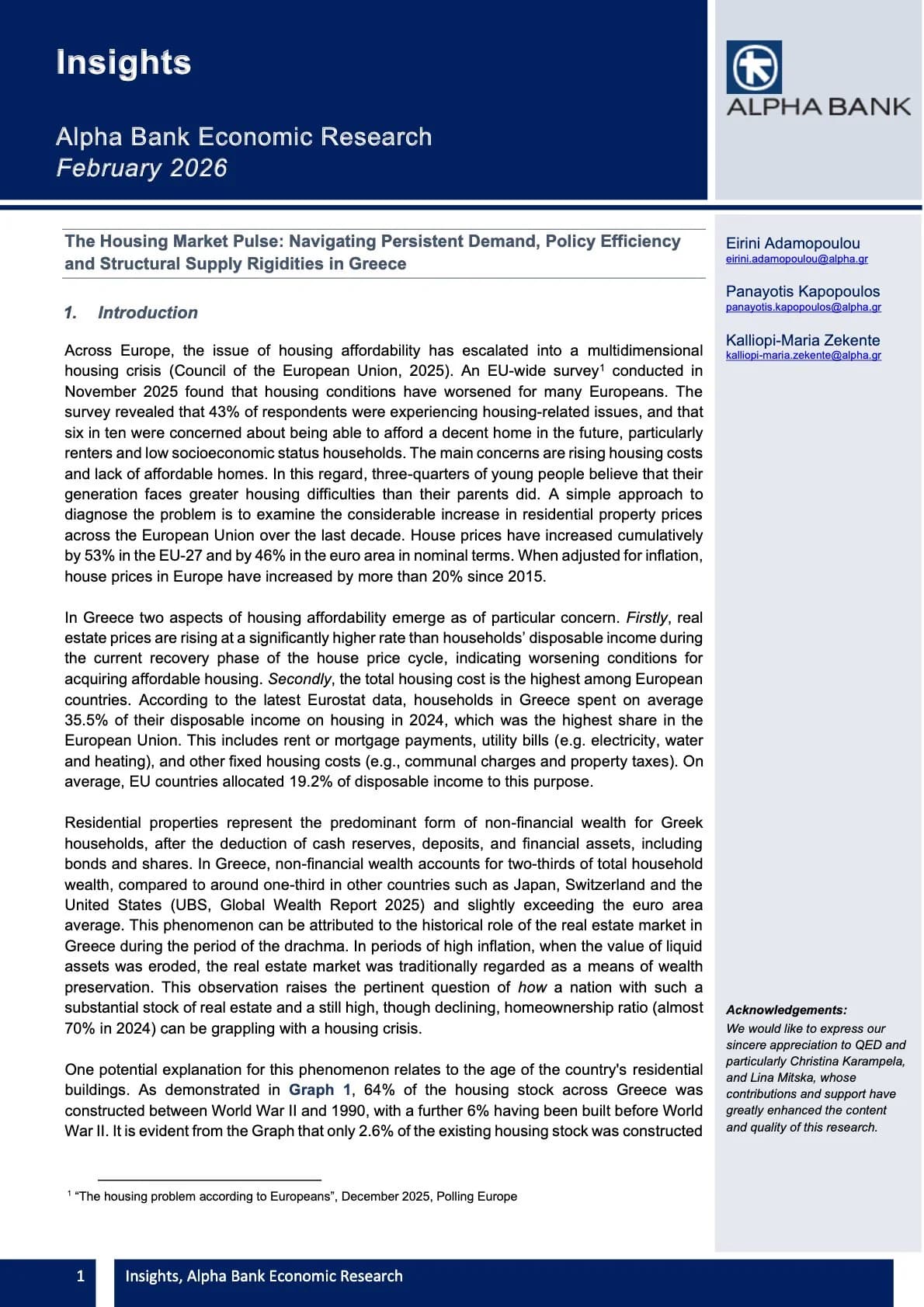
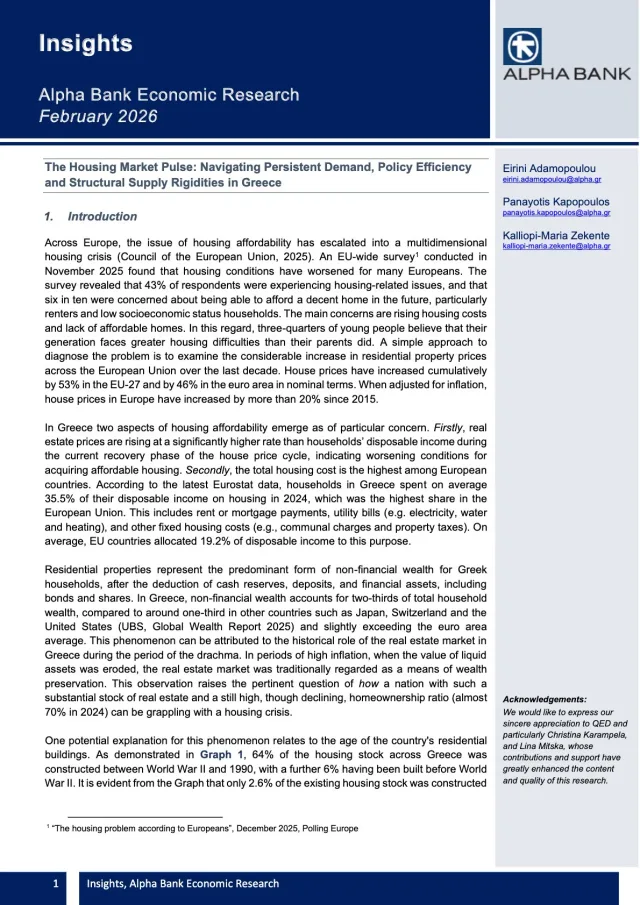
The study “The Housing Market Pulse: Navigating Persistent Demand, Policy Efficiency and Structural Supply Rigidities in Greece” is produced by Alpha Bank’s Economic Research division. It is authored by Eirini Adamopoulou, Panayotis Kapopoulos and Kalliopi‑Maria Zekente, senior analysts at Alpha Bank, a major Greek financial institution. The research aims to assess the current state of Greece’s housing market, identify drivers of demand and supply, and evaluate recent policy measures, with relevance for a pan‑European audience interested in sustainable housing.
Key Findings on Housing Affordability
Greek households spent 35.5 % of disposable income on housing in 2024 – the highest share in the EU, where the average is 19.2 %. Real‑estate prices have risen faster than incomes, and rent inflation reached double‑digit growth in 2025. Approximately 43 % of Europeans report housing‑related problems, and six in ten fear future unaffordability, underscoring the broader European context.
Ageing Stock and Energy Upgrade Needs
Around one‑fifth of primary residences in Greece are over 40 years old; 73 % were built between 1946 and 1990. Six out of ten homes need energy upgrades, with the share rising to over two‑thirds for dwellings older than 25 years. Tenants report the highest need for upgrades (72 %). Energy‑inefficient housing contributes to the EU‑27’s highest inability to keep homes adequately warm (19 % of the population).
Vacant Dwellings and Supply Constraints
Unoccupied conventional dwellings account for 34.5 % of the Greek housing stock, the third‑highest share in the EU‑27. Vacant properties total about 794 000, with roughly one‑third located in Attica. The main reasons for vacancy are high renovation costs (42 %) and multiple ownership/heir issues (21 %). Only about 20 % of owners intend to place vacant homes on the long‑term rental market in the near future.
Policy Landscape and “My Home II” Programme
The government introduced “My Home II” in January 2025, allocating €2 billion (half from the EU Recovery and Resilience Fund at zero interest). The scheme targets individuals aged 25‑50 years, offering loans up to €190 000 with up to 90 % loan‑to‑value. Around 24 % of prospective buyers have applied or plan to apply, while 45 % have no intention to participate, citing income and age criteria. Two‑thirds of respondents (66 %) agree that the programme helps address the housing crisis, yet a majority also believe it may push up eligible property prices.
Market Expectations and Drivers
In 2025, 70 % of respondents expect rents to rise over the next five years, with tourism and the home‑sharing economy identified as the top factor influencing future house prices and rents (71 % of respondents). Government/tax policies rank second, while interest rates and urbanisation remain significant drivers. Expectations are consistent across regions, though islands show the strongest belief in rent growth.
Sustainable Housing Implications
The high share of ageing, energy‑inefficient stock and the prevalence of vacant, under‑utilised properties highlight substantial opportunities for sustainability‑focused interventions. Renovation subsidies covering up to 90 % of costs (up to €36 000 per property) have been introduced, alongside a €400 million programme targeting old or vacant homes. Energy‑upgrade uptake remains low (≈20 % of owners have benefited from recent schemes), indicating a need for further incentives to achieve EU climate targets.
Concluding Insights for Europe
Greece exemplifies a market where high homeownership, an ageing building stock and significant vacancy coexist with rising affordability pressures. The interplay of tourism, short‑term rentals and limited supply underscores the importance of coordinated policy actions that combine demand‑side support with robust supply‑side and energy‑efficiency measures. These findings are relevant for European policymakers and investors seeking sustainable housing solutions across the continent.