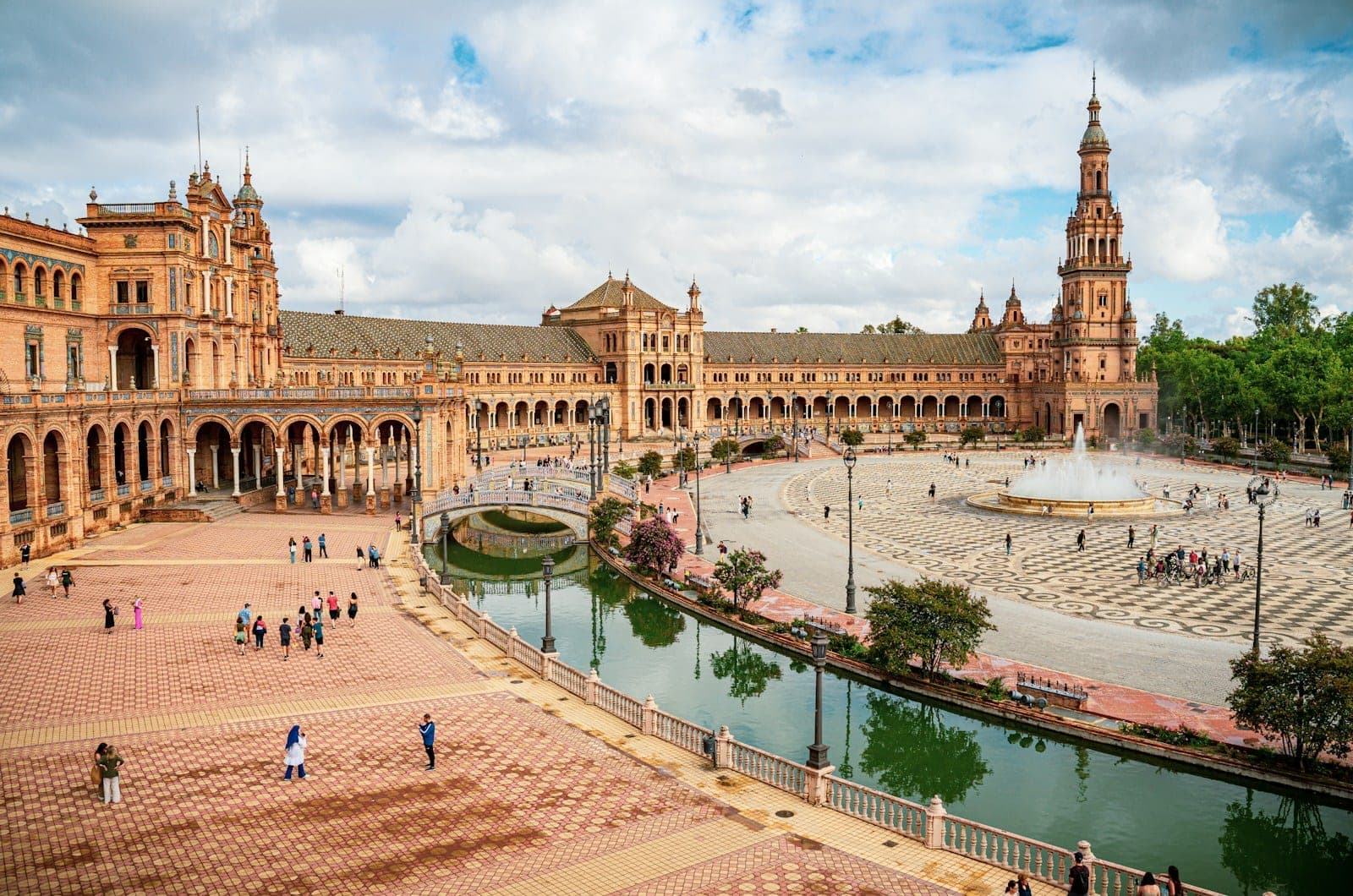
A century of municipal housing, and the tightest rent burden in Spain
Sevilla built its housing culture around the patio. For most of the nineteenth century working families lived in corrales de vecinos, courtyard tenements where the tap, the washhouse and often the kitchen were shared and only the rooms were private. A few hundred survive, housing about 2,700 people. The city moved that instinct into public hands early, founding the Patronato Municipal de Casas Baratas, its municipal cheap-housing board, in April 1918. A century later its successor, the municipal housing company EMVISESA had delivered roughly 22,000 protected homes. What that century has not managed is to keep renting within reach.
Ownership is close to absolute here. 86% of Sevillian households own the home they live in and only 13.3% rent, across a stock of roughly 330,000 dwellings. Public and non-profit landlords hold 0.7% of it, some 2,200 homes in EMVISESA’s hands. Private landlords let the remaining 12.6%. Add the public stock to the handful of non-profit and cooperative homes and the genuinely non-market tier reaches 0.7%, among the thinnest of any large city in western Europe. Cooperative tenure does not appear in the figures at all, because Spain’s standard housing cooperative dissolves the moment the flats are handed over.
- Owners
- Owner-occupier86.0%
- Renters
- Public & non-profit rental0.70%
- Cooperative0.00%
- Private rental12.6%
- Unclassified0.70%
- Unknown / Other0.70%
A second rule sits on top of those tenures. 2% of Sevilla’s dwellings carry a social-housing qualification, a covenant with a fixed term rather than a tenure of its own. Against that, 30% of residents would qualify for protected housing on income grounds. The distance between what is reserved and who would be eligible is where every local argument starts. It is also the measure the comparative mapping of housing-stressed areas in Europe uses to mark a city as under strain.
Price the tiers per square metre and the ladder is short but steep. EMVISESA’s protected lettings sit near €5.50 a month, cold. The median across all occupied stock is €8.60. A newly advertised flat asks €12.30, a furnished long-let €14.10, and a serviced or flexible let €20.90 gross. Utilities add roughly €1.75 on top. A new market contract therefore costs more than twice a protected tenancy, in a city whose wages are among the lowest of Spain’s big capitals.
- Public / protected (EMVISESA)
- All-stock median
- New contracts (advertised)
- Furnished long-let (gross)
- Serviced / flexible (gross)
Monthly rent per square metre by tier. Protected and market rents are net cold; furnished and serviced tiers are gross all-in, so part of the gap is service charge rather than rent.
Empty stock and tourist stock are the two halves of the supply question. The 2021 census recorded a 13% dwelling-vacancy rate and 24,695 empty residential buildings, while the rental vacancy rate has since tightened to 1.5%. Offices are looser, with 11.8% empty and 19 buildings wholly vacant. Short-term letting applies the sharper squeeze. Tourist flats cluster so heavily in the Casco Antiguo, the old town, that 11 neighbourhood zones have already passed the 10% ceiling the council set in October 2024, Triana’s historic core among them. On the mayor’s own estimate the cap has held back close to 500 further conversions. What that concentration does to local rents has been measured in the Barcelona study of Airbnb’s effect on housing markets and in a Lisbon case study of tourism-driven displacement.

We would like a law that let us be far more restrictive, because I still think Sevilla cannot take a single tourist flat more. But we can only go as far as the law allows.Demand arrives faster than the cranes. Sevilla registers 10,681 new residents a year and hosts around 35,000 mid-term residents on stays of three to twelve months. The province finished 5,956 homes in 2025 against 9,005 new households, even after output roughly tripled since 2021 to about 6,000 a year. No rent cap applies: Andalusia has declined to declare any stressed-market zone, so nothing limits what a new contract may ask.
The squeeze reaches well past the poorest households. On the Bank of Spain’s 2025 figures, 46.8% of Sevilla’s renting households spend more than 30% of net income on rent. That is the highest share of any large Spanish city, ahead of Málaga on 46.7% and Madrid on 41.3%. At the floor it is worse. In Polígono Sur, the estate Sevilla calls Las Tres Mil Viviendas, average income runs to €6,747 a year. Heat sharpens the same inequality: only 19.8% of vulnerable Spanish households have air conditioning, against a national average near 53%. A survey of Europe’s overlapping housing crises finds the same pattern from Lisbon to Ljubljana. In Sevilla it has become street politics. In June 2026 the city’s tenants’ union, the Sindicato de Inquilinas e Inquilinos de Sevilla, marched from the Andalusian Parliament under the slogan La vivienda nos cuesta la vida, housing is costing us our lives.
Which leaves the cooperative question. Sevilla’s cooperative housing does not register in its tenure figures yet. It does now have a legal form, a municipal working group and a first generation of members waiting on land.
From the corral to the cesión de uso
Two quite different things are called a housing cooperative in Spain. The common one is the cooperativa de viviendas, a promotional cooperative: future owners band together to commission a building, then wind the cooperative up and take individual title. The form Sevilla is now trying to grow is cesión de uso, grant of use. There the cooperative keeps the freehold permanently, and each member holds a transferable right to occupy one flat that can never be sold at a profit. A member pays an aportación, a refundable entry share, then a monthly fee closer to a rent than a mortgage. Andalusia’s cooperatives law names the model explicitly, and La Germinadora, a national incubator for the form, runs the workshops behind it. The money is not trivial. The terms modelled for EMVISESA’s San Jerónimo scheme come to €14,000 on entry, a further €19,000 in instalments, and €590 a month.
The tradition this is grafted onto is more municipal than cooperative. Sevilla’s nineteenth-century corrales were collective by necessity, never by charter. Public promotion took over instead. The workers’-housing committee of 1908 was followed by the Patronato of 1918, and after the civil war by the Obra Sindical del Hogar, the Franco-era trade-union housing agency. It raised barriada after barriada for families arriving from the countryside. The Polígono de San Pablo alone absorbed more than 8,800 protected dwellings between 1963 and 1967, and Polígono Sur followed in the 1970s. Ownership-first policy then took the rest of the century, and cooperatives survived mainly as a cheaper route into buying.
Today’s sector is small, young, and sorts into three groups with different problems. EMVISESA’s Mesa Cooperativa holds the institutional end. The standing working group examines which municipal plots could be leased to cesión-de-uso cooperatives on surface rights, and gives those groups technical accompaniment they could not otherwise buy. Abante Jubilar Sevilla holds the citizen end, a senior cohousing cooperative that bought a 9,000-square-metre plot in Mairena del Aljarafe and lifted its plan from 30 homes to 60. Between the two sit the movement bodies. Cotidiana, a Sevillian cooperative consultancy, and CAIS, an Andalusian social-economy consortium, run La Germinadora’s regional incubator, while FAECTA and FECOVI-Andalucía, the Andalusian federations of worker and of housing cooperatives, carry the institutional weight above them.
All three groups hit the same two walls: land, and credit from banks with little appetite for a developer who has no resale exit. Those are precisely the constraints catalogued in the study of access to land and finance for community-led housing, which also sets out the instruments that have unlocked it elsewhere. Why the senior groups moved first is not an accident of temperament. Participatory research into collaborative housing in later life finds older households readiest to trade private floor area for shared space. A review of cooperative housing and wellbeing across English and Spanish evidence reports measurable gains when they do.
Government treats the form as supply rather than as ideology, and the lever it reaches for is land. The city’s instrument is derecho de superficie, a long surface-rights lease that keeps the plot in public ownership while the cooperative owns the building on it. Andalusia’s instrument is the bolsa de suelo, a land bank for affordable housing written into its 2025 housing law. Comparative work on public-cooperative policy mechanisms describes the same pairing across Europe, and a study of socially oriented cooperative housing as an answer to speculation explains what the permanent-freehold version protects. The design capacity is already local, as an assessment of Spanish protected housing argues. What Sevilla has not yet run is the tender that turns a working group into a building.
Three governments, one land bank, and no stressed-market zone
José Luis Sanz of the Partido Popular, the centre-right party that also governs Andalusia, has governed Sevilla since June 2023, and his answer to the crisis is municipal construction at volume. EMVISESA now has 2,200 protected homes in execution this mandate against an original target of 1,403. Of those, 1,814 are for rent and 386 for sale, on investment of €330 million. Plan Hábitat Sevilla covers the other half of the job, modernising the accessibility, energy performance and safety of the stock the city already owns.
Three levels of government hold different levers here, and they pull against one another. Madrid writes the framework. Spain’s 2023 housing act created stressed-market zones, and Real Decreto 326/2026 set the state housing plan for 2026 to 2030. Andalusia legislates its own way. Ley 5/2025, the Andalusian housing act, was carried on 3 December 2025 with Partido Popular votes alone, entered into force on 24 January 2026 and runs to 117 articles. The Junta de Andalucía, the regional government, has refused to declare a single stressed-market zone. That choice cost it a share of €90 million in state rental funding, which went instead to Catalonia, the Basque Country, Navarre, Galicia and Asturias. It has also opened a competence conflict against the state plan. The city, meanwhile, owns the plots.
We do not accept that a legitimate decision taken within our own powers should end up penalising Andalusia financially.- 1918[source]
Patronato Municipal de Casas Baratas
Sevilla creates a municipal board to build cheap housing; its successors would deliver roughly 22,000 protected homes over the following century.
- 1963–1967[source]
Polígono de San Pablo
The Obra Sindical del Hogar builds more than 8,800 protected dwellings in five phases, the largest single act of housing production in the city’s history.
- 2020[source]
Mesa Cooperativa
EMVISESA opens a standing working group to identify municipal land that could be leased to cesión-de-uso housing cooperatives on surface rights.
- October 2024[source]
Tourist-flat cap
Sevilla caps tourist dwellings at 10% of the homes in any neighbourhood; 11 zones, ten in the Casco Antiguo plus Triana’s old core, are already above the line.
- December 2025[source]
Ley 5/2025 de Vivienda de Andalucía
Andalusia passes the first regional housing act in Spain, 117 articles built on land supply and tax relief rather than price control, with Partido Popular votes alone.
- June 2026[source]
Tenants take the street
The Sindicato de Inquilinas e Inquilinos de Sevilla marches from the Andalusian Parliament, with Sevilla now the Spanish city where the highest share of renters, 46.8%, spend over 30% of net income on rent.
- July 2026[source]
Plan Sevilla Centro Vivo
The city commits a minimum €300 million to build 1,039 homes on 21 municipal buildings and plots in the historic centre, and offers incentives to convert tourist flats back to long-term lets.
- 2027–2031[source]
Centro Vivo delivery window
Funding starts in the 2027 municipal budget and the programme runs to 2031, targeting about 3,500 new residents in a centre that lost roughly 3,000 to tourism over the previous decade.
From the municipal cheap-housing board to the Andalusian housing act, the tourist-flat cap and the historic-centre repopulation plan.
Concrete cooperative support is thinner than the rhetoric, and all of it is about land. The Mesa Cooperativa is the standing channel, surface rights on municipal plots are the instrument, and the regional land bank is meant to widen the pool. Ley 5/2025 also obliges Andalusian municipalities above 100,000 inhabitants, 49 of them, to contribute land that could carry close to 40,000 homes. None of it is ring-fenced for cooperatives, which is the gap the sector is lobbying to close. Both a review of how cities promote collaborative housing and the European Parliament’s housing mission report on Barcelona put land allocation, not subsidy, at the top of the list.
Sevilla’s reply to its empty and its touristified stock arrived in July 2026 as Plan Sevilla Centro Vivo. It puts 21 municipally owned buildings and plots across the historic centre, Triana, Los Remedios, San Bernardo and El Prado into one programme. 10 of the sites are whole-block projects combining homes, commerce and parking. The plan also pays owners to turn a tourist flat back into a long-term let, reversing the trade of the last decade. The regulatory half already runs: since October 2024 no neighbourhood may exceed 10% of its dwellings in tourist use, and 11 zones are over that line. Above it sits the EU’s registration framework for short-term rentals. The method for the harder conversions is set out in a practical guide to transforming buildings through adaptive reuse and in an instrument for measuring whether an office can become homes at all.
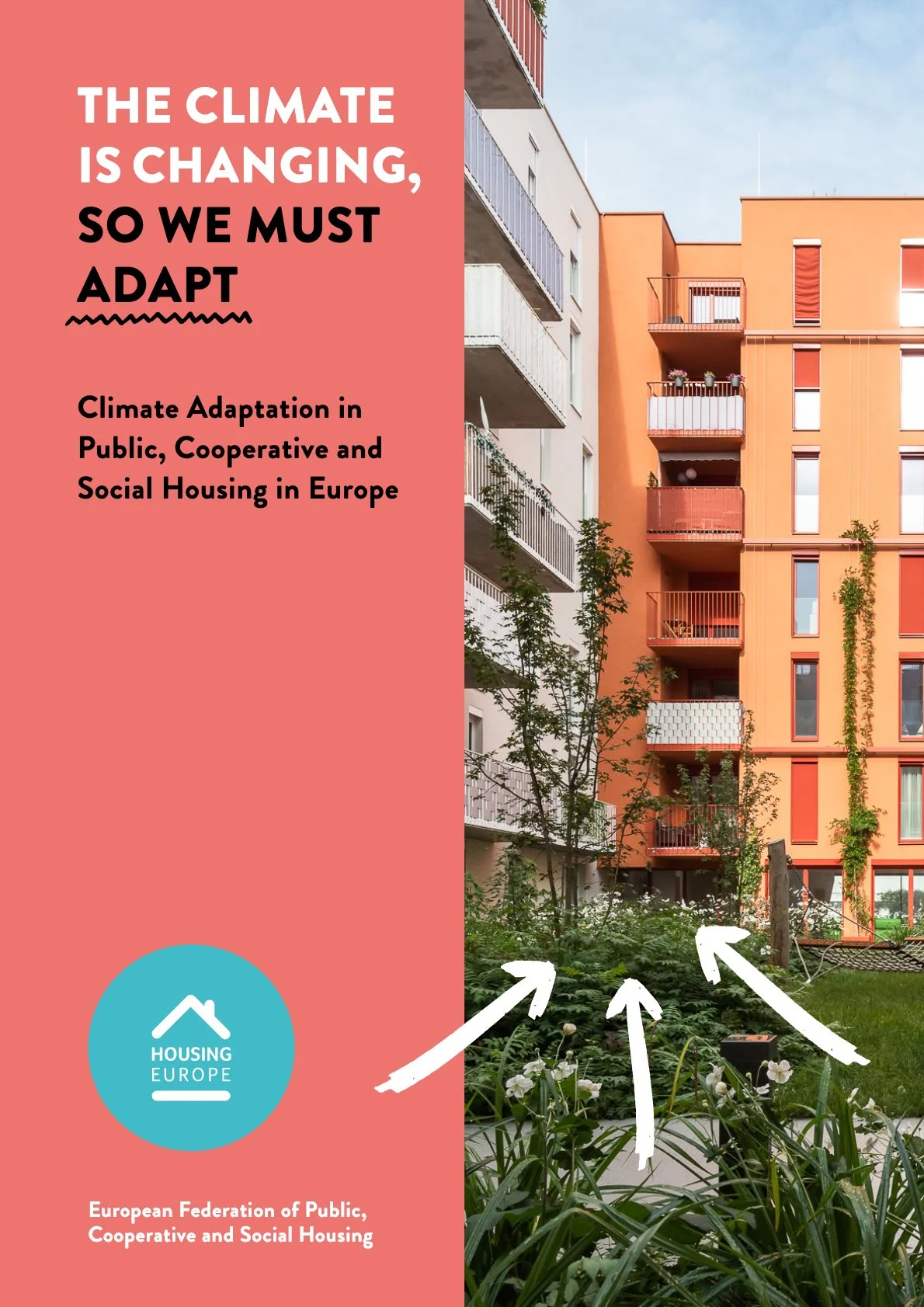
Decarbonising and cooling are one project in a city this hot. More than half of Spain’s homes went up before 1981 with no insulation standard. Andalusia routes its retrofit money through Plan Eco Vivienda, which meets 40% to 80% of works cost and was topped up by another €38.7 million in July 2026. Sevilla adds a requirement the northern retrofit agenda barely addresses, which is surviving August indoors. Housing Europe’s study of climate adaptation in public, cooperative and social housing argues that non-market landlords are the only ones able to act at stock scale. Work on embedding circularity goals in housing cooperatives shows how the retrofit itself can stay low-carbon, and both threads now run through the European Affordable Housing Plan and the review of integrated municipal approaches.
Nobody in Sevilla argues that nothing is wrong. The fight is over whether building more is enough on its own. Rocío Díaz makes the regional case for supply plus tax relief, and rejects price control as an intervention that shrinks the rental market rather than cheapening it. Ibán Díaz, spokesperson for the Sindicato de Inquilinas e Inquilinos de Sevilla, reads the same act as starting from the wrong diagnosis and written for developers. Jaime Jover, who teaches human geography at the University of Seville, puts the objection in one sentence.
Building more helps the property business, but it does not solve the real problem.Cooling the courtyard: Sevilla’s working prototypes
CartujaQanat is the clearest proof that Sevilla can engineer its own climate. Built on the Expo ’92 island and opened in 2022, it revives the qanat, an underground water gallery of Bronze Age origin, to cool a street and an open-air amphitheatre without conventional air conditioning. Two galleries hold 140 cubic metres of water that cools overnight from 25°C to 19°C. The installation has measured street-level reductions of around 10°C. Its €5 million budget came 80% from the EU’s Urban Innovative Actions programme. Its partners were the water utility EMASESA, the Cartuja science park, the University of Seville and the Eduardo Torroja Institute of the CSIC, Spain’s national research council. It is an urban prototype rather than a housing one, which is exactly the gap the next projects have to close.
Abante Jubilar Sevilla is the first citizen-led cesión-de-uso cooperative in the city to get as far as owning its site. The association bought its plot in Mairena del Aljarafe on Sevilla’s western edge, and the extra ground let it lift the scheme from 30 homes to 60. Members hold the right to occupy for as long as they live there, and the cooperative keeps the title throughout. Its difficulty is the one every Spanish senior cohousing group reports: the entry contribution falls due years before the keys do, which quietly decides who can join.
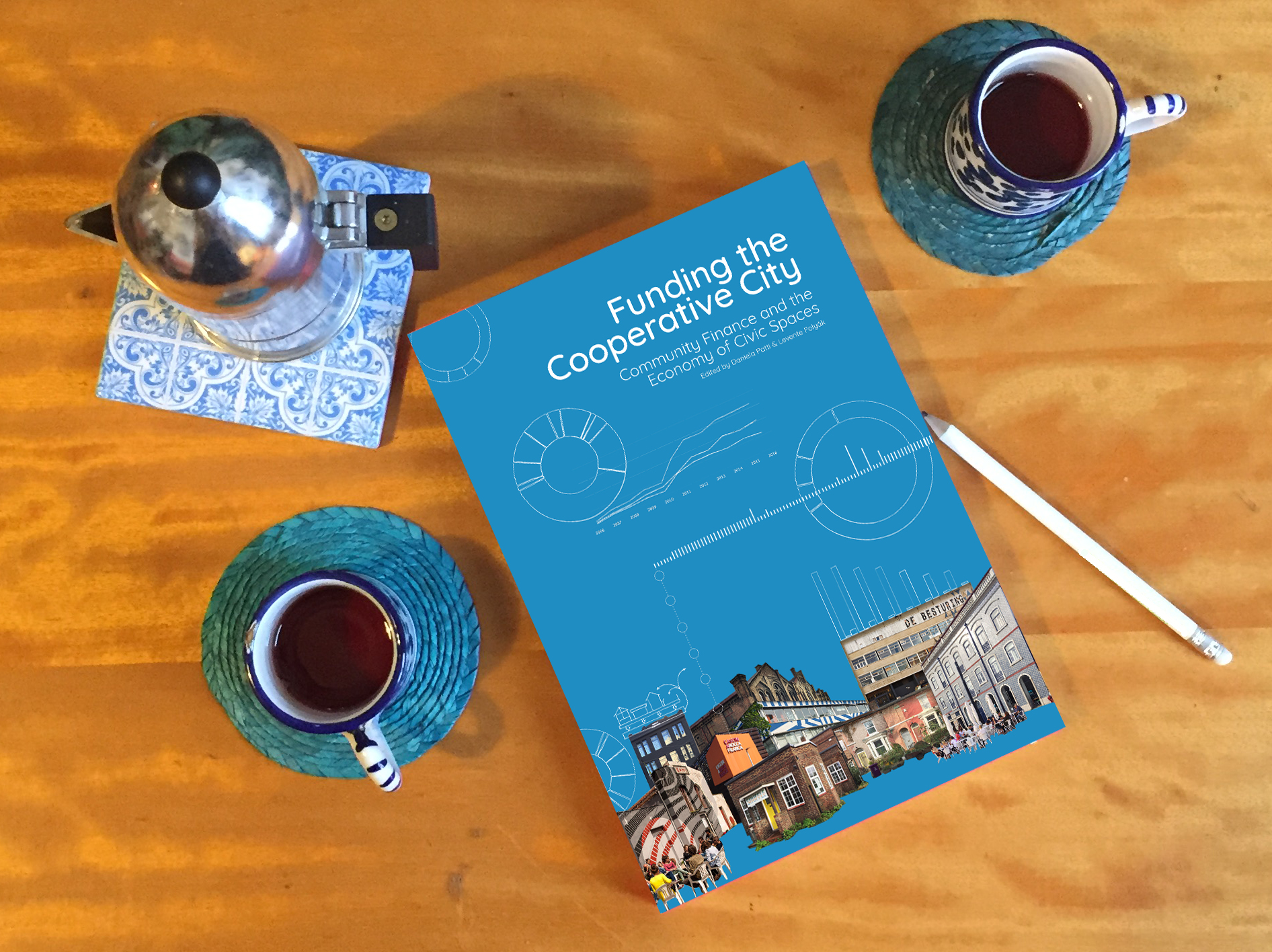
The San Jerónimo–Alamillo scheme is the municipal answer to that filter. The city granted EMVISESA a plot of 4,237 square metres carrying 10,170 square metres of buildable area, on a 75-year term. It is designed for 189 cooperative cohousing and coliving homes aimed at active ageing, and was presented as the first Sevillian project to put workplace and residence in one building. Public land on a long lease is what makes those numbers survive contact with a spreadsheet. Work on community finance and the economy of civic spaces describes the capital stack such a scheme still needs on top of the land.
Martínez Montañés, the Polígono Sur block Sevilla knows as Las Vegas, is the largest live test of whether the city can repair what it built. The Junta de Andalucía and the city are spending more than €19 million there on 92 new homes and 512 refurbished ones, with façades and common areas on another 432 properties queued for 2026. The estate went up in the 1970s to clear shanty settlements and slid into the deepest poverty in Spain. Treating it as a retrofit project concedes that mass public housing needs maintenance capital, not only construction capital, a point the European Parliament’s report on the housing crisis makes about social stock across the continent.
El Vacie is the oldest continuously inhabited shanty settlement in Europe, and Sevilla is finally closing it. The first shacks went up beside the San Fernando cemetery wall in 1932, and the settlement proper dates from 1954. A rehousing team of 12 social integration workers has moved family after family into ordinary flats. Just 36 families remain, and the city has given itself until May 2027 to finish. In February 2026 the last shacks in the Tres Mil Viviendas came down after 35 years. Neither of those is a design story. Both are the precondition for one.
The corral de vecinos is the typology Sevilla has still not reused at scale. The survivors are mostly ordinary flats arranged around a shared patio, and the geometry that once signalled poverty now reads as climate-adaptive design: cross-ventilation, deep shade, a cool centre. Adapting them, and the vacant upper floors above the shops of the Casco Antiguo, is the same craft problem the adaptive-reuse guidance and Housing Europe’s climate-adaptation study set out. Nobody has yet catalogued that stock. Put these pieces beside one another and the question this portrait opened with starts to find an answer. A city of orange trees and named heatwaves already knows how to build shade into a floor plan. What it has never had is a way to pay for that at the pace its rents now move, or a tenure that keeps the result out of the market once it is finished.
References
Statistics16Click on any number to see the source
Housing market
Tenure & affordability
Adaptive reuse & vacancy
Population & migration
From our library22
- Europe under Housing Stress – Housing-stressed Areas in Europe: Comparative Approaches and a Proposal for a European Housing Stress Index — Knowledge
- Do short-term rental platforms affect housing markets? Evidence from Airbnb in Barcelona — Knowledge
- Airbnb, buy-to-let investment and tourism-driven displacement: A case study in Lisbon — Knowledge
- One roof, many realities: Europe's complex housing crisis — Knowledge
- Access to land and finance for community-led housing (No 1) — Knowledge
- Access to land and finance for community-led housing (No 2) — Knowledge
- Living together in old age: Identifying preferences for collaborative housing through participatory design-led research — Knowledge
- Cooperative housing: A catalyst for health and wellbeing? A scoping review of English and Spanish literature (2004–2024) — Knowledge
- Public-cooperative policy mechanisms for housing commons — Knowledge
- Socially oriented cooperative housing as alternative to housing speculation — Knowledge
- Why Is Spain’s Social Housing So Well-Designed? — Knowledge
- Why and how cities can promote affordable and sustainable Collaborative Housing — Knowledge
- Report of the HOUS mission to Barcelona, Spain — Knowledge
- The regulatory aspects of short-term rentals in the EU — Knowledge
- Transforming Buildings Through Adaptive Reuse — Knowledge
- Offices for living in: An instrument for measuring the potential for transforming offices into homes — Knowledge
- Climate adaptation in public, cooperative, and social housing in Europe — Knowledge
- Enabling and embedding circularity goals in housing cooperatives — Knowledge
- The European Affordable Housing Plan — Knowledge
- Cities addressing the housing crisis: Innovative and integrated approaches — Knowledge
- Funding the Cooperative City: Community Finance and the Economy of Civic Spaces — Knowledge
- REPORT on the housing crisis in the European Union with the aim of proposing solutions for decent, sustainable and affordable housing — Knowledge
Further sources25
- “En Sevilla no cabe ni una vivienda de uso turístico más” — entrevista con José Luis Sanz — Preferente / Europa Press · 2026-08-09
- Sevilla leads Spain on rent burden: 46.8% of tenants over the 30% threshold — idealista / Banco de España · 2026-06-23
- Limitación de viviendas de uso turístico en Sevilla — the 10% neighbourhood cap — GPG Arquitectos / Gerencia de Urbanismo · 2024-10-28
- El Sindicato de Inquilinas critica la ley de vivienda andaluza — elDiario.es Sevilla · 2025-09-22
- El Parlamento aprueba la Ley de Vivienda de Andalucía — Canal Sur · 2025-12-03
- Andalucía queda fuera de 90 millones en ayudas a la vivienda — El Confidencial Digital · 2026-09-13
- Plan Sevilla Centro Vivo: 1.039 viviendas en el centro histórico — idealista · 2026-07-29
- Emvisesa en Welcome Home 2026: más de 2.200 viviendas públicas en ejecución — EMVISESA · 2026-02-20
- Mesa Cooperativa — EMVISESA — EMVISESA · 2020
- Parcela en San Jerónimo-Alamillo para 189 alojamientos cooperativos — EMVISESA · 2019-05-27
- Cien años de vivienda pública municipal en Sevilla — EMVISESA · 2018
- A El Vacie le queda un año de vida: 36 familias por realojar — El Español Sevilla · 2026-07-02
- Rehabilitación integral de Martínez Montañés, Polígono Sur — El Debate · 2025-08-24
- El sistema sevillano que rebaja 10 grados la temperatura sin aire acondicionado — El Español / Omicrono · 2022-09-09
- Sevilla triplica el ritmo de producción de vivienda — Savills España
- Andalucía registra un déficit de viviendas respecto a los hogares creados — El Conciso
- Plan Eco Vivienda: 38,7 millones más para rehabilitación energética — El Mira · 2026-07-07
- Olas de calor y pobreza energética — Socaire (Greenpeace, 2026) — Moncloa · 2026-09-14
- Corrales de vecinos de Sevilla — Wikipedia
- Polígono de San Pablo — 8.800 viviendas de la Obra Sindical del Hogar — Wikipedia
- El primer cohousing de Sevilla ya cuenta con suelo para edificar — Iniciativa Sevilla Abierta · 2019-07
- The city with the most vitamin C in the world — Andalucía.org
- Heat Wave Zoe: Seville becomes the first city in the world to name a heatwave — Arsht-Rock Climate Resilience Center · 2022-07-25
- Metropol Parasol — Wikipedia
- Alcázar of Seville — Wikipedia
Funding & land tenure
What a housing cooperative could actually build on hereSevilla is not in the funding registry yet — the tenure figures above are national.