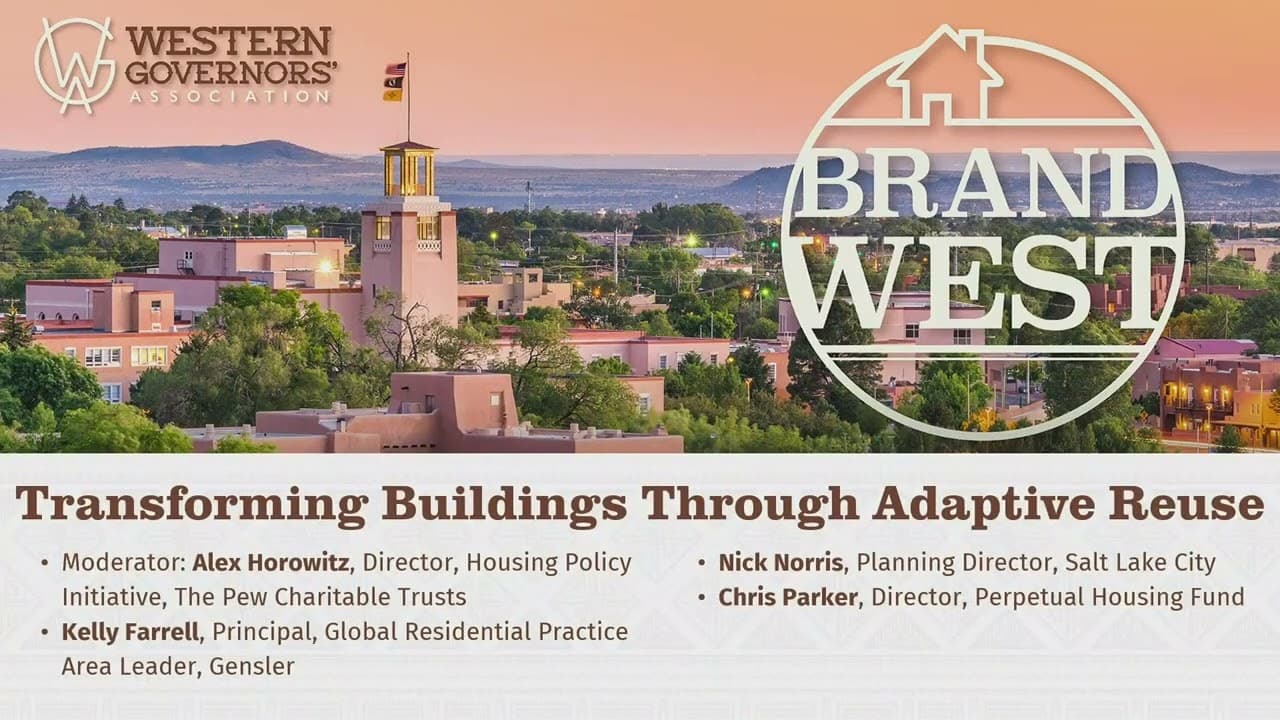
Overview of the Panel Discussion
The resource is a recorded panel titled “Transforming Buildings Through Adaptive Reuse”, presented by the Western Governors’ Association and featuring experts from the Pew Charitable Trusts, Gensler, Salt Lake City planning, and the Perpetual Housing Fund. The conversation focuses on converting under‑used office buildings into affordable residential units, a strategy increasingly relevant across Europe as cities confront housing shortages and climate imperatives.
Adaptive Reuse as a Cost‑Effective Solution
Panelists highlight that co‑living units built on former office floors can cut construction costs by 25‑35 % compared with new‑build apartments. Development expenses for micro‑units range from $123 k per unit in Denver to $190 k in Seattle, far lower than the $400 k‑plus required for conventional studios. Lower costs translate into rents that are roughly half the median market rate, achieving affordability in the 30‑40 % of median income (AMI) bracket.
Technical Advantages of Centralised Plumbing
A recurring theme is the financial benefit of retaining centralised plumbing shafts in office cores. By avoiding individual unit plumbing, developers reduce per‑unit cost two to four times compared with traditional apartments. This design also shortens conversion timelines to 12‑18 months, accelerating delivery of housing stock.
Impact on Housing Affordability and Subsidy Efficiency
Using the Denver example, a $400 k new‑build studio would require $300 k of public subsidy per unit, whereas a $123 k adaptive‑reuse unit needs only $23 k, allowing the same subsidy pool to fund twelve to thirteen times more units. Projected rents for the micro‑units are $850 in Denver, $750 in Minneapolis and $1 400 in Seattle, inclusive of utilities, representing a substantial reduction in household housing cost burdens.
Environmental Benefits and Carbon Savings
Converting existing structures avoids the embodied carbon associated with demolition and new construction. The panel notes that adaptive reuse can help cities meet climate targets by preserving building stock, reducing construction waste, and lowering the overall energy demand of housing projects.
Policy and Zoning Innovations Supporting Reuse
Salt Lake City’s adaptive‑reuse ordinance exemplifies regulatory flexibility: it waives parking minimums, relaxes floor‑area‑ratio constraints, and offers height bonuses for historic or older buildings. Such incentives are echoed in other U.S. states (e.g., Oregon, Washington, Hawaii) and provide a model for European municipalities seeking to streamline approvals for conversion projects.
Social Dimensions: Community and Loneliness
The discussion stresses that mixed‑use developments foster social interaction, combating urban loneliness. Designs incorporate shared communal spaces, vertical neighbourhood concepts, and amenities that encourage resident engagement, aligning with European goals for inclusive, socially sustainable neighbourhoods.
Market Drivers and Investor Interest
Recent market shifts show owners of vacant office assets actively seeking conversion opportunities. Banks and developers report increased acquisition activity at lower purchase prices, motivated by the favourable economics of adaptive reuse and the growing demand for affordable housing.
Future Outlook for Pan‑European Adaptive Reuse
The panel estimates that over 3 500 office‑to‑residential conversions have been examined in the United States within the past 18 months, suggesting a scalable template for Europe. By leveraging existing building cores, applying targeted policy incentives, and focusing on micro‑unit typologies, European cities can accelerate the delivery of sustainable, affordable housing while meeting carbon‑reduction commitments.