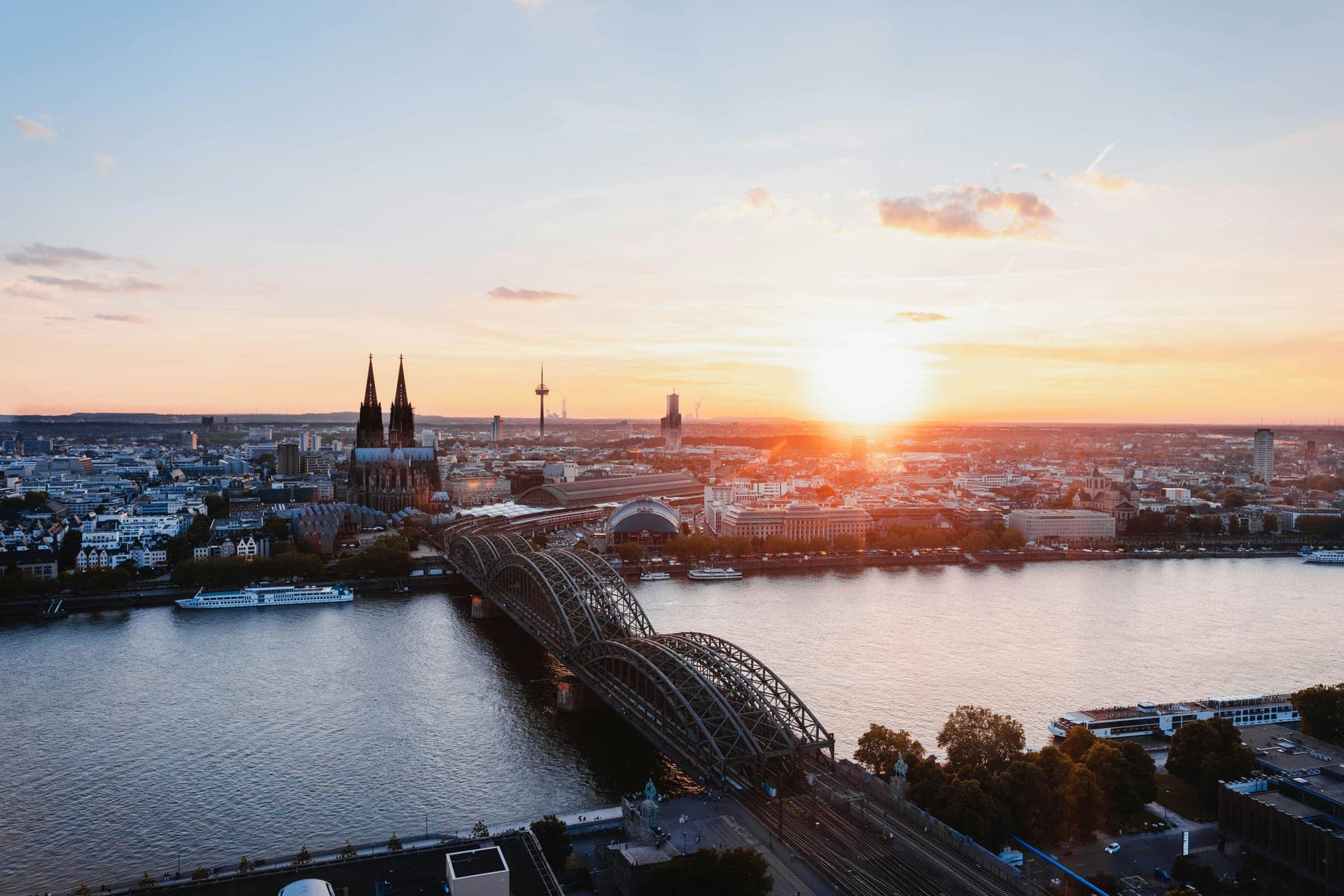
A city that keeps arriving
Cologne wears its history at street level. 12 Romanesque churches stand in a semicircle around the old town, the cathedral took 632 years to finish, and every February the city hands itself over to a parade of 74 carnival societies. This is a place that has always organised itself in associations. Its housing question is what that habit is worth in a market that no longer clears.
The stock counts 567,401 dwellings, and most of it is rented. Owner-occupiers hold 24.7%. Tenants occupy 73.7%, far above the German average. Two non-market blocks sit inside that majority. Cooperatives run about 7% of all dwellings, roughly 40,000 homes held by 28 societies in and around the city. GAG Immobilien, the housing company the municipality controls, owns 45,798 flats, or 8.1%. The remaining 58.6% belongs to private landlords.
- Owners
- Owner-occupier24.7%
- Renters
- Public & non-profit rental8.1%
- Cooperative7.0%
- Private rental58.6%
- Unclassified1.6%
- Unknown / Other1.6%
Social housing here is not a tenure at all. It is the Sozialbindung, a rent and allocation cap attached to a dwelling for as long as its public subsidy runs, and it expires on a fixed date. 6.6% of Cologne dwellings still carry one. The Mieterverein Köln, the city’s tenants’ association, counts 36,914 of them. Because those flats are scattered through the municipal, cooperative and private stock, the share can fall year after year while nothing visible changes on any street. About 45% of Cologne households earn little enough to qualify for one.
Each tier prices differently. Cooperative members pay a median €6.45 per square metre a month, net cold. The GAG stock averages €7.50. The qualifizierter Mietspiegel, the certified municipal rent index that governs existing leases, sits at €9.84. A new contract costs €15.10, and the Kreissparkasse market report put average asking rents in 2025 at €14.99. Furnished lets reach €25.10 and serviced flats €26.
- Cooperative
- Municipal (GAG)
- All-stock median (Mietspiegel)
- New contracts
- Furnished (gross)
- Serviced (gross, all-in)
Median monthly rent per square metre. The first four tiers are net cold; furnished and serviced are gross, which is why the gap overstates the like-for-like difference.
There is almost no slack to redirect. The 2022 census counted a residential vacancy rate of 2.5%, some 13,533 empty dwellings. The market-active figure is thinner still: the tenants’ association puts effective vacancy at 0.9%, against the 3% a functioning market is usually said to need. Offices hold no reserve either. Vacancy there runs at 6.1% across about 1 m² of floor space, the tightest of Germany’s seven largest office markets.
58,189 people crossed the city boundary to move in during 2023, and that flow keeps the market taut. A study of migration and housing by the Cologne-based Institut der deutschen Wirtschaft finds newcomers carrying a housing-cost burden of 1 to 2 percentage points above comparable residents paying similar rents (Migration und Wohnen). Output has swung violently. 2024 delivered 1,819 dwellings, a fall of 48.5% in a single year. 2025 rebounded to 4,623, the best figure in a decade, while permits slipped to 2,323. Set against that, the municipal housing framework puts total need at 66,000 dwellings by the end of 2029. Building costs about €2,450 per square metre before land, and residential land is priced at €1,100 per square metre. An empirica analysis of the shortage argues that cheap sitting leases and lightly occupied flats hold usable stock off the market even where it physically exists (Zu den Ursachen der Misere am Wohnungsmarkt).
The burden is not spread evenly, and the spread is the argument. Cologne renters spent 32.5% of household income on gross cold rent in 2023. For households below €2,000 a month the average was about 47%; for those on €4,000 to €6,000 it was roughly 21%. The alarm is no longer confined to the bottom of that range. The tenants’ association closed 2025 with 70,260 members, a record. The post-war estate at Chorweiler tells the same story from the other end. A generation of planners wrote it off; research now reads such estates as one of the last reserves of genuinely cheap rent (Large Housing Estates in Germany’s Major Cities).
The balance on the housing market has come completely apart.One slice of that market prices to cost rather than to whatever a bidder will pay. It is also the oldest thing in Cologne housing that still works.
The seventh that prices to cost
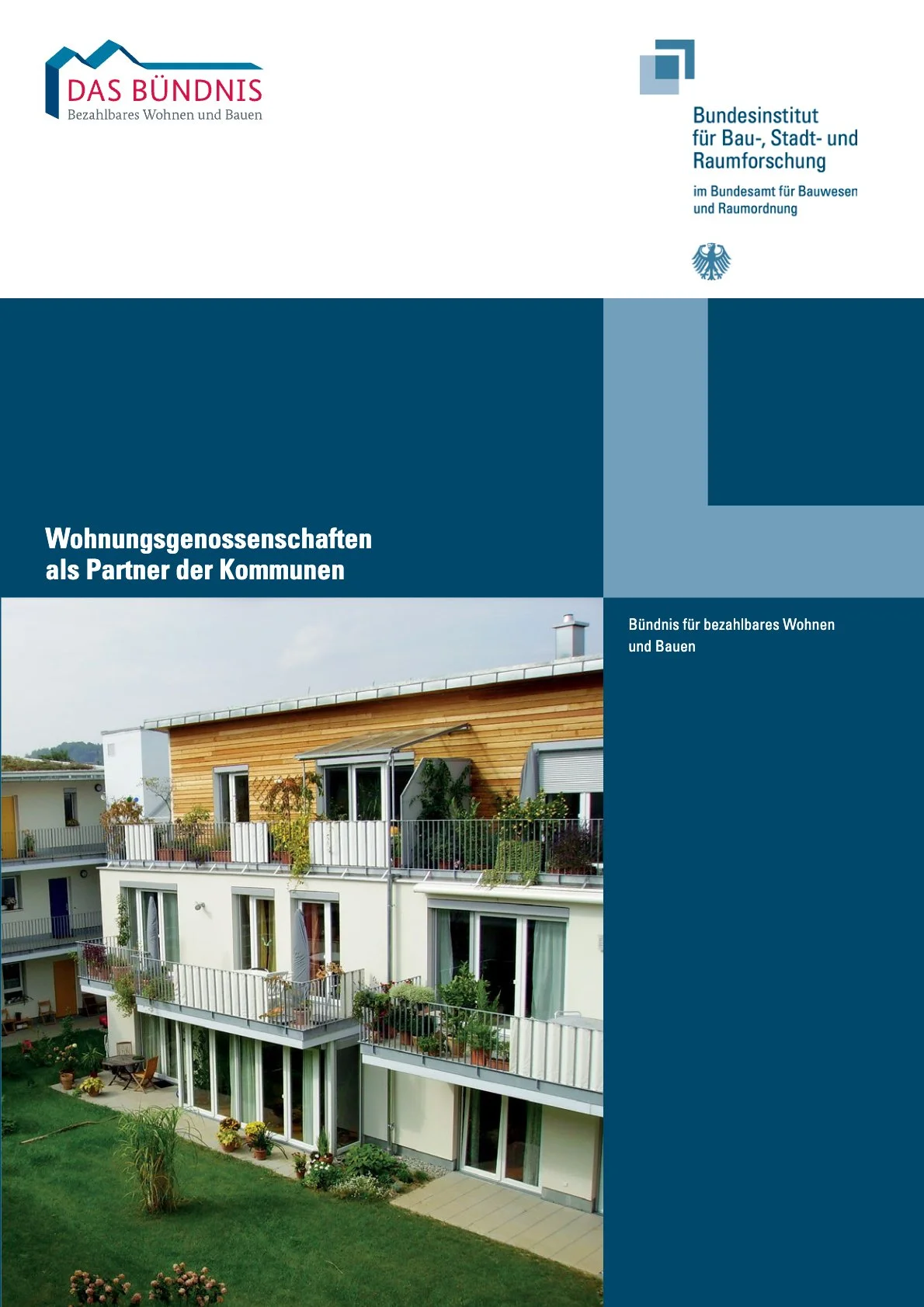
German cooperatives rent to their members; they do not sell to them. A member buys a Genossenschaftsanteil, the share that confers membership and with it a lifetime right to occupy a flat. The share is repaid when the member leaves, so the home never becomes a tradable asset, and the rent is set to cover cost rather than to track what the flat would fetch. Every Cologne society is an eingetragene Genossenschaft, the registered legal form in which each member holds one vote however many shares they own. A federal BBSR review of cooperatives as partners of municipalities (Wohnungsgenossenschaften als Partner der Kommunen) describes the bargain plainly: security and a below-market rent, bought with the surrender of any capital gain.
The names date the movement. Wohnungs-Genossenschaft Köln 1896, Gemeinnützige Wohnungsgenossenschaft 1897 Köln rechtsrheinisch and Kölner Baugenossenschaft von 1920 still trade under the years they were founded. They arrived as Cologne industrialised on both banks of the Rhine, when the alternative to a speculative tenement was a society you joined and paid into. They survived two wars, the Wohnungsgemeinnützigkeit regime that governed non-profit landlords from the 1930s, and its abolition in 1990, which stripped the tax privileges but left the estates in collective hands. That continuity is why the cheapest rents in the city sit in buildings nobody has been able to sell.
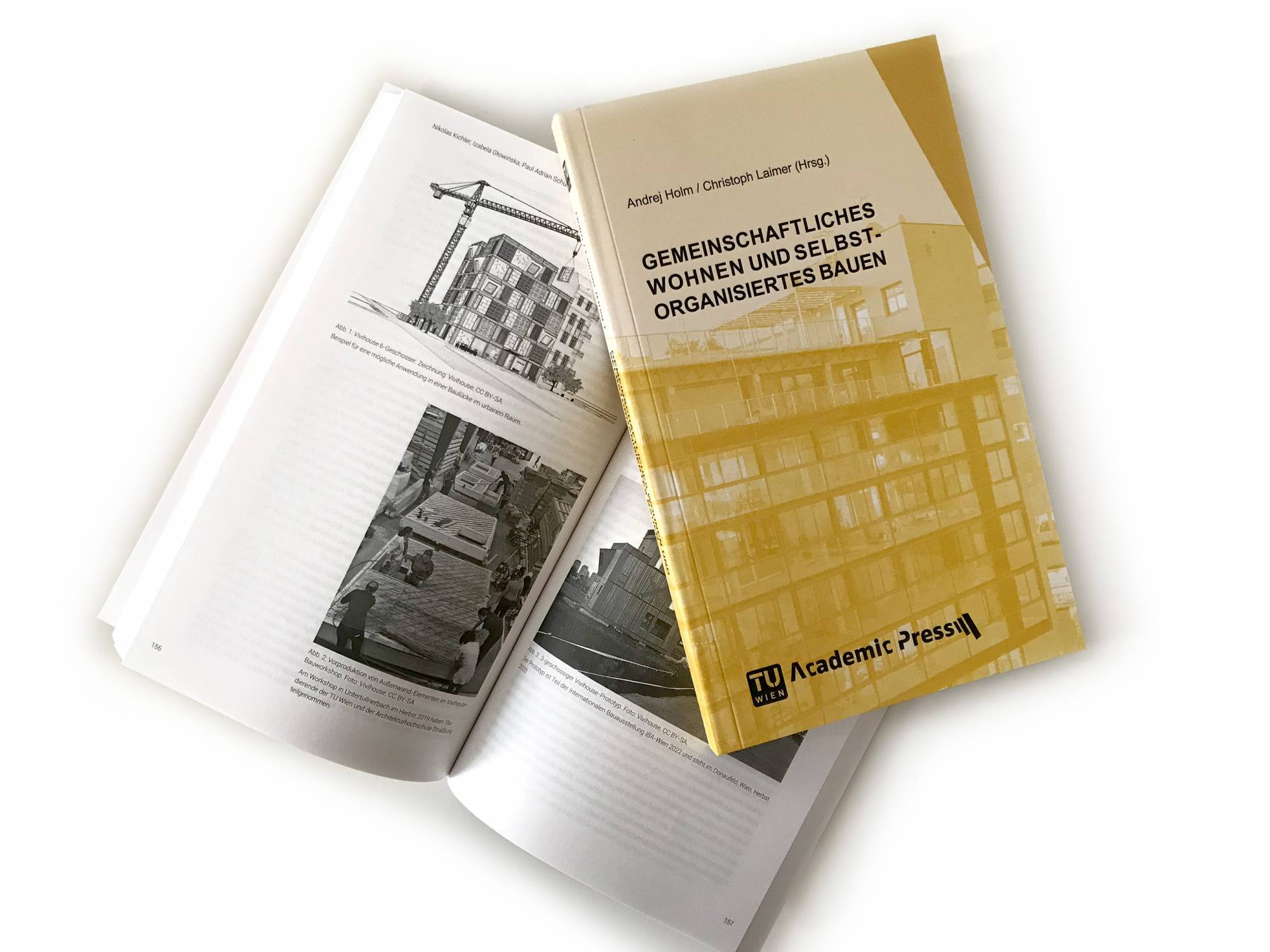
The sector today is four things, not one. Traditional societies such as Erbbauverein Köln, Wohnungsgenossenschaft Köln-Sülz and Wohnungsgenossenschaft am Vorgebirgspark manage inherited estates, an ageing membership and a retrofit bill. A second cluster develops at scale: the Kölner Wohnungsgenossenschaft alone runs a pipeline from Clouth.Tor 2 in Nippes to a 404-home KlimaQuartier.NRW scheme. A third is self-organised, the Baugruppe that turns itself into a cooperative in order to hold what it has built, which is how WoGe Köln eG came into being at the Clouth works. A fourth is federative, the regional association of Cologne housing cooperatives, which negotiates on behalf of the whole group. Their constraints point in opposite directions. The old societies are equity-rich and land-poor; the new ones have land offers and no balance sheet deep enough to carry them. A TU Berlin study of cooperative project development as a housing commons (Genossenschaftliche Projektentwicklung von Wohnraum-Commons) traces how thinly capitalised the third group is at the moment it most needs money. A Vienna study of self-organised building (Gemeinschaftliches Wohnen und selbstorganisiertes Bauen) reaches the same point from the architecture side.
What has changed is how the city treats them. Cologne now reads cooperatives as delivery instruments rather than applicants. A BBSR survey of communal housing forms among cooperatives (Neues Wohnen: Gemeinschaftliche Wohnformen bei Genossenschaften) urged that shift a decade ago. A comparative review of cooperative-housing policy (International policies to promote cooperative housing) finds it works only when land and finance move together. Municipal plots now leave on Erbbaurecht, a ground lease that keeps the freehold with the city. They are awarded on the strength of a submitted concept rather than the size of the cheque.
Three levels and one queue
Torsten Burmester took office as Oberbürgermeister, the directly elected head of the city, on 28 September 2025 with 53.48% of the runoff vote. In December 2025 he signed Cologne into Mayors for Housing, the alliance of European mayors arguing that housing is a social right and that cities belong inside EU housing policy rather than downstream of it. The instruments he inherited are older than his mandate. The Kooperatives Baulandmodell, the city’s binding land-use rule, obliges any scheme creating more than 1,800 m² of residential floor space, roughly 20 flats, to deliver 30% of its units as publicly subsidised housing. Cologne’s own Wohnraumförderung budget, the municipal subsidy pot, runs at €100 million a year at minimum, and the administration concedes that more flats leave price control each year than enter it.
Cost is the argument the administration itself has opened. In August 2025 it asked developers, planners, lawyers, builders and lenders to design a model for cost-reduced housing by spring 2026, targeting savings of up to 30% of construction costs. That is a deregulatory reading of the crisis, and it is being advanced by the city, not against it.
The high standards for building homes mean that new housing stays affordable for average earners only with state subsidy.Cologne holds fewer of the controls than the argument suggests. Tenancy law and planning law are federal. The Bundestag passed the Bau-Turbo on 9 October 2025, inserting a new §246e into the Baugesetzbuch, the federal planning code. Councils may now waive planning rules for housing schemes, and the clause runs to the end of 2030. The same coalition extended the Mietpreisbremse, the cap on rents in newly signed leases in tight markets, to the end of 2029. Subsidy is regional. North Rhine-Westphalia approved €2.4 billion for 13,356 dwellings in 2025, paid out through NRW.BANK, the state development bank. Land is the municipal lever, and it is the one Cologne actually pulls.
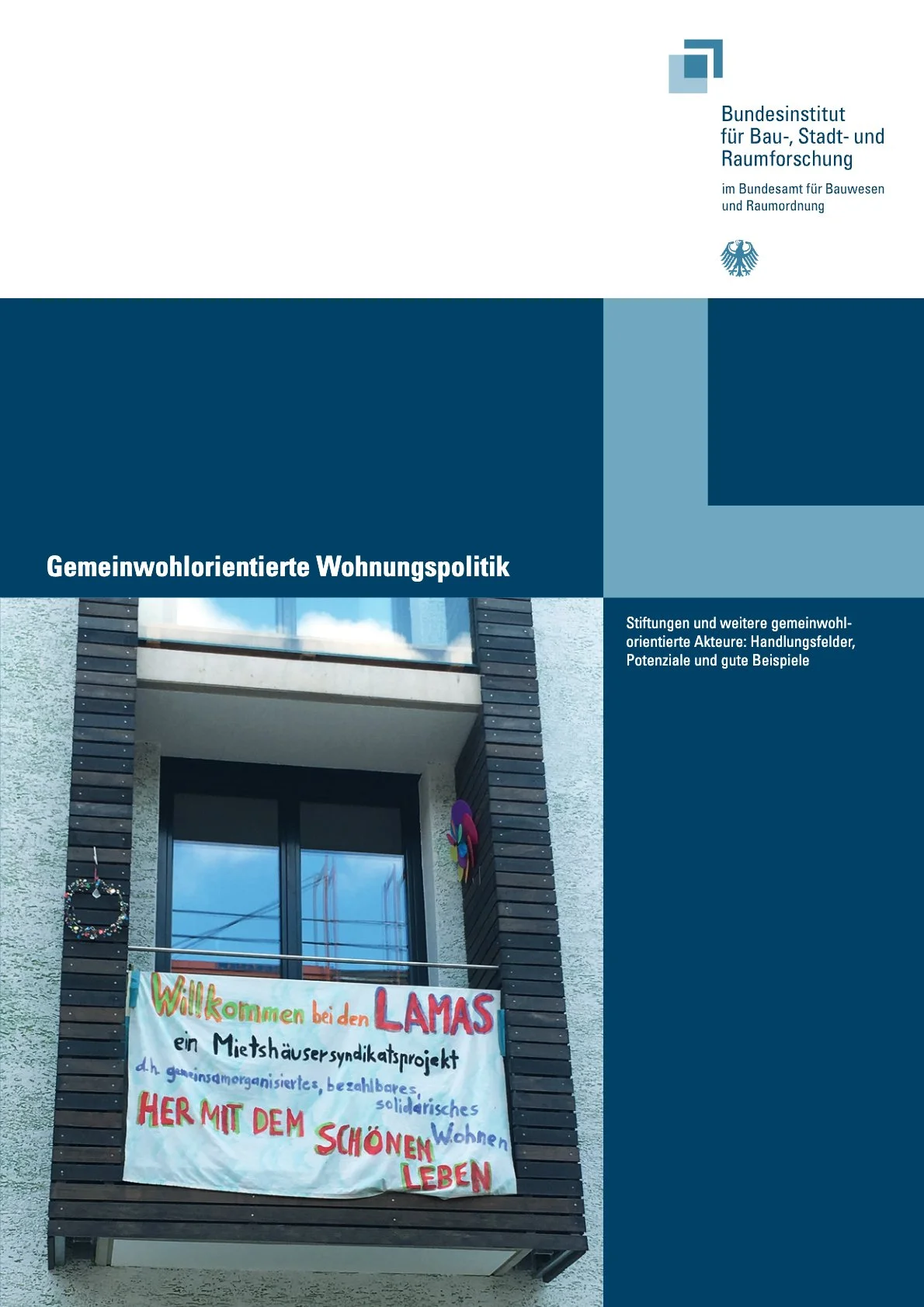
Housing construction is under considerable pressure nationally and across the state. Rising build costs, high interest rates and economic uncertainty are making investors hold back in many places.Concept-led allocation is the sharpest of the municipal tools. On 16 May 2024 the council resolved that municipal plots for community housing projects be awarded on submitted concepts and that the commitments be written into the ground lease, where they bind permanently rather than lapsing with a sale. A Büro für gemeinschaftliche Wohnbauprojekte, the in-house office for community-led housing opened in early 2022, walks groups through that route, with the advisory body MitStadtZentrale handling first contact and legal-form questions. A BBSR study of common-good housing policy (Gemeinwohlorientierte Wohnungspolitik) sets out why the combination of ground lease and concept test, rather than subsidy on its own, is what makes a low rent permanent.
On empty space, Cologne enforces rather than converts, because what stands empty here is flats rather than offices. The Wohnraumschutzsatzung, the municipal housing-protection by-law, took effect on 1 July 2021 under the state Wohnungsstärkungsgesetz. It treats leaving a dwelling empty, demolishing it or letting it by the night as Zweckentfremdung, the misuse of housing, punishable by fines of up to €500,000. The Verwaltungsgericht Köln, the city’s administrative court, barred short-term letting of two old-town flats in a ruling of 13 June 2024, and NRW now requires a registration number on every listing. An estimated 1,006 Cologne dwellings operate as full-time short-term rentals. The office reserve that Frankfurt and Düsseldorf are converting barely exists here, as the federal building ministry survey of national office vacancy (Schriftlicher Bericht des BMWSB zum deutschlandweiten Büroleerstand) makes clear, so the reuse pipeline runs through industrial heritage instead. Research on under-occupied dwellings across the European building stock (Housing for millions without new buildings?) and on reclaiming obsolete urban space for common-good development (Obsolete Stadt) both point the same way.
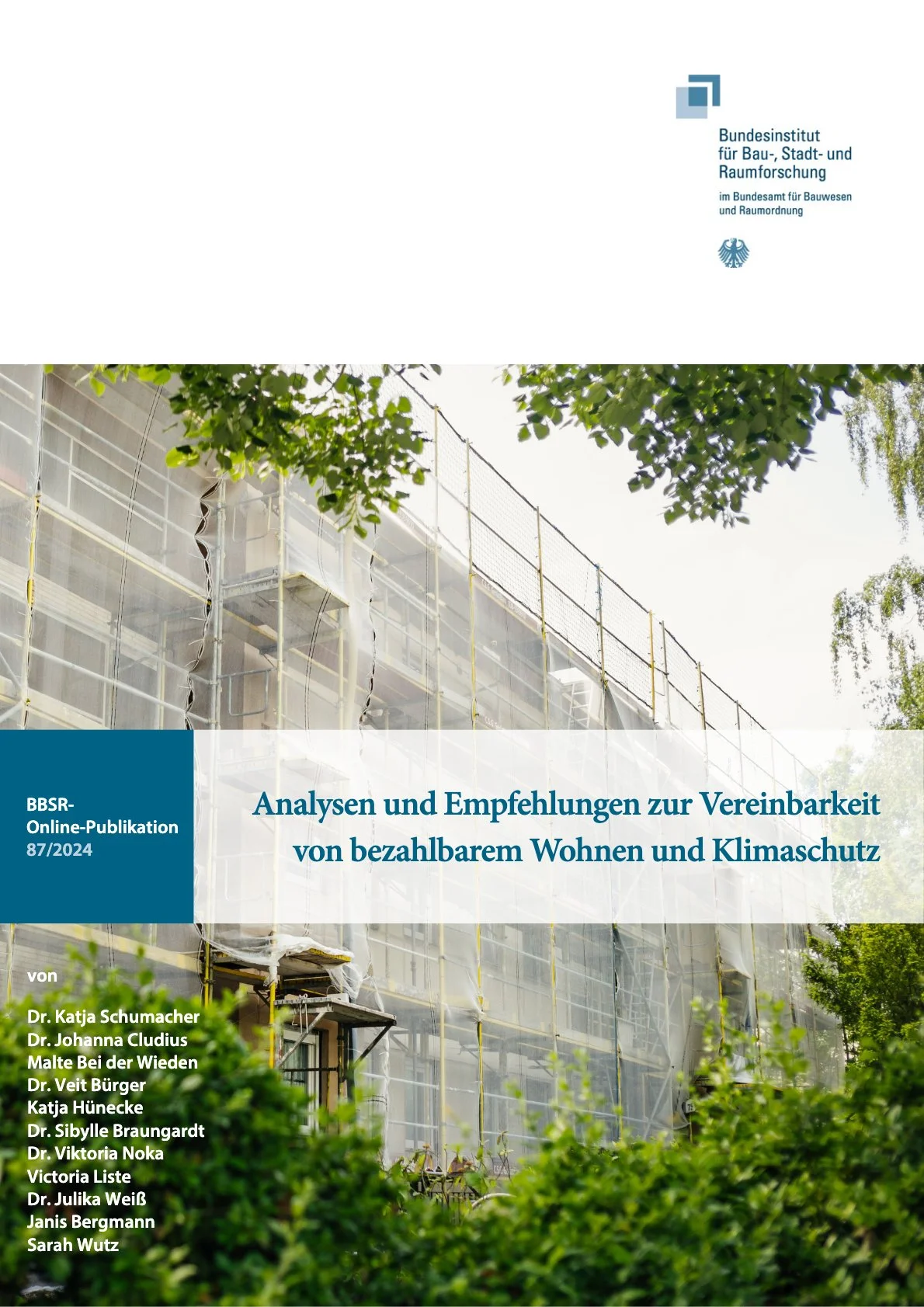
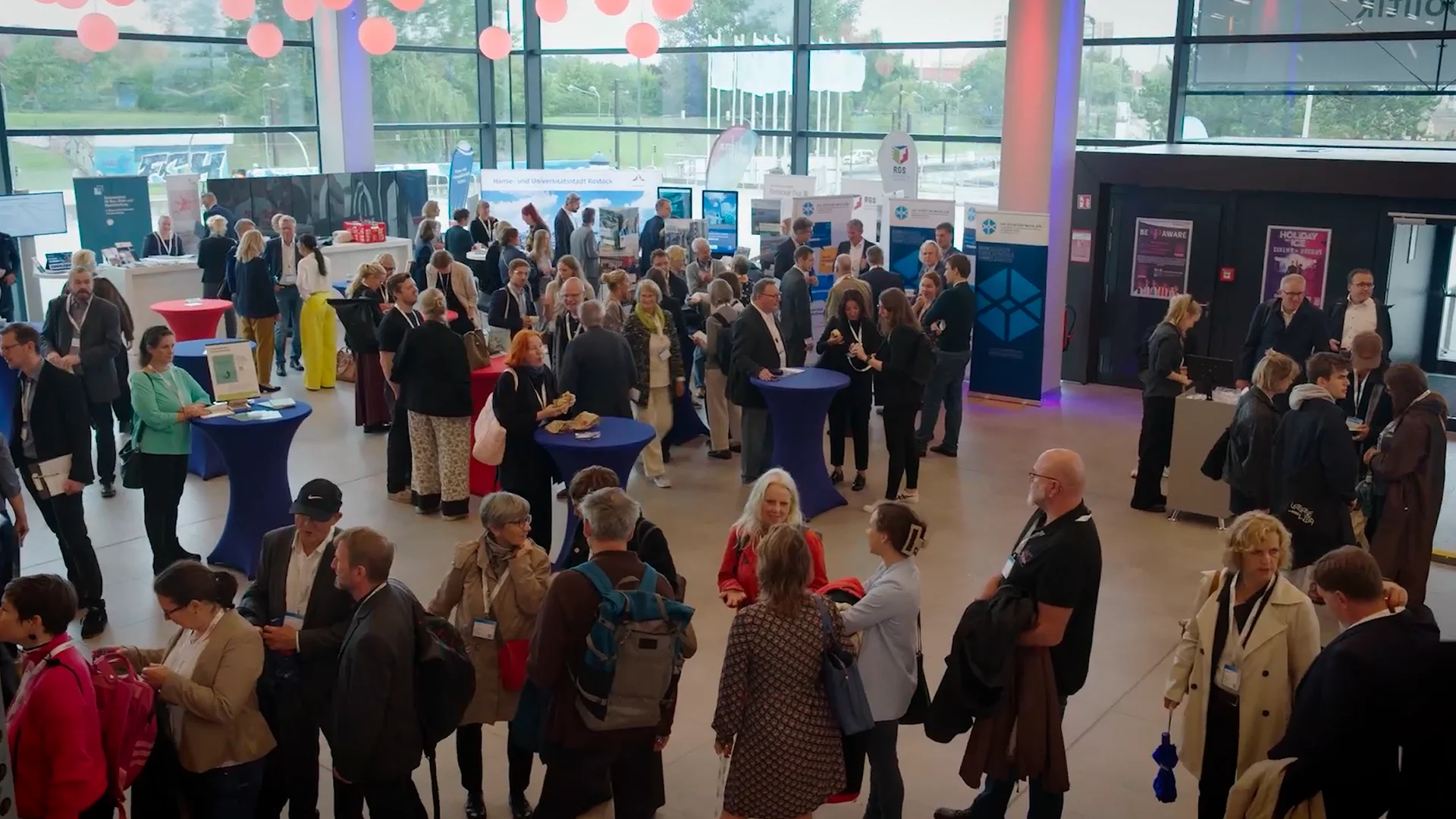
Climate rules now decide what a refurbishment costs, and they are converging on the same owners. The Gebäudeenergiegesetz, the German building energy act, and the recast EU Energy Performance of Buildings Directive push existing stock towards deep retrofit, while the ETS2 carbon price on heating fuels lands from 2027. A Bertelsmann Stiftung analysis warns that ETS2 will fall hardest on low-income tenants in badly insulated buildings (Heating Up Inequality?), and a BBSR study on reconciling affordable housing with climate protection (Vereinbarkeit von bezahlbarem Wohnen und Klimaschutz) reaches the conclusion Cologne’s instruments already assume: landlords who are not selling are the only ones whose time horizon fits a retrofit. NRW funds that through its Klimaschutzsiedlung and KlimaQuartier.NRW programmes. The 19th Bundeskongress Nationale Stadtentwicklungspolitik, convened by the BMWSB, the federal ministry for housing, urban development and building, met in Cologne from 14 to 16 September 2026 with this argument on the floor.
There is hardly any affordable housing left in Cologne for young families, apprentices, students and pensioners.- 11 February 2014[source]
Stadtentwicklungskonzept Wohnen adopted
The council sets the framework for municipal housing policy that still governs land allocation and subsidy targets.
- 1 July 2021[source]
Wohnraumschutzsatzung in Kraft
Cologne housing-protection by-law takes effect alongside the state Wohnungsstärkungsgesetz. Leaving a flat empty, demolishing it or letting it short-term becomes an offence carrying fines of up to 500.000 Euro.
- 16 May 2024[source]
Grundsatzbeschluss zur Konzeptvergabe
The council resolves to allocate municipal land for community housing projects on submitted concepts, with the commitments secured in the Erbbaurecht contract.
- 28 September 2025[source]
Torsten Burmester elected Oberbürgermeister
The SPD candidate wins the runoff with 53,48 Prozent on a turnout of 44,72 Prozent, naming affordable housing as his first priority.
- 30 October 2025[source]
Bau-Turbo, §246e BauGB, in force
The Bundestag adopts the Bau-Turbo on 9 October 2025. Councils may set aside planning rules for housing schemes; the clause expires on 31 December 2030.
- 23 April 2026[source]
Completions at a ten-year high, permits falling
4.623 Wohnungen were completed in 2025 against 1.819 the year before, while approvals fell to 2.323 and the Bauüberhang dropped to 7.821.
- End of 2029[source]
The stated target, and the rent cap expiry
The municipal framework identifies a need for 66.000 Wohnungen by the end of 2029, the same date on which the federal Mietpreisbremse is currently due to lapse.
- 2030[source]
Deutzer Hafen cooperative block due
Construction of the Kölner Wohnungsgenossenschaft quarter at the Deutzer Hafen is scheduled from early 2028 to 2030, delivering 326 dwellings of which 78 are cooperative.
Municipal, state and federal decisions that set the terms of the current argument.
From the rubber works to the foundry
The Clouth-Quartier in Nippes is the reference everyone in Cologne reaches for. The Franz Clouth rubber works ran on the site for close to 140 years until production stopped in 2005. The ground now carries about 1,200 dwellings for roughly 3,000 residents across 14.5 hectares, finished in 2021. Eight plots went to Baugruppen, the self-organised building groups that commission their own block, rather than to developers. A UCL study of group-build housing in Germany (Self-build communities: the rationale and experiences of group-build housing) explains what that allocation buys a city: buildings designed by the people who will live in them, at a cost that skips the developer margin.

The Kölner Wohnungsgenossenschaft block on the same site shows what a cooperative does with a plot once it has one. It holds 88 dwellings, of which 78 are publicly funded and price-controlled, financed with €11.1 million of NRW.BANK promotional loans and completed in 2023. Every flat is barrier-free. Three are laid out for wheelchair users, two assisted-living households for adults with intellectual disabilities operate around the clock, and the Kölner Zentrum für selbstbestimmtes Leben runs a disability advice office in the building, beside a neighbourhood café and a shared garden. Rooftop photovoltaics supply tenant electricity and 32 charging points.
Clouth.Tor 2, the same cooperative’s next project on the site, went into construction in April 2025 and is due in autumn 2027. It adds 75 dwellings, with public funding covering a little under half the living space. That is the unglamorous part of the story and the part that compounds: a society that has finished one building on a site is the cheapest possible developer of the second.
The Deutzer Hafen is the scale test. The Kölner Wohnungsgenossenschaft signed the purchase contract on 9 June 2026 with Erbbauverein Köln eG and Kreer Development for a 6,178 m² site carrying 326 dwellings, 78 of them cooperative, with about 30% of the whole publicly funded. Construction runs from early 2028 to 2030 and includes a four-group nursery. Two cooperatives and a private developer on one plot is precisely the mixed delivery the city land rules were rewritten to produce.
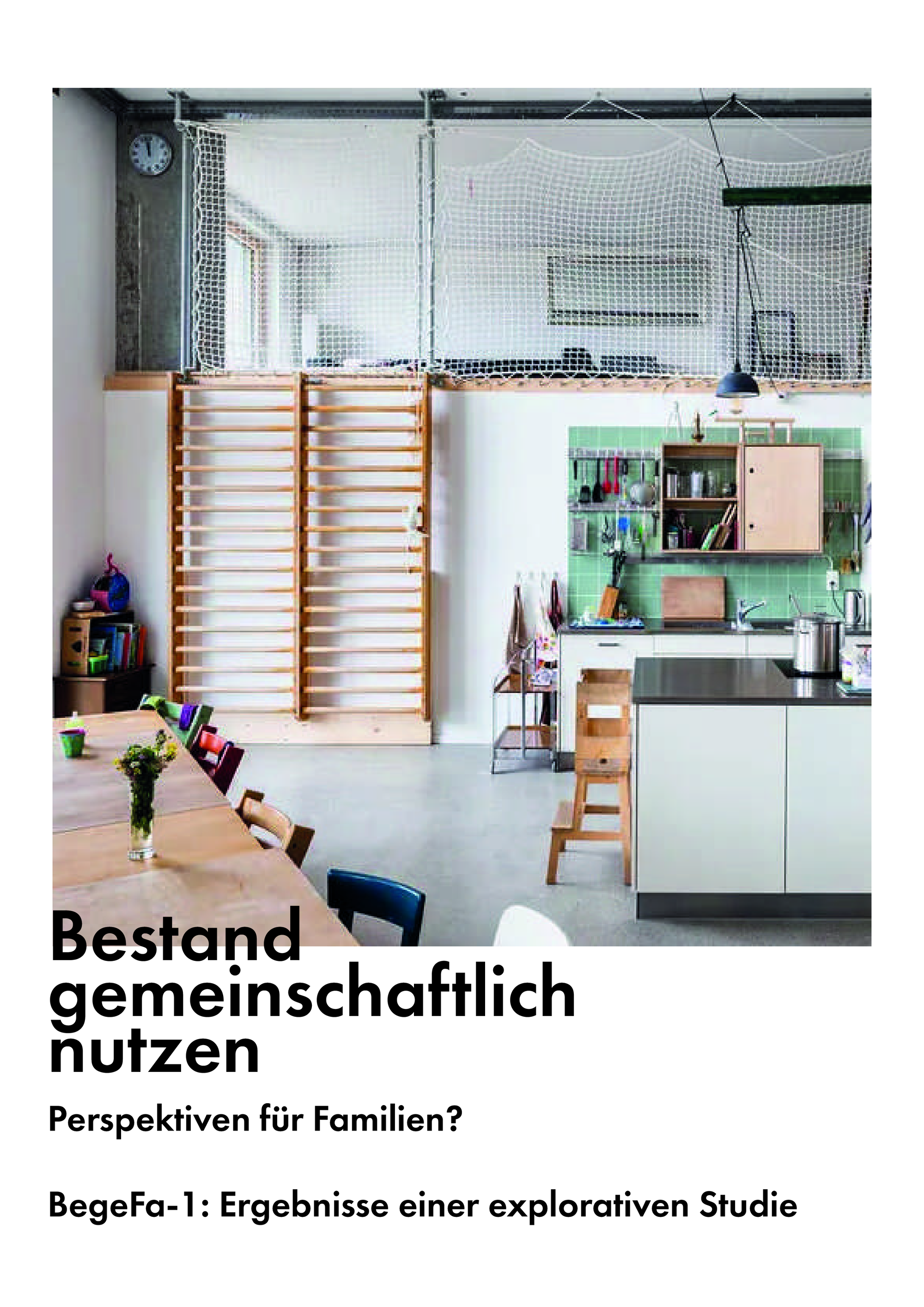
The Otto-Langen-Quartier in Mülheim is the unresolved one, and the most instructive. Five hectares of the former Deutz AG foundry, much of it listed, were earmarked in a 2021 council resolution for a common-good, mixed-use quarter of culture, work and housing, with up to 400 dwellings and a 30% subsidised share. A Europe-wide tender opened in early 2025 and was suspended that September for want of bidders. The artists’ collective Raum 13, evicted from the halls and campaigning for years to return, has become the reason the site is still being argued over rather than quietly sold. Research on collaborative activation and re-use of existing buildings by non-profit actors (Collaborative Activation and Re-Use) and on using existing stock collectively for families (Bestand gemeinschaftlich nutzen) describe the method this site keeps failing and retrying.
The Stegerwaldsiedlung in Mülheim answers a different question: what to do with what already stands. The estate dates from 1955, and its retrofit put 6,100 m² of photovoltaic modules across 16 residential blocks and cut primary energy demand from as much as 180 kWh per square metre to between 30 and 40. A self-learning controller matches generation, storage and weather forecasts. It carries climate-protection estate status under the NRW programme, and it happened because the owner intends to still be there in a generation.
Poller Damm is the route being tested right now. The city offered two building fields on Eva-Zobel-Straße to a housing cooperative on Erbbaurecht, each sized for about 80 residents, awarded on concept quality at a fixed price, with applications closing on 7 October 2025. Groups had to show housing mix, shared space and a plausible neighbourhood life rather than the highest bid.
Behind all of it sits the Büro für gemeinschaftliche Wohnbauprojekte, two municipal officers whose stated job is to act as advocates for building communities inside the administration. Their current file covers Poller Damm in tender, Alpener Straße in Ehrenfeld as cooperative housing with an inclusive component, and Am Petershof, a socio-cultural centre with collective housing where the allocation is already done. Two people is a thin institution. It is also the difference between a land policy that exists on paper and one that produces buildings.
A city that spent centuries on one cathedral is not short of patience, and patience turns out to be the binding input. A foundry still waiting for the right buyer. A rubber works that took two decades to become a district. A 1955 estate rebuilt to a standard nobody demanded of it. None of these were quick, and every one of them is cheaper to live in than what the market would have put there. Cologne has the method. It does not yet have enough of it.
References
Statistics19Click on any number to see the source
Housing market
Tenure & affordability
Cooperative, social & public
Adaptive reuse & vacancy
Population & migration
From our library17
- Migration und Wohnen: Ökonomische Effekte und soziale Implikationen — Knowledge
- Zu den Ursachen der Misere am Wohnungsmarkt — Knowledge
- Large Housing Estates in Germany's Major Cities: A Last Bastion of Affordable Housing? — Knowledge
- Bündnis für bezahlbares Wohnen und Bauen – Wohnungsgenossenschaften als Partner der Kommunen — Knowledge
- Genossenschaftliche Projektentwicklung von Wohnraum-Commons — Knowledge
- Gemeinschaftliches Wohnen und selbstorganisiertes Bauen — Knowledge
- Neues Wohnen – Gemeinschaftliche Wohnformen bei Genossenschaften — Knowledge
- International policies to promote cooperative housing — Knowledge
- Gemeinwohlorientierte Wohnungspolitik - eine Studie — Knowledge
- Schriftlicher Bericht des BMWSB zum deutschlandweiten Büroleerstand — Knowledge
- Housing for millions without new buildings? An analysis of the theoretical housing potential of under-occupied dwellings in the European building stock — Knowledge
- Obsolete Stadt - Raumpotenziale für eine gemeinwohlorientierte, klimagerechte und koproduktive Stadtentwicklungspraxis in wachsenden Großstädten — Knowledge
- Heating Up Inequality? Socio-spatial impacts of ETS2 on European housing and cohesion — Knowledge
- Analysen und Empfehlungen zur Vereinbarkeit von bezahlbarem Wohnen und Klimaschutz — Knowledge
- 19. Bundeskongress Nationale Stadtentwicklungspolitik. — Event
- Self-build communities: the rationale and experiences of group-build (Baugruppen) housing development in Germany — Knowledge
- Bestand gemeinschaftlich nutzen: Perspektiven für Familien? (BegeFa-1) — Knowledge
Further sources28
- Köln hat Torsten Burmester zum neuen Oberbürgermeister gewählt — Stadt Köln · 2025-09-29
- Die meisten fertiggestellten Wohnungen seit zehn Jahren — Stadt Köln · 2026-04-23
- Auswertung der Kölner Bautätigkeitsstatistik 2024 — Stadt Köln · 2025
- Kooperatives Baulandmodell Köln — Stadt Köln · 2024
- Wohnraumschutz und Zweckentfremdungsverbot — Stadt Köln · 2026
- Stadtentwicklungskonzept Wohnen — Stadt Köln · 2026
- Büro für gemeinschaftliche Wohnbauprojekte — Stadt Köln · 2026
- Grundstücke für gemeinschaftliches Wohnen in Köln-Poll — Stadt Köln · 2025-04
- Otto-Langen-Quartier — Stadt Köln · 2025
- Bundestag verabschiedet den Bau-Turbo — Deutscher Bundestag · 2025-10-09
- Der Förder-Boom für bezahlbare Mieten und Eigentum geht weiter — Land Nordrhein-Westfalen · 2026-02-02
- Geförderter inklusiver Genossenschaftswohnraum in Köln — NRW.BANK · 2024
- Clouth Quartier — moderne stadt GmbH · 2021
- Aktueller Neubau der Kölner Wohnungsgenossenschaft — Kölner Wohnungsgenossenschaft eG · 2026
- Die Wohnungsbaugenossenschaften Köln: Mitgliedsgenossenschaften — Die Wohnungsbaugenossenschaften Köln · 2026
- Verbund Köln und Umgebung — Wohnungsbaugenossenschaften Deutschland · 2024
- Stegerwaldsiedlung in Köln: Klimaschutz mit Algorithmus — BDEW · 2023
- Kölner Grundsatzbeschluss zur Konzeptvergabe — MitStadtZentrale · 2024-05-16
- Mieten in Köln: Mieterverein kritisiert OB Burmester — t-online Köln · 2026-01-08
- So teuer ist Wohnen in Köln geworden — YES WE KÖLN · 2023-11-12
- Wohnungspolitik braucht höchste Priorität in Köln — DGB Nordrhein-Westfalen · 2024-06-15
- Wohnungsbau in Köln soll bis zu 30 Prozent günstiger werden — Stadt Köln · 2025-08-13
- Stadt Köln tritt europäischer Allianz Mayors for Housing bei — Stadt Köln · 2025-12
- Otto&Langen-Quartier — raum13 · 2026
- Wohnraumförderung — Stadt Köln · 2024-04-09
- Baugeschichte des Kölner Doms — KölnTourismus · 2026
- 12 Romanesque Churches in Cologne — KölnTourismus · 2026
- Zug in Zahlen — Festkomitee Kölner Karneval · 2026