Two in three rent, and the newcomers pay most
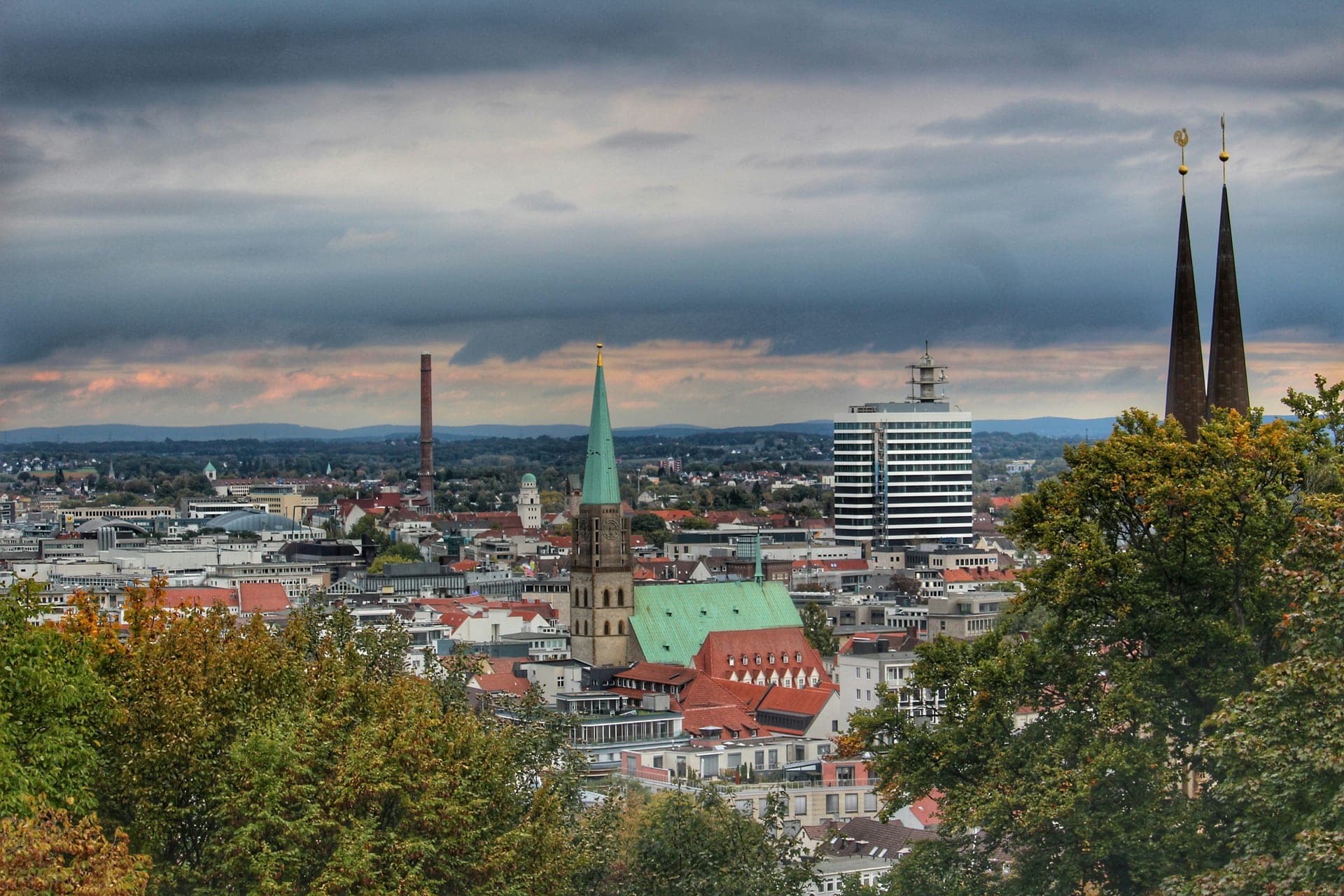
For a quarter of a century Bielefeld was the butt of a joke that it does not exist. In 2019 the council offered €1 million to anyone who could prove it, and nobody collected. The real city is a former linen town of 331,419 people on the ridge of the Teutoburg Forest. It hosts a large university, the Bethel welfare foundation and a cluster of family-owned manufacturers. Those employers keep people arriving, and finding them a flat has become the city's more serious story.
Two in three households rent. The census puts 65.1% of households in rented homes and 33.3% in homes they own, a higher ownership rate than Frankfurt's or Berlin's. Private landlords hold 55.9% of the stock. Public housing accounts for 7%, about 12,000 flats, and almost all of it belongs to one municipal company, BGW (Bielefelder Gemeinnützige Wohnungsgesellschaft). The cooperative share is recorded at 2.2%, or about 3,300 flats. That low-confidence estimate looks too small, because Freie Scholle alone reports 5,238 flats.
- Owners
- Owner-occupier33.3%
- Renters
- Public & non-profit rental7.0%
- Cooperative2.2%
- Private rental55.9%
- Unclassified1.6%
- Unknown / Other1.6%
Social housing is a separate layer, not a landlord. In Germany it means a Mietpreisbindung (a rent and income cap attached to a publicly funded flat for a fixed term). In Bielefeld 4.5% of dwellings carry one, spread across the municipal, cooperative and private stock. About a third of BGW's own flats are subsidised, according to its 2025 annual report. On income alone, 50% of households would qualify. The covenants also run out. The city's housing report projected the bound stock falling by more than 30% by 2028.
Rents look mild next to Munich or Hamburg, but the ladder is steep. Cooperative members pay around €5.90/m² net cold (rent before heating and service charges). Public tenants pay about €6.50/m², and the median across all existing leases is €7.25/m². Anyone signing a new contract today faces €10.35/m². Furnished and serviced flats, priced gross with utilities and furniture included, reach €20.35/m². Movers, students and newcomers feel the gap first.
- Cooperative
- Public housing (BGW)
- All-stock median
- New contracts
- Furnished / serviced (gross)
Net-cold monthly rent per square metre by tier (furnished is gross, all-in). The cooperative and municipal floor sits close to the all-stock median; a new private contract costs well over half as much again as a cooperative flat.
Some homes sit empty even so. The 2022 census counted a vacancy rate of 3.2% and about 1,400 empty residential buildings. A 2025 study by the Pestel Institute, reported in a Westfalen-Blatt piece on the city's missing flats, found 2,320 flats empty for a year or more, and warned that such homes rarely return to the market. BGW's own vacancy is just 1.64%. Commercial space is a smaller issue than in the big office cities: about 0 m² of retail and commercial floor space stands vacant. The largest empty sites are two former British Army barracks.
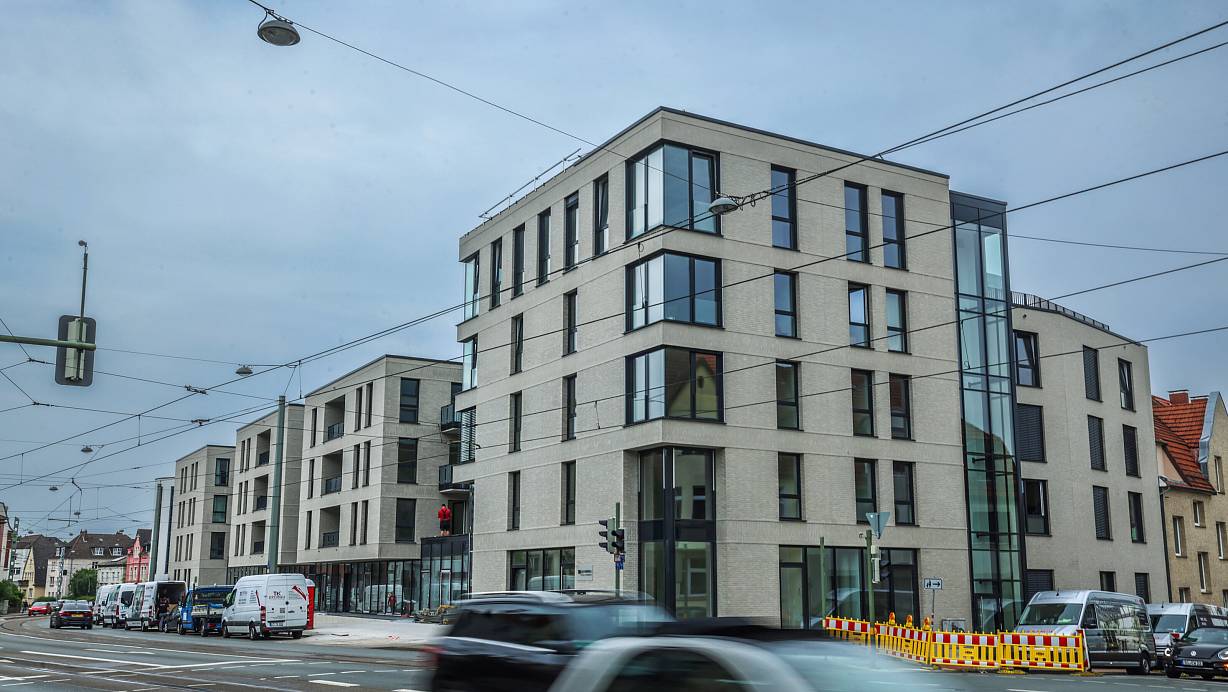
Demand keeps coming. Around 18,000 people move to Bielefeld each year, and the Pestel study puts the shortfall at 3,600 flats, with 1,380 new ones needed each year. Building has slowed across the state. The VdW Rheinland Westfalen's 2026 survey (the regional federation of housing companies and cooperatives) counted 37,185 completions in North Rhine-Westphalia in 2025, against a need of about 46,000. Building now costs about €2,450/m², and a July 2026 report on the state's construction slump describes fresh material and financing shocks since February. Bielefeld also went without a rent brake from July 2020 until March 2025.
Who carries the strain? An estimated 26.1% of households spend an excessive share of income on housing. Low-income tenants, students and older people on small pensions are most exposed. But local reporting suggests the pressure now reaches people in work. In a 2024 Westfalen-Blatt report, the regional tenants' association, Mieterbund Ostwestfalen-Lippe, pressed for the rent brake's return. Nationally, the Deutscher Mieterbund's Mietenreport 2026 found that 29% of tenants fear they will not manage their rent in future.
The working population can barely afford the rent any more.Against that shortage, Bielefeld holds an unusual asset: a cooperative tradition born in a dispute over a gym, whose largest society now has 8,254 members.
From a gymnasts’ protest to 8,000 members
Bielefeld's cooperatives are rental cooperatives of the classic German kind. A member buys Genossenschaftsanteile (cooperative shares, repaid on leaving) and gains a lifelong right to occupy a flat. They pay a Nutzungsgebühr (a usage fee set to cover costs, not to earn a market return) instead of rent. There is no personal equity to sell, and each member has one vote. At Freie Scholle the average fee is €6.86/m². Its 2025 surplus let it pay about €618,000 in interest on members' shares. Members elect a Vertreterversammlung (a representative assembly) every four years.
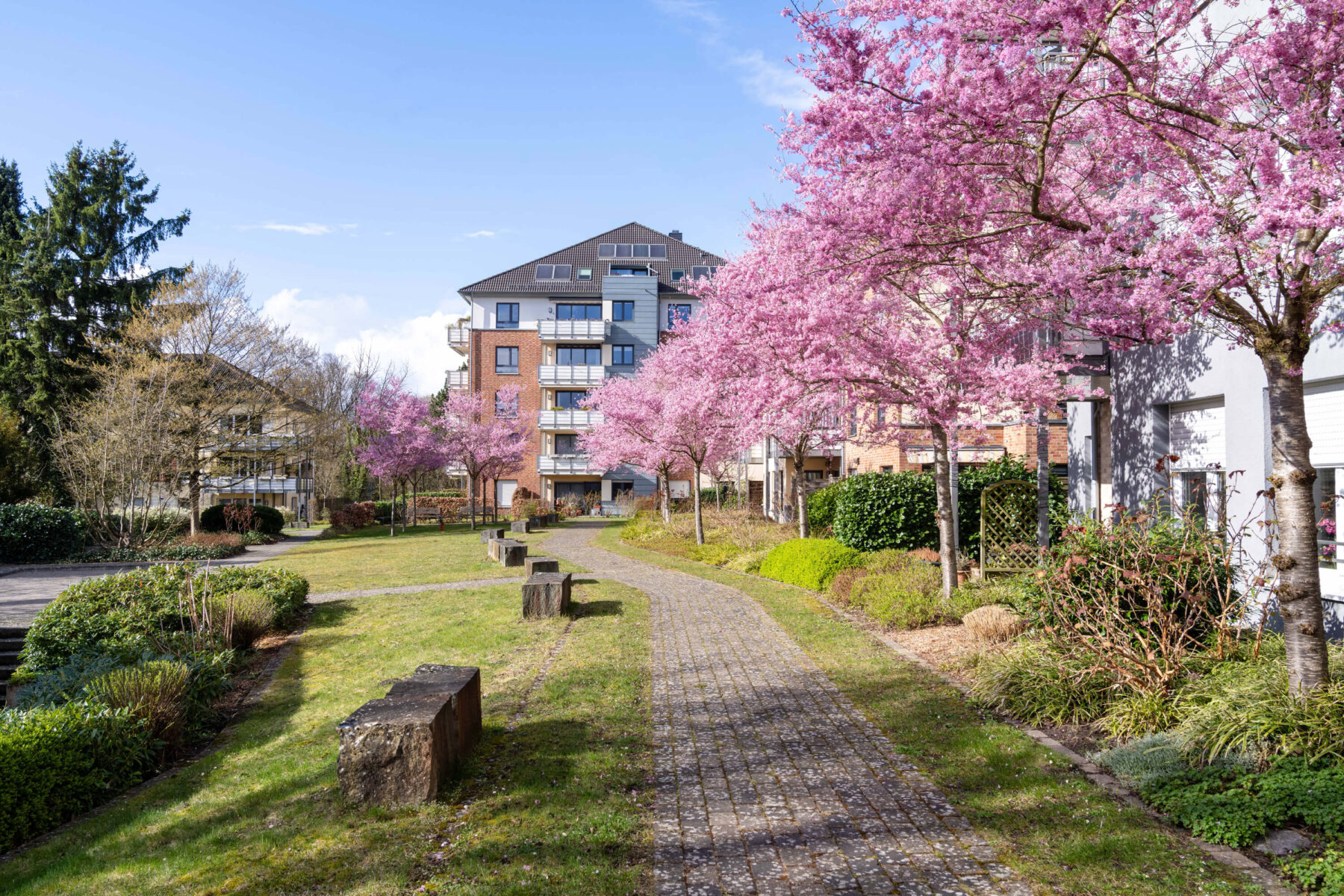
The tradition began with gymnastics. On 21 June 1911 the Freie Turnerschaft, a workers' sports club, founded a building society after the city barred it from municipal gyms. It meant to build a hall. From 1914 it built housing instead, starting with 138 flats at Niedermühlenhof with running water and electricity. In the 1920s the architect Gustav Vogt designed its red-brick estates at Heeper Fichten and Im Siekerfelde. The Nazis brought the society into line in 1933. After 1945 it helped rebuild a city whose population had almost doubled with refugees. The same need produced Sennestadt, Hans Bernhard Reichow's 1956 planned town, designed for about 11,000 people.
Today the sector falls into two clusters. The first is the traditional societies. Freie Scholle is the largest, and the Gemeinnützige Baugenossenschaft Brackwede (gbb) runs more than 1,750 flats in the south of the city. Smaller societies such as the GSWG in Senne complete the list. Their challenges are shared: ageing members, 1960s blocks that are costly to bring up to climate standards, and building costs that make new flats hard to price. Freie Scholle met the first early. It founded its own care-and-neighbourhood association in 1990 after a study showed its members growing older.
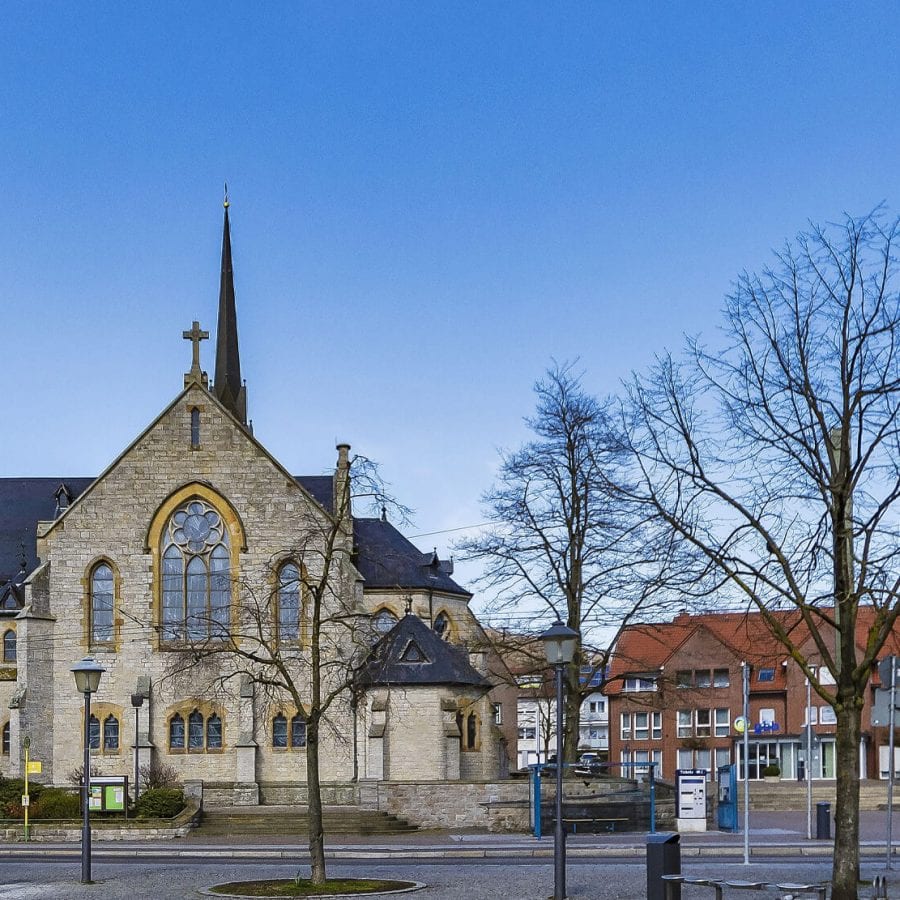
The second cluster is self-organised. The Bielefelder Netzwerk selbstorganisierter Wohnprojekte (a network of self-organised housing projects) has linked group-built projects since 2010. Seven were completed between 2009 and 2020 and now house about 230 adults and 65 children. Most are associations or owner groups rather than registered cooperatives, and their bottleneck is different: land and start-up finance, not ageing stock. The regional office of the federal FORUM Gemeinschaftliches Wohnen (an association for community-led housing) has sat in one of these projects since 2019.
The city positions both clusters as partners rather than as a programme of their own. Their route in runs through the council's land strategy and the state's housing subsidy, which is where municipal policy takes over.
A new mayor, a returning rent cap and two empty barracks
Bielefeld changed hands in 2025. Christiana Bauer of the centre-right CDU won the mayoral run-off with 51.38% against the Social Democrat Ingo Nürnberger. She took office in November 2025, succeeding the SPD's Pit Clausen. In February 2026 her CDU and the SPD signed a coalition agreement that names the tight housing market as a core challenge. After her first 100 days, the Neue Westfälische judged the pact pragmatic, with little money for large plans.
Each level of government holds a different lever. Berlin sets tenancy law. In June 2025 the Bundestag extended the Mietpreisbremse (the rent brake, which caps new-let rents at 10% above the local reference rent) to the end of 2029. In October 2025 it passed the Bau-Turbo, a new section 246e of the federal building code that lets councils approve housing without a new zoning plan until 2030. Düsseldorf, the state capital, decides where those rules bite. Its Mieterschutzverordnung (tenant-protection ordinance) grew from 18 to 57 municipalities in March 2025, and Bielefeld is one of them. Sitting tenants' rents may now rise by at most 15% in three years. And when a rental flat is converted into a condominium, the buyer must now wait eight years before evicting the tenant for personal use.
From 18 to 57: with the new tenant-protection ordinance, the North Rhine-Westphalia state government is expanding protection for tenants in areas with a tight housing market.The state also holds the money. Its 2025 housing-subsidy round approved €2.4 billion for 13,356 homes and named Bielefeld among the places where the subsidised stock had begun to grow again. Locally, 607 homes were funded in 2025 with €94 million.
The municipal lever is land. The Bielefelder Baulandstrategie, adopted in July 2019, requires the city to buy at least 50% of any site over one hectare before rezoning it. It then sells by Konzeptvergabe (concept-led allocation, scored on the quality of the scheme rather than on price). That is the main door for cooperatives and group projects, although the published strategy reserves no fixed quota for them. The other lever is BGW, which has more than 160 new flats under way.
- 1911[source]
Freie Scholle founded
Worker gymnasts barred from municipal halls found a building society; from 1914 it builds housing.
- 1956[source]
Sennestadt begins
Construction starts on Hans Bernhard Reichow's planned new town, designed for 3,400 dwellings.
- 1990s[source]
The Bielefelder Modell
BGW, a social-care provider and the city develop ordinary rental flats with on-call care, paid only when used.
- Jul 2019[source]
Baulandstrategie adopted
The council commits to buying at least half of large development sites and selling them by concept-led allocation.
- Jul 2020[source]
Rent brake lapses
The Mietpreisbremse stops applying in Bielefeld.
- Mar 2024[source]
Rochdale framework plan
The council adopts a plan for about 650 homes on the former Rochdale Barracks.
- Mar 2025[source]
Tenant protection returns
North Rhine-Westphalia's ordinance brings Bielefeld under a 15% cap on in-tenancy rent rises until February 2030.
- Jun 2025[source]
Heat plan adopted
The council adopts its municipal heat plan, the roadmap away from gas and oil heating.
- Oct 2025[source]
Barracks sales frozen
The federal government halts sales of former barracks nationwide pending a Bundeswehr review.
- Nov 2025[source]
Mayor Bauer takes office
Christiana Bauer (CDU) becomes mayor after winning the September run-off.
- 2029[source]
Rent-brake horizon
The federal rent brake runs to the end of 2029 under the June 2025 extension.
- 2030[source]
Climate-neutrality target
The city's target year for climate neutrality.
- 2045[source]
BGW's climate goal
The municipal landlord aims for a largely climate-neutral housing stock.
From a workers’ gym dispute to the barracks question and the climate deadlines ahead.
The empty barracks are the vacancy test. After the British Army left in 2020, the city received about 30 hectares of the Rochdale and Catterick sites without paying a purchase price. The council's March 2024 framework plan for the Rochdale Barracks foresees 650 homes in two- to seven-storey buildings. In October 2025 Berlin froze sales of former barracks nationwide while the Bundeswehr reviews its needs. In September 2026 the defence ministry told the city a decision was close. The environmental group BUND wants the plans kept, so that housing does not move onto open fields. For smaller empty buildings, the federal Gewerbe zu Wohnen (commercial-to-housing) programme has €360 million for 2026.
Tenant advocates doubt that supply alone will do it. In 2024 Sarah Bohnke, managing director of the Mieterbund Ostwestfalen-Lippe, told the Westfalen-Blatt: "We very often see listed players buy land, let it rot and sell it on." Her association argues that rent caps, and landlords actually respecting the local rent index, matter as much as cranes.
Climate goals ride on the same buildings. The council wants Bielefeld climate-neutral by 2030, and its municipal heat plan, adopted in June 2025, starts from a stock that still meets 75% of its heat demand with gas and oil. The federal Gebäudeenergiegesetz (buildings energy act) sets the standards for boilers and retrofits. Non-market landlords are the practical vehicle. BGW aims for a largely climate-neutral stock by 2045, and Freie Scholle is extending district heating. "Climate protection and affordable housing belong together for us," Sabine Kubitza, BGW's managing director, said when presenting its 2025 results.
Care on call, estates rebuilt
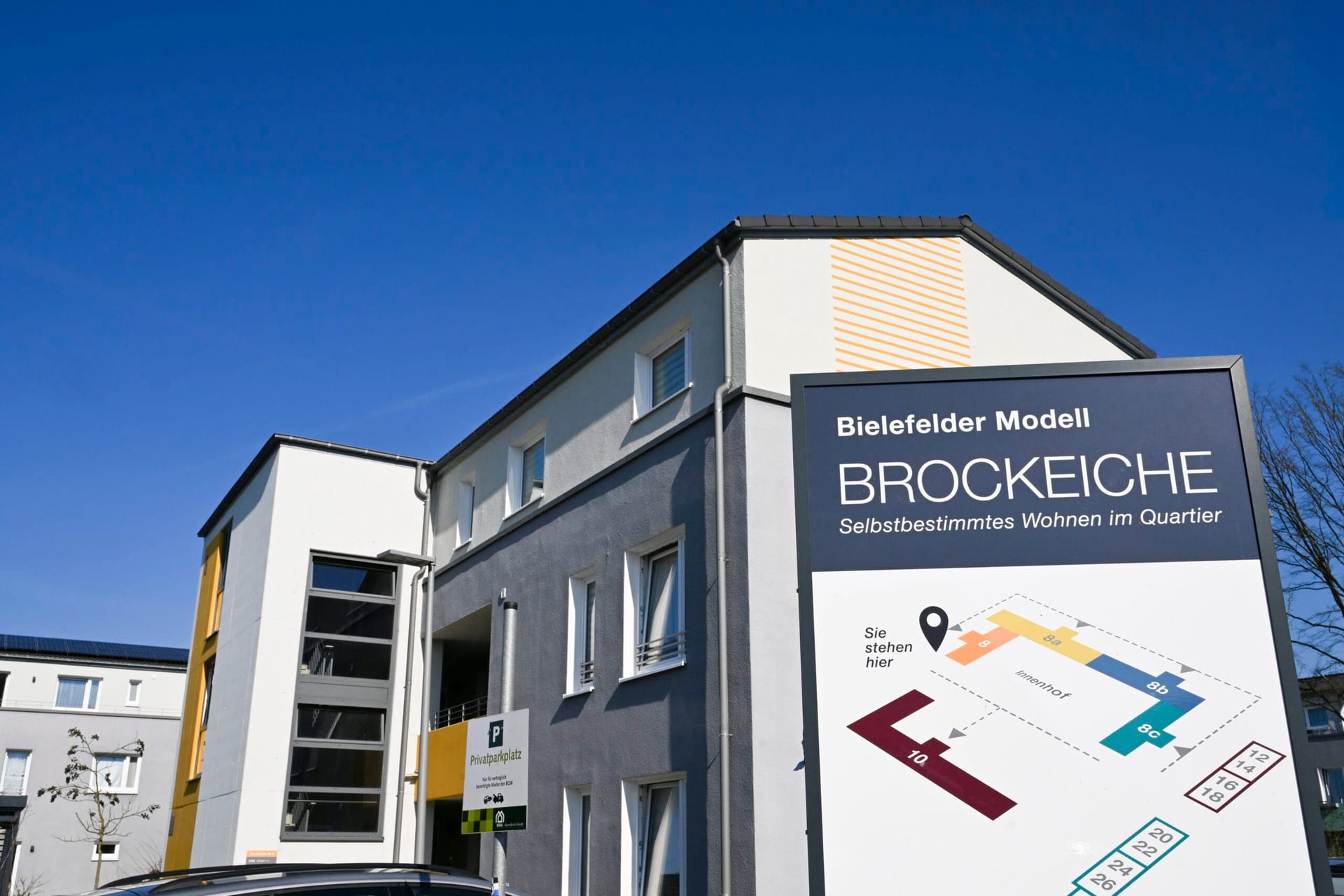
The Bielefelder Modell is the city's best-known export. BGW developed it in the 1990s with a social-care provider and the city. Older and disabled tenants rent ordinary barrier-free flats in a normal building. A care service is on call around the clock, but tenants pay only when they use it. Each site has a Wohncafé (a residents' café) open to the whole neighbourhood. BGW now runs the model in about ten neighbourhoods, and it lets people stay in their own homes rather than move into care.
Freie Scholle's renewal of Stieghorst shows a cooperative rebuilding its own estate. Since 2009 it has replaced about 200 identical post-war flats with 302 homes of varied sizes in 19 new buildings. The last 31 are going up on Grünberger Straße now. Members stayed in the neighbourhood while the blocks were replaced in turn.
The Schildesche market-square project takes the cooperative into care housing. Freie Scholle is building 30 flats with Bethel.regional, the regional arm of the Bethel foundation, mainly for people who need support. Twenty of the flats are publicly funded. Its Quartier Ost adds 28 barrier-free flats, 16 of them subsidised.
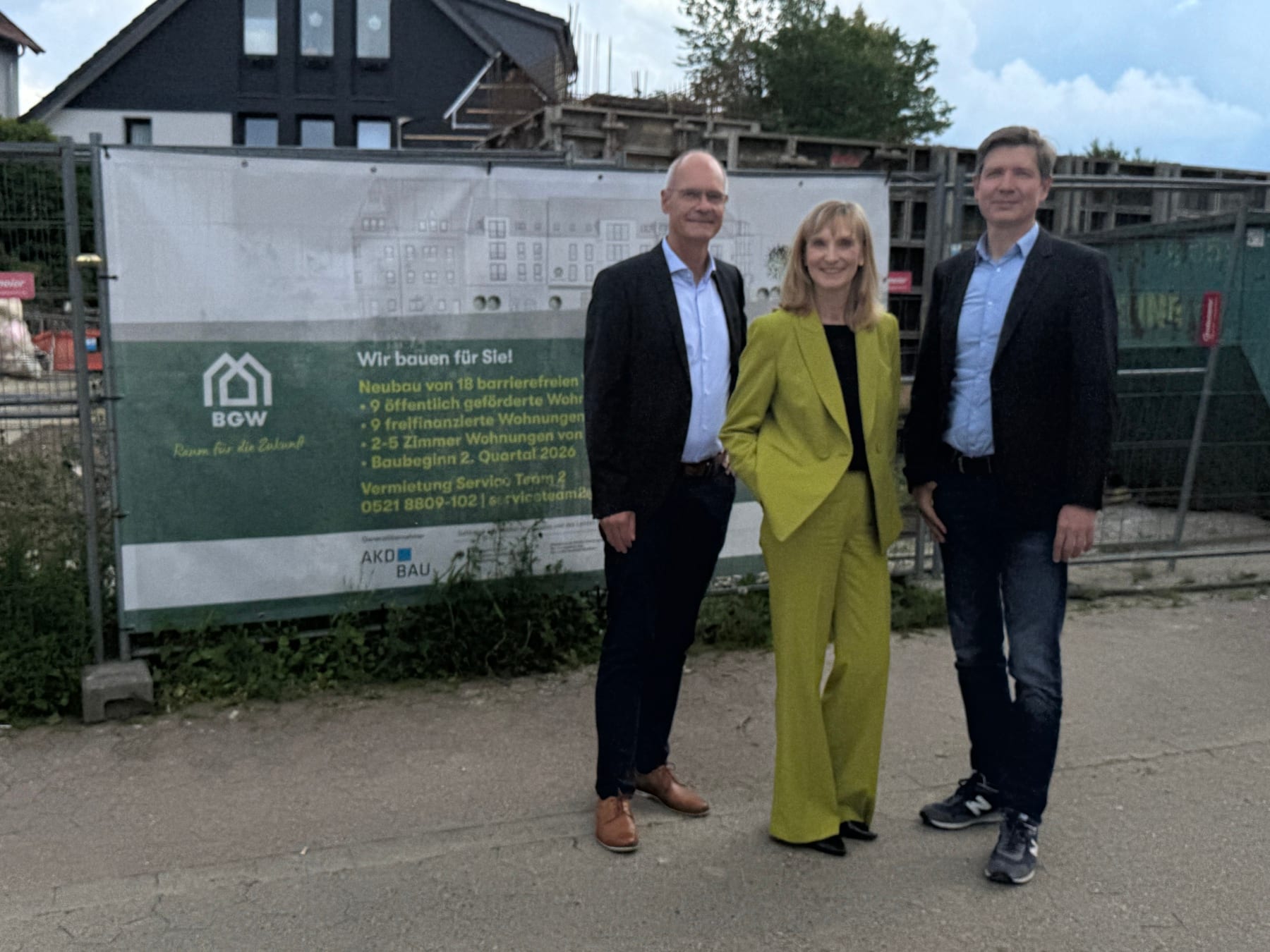
BGW's Vilsendorf scheme is the municipal company's largest current build: eight buildings with 96 flats and a nursery on the northern edge of the city. Together with the Rabenhof in Baumheide and 18 barrier-free flats on the Heisenbergweg, it makes up BGW's pipeline of new homes.
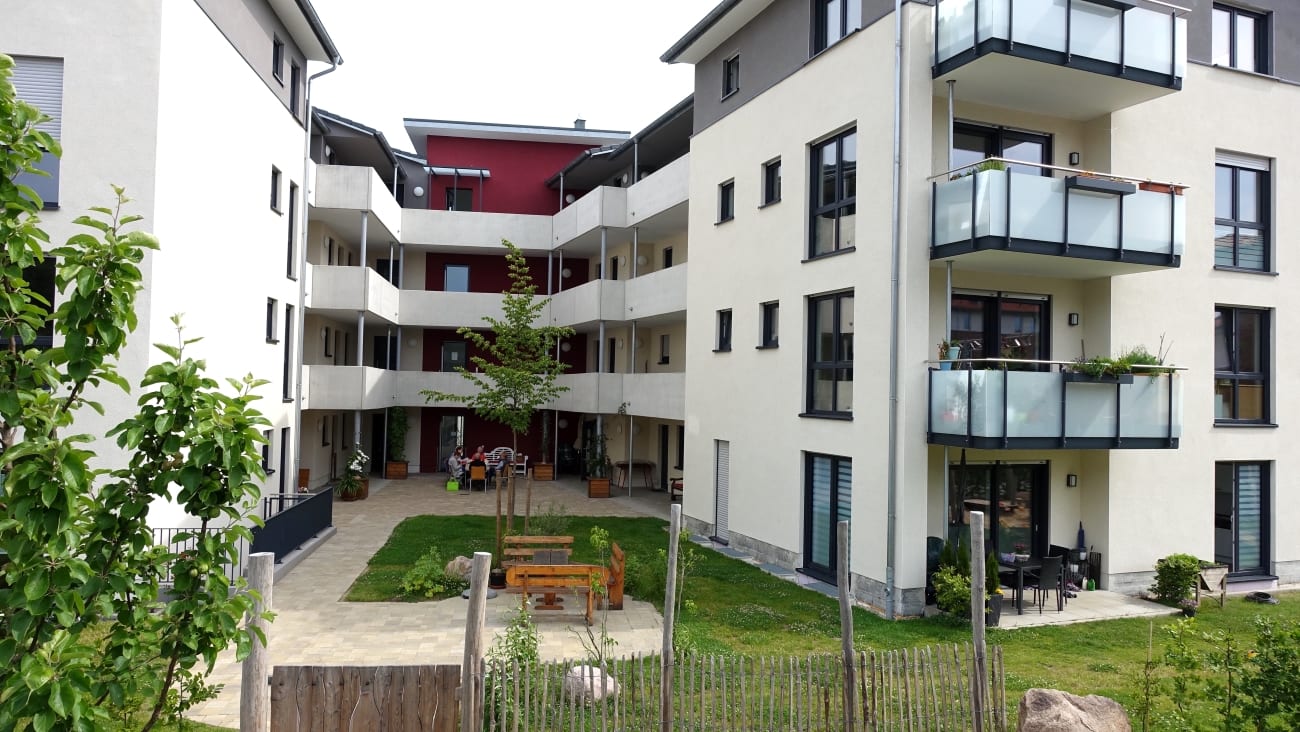
Wohnprojekt Stiftsfreiheit is the small-scale counterpoint. Its residents built it themselves, without a developer, and moved in in January 2017. Eleven flats of 55 to 110 m² house 17 people aged 25 to 79. Five flats are rented and six are owned. The group shares a large roof terrace, a choir and a monthly house meeting. It is one of the projects the Bielefelder Netzwerk uses to coach new groups.
Behind these projects sit two old institutions and one new source of money. gbb Brackwede has housed the south of the city for more than 80 years. Aurem Impact, an impact investor based in Bielefeld, points to local capital looking for social returns. Bielefeld does exist, then, and it already builds cooperative, municipal and self-organised homes side by side. The open question is whether the barracks will add a fourth kind.
References
Statistics17Click on any number to see the source
Housing market
Tenure & affordability
Cooperative, social & public
Adaptive reuse & vacancy
Population & migration
From our library18
- BGW Bielefelder Gemeinnützige Wohnungsgesellschaft mbH — Organisation
- Baugenossenschaft Freie Scholle eG — Organisation
- BGW legt Geschäftsbericht für 2025 vor: Stabil wirtschaften, verantwortlich handeln — Knowledge
- In Bielefeld fehlen 1380 Wohnungen pro Jahr — Knowledge
- VdW Rheinland Westfalen Jahrespressekonferenz 2026 — Knowledge
- In Nordrhein-Westfalen: Baukosten bremsen Wohnungsneubau weiter aus — Knowledge
- Wegen Wohnungsnot: Mieterbund fordert Preisbremse für OWL — Knowledge
- Mieterbund Ostwestfalen-Lippe und Umgebung e.V. — Organisation
- Mietenreport 2026 - Deutscher Mieterbund — Knowledge
- Gemeinnützige Baugenossenschaft Brackwede eG (gbb) — Organisation
- Bielefelder Netzwerk selbstorganisierter Wohnprojekte e.V. — Organisation
- Bundestag: Mietpreisbremse verlängert — Knowledge
- Aus 18 werden 57 – Nordrhein-Westfalen weitet Mieterschutzverordnung aus — Knowledge
- Der Förder-Boom für bezahlbare Mieten und Eigentum geht weiter – Rund 2,4 Milliarden Euro für 13.356 Wohnungen bewilligt — Knowledge
- Die Bielefelder Baulandstrategie — Knowledge
- Schriftlicher Bericht des BMWSB zum deutschlandweiten Büroleerstand — Knowledge
- Bielefeld Klimaneutral 2030 – Konzeptstudie — Knowledge
- Aurem Impact — Organisation
Further sources19
- Bielefeld conspiracy — Wikipedia
- Freie Scholle – Genossenschaftliches Wohnen seit 1911 — Freie Scholle
- Freie Scholle (Bielefeld) — Wikipedia (de)
- Freie Scholle investiert Millionen in Wohnungen und Fernwärme — Westfalen-Blatt
- Freie Scholle baut in Bielefeld ein ganzes Quartier um — Neue Westfälische
- Wohnungsmarktbericht — Stadt Bielefeld
- Der BGW-Geschäftsbericht 2025 — BGW
- Die laufenden Neubauprojekte der BGW — BGW
- Wohnungsbauförderung — Stadt Bielefeld
- Stichwahl 2025 in Bielefeld: Ergebnis — Neue Westfälische
- 100 Tage Christiana Bauer — Neue Westfälische
- Koalitionsvertrag von SPD und CDU — SPD Bielefeld
- Bau-Turbo (§246e BauGB) — Deutscher Bundestag
- Ehemalige britische Kasernen gehen in Stadtbesitz über — Stadt Bielefeld
- Entscheidung zu Bielefelder Kasernen steht bevor — Neue Westfälische
- Kommunale Wärmeplanung — Stadt Bielefeld
- Sennestadt – Stadtteilgeschichte — Sennestadt GmbH
- gbb Brackwede — gbb Brackwede
- Bielefeld — Wikipedia