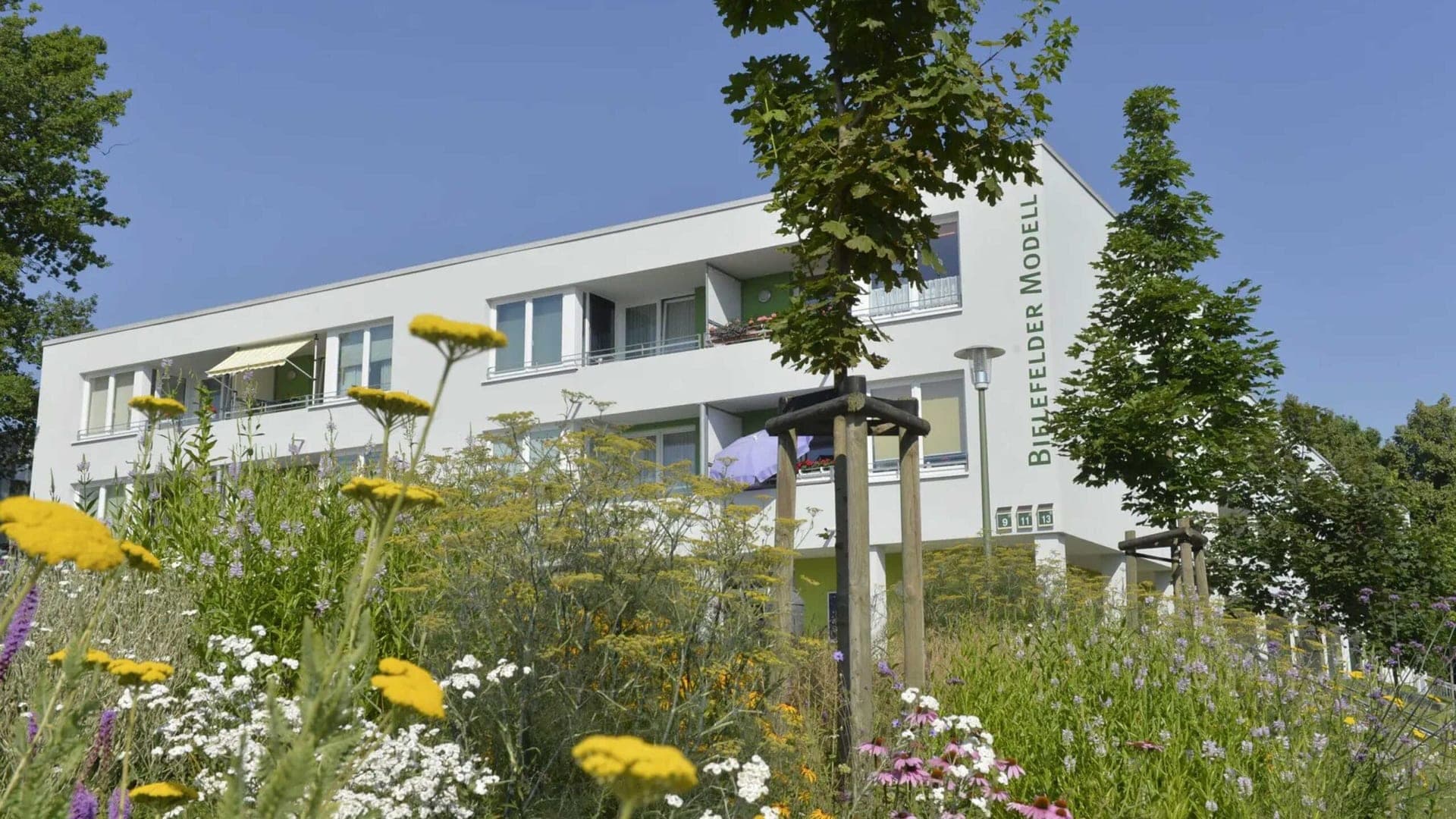
The Bielefelder Modell is a neighbourhood-based housing and support concept developed in Bielefeld, Germany, by BGW in partnership with a social-service provider and the city; the project began in the 1990s, with the first BGW housing complex under the model opened in 1996. 18 BGW is the housing provider, while social-service partners provide support and care in the neighbourhood. 23
The model is intended to help older people and people with disabilities remain in familiar surroundings and live independently, with support available when needed. 1 BGW offers accessible homes in established neighbourhoods with good local infrastructure, alongside a “Wohncafé” that serves as a meeting place open to residents and neighbours. 1 A social-service provider offers advice and a range of domestic and care services locally; residents can use these services as needed and pay for the support they actually receive, rather than a compulsory service fee. 1
The approach separates tenancy and support agreements, preserving residents’ choice over services and providers. 13 Its wider activities include local support and care offices, advice and referral to services, and opportunities for neighbourhood interaction and mutual support. 12 The model has attracted attention beyond Bielefeld and has also been implemented in other cities. 1 Oliver Klingelberg, BGW’s team leader for social management, is identified on the project page as a contact and spokesperson for the model. 1