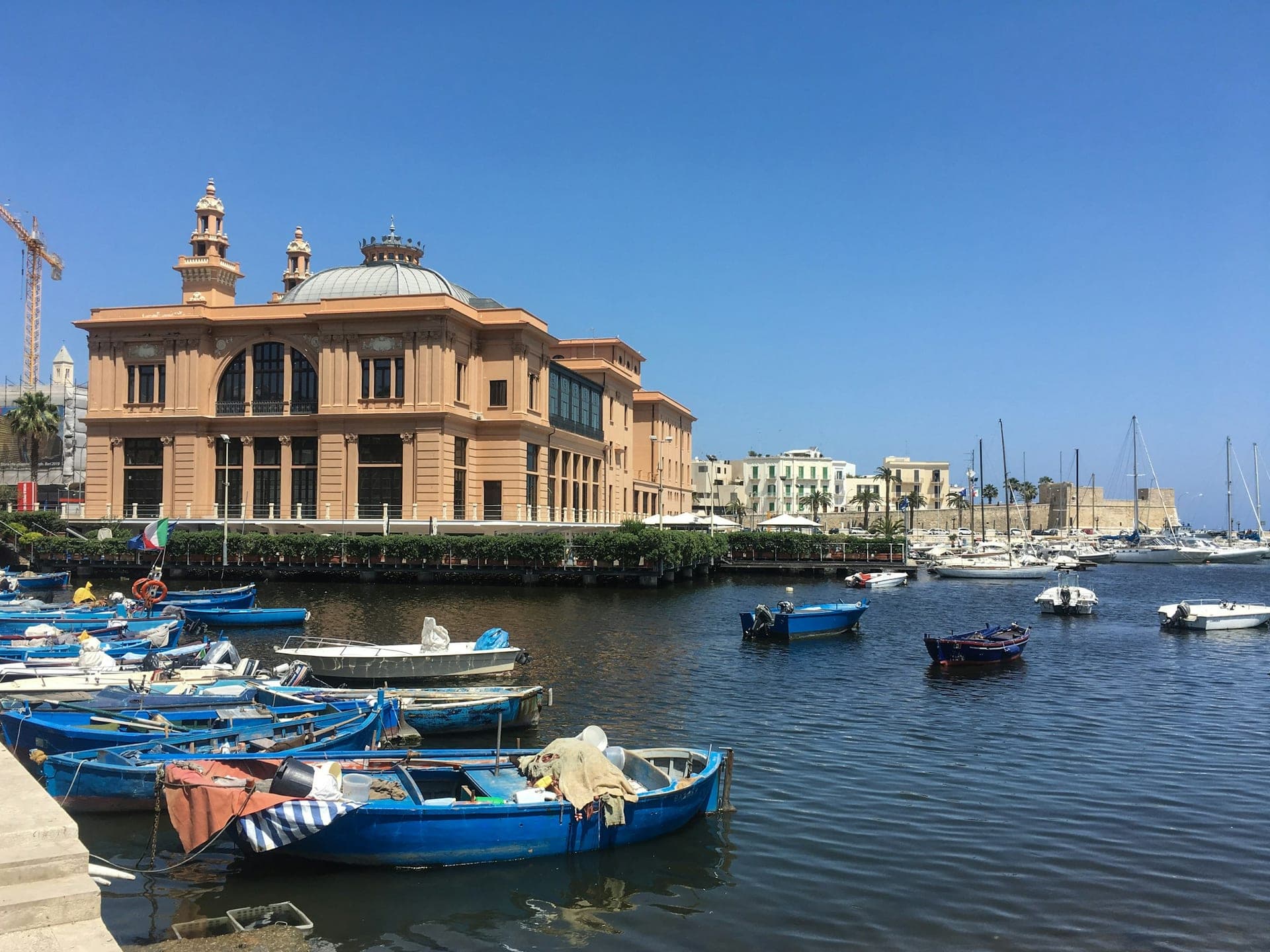
A port city that owns its homes, and is letting them go
Bari has always lived off the sea. In the eleventh century its sailors carried the bones of Saint Nicholas home from Myra, and the basilica built for them still anchors the old town. Nine centuries on, the same port pulls in ferries, cruise ships and weekend visitors. That openness is now the city’s housing problem. The lanes of Bari Vecchia that once held fishing families increasingly hold guests.
Most Baresi own the roof over their heads. ISTAT, the national statistics institute, found in its 2021 census portrait of the city that 31.1% of households live in a home they do not own, which leaves about 68.9% as owner-occupiers. The picture splits sharply by district. Renting and public tenancy pass 45.3% in San Paolo and 44.3% in San Nicola, the old town. Public landlords hold about 12,000 homes of edilizia residenziale pubblica, the Italian public-rental tier known as ERP. Most belong to ARCA Puglia Centrale, the regional housing agency, and the rest to the Comune. By the agency’s own count, one Barese in eight lives in a casa popolare. A cooperative tier barely registers. The census does not count one, and the catalogue holds no cooperative share for Bari.
- Owner-occupied68.9%
- Public rental (ERP)8.1%
- Private rental and rent-free23.0%
Italy treats social housing as a regulatory layer rather than a tenure. Alongside ERP sits edilizia residenziale sociale, or ERS: privately built homes let at capped rents to households who earn too much for the public list. Bari has little of it, so the real pressure shows up at the ERP door. The 2024 call for public homes drew 2,085 applications, and 1,758 were admitted to a list that turns over slowly. At the regulated floor, rents are nominal. Under a regional law with six income bands, 30% of ARCA tenants pay €24.90 a month.
Above that floor the ladder climbs fast. Leases signed under the canone concordato, Italy’s agreed-rent scheme with tax breaks for landlords, averaged €5.98 per square metre in 2024, and registered open-market contracts €7.10. Those are the rents declared on registered leases. Listings ask far more: €11.20 a square metre in 2024, and Idealista put the average at €12.60 by mid-2026. A furnished mid-stay flat, the kind a visiting doctor or engineer needs, is estimated at €19 gross. Immobiliare.it expects Bari to lead Italy’s big cities on rent growth in 2026, at +9.3%.
- Agreed rent (canone concordato)
- Registered open-market contracts
- New-let asking rent
- Average asking rent, Q2 2026
- Furnished mid-stay (estimate, gross)
Monthly rent per square metre. The two left-hand points are 2024 registered contracts; the others are asking rents or an estimate. There is no cooperative tier to plot.
The homes exist; many are simply not lived in. An Openpolis reading of ISTAT data counted almost 27,500 of just over 163,000 dwellings in the city as unoccupied, or 16.8%. The Comune’s narrower tally of flats standing empty and unlet is about 20,000. Caritas, in its 2024 poverty report for the diocese, set that stock against some 6,000 households without a home of their own. Offices are harder to read. The land registry lists 1 m² of office floor, but no reliable local survey measures how much of it stands idle.
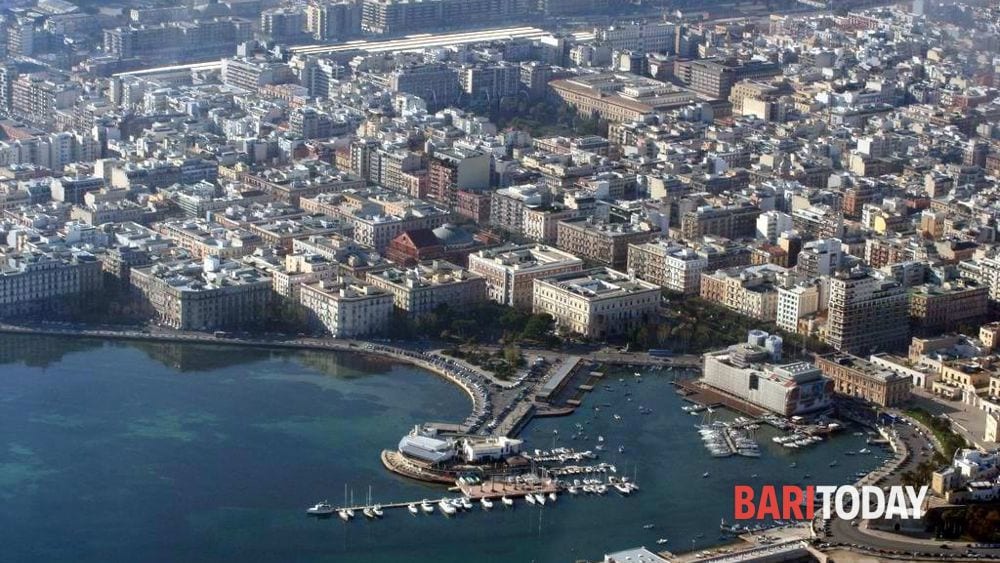
Short lets explain much of the gap. The AirMap study of Bari by the Politecnico di Torino and local universities counted 4,504 homes on Airbnb in 2024, up 235% since 2017. That was the fastest rise in Italy, against 52% nationally. Across the city there are 2.4 whole-flat listings per 100 resident homes; in the old town the figure is 19.4. Visitors keep coming. Bari hosted about 1.1 million guests in 2025, 25% more than a year earlier.
Residents, meanwhile, are thinning out. The city fell from 327,361 to 315,473 people in a decade, far below its 1981 peak. The University of Bari enrolled 41,763 students in 2024, against 59,005 in 2010. Yet demand has not eased, because what leaves is households and what arrives is short stays. The catalogue estimates 12,000 mid-term residents a year, from Erasmus students to port and rail workers. Public student beds number about 1,120. New supply is thin across Italy too: the country completes fewer homes per head than any other market Euroconstruct follows.
The strain is widest at the bottom and now reaches the middle. The catalogue’s rent-to-income estimate puts a typical renting household’s housing costs at 37.6% of income. Eviction orders across the province rose to 1,074 in 2024, up 18.9%, with 368 of them in the city and most for arrears. A student bed averages €400 a month. Avvenire’s reporting from the city in September 2026 followed a family whose 70 m² flat, rented for €600, would now be offered at about €1,200. The housing assessor told the paper that the problem “no longer concerns only the most fragile, but now reaches the middle class too.” The Ipsos Housing Monitor finds the same fear among young Italians nationwide, and research on housing as an asset across southern Europe places Bari in a regional pattern. In a city this owner-heavy, the cooperative sector that might soften the fall is almost invisible.
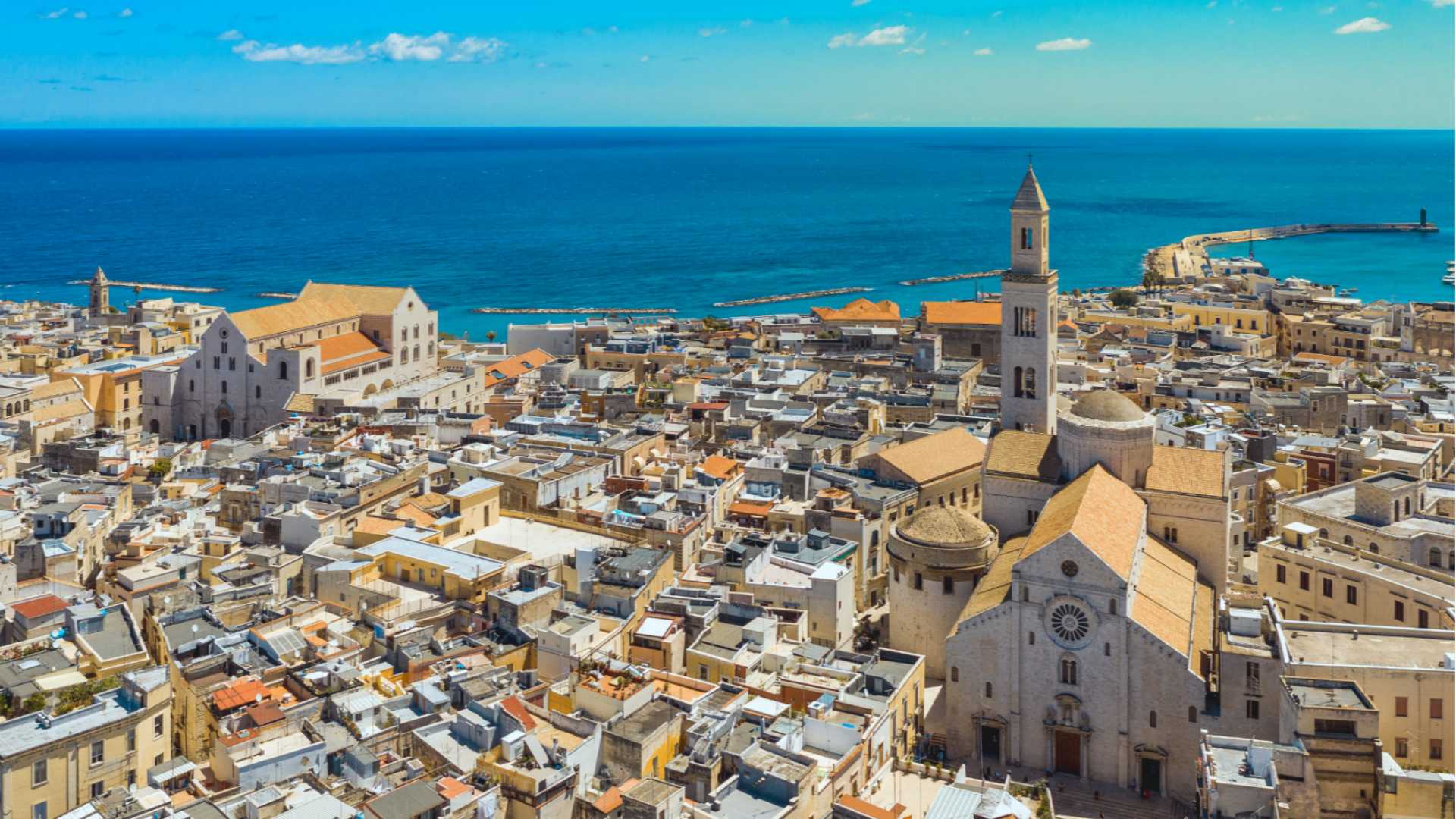
Finding a home to rent is ever harder for every social class. Rents are unaffordable for families, and evictions for unjustified arrears are rising.Cooperatives that built to own, and then dissolved
Italian housing cooperatives come in two forms, and the difference decides everything. In a cooperativa a proprietà divisa (divided ownership), members pool savings to build at cost and then take title to their own flats. The cooperative dissolves into a condominium. In a cooperativa a proprietà indivisa (undivided ownership), the building stays with the cooperative for good. Members pay a social share and a use charge, and the home is never resold on the market. Legacoop, the national league of cooperatives, counts over 330,000 homes built in divided ownership against about 40,000 undivided, most of them in the north. A scoping review of cooperative housing models shows why that split matters: only the undivided form keeps homes out of the market after the first generation.
Bari’s cooperatives grew up with the post-war city, and almost all of them chose ownership. The 1962 law on public building land, known by its number as the “167”, let councils expropriate areas and hand plots to public bodies and cooperatives. Bari’s planners laid out whole quarters this way. In Japigia, the high-density zones along via Caldarola date from the 1960s, and one of them, “zona 45”, is mainly cooperative and public. Poggiofranco has its own “167” quarter of the same vintage. Nationally, 47% of undivided cooperative homes date from those decades. In Bari, though, the flats mostly passed to their members, which is why they now count as owner-occupied.
What remains today is a small and scattered sector. Legacoop Puglia, the regional federation, is based in Bari. In its housing league Puglia counted 60 active housing cooperatives in 2015, fourth among Italy’s regions, yet their combined output that year was only €14.1 million. Three clusters stand out, and they face different problems. The old building cooperatives are mostly dormant once their flats are handed over. Social cooperatives, which Italy licenses to deliver care and inclusion, now run small housing projects such as co-housing for older people. A third cluster is only a legal frame so far: Puglia’s 2014 law on community cooperatives, which lets residents run shared services and assets together. The builders lack land and finance; the social co-ops lack capital; the community co-ops lack a housing track record. A study of housing cooperatives across Europe shows how far that sits from the continent’s large rental sectors.
Public policy has not yet given cooperatives a defined role. Puglia’s 2014 reform of public and social housing turned the old IACP of Bari into ARCA Puglia Centrale and made the agency the main vehicle. New affordable supply in Bari is being framed as ERP plus ERS, delivered by ARCA, the Comune and investment funds. Cooperatives appear in neither the city’s protocol nor its programmes. The international record on land leases and public guarantees suggests what a cooperative track could look like. Whether Bari opens one depends on choices being made now at three levels of government.
Three governments, one short-let argument
Rome sets the frame. The government’s Piano Casa, first announced in a Council of Ministers communiqué, became Law 116 of 2 July 2026. It aims to make about 100,000 homes available in ten years and commits €970 million for 2026–2030 to bringing empty public flats back into use through Invitalia, the state development agency. The Senate passed it by 106 votes to 62. Tenant unions called it inadequate to the emergency. The same government has not refinanced the national rent-support fund since the 2023 budget. Bari filled part of the hole from its own budget, with €3.6 million for 2,172 families.
The region holds the rules for short lets and public housing. Antonio Decaro, Bari’s mayor for a decade, became President of Puglia in November 2025. His administration sent a bill to the regional council that lets provincial capitals and high-tourism towns cap new tourist lets by zone, in a region with almost 45,000 active units. Owners letting up to two homes are exempt. Separately, the council voted that short lets running without a permit must register by 31 December 2026. Since 2025 every Italian short let also needs a national identification code, the CIN. Researchers on how EU states regulate short lets note that such codes matter only if platforms share their data.
In the city, Vito Leccese won the mayoralty in June 2024 with 70.27% of the vote and created an assessor for ERP and the housing emergency, Nicola Grasso. Their main instrument is a protocol with ARCA Puglia Centrale covering about 10,000 public homes and over €250 million of programmed works. It includes €59.3 million for about 1,000 flats in Madonnella and San Paolo and new building in Mungivacca and San Girolamo. The Comune also runs an Agenzia sociale per la Casa, a social lettings agency that brokers private flats to low-income tenants, with €5 million of EU metropolitan funds. Grasso has asked Rome and the regions for more, joining other cities in a municipal alliance on the national plan. There is still no concept-led land tender, no ground-lease pact and no funding line for cooperatives.
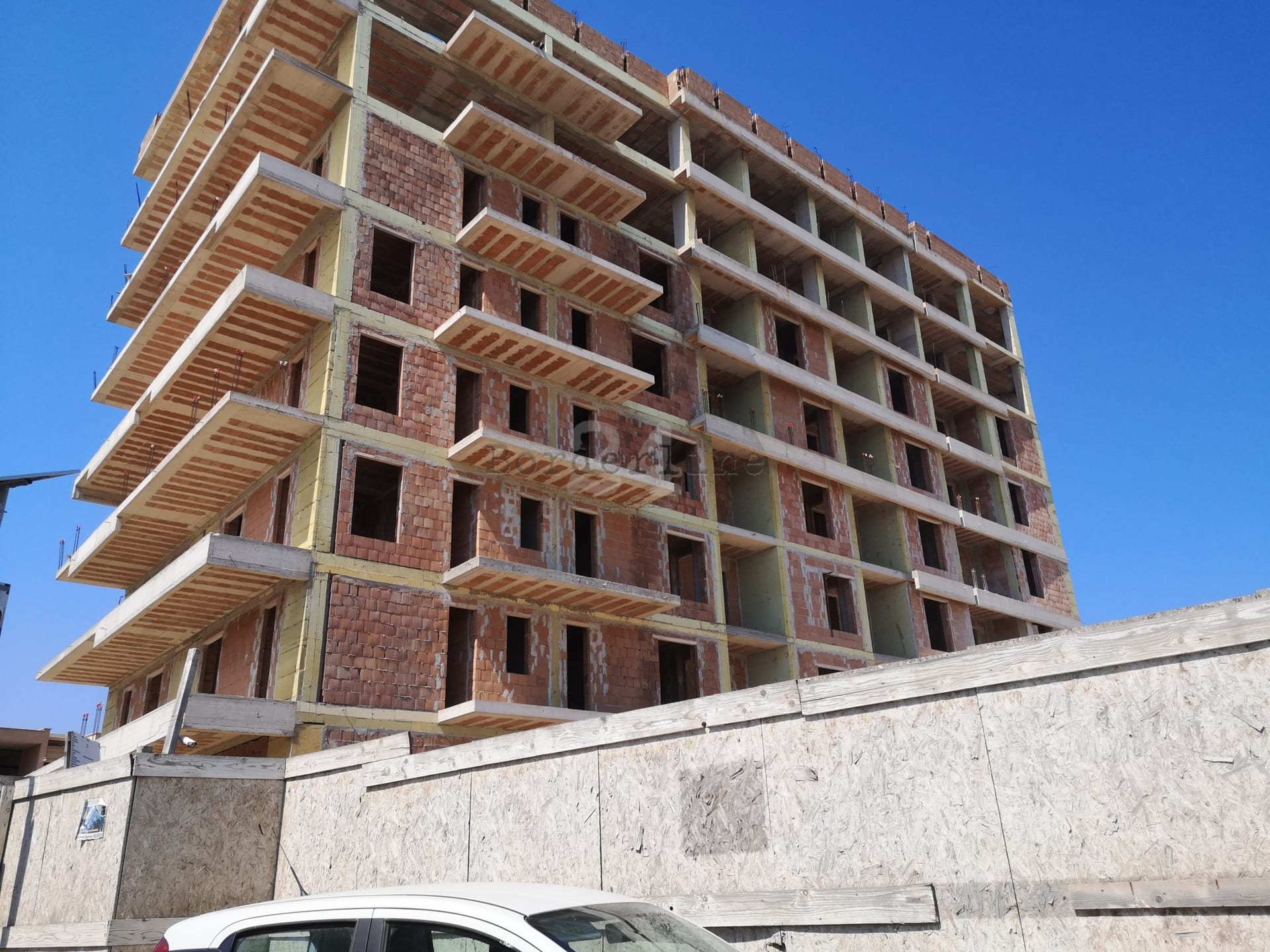
The empty homes have a partial answer. The Comune is designing a guarantee fund to coax owners back to the long-term market, alongside tax incentives for agreed-rent leases. Conversion comes next. In September 2026 the council decided to turn an unfinished student residence in Mungivacca into public and social homes. The broader toolkit is familiar from comparative work on vacant housing: registers, taxes and brokered leases. Bari has used the last of these, but not yet the first two.
Climate goals arrive mostly through the public stock. ARCA has won PNRR money, Italy’s share of the EU recovery fund, to retrofit 1,474 public homes. It also borrowed €10 million from Cassa Depositi e Prestiti, the state lender, under an EU InvestEU guarantee, within a €180 million three-year plan. Land is the harder limit. Bari has sealed 43.34% of its soil, the highest share in Puglia, which makes reuse of built space the only growth path that fits. Leccese’s Costa Sud plan promises a 6 km coastal park with building volumes cut by half. A Housing Europe review of climate adaptation in public and cooperative housing warns that southern stock faces the steepest heat risk.
- 1976[source]
Quaroni’s master plan
Bari approves the general town plan drawn up by Ludovico Quaroni, which still governs much of its land use.
- 2006[source]
Punta Perotti comes down
The unlicensed seafront towers known as the ecomostro are demolished with explosives. In 2012 the European Court of Human Rights orders Italy to pay the builders €50 million.
- 2014[source]
The ARCAs are born
Puglia’s regional law 22 reorganises public and social housing and turns the IACP of Bari into ARCA Puglia Centrale.
- 2016[source]
First fund-built social housing
The Comune signs the agreement behind the 226-flat Torricella social-housing estate.
- 2021[source]
A national pilot at the station
Bari is chosen as one of eight PINQuA pilot projects for the area around Bari Centrale.
- 2024[source]
A housing assessor and a protocol
Vito Leccese is elected mayor and signs a protocol with ARCA covering about 10,000 public homes.
- July 2026[source]
The Piano Casa becomes law
Law 116/2026 targets about 100,000 homes in ten years and €970 million for public-housing recovery.
- December 2026[source]
Short-let registration deadline
Unpermitted short lets in Puglia must register with the municipal business desk by 31 December 2026.
- December 2027[source]
Integrated urban plans due
28 works in the Bari metropolitan area under the PNRR integrated urban plans must now be finished by 31 December 2027.
- 2030[source]
Public-housing recovery closes
The national €970 million programme to return empty ERP homes to use runs to the end of 2030.
We chose to focus only on new openings, leaving the current situation unchanged, because the studies show it is short lets that take homes away from families, students and young couples, the groups most vulnerable when it comes to the right to housing.Limiting the so-called short-let market is completely out of place. If private property is sacred, everyone does what they like with their own flat.From the station park to the shell in Mungivacca
Nodo Verde, the park planned over the rail yards at Bari Centrale, is the city’s showcase. It was picked as one of eight national pilots under PINQuA, the national programme for housing quality. The project carries €100 million. Of that, €3.4 million goes to the old canteen of the ex-Caserma Rossani, a barracks becoming a house for local associations. Part of the barracks was already a park. In 2017 residents turned it into Parco Gargasole. Sarah Gainsforth’s critique of Bari’s regeneration in Internazionale pointed out the imbalance. The two PINQuA projects in the public estates of San Pio and Santa Rita received €15 million each, a fraction of the station’s share.
ARCA Puglia Centrale is the city’s largest landlord and its most stretched. Across the provinces of Bari and Barletta-Andria-Trani it owns 20,804 homes. A study of how Apulia’s five public-housing agencies manage their stock found ageing buildings, fragmented processes and outdated systems. Its PNRR retrofit and the barrier-removal loan are real progress. But with a third of tenants paying a token rent, its head says maintenance cannot be funded from income alone.
The Mungivacca conversion shows how slowly empty space returns to use. A student residence was planned there in 2001 and left as a shell. In September 2026 the council agreed to finish it as 100 homes, half public and half social rent. The social half is meant for young couples and single-earner households who fall between the ERP list and the market. The work still has to be tendered and built. Research on what adaptive reuse can deliver for housing suggests conversions of this kind rarely move fast.
Bari Social Housing in Torricella was the city’s first fund-built estate of capped-rent homes. Fondo Esperia, managed by Fabrica Immobiliare SGR, let 226 flats from €240 a month to households earning up to €45,779. It proved that ERS can work in Bari. It also sits on the provincial road to Santo Spirito, far from the centre, and no second estate has followed.
G124, the peripheries group founded by the architect and life senator Renzo Piano, chose San Paolo in 2022. San Paolo is the public-housing district where nearly half of households do not own their home. Four young graduates of the Politecnico di Bari worked with residents on reclaiming a neglected area, funded by €30,000 in grants. The scale was modest. The method, co-design with tenants on public land, echoes the community-driven adaptive reuse that European research treats as a model. At the Politecnico, Carla Chiarantoni has written on social housing as a response to housing need in the region.
The ex-Liceo Socrate is the counter-example. A group of refugees occupied the empty school in 2010 and made it a home. A 2014 agreement promised refurbishment with EU funds, and years later nothing had been done. Smaller experiments point elsewhere. CondiViviamo, a co-housing project for over-65s supported by the Comune, is run by a social cooperative. Along the seafront, the site of the demolished Punta Perotti towers is now open ground by the sea. Bari’s lighthouse is still being built.
References
Statistics5Click on any number to see the source
Housing market
Tenure & affordability
Population & migration
From our library20
- Report Comune di Bari (ISTAT, Commissione parlamentare sulle periferie) — Knowledge
- Rapporto 2024 Caritas diocesana Bari-Bitonto — Knowledge
- AirMap Bari: gli affitti brevi a Bari 2017-2024 — Knowledge
- Housing crisis in Europe: Italy ranks last in new dwellings completed — Knowledge
- A Bari, tra B&B e fiction, la casa è introvabile anche per il ceto medio — Knowledge
- Prezzi delle case, caro affitti e le sfide per i giovani in Italia: il nuovo Ipsos Housing Monitor — Knowledge
- Housing as investment in Greece and Southern Europe - Private profit versus social value — Knowledge
- Housing Needs and Cooperative Housing Models: A Scoping Review — Knowledge
- Housing Cooperatives in Europe - Resilience and Adaption to Changing Need — Knowledge
- International policies to promote cooperative housing — Knowledge
- Piano Casa: comunicato del Consiglio dei Ministri n. 173 — Knowledge
- Il Piano Casa è legge con la fiducia. Salvini: 'Ora si deve correre'. Le organizzazioni degli inquilini: 'Inadeguato all'emergenza' — Knowledge
- The regulatory aspects of short-term rentals in the EU — Knowledge
- Bari, 10mila alloggi popolari: il piano di Comune e Arca — Knowledge
- Tools to Deal with Vacant Housing — Knowledge
- Climate adaptation in public, cooperative, and social housing in Europe — Knowledge
- A Bari la rigenerazione urbana non è per tutti (Internazionale) — Knowledge
- Process View to Innovate the Management of the Social Housing System: A Multiple Case Study — Knowledge
- Adaptive Reuse for Housing — Knowledge
- Open Heritage - Community-Driven Adaptive Reuse in Europe: Best Practice — Knowledge
Further sources50
- Report Comune di Bari — ISTAT · 2024-06
- Case popolari a Bari: occupazioni abusive e morosi — BariToday · 2026-02-03
- Graduatorie provvisorie bando ERP 2024 — Comune di Bari · 2025-02-17
- Arca Puglia, De Nicolo: il 30% degli assegnatari paga 25 euro al mese — L’Edicola del Sud · 2026-04-08
- Bari, sfratti al +19% e affitti alle stelle — La Gazzetta del Mezzogiorno · 2025-09-29
- A Bari, tra B&B e fiction, la casa è introvabile anche per il ceto medio — Avvenire · 2026-09-05
- Previsioni 2026 del mercato immobiliare — Immobiliare.it Insights · 2025-12-17
- Boom di case disabitate in Puglia — La Gazzetta del Mezzogiorno · 2023-12-10
- Rapporto 2024 — Caritas diocesana Bari-Bitonto · 2024-11-28
- AirMap Bari — FULL – Politecnico di Torino · 2026
- A Bari oltre un milione di turisti nel 2025 — ANSA · 2026-01-02
- Bari ha perso 12mila abitanti in un decennio — Telebari · 2025-04-02
- Iscritti, serie storiche — Università di Bari open data
- Alloggi universitari — Università di Bari · 2026-04-23
- Sfratti 2024 — CGIL · 2025
- Bari, il costo dei posti letto per gli studenti — Quotidiano di Puglia · 2026-06-05
- Cooperare per abitare — Legacoop · 2024-04
- Il quartiere Japigia — Comune di Bari · 2016
- Le cooperative di abitazione — Legacoop Area Studi · 2017
- Legge regionale 20 maggio 2014, n. 23 — Regione Puglia · 2014-05-20
- Legge regionale 20 maggio 2014, n. 22 — Regione Puglia · 2014-05-20
- Piano casa 2026: le novità del decreto convertito in legge — Edotto · 2026-07-06
- Piano casa, decreto 100 mila alloggi — MisterLex · 2026-07-05
- Il Piano Casa è legge — Idealista · 2026-07-03
- Il fondo di supporto agli affitti e il governo Meloni — Pagella Politica · 2023-05-03
- Bonus fitti, la graduatoria del Comune di Bari — BariToday · 2025-01-16
- Chi è Antonio Decaro, nuovo presidente della Regione Puglia — Open · 2025-11-24
- Affitti brevi, ok al disegno di legge in Puglia — BariToday · 2026-07-23
- Consiglio regionale, ok debiti fuori bilancio — Giornale di Puglia · 2026-09-30
- Parte l’obbligo del CIN dal 1° gennaio — QualityTravel · 2024-12-31
- Bari, Leccese eletto sindaco con il 70,27% dei voti — LaPresse · 2024-06-24
- Le linee programmatiche del sindaco Leccese — BariToday · 2024-10-14
- Bari, 10mila alloggi popolari: il piano di Comune e Arca — Borderline24 · 2024-11-07
- Piano nazionale casa: il Comune di Bari nell’alleanza municipalista — BariToday · 2025-12-16
- Riconversione del complesso di Mungivacca in case popolari — BariToday · 2026-09-16
- Puglia, dieci milioni per la riqualificazione dell’edilizia residenziale pubblica — Italpress · 2025-12-22
- Consumo di suolo a Bari, i dati 2023 — BariToday · 2024-12-04
- A Bari la rigenerazione urbana — Internazionale · 2023-03-20
- L’ultima beffa di Punta Perotti — Il Fatto Quotidiano · 2012-05-10
- Bando Bari Social Housing, Torricella — Fabrica Immobiliare SGR · 2019
- PINQuA: comunicato stampa MIMS — Ministero delle Infrastrutture · 2021-10-07
- PNRR Piani Urbani Integrati: proroga dei tempi per 251 interventi — ANCE · 2026-09
- Affitti brevi in Consiglio il 18 settembre — Rete Gargano · 2026-09-12
- Puglia, affitti brevi: i sindaci esultano — Quotidiano di Puglia · 2026-05-21
- Bari, Nodo Verde e ex Caserma Rossani — Ferrovie.it · 2022-10-28
- Relazione assegno di ricerca 2025 (ARCA Puglia Centrale) — Università Roma Tre · 2025-11
- G124 a Bari, il quartiere San Paolo — Corriere del Mezzogiorno · 2022-03-24
- Social housing as a response to housing needs — Politecnico di Bari · 2024
- Bari, la storia di buona integrazione dimenticata dalle istituzioni — Il Fatto Quotidiano · 2017-09-17
- CondiViviamo, co-housing per over 65 del Comune di Bari — Affaritaliani · 2022-10-18