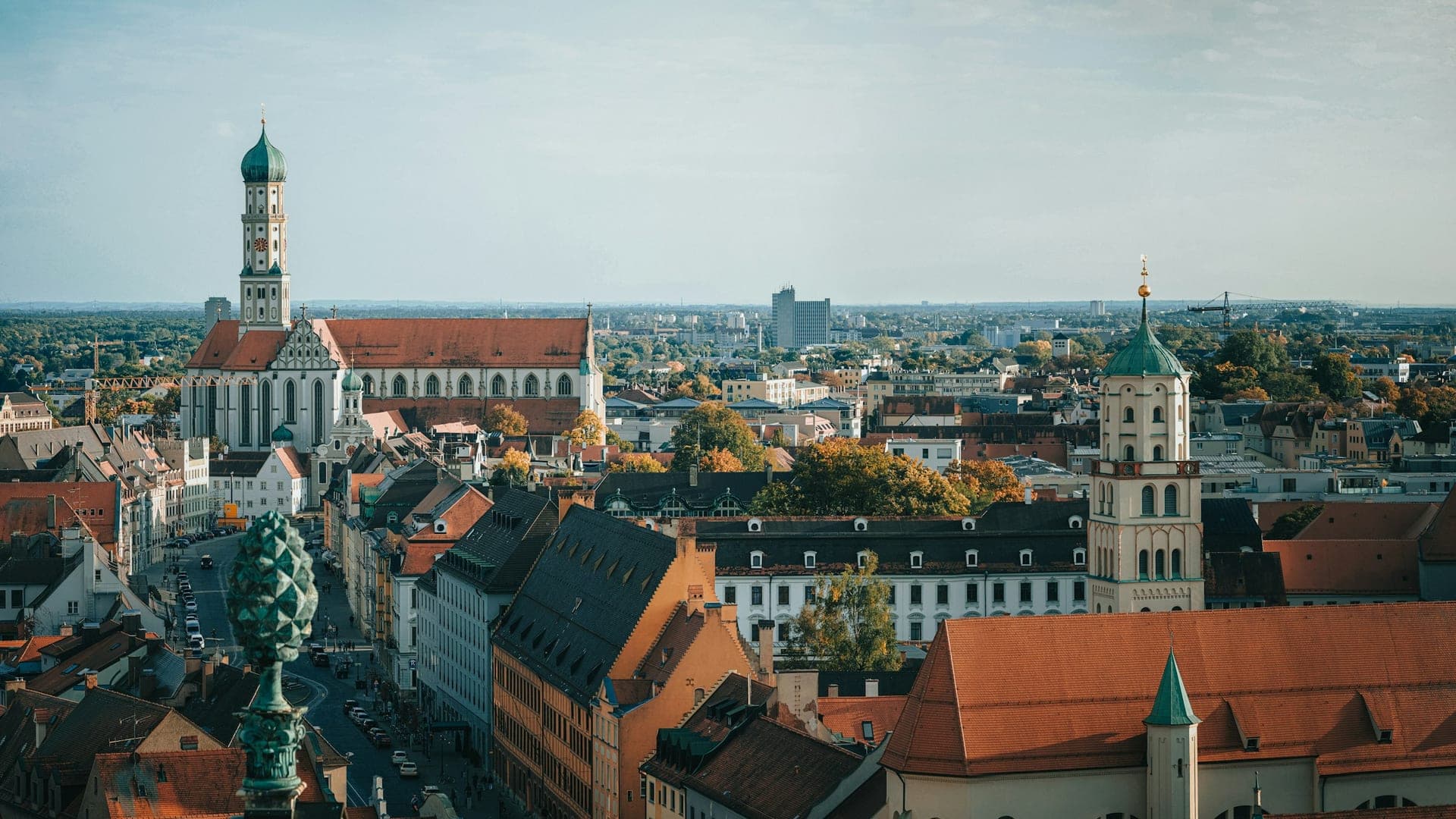
From the Fuggerei to the waiting list
Augsburg has argued about who should pay for a home since 1521. That year the merchant Jakob Fugger endowed the Fuggerei, a walled lane of almshouses that its foundation calls the world's oldest existing social housing settlement. Its 142 flats are still let to needy Catholic residents for €0.88 a year. Outside the gate, a city of 301,786 people faces a harder sum.
Most of those people rent. The 2022 census puts owner-occupiers at 32.5% and renting households at 67.5%. Cooperatives account for about 5% of dwellings, roughly 8,000 homes run by 8 cooperatives. Public housing is dominated by one landlord, the city-owned Wohnbaugruppe Augsburg, with around 10,000 flats and a share of 6.2%. Private landlords hold the remainder, an estimated 56.3% of the stock and by far the largest tenure.
- Owners
- Owner-occupier32.5%
- Renters
- Public & non-profit rental6.2%
- Cooperative5.0%
- Private rental56.3%
Social housing here is a rule attached to a building, not a type of landlord. On 1 January 2024 the city counted 7,465 subsidised flats under a Sozialbindung, about 4.5% of all dwellings. They are spread across the tenure slices above, from municipal blocks to cooperative and private buildings. Need dwarfs them. By the city's own reckoning more than half of Augsburg's households fall within the income limits. In 2023 it issued 3,196 Wohnberechtigungsscheine (certificates that entitle a household to a subsidised flat) and could allocate 608 flats.
What a household pays depends heavily on which door it came through. Public and non-profit flats let at around €6.50/m² net cold. The city's Mietspiegel 2025 (its qualified rent index, used in court) puts the average rent across the private stock at €9.80/m². Advertised new lets asked about €14.70/m² in 2026, half as much again. Furnished mid-stay flats, priced gross with bills and furniture included, are estimated near €25/m².
- Public/municipal housing
- Income-oriented subsidised new build (lowest tier)
- All-stock median
- New contracts
- Mid-stay furnished (serviced, gross)
Net cold rents from municipal housing to open-market new lets, with the gross furnished mid-stay tier for comparison. The subsidised new-build point is what the lowest income tier pays in the Wohnbaugruppe's 2026 Urmelstraße block after Bavaria's income-oriented subsidy.
Vacancy offers little slack. The census found 4.3% of dwellings empty on census day, and Bavaria's statistics office counts around 3,800 empty residential buildings. Offices are hardly looser: of roughly 1.5 million m² of office floor, an estimated 0 m² stood empty, a vacancy rate similar to that of homes.
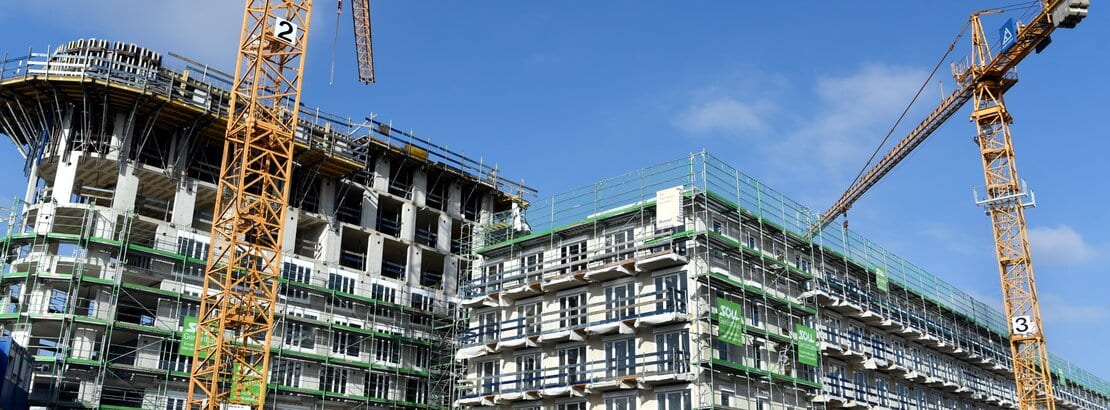
Growth keeps the queue long. Augsburg draws an estimated 22,000 newcomers a year, among them students and engineers for its aerospace and robotics plants. Builders finished 1,075 new-build flats in 2024, according to the city's statistics office. At year-end 2,186 approved homes had not been started, and 2,468 were still on site. Augsburg has been classed as a tight housing market since 2013, and Bavaria's renewed tenant-protection ordinance keeps it there until the end of 2029.
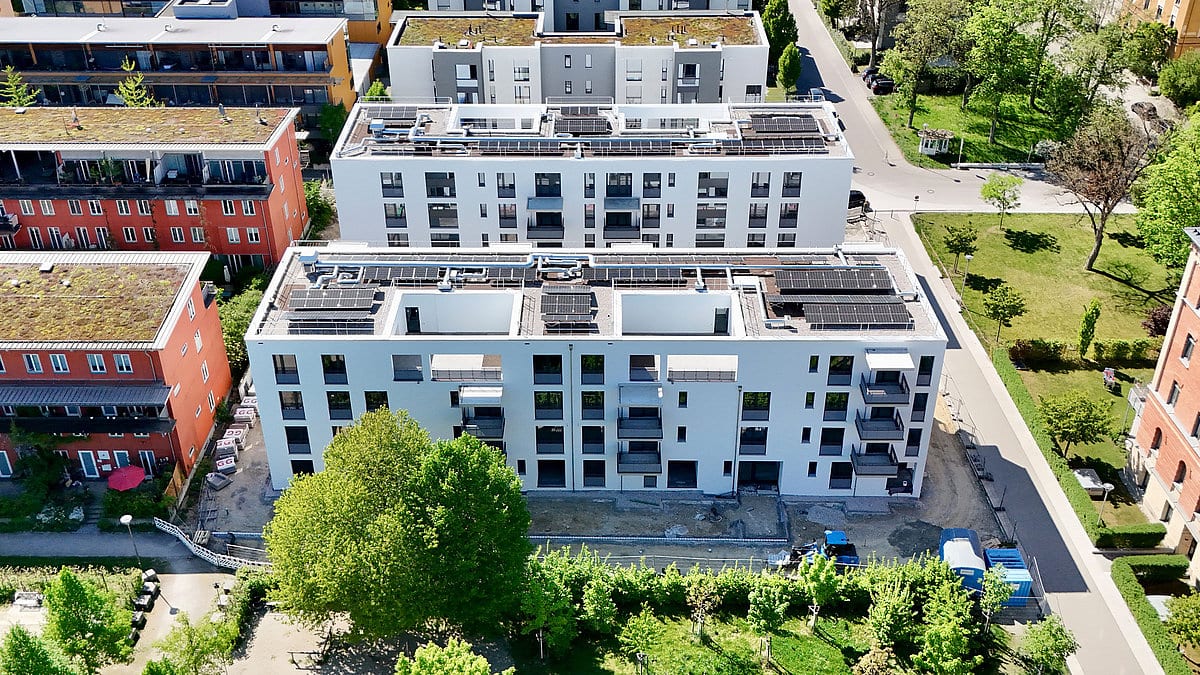
The strain falls hardest at the bottom, but it no longer stops there. A Hans-Böckler-Stiftung study of 77 German cities found that in 2018 47% of Augsburg's renter households spent more than 30% of income on warm rent, and 11% spent more than half. Only 49% lived in a flat that was both affordable and big enough; 40,264 households did not. Nationally the study traces the hard core of the gap to single people and low earners. Yet the subsidy income limits now cover most households, which takes eligibility well into the middle class. Local politics reads it the same way. In June 2026 the leaders of the SPD/ÖDP/Volt council group, Lara Hammer and Benjamin Adam, called housing "the great social question of the time", as Die Augsburger Zeitung reported.
Amid that pressure, one home in twenty belongs to a cooperative, the part of the market with the longest memory of doing things differently.
Garden-city settlers and Sheridan newcomers
Augsburg's cooperatives follow the German rental model. A new member buys a Genossenschaftsanteil (a refundable share that makes the tenant a co-owner of the cooperative) and gains a Dauernutzungsrecht (a lifelong right to occupy the flat). Rents cover costs and repayments rather than a return to investors. Nobody can sell a cooperative flat, so a low rent passes intact from one household to the next.
The tradition grew out of shortage. After the First World War the city needed homes fast, and Firnhaberau in the north shows how it improvised. The land had been left to Augsburg by the widow of the industrialist Friedrich August Firnhaber and held in trust for a housing emergency. Settlers began clearing it in 1921. Homes there are still managed by the Siedlungsgenossenschaft Firnhaberau (a settlement cooperative). It sits in the local directory of housing providers alongside the Baugenossenschaft Augsburg, WES eG and several other cooperatives, most of them small and rooted in one district.
Today the sector splits into two generations with different problems. The established cooperatives manage mostly post-war blocks; their task is keeping ageing buildings affordable while paying for insulation and new heating. The newcomers need land and credit in a market of high building costs. WOGENAU is the clearest case of the second group. It was founded in September 2019 with 26 founding members and passed 100 members within 18 months. The Munich cooperative wagnis came west to build here too. So did self-organised Baugemeinschaften (building groups, households that commission a building together and then own or rent it jointly). Federal research on communal living in cooperatives found the same pattern across Germany: new groups bring shared rooms and mixed generations into a form that had grown conservative.
The city's main lever is land. In 2021 it awarded 4 plots on the former Sheridan barracks to the best concepts rather than the highest bids, as an architect's account in a3kultur describes. Whether that one-off becomes standard practice is a question for the new council.
A housing-first mayor and a thinning subsidy stream
Housing decided Augsburg's 2026 election. In the March runoff the SPD's Florian Freund unseated the CSU mayor Eva Weber with 56.58% of the vote. He had campaigned on the line "Wohnen hat oberste Priorität" (housing comes first): adding storeys to existing buildings, developing Haunstetten Südwest at scale and founding an apprentices' housing company with fixed low rents. His new city executive mixes SPD and CSU department heads, with his SPD deputy Dirk Wurm running social affairs. The pipeline he inherits is thin. In the three years to mid-2024 the city approved 412 new subsidised flats, while Robert Kern, head of its housing-subsidy office, reported rising demand for loans at 0.5% fixed for 40 years.
Affordable housing is one of the most important social questions of our time.The council wants to go further. In June 2026 the SPD/ÖDP/Volt and Generation AUX/FDP/Die Partei groups tabled an "Augsburg Way". Developers could pay a levy instead of building subsidised units. Existing flats would stay rent-bound, and new flats would be sold cheaply to the Wohnbaugruppe. Raphael Brandmiller, who leads the Generation AUX/FDP/Die Partei group, said the city should tackle the shortage "instead of pointing to others' responsibility".
Each level of government holds a different lever. The federal level sets tenancy law: the Bundestag extended the rent brake to the end of 2029. In Augsburg that caps a new let at 10% above the local comparison rent and existing rents may rise by at most 15% in three years. Berlin's new Bauturbo (a fast-track planning law that lets councils approve housing without a new zoning plan) has been debated as the fix for slow permits. Bavaria holds the money through EOF, its income-oriented subsidy, which lowers each tenant's rent according to income. That pipeline is strained. The state company BayernHeim promised 10,000 homes by 2025 and expected about 1,700. The social landlords' federation VdW Bayern reported a funding freeze and building costs 44% above 2019. The city's own levers are land, planning and the Wohnbaugruppe.
The rent index the city council has just adopted changes nothing at all about the current housing market.For cooperatives the key instrument is the Konzeptvergabe (a concept tender, where land goes to the best project rather than the highest bid), used so far on Sheridan. The Greens' council group wants more of it. Its 2025 housing paper calls for land on Erbbaurecht (a long ground lease that keeps the land public while a project owns the building). It also wants a contact point for cooperative and other common-good projects, and a land-value model binding at least 30% of new homes as subsidised for 40 years.
Vacant homes draw a softer response than in Munich. Augsburg runs a vacancy-management service that helps hesitant owners re-let. It has no Zweckentfremdungssatzung (a bylaw requiring permission to leave homes empty or turn them into holiday lets). The same Greens' paper wants one, pointing to Nuremberg, where it returned almost 100 flats in its first year. For offices, federal money is arriving: Berlin's commercial-to-housing programme earmarks €360m for 2026. Augsburg's large conversions, though, have been military rather than office land.
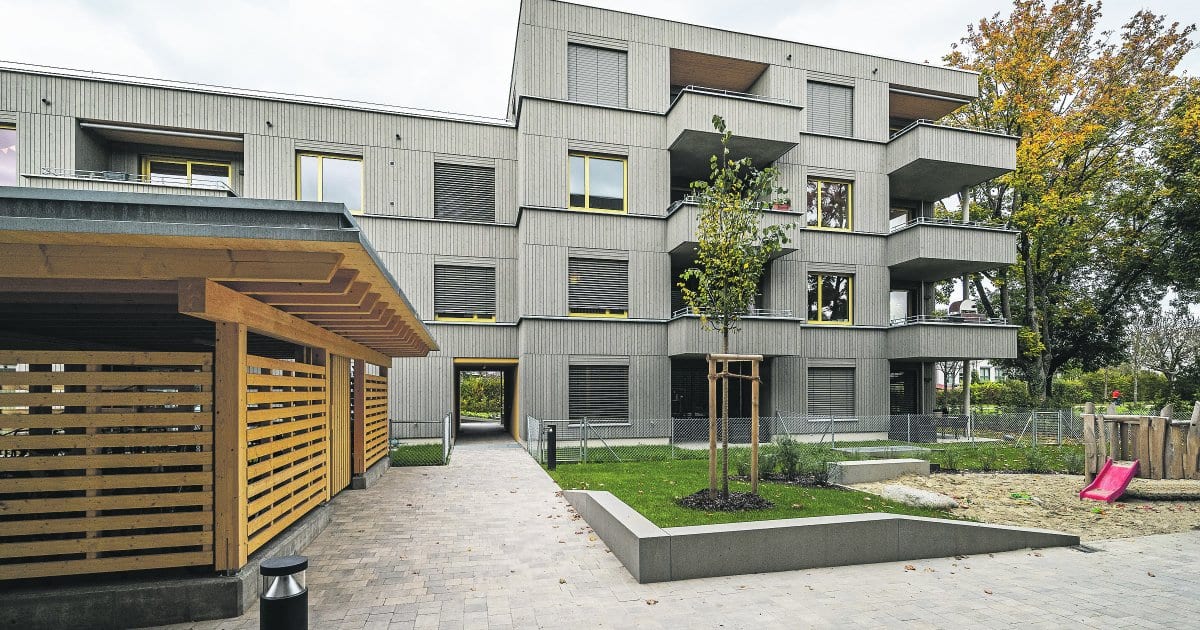
Climate policy runs alongside. The council's Blue City programme, adopted in July 2022, aims to halve the city's emissions by 2030 against 1990 and make the administration climate-neutral by 2035. New subsidised housing is where those standards land first. The Wohnbaugruppe's newest block is timber-framed to a federal climate-friendly standard, and both Sheridan cooperatives build in wood.
- 1521[source]
Jakob Fugger founds the Fuggerei
The endowed almshouse lane still charges a symbolic annual rent.
- 1927[source]
Municipal housing company founded
The forerunner of today's Wohnbaugruppe Augsburg starts building for the city.
- 1994[source]
The barracks conversion begins
The end of military use hands the city more than 200 ha of barracks land to turn into neighbourhoods.
- 2013[source]
Tight-market designation
Augsburg is classed as a strained housing market, unlocking rent regulation.
- 2021[source]
Sheridan plots go to the best concepts
Four plots are awarded to cooperatives and building groups on quality, not price.
- July 2022[source]
Blue City climate programme adopted
The council commits to cutting emissions as fast as possible, with buildings a core pillar.
- December 2025[source]
Mietspiegel 2025 takes effect
The qualified rent index sets the average net rent at €9.80/m² and runs to November 2027.
- March 2026[source]
Florian Freund elected mayor
The SPD candidate wins the runoff with 56.58% on a housing-first platform.
- April 2026[source]
wagnisSHARE residents move in
The first Sheridan cooperative house opens with 46 flats in 3 buildings.
- 2029[source]
Rent brake and tenant protection run out
The federal extension and Bavaria's ordinance keep the new-let cap in force until the end of 2029.
- 2030[source]
Emissions halved
The city's target line is a 50% cut in CO2 against 1990.
- 2035[source]
Climate-neutral city administration
The council's deadline for the administration's own operations, including its buildings.
From a merchant's almshouses to the city's stated climate and tenancy horizons.
Barracks land, timber houses and a whole new district
Sheridanpark is where Augsburg's post-military land turned into its most inventive housing. The US Army stayed in western Augsburg for half a century after 1945. Since its departure the city has turned more than 200 hectares of barracks land into neighbourhoods, stitched together by a 4 km green axis, according to a Bavarian land-saving case study. On the last Sheridan plots it tested a different kind of developer.
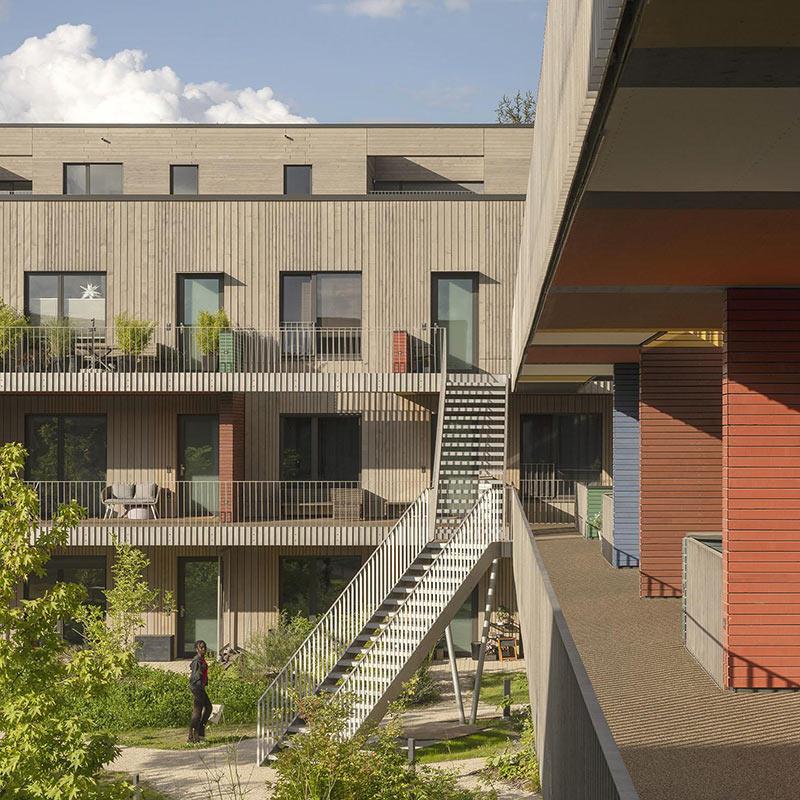
wagnisSHARE was the first to move in, in April 2026. The Munich cooperative wagnis built 46 flats in 3 houses on the site, mixing subsidised and other homes for a multi-generational neighbourhood. Residents share a guest flat, a workshop and roof terraces. The name joins Sheridan to the cooperative's rule of sharing resources.
WOGENAU's timber house next door was the young cooperative's first project. It holds 55 flats, 22 of them income-oriented subsidised, over 300 m² of shared rooms. Ground broke in September 2024 and the last free flat was allocated in June 2026.
Sheridan Park & Junia, a building group, completed three timber buildings on its plot and moved in during 2025. Its architect Frank Lattke describes communal building as "a form of social and economic self-determination, and an investment in the future".
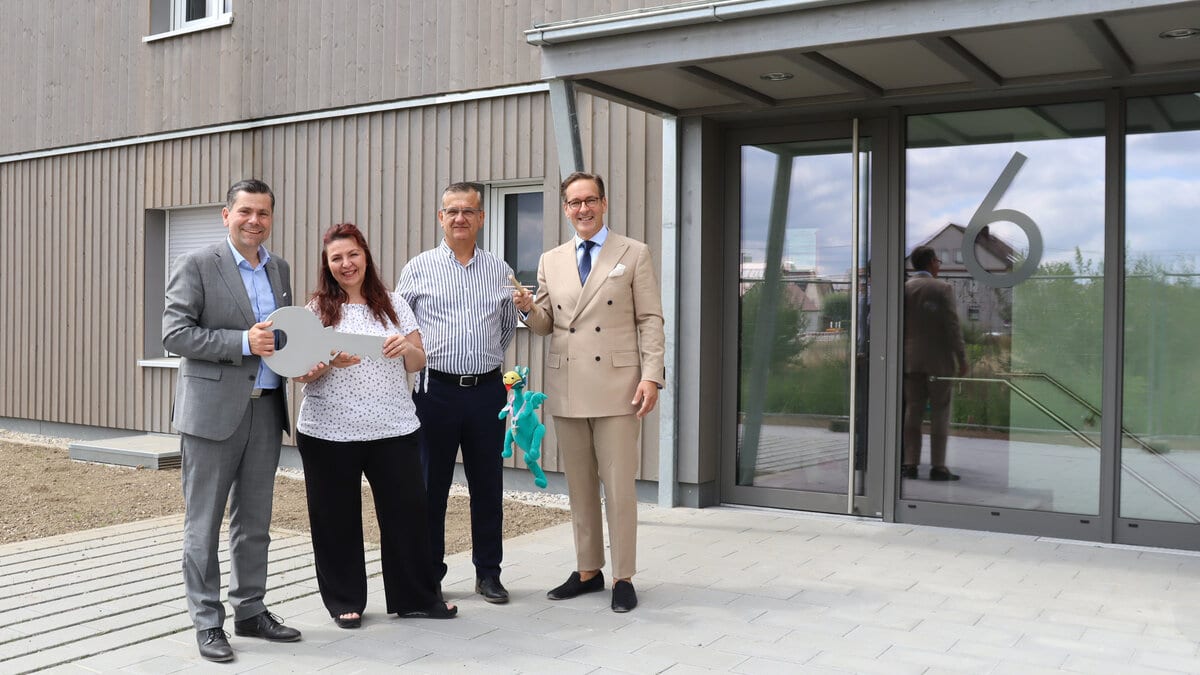
Urmelstraße in Lechhausen shows the municipal route. The Wohnbaugruppe finished 47 flats in three timber-frame buildings in 2026, named after the Puppenkiste's baby dinosaur. The target rent is €14.50/m², but subsidised tenants pay €7 to €9.50/m². Bavaria contributed €2.5 million in grants and a €10.1 million loan. The company's pipeline continues with a student hall of more than 260 places at the Lech bridge and 33 subsidised flats on Brunnenlechgäßchen.
Zeuna-Stärker, a former industrial site by the Wertach north of the old town, brings the state in. BayernHeim planned about 160 affordable flats within a new quarter of some 650 homes on the brownfield site. Its progress will test the company that missed its statewide target.
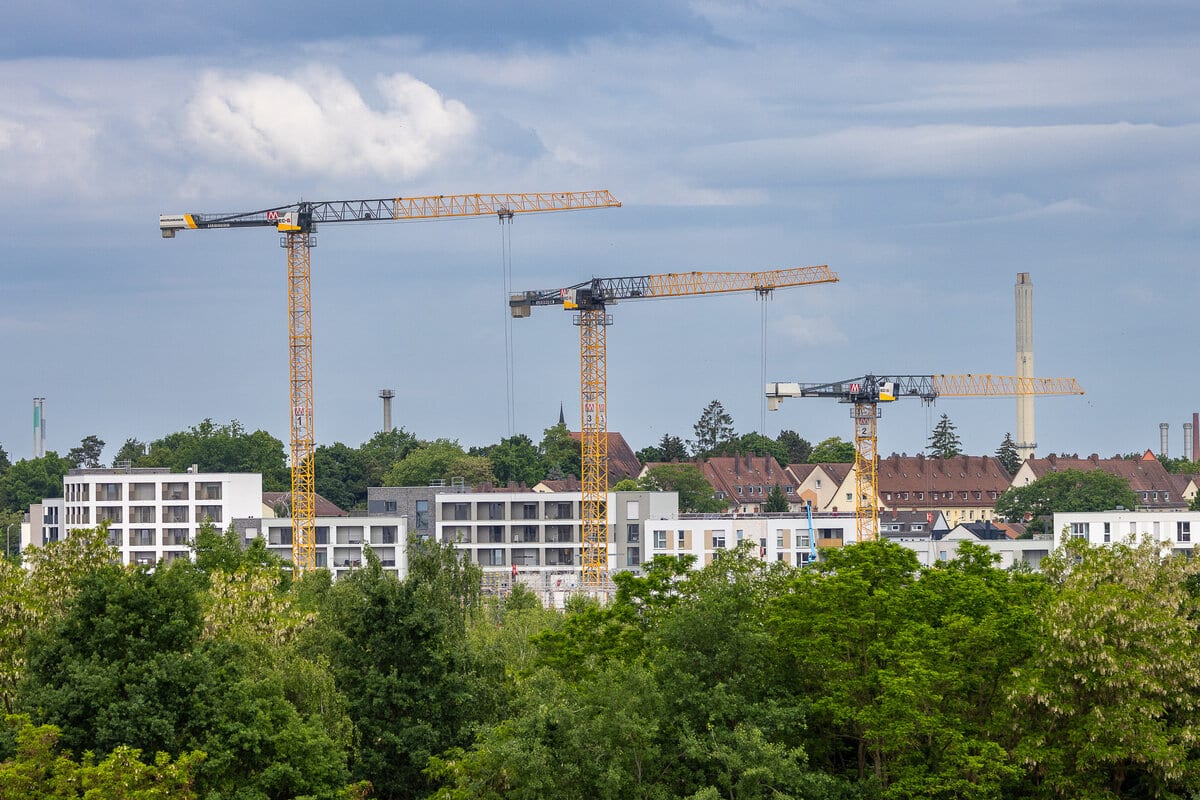
Haunstetten Südwest is the city's largest bet. On around 200 hectares of farmland in the south, the plan is homes for at least 10,000 residents and 5,000 jobs, reached by tram line 3. The council's brief asks for affordable homes for low and middle incomes and names cooperatives and building groups as partners. The Sheridan plots were the pilot; Haunstetten would show whether concept tenders can work at the scale of a whole district.
References
Statistics13Click on any number to see the source
Housing market
Cooperative, social & public
Adaptive reuse & vacancy
Population & migration
From our library18
- Wohnbaugruppe Augsburg — Organisation
- Wie die Stadt Augsburg sozialen Wohnbau fördert — Knowledge
- Mietspiegel 2025 – Wohnen in Augsburg — Knowledge
- Wohnungsbau in Augsburg: Baufertigstellungen und Bauüberhang zum Jahresende 2024 — Knowledge
- Wie viele (und welche) Wohnungen fehlen in deutschen Großstädten? — Working Paper 217 — Knowledge
- Bezahlbares Wohnen: Zwei Fraktionsgemeinschaften wollen Augsburger Weg — Knowledge
- WOGENAU eG — Organisation
- Neues Wohnen – Gemeinschaftliche Wohnformen bei Genossenschaften — Knowledge
- Gemeinschaftlich wohnen (a3kultur) — Knowledge
- Bundestag: Mietpreisbremse verlängert — Knowledge
- Einfacher und schneller Bauen: Hilft der Bauturbo zur Lösung der Wohnungskrise? — Knowledge
- BayernHeim: Wohnungsbauziele werden deutlich verfehlt — Knowledge
- In Bayern werden immer weniger bezahlbare Wohnungen gebaut — Knowledge
- Unser Positionspapier zu Wohnen – Grüne Stadtratsfraktion Augsburg — Knowledge
- Schriftlicher Bericht des BMWSB zum deutschlandweiten Büroleerstand — Knowledge
- Klimaschutzbericht 2024 der Stadt Augsburg — Knowledge
- Augsburg: Umwandlung militärischer Flächen im Westen Augsburgs — Knowledge
- 47 neue Wohnungen in der Urmelstraße — Knowledge
Further sources25
- Fuggerei — Fuggersche Stiftungen
- Wie die Stadt Augsburg sozialen Wohnbau fördert — Stadt Augsburg
- Wohnungsbau in Augsburg: Baufertigstellungen und Bauüberhang 2024 — Stadt Augsburg
- Wie viele (und welche) Wohnungen fehlen in deutschen Großstädten? Working Paper 217 — Hans-Böckler-Stiftung
- Augsburg-Firnhaberau — Wikipedia
- Siedlungsgenossenschaft Firnhaberau — SGF
- Wohnungsgesellschaften und Wohnungsgenossenschaften in Augsburg — Wohnprojekt Augsburg
- WOGENAU — WOGENAU eG
- Gemeinschaftlich wohnen — a3kultur
- Ergebnis der Stichwahl steht fest — Stadt Augsburg
- "26 für 26": SPD will den Wohnungsmarkt reformieren — Die Augsburger Zeitung
- Das ist die neue Stadtspitze — Stadt Augsburg
- 47 neue Wohnungen in der Urmelstraße — Stadt Augsburg
- Mietspiegel 2025 — Stadt Augsburg
- BayernHeim: Wohnungsbauziele werden deutlich verfehlt — Bayerische Staatszeitung
- In Bayern werden immer weniger bezahlbare Wohnungen gebaut — Allgemeine Bauzeitung
- Mietspiegel in Augsburg: Das sind die Argumente dafür und dagegen — b4bschwaben.de
- Unser Positionspapier zu Wohnen — Grüne Stadtratsfraktion Augsburg
- Wohnbaugruppe Augsburg — Wohnbaugruppe Augsburg
- Umwandlung militärischer Flächen im Westen Augsburgs — Bayerisches Staatsministerium für Umwelt und Verbraucherschutz
- Klimaschutzbericht 2024 — Stadt Augsburg
- wagnisSHARE — wagnis eG
- Gemeinschaftliches Bauen in Augsburg — Stadt Augsburg
- BayernHeim plant 160 bezahlbare Wohnungen in Augsburg — Sonntagsblatt / epd
- Haunstetten Südwest – Auslobung — Stadt Augsburg