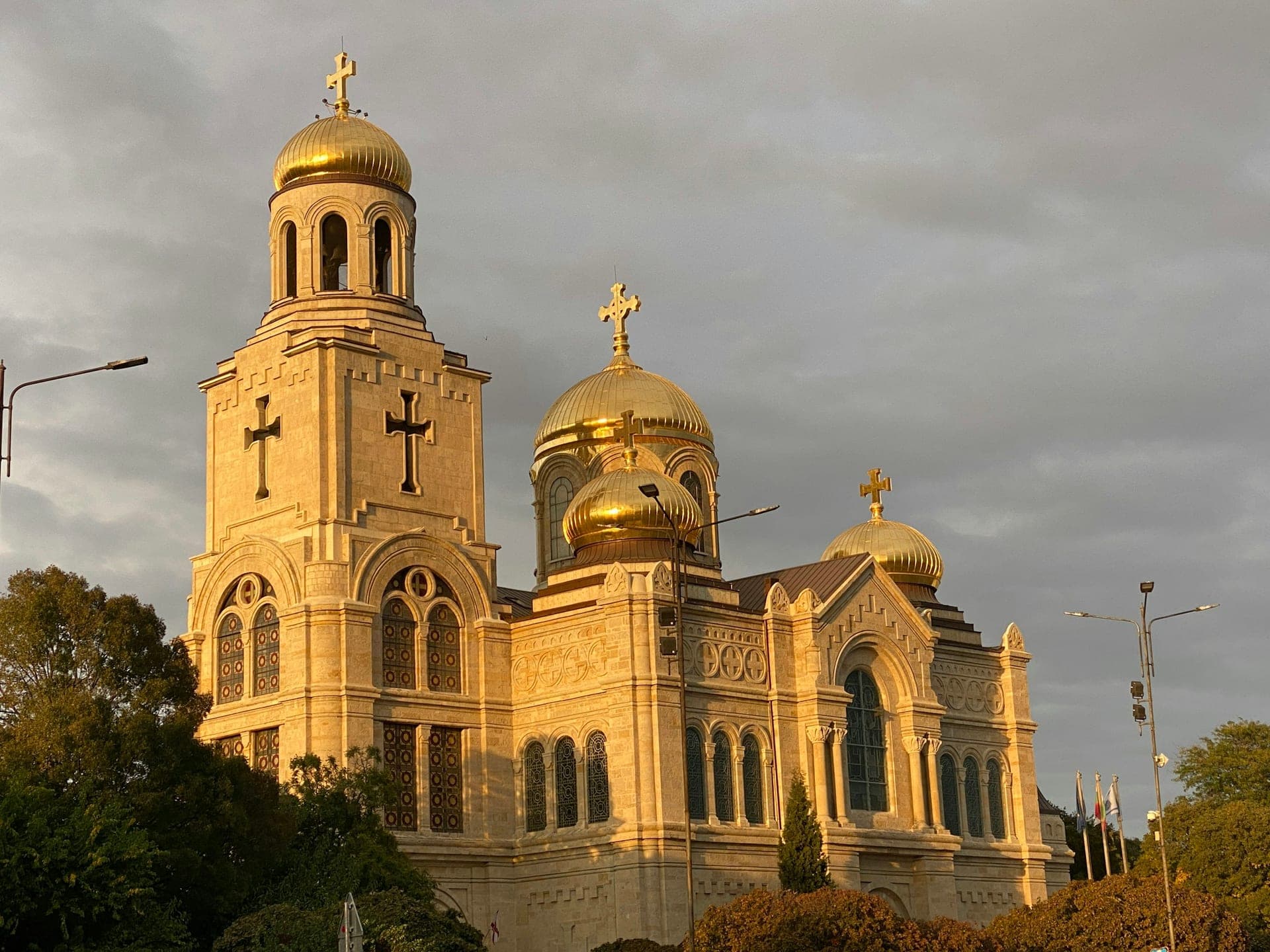
A summer capital of owners
Varna has always lived off the sea. Greek settlers founded it as Odessos, Roman engineers gave it the largest bathhouse in the Balkans, and in the 20th century it became Bulgaria's summer capital. That seaside economy still decides who can afford to live here. A flat in Varna is a home, a holiday let and, more and more, a family's savings account.
Home ownership is close to universal. Of the city's 322,683 residents, 83% live in a home they own. Renters make up 13%, and nearly all of them rent from a private landlord: private rental accounts for 12.4% of households. Public housing is a sliver. The municipality owns only a small stock of flats. Cooperative tenure, in which members jointly own a building and live in it as tenants of their own society, does not exist here as a category.
- Owners
- Owner-occupier83.0%
- Renters
- Public & non-profit rental0.60%
- Cooperative0.00%
- Private rental12.4%
- Unclassified4.0%
- Unknown / Other4.0%
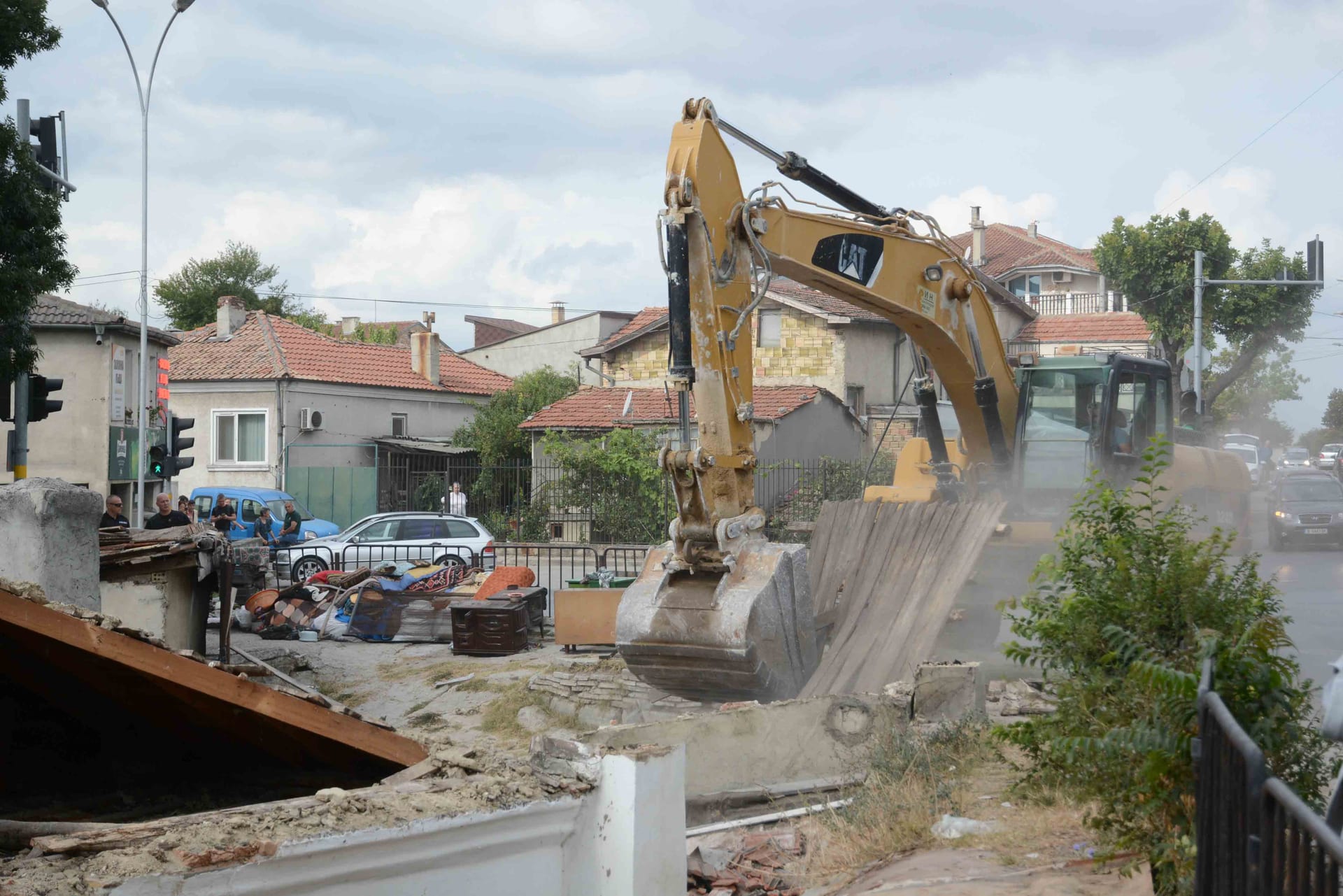
Social housing, in the sense of a covenant that caps rents across tenures, has no separate count in Varna. The municipal flat is the social layer. Its rent is fixed by municipal ordinance, not the market, and tenants are chosen by need from a waiting list. When Integro Association documented the Maksuda demolitions, the city administration put that queue at 2,500 people, mostly disabled residents and large families.
The rent ladder has few rungs. Municipal tenants pay around €0.75/m² a month. A newly advertised flat asks €9.18/m², roughly twelve times as much. A furnished flat taken for about six months is estimated at €15.6/m² with bills included, and a furnished one-bedroom lists at around €400 a month. No one measures what sitting tenants pay across the whole stock. In a city of owners, rents are simply not tracked.
- Public/municipal housing
- New contracts
- Furnished / serviced (gross)
Net cold rent per m² per month for municipal flats and new lets; the furnished mid-stay tier is gross, bills included.
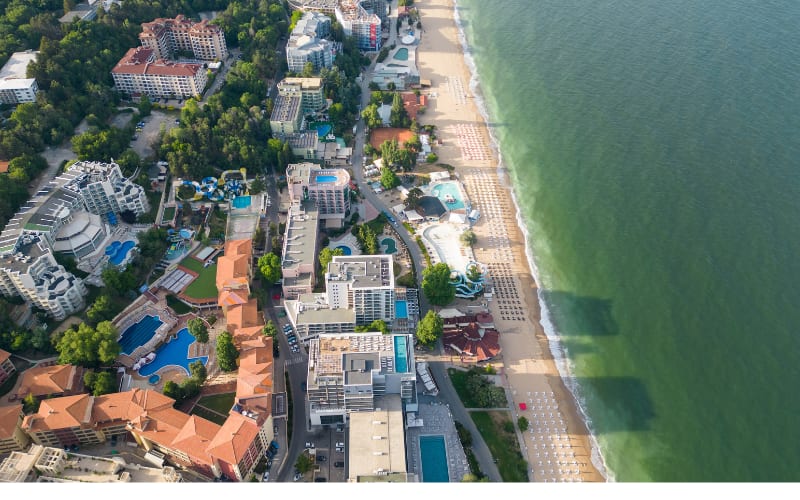
Empty homes are the city's paradox. The 2021 census counted 22% of Varna's dwellings as uninhabited, some 45,000 homes. Much of that is holiday stock, used for a few weeks each summer. Offices tell the opposite story. Colliers' figures, reported in a BTA survey of Bulgaria's regional office markets, put Varna's office vacancy at a record low of 4.2% across 277,100 m² of stock.
New arrivals keep coming. About 7,000 people settle in the municipality each year, drawn by the port, the universities and the coast. Holiday lets compete for the same flats: a one-bedroom on a booking platform fetches a median €60 a night, so a single summer week can out-earn a month of rent. Buyers are chasing the top of the market. BNT's report on rising Varna prices describes people paying for sea views before buildings are finished, with 65% of deals financed by bank loans.
Who feels the squeeze? The poorest first. Habitat Bulgaria's warning about dangerous housing notes that 32% of Bulgarians live at risk of poverty or social exclusion. Bulgaria also shares with Greece the EU's highest rate of people unable to keep their homes warm: 19% in 2024, against 9.2% across the EU. Roma families in informal districts such as Maksuda are at the sharpest end, because a house built without a permit bars its owner from the municipal queue.
The pressure has now reached the middle class. Bulgarian house prices rose 14.8% in the year to the first quarter of 2026, BTA's report on the latest price index shows, and Varna added 4.0% in that quarter alone. The run-up to euro adoption on 1 January 2026 pushed savers into bricks. For a household without savings, a mortgage is now the only way in, and the deposit grows every quarter. Between the bank loan and the municipal flat there is no middle tenure at all, and the cooperative share is effectively nil.
Cooperatives that built blocks, then dissolved into them
In Bulgaria a housing cooperative is a way to build, not a way to live. Under the zhilishtno-stroitelna kooperatsiya (housing-construction cooperative, ZhSK), at least six households pool their money, hire an architect and a contractor, and put up a block together. Each member ends up owning a flat. Once the building stands, what remains is a condominium, run by an owners' association under the Condominium Management Act. There is no equity share that stays with the society, and no rent paid to it.
The form is a century old. In the early 1920s the government of Aleksandar Stamboliyski changed the law to let families pool savings for flats. Cooperative blocks of three to five storeys rose across Sofia through the 1930s, and examples survive in Varna and Burgas. The practice stopped in 1946 under the new communist regime. It returned in 1978 with a Law on Housing Construction Cooperatives, this time as one more route to owning a flat. Either way, the cooperative ended the day the keys were handed over.
What survives today is the legacy, not a sector. Three groups matter in Varna. The first is the stock itself: interwar and socialist-era cooperative blocks, now ordinary condominiums whose owners must agree before anything is repaired. The second is the national renovation programme, which works only through owners' associations and has revived collective decision-making in the panel estates. The third is a thin civic layer of lenders and advocates, led nationally by Habitat for Humanity Bulgaria. They share one gap. None of them owns land or buildings that could anchor a permanent, non-speculative stock.
Policy has never placed cooperatives in Bulgaria's affordable mix. National programmes speak of municipal flats, social housing and energy renovation. Housing Europe's review of Bulgarian housing development traces the EU-funded lines of 2014 to 2020 and 2021 to 2027, and none of them is cooperative. A cooperative future in Varna would have to be written into policy from the first line.
A strategy in draft, a coastline under concrete
Bulgaria is rewriting its housing policy from scratch. The work sits with the MRRB (the Ministry of Regional Development and Public Works, which holds housing, planning and construction). In April 2026 its then minister, Nikolay Naydenov, announced a new national strategy centred on social housing and informal settlements, BTA reported. In July deputy ministers said it should be ready by the end of 2027 and run to at least 2040, as BTA's follow-up on the timetable records. The current EU programming period sets aside €90 million for energy efficiency in existing homes and €29.35 million for new energy-efficient buildings.
The strategy in Bulgaria will emphasize the problems of marginalized settlements, and additional efforts will be needed for their development and improvement of living conditions.Each tier of government holds a different key. The national level writes tenancy and planning law, funds renovation and, through the BNB (the Bulgarian National Bank, the central bank), sets mortgage rules. Since October 2024 new home loans may cover at most 85% of a property's value, with repayments capped at 50% of disposable income. Regional offices of the construction-control agency enforce permits. The municipality owns the land and the flats, and writes the rules for allocating them.
In Varna the municipal tier is also where planning fails in public. At Baba Alino, beside the Golden Sands resort, police and municipal officers found 104 blocks of flats on about 10 hectares of land still classed as forest. Mayor Blagomir Kotsev signed the first demolition orders in June 2026, BTA reported. Ivan Shishkov, the Regional Development Minister in Rumen Radev's government, told Parliament that checks on the certificates that legalised the blocks would reach back before 2023, according to BTA's parliamentary report. Kotsev himself had returned to City Hall in December 2025 after months in custody on corruption charges he denies.
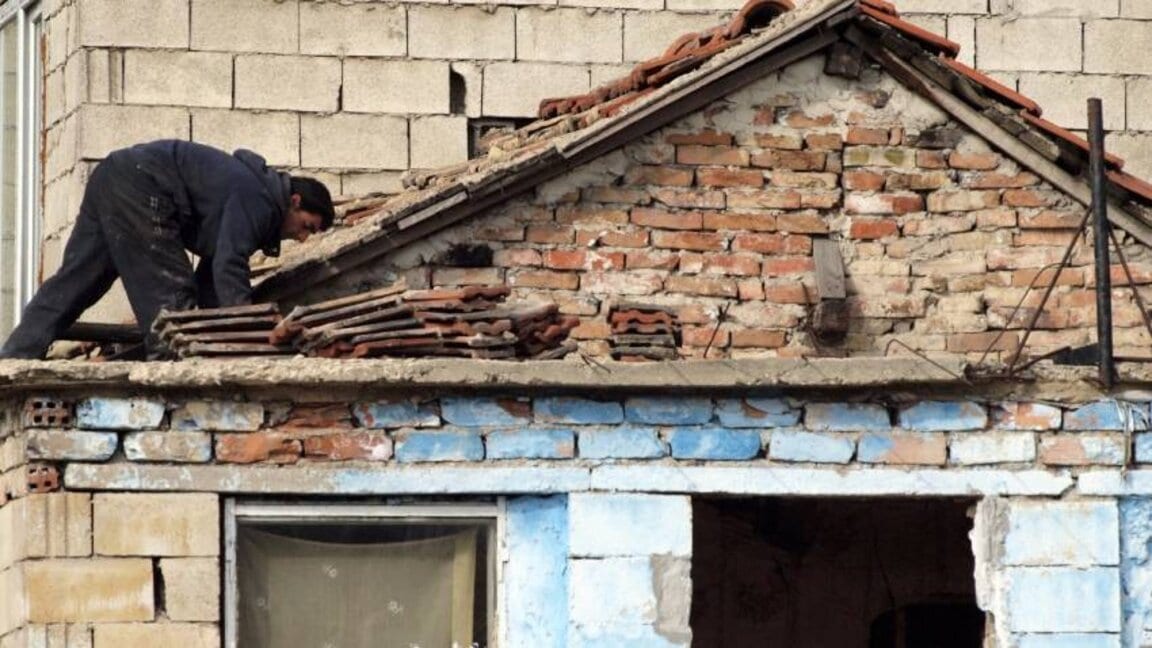
No instrument in Varna or in national law supports cooperatives. There is no concept-led land tender, no ground-lease pact and no dedicated funding line. What exists is municipal, and it has been contested. In 2014 the city proposed EU-funded social housing in the Mladost district. A citizens' committee gathered 20,000 signatures against it, and the ministry refused the money. The next summer the city demolished 46 houses in the Roma district of Maksuda.
We are working in places where economic and housing poverty reach terrifying scale.The empty flats along the coast get no direct answer yet. Varna has no vacant-homes tax and no register of empty buildings. The EU's proposed Affordable Housing Act, published in September 2026, would let cities restrict short-term lets in areas under housing stress, where they have harmed affordability for at least three years. For a resort city it would be the first legal tool aimed at holiday lets. FEANTSA's study of reclaiming vacant spaces sets out the conversion routes Varna has not yet tried.
Energy is where housing and climate policy meet. The national renovation programme for multi-family buildings, funded from the Recovery and Resilience Plan with BGN 1.13 billion, paid up to 100% of works in its first stage. Each block had to reach energy class B and save 30% of its primary energy. Because only owners' associations can apply, the condominium has become Bulgaria's vehicle for decarbonising homes, a role cooperatives play elsewhere. Baba Alino adds the land question: every block built on forest is soil sealed for good.
- 1920s[source]
Cooperative building allowed
Aleksandar Stamboliyski's government lets families pool savings to build flats together.
- 1978[source]
Law on Housing Construction Cooperatives
Cooperative building returns after more than three decades, as a route to ownership.
- 2015-08[source]
Maksuda demolitions
Varna carries out 46 demolition orders in a Roma district after a 2014 social-housing project was blocked.
- 2022-12[source]
Renovation programme opens
Owners of multi-family blocks can apply for recovery-plan grants of up to 100% for energy renovation.
- 2024-10[source]
Mortgage limits in force
The BNB caps new home loans at 85% of value, 50% of income and 30 years.
- 2026-01
Bulgaria joins the euro
The lev gives way to the euro; savers had moved into property ahead of the changeover.
- 2026-04[source]
New housing strategy announced
The ministry says the strategy will focus on social housing and informal settlements.
- 2026-06[source]
Baba Alino demolition orders
Varna issues the first orders against 104 blocks built on forest land.
- 2026-09[source]
EU Affordable Housing Act proposed
Cities could restrict short-term lets in areas under housing stress.
- 2027 (target)[source]
National housing strategy due
The new strategy is due by the end of 2027.
- 2040 (horizon)[source]
Strategy horizon
The new strategy is to run to at least 2040.
From the Reserve fund to the owners’ association
Varna has no flagship cooperative to point to. Its beacons are smaller: a municipal emergency fund, a civic plan, a lender to the poor and thousands of owners' associations learning to act together. Each is a piece of what a non-market housing system would need.
The municipality's Reserve fund, its emergency pool of flats, still works case by case. In June 2026 it housed a family with a disabled 12-year-old in a 77 m² flat at a symbolic rent. The same announcement said the city is putting up three new buildings for social and health services. The tool exists; what it lacks is scale.
The Plan for Varna, drafted by the civic initiative committee Future for Varna, is the closest the city has come to a housing programme on paper. Its social and housing chapter proposed 50 new municipal homes and a pilot of 100 homes for people in need, with rent and utilities covered by EU funds. It named Vienna, Ostrava and Poznań as models and called for an end to demolitions without somewhere else to live.
Habitat for Humanity Bulgaria shows what patient, small-scale finance can do. Its interest-free micro-loans of BGN 1,200 each have funded repairs in poor districts, and Bulgarian National Radio's report records a repayment rate of 97%. Its Home Equals campaign now works with pilot municipalities on planning for informal neighbourhoods.
The owners' associations of Varna's panel estates are the fourth building block. Formed to apply for renovation grants, they already vote on budgets, contractors and shared repairs. That is already a form of self-government. In Varna the associations still stop at the front door: nobody owns the building together, and the flats trade on the open market the day the scaffolding comes down.
References
Statistics10Click on any number to see the source
Housing market
Adaptive reuse & vacancy
Population & migration
From our library11
- Roma housing demolition in Varna, Mladost district, Maksuda Roma neighborhood — Knowledge
- Office Markets in Bulgaria's Major Regional Cities Remained Resilient In 2025 and Early 2026 — Knowledge
- House prices in the coastal city of Varna are rising - what are the reasons? — Knowledge
- Habitat Bulgaria: The big problem with dangerous housing is not among the state's priorities — Knowledge
- Housing Prices in Bulgaria Rise 6.2% in Q1 of 2026 — Knowledge
- Housing Development in Bulgaria – Learning from 2014-2020 to Take a Step Further in 2021-2027 — Knowledge
- Bulgaria to Begin Developing New National Housing Strategy With Focus on Social Housing, Says Regional Development Minister — Knowledge
- New National Housing Strategy Expected by End-2027, Officials Say — Knowledge
- Varna Municipality Issues First Demolition Orders for Illegal Houses in Baba Alino Area — Knowledge
- Checks into Controversial Tolerance Certificates in Varna to Cover Period before 2023, Regional Minister Says — Knowledge
- Reclaiming Vacant Spaces to Tackle Housing and Homelessness Crises in Europe — Knowledge
Further sources11
- Eurostat: 19% in Greece couldn’t heat homes in 2024 — To Vima · 2026-02
- Жилищна кооперация (Housing cooperative) — Wikipedia (Bulgarian)
- BNB lending standards for household loans secured by residential property — Bulgarian National Bank · 2025-03-17
- Varna Mayor Says New Chapter Opens in City’s Governance — BTA · 2025-12-01
- European Commission proposes Affordable Housing Act — The Sofia Globe · 2026-09-09
- The application phase under the national programme for energy efficiency of multi-family residential buildings has started — EnEffect · 2022-12-20
- Minister Nikolay Naydenov: It is imperative to immediately start working on a new National Housing Strategy — Habitat for Humanity Bulgaria · 2026-04-22
- 12-годишната Ани и семейството й от днес са в новия си дом — Varna Municipality · 2026-06
- План за Варна: Социална и жилищна политика — Initiative committee Future for Varna
- Varna Chalcolithic Necropolis — Visit Varna
- Roman Thermae — Regional Museum of History, Varna