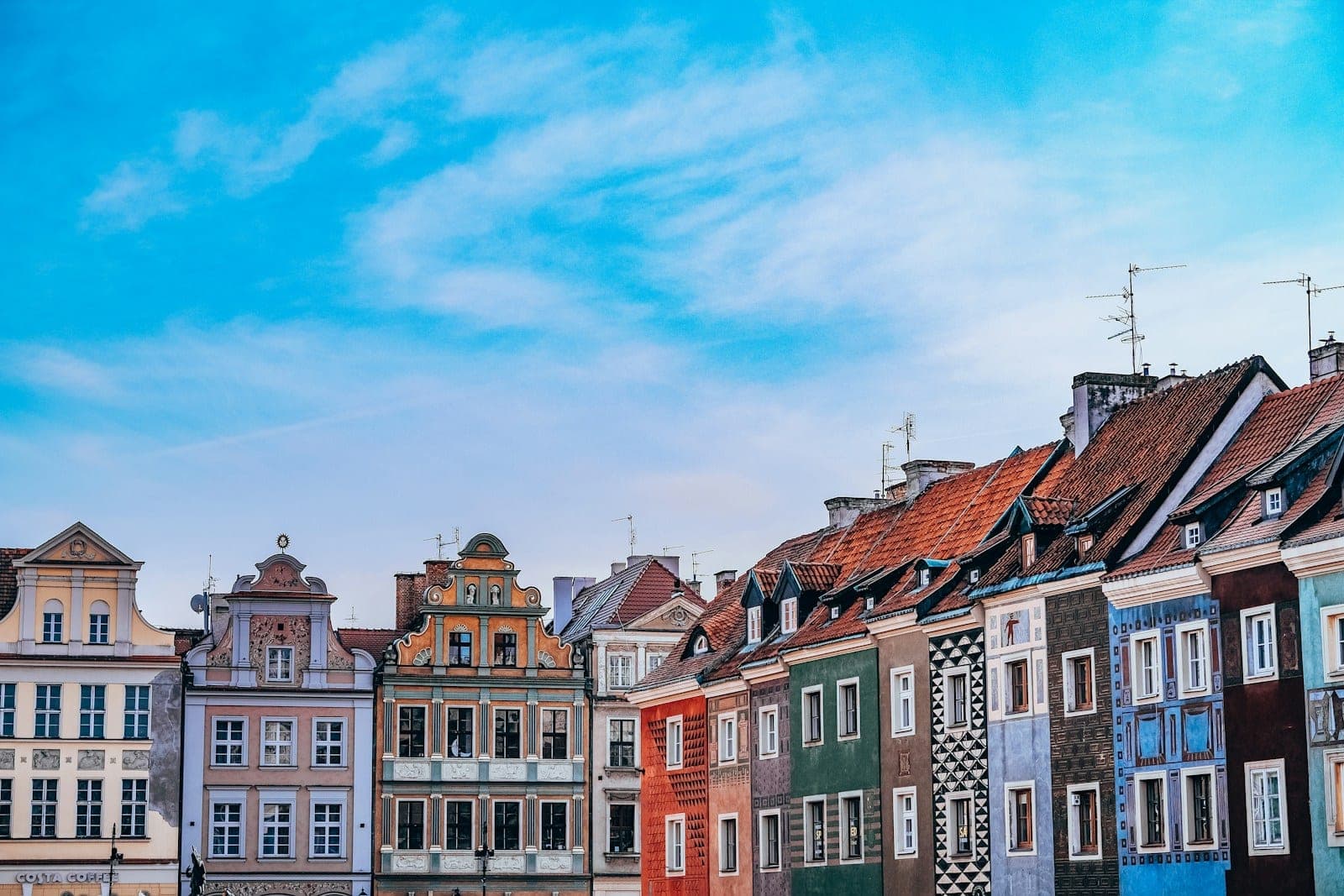
A city of rituals, short of rooms
Poznań likes its rituals. Two mechanical goats still butt heads above the Old Market Square at noon, and every 11 November the city buys St Martin’s croissants by the tonne. The same steadiness runs through its housing: a trading city of merchants and engineers that has always preferred organised, collective answers, from the first building societies of the 1890s to the vast cooperative estates of Rataje and Winogrady. What it has not yet settled is who builds the homes its newcomers need.
No census table splits Poznań by tenure, so the headline shares lean on proxies. Nationally, 58.1% of urban dwellings are owner-occupied, and cooperatives hold 13.2% of Polish stock. The city’s own statistics show a stronger cooperative presence: cooperatives manage 63.8 thousand of Poznań’s dwellings, roughly a fifth of the stock. Municipal ownership is thin, at 12,500 flats or 4.1% of dwellings. On these proxies private renting works out at 37.8%, a residual that probably overstates it, because the owner figure is a national urban average rather than a Poznań count.
- Owners
- Owner-occupier44.9%
- Cooperative13.2%
- Renters
- Public & non-profit rental4.1%
- Private rental37.8%
Social housing in Poland is a set of rules rather than a tenure. About 4.5% of Poznań’s homes carry some form of social rent, spread across three tracks. ZKZL, the city company that manages municipal housing, holds 1,635 social flats (lokale socjalne, the cheapest tier for households at risk of homelessness) within a portfolio of 12,612 units. Beside them sit 3.7 thousand social-rental (społeczno-czynszowe) flats, mostly built by PTBS, the municipal social-rental company. Both tracks are publicly owned, so in Poznań the social layer and the public slice largely coincide.
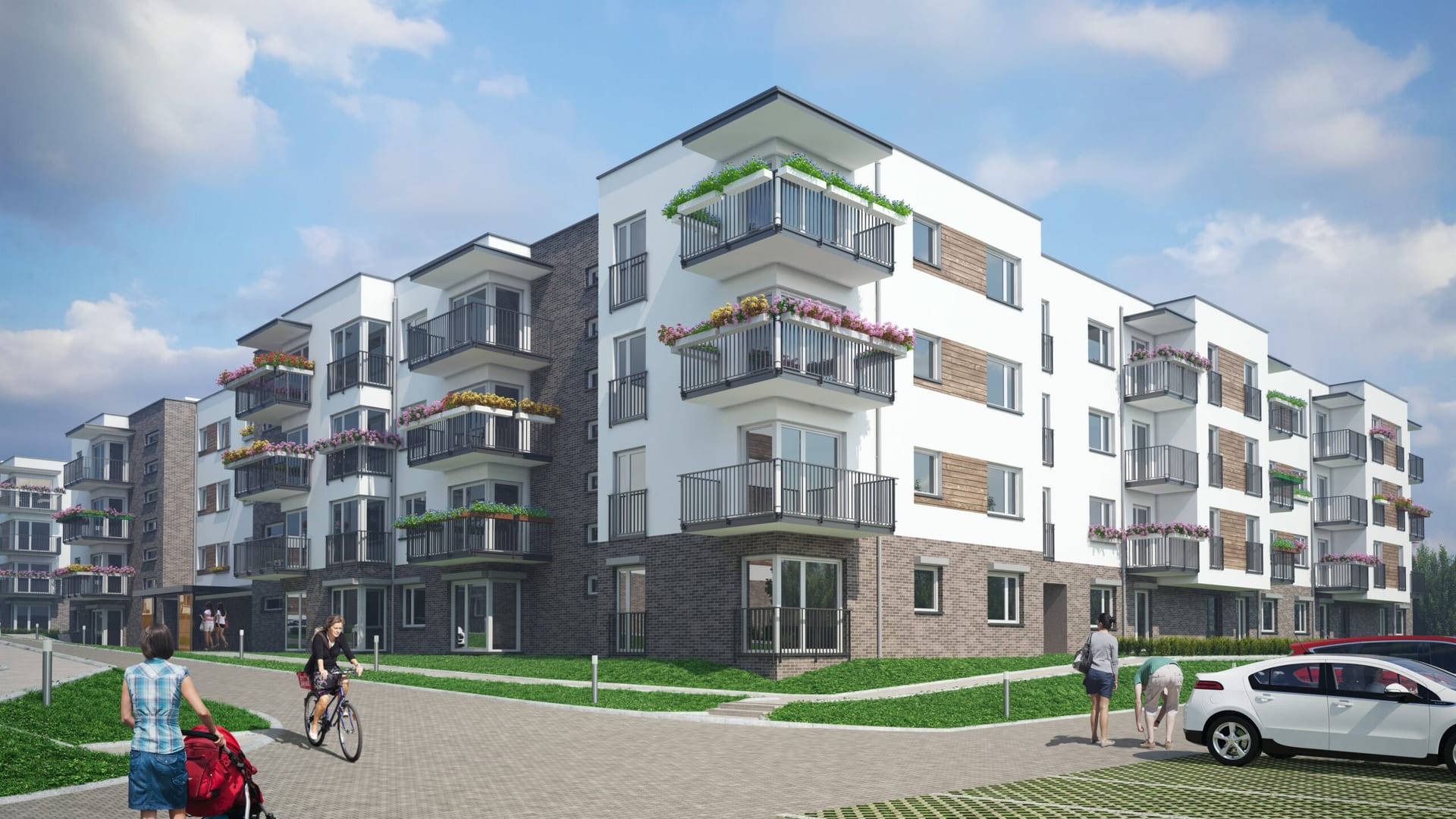
Rents climb steeply once a household leaves those tracks. A cooperative member pays running charges of about €1.77/m², and a municipal tenant about €2.70/m². The market is several times dearer. Average rents across the stock reach €12.72/m², asking rents for new lets €10.35/m², and furnished flats with utilities and furniture priced in €16.70/m². The asking figure sits below the stock average because it is an offer price from listings, while the stock figure comes from the central bank’s transaction survey.
- Cooperative
- Public/municipal housing
- New contracts
- All-stock median
- Furnished / serviced (gross)
Cooperative and municipal tenants pay a fraction of market rents. Cooperative and public figures are running charges and regulated rents; furnished rents are gross, including utilities and furniture.
Empty homes are harder to count than they look. The 2011 census counted 12,181 empty dwellings. The 2021 census found about 39 thousand uninhabited flats, a figure that includes homes awaiting sale or used only part of the year. In the municipal stock ZKZL recorded 559 empty flats in July 2026. Offices tell a similar story: vacancy across Poland’s regional office markets stands at 11.5%, which on Poznań’s stock means roughly 119,260 m² of empty floor space.
Demand keeps arriving from several directions. The city registers about 5,454 newcomers a year, yet it loses residents to its own suburbs: in 2024 internal migration left the city 1,481 people down while the surrounding county gained 5,229. Poznań also teaches 100,433 students, and mobile data put 79.3 thousand foreign residents in the city, mostly from Ukraine and Belarus. Builders completed 5,041 dwellings in 2024, and 4,549 of them were for sale or rent by developers. Poland has no rent cap.
The squeeze falls hardest on those without a secure title. On Osiedle Maltańskie, a settlement that grew from allotment plots on church land, the Archdiocese sold the site to a developer for 421.18 million zł in January 2026, and families who had lived there for generations are being moved out. The Wielkopolskie Stowarzyszenie Lokatorów (the Greater Poland tenants’ association) was founded in 2011 against landlords who emptied old tenements by harassment. The crisis also reaches the middle. A single person renting a studio spends about 36.4% of an average net wage on rent. Nationally, over half of Poles aged 25 to 34 (53.9%) still live with their parents, and 33.7% of people live in overcrowded homes, double the EU rate. Habitat for Humanity Poland estimates that nearly a third of society sits in a “rent gap”, too poor to rent or buy and too well-off for support. Perception follows the numbers: when Poznań opened 353 affordable flats in 2024, nearly 1,000 households applied.
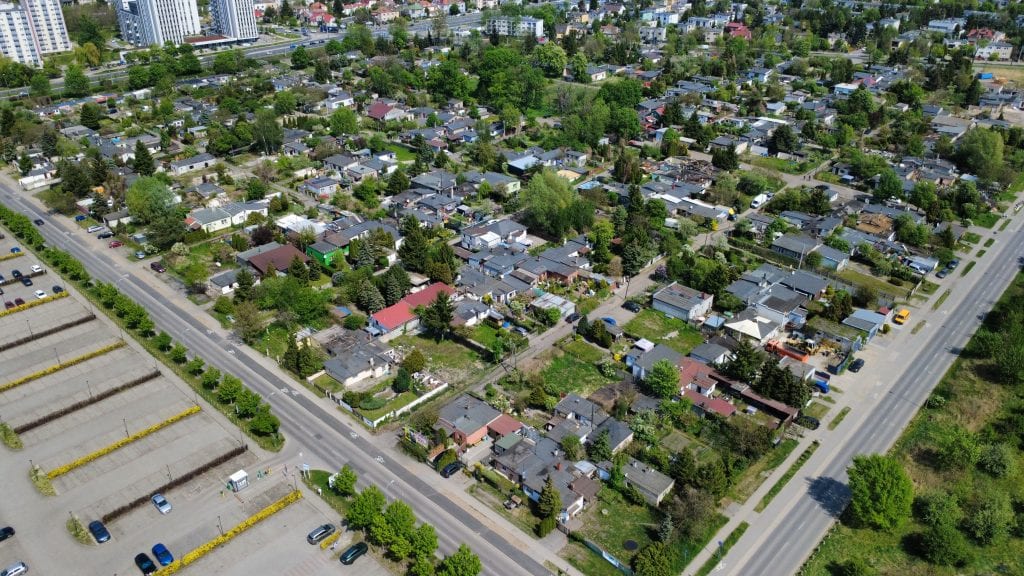
Against that pressure, cooperatives remain the city’s largest non-market landlord, with about a fifth of the stock in their care.
From Pomoc to the panel estates
Polish cooperatives house members under two main titles. The spółdzielcze własnościowe prawo (an ownership-type cooperative right) can be sold and inherited, while the lokatorskie prawo (a tenant-type right) cannot. The ownership right dates from 1972, and new ones stopped being created in 2007, according to a 2023 report on Polish housing cooperatives by the Institute of Urban and Regional Development. Most members have since converted to full ownership, so a Poznań cooperative today is often a manager of owners rather than a landlord.
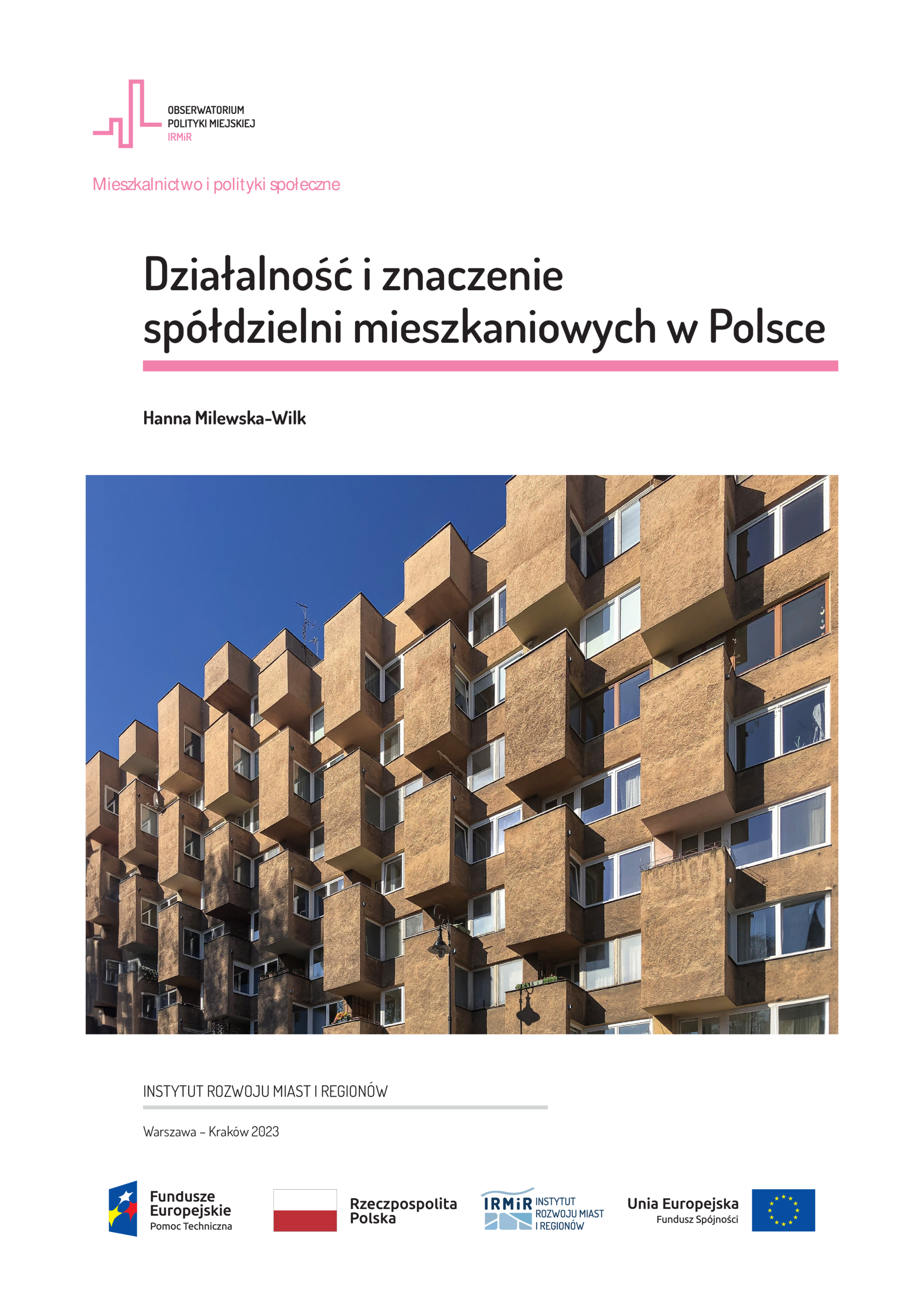
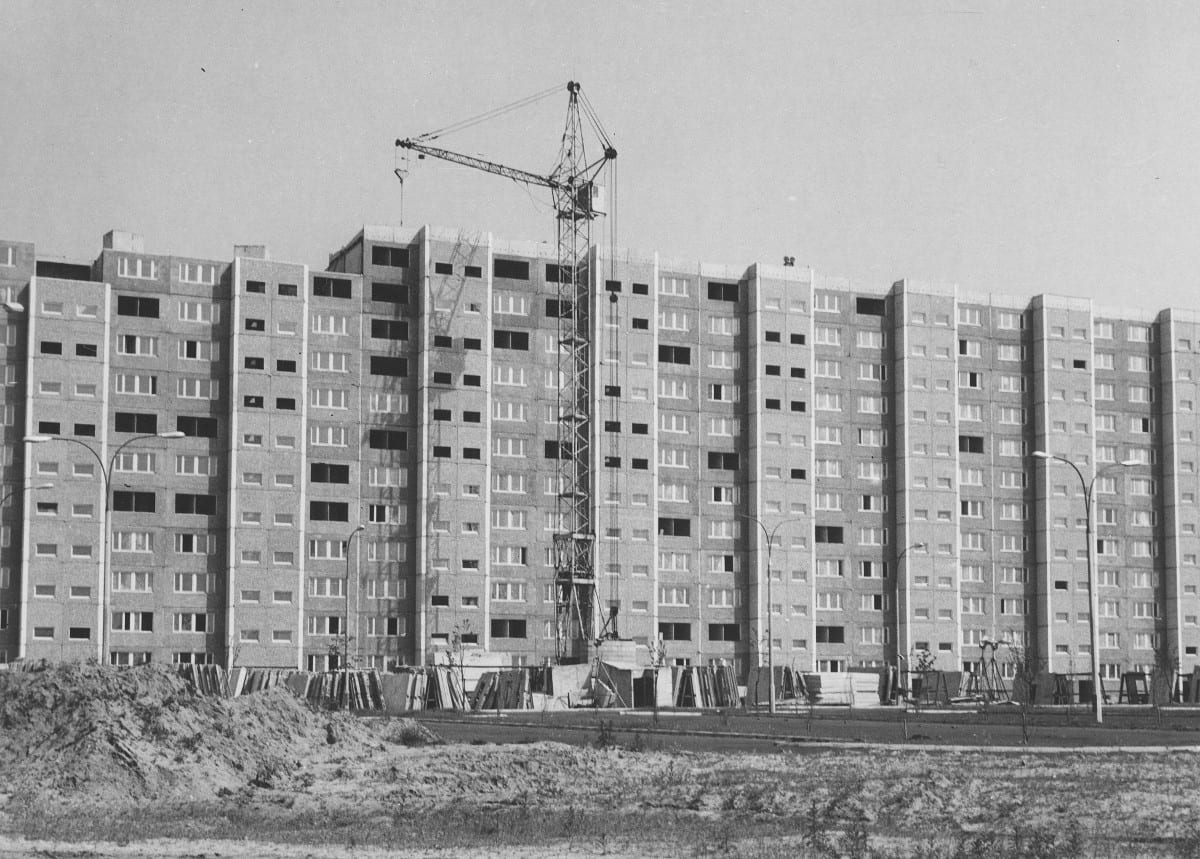
The tradition is old. The building society Pomoc, founded in Poznań in 1890, was among the first housing cooperatives on Polish soil. Between the wars, the Poznańska Spółdzielnia Mieszkaniowa notes, the city’s cooperative sector grew faster than anywhere except Warsaw. In 1949 the state merged it into one city-wide cooperative. After the June 1956 uprising, which began in Poznań, the authorities turned to cooperatives as the main builders of housing. They raised the large-panel estates of Rataje, Winogrady and Piątkowo in the 1960s and 1970s.
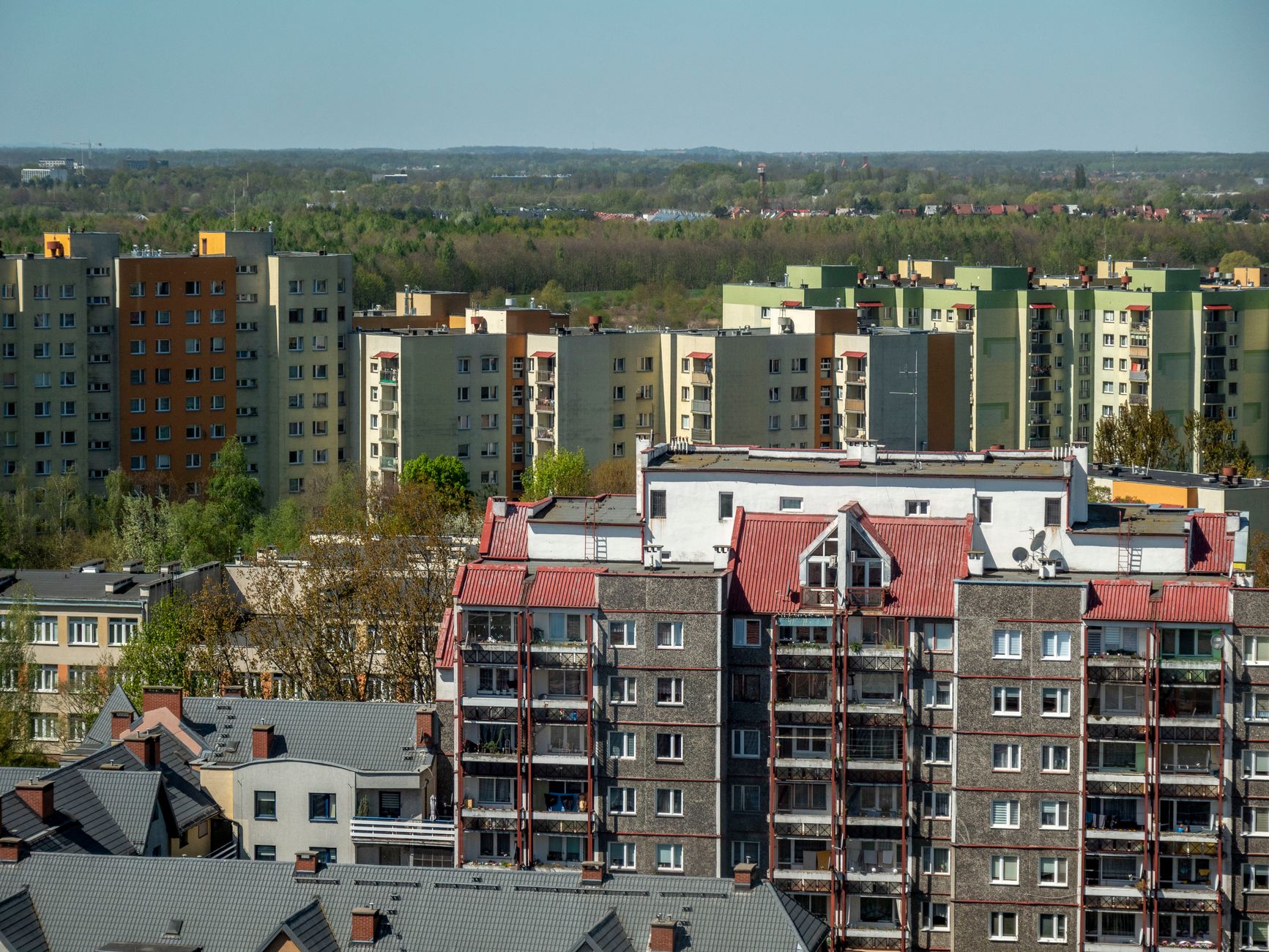
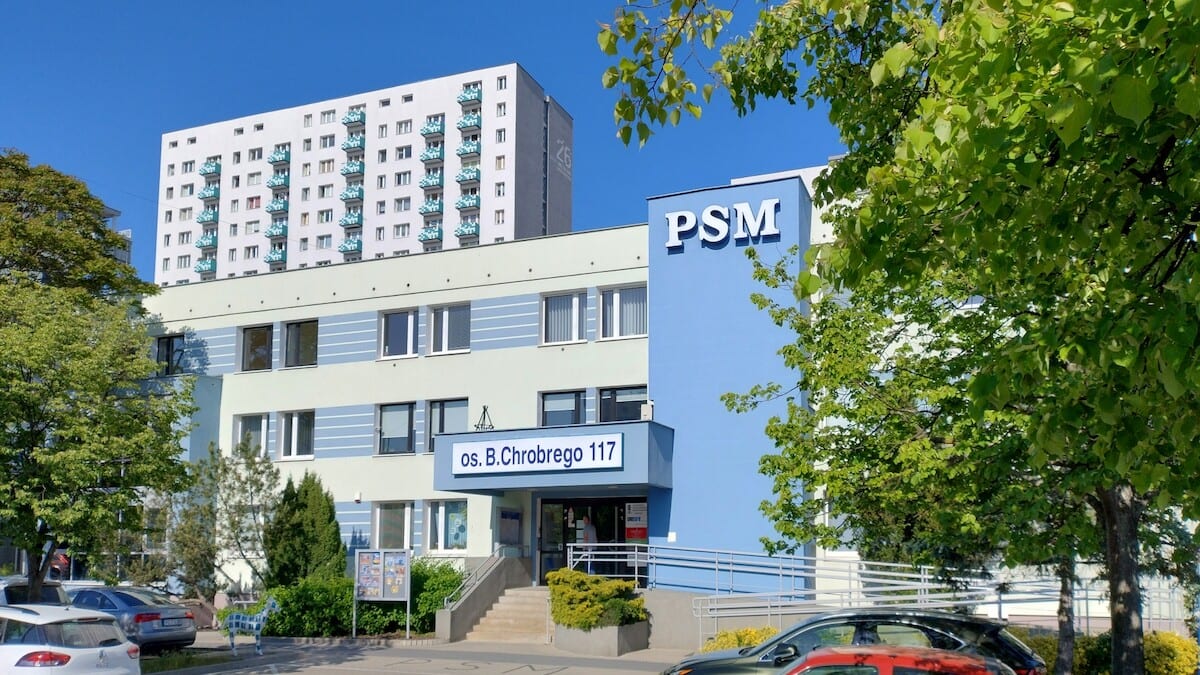
Those estates still define the sector. Spółdzielnia Mieszkaniowa “Osiedle Młodych”, founded as a youth cooperative in 1958, manages 30,978 flats in Rataje and is the largest cooperative in the region. The Poznańska Spółdzielnia Mieszkaniowa counted 19,624 members on Piątkowo. Winogrady broke away as its own cooperative in 1983, and the Cegielski cooperative in Wilda dates, like Osiedle Młodych, from 1958. Nationally there are 3,499 cooperatives. Their problems converge. Panel blocks need insulation; Osiedle Młodych still had 21 buildings to insulate in 2025, funded from commercial rents rather than members’ charges. Governance is the second strain: the Poznańska cooperative went without a president for months after the 2021 dismissal of its board. New-build is the third. Polish cooperatives completed only 1,500 flats in 2020, and the kooperatywy mieszkaniowe (small self-build groups allowed since 2023) remain marginal because the law gave them neither land nor money. A 2023 study of cooperatives in the Polish property market traces the same regulatory and financing barriers.
Increasing cooperatives’ building activity requires support from the state.Government is now rewriting the rules around them. An amendment in force since January 2026 requires officers to be elected in person. A further draft would scrap members’ right to convert tenant-type flats into full ownership, so that cooperatives can build rental homes without fearing they will lose them. Poznań itself has so far left cooperatives out of its own building programme.
Rent, not mortgages
The national government’s answer to the crisis has moved from mortgages to rent. In February 2025 Krzysztof Paszyk, then minister of development and technology, scrapped the subsidised “Kredyt na start” mortgage and promised that no złoty would flow to developers. His plan set a target of 40,000 social-rental flats a year by 2030. In January 2026 the government put 6.7 billion zł into housing for 2026, most of it through the Fundusz Dopłat (the subsidy fund run by BGK, the state development bank). The ministry says the fund financed a record 10,341 homes in 2025. A bill now before the Sejm would make short-term lets register with the municipality, though it dropped the zones where cities could ban them.
Money and tenancy law are set nationally; land, planning and the municipal stock belong to the city. Jacek Jaśkowiak, president of Poznań since 2014, won a third term in April 2024 with 70.67% of the run-off. His administration steers housing through a 2024–2028 programme for the municipal stock and through PTBS. Its flagship is “POZnań – i zamieszkaj”, a below-market rental scheme. The third stage, 516 flats on ul. Żelazna, is financed from the Fundusz Dopłat, a loan, tenants’ contributions and PTBS’s own funds. In December 2025 Poznań became the first large Polish city to adopt its plan ogólny (the new zoning plan every municipality must have), which decides where the next estates can go.
Cooperative instruments exist on paper more than in Poznań. Since 2017 cooperatives can again build tenant-type flats with 30-year BGK loans under Społeczne Budownictwo Czynszowe (social rental construction). Nationally only 905 flats had been financed this way when IRMiR reported. The kooperatywy law lets young-majority groups buy municipal land on preferential terms, but Poznań runs no dedicated land tender for cooperatives, and none of the city’s recent social-rental homes came from one.
The city’s reply to its own vacancies is practical. ZKZL cut the time to relet an empty flat from over 180 days to about 60, handing over 724 flats in 2022. Its “Mieszkanie do remontu” scheme offers run-down flats to tenants who renovate them, with six months rent-free and an open-ended lease. Municipalities can claim up to 80% of renovation costs from the national fund. A revitalisation programme covers Śródka, the Old Town, Łazarz, Wilda and Święty Marcin. Office conversion has no policy of its own yet.
Climate targets now ride on the same stock. Poznań’s draft sustainable-energy and climate plan aims to cut emissions by 40% by 2030 and 80% by 2050, with energy poverty as one of its three pillars. The EU buildings directive requires zero-emission new buildings from 2030. The 2026 state budget adds 942 million zł from the recovery plan for energy-efficient housing. Municipal and cooperative estates, with their thousands of panel flats, are where those targets will be met or missed.
The sharpest argument is over Osiedle Maltańskie. The mayor says the city has rehoused residents in 48 municipal flats and accuses some campaigners of seeking conflict rather than agreement. Residents and the left-wing Razem party say the city has abandoned people who paid local taxes for decades.
This is not at all a wish to compromise; it is a wish to stir up trouble. Agreement is not the goal of some of the groups involved in the Osiedle Maltańskie case.This is my home, my history and my identity.- 1890[source]
Building society Pomoc founded
One of the first housing cooperatives on Polish soil is set up in Poznań.
- 1958[source]
Osiedle Młodych cooperative founded
A youth cooperative that grows into the region’s largest, on the Rataje estates.
- 1996[source]
PTBS becomes Poland’s first registered TBS
Poznań’s social-rental company is the first of its kind registered nationally; its first estate of 503 flats follows in 2001.
- 2007[source]
New ownership-type cooperative rights end
Cooperatives may no longer create the tradable cooperative title in new buildings.
- 2011[source]
Tenants’ association founded
Tenants of a Piaskowa Street building facing removal found the Wielkopolskie Stowarzyszenie Lokatorów.
- April 2024[source]
Jaśkowiak re-elected
The mayor wins a third term with 70.67% in the run-off.
- December 2025[source]
General zoning plan adopted
Poznań is the first large Polish city to adopt its plan ogólny.
- January 2026[source]
Osiedle Maltańskie sold
The Archdiocese sells 12.2 ha to JHM Development for 421.18 million zł net.
- January 2026[source]
Cooperative law amendment in force
Cooperative officers must now be elected in person.
- August 2026[source]
Żelazna contract signed
PTBS signs the build contract for 516 rental flats, its largest single-phase investment.
- 2028[source]
Żelazna tenants move in
Move-in of the 516 flats is planned for the second half of 2028.
- 2030[source]
Climate and social-housing targets
Poznań aims for a 40% emission cut; the national plan targets 40,000 social-rental flats a year.
- 2050[source]
Deeper emission cut
The city plan targets an 80% cut against 2019.
Between the ministry’s billions and the eviction lists, the homes that show what works are already standing in Strzeszyn, Rataje and Garbary.
Strzeszyn, Rataje, Garbary: the pieces on the table
“POZnań – i zamieszkaj” is the city’s bet on rent rather than ownership. PTBS delivered 199 flats in Strzeszyn at about 21 zł/m², well below market, and 353 more next door, 35 of them adapted for wheelchair users. The Żelazna stage, twelve buildings on 4 hectares, is the company’s largest yet. The model has friction. Tenants in PTBS’s older rent-to-own scheme took the company to court in 2023, when nearly 400 tenants sued over rent rises and management costs.
Osiedle Młodych shows what the socialist-era cooperatives can still do at scale. Its Rataje estates house about 65,000 people on nearly 300 hectares, and the cooperative has insulated most of its panel blocks over a decade-long schedule. The work slowed under inflation, and the last towers remain. The Poznańska Spółdzielnia Mieszkaniowa on Piątkowo faces the same retrofit bill with a weaker board after its leadership crisis.
Stara Rzeźnia, the municipal slaughterhouse on Garbary that opened in 1900, is Poznań’s largest adaptive-reuse housing project. The Swedish developer Vastint bought the 5.5-hectare site in 2018 and is turning the brick halls into homes, offices and cultural space. Its friction is ownership: a public site went, after years of disputes, to a private developer building flats for sale, not rent. On the former Cegielski works in Wilda, Nowy Cegielski follows the same path.
Fundacja Barka, the mutual-aid foundation Barbara and Tomasz Sadowski started in 1989, built Osiedle Darzybór on 5 hectares of land the city gave in 2002. Its first stage housed 32 households in quick-build panel houses, meant as a three-year step out of homelessness. A 2010 survey found most families stayed longer, because nothing affordable waited on the other side.
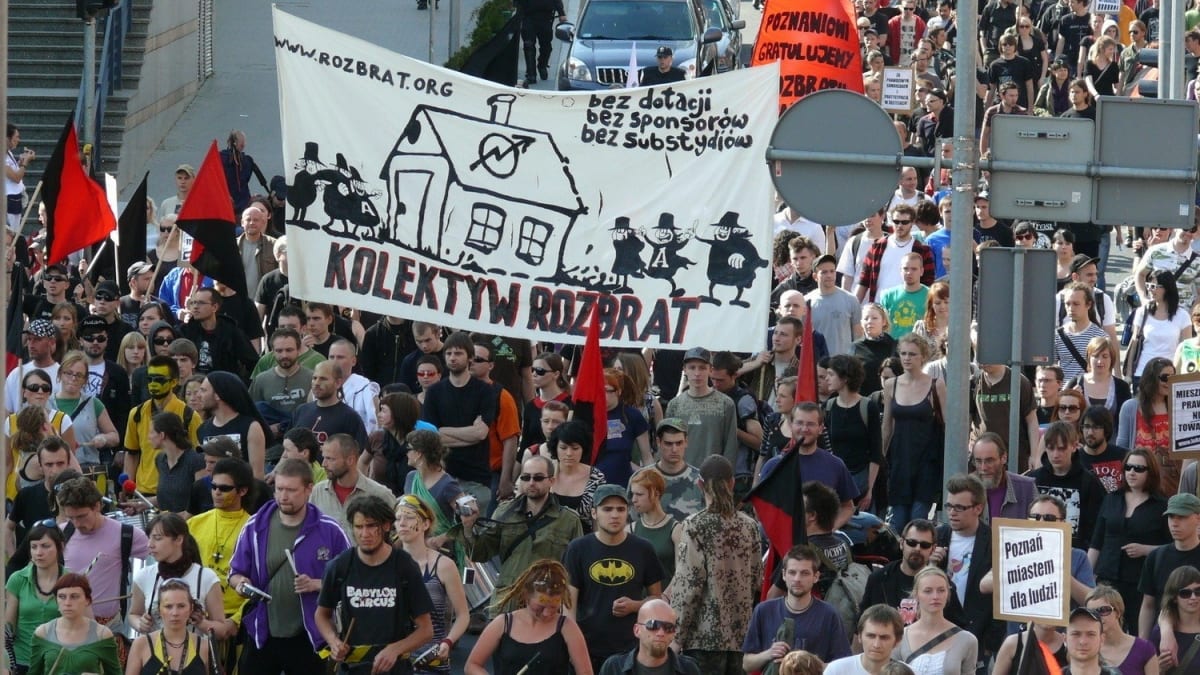
Wielkopolskie Stowarzyszenie Lokatorów works at the other end of the same problem. Beyond fighting harassment evictions, it has run a supported social-housing project since 2017. Ultra Architects, a Poznań practice founded in 2004, shows the design talent on hand, with infill housing such as a tenement on Wilda’s market square.
Wielkopolskie Stowarzyszenie Lokatorów
Poznań’s tenants’ association.
Read more →These pieces rarely meet. Rataje has scale, PTBS has cheap public money, Barka has social know-how and Garbary has a model for reuse. Across Central Europe, a network of cooperative pioneers is already testing how such pieces can be joined, while an analysis of Central and Eastern Europe’s housing crisis warns what happens when ownership-heavy cities fail to build for rent. Poznań holds most of the materials; it has yet to put them in the same room.
References
Statistics10Click on any number to see the source
Housing market
Cooperative, social & public
Adaptive reuse & vacancy
Population & migration
From our library11
- Poznańskie Towarzystwo Budownictwa Społecznego (PTBS) — Organisation
- Osiedle Maltańskie bez tajemnic. Konflikt, który podzielił Poznań — Knowledge
- Wielkopolskie Stowarzyszenie Lokatorów — Organisation
- Over half of Poles aged 25-34 live with parents — Knowledge
- Co trzeci Polak zbyt biedny na najem lub kupno mieszkania, a za bogaty na wsparcie — Knowledge
- Działalność i znaczenie spółdzielni mieszkaniowych w Polsce — Knowledge
- Poznańska Spółdzielnia Mieszkaniowa — Organisation
- Spółdzielnia Mieszkaniowa „Osiedle Młodych” — Organisation
- Spółdzielnie mieszkaniowe na rynku nieruchomości w Polsce w XXI w.: Bariery i szanse rozwoju — Knowledge
- Cooperative Housing Pioneers in Central and South- Eastern Europe: Mainstreaming Alternatives through Translocal Networks — Knowledge
- Housing Crisis Threatens to Fracture Central and Eastern Europe — Knowledge
Further sources39
- Badam Poznań, housing stock 2024 (GUS, UMP)
- Badam Poznań, housing stock 2023
- Bankier.pl on NSP 2021
- Poznań Nasze Miasto, August 2026
- ilezametr.pl, citing GUS
- Badam Poznań, students 2024/25
- Badam Poznań, foreigners 2025
- wPoznaniu, January 2026
- Bankier.pl, September 2025
- Eurostat, December 2025
- City of Poznań, 2024
- SM Osiedle Młodych, August 2025
- kooperatywy mieszkaniowe
- amendment in force since January 2026
- Hanna Milewska-Wilk, housing researcher at the Institute of Urban and Regional Development (IRMiR) and author of its 2023 report on housing cooperatives
- no złoty would flow to developers
- Ministry of Development and Technology, January 2026
- short-term lets register with the municipality
- Rzeczpospolita, April 2024
- wPoznaniu, August 2026
- first large Polish city to adopt its plan ogólny
- ZKZL, February 2023
- six months rent-free
- Infor, November 2022
- revitalisation programme
- City of Poznań, March 2026
- zero-emission new buildings from 2030
- epoznan.pl, September 2026
- Jacek Jaśkowiak, President (mayor) of Poznań, September 2026
- Patrycja Bartoszewska, resident of Osiedle Maltańskie whose family has lived on the estate since 1949
- PTBS, stage I
- PTBS, stage II
- Codzienny Poznań, March 2023
- Stara Rzeźnia
- Nowy Cegielski
- Fundacja Barka
- Osiedle Darzybór
- a supported social-housing project
- Ultra Architects