Overview of the Report and Publisher
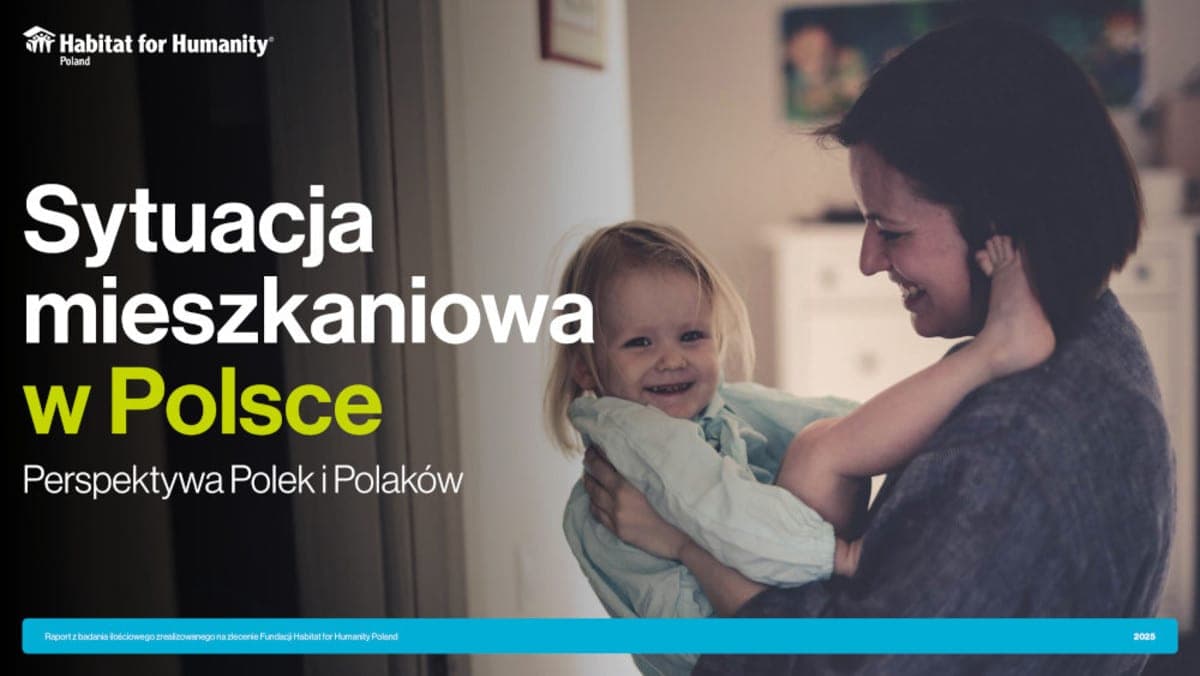
The article, published by Architektura.info, presents findings from the “Sytuacja mieszkaniowa w Polsce 2025” report prepared by Habitat for Humanity Poland. The publisher is an online news platform focusing on architecture and urban issues in Poland. The report is based on a nationwide survey and expert analysis, aiming to highlight the scale of the housing affordability gap and propose policy solutions.
Scale of the Housing Gap in Poland
According to the report, one‑third of Poles are caught in a “rent gap”: they earn too much to qualify for social housing yet too little to afford market‑rate rent or purchase. 47 % of respondents spend between 30 % and 50 % of their income on housing costs, and the share of people spending over half their earnings on housing rose from 8 % in 2022 to 14 % in 2025. Only 11 % say they can afford stable, long‑term rent, a figure that fell from 21 % in 2022.
Impact on Different Demographic Groups
The lack of affordable housing affects both young adults and the elderly. Young people delay leaving the parental home and starting families, while older residents often live in poorly heated or ventilated dwellings. The survey shows 34 % of the population lives in overcrowded homes, and 1 in 5 share their flat with people they would prefer not to live with. Additionally, 14 % cannot adequately heat their homes, a problem concentrated among seniors and low‑income households.
Proposed Policy Measures
Habitat for Humanity Poland recommends a coordinated, comprehensive housing policy that includes:
- Construction and modernisation of social and municipal apartments.
- Renovation and conversion of the estimated 1.8 million vacant properties into affordable homes.
- Expansion of state‑supported rental schemes, modelled on successful programmes in Austria where over 60 % of Vienna’s residents benefit from social housing. These measures aim to reduce the “rent gap” and improve living standards, especially for those who currently fall outside eligibility for public assistance.
Role of the Private Sector and Community Initiatives
The report stresses that developers currently fill the vacancy of empty buildings, but high market prices limit access for most citizens. It calls for public‑private partnerships, increased investment in low‑cost housing, and greater involvement of NGOs and local authorities in managing and adapting vacant properties.
Societal Consequences of Inadequate Housing
Overcrowding and insecure tenancy have broader social effects. Children in cramped homes display poorer educational outcomes and higher health risks. 29 % of young respondents cite unstable housing as the main barrier to starting a family, potentially affecting demographic trends. Moreover, the lack of affordable, decent housing is ranked behind high living costs, low wages, and an inefficient health system as one of the top life‑quality concerns.
Outlook and Call to Action
The article concludes with a petition link for Habitat for Humanity Poland, urging citizens to support policy reforms. It highlights that addressing the housing crisis is essential for sustainable urban development across Europe, aligning with broader European Union goals for social inclusion and climate‑responsive building standards.