After the pits: estates, emptiness and one big landlord
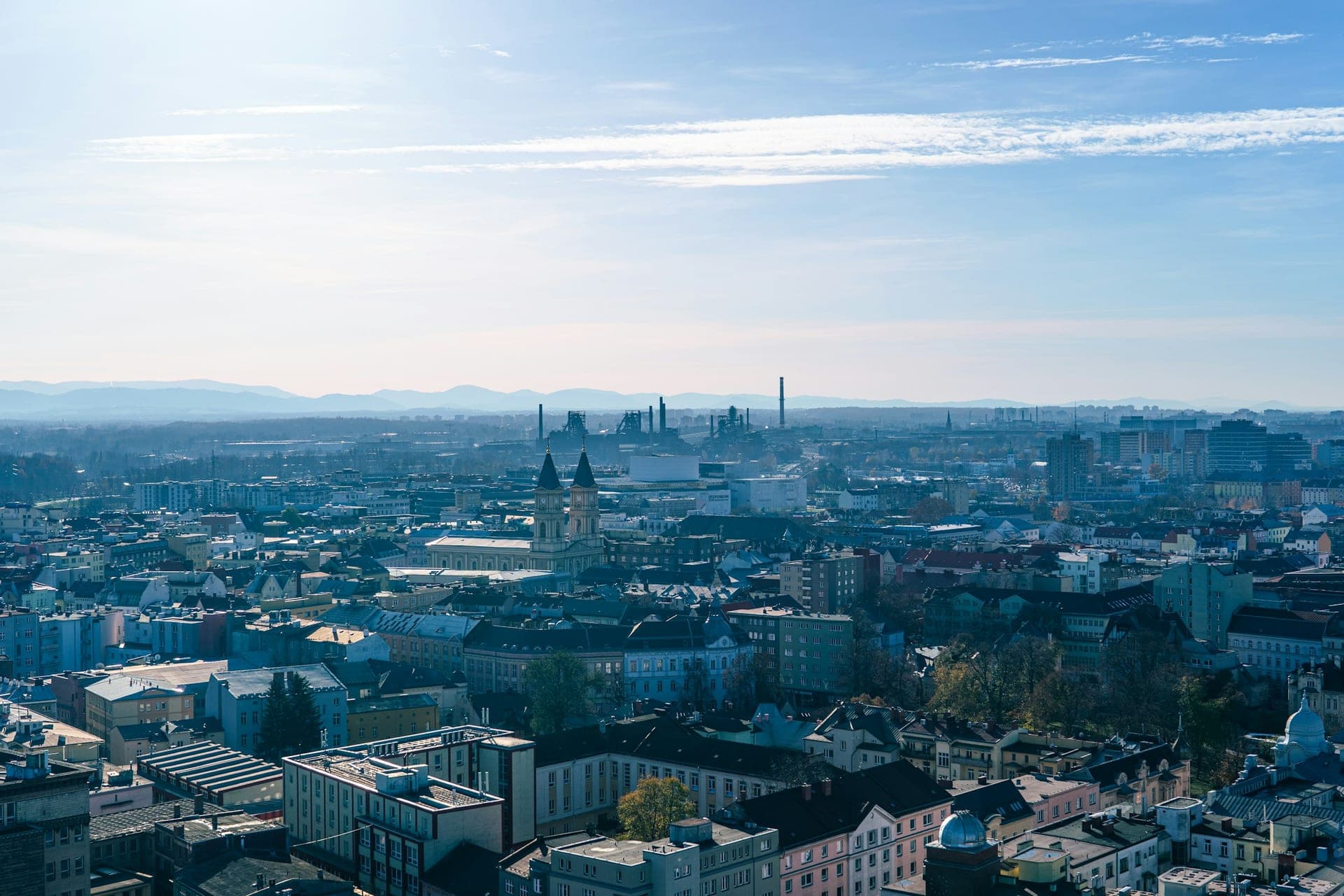
Ostrava grew on coal and steel, and its homes still follow that map. The city mined its last coal on 30 June 1994, and the blast furnaces of Dolní Vítkovice were tapped for the last time four years later. Pits and ironworks built estates for their workers. According to the city's new housing-policy concept, more than half of residents still live on sídliště (the prefabricated housing estates of the socialist era), mostly in Poruba and Ostrava-Jih. Ostrava counted 280,853 residents at the end of 2025, against 327,371 in 1991. The housing question here is less about finding a roof than about whether the city can keep the people under its roofs.
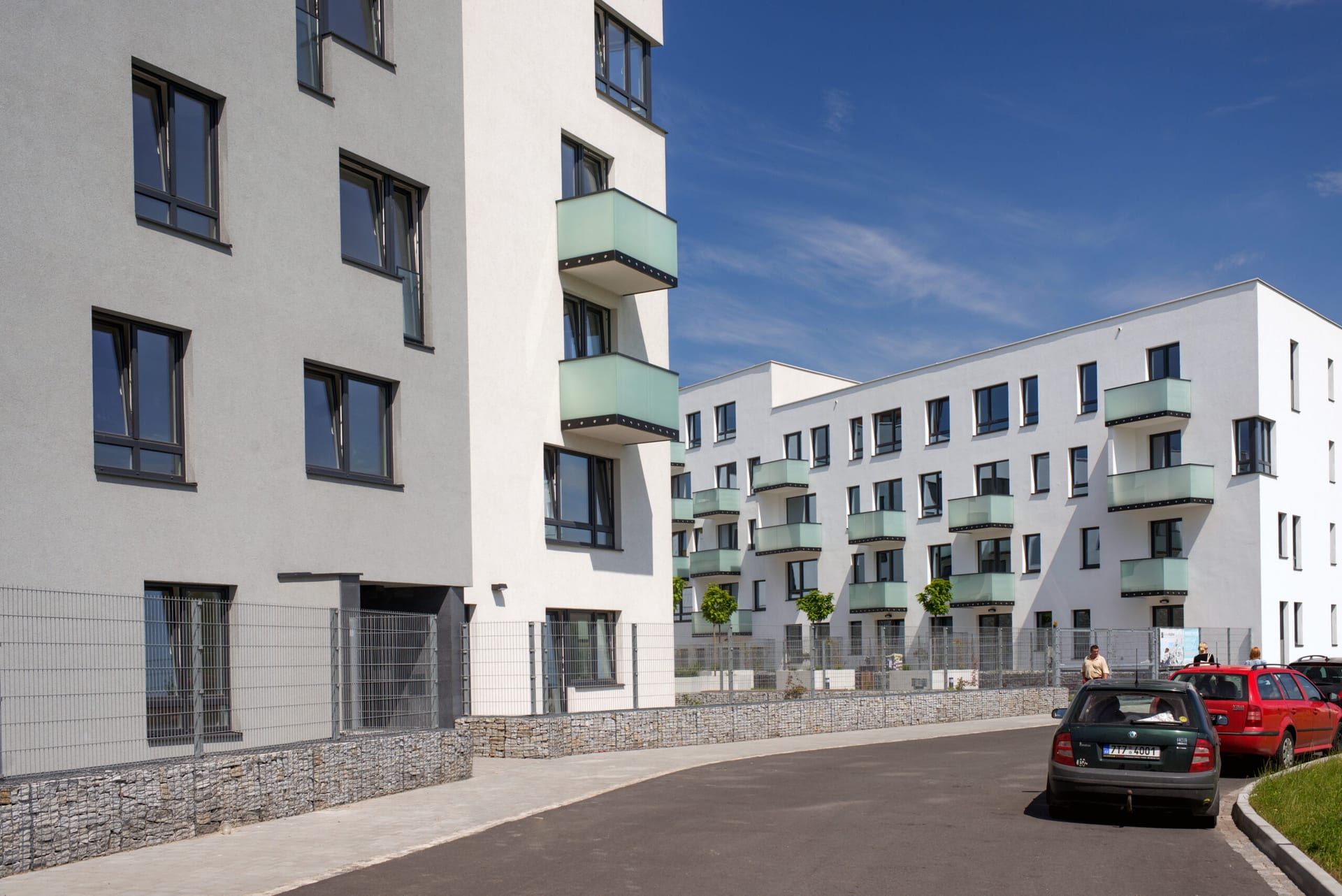
The 2021 census counted 145,795 dwellings in the city, of which 134,637 were occupied. Owners hold the largest share, 43% of occupied homes. Cooperatives hold 15,225 homes, or 11%. The city owns 12,649 flats, about 9% of occupied homes once its empty flats are set aside. Private landlords let another 22%. Almost half of that private stock belongs to one company, Heimstaden Czech, which owned 14,470 flats in the city in 2023. A 2024 Seznam Zprávy investigation found it was the largest landlord in every big town of the region. The remaining 15% of homes were used free of charge, held on some other basis, or left blank on the census form.
- Owner-occupier43.1%
- Cooperative11.3%
- Public & non-profit rental8.8%
- Private rental22.2%
- Free use / other / not stated14.6%
Social housing in Czechia is a rule about who gets a flat and at what rent, not a separate stock. In Ostrava roughly 1.5% of dwellings sit in the city's social-housing fund, a share that overlaps the tenure slices rather than adding to them. Most of these homes are municipal flats let on social criteria. The city's social-housing concept for 2025–2028 counts 3,300 households, or 7,600 people, in housing need. Only Prague has more. The private market is part of the answer too: Heimstaden makes about 350 flats available to the city's social-housing programmes.
Rents climb a steep ladder. City flats let for about €4.4/m² a month, and 1,514 of them still cost less than 60 Kč/m². Asking rents on new leases averaged €9.85/m² in late 2025, and Deloitte's index recorded a further rise of 4.2% in the first quarter of 2026. A furnished studio lets for around €380 a month. At the top of the municipal ladder, borough flats near the Bělský les forest in Ostrava-Jih already reach 230 Kč/m², close to the market.
- Public/municipal housing
- Municipal flats, top locations (Ostrava-Jih)
- New contracts
- Furnished / serviced (gross)
Municipal rents are the typical regulated level and the ceiling reached in the most attractive borough locations. New contracts are asking rents from Deloitte's index. The furnished mid-stay tier is an EHC estimate, not a measured Ostrava figure.
Empty homes are not scarce. The census found 11,158 unoccupied dwellings, 7.7% of the stock, and the city itself had 829 empty flats of its own at the start of 2025. Some are in poor repair; others sit in districts that industry left behind. The non-residential stock tells the same story. A 1960s tower in the centre, built for housing and later used as offices, has stood empty since 2013. The city has no current count of vacant office floor space.
People are leaving faster than homes are built. Between 2014 and 2024 Ostrava lost 14,663 residents to the rest of the country, most of them to villages within commuting distance. Arrivals from abroad softened the fall. 7,469 people moved into the Ostrava-město district in 2024, and the foreign share of residents rose from 3.1% to 7.3% in a decade. Builders complete about 1.5 flats per 1,000 residents a year, half the national rate. In 2025 they started only 501 in the Ostrava-město district, 56.4% fewer than a year earlier. New leases carry no rent cap. Rises for sitting tenants are limited to 20% over three years.
Ostrava is still cheap by Czech standards, but it is no longer cheap for Ostravans. Seznam Zprávy reported that a flat which sold for 18,000 Kč/m² in 2016 fetched 63,000 Kč/m² in 2025, a rise of 251%, steeper than in Prague or Brno. Deloitte's Property Index still puts a new 70 m² flat here at almost four gross annual salaries less than in Prague, where it takes 15. The hardest hit are the households in housing need, many of them in the city's socially excluded localities. The squeeze now reaches the middle as well. Nationally, a STEM/MARK poll found that nearly half of households spend more than thirty per cent of income on housing, and eight in ten Czechs call it a problem. Ostravans rank it lower than that. In the city's 2023 survey of 5,190 residents, satisfaction with housing stood at 50%, above safety and the environment. In a 2025 survey, 38% of families were reconsidering whether to stay, and most blamed safety and pollution rather than rent.

Between the landlord and the market sits a quieter asset: the 15,225 cooperative homes that miners and steelworkers built for themselves, roughly one home in nine.
Cooperatives from the pithead
Czech housing cooperatives sit closer to ownership than to renting. A member buys a členský podíl (a membership share) and with it the right to lease one specific flat. The bytové družstvo (housing cooperative) owns the building, and the member can sell the share or pass it on. After 1989, laws passed in 1992 and 1994 let members convert that right into outright ownership. A typical cooperative block is now split into individually owned flats, with an SVJ (an owners' association) running it and the old cooperative often staying on as its manager.
Ostrava's cooperatives were founded by its employers. Stavební bytové družstvo Vítkovice was set up on 15 July 1959 for workers of the Vítkovice ironworks. SBD Hlubina followed in 1964 for miners at the Hlubina colliery. In the 1960s, building cooperatives delivered up to 56% of all new homes in Czechoslovakia, and their panel blocks filled Poruba, Zábřeh and Hrabůvka. When the mines closed, the cooperatives and their flats stayed.
Today the sector falls into two groups with different problems. The legacy cooperatives are large and solvent, but they work mostly as property managers. SBD Vítkovice looks after almost 12,500 flats, garages and premises, and SBD Hlubina about 5,500 units. Their worries are ageing panel blocks, the cost of energy retrofits and the vypořádací podíl (the payout owed to a departing member). The national union SČMBD put that payout rule on its 2026 agenda. The second group barely exists: small cooperatives formed by residents or councils to build new homes. Research on cooperative pioneers in Central and South-Eastern Europe finds finance is their biggest barrier, in a region where the privatisations of the 1990s made almost everyone an owner. The MOBA network argues for patient, cross-border capital to fill that gap. No new-build cooperative has broken ground in Ostrava yet. The nearest is in Bílovec, where the town plans 72 flats under a municipal cooperative model.
The city now names that gap itself. Its housing-policy concept notes that Ostrava lacks any body to help residents found a housing cooperative as an alternative to developer projects, and proposes one. The national government frames cooperatives as a middle way between renting and owning, and wants about a tenth of 10,000 affordable homes a year to be cooperative.
Three per cent for thirty years
The government of Andrej Babiš, formed after the 2025 general election, calls affordable housing a public interest. Its programme promises faster permits, support for rental and cooperative building, state guarantees for cooperatives and new money for renovating panel blocks. The MMR (the ministry for regional development), led by Zuzana Mrázová of ANO (Andrej Babiš's movement), wants 50,000 new homes a year nationally by 2030, about 10,000 of them municipal, cooperative or affordable rental. President Petr Pavel signed the amended building act in September 2026. The Housing Support Act (zákon o podpoře bydlení) took effect in January 2026, with contact points for households at risk. An OECD review of housing reforms in Czechia and Poland urges the country to go further: expand social rental housing and bring empty homes back into use.

In Ostrava the levers are split between the state, the region and the town hall, and the town hall holds the most. The state writes tenancy law and funds programmes through the SFPI (the State Investment Support Fund) and the National Development Bank. The Moravian-Silesian Region channels EU money for the coal region's transition. The flats, though, belong to the city and are run by its 23 boroughs, which set the rents and must reinvest at least 50% of rental income in the stock. Mayor Jan Dohnal of ODS (the Civic Democratic Party) has led a five-party coalition since April 2023. In May 2026 the city published its first housing-policy concept, running to 2050. It proposes spending 3% of the city budget, about 350 million Kč a year, for at least 30 years. That should pay for about 100 flats a year and, by 2035, a system able to deliver 1,000 new municipal flats a decade. City rents would split into three tiers: market, affordable at 70–80% of market, and social. A quarter or more of flats would let at market rents to carry the rest.
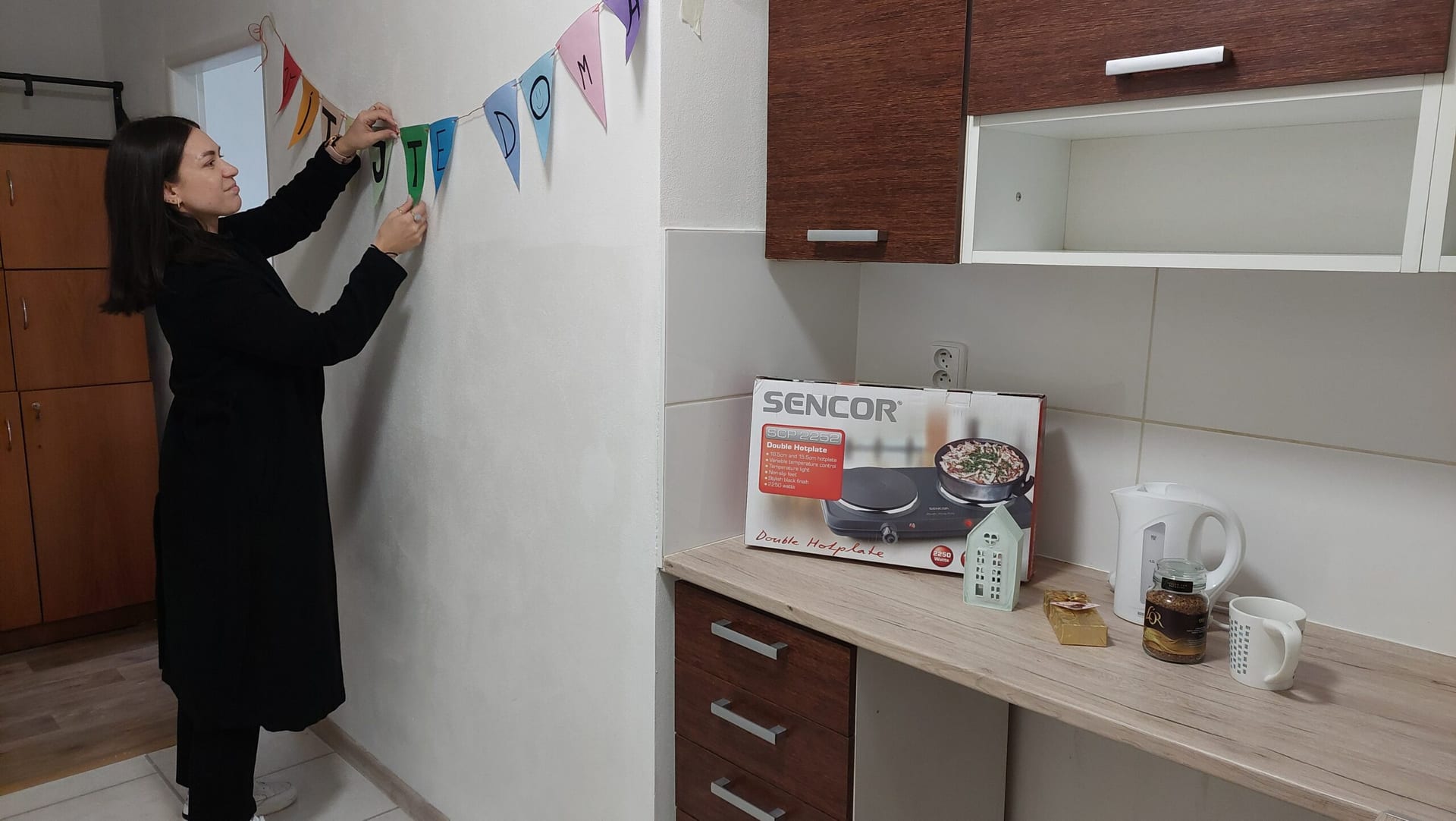
For cooperatives the new tools are mostly national. From 2026 members can deduct interest on their cooperative's loan from income tax, up to 150,000 Kč a year. In February 2026 the MMR and SFPI published a guide for councils on four kinds of cooperative, noting that municipalities already hold permitted projects worth 48.5 billion Kč. Ostrava's concept adds a local piece: a housing body to assemble land, prepare "shovel-ready" projects and help residents set up cooperatives or limited-profit companies. It also proposes at least 20 furnished municipal flats for stays of up to six months, for doctors, teachers and researchers, and rent discounts for people under 35.
The city's answer to its empty buildings is to pay owners to fill them. Since 2023 it has offered up to 350,000 Kč per flat to owners who turn long-vacant buildings into homes. In return, owners must let them for at least 7 years at no more than 70% of the city's average rent. The concept also orders a condition survey of every municipal flat, because the city has no single record of their state.
Climate targets run through the same buildings. Ostrava's SECAP (Sustainable Energy and Climate Action Plan) reports CO₂ emissions down more than 53% on 2000, close to the 55% target for 2030. National Nová zelená úsporám (New Green Savings) loans now cover blocks owned by cooperatives and owners' associations, with a bonus for low-income households. The city concept asks for insulation, solar panels and heat pumps on municipal blocks, and for new building on brownfields near tram and rail lines rather than on open land. The government, by contrast, has promised to relax energy standards for new construction.
Heading into the October 2026 municipal elections, the argument is less about whether the city should act than about who should build. A Seznam Zprávy report found both leading candidates promising to buy back former miners' flats from Heimstaden. A 2026 European Parliament study of corporate landlords helps explain why: such firms own a modest share of Europe's homes but weigh heavily where their portfolios are concentrated.
I can imagine Ostrava either buying a significant part of it, or even buying out Heimstaden's entire housing stock in the city.The former mayor sees the constraint in the market rather than in ownership. Tomáš Macura led the city from 2014 to 2023 and now works for the developer Antracit.
Construction costs are the same whether you build in Ostrava, in Prague or in Brno, but the sale price is much lower.- 1959[source]
SBD Vítkovice founded
The ironworks' building cooperative is set up on 15 July; its panel blocks follow across Ostrava.
- 1994[source]
Last coal, new ownership law
Mining in Ostrava ends on 30 June. Act 72/1994 on flat ownership lets cooperative members become owners.
- 2004[source]
OKD privatised with its flats
The state sells its stake in the mining company OKD to Karbon Invest for 4.1 billion Kč; about 44,000 miners' flats go with it.
- 2015[source]
RPG Byty sold to Round Hill Capital
The former OKD portfolio of 43,083 flats changes hands.
- 2020[source]
Heimstaden buys Residomo
More than 42,500 flats, mostly former OKD homes, are sold for €1.3 billion.
- 2023[source]
Grants to convert empty buildings
The city sets aside 40 million Kč for 2023–2026 to turn long-vacant buildings into rental flats at capped rents.
- 2024[source]
Nové Lauby opens
A city-led block on a former car park opens; the city buys 31 flats for municipal rent.
- January 2026[source]
Housing Support Act in force
Act 175/2025 sets up housing contact points and support for households in housing need.
- May 2026[source]
First city housing-policy concept
Ostrava plans to spend 3% of its budget on municipal housing for at least 30 years.
- September 2026[source]
Building-act amendment signed
The president signs a reform meant to speed up and simplify building permits.
- October 2026[source]
Municipal elections
Ostrava votes on 9 and 10 October, with housing among the leading issues.
- 2030[source]
Climate and construction targets
The city aims for a 55% cut in CO₂ against 2000; the state aims for 50,000 new homes a year nationwide.
- 2035[source]
A municipal building machine
The concept's goal: a system able to deliver at least 1,000 new municipal flats a decade.
- 2070[source]
Two futures
The city's projection: about 192,000 residents on current trends, or up to 338,000 with sustained housing investment.
Milestones behind Ostrava's housing today, and the targets the city and state have set.
The concept is new, but the working examples already stand in the centre, on brownfields and in the old colonies.
Buying back the city, block by block
Nové Lauby is the plainest proof that the city can commission housing again. The site behind the historic centre was a car park for decades. The city ran an architecture competition in 2016, which the studio Znamení čtyř won with five houses modelled on the old arcaded "lauby" merchant houses. It then sold the plot with a building permit to a private consortium. The block opened in 2024 with 83 flats, 2 studios, a planted courtyard and rainwater reuse. The city bought 31 of the flats for municipal rent. The national press now holds it up as a model for Prague.
Ostrava's "skyscraper" on Ostrčilova Street is the city's boldest bet on reuse. Built in the 1960s as one of Czechoslovakia's tallest residential towers, it was turned over to offices after technical failures and has been empty for over a decade. The city is selling it for 120 million Kč to developers who plan 111 flats designed by Eva Jiřičná, with reconstruction costing more than 530 million Kč. Part of the equity came from small investors on the Crowdberry platform. The flats will be sold, not let, so the tower answers the empty-building question more than the affordability one.
Nová Karolina shows how far brownfield land can carry the centre. The former coking plant beside the old town now holds shops and offices, and the development includes a residential complex of 1,200 apartments. Under the new concept's "grow inwards" rule, sites like this, close to trams and trains, are where the next municipal flats should go.
Hlučín's purchase of former OKD flats, just outside Ostrava, shows what a buy-back costs. The town took over 577 flats from Heimstaden Czech on 1 April 2026 for 605 million Kč. Heimstaden says it plans no large sales, and still spends heavily on its stock: about 1.8 billion Kč on renovation across Czechia last year. Any municipal buy-back in Ostrava will be priced against that investment.
Ostrava's fourth social-housing project is built on Housing First, the approach that gives people a flat first and support after. The social-housing concept commits to at least 45 Housing First flats by the end of 2026, from municipal and private stock. The housing-policy concept adds a rule for new municipal blocks: about one social flat in every 20. Spreading social flats this way is meant to stop new excluded localities forming.
Bedřiška, a miners' colony of wooden "Finnish houses" in Mariánské Hory, shows the other side of that struggle. Its borough says the houses are past their useful life and wants the tenants to move out gradually, offering them other homes. Demolition of the empty houses began in November 2025. The city council rejected a call to halt it after hours of debate. The residents' spokesperson, Eva Lehotská, proposed a právo stavby (a right to build, similar to a long ground lease): the city would keep the land and buildings, and residents would repair the houses themselves. Councillors did not take it up. It remains one of the few resident-led ownership models on the table in Ostrava.
So what kind of housing keeps people in a city that stopped mining? The evidence points to the "missing middle" the concept asks for: smaller blocks near trams, mixed tenures, rents that people on a teacher's salary can meet. It also points to institutions that outlast one employer or one owner. SBD Vítkovice has already outlived the ironworks that founded it. The materials are on the table: permitted land, a budget line, empty buildings and a public ready to argue about who should own the homes on it.
References
Statistics6Click on any number to see the source
Housing market
Population & migration
From our library8
- Koncepce politiky bydlení statutárního města Ostravy — Knowledge
- V kraji, kde stát zadusil obří trh s byty, ho to dnes stojí miliardy — Knowledge
- Koncepce sociálního bydlení statutárního města Ostravy 2025–2028 — Knowledge
- Property Index - Overview of European Residential Markets — Knowledge
- Cooperative Housing Pioneers in Central and South- Eastern Europe: Mainstreaming Alternatives through Translocal Networks — Knowledge
- MOBA: Rethinking needs and financing for affordable rent and cooperative housing in Central and South-Eastern Europe — Knowledge
- Housing Reforms in Czechia and Poland — Knowledge
- Housing speculation in the EU: Corporate landlords, real estate trusts, abusive speculative behaviour and impacts on prices and transactions — Knowledge
Further sources19
- Sčítání lidu, domů a bytů 2021 — Moravskoslezský kraj — ČSÚ · 2023
- Koncepce politiky bydlení statutárního města Ostravy — komunikační verze — Statutární město Ostrava · 2026-05
- Ostrava raketově zdražuje, i když z ní mizí lidé — Seznam Zprávy · 2026-04-18
- Nájemné v Česku opět zdražilo. Největší skok hlásí Liberec a Ostrava — Newstream / ČTK · 2026-05-05
- Na koupi bytu je potřeba 15 ročních platů. Praha se dere do čela Evropy — Echo24 · 2025-08-26
- Bydlení je nedostupné pro osm z deseti Čechů — Newstream (STEM/MARK for Salutem Group) · 2025-12-02
- Bytová výstavba v Moravskoslezském kraji v roce 2025 — ČSÚ · 2026
- Stát chce nastartovat družstevní výstavbu — E15 · 2026-06-04
- Historie družstevního bydlení — Coop Development
- Bílovec plánuje družstevní bydlení — MS stavby · 2026-04-18
- Programové prohlášení vlády — Government of the Czech Republic · 2026
- MMR nemá připravenou novou podobu programu na výstavbu dostupného bydlení — Archiweb / ČTK · 2026-05
- MMR a SFPI spouští pro obce metodickou podporu družstevního bydlení — MMR · 2026-02-04
- New City grant programme will support the revitalization of empty buildings — City of Ostrava · 2023
- Ostrava's green transformation is running ahead of plan — City of Ostrava · 2026-06
- Nové Lauby apartment complex has now been officially opened — fajnOVA · 2024-09-11
- Developer chystá byty za 530 milionů — Ekonomický deník · 2025-07-08
- Ostravští zastupitelé odmítli návrh na zastavení demolice v kolonii Bedřiška — Seznam Zprávy / ČTK · 2025-12-03
- Za hornické byty po OKD dali Švédové 33 miliard korun — E15 · 2020-01-09