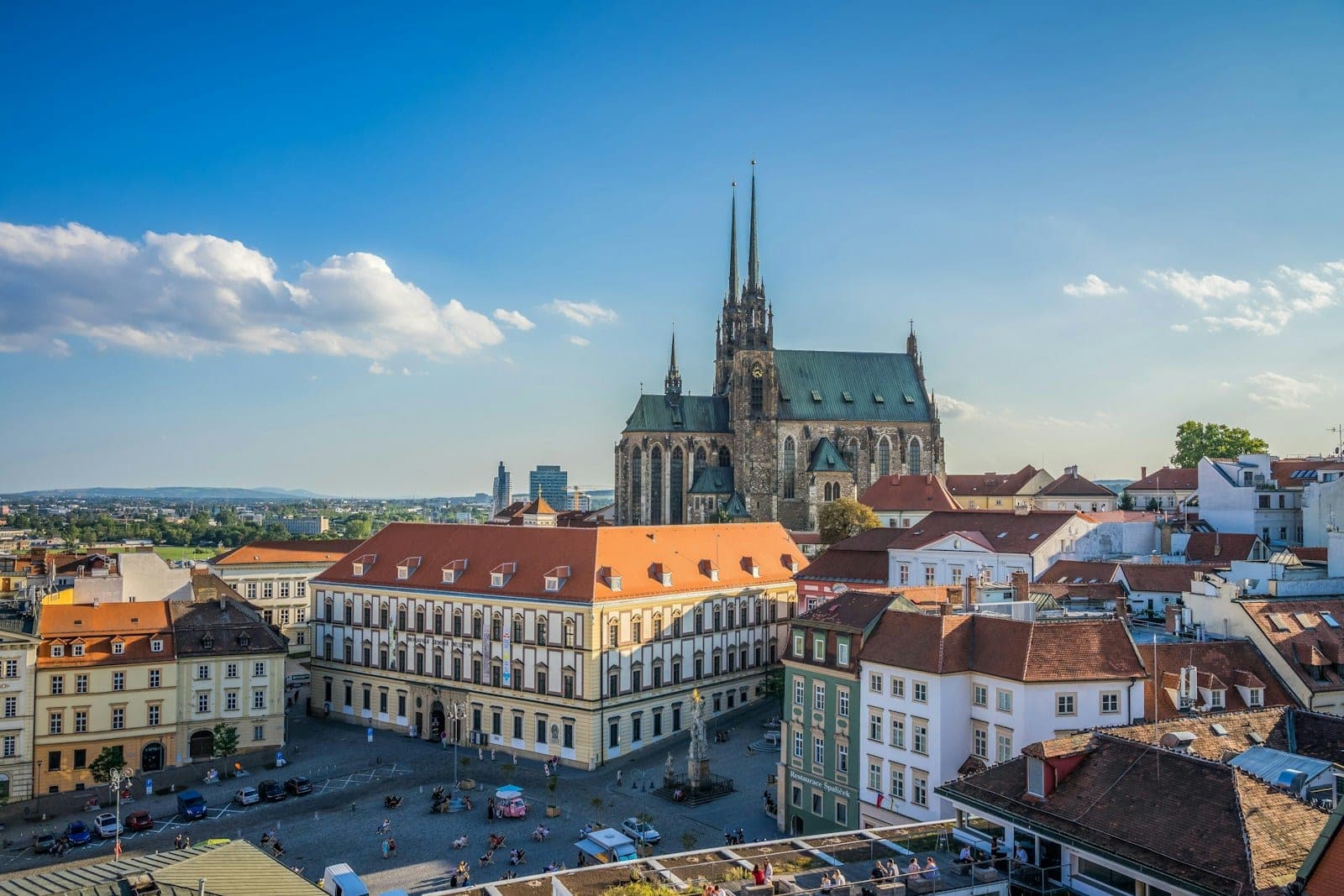
The Moravian Manchester, short of rooms again
For almost three centuries Brno spun wool. The mills along Cejl earned it the nickname "Moravian Manchester", and the workers they pulled in needed rooms. In 1928 the city answered with a manifesto in concrete and glass: the New House estate, sixteen model homes by nine architects. Today the pull comes from lecture halls and software offices rather than looms. A city of 402,739 people is once again short of homes its newcomers can afford.
The 2021 census counted 184,647 occupied dwellings. Roughly a third are flats in personal ownership and roughly a third are rented, with family houses making up most of the rest. Owners hold 48.2% of occupied homes and tenants 34.6%. The city is the largest landlord by far. It owned 28,332 flats at the end of 2024, about 14.5% of the stock. Prague, with three times the population, owns only about 3,000 more. Private landlords let most of the remaining rented homes, roughly a fifth of the total. Cooperative tenure has almost vanished from the count: just 2,132 dwellings, or 1.2%. Another 16% fall into census categories for free use, other arrangements or no recorded tenure.
- Owners
- Owner-occupier16.0%
- Cooperative22.0%
- Renters
- Public & non-profit rental14.5%
- Private rental10.5%
- Unclassified37.0%
- Unknown / Other37.0%
Social housing here is a way of allocating flats, not a tenure of its own. The catalogue puts it at about 1% of dwellings, and it sits almost entirely inside the municipal stock. City Hall lets 1,209 flats directly under special regimes for young starters, seniors and households in need. The districts run the rest under their own rules. Around 8% of residents would qualify for help with housing costs.
Market rents have climbed to match the city's pull. Deloitte's Rent Index for the second quarter of 2026 put Brno at 390 CZK per m², the dearest regional market in Czechia. In euros the all-stock median is €14.5 and a newly signed lease €16 per m². Furnished and serviced lets, with utilities and furniture priced in, reach €17.5. At the other end, municipal tenants pay around €5. A new private lease costs more than three times a council flat.
- Public/municipal housing
- Cooperative
- All-stock median
- New contracts
- Furnished / serviced (gross)
Net-cold monthly rent per m² by tier (furnished is gross, all-in). The cooperative tier is the modelled cost for a member of the city-founded cost-price cooperatives.
Not every dwelling is in use. The census found 24,940 of 209,587 dwellings unoccupied, roughly 12%, though many are unmodernised, inherited or awaiting sale. The OECD's review of housing reforms in Czechia and Poland finds national vacancy rising, much of it in places with few jobs. Offices show slack too. Vacancy stood at 13% in 2024 and was still 12.65% in mid-2026, with 90,750 m² of modern space empty. Short-term lets are harder to measure: the national eTurista register still has no basis in law.
Demand keeps arriving. About 12,000 people move to Brno each year, and some 24,000 stay for three to twelve months, mostly students, Erasmus visitors and engineers on contract. Building has picked up. Brno was the only district in South Moravia where housing starts rose in 2025, by 20.9%. Rents on new leases are set freely, with no cap.
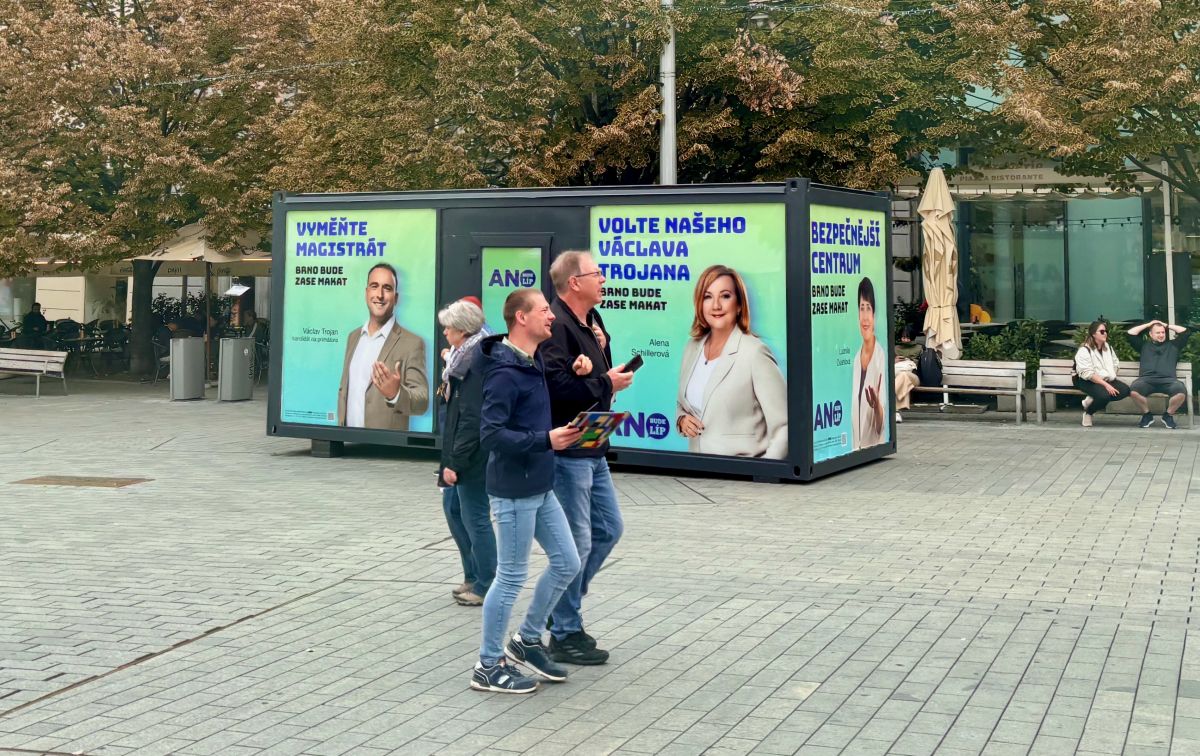
The squeeze now reaches well into the middle. Deloitte's Property Index prices a new flat in Brno at 14 gross annual salaries, a ratio close to Prague and Amsterdam. ČSOB chief economist Jan Bureš finds that not even a household at the 80th income percentile can realistically finance a flat with a mortgage. Across Czechia the burden falls hardest on the poor. 29.5% of the poorest fifth spend more than two-fifths of disposable income on housing, against 0.7% of the richest. The figure is 26.0% for tenants paying market rent and 22.5% for single parents. Residents feel it. In a Kantar poll for ČT24 in September 2026, 71% of Brno residents named housing costs as the city's main problem, up from 30% in 2014. In South Moravia, 28% spend more than two-fifths of their income on housing. Analysts writing for Social Europe describe the regional paradox: very high ownership, and very little access for anyone arriving now.
On paper it looks stable, but the reality is different. Many households live in debt and under pressure. Often the question is not whether they go on holiday, but whether they can pay for energy and rent.City Hall has placed its biggest bet on the form the census barely records: the cooperative.
The družstvo, dismantled and rebuilt
The Czech housing cooperative is the bytové družstvo (a cooperative that owns the building and allocates its flats to members). A member holds a družstevní podíl (a transferable share that carries the right to use one specific flat). In law the member rents from the cooperative. In practice the share trades almost like property, so the form sits between ownership and tenancy. Brno's new schemes add a členský vklad (the member's capital contribution), set at 25% or 50% of the flat's cost after a CZK 100,000 deposit. A bank loan to the cooperative covers the rest, repaid through members' monthly payments.
Brno's big construction cooperatives were born under socialism. DRUŽBA was founded on 10 June 1959, with building costs split between members, the state and credit. It built across Bohunice, Lískovec, Kohoutovice and Líšeň, and still manages about 14,000 flats. After 1989, Act 72/1994 (the flat-ownership law) let members convert cooperative flats into personal ownership, with a final deadline at the end of 2020. Most did. The cooperatives that built much of the city now administer buildings their members own outright.
Today the sector falls into three clusters with different problems. The legacy societies, DRUŽBA among them, act as managers for owners and wrestle with retrofitting ageing panel blocks. A 2026 study of Polish and Czech housing cooperatives finds those decisions dominated by boards and engineers, with residents rarely in the room. The second cluster is new and municipal: cooperatives founded by the city for residents under 45, building at cost on city land. The third is self-organised. It runs from a baugruppe pilot in the old textile quarter to the regional networks traced in the study of cooperative pioneers in central and south-eastern Europe and in MOBA's work on financing affordable cooperative housing. Legacy societies face retrofit bills and ageing members. The municipal cooperatives face construction costs and interest rates. Self-organised groups face the hardest wall: land, finance and no legal category for a not-for-profit housing provider.
City Hall treats the cooperative as its main affordable-housing channel, not a relic. Deputy mayor Jiří Oliva calls it applying the Vienna model. Vienna's cooperatives built hundreds of thousands of homes, a record explored in an essay on why Vienna is called a renters' utopia. Brno is preparing six sites for more than 1,600 cooperative flats. The national government now promises state guarantees for cooperatives, which would widen the channel beyond what one city can finance.
The state sets the rules, the city builds
The state writes the rules and Brno builds. The national frame changed in 2026. Act 175/2025, the zákon o podpoře bydlení (Housing Support Act), is the first national law aimed at preventing housing emergencies. It took effect in January, but the government of Andrej Babiš (ANO) postponed its support measures to September. Minister for Regional Development Zuzana Mrázová called it a technical amendment. The coalition has promised 50,000 new flats a year by 2030. Its programme adds tax incentives for long-term investors in affordable rental and cooperative housing. The SFPI (the State Investment Support Fund) has granted municipalities up to a quarter of the cost of affordable rental homes from Recovery Plan money. In September 2026 the Chamber of Deputies overrode a Senate veto on a Building Act amendment that centralises permitting in state building offices.
At the municipal level the instrument is the city's own housing strategy to 2030. Its action plan for 2025 to 2027 starts cooperative building at Kamenný vrch, Francouzská, V Aleji and Přízřenice, and the first cooperative renovation at Mostecká. It also finishes municipal flats on Terezy Novákové and senior flats in Bystrc and Tuřany. Most of the city's flats are entrusted to its districts, each with its own rules. Since January 2026 a single application form lets an applicant apply once and tick every district they would live in.
The cooperative instruments are concrete. The city supplies land and pre-finances design from its housing construction fund, and the cooperative repays it. For Kamenný vrch the city negotiated a bank loan of roughly two billion crowns at a fixed margin. For self-organised groups it is testing spolkové bydlení (baugruppe housing): a plot on Cejl offered on a 99-year building right, with designs judged 80% on quality and the rest on price.
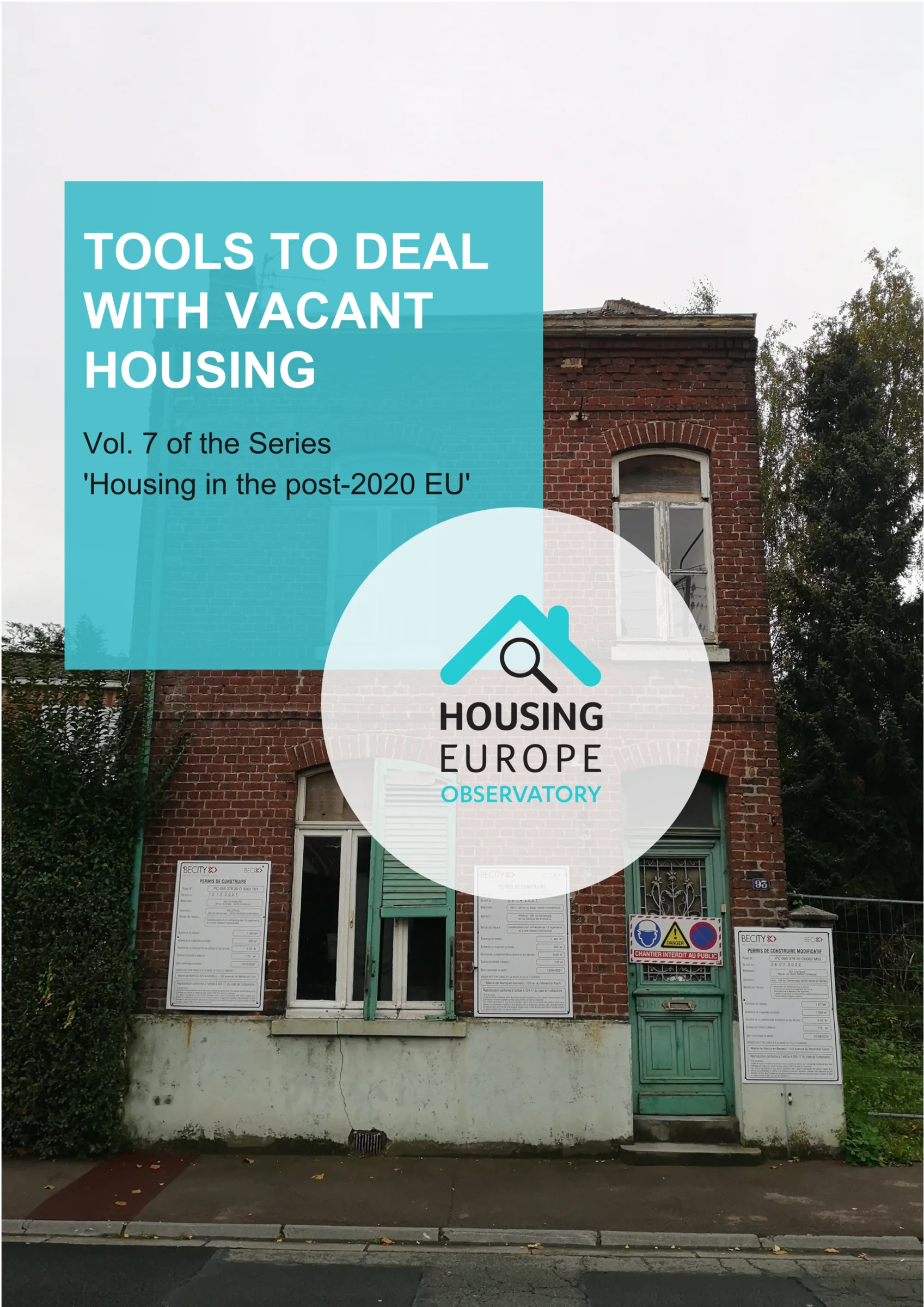
The answer to empty space is less developed. Czechia has no vacant-homes tax, and Brno has been selling surplus property, including some apartment buildings. Ahead of the October 2026 municipal elections, a Deník Alarm comparison of party programmes found the Greens pledging to bring 800 empty municipal flats back into use. Housing Europe's toolkit on vacancy sets out the menu the city has not yet ordered from, from registers to taxes to leasing schemes. On brownfields the city's largest site, the former Zbrojovka arms works, is already turning into housing.
Climate policy runs through the same buildings. The EU's Energy Performance of Buildings Directive requires zero-emission new buildings from 2030. The Nová zelená úsporám (New Green Savings) programme now offers owners' associations and housing cooperatives interest-free loans over 25 years, plus a direct bonus. That makes the legacy cooperative estates the main vehicle for retrofitting the panel blocks.
The debate is sharpest over pace. Deník Alarm argued that Brno had built roughly two flats of its own in four years. The city counts differently: it says it completed more than 250 municipal flats in two years, mostly renovations and infill, and points to the cooperative pipeline breaking ground now. The opposition has attacked the sale of repairable buildings. City Hall answers that it had to invent a new model from scratch.
Cooperative housing is a completely new direction that municipalities have only very rarely taken in recent years. So Brno had to break trail through terrain no one had crossed before.We certainly don't mind selling land and property that is surplus, but selling apartment buildings that could be repaired and offered for rent to the city's residents is wrong in our view.- 1959[source]
DRUŽBA founded
The construction housing cooperative that went on to build much of the south-western estates is set up in Brno.
- 1994[source]
Flat-ownership law
Act 72/1994 lets cooperative members convert their flats into personal ownership, emptying the cooperative tenure over the following two decades.
- 2016[source]
Rapid Re-Housing pilot
The city houses 50 homeless families in municipal flats with support; 96% are still housed a year later.
- 2025[source]
Housing action plan 2025–2027
The city schedules cooperative construction on four sites and its first cooperative renovation, under its housing strategy to 2030.
- 2025-11[source]
New government programme
The Babiš coalition promises cooperative-law reform, state guarantees for cooperatives and tax incentives for affordable-housing investors.
- 2026-01[source]
Housing Support Act in force
Act 175/2025 takes effect; the start of its support measures is postponed from July to September.
- 2026-01[source]
One form for municipal flats
Applicants can apply once for flats in every city district.
- 2026-09[source]
Kamenný vrch II breaks ground
Construction starts on 353 flats, 280 of them cooperative, in Nový Lískovec.
- 2029[source]
Mostecká and V Aleji ready
Planned move-in date for the first cooperative renovation and the V Aleji new build.
- 2030[source]
National and EU targets
Kamenný vrch due for completion; the government target of 50,000 new flats a year; zero-emission new buildings under the EPBD.
- 2030s[source]
New main station
The earliest start for the new main railway station, whose rail node the city costs at up to CZK 73 billion.
From the New House to cost-price cooperatives
Kamenný vrch II is the flagship, and a first for Czechia. In Nový Lískovec the city is building 353 flats, 280 of them for a cooperative of couples and singles aged 18 to 45. STRABAG and SYNER won the contract with a bid of CZK 2,099,354,189. Members pay CZK 107,839 per m² against a market average of about 150,000, almost a third less, because the city takes no margin. The foundation stone was laid in September 2026, and the first residents should move in about three and a half years later. The city keeps three buildings as rentals and the district one more, so the estate mixes owners' shares with municipal tenancies.
Mostecká 16 tests the idea on an old building. The city is rebuilding a run-down block in Královo Pole into 25 smaller cooperative flats for young couples and single people, designed by KUDA architecture. With the V Aleji new build in Holásky, it is due for move-in in 2029. Renovating empty stock is slower and fiddlier than building on a field, which is exactly why the pilot matters.
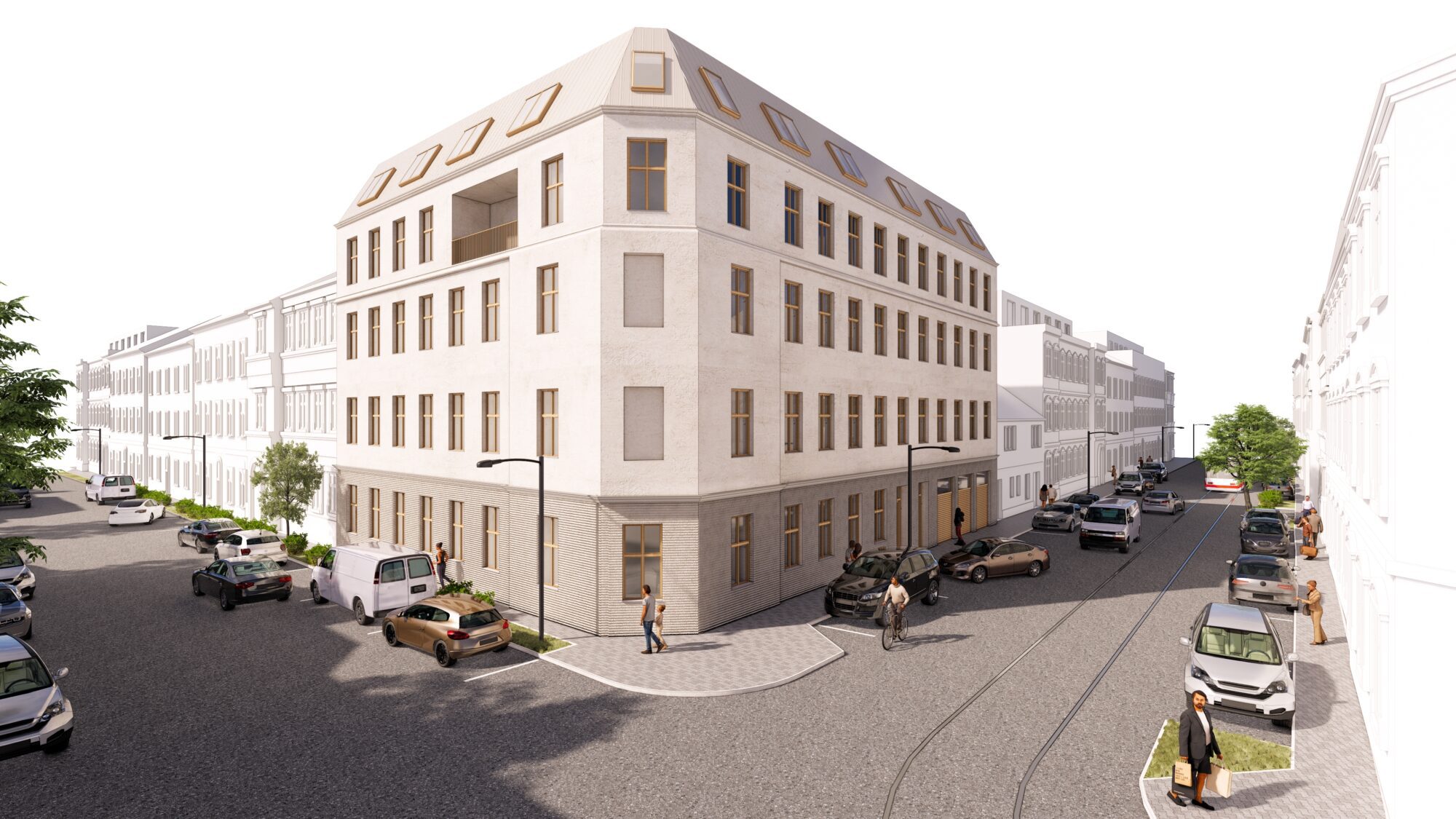
Cejl 123 carries the self-organised strand back to the textile quarter where Brno's housing story began. The gap site, with room for 535.5 m² of floor space, is the city's first offer to a baugruppe. A residents' association will design, finance and run the house on a 99-year building right, then hand it back.
Rapid Re-Housing is the city's proof that housing first works in Czech conditions. In 2016 the city gave 50 homeless families municipal flats with support. 96% were still housed a year later, and their children were spared 3,984 days in institutional and foster care. The follow-on programme was later dropped, and restoring it is now an opposition pledge.
Vojtova is the quieter half of the story. The block of 116 flats is the largest of the municipal homes the city has completed in the last two years, most of them let at reduced rents to young families, seniors and single parents. Next comes Západní brána in Starý Lískovec, where a private builder would finance about 250 flats under a concession, with the city choosing the tenants and rents about a fifth below market. It is a second import from Vienna.
Nová Zbrojovka is the market's answer on the same brownfield logic. On the former arms-works site in Židenice, CPI is building the Morizz and Cubicum blocks, the first homes in what will be a new riverside quarter.
Na Kaménkách in Černovice is the largest cooperative site still on paper, planned for 600 flats. In 1928 the New House estate asked how a modern household should live. A century on, Brno's cooperatives are asking who should own the building, and at what price.
References
Statistics10Click on any number to see the source
Housing market
Tenure & affordability
Adaptive reuse & vacancy
Population & migration
From our library10
- Družstevní bydlení Mostecká 16 — Project
- Housing Reforms in Czechia and Poland — Knowledge
- Between efficiency and democracy: Explaining support and resistance towards energy transition and prosumer solutions in Polish and Czech housing cooperatives — Knowledge
- Krize bydlení v Brně: ANO ani ODS nezajímá, ostatní strany berou situaci vážně — Knowledge
- Property Index - Overview of European Residential Markets — Knowledge
- MOBA: Rethinking needs and financing for affordable rent and cooperative housing in Central and South-Eastern Europe — Knowledge
- Cooperative Housing Pioneers in Central and South- Eastern Europe: Mainstreaming Alternatives through Translocal Networks — Knowledge
- Tools to Deal with Vacant Housing — Knowledge
- Housing Crisis Threatens to Fracture Central and Eastern Europe — Knowledge
- Vienna has been declared a renters’ utopia – here’s why — Knowledge
Further sources39
- Go to Brno's Moravian Manchester — GO TO BRNO
- Explore the housing estate New House — GO TO BRNO
- Základní výsledky SLDB 2021 – Jihomoravský kraj — ČSÚ
- Brno podepsalo smlouvu se zhotovitelem 353 bytů na Kamenném vrchu — Statutární město Brno
- Jeden formulář pro téměř 30 000 bytů — Statutární město Brno
- Nájemné v Praze i většině krajských měst mírně zlevnilo — Deloitte
- Regional Research Forum: kancelářský trh v Brně, 1. pololetí 2026 — OfficeGuide
- Anketa: jak si vede vláda v oblasti cestovního ruchu — TTG Czech Republic
- Bytová výstavba v Jihomoravském kraji v roce 2025 — ČSÚ
- Bydlení v Brně podle Deloitte patří k nejméně dostupným v Evropě — Brno Today
- Česko se propadá v dostupnosti bydlení, Praha a Brno jsou už úplně mimo realitu příjmů — Hypoindex (Jan Bureš, ČSOB)
- Housing cost overburden rate by income quintile (ilc_lvho07b) — Eurostat
- Housing cost overburden rate by tenure status (ilc_lvho07c) — Eurostat
- Housing cost overburden rate by household type (ilc_lvho07e) — Eurostat
- V Brně má nejvyšší volební potenciál uskupení lidovců a starostů — ČT24
- Téměř polovina příjmů na bydlení: bytová krize zasahuje Brno i obce — Brněnský deník
- Bydlete ve svém v novostavbě a za cenu nákladů — Statutární město Brno
- Historie družstva — DRUŽBA, stavební bytové družstvo
- Zákon č. 72/1994 Sb., o vlastnictví bytů — Zákony pro lidi
- Strategie bydlení Brna stojí na několika pilířích — Statutární město Brno
- Co plánuje Babišova vláda udělat s bydlením — Brněnská Drbna
- Zákon o podpoře bydlení — Právní prostor
- Vláda schválila odložení spuštění podpory bydlení — Advokátní deník
- Hospodářská strategie vlády — Echo24
- Dostupné nájemní bydlení — SFPI
- Sněmovna přehlasovala Senát a stvrdila koaliční novelu stavebního zákona — Advokátní deník
- Brno má vytvořený akční plán pro bydlení na další tři roky — Statutární město Brno
- Inspirace Západem: město vyzkouší koncept spolkového bydlení — Statutární město Brno
- Krize bydlení v Brně: ANO ani ODS nezajímá — Deník Alarm
- Energy Performance of Buildings Directive — European Commission
- Efektivní, udržitelná a lépe cílená Nová zelená úsporám — Ministerstvo životního prostředí
- Je to tady: na Kamenném vrchu začala stavba bytů — Noviny kraje
- Výsledky ročního výzkumu Rapid Re-Housing — Statutární město Brno
- Brno stavby rok 2026: Nová Zbrojovka, Pod Hády, Západní brána — Brněnský deník
- Brno se zbavuje dalších nemovitostí — ČT24
- Nové hlavní nádraží v Brně začne vznikat nejdříve ve 30. letech — RegionBrno
- Universities in Brno — City of Brno
- Technical monuments: textile suburb of Cejl — GO TO BRNO
- Ossuary at the Church of St James — GO TO BRNO