
A planned town that still has room, but not for everyone
Marne-la-Vallée began as a line on a planner's map. The 1965 master plan for the Paris region sketched five new towns to absorb the capital's growth, and this was the eastern one. A state development agency founded in 1972 has been buying farmland, laying out districts and selling building plots ever since. Today the new town spreads along the RER A across 27 communes, from the concrete monuments of Noisy-le-Grand to the Disney resort at Chessy, and is home to 318,325 people. Its housing question is an unusual one for Europe. The issue is less how to squeeze homes into an old city than whom the homes of a planned one are for.
The census gives a clear picture for the Paris–Vallée de la Marne agglomeration, whose communes include the new town's central Val Maubuée sector. A majority own: INSEE counts owner-occupiers at 55.4% of main homes and tenants at 43%. HLM tenants, renting from France's regulated social landlords (public offices and non-profit companies alike), hold 21.7% of homes, or 20,401 dwellings. Private landlords house about 21.3%. Cooperatives do not register as a tenure at all. A further 1.6% of households live rent-free, usually in a home lent by family or an employer.
- Owners
- Owner-occupier55.4%
- Renters
- Public & non-profit rental21.7%
- Cooperative0.00%
- Private rental21.3%
- Other1.6%
- Housed free of charge1.6%
Social housing in France is a rulebook as much as a landlord. The census counts 21.7% of the agglomeration's homes as social lettings, and here that layer overlaps almost exactly with the HLM stock, because the new town's social homes were built by HLM bodies. The SRU law (the 2000 act that obliges larger communes to reach a minimum share of social housing) sets that minimum at 25% and, in Île-de-France, applies to communes from 1,500 inhabitants. Eligibility reaches far beyond the stock. About 66% of French households fall under the income ceilings for a social home.
Rents sit below the capital's but are not low. A home let in 2024 cost a median €15.90 per m² a month before charges, averaged across four core communes surveyed by the Paris rent observatory (OLL, the Observatoire des loyers). The commune medians run from €13.70 in Noisiel to €17.20 in Champs-sur-Marne and Torcy. A furnished flat taken for about six months, bills included, is estimated at around €27 per m². Buying has cooled. The notaries' index put resale flats across Seine-et-Marne at €2,810 per m² in spring 2026, down from €3,000 at the end of 2022.
- Noisiel (commune median)
- Bussy-Saint-Georges (commune median)
- New contracts
- Champs-sur-Marne / Torcy (commune median)
- Furnished / serviced (gross)
Monthly rent per m². Commune medians and the new-let average are net of charges (OLL 2024); the furnished mid-stay tier is an estimate, gross of bills and furniture.
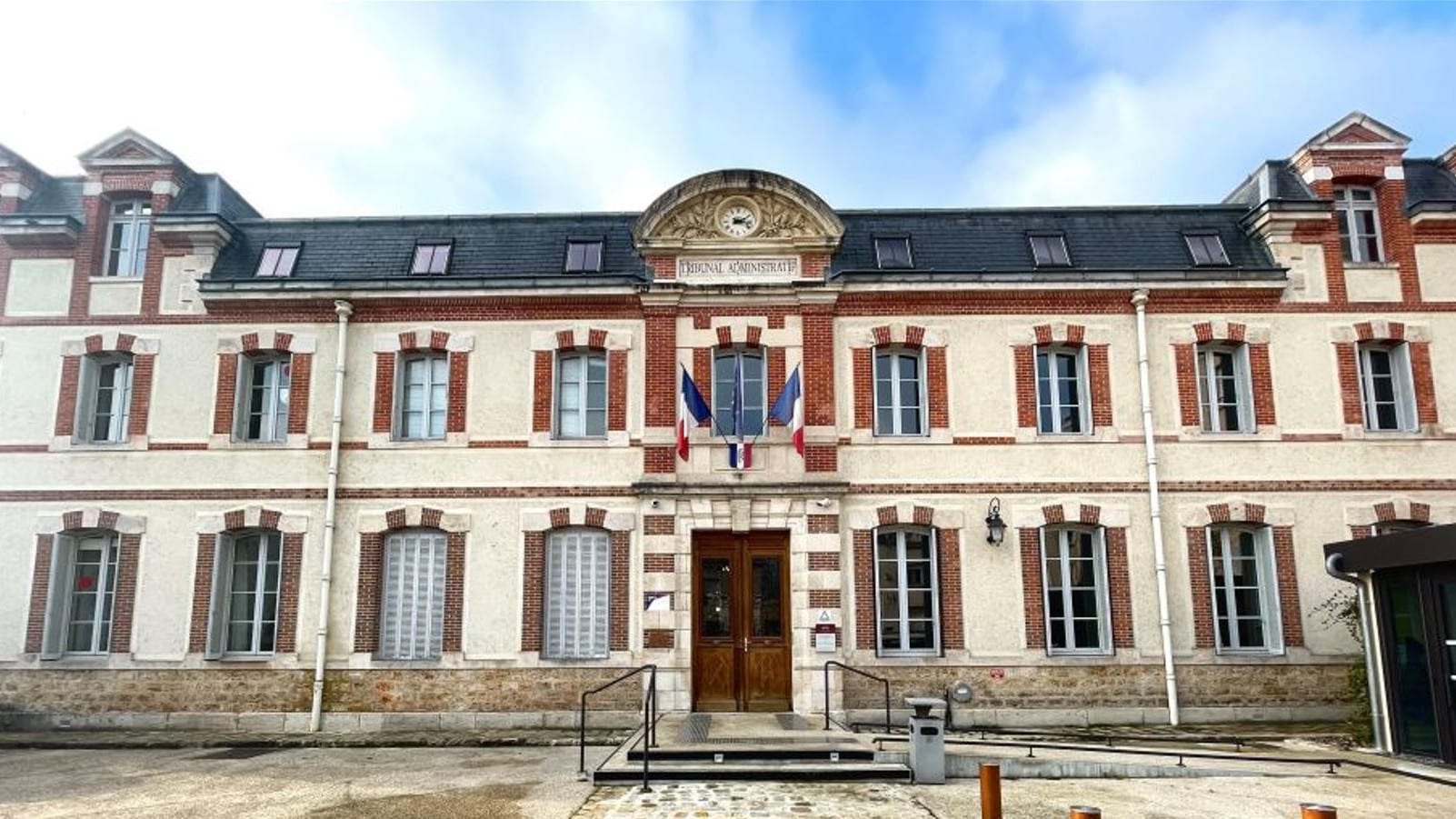
Empty homes are scarce. The census counts 4.4% of dwellings as vacant, close to the level a market needs just to let people move. Offices tell another story. Around 8.9% of the new town's office stock stood empty in the first half of 2026, some 135,000 m² in total. Around Disneyland the pressure comes from tourists instead. In Val d'Europe, the Disney sector, tourist lettings rose from 289 to 753 between 2020 and 2023. The agglomeration made such lettings subject to prior authorisation in December 2023, and a ruling by the administrative court in Melun upheld the rule in June 2024.
Growth is the town's reason to exist. Val d'Europe gains about 1,000 residents a year, and the agglomeration's plans hold 4,500 more homes in three new districts. Paris–Vallée de la Marne delivered 2,130 homes in 2021, 42% of them social rentals. It judges the private market all the same to be "saturated and unaffordable" for many residents. There is no rent cap here. Instead, landlords in seven of the agglomeration's communes must declare every new letting to the authorities, a check on substandard homes rather than on price.
The strain shows first in the queue. At the end of 2024, 73,535 households were waiting for a social home in Seine-et-Marne, against 7,070 allocations in a year. The figures come from the annual report on poor housing in Île-de-France by the Fondation pour le Logement des Défavorisés (France's main anti-poverty housing charity). The poorest wait longest. Across the region there are 23.6 applications for each home allocated among the lowest-income quarter. The same charity's study of households left waiting counts 13,520 Seine-et-Marne applicants past the three-year wait that the law calls abnormally long.
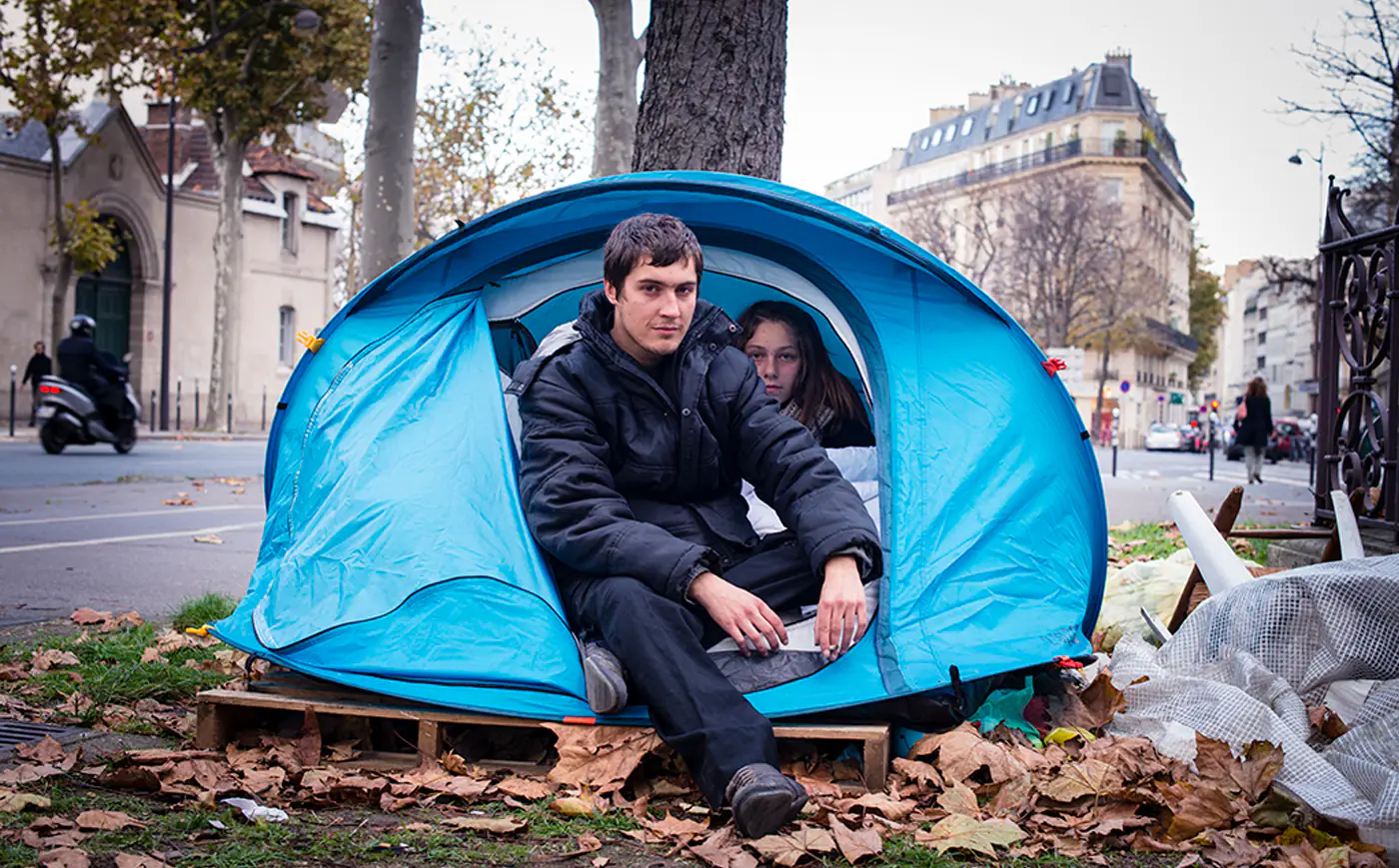
The squeeze reaches working households too. Of those given a social home in Seine-et-Marne in 2024, 53% were in work and 24% came from private rentals. The poorest private tenants across the region spend 48.5% of their income on rent. Residents themselves feel it less than Parisians do. In an Odoxa poll for the region's mayors' association, 76% of Seine-et-Marne residents said they were satisfied with their housing, against 42% in Paris. Space is what the new town still offers. Affordability for newcomers is what it is losing.
One tenure is missing from all of these counts. The census finds no cooperative homes here, so Marne-la-Vallée's cooperative story is one of revival rather than tradition.
Cooperatives that arrived through the land
French cooperative housing today takes three forms, and the new town knows two of them. The oldest is the société coopérative d'HLM (a cooperative social landlord whose members include its tenants and buyers). Les Coop'HLM, their federation, counts 160 of them nationally. The newest is the bail réel solidaire, or BRS (a long lease under which a household buys the home while a land trust keeps the land and caps every resale price). The land trust is an organisme de foncier solidaire, or OFS (a non-profit body approved by the prefect to hold land permanently out of the market). The third form, the coopérative d'habitants (a residents' cooperative whose members collectively own the building and pay it a monthly fee), has champions such as Habicoop but no project yet in Marne-la-Vallée.
The history explains the gap. Cooperatives of the HBM era, the forerunner of HLM, had built 10,000 homes by 1928, and the Castors self-build movement put up 12,100 more between 1948 and 1952. Then laws in 1965 and 1971 barred cooperatives from renting homes to their members. Those are exactly the years in which the new town was drawn up. Its housing was delivered by the state agency, HLM landlords and private developers, and the cooperative form simply had no legal place in it until the 2014 ALUR law gave residents' cooperatives a statute again.
The sector that exists now clusters in three groups. The first is the cooperative HLM builders. Coopimmo and Expansiel Promotion were among the 11 HLM cooperatives that founded the region's first land trust in June 2017. The second is that trust itself, La Coop Foncière, part of a fast-growing national network. France had 188 OFS approvals by the end of 2024 and 2,119 homes under BRS a year earlier, according to the housing ministry's review of the scheme. The third group is citizens. In Noisy-le-Grand, the Mosaïque project is gathering a group for 43 homes, all under BRS, and aims for a third of its households to be over 55. It is listed by Habitat Participatif France, the national network of self-organised housing groups. The three groups share one constraint, the price of land. They differ in time horizons. An HLM cooperative can deliver on a developer's timetable, while a residents' group needs years to form before it can buy.
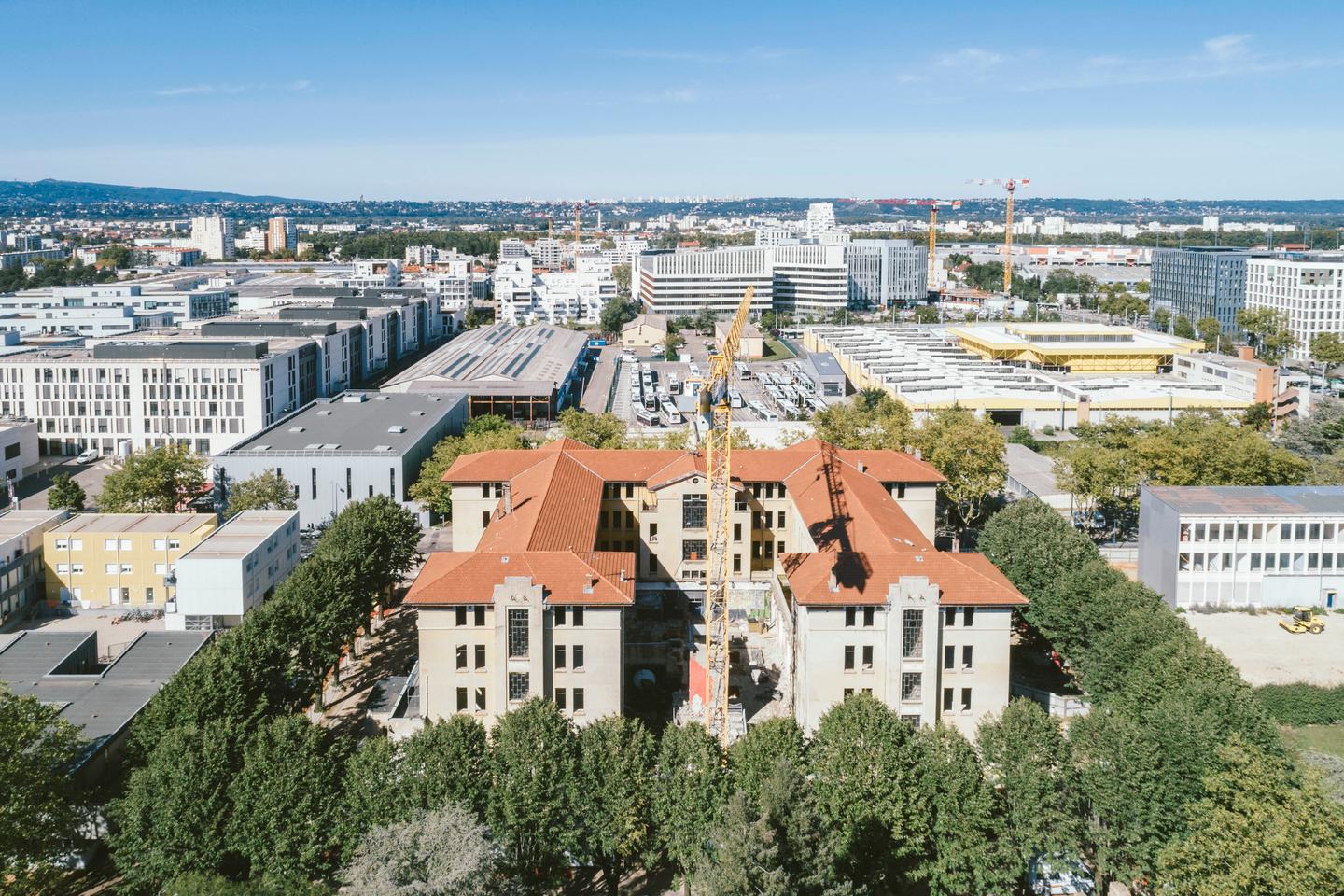
The state is the swing actor. EpaMarne-EpaFrance (the state development agencies that own and sell most of the building land) now writes BRS quotas into its tenders. In Champs-sur-Marne, one 2025 lot of 123 homes must include 37 in BRS at a capped sale price. A lot in Villiers-sur-Marne asks for 25%. In a town where the state sells the land, cooperative ownership grows only as fast as the land contracts allow.
Supply first, from the ministry to the Disney contract
The national line in 2026 is supply first. Vincent Jeanbrun, Minister for Cities and Housing, calls the crisis the worst since the Second World War. His bill on relaunching and decentralising housing aims for 2 million new or renovated homes by 2030. It also carries a third national urban renewal programme for 2030 to 2040, worth €5 billion and run by ANRU (the national agency for urban renewal). The 2026 budget added a statut du bailleur privé (a tax status that lets private landlords depreciate new homes let below market rents). Social landlords want room to build too. Their union says the state levy on their rents still takes €900 million a year, while 2.9 million households wait for a social home across France.
We must stop discouraging investors and builders and, on the contrary, encourage them.It is very important that we manage to put housing at the heart of the campaign.Below the state, each level holds a different lever. The Île-de-France Region's master plan, the SDRIF-E, approved by decree in June 2025, asks the region for 70,000 homes a year, two-thirds of them affordable. The Region also stopped funding very-low-rent PLAI homes in communes already above 30% social housing, which its critics call a brake on social supply. The agglomerations write the local rules. Val d'Europe's short-term let regime is one. Its draft intercommunal plan targets 883 homes a year towards an eventual 80,000 inhabitants. Above them sits a private contract. The 1987 agreement between the state and Disney still governs Val d'Europe, and its 2020 amendment added 1,800 homes, plus 450 reserved for Disney employees.
Cooperative instruments come through the land. The BRS quotas in EpaMarne's tenders are the main one, and the Coopérative Foncière Francilienne is the vehicle that holds the land. Research on land policy instruments for social and affordable housing across Europe shows why this matters: public land banking lets an authority set the terms of what gets built. Marne-la-Vallée has had a public land bank for half a century. What is new is using it to keep homes out of the resale market for good, as land trusts across Europe do, according to the European sector report on community land trusts.
The answer to empty offices is legal as much as financial. A law of June 2025 lets mayors waive parts of the local plan to turn offices into homes, and allows a single permit to cover several successive uses. Val d'Europe goes further on its own patch. An owner who takes a flat off the market for tourists can be required to compensate by converting non-residential space, such as an office or a shop, into housing. A report for the European Commission on converting offices into affordable housing argues such conversions can emit far less carbon than demolition and rebuild. Housing Europe's policy menu for vacant homes stresses that such tools only work where vacancy is measured and enforced.
Climate rules now shape every scheme. Homes rated G on France's energy performance certificate (the DPE) can no longer be newly let since 2025, F-rated homes follow in 2028 and E-rated homes in 2034. The 2021 climate and resilience law requires land take to be halved by 2031 and to reach zero net artificialisation (no net loss of natural land to building) by 2050. For a town that grew on farmland, that is a direct limit. EpaMarne has prescribed timber and bio-based materials in a third of its housing schemes since 2015, and around 50% of its 2021 housing used them. Housing Europe's study of climate adaptation in public, cooperative and social housing warns that older social estates, like the new town's 1970s blocks, carry the highest exposure to heat.
- 1965[source]
Regional master plan draws five new towns
Marne-la-Vallée is the eastern one.
- 1972[source]
EpaMarne created
The state development agency starts buying and planning the land.
- 1983[source]
Bofill's Espaces d'Abraxas completed
A postmodern social housing ensemble in Noisy-le-Grand.
- 24 March 1987[source]
State–Disney agreement signed
It still governs how Val d'Europe is developed.
- 12 April 1992[source]
Euro Disneyland opens at Chessy
- 2014[source]
ALUR law restores residents' cooperatives
Cooperative housing regains a legal framework.
- June 2017[source]
Coopérative Foncière Francilienne founded
HLM cooperatives create the region's first land trust.
- October 2020[source]
Disney agreement amended
Adds 1,800 homes and 450 homes for Disney employees.
- December 2023[source]
Val d'Europe licenses short-term lets
Prior authorisation for tourist lettings, upheld in court in June 2024.
- June 2025[source]
SDRIF-E regional plan approved; office-conversion law published
The plan targets 70,000 homes a year across Île-de-France.
- Autumn 2027[source]
Grand Paris Express line 15 Sud reaches Noisy-Champs
- 2028[source]
F-rated homes can no longer be newly let
- 2030[source]
National target of 2 million new or renovated homes
The horizon of the Jeanbrun housing bill; ANRU 3 runs from 2030 to 2040.
- 2031[source]
Land take must be halved
First milestone towards zero net artificialisation in 2050.
From a line on the 1965 plan to the transport and climate deadlines ahead.
From the chocolate village to the timber tower
The Cité Menier in Noisiel came a century before the new town. The chocolate maker Menier began building it in 1874, and more than 300 brick houses eventually stood on some 20 hectares beside the factory. It was the area's first planned housing: built for workers, owned by their employer, and still lived in today.
Les Espaces d'Abraxas is the new town's most famous housing. Ricardo Bofill designed about 590 homes in three monumental blocks in Noisy-le-Grand, completed in 1983, and cinema made them a dystopian backdrop. The Palacio alone holds 441 homes, 329 of them social, managed by CDC Habitat (the social-housing arm of the state bank). After years of debate and an abandoned attempt at demolition, a retrofit worth about €16 million is under way and runs until 2027. Across the square, Manuel Núñez Yanowsky's Arènes de Picasso gathers 540 homes in two giant discs, locally known as the camemberts.
La Noiseraie, by Henri Ciriani, shows the tension between heritage and climate. Only 300 of the 900 planned homes were built, for the social landlord now called 3F. In 2019 the architect used his moral right as author to stop external insulation that would have thickened the façades. The building has no heritage protection, so the next retrofit is still an open question.
The Mont d'Est business district, Noisy-le-Grand's 1970s office quarter, is where conversion has begun. The intermediate-rent landlord in'li has awarded a contract to turn an office building at 1 avenue Montaigne into 51 homes. Nearby, the Vendôme 1 tower is set to convert 7,000 m² of offices into coliving and family flats. A 2023 partnership contract with the Métropole du Grand Paris frames the renewal of the whole district. Research on adaptive reuse for housing suggests such conversions can become a steady share of supply once the rules allow them.
Treed It at the Cité Descartes is the new town's timber showcase. Its 37 m tower has a wooden frame, and the complex includes 284 social student homes and 120 homes for young workers. It sits on a campus of the Université Gustave Eiffel, inside a district planned for 2,603 homes heated by deep geothermal energy. The Grand Paris Express station at Noisy-Champs will link it to the metro network from 2027.
Résidence Unisson, on the edge of Noisy-le-Grand and Villiers-sur-Marne, is the land trust at work. La Coop Foncière and Immobilière 3F sold its 48 homes under BRS at €3,250 per m², close to 30% below the market. Buyers own their flat, the trust keeps the land, and every future sale stays capped. The Toulouse planning agency's study of the BRS finds the same mechanism working at scale in another French metropolis.
The Sycomore eco-district in Bussy-Saint-Georges and Les Roseaux in Montévrain show the new town still growing outwards. Sycomore plans 4,500 homes, a quarter of them social, and more than 1,800 are built. Les Roseaux holds 3,200 homes on 153 hectares. Both carry the state's ÉcoQuartier label, and both were planned on fields that the zero net land take rule would now protect.
So what does a town drawn for growth build for the people who stay? The pieces on the table are unusual in France: a state agency that owns the land, HLM builders with cooperative roots, a regional land trust and a first residents' group. They have yet to be joined into anything larger than a lot.
References
Statistics7Click on any number to see the source
Housing market
Tenure & affordability
Adaptive reuse & vacancy
Population & migration
From our library16
- Locations de courte durée au Val d'Europe – ordonnance du tribunal administratif de Melun — Knowledge
- L'État du mal-logement en Île-de-France 2025 — Knowledge
- Des vies en suspens – l'attente d'un logement social — Knowledge
- Fédération nationale des Sociétés coopératives d’HLM (Les Coop’HLM) — Organisation
- Habicoop — Organisation
- CoopImmo — Organisation
- La Coop Foncière — Organisation
- Les organismes de foncier solidaire et le bail réel solidaire (2025) — Knowledge
- Habitat Participatif France — Organisation
- Land Policy Instruments for the Provision of Social and Affordable Housing — Knowledge
- Community Land Trusts in Europe: State of the Sector Report — Knowledge
- Conversion of offices into affordable housing — Knowledge
- Tools to Deal with Vacant Housing — Knowledge
- Climate adaptation in public, cooperative, and social housing in Europe — Knowledge
- Adaptive Reuse for Housing — Knowledge
- Bail réel solidaire : une solution pour l'accession abordable — Knowledge
Further sources38
- Wikipédia — Wikipédia
- Banque des Territoires — Banque des Territoires
- OLL 2024 — OLL 2024
- Notaires du Grand Paris — Notaires du Grand Paris
- MoneyVox / AFP — MoneyVox / AFP
- Val d'Europe Agglomération — Val d'Europe Agglomération
- CA Paris–Vallée de la Marne — CA Paris–Vallée de la Marne
- www.agglo-pvm.fr — www.agglo-pvm.fr
- DRIHL Seine-et-Marne — DRIHL Seine-et-Marne
- MoneyVox / AFP, citing Institut Paris Region — MoneyVox / AFP, citing Institut Paris Region
- Odoxa for AMIF — Odoxa for AMIF
- Les Coop'HLM — Les Coop'HLM
- Cooperative Housing International — Cooperative Housing International
- Banque des Territoires — Banque des Territoires
- EpaMarne-EpaFrance — EpaMarne-EpaFrance
- LCP — LCP
- Public Sénat — Public Sénat
- Sud Radio / AFP — Sud Radio / AFP
- Région Île-de-France — Région Île-de-France
- Banque des Territoires — Banque des Territoires
- Commission d'enquête PLUi Val d'Europe — Commission d'enquête PLUi Val d'Europe
- www.banquedesterritoires.fr — www.banquedesterritoires.fr
- www.tendancehotellerie.fr — www.tendancehotellerie.fr
- www.weblex.fr — www.weblex.fr
- www.linfodurable.fr — www.linfodurable.fr
- EpaMarne-EpaFrance — EpaMarne-EpaFrance
- Wikipedia — Wikipedia
- Wikipedia — Wikipedia
- Tribunal administratif de Melun — Tribunal administratif de Melun
- Citoyens.com — Citoyens.com
- Ville de Noisiel — Ville de Noisiel
- CDC Habitat Île-de-France — CDC Habitat Île-de-France
- La Libre Belgique — La Libre Belgique
- Paris ZigZag — Paris ZigZag
- DoCoMoMo France — DoCoMoMo France
- Marchés Online — Marchés Online
- Welcome to the Jungle — Welcome to the Jungle
- EpaMarne — EpaMarne
Funding & land tenure
What a housing cooperative could actually build on hereMarne La Vallée is not in the funding registry yet — the tenure figures above are national.