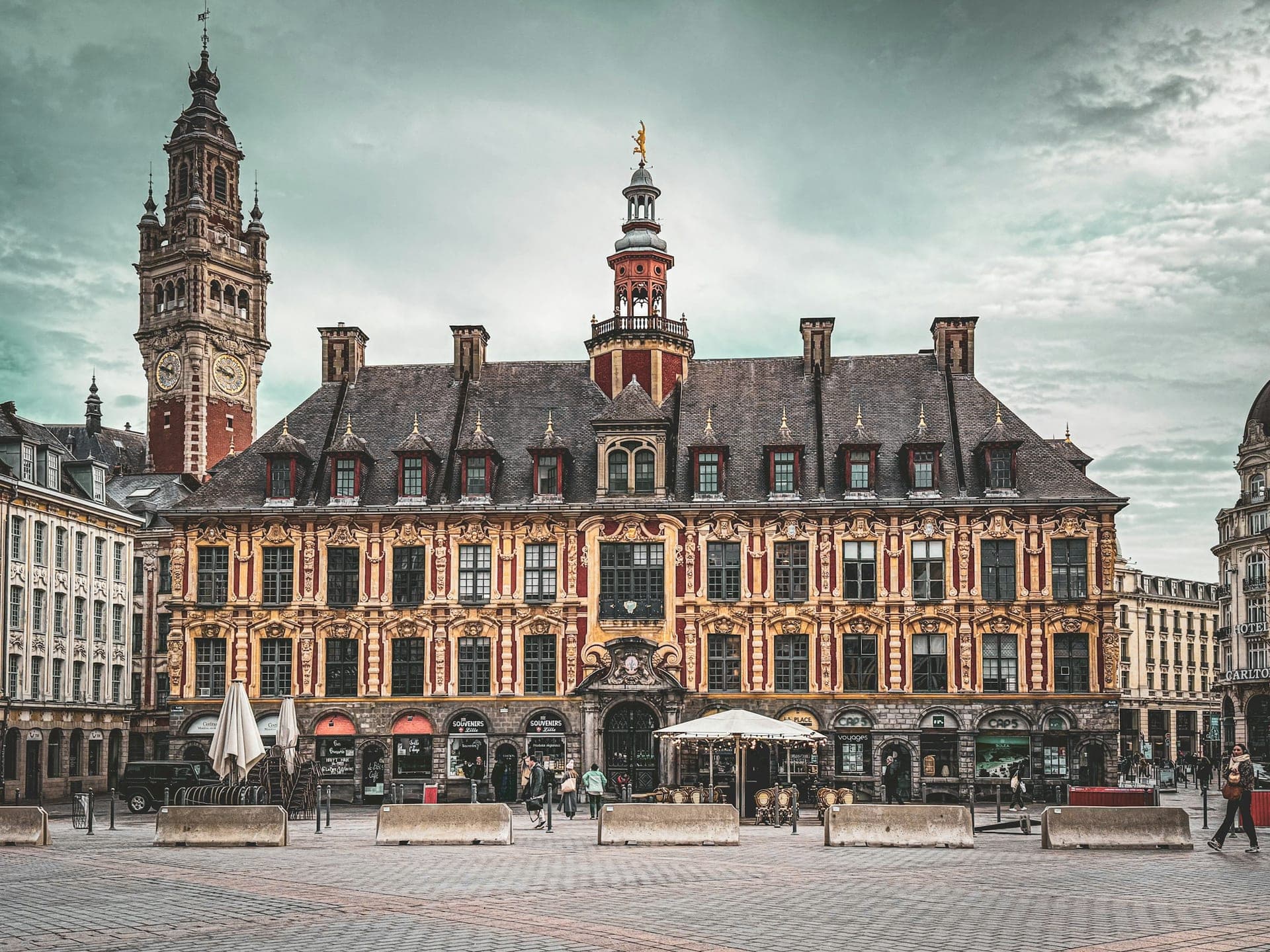
A student city on a mill town’s bones
Lille made its fortune spinning cotton and linen, and it housed the workers in courées: rows of tiny brick cottages packed into back courts behind the street front. By 1740 the city already counted 105 of them. The mills have gone, and a metropolis of universities and services has taken their place, home to 136,000 students. That shift from factory to lecture hall still shapes who lives here, in what kind of home, and on what terms.
Renting is the rule in a city of 238,246 people. Some 70.3% of households rent and only 27.6% own their home. Social landlords hold about 25% of the stock, and the city's own housing plan puts its social rental share at 26.3%. Private landlords let the rest of the rented homes, around 45.3% of households, the largest single tenure. Resident-owned cooperatives barely register. France abolished its cooperative tenure in 1971 and restored it only in 2014, and none is known to operate in the city yet. A small remainder, about 2.1% of households, is housed free of charge.
- Owners
- Owner-occupier27.6%
- Renters
- Public & non-profit rental25.0%
- Cooperative0.00%
- Private rental45.3%
- Other2.1%
- Housed free of charge2.1%
In France, social housing is a legal status rather than a landlord. A logement social (a home let at a capped rent to a household under an income ceiling) can be owned by a public office, a non-profit company or occasionally a private investor under contract. The SRU law of 2000 (the Solidarity and Urban Renewal act) obliges cities like Lille to reach a quota of such homes, and Lille clears it with 25%. Most of the stock belongs to Lille Métropole Habitat (LMH, the metropolitan public housing office), Vilogia and 3F Notre Logis. Demand still far outruns it: the metropolis logged 62,700 applications at the end of 2022 against 10,100 allocations over the year.
Rents rise steeply as a household moves up the ladder. A social home lets for around €6 per square metre a month. The median private rent across the agglomeration is €12.1, and inside the city it ranges from €10.4 to €15.5 depending on the district. Flats advertised in June 2026 asked €16.40 per square metre. For the students who dominate the small-flat market, an average studio now costs €548 a month with charges, up 5.8% in a year.
- Public/municipal housing
- Cheapest district median
- All-stock median
- Dearest district median
- Advertised rents (new listings)
Monthly rent per square metre, net of charges. The capped social rent sits at half the private median; asking rents on newly advertised flats run a third above it.
Empty space sits alongside the waiting list. INSEE (the national statistics office) counts 8.2% of the city's 145,127 dwellings as vacant, and the city's housing plan identifies about 3,000 that have stood empty for the long term. In the office market, 8.8% of the metropolis's floor space was vacant in mid-2026. Short lets add pressure at the margin, with 2,362 active Airbnb listings counted over the year to October 2025. Since April 2024 anyone turning a flat into a tourist let must compensate by creating housing elsewhere in the city.
Lille grows slowly, by 0.4% a year, and only because births outnumber departures. More people move out than move in. Supply is the tighter constraint. The metropolis started 5,279 homes in 2024, 85% of its target of 6,200 a year. Social production fell further behind: only 780 homes under PLUS and PLAI (the two main subsidised social-rent loans) were financed in 2025, against a goal of 2,000.
The squeeze bites hardest at the bottom and among the young. Some 28.6% of Lille residents live below the poverty line, and 26.0% of the population is aged 15 to 24. An estimated 33.4% of households are overburdened by housing costs, so strain reaches well beyond the poorest. The Fondation pour le Logement des Défavorisés (France's leading housing-rights charity, formerly the Fondation Abbé Pierre) finds that almost no request to the 115 emergency-shelter line in the metropolis ends in an offer. Across Hauts-de-France, 247,500 households wait for social housing, up 36% in six years. The charity's national study Des vies en suspens traces what those years of waiting do to families. Students feel it on the private market too: one student told L'Étudiant of expecting to end up sleeping in a tent.
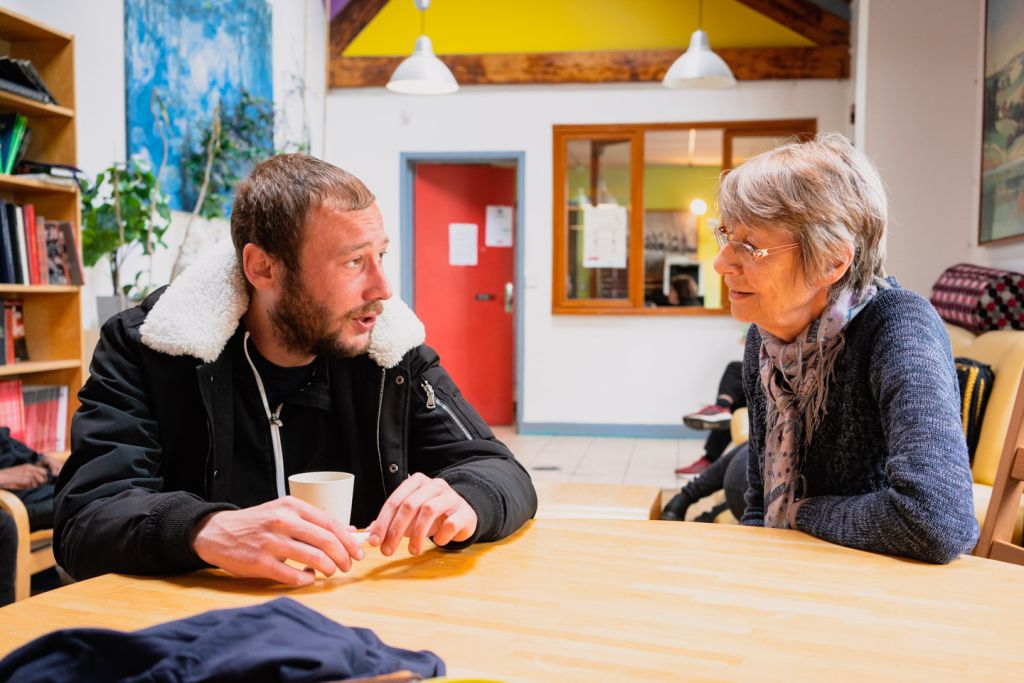
The number of households waiting for social housing has risen by more than a third in six years.Set against a queue that long, the non-speculative sector outside social renting is small. It is also unusually inventive: Lille has no known resident cooperative yet, but it founded France's first community land trust.
Cooperation before cooperatives: France’s first land trust
French law offers four routes to housing that sits outside speculation. The coopérative d'habitants (resident cooperative) lets members own shares in the building rather than their flat. Habitat participatif (participatory housing) brings a group together to design its own building, often in partnership with a social landlord. The coopérative HLM (a cooperative social-housing company) builds homes for affordable ownership. The fourth, the bail réel solidaire (BRS, a solidarity lease), separates land from building. A household buys the flat while a land trust keeps the ground and charges a small monthly fee. In Lille the last two routes carry most of the weight.
The Nord's cooperative instinct was industrial and employer-led before it was resident-led. In 1943 the textile industrialist Albert Prouvost joined Roubaix employers, officials and trade unionists to found the first CIL (Comité Interprofessionnel du Logement, an inter-industry housing committee). Its payroll levy became the national "1% logement", today Action Logement, and its housing company lives on as Vilogia. Residents organised later. In Villeneuve-d'Ascq, next door to Lille, the group Les Crieurs began renting and running its own homes in 1982, a French first for self-managed group housing.
Today the sector falls into three clusters that face different problems. Participatory groups make up the first. The city lists seven such projects, from Les Voisins du Quai on the Quai de l'Ouest to Les Cailloux Verts at Fives Cail, supported by the network Habitat Participatif en Nord. Their obstacle is time: the Voisins du Quai group formed in 2011 and moved in only in 2018. The second cluster is the land trust, the Organisme de Foncier Solidaire de la Métropole Lilloise (OFSML). It depends on cheap public land and on developers willing to carve BRS homes out of larger schemes. The third is the social landlords, squeezed by construction costs.
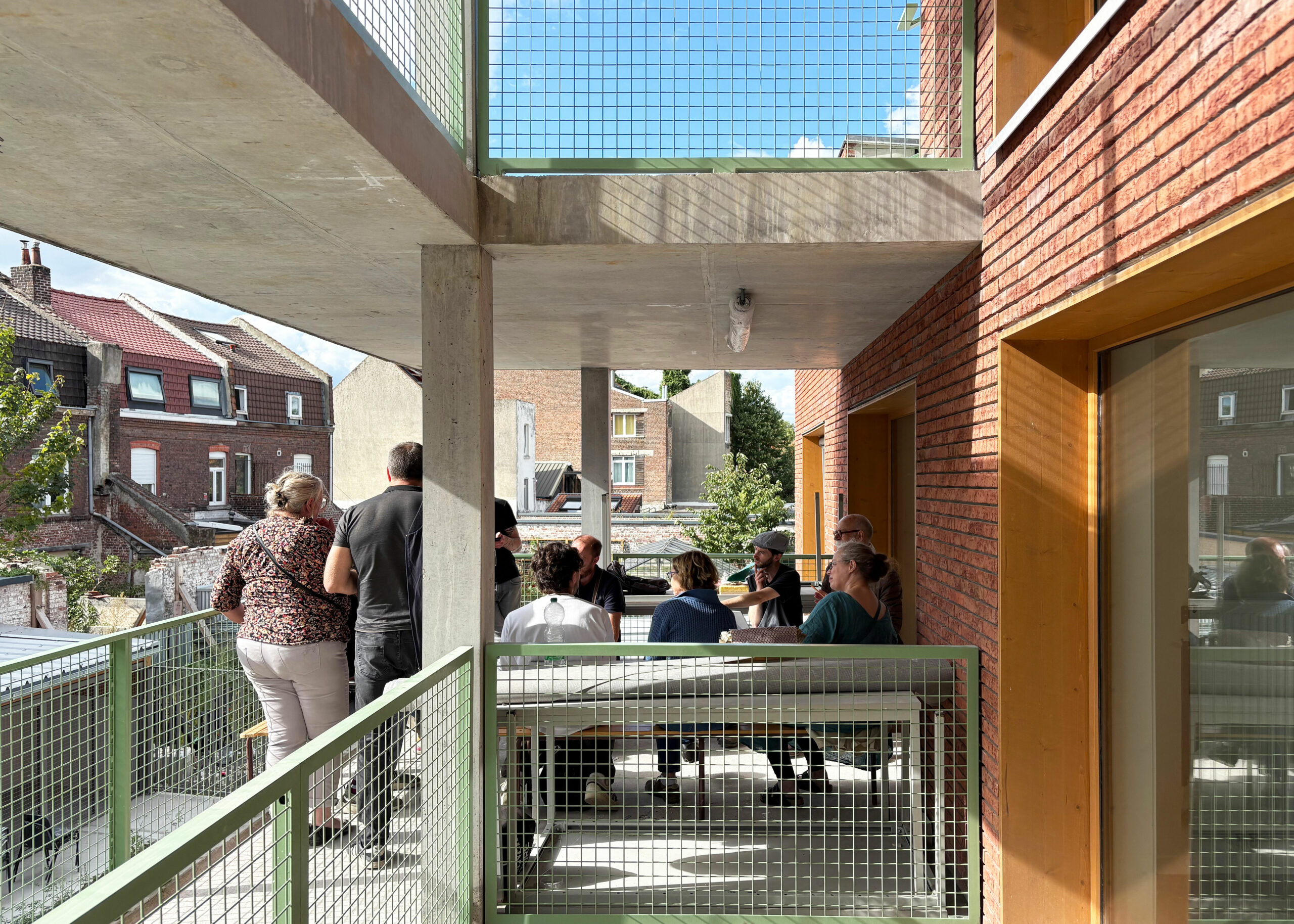
The land trust is where Lille leads the country. OFSML was created in February 2017 and approved by the state that July, the first organisme de foncier solidaire in France. Its founding rationale was blunt. Homes sold with city help since 2008 had resold at an average gain of €21,882, so the subsidy leaked out at the first sale. BRS locks the discount in by indexing resale prices to rents. The idea has spread fast: the national guide Les organismes de foncier solidaire et le bail réel solidaire counts 188 OFS approvals by the end of 2024. How the metropolis builds such tools into its plans is the political story of the city's housing.
Build, renovate, regulate
Lille has a new mayor with an old majority. Arnaud Deslandes (Socialist Party) succeeded Martine Aubry in March 2025 and won the municipal election in March 2026 with 49.33% of the second-round vote. His coalition of Socialists, Greens and Communists holds 47 of the 61 council seats, with La France insoumise as the main opposition. Housing is split between three deputy mayors: Anissa Baderi for housing, Martin David-Brochen for tenants' rights and substandard housing, and Frédéric Laroche for emergency shelter.
Most levers sit one level up, with the MEL (Métropole Européenne de Lille, the metropolitan authority that plans housing for Lille and its neighbours). It is led by Éric Skyronka, confirmed as president in April 2026 after his predecessor was barred from office. Its third Programme Local de l'Habitat (PLH3, the local housing programme for 2022 to 2028) targets 43,400 new homes and 57,000 renovations, backed by €100 million a year. New building is meant to split 30% social, 30% intermediate and 40% market, with affordable purchase capped at €2,500 per square metre. Lille's own share is 1,550 homes a year. The state keeps the tenancy framework, the SRU quota and the rules on rent control.
Rent control is the city's signature fight. Lille capped rents on new leases from February 2017, until the administrative court annulled the scheme that October. The encadrement des loyers (rent cap) returned in March 2020 under a national experiment, covering Lille, Hellemmes and Lomme. A new lease may not exceed the reference rent plus 20%. Compliance is improving: the share of listings breaking the cap fell from 43% in 2022 to 25% in 2026, with an average overcharge of €85 a month. Opponents elsewhere still cite Lille as a warning, as a Toulouse campaign debate showed. The experiment expires in November 2026 unless the Senate extends it.
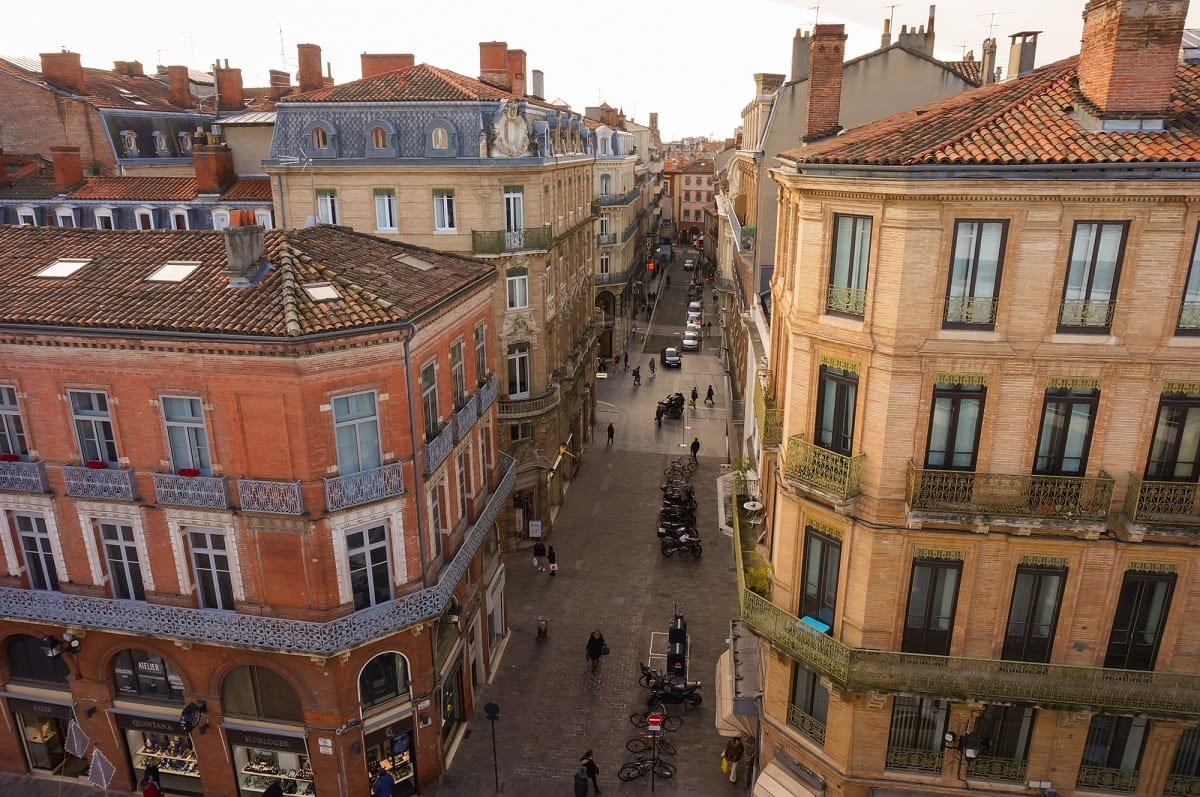
- 1943[source]
The first CIL is founded in Roubaix
Employers, officials and unions create the inter-industry housing committee whose payroll levy becomes the national 1% logement.
- Feb 2017[source]
OFSML, France’s first land trust
The Organisme de Foncier Solidaire de la Métropole Lilloise is created and approved by the state in July.
- Oct 2017[source]
First rent cap annulled
The administrative court annuls the prefectoral orders capping rents in Lille, eight months after they took effect.
- Apr 2019[source]
Rental declaration and division permits
The MEL brings in the permis de louer, permis de diviser and rental declaration in 22 communes to fight substandard lets.
- Mar 2020[source]
Rent control returns
The encadrement des loyers is reinstated in Lille, Hellemmes and Lomme under the ELAN law experiment.
- 2022[source]
PLH3 adopted
The metropolis sets a target of 43,400 new homes and 57,000 renovations between 2022 and 2028.
- Mar 2026[source]
Deslandes elected mayor
Arnaud Deslandes wins the municipal election with 49.33% in the second round.
- Nov 2026[source]
Rent-control experiment due to expire
Without a new law the cap lapses; an extension to 2028 is before the Senate.
- 2028[source]
PLH3 ends
The six-year programme closes against its target of 6,200 new homes a year.
- 2030[source]
Climate-plan milestone
The metropolitan climate plan aims to cut greenhouse-gas emissions by 45% against 1990.
- 2050[source]
Carbon neutrality and zero net land take
The metropolis targets carbon neutrality, and national law targets zero net artificialisation of land.
From the first employer housing committee to the land trust, rent control and the climate targets that frame the next two decades.
The minister refuses to extend rent control, against the wishes of mayors, MPs and the French people. Ending rent control is an unforgivable mistake.Landlords read the same numbers differently. Thierry Lorieux, regional president of UNPI (the national union of property owners), argues that owners who see a low capped rent simply turn to Airbnb instead. The mayor wants the cap kept. By summer 2026 the housing minister, Vincent Jeanbrun, was signalling a two-year extension, while tenant advocates pressed for more.
Support for the non-speculative sector comes mostly as land and lease law rather than grants. The city sells plots to OFSML for a symbolic euro, and the MEL has committed €3,680,000 over three years to its work. BRS homes count within the plan's intermediate band, and Lille describes itself as a pioneer commune for the lease. Participatory groups have been offered city plots through dedicated calls since 2013, with social landlords as partners.
The vacancy answer is slow and case-by-case. A 2016 count put 35,000 to 40,000 empty homes across the metropolis. Its regeneration company, La Fabrique des Quartiers, holds a concession to bring 1,600 of the hardest cases back into use, and the MEL was one of 17 winners of the national vacant-homes plan in 2021. A rental declaration now applies to Lille homes built before 1948. For empty offices, Lille Métropole Habitat leads Circular Building Convert, a European project testing low-carbon office-to-housing conversion. The BPIE report Conversion of offices into affordable housing sets out why: reusing a structure cuts embodied emissions by 60 to 80% compared with new build.
Climate targets now frame the building programme. The metropolitan climate plan (PCAET) aims to cut emissions by 45% by 2030 against 1990, and to renovate 8,200 homes a year. The need is large: 93,191 of Lille's homes predate France's first thermal regulations of 1975, and 9,033 social homes are rated E to G for energy. The metropolitan renovation service tops up household grants with a €5,000 bonus for deep low-energy renovation. National law also requires land take to halve between 2021 and 2031, on the way to zero net artificialisation in 2050, which favours reuse over sprawl.
From the Fives Cail forges to the offices of rue Gambetta
Cosmopole, on the site of the old pharmacy faculty in Saint-Michel, is where France's land-trust housing began. OFSML carved 15 BRS homes out of a 210-home scheme by the developer Finapar, handed over in 2020. Buyers paid about €2,100 per square metre, against roughly €3,500 for older flats nearby and €4,500 for new ones. They pay the land trust a ground fee of about €1 per square metre a month, so a 65-square-metre flat costs €65 in rent for its land. More schemes followed, including 19 BRS homes at Edenium, handed over in 2023.
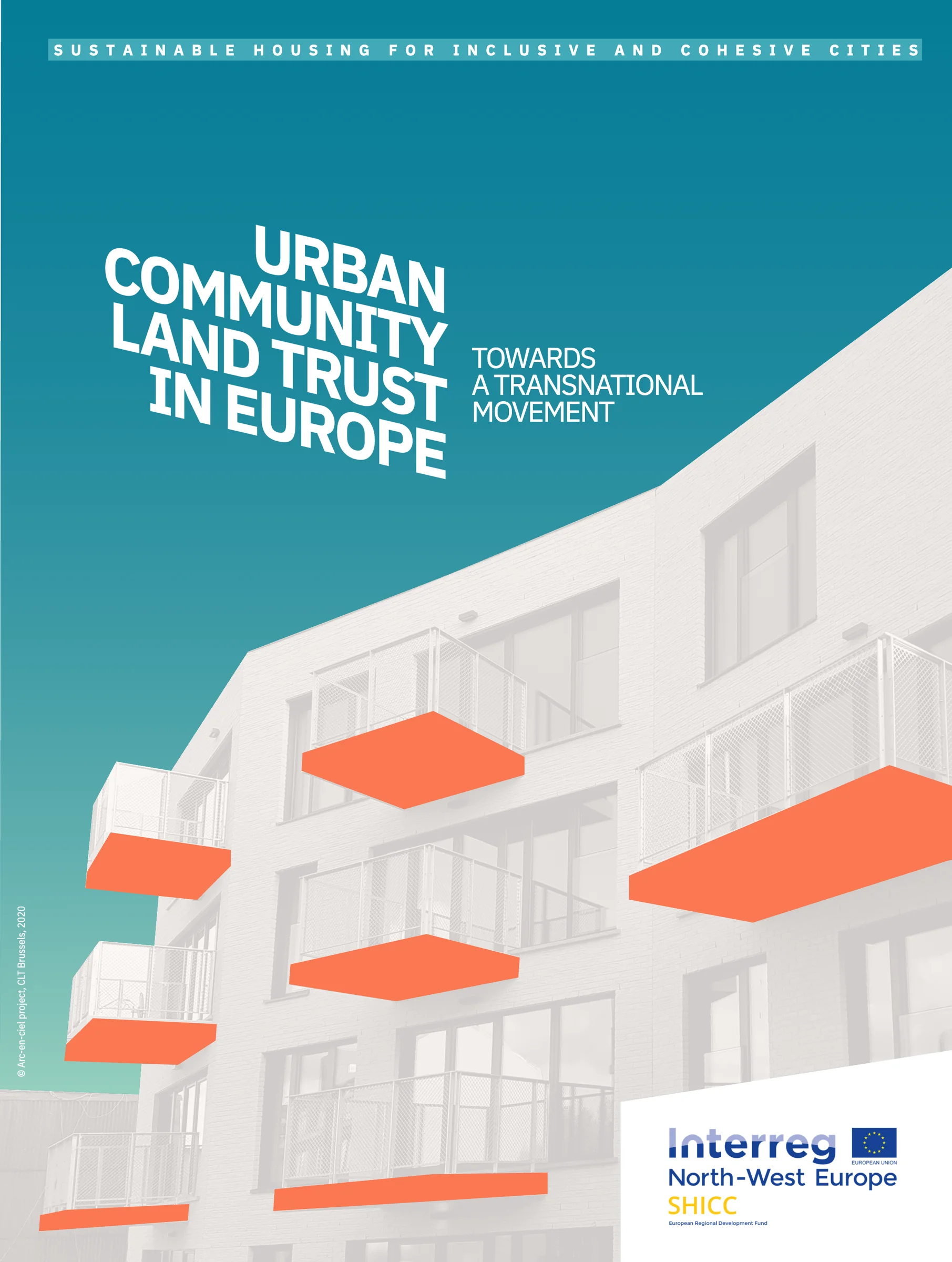
SHICC (Sustainable Housing for Inclusive and Cohesive Cities) took the Lille model to Europe. The city led this Interreg project from 2017 to 2020 with CLT Brussels, London CLT and a community-development agency in Ghent, on a budget of €2.9 million. It won a REGIOSTARS award in 2020 for citizen engagement. Its guide, Urban Community Land Trust in Europe, sets out how the four cities financed and mentored land trusts, and it remains the reference for cities copying the model.
Les Cailloux Verts shows what a participatory group can build on a former industrial site. Its 20 homes, from two to five rooms, stand on the edge of the old Fives Cail engineering works. The group partnered with the social landlord 3F Notre Logis, and the architects HBAAT completed the building in 2024. Shared rooms sit alongside the private flats.
Fives Cail itself is the city's largest reuse story. The works built the Pont Alexandre III in Paris and the lifts of the Eiffel Tower, and closed in 1998. A 25-hectare concession now turns the halls into a district, with 500 homes in the first phase and a similar number planned in the second. One hall houses the Lycée Hôtelier International, a hotel and catering school. Another became La Loco, a tiers-lieu (a shared community venue) built by the solidarity property company ETIC. Connexio, designed by XDGA, adds 164 homes, 101 of them in a residence for older people.
Les Voisins du Quai, in Bois-Blancs, is the benchmark for a group that took the slow road. Its eleven households mix 8 owners, who bought through affordable purchase, with 3 tenants renting from a social landlord. They share a garden of 350 square metres and a common room, bought at €2,825 per square metre of floor area. A few streets away, Les Voisins et Caetera built 8 timber homes with a social landlord in 2017.
Saint-Sauveur, a 23-hectare former railway goods yard empty since 2003, is the metropolis's most contested site. The plan approved in 2022 foresees 2,000 to 2,400 homes, a park of 8 hectares and a swimming pool. The residents' association P.A.R.C Saint-Sauveur challenged it, but in 2023 the administrative court upheld the procedure. The land trust's SHICC case study earmarks 60 BRS homes there.
Concorde, in Lille-Sud, is the renewal site where demolition and reuse meet. Its 1,500 homes in 10 blocks beside the A25 motorway are being partly demolished and rebuilt over 15 years. The project aims for 1,600 new and renovated homes, and one 11-storey tower is being converted into an intergenerational residence. The metropolitan development company SPL Euralille leads it.
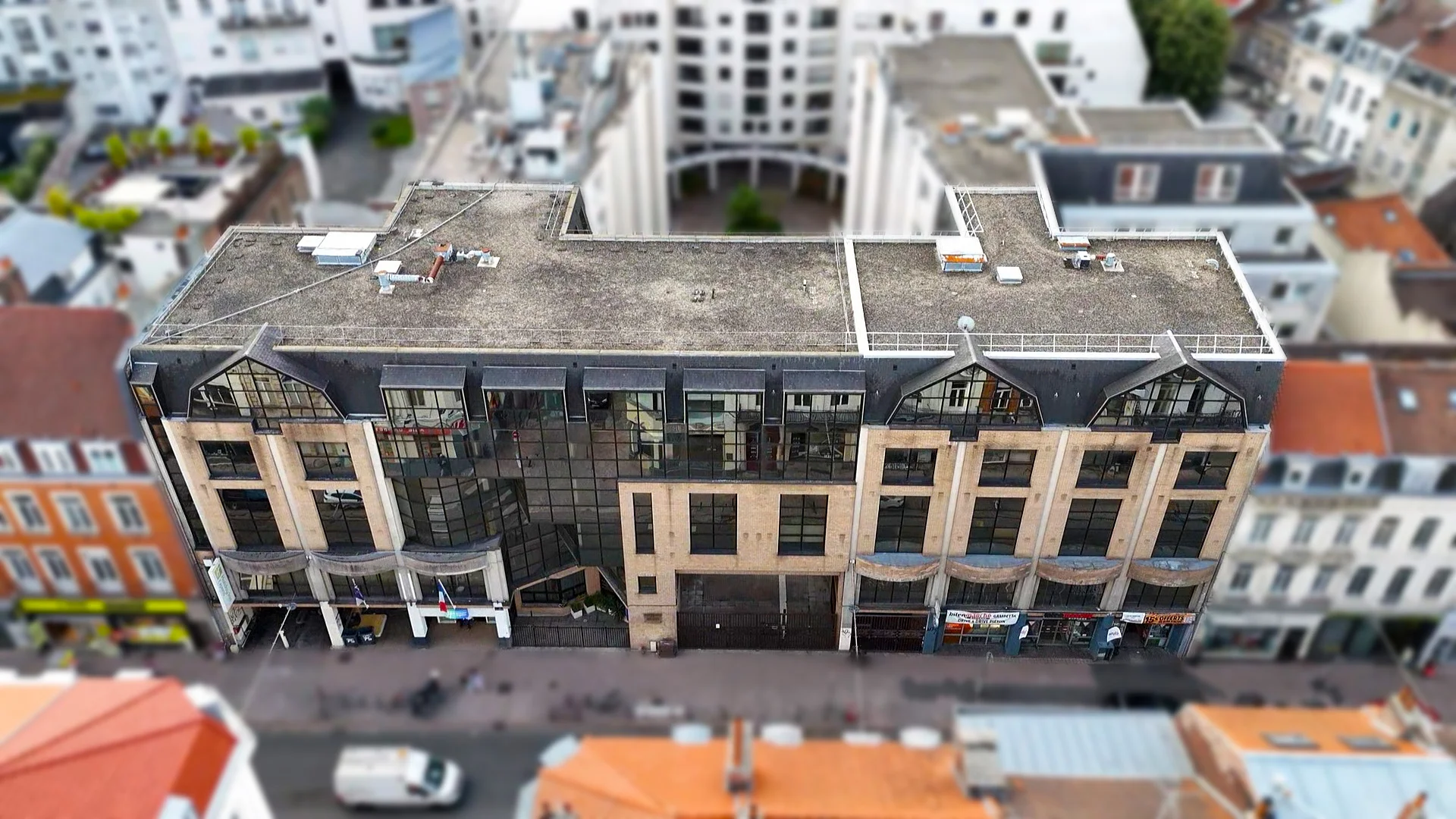
Circular Building Convert brings the office question home. Its Lille pilot, at 75 and 77 rue Gambetta, covers 2,110 square metres co-owned by Lille Métropole Habitat plus around 3,500 more in the neighbouring building. The aim is a mix of good-quality homes for people on low and middle incomes, delivered with circular building methods, with a twin pilot in Heerlen in the Netherlands. The European Urban Initiative, the EU programme for urban innovation, keeps its secretariat in Lille, a reminder that the city sits at a crossroads of European urban policy.

Each September the Braderie turns Lille's pavements into a market where things change hands for a few euros. Its housing makers have spent a decade doing the opposite, taking land off the market for good, one lease at a time. The land trust, the participatory groups and the converted halls are small beside a waiting list of tens of thousands. They are also the proof that the method works here.
References
Statistics7Click on any number to see the source
Housing market
Tenure & affordability
Adaptive reuse & vacancy
Population & migration
From our library9
- Des vies en suspens – l'attente d'un logement social — Knowledge
- Organisme de Foncier Solidaire de la Métropole Lilloise (OFSML) — Organisation
- Les Cailloux Verts — Project
- Les organismes de foncier solidaire et le bail réel solidaire (2025) — Knowledge
- Encadrement des loyers à Toulouse : Piquemal promet, Moudenc refuse catégoriquement — Knowledge
- Conversion of offices into affordable housing — Knowledge
- Circular Building Convert (CBC) — Organisation
- Urban Community Land Trust in Europe — Knowledge
- European Urban Initiative — Organisation
Further sources60
- connexionfrance.com — connexionfrance.com
- MEL, Lille métropole accueille vos réussites (2025) — lillemetropole.fr
- Cahier Lillois du PLH3 2022–2028 (RPLS 2020) — lillemetropole.fr
- ADU Lille Métropole, L’Aperçu n°33 (2024) — www.adu-lille-metropole.org
- Observatoire local des loyers, Lille 2024 — www.observatoires-des-loyers.org
- Moneyvox / SeLoger, June 2026 — www.moneyvox.fr
- LocService, June 2026 — www.locservice.fr
- Airbtics (commercial estimate) — airbtics.com
- www.lille.fr — www.lille.fr
- INSEE, dossier complet Lille — www.insee.fr
- MEL press release, 17 Oct 2025 — www.lillemetropole.fr
- Fondation pour le Logement, L’État du mal-logement en Hauts-de-France 2026 — www.fondationpourlelogement.fr
- www.letudiant.fr — www.letudiant.fr
- Isabelle Fourot — www.fondationpourlelogement.fr
- www.banquedesterritoires.fr — www.banquedesterritoires.fr
- www.batiweb.com — www.batiweb.com
- habitat-cooperactif.eu — habitat-cooperactif.eu
- www.lille.fr — www.lille.fr
- www.banquedesterritoires.fr — www.banquedesterritoires.fr
- DREAL Hauts-de-France / CRHH, OFSML presentation (2020) — www.hauts-de-france.developpement-durable.gouv.fr
- Ministère de la Cohésion des territoires, guide OFS/BRS 2025 — www.ecologie.gouv.fr
- france3-regions.franceinfo.fr — france3-regions.franceinfo.fr
- LCP, 22 March 2026 — lcp.fr
- www.lille.fr — www.lille.fr
- www.lille.fr — www.lille.fr
- www.mediacites.fr — www.mediacites.fr
- MEL press release on the PLH3, Feb 2023 — www.lillemetropole.fr
- MEL, Construire plus, un habitat plus — www.lillemetropole.fr
- www.lafinancepourtous.com — www.lafinancepourtous.com
- www.lille.fr — www.lille.fr
- Fondation pour le Logement, 6e baromètre de l’encadrement des loyers (2026) — www.fondationpourlelogement.fr
- www.banquedesterritoires.fr — www.banquedesterritoires.fr
- MEL press release — www.lillemetropole.fr
- MEL deliberation 24-C-0019 — www.lillemetropole.fr
- Ministère de la Transition écologique — www.ecologie.gouv.fr
- Arnaud Deslandes — france3-regions.franceinfo.fr
- vb.nweurope.eu — vb.nweurope.eu
- OFSML news, 18 Feb 2026 — ofsml.fr
- www.rtes.fr — www.rtes.fr
- Les EPL, June 2016 — lesepl.fr
- MEL press release, May 2021 — www.lillemetropole.fr
- www.lillemetropole.fr — www.lillemetropole.fr
- BPIE for DG Environment (2025) — www.bpie.eu
- MEL press release, Dec 2019 — lillemetropole.fr
- www.banquedesterritoires.fr — www.banquedesterritoires.fr
- L’Info Durable — www.linfodurable.fr
- climate-chance.org — climate-chance.org
- vb.nweurope.eu — vb.nweurope.eu
- www.lille.fr — www.lille.fr
- www.pss-archi.eu — www.pss-archi.eu
- cd2e.com — cd2e.com
- cd2e.com — cd2e.com
- www.pss-archi.eu — www.pss-archi.eu
- MEL press release, Oct 2022 — www.lillemetropole.fr
- France 3 Hauts-de-France, Oct 2022 — france3-regions.franceinfo.fr
- www.ici.fr — www.ici.fr
- MRAe opinion 2023-6963 — www.mrae.developpement-durable.gouv.fr
- www.ecologie.gouv.fr — www.ecologie.gouv.fr
- Circular Building Convert, pilots — circularbuildingconvert.nweurope.eu
- circularbuildingconvert.nweurope.eu — circularbuildingconvert.nweurope.eu
Funding & land tenure
What a housing cooperative could actually build on hereLille is not in the funding registry yet — the tenure figures above are national.