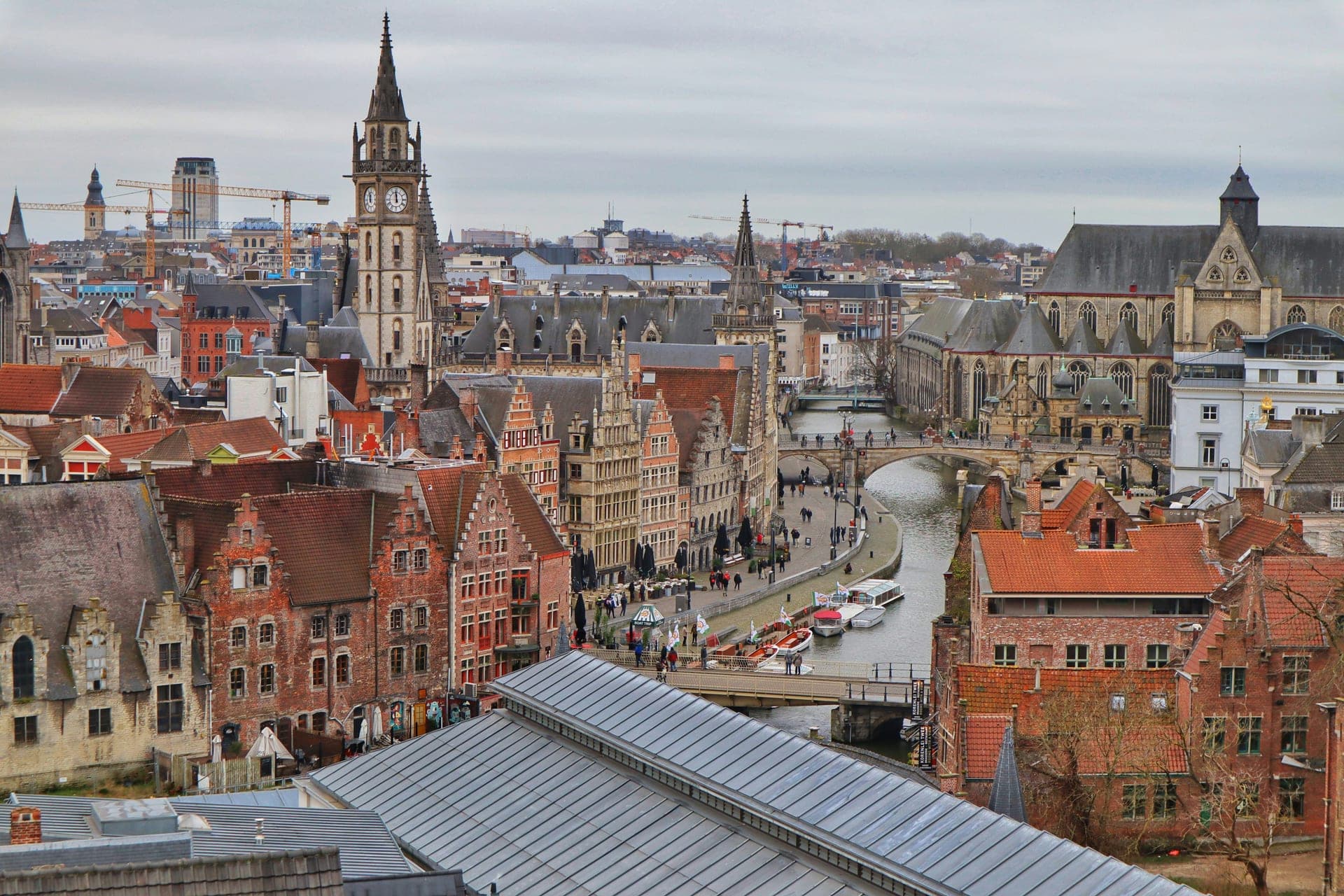
A university city its young families struggle to stay in
Ghent has practised shared living for a very long time. Its Small Beguinage, founded in 1235, still gathers about a hundred homes around one meadow behind a single wall, and people live there today. In 1880 the city's workers founded Vooruit, a cooperative bakery that grew into shops, a newspaper and a festival hall. Now the same city is a crowded university town that its own young families struggle to stay in. That tension between collective memory and a tight private market runs through everything below.
Ownership and renting are almost evenly balanced. About 52% of households own their home and 45% rent, across roughly 135,000 dwellings. Public landlords hold 9% of the stock, some 12,000 homes. That leaves about 36% in private rental, the tier where most of the pressure lands. Cooperative housing is too small to register in the census. It is counted in single buildings: 24 flats in one rescued block, 34 land-trust homes in another.
- Owners
- Owner-occupier52.0%
- Renters
- Public & non-profit rental9.0%
- Cooperative0.00%
- Private rental36.0%
- Unclassified3.0%
- Unknown / Other3.0%
Social housing in Flanders is a rulebook for rents and allocation, not a separate tenure. On the regional count it covers 9% of Ghent's dwellings; the city's own planning figure is higher, at 12%. Almost all of it is let by Thuispunt Gent, the city's social housing company (woonmaatschappij), and the smaller Dimensa. So the regulatory layer and the public slice largely overlap instead of adding up. Roughly 50% of households would qualify on income, and more than 11,000 families are on the waiting list.
Rents open a wide gap between those two worlds. Social tenants pay around €4.50 per m² a month, against a median of €12.50 across the whole rental stock. A furnished one-bedroom flat lets for about €850 a month, and a three-bedroom flat in the centre for about €1,617.50. Across Flanders, new contracts signed in 2024 cost about 6% more than a year earlier, roughly double the rate of inflation, according to the public broadcaster's rent barometer.
- Social rent (Thuispunt Gent / Dimensa)
- All-stock median (net cold)
Net monthly rent per m². Ghent has no published cooperative or new-contract rent series, so the ladder shows its two measured rungs: the social rent and the median across the whole stock. Furnished and family-flat rents appear in the text as monthly totals.
Vacancy is modest by European standards. About 3% of homes stand empty, and the regional register records roughly 5,500 empty buildings. The city's own list of empty, neglected or unfit homes held about 2,000 buildings in 2023. Offices offer less slack than in most capitals: 4.3% of Ghent's office stock was on offer in mid-2026, some 0 m². Short-term letting takes an estimated 545 whole homes out of long-term use.
Newcomers keep arriving. Around 18,000 people move to Ghent each year, and an estimated 28,000 residents stay for three to twelve months, many of them students and researchers. A 2023 study for the city by the planning firm Atelier Romain projected up to 20,000 extra households by 2040. “Many more small apartments are being built than larger homes,” its author Brecht Vandekerckhove told VRT. Students add their own squeeze. The city is short of up to 10,000 student rooms (koten), so many students share family houses instead.
The squeeze has moved up the income ladder. In Flanders about 50% of private renters spend more than 30% of their income on housing, against about 20% of all households. HIVA-KU Leuven researcher Sien Winters sets out those figures in her essay Is wonen echt onbetaalbaar? (Is housing really unaffordable?). In Ghent, the city's social-housing programme director Kristof Gielen told the council in 2024 that 36,000 households cannot rent on the private market, let alone buy. The Atelier Romain study found about 3,500 people leave the city each year because they can no longer afford a home, most of them in their thirties. Public feeling is plain. In October 2023 more than 33,000 residents voted in a citizens' referendum (volksraadpleging) on housing, and nearly 80% backed a public land bank for social housing.

Beside that demand, cooperative and community-owned homes remain a sliver of the stock, yet they are where Ghent has tried its least conventional answers.
From the Vooruit bakery to the land trust: Ghent’s cooperative line
Ghent's cooperative housing takes three legal shapes, none of them large. wooncoop, founded in 2017 and based in Sint-Amandsberg, is a rental cooperative. Residents buy shares (aandelen) and then rent from the cooperative at cost price, so the more shares they hold, the lower their monthly payment. Community Land Trust Gent (CLT Gent) separates the land from the bricks. A foundation keeps the ground for good, households buy only the home, and resale prices are capped so the discount passes to the next buyer. The third shape is the cohousing group: residents who commission a building together and share rooms and gardens, usually organised as a non-profit association (vzw) rather than a cooperative.

The cooperative idea is older here than cooperative housing. Vooruit's bakers and shopkeepers turned Ghent into a reference point for workers' cooperatives, but that movement fed and clothed its members rather than housing them. Housing took another road. After 1919 a national agency lent cheaply to housing cooperatives, most of them garden suburbs around Brussels. Policy then swung to ownership, and the De Taeye law of 1948 put generous public money behind buying your own house. Belgians still call the result a brick in the stomach (baksteen in de maag), the lifelong urge to own. Ghent's social landlords grew up as public companies, and resident-run cooperatives only reappeared in the 2010s.
The sector now falls into three clusters, and each is short of something different. The land-trust cluster, CLT Gent working with the social landlord and the city's development agency Sogent, is short of land: its first building waited 12 years for a plot. The rental-cooperative cluster around wooncoop is short of capital, and raises it through share offers to Ghent residents. The cohousing cluster, groups such as Biotope, De Spore and Wijgaard, is short of time and of partners willing to wait. Around them sit the community organisers of SAAMO (formerly vzw Samenlevingsopbouw Gent). After the city stopped indexing its budget, SAAMO left the Rabot district in 2026 after 30 years.
We are aiming at people who just miss out on a loan from the bank. Taking the price of the building land out of the equation should give them the final push.Flanders has only lately begun to treat cooperatives as a third way between renting and buying. The 2024 to 2029 policy note of then-housing minister Melissa Depraetere promised a level playing field for cooperative, cohousing and leasehold models. The Flemish environment department now runs a learning track, Van proeftuin naar opschaling (from test garden to scaling up), for towns that want to put public land into cooperative projects. A 2025 study by the research institute VITO with Deloitte set out the legal and tax building blocks a housing cooperative still lacks in Flemish law. Ghent sits at the front of that queue, with the most projects and the longest list of what stalls them.
Social renting without hang-ups: Ghent’s wager and its critics
Three governments share the job in Ghent, and none holds every tool. The federal state sets tax rules and the constitutional right to decent housing. Flanders writes tenancy law, finances social building and sets the Bindend Sociaal Objectief (binding social objective). It required every municipality to reach 9% social housing by the end of 2025, and then-minister Depraetere proposed fines for towns that refuse to build. The city holds the land and the building permits, and steers Thuispunt Gent's priorities through its housing programme.
In April 2026 Flanders raised its sights. Housing minister Hans Bonte of Vooruit (the Flemish social democrats) announced up to 56,000 extra social homes by 2042, backed by more than €1 billion a year for building and renovation. The Flemish waiting list had reached 215,337 households. Ghent has already said it wants a share of an optional 11,000-home envelope on top of its quota.
Ghent's own answer is the boldest in the region. The city is governed by Voor Gent, the liberal and social-democrat list of mayor Mathias De Clercq, together with Groen (the Greens). The coalition wants 20% of homes let socially by 2050, alongside a matching share of cheaper budget housing. The plan adopted in 2024 is costed at €2.3 billion to 2050, about €90 million a year, most of it from Flanders. Thuispunt Gent plans about 2,300 more homes by 2034. It says demolitions and renovations will still absorb most new building until 2028, when the waiting list should start to fall.
In Ghent we choose social housing without hang-ups. It is the way out of the housing crisis, and for many people a necessity to get their lives in order. With 30 million in subsidies we are making sure Thuispunt is armed to take on the waiting list.The instruments are specific. Since January 2025 Thuispunt holds a pre-emption right (voorkooprecht) across the whole city, letting it buy land and larger buildings before a private buyer. After the referendum the city put its own property first in line for social housing and withdrew the Vredeshuis from sale. The Woonpact (housing pact) has been open to projects since June 2026. Developers who make at least 40% of a scheme affordable rent, split evenly between social and budget rental, get one contact point, faster permits and a waiver of the fee for occupying public space. Cooperatives have no dedicated Ghent funding line. Their route runs through land: Sogent donated the plot for the Meulestede land trust and ran the competition that became Bijgaardehof.
Empty homes get a tax first and, as a last resort, a takeover. Owners on the vacancy register pay a yearly levy, and since 2023 the city may take a long-neglected home into social management (sociaal beheer) for at least 9 years. It renovates the house and lets it socially until the works are paid back. In October 2025 it did so for the first time, with a house empty for 21 years. Alderman Filip Watteeuw conceded that it “will not solve the housing crisis” but called it an important signal. With so little office vacancy, conversion is a smaller lever here than in the larger capitals.
Climate targets press on the same buildings. Ghent aims to be climate-neutral by 2050 and to cut CO2 emissions by 40% by 2030, and its own website admits the current trend falls short. Flanders obliges anyone who buys a home rated E or F on the energy performance certificate (EPC) to bring it up to label D within 6 years. Its Bouwshift (building shift) policy aims to end net new land take by 2040, so growth must happen on land already built on. Help for owners comes through the city's Huis+ one-stop shop and the EU-funded Gent Knapt Op programme for vulnerable homeowners, part of the neighbourhood-first approach Eurocities describes. Social landlords feel it most: Thuispunt says about 40% of its stock is outdated.
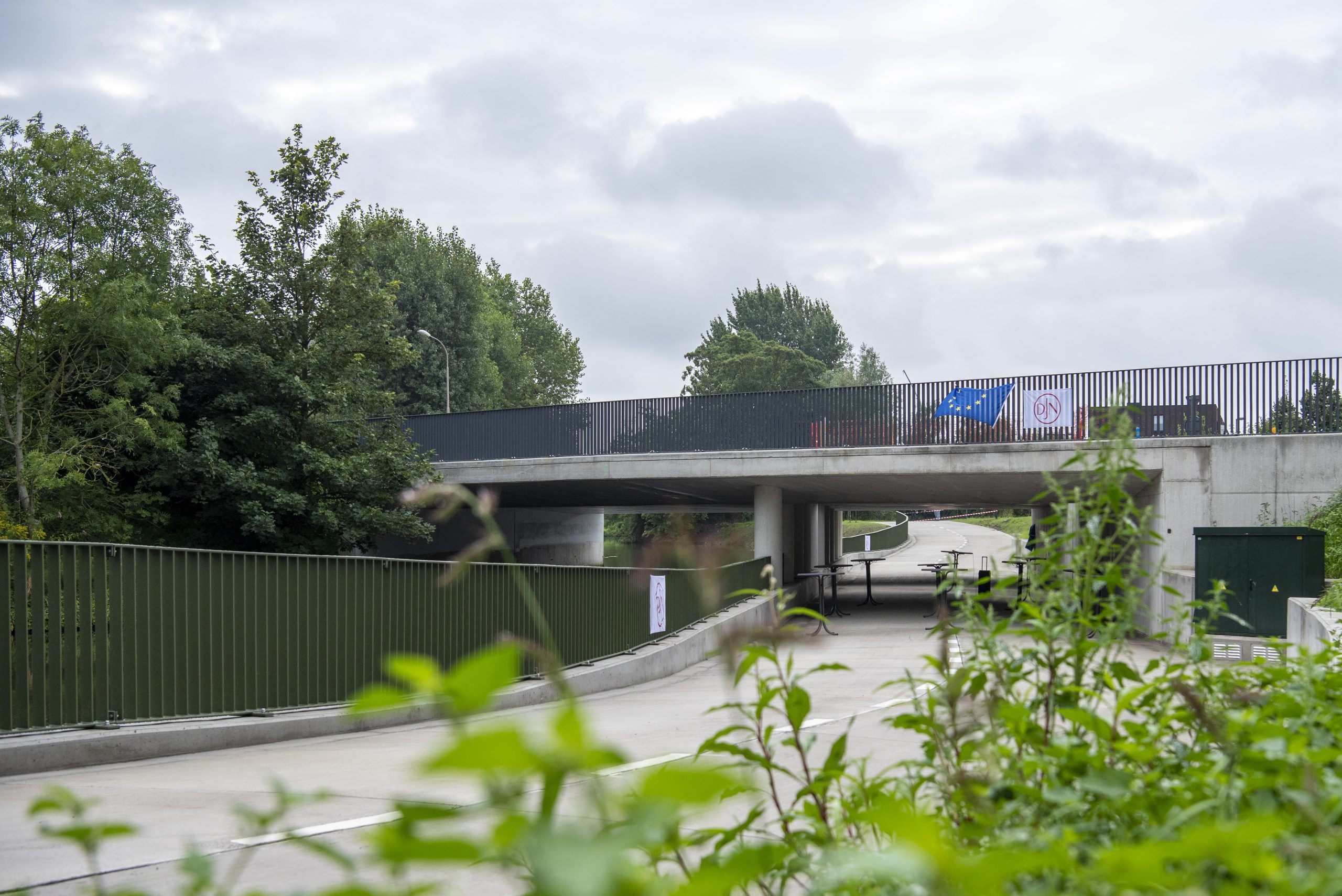
The argument is about pace more than direction. The coalition presents social renting as the main exit from the crisis. The left-wing PVDA says the plan moves too slowly, while the Flemish nationalist N-VA voted against the social-housing programme in 2024. The groups behind the referendum wanted twice the city's target.
It is good that the renovation plan is now picking up speed. But the ambition is not enough to clear the waiting list. We want the administration to draw up a new investment plan this term that really gets to work on it. It is now going slower than foreseen in the earlier plans.- 1880[source]
Vooruit cooperative founded
Ghent workers led by Edward Anseele found the Vooruit cooperative bakery, the start of a cooperative network of shops and services that became a model for the labour movement.
- Oct 2022[source]
First land trust in Flanders breaks ground
Construction starts on 34 community-land-trust homes in Meulestede, on land owned by WoninGent, after 12 years of searching for a site.
- 2023[source]
Social-housing cap lifted
The Constitutional Court strikes down the Flemish rule that denied support for extra social homes in municipalities already above 15%, opening the way to Ghent’s 20% goal.
- Oct 2023[source]
Citizens’ referendum on housing
More than 33,000 residents vote in a non-binding volksraadpleging; nearly 80% back keeping city property public and a land bank for 40% social housing.
- Jan 2024[source]
20% social-housing plan adopted
The city council approves a programme to raise social housing from 12% to 20% of homes by 2050, costed at €2.3bn.
- Jan 2025[source]
Pre-emption right city-wide
Thuispunt Gent’s right to buy land and larger buildings before private buyers is extended to every residential area of the city.
- Oct 2025[source]
First empty home taken into social management
For the first time the city takes over a house that had stood empty for 21 years, renovates it and lets it as social housing for at least 9 years.
- Jun 2026[source]
Woonpact opens to projects
Developers can submit schemes that set aside at least 40% affordable rent, half social and half budget rental, in exchange for faster, guided permitting.
- 2042[source]
Flemish social-housing horizon
Flanders targets up to 56,000 extra social homes by 2042; Ghent has signalled it wants a share of the optional 11,000-home envelope.
- 2050[source]
One home in five let socially
The horizon of the city’s programme: 20% of all homes in social rental, about 10,000 more than in 2024, with roughly 3,000 added per decade after 2030.
From a workers’ cooperative bakery to a city target of one home in five let socially, with the Flemish and city milestones that shape it.
Courtyards rebuilt: Bellefleur, Meulestede, Bijgaardehof and the social towers
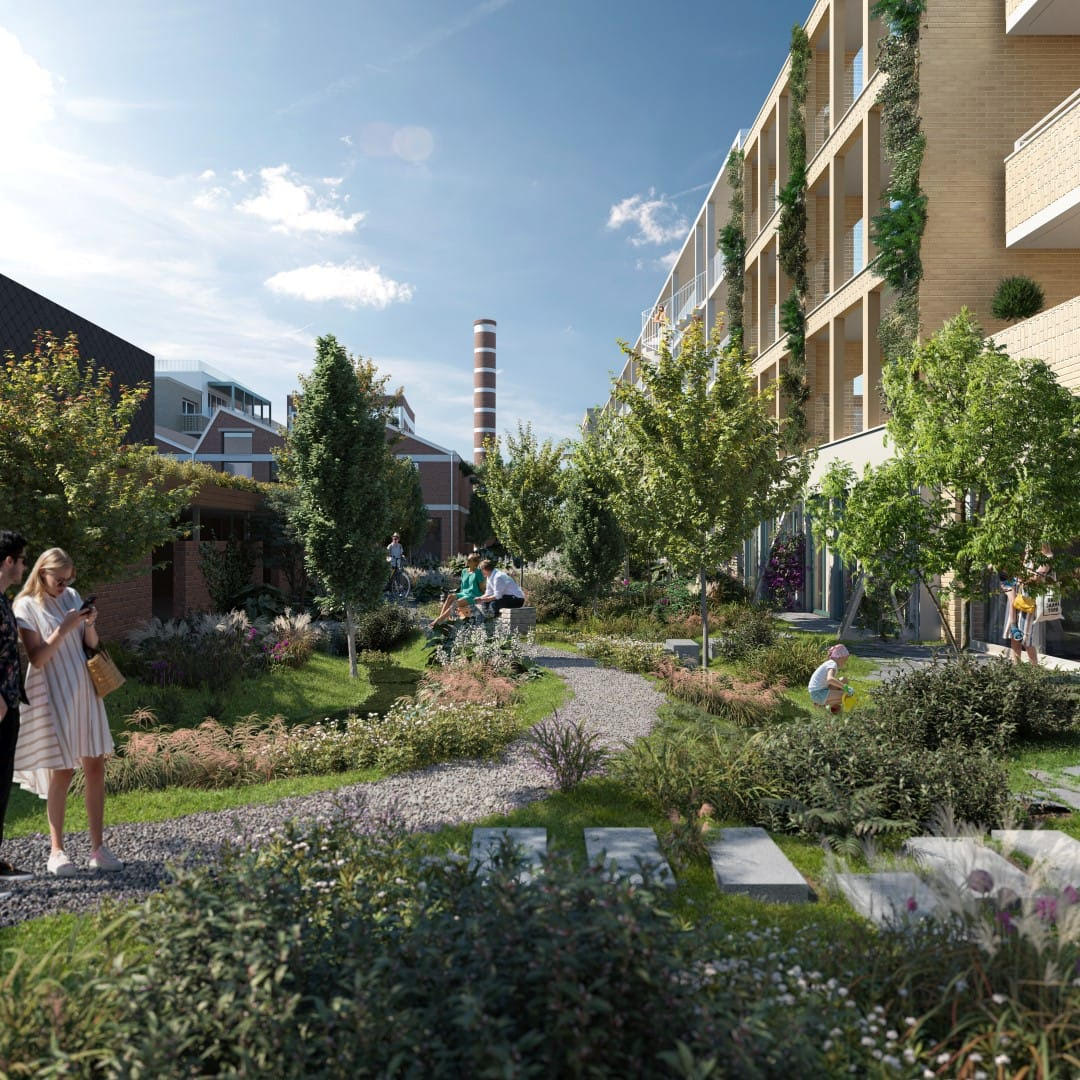
Bellefleur is the clearest case of a rental cooperative rescuing old social housing. wooncoop bought four empty historic blocks with protected facades and turned them into 24 flats around a shared garden of about 200 m². Energy use fell by about 80%. One flat is reserved for a vulnerable household through the Bellefleur Solidair fund, which has raised €220,000. Havana architecten won the Ghent Architecture Prize in 2024 for the design. The friction is money: the purchase and renovation needed repeated share offers to residents, and a cost-rent flat in a listed facade is still out of reach for the lowest incomes.
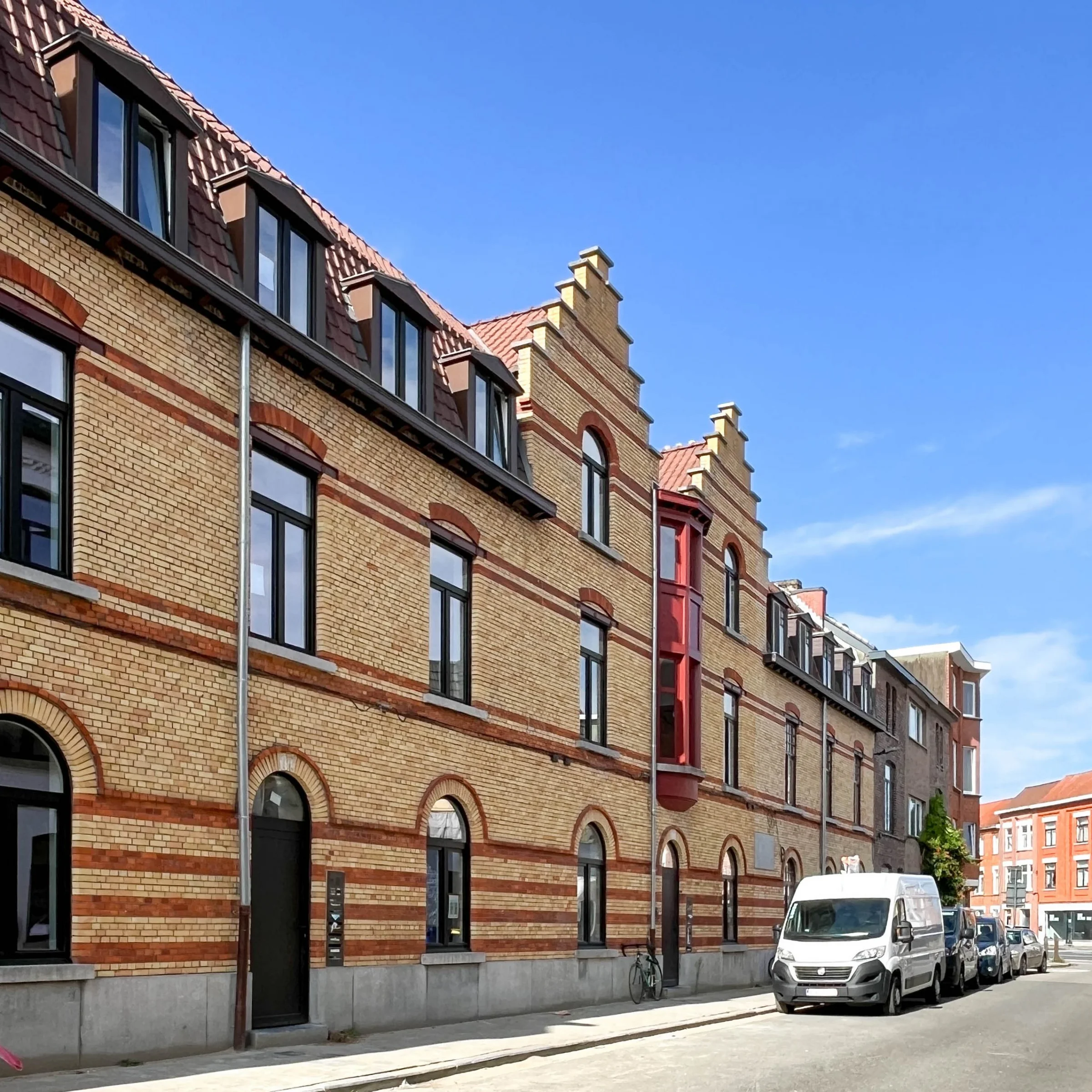
Meulestede, in the city's port-side north, is where the land trust finally broke ground. Its homes stand in two four-storey blocks around a collective garden and a neighbourhood room, on land owned by the social landlord. Buyers own the home but not the ground, so the price leaves out the plot. They must live there themselves, cannot let the home, and resell at a capped price. An earlier group in Sint-Amandsberg had formed a community but never found land, which is why CLT Gent's first building came a decade late.
Bijgaardehof turned the former Malmar factory near Dampoort station into 59 homes for three cohousing groups, Biotope, De Spore and Wijgaard, with the Kapellenberg neighbourhood health centre alongside. The design, by BOGDAN & VAN BROECK, covers 9,375 m² gross. Sogent organised the competition in 2009 and the building was finished in 2022. That 13-year gap is the honest measure of how long collective self-build takes in Flanders.
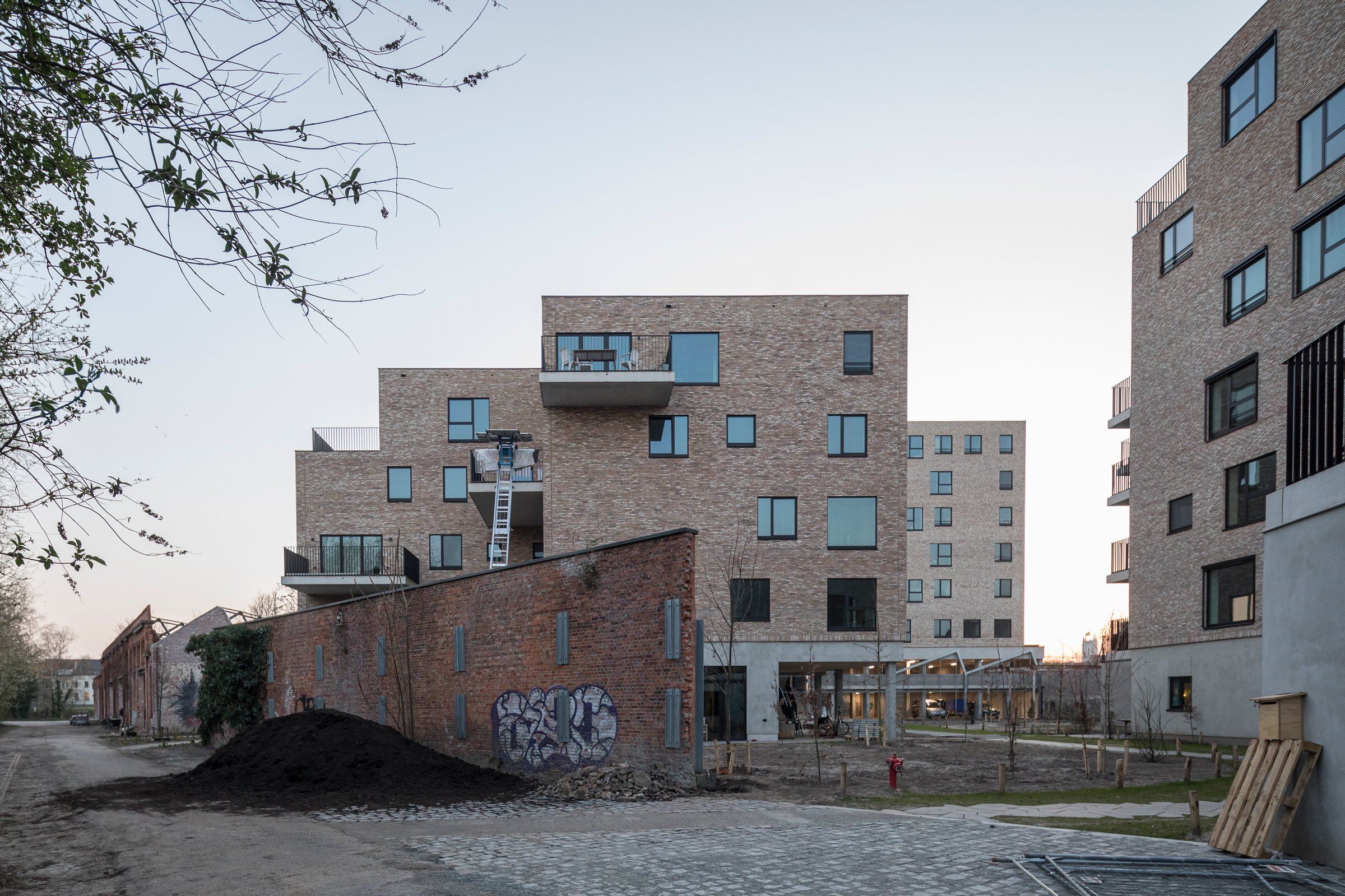
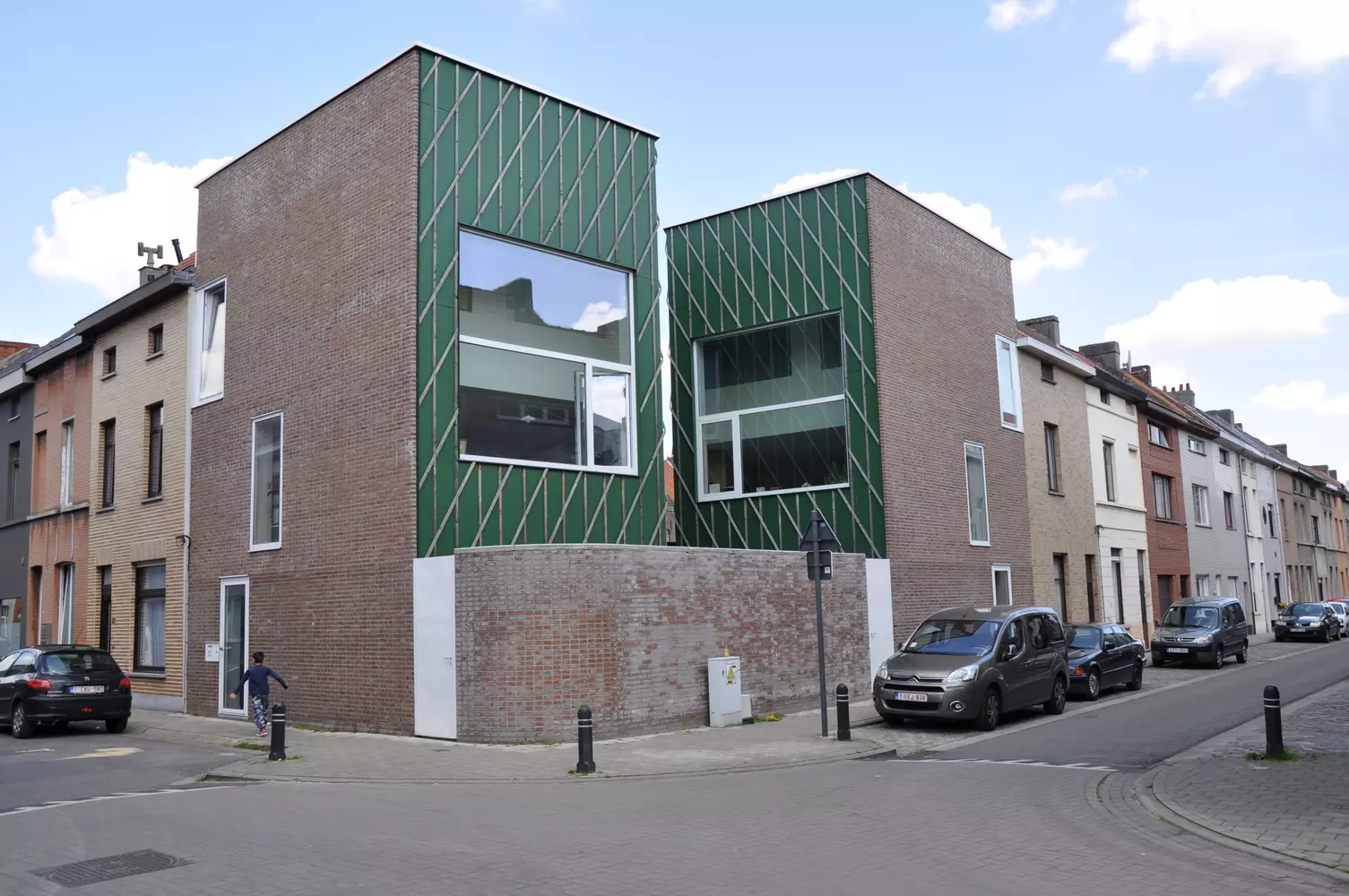
Sociale woningen Nekkersput took the opposite path to the tower demolitions elsewhere in the city. The architects DBLV kept the structure of an existing social block and rebuilt it as 44 duplex flats, adding two free-standing volumes, for the former social landlord De Gentse Haard. It was completed in 2020. At Rabot and Nieuw Gent, by contrast, Thuispunt is pulling down worn-out towers and rebuilding, which empties homes before it adds them.
Revive shows the private-market version. The Ghent developer was the first property company in Belgium to be certified as a B Corp. It cleaned up the polluted site of the former Elektrion engine-oil works and built WATT, a fossil-free district of homes and workspace heated through a geothermal network. It proves that a brownfield can carry high energy ambitions. Whether districts like it can also carry the Woonpact's affordable quota is the test now ahead.
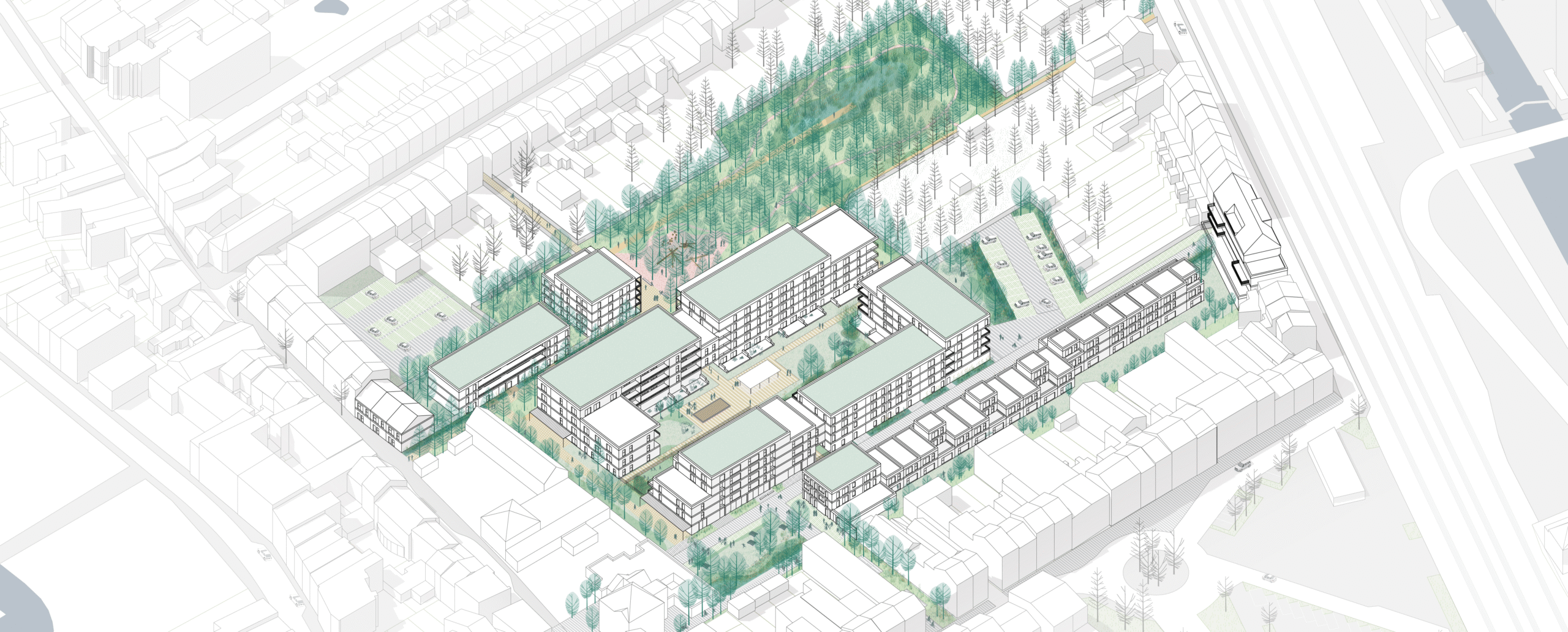
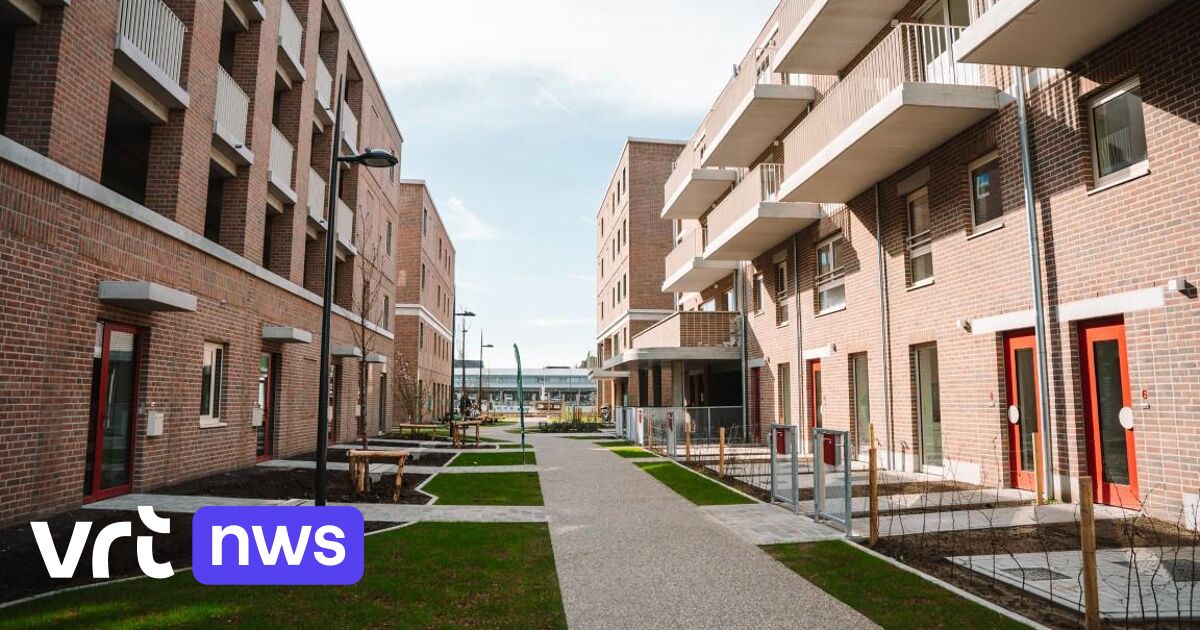
Thuispunt Gent is the largest player of all, and its new building is starting to show. In March 2026 it handed over 43 new social homes at the Oude Dokken, the former docklands now rebuilt as a mixed district. It expects 354 modern units in 2026, more than double the year before. SAAMO, meanwhile, helped social tenants in the Otterbeek estate share rooftop solar through the Buurzame Stroom project, a reminder that community organising and bricks move together.
A medieval beguinage, a rescued block of early social flats, a land trust and a factory turned cohousing: Ghent already shows shared living at every scale. What it does not yet show is volume. The open question is whether this handful of addresses can grow into an ordinary way to live, beside a social-housing target that already asks more of the city than any other in Flanders.
References
Statistics13Click on any number to see the source
Housing market
Tenure & affordability
Adaptive reuse & vacancy
Population & migration
From our library17
- Huurbarometer 2024: huurprijzen in Vlaanderen — Knowledge
- Is wonen echt onbetaalbaar? En wat kunnen we eraan doen? — Knowledge
- 1 jaar na de volksraadpleging in Gent: wat is er gebeurd om wonen betaalbaarder te maken? — Knowledge
- wooncoop — Organisation
- Community Land Trust Gent (CLT Gent) — Organisation
- vzw Samenlevingsopbouw Gent — Organisation
- Vlaams minister van Wonen Melissa Depraetere zet in op coöperatieve woonvorm — Knowledge
- Leertraject Coöperatieve Woonprojecten: Van proeftuin naar opschaling — Knowledge
- Bouwstenen voor coöperatief wonen – Rechtseconomische en fiscale fundamenten — Knowledge
- Bouwen of betalen: minister Depraetere wil sancties voor gemeenten die te weinig sociale woningen bouwen — Knowledge
- Aantal moderne sociale woningen in Gent groeit fors, wachtlijst vanaf 2028 versneld afgebouwd — Knowledge
- Een woning kopen, maar niet de grond: dat gebeurt voor het eerst in Vlaanderen — Knowledge
- Investing in Europe starts with cities: Ghent's neighbourhood-first lesson — Knowledge
- Bellefleur — Project
- Bijgaardehof — Project
- Sociale woningen Nekkersput — Project
- revive — Organisation
Further sources27
- Small Beguinage Our Lady Ter Hoyen — Visit Gent
- Edward Anseele — Wikipedia
- Bellefleur — wooncoop
- Een woning kopen, maar niet de grond — VRT NWS · 2022-10-09
- Voorkooprecht in heel Gent — VRT NWS · 2024-08-30
- Aantal moderne sociale woningen in Gent groeit fors — VRT NWS · 2026-04-03
- Huurbarometer 2024 — VRT NWS · 2025-02-18
- Gent dreigt leegstaande en verkrotte woningen over te nemen — VRT NWS · 2023-02-06
- Gent blijft groeien, tot 20.000 extra gezinnen tegen 2040 — VRT NWS · 2023-05-12
- 1 jaar na de volksraadpleging in Gent — VRT NWS · 2024-10-08
- Is wonen echt onbetaalbaar? — Belgisch Financieel Forum · 2025-01
- Gent wil 20 procent sociale woningen tegen 2050 — VRT NWS · 2024-01-19
- wooncoop — wooncoop
- Community Land Trust — Stad Gent
- Wooncoöperaties in België: geschiedenis — Coöperatief Wonen
- 30 jaar SAAMO: afscheid van het Rabot — VRT NWS · 2026-04-07
- Bouwen of betalen: minister Depraetere wil sancties — VRT NWS · 2024-12-09
- 56,000 new social housing units by 2042 — VRT NWS · 2026-04-07
- Bestuursakkoord 2025-2030 — Stad Gent · 2025
- Gent lanceert oproep voor projecten voor het Woonpact — Stad Gent · 2026
- Gent neemt voor het eerst een woning in sociaal beheer — VRT NWS · 2025-10-02
- Klimaatneutraal tegen 2050 — Stad Gent
- Renovatieverplichting voor residentiële gebouwen — Vlaamse overheid
- Vlaamse regering bereikt akkoord over bouwshift — Jubel
- Thuispunt Gent belooft versnelling in bouw nieuwe sociale woningen — VRT NWS · 2023-06-21
- Bijgaardehof — &bogdan
- Sociale woningen Nekkersput — Architectuur Gent