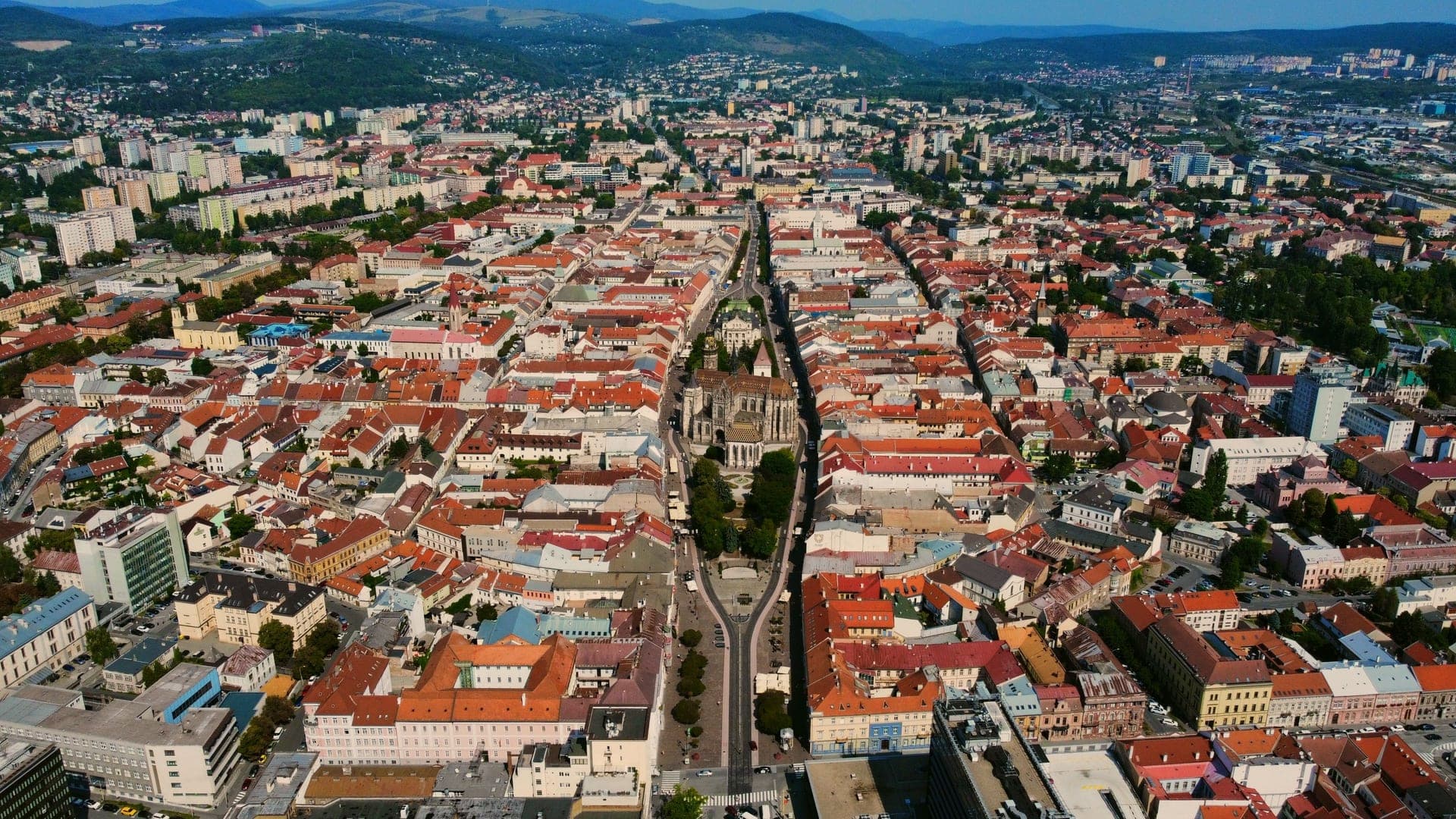
A steel town that bought its own flats
Košice was a royal trading town for six centuries before it became a steel city in one generation. Once the East Slovak Ironworks was built, the population climbed from 60,700 in 1950 to 235,000 in 1991. Most of the panel estates on today's map went up as that workforce grew. The city now counts 222,286 residents, fewer than at the 2011 census, and yet buying a flat here takes a larger slice of a salary than in Bratislava.
After 1989 the estates were sold to the people living in them. Act 182/1993 on the ownership of flats let tenants and cooperative members buy their homes, and almost all of them did. Owner-occupiers now hold 85% of homes, against a Slovak average of 93%. Renters are a thin 6.9%. Within that slice the city itself owns 1.6% of the stock, around 1,600 flats, and private landlords let 5.3%. The cooperative tenure that built much of the city survives as a census residue of 0.1%. The rest were empty on census day, which is why they appear as their own wedge below.
- Owners
- Owner-occupier84.9%
- Cooperative0.10%
- Renters
- Public & non-profit rental1.6%
- Private rental5.3%
- Other8.1%
- Vacant / unoccupied8.1%
Social housing is a purpose attached to some of those municipal flats rather than a sector of its own. About 1% of dwellings are reserved for households in need, and they sit inside the city stock run by Bytový podnik mesta Košice, the municipal housing company. In 2023 the city spokesman listed 1,228 city-owned flats split between pensioners, starter flats for young people, accessible flats, compensation flats and Housing First. Flats for pensioners are the most sought after. Rents in the older municipal blocks ran at €35 to €70 a month before energy costs.
That municipal floor sits far below everything else on offer. A city flat costs about €3.20 per m² a month. The state-supported rental scheme described further down caps rent at €9.58 per m². Asking rents on new market lets have reached around €14 per m², and a furnished flat taken for about six months works out near €23.80 per m². In household terms, a furnished one-bedroom flat now lets for about €650 a month and a furnished family flat for about €1,100.
- Public/municipal housing
- State-supported rental (cap)
- New contracts
- Furnished / serviced (gross)
Monthly rent per square metre by tier. The municipal and state-supported tiers are regulated, before energy; the new-let figure is an asking rent; the furnished mid-stay figure is an all-in estimate. A market lease costs more than four times a municipal one.
Empty homes are part of the picture too. The 2021 census found 8% of dwellings unoccupied, roughly 7,000 flats. Short-term lets compete for the occupied stock as well, at a median nightly rate of about €55. Empty office floor space adds up to the equivalent of about 7 average Slovak office buildings, small beside the housing vacancy but a ready pool for conversion.
Demand now comes from new directions. Around 4,500 people move in each year, and some 10,000 students, researchers and posted workers stay for months rather than years. The biggest new draw is the Volvo Cars plant at Valaliky, just east of the city. It employed more than 600 people in May 2026 and moves to full production in 2027. Supply has not kept pace. Slovakia completes about 17,000 dwellings a year, and building here costs about €1,750 per m² before land.
The pressure is sharpest for people trying to buy. The 2025 Deloitte Property Index prices a new 70 m² flat in Košice at 14.2 gross annual salaries, more than in Bratislava and among the seven hardest markets of the cities it compares. Young renters feel it next. One-bedroom rents in the Košice I district rose 14% in a single quarter and 16% in a year, the fastest in Slovakia, and the portal's analysts tie that to students, singles and staff of the city's IT and industrial employers.
According to the latest data, rising flat prices in eastern Slovakia now seem to be pushing hard on rents too. As these changes have been visible for several months, this is probably a bigger shift in the market, not just a local swing.The squeeze has also reached the middle. A January 2026 study by the Institute of Martin Filko, an economic think tank, found that Slovakia is short of roughly 500,000 homes and that unaffordability hurts "not only the poorest but also part of the middle class". The deepest exclusion is older and more local. The IWU's survey of EU housing policies lists the Košice region among the areas worst affected by substandard Roma settlements. Inside the city that means Luník IX, an estate built for about a third of the 7,236 people it now houses, many without regular water or power.
Between the owners, the municipal waiting lists and the settlements, one form that once built a large part of this city has almost disappeared from the count: the housing cooperative.
Where the družstvo went
The Slovak form is the bytové družstvo, a housing cooperative that owns the building while each member holds a členský podiel (a member's share that carries the right to use one flat). Under socialism the stavebné bytové družstvo (construction housing cooperative) raised the blocks with state loans, and members paid for their flat in instalments. Today's revived version works the same way with market money. A member pays an entry contribution, the cooperative takes the bank loan, and the member repays it monthly until the flat can pass into personal ownership.
The model grew with the steelworks. Act 27/1959 on cooperative housing construction made building cooperatives a main route to a new flat in Czechoslovakia. In Košice they grew up alongside the ironworks estates. The 1993 ownership law then let members convert their cooperative right into a deed, and nearly all of them did. The cooperatives survived as managers rather than landlords. Their census footprint in the city shrank to roughly 100 flats.
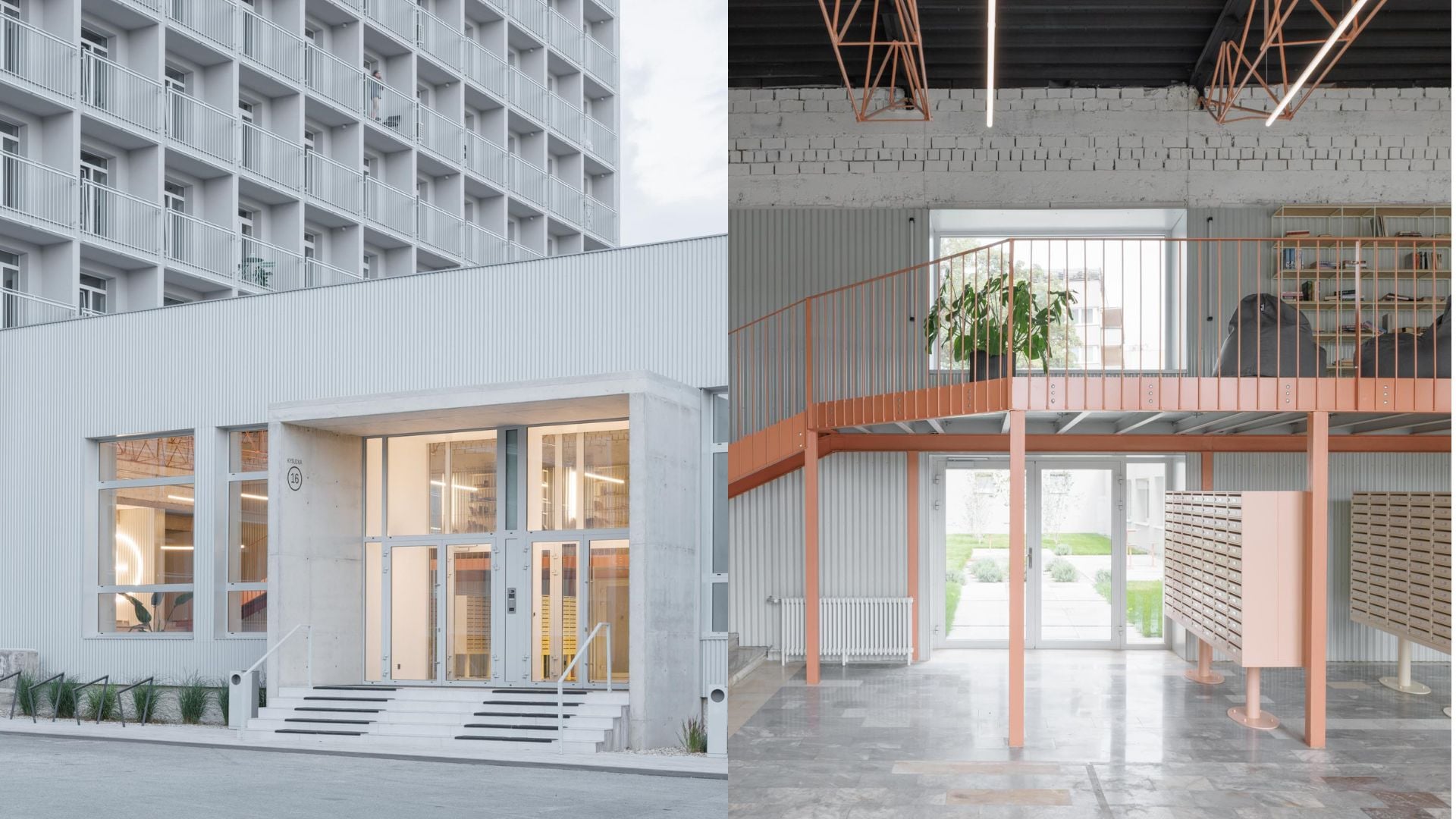
Two very different groups now carry the name. The first are the legacy building cooperatives that still run heating, repairs and renovation for the panel blocks their former members own. Their problems are ageing buildings and energy retrofits. The second is new and developer-led. KOSMALT, which came to market on the Terasa estate in 2026, is the first project in the city sold through a cooperative. Entry starts at €26,170 with monthly payments from €410. National developers such as Penta and YIT are reviving the same model elsewhere in Slovakia, and the risks are financial. Marián Búlik of the adviser OVB Allfinanz has calculated that a member on a €252,000 flat saves about €40 a month but overpays by €95,000 over a 40-year term. The entry deposit is also unprotected if the cooperative fails.
Neither group is a non-profit landlord of the Austrian or Czech kind. The state has not written cooperatives into its rental push, which runs through investor-owned buildings instead. The Institute of Martin Filko argues that non-profit projects and cooperatives suit some households, but for now that is advice to government rather than policy. Košice's own answer to the housing question has gone another way.
Land for rent: the city's bargain with Viennese capital
National housing policy rests on one law. Act 222/2022 on state support for rental housing created the Agentúra štátom podporovaného nájomného bývania (AŠPNB, the Agency for State-Supported Rental Housing). Private investors build or buy blocks, keep them, and let them at rents tied to the regional average wage. In return they pay a reduced 5% VAT rate. The previous government signed its first two partners, Kooperativa of the Vienna Insurance Group and WBG, in 2022 and set a goal of at least 100,000 new rental flats. Prime Minister Robert Fico has kept the scheme and added an employer contribution of up to €360 a month per tenant.
Košice turned that national framework into a municipal deal. It is the first city to put its own land into the scheme. In April 2025 councillors approved a joint venture with WBG, part of the Austrian non-profit BWSG group, in which the city holds 15% and the investor the rest. The plan is for about 5,400 flats and €1.3 billion over ten years on 11 sites. Leases turn indefinite after five years, and tenants must live permanently in the city. Mayor Jaroslav Polaček, an independent, links the programme directly to a promise made to Volvo. The Archdiocese of Košice is adding land at Valaliky for about 2,200 more flats near the plant.
These are flats for people who cannot reach a mortgage today, who work and want to live in our city.The levels of government split the work. The state writes the rules, licenses investors and keeps the register of applicants. A new Regionálny úrad pre územné plánovanie a výstavbu (regional office for planning and building permits) has handled permits under the construction law in force since April 2025. The city supplies land and a share of the flats. By March 2026 it had 800 flats on four sites prepared and some 2,500 Košice households registered. Agency chief Eva Lisová put a typical two-room market let at €800 to €900, against about €600 in the scheme and under €300 with an employer's contribution.
Direct help for non-profit and cooperative housing is thinner. The Štátny fond rozvoja bývania (State Housing Development Fund) lends to towns building rental flats, as neighbouring Trebišov did in 2021. The city itself leases derelict flats to NGOs for Housing First. A 2021 pilot with ten flats, run by an NGO acting as a social rental agency, is documented in Eurofound's study of unaffordable and inadequate housing. The OECD's review of Europe's social economy notes that Košice writes social clauses into public procurement and built social enterprise into its development strategy.
For empty buildings the lever is reuse. Act 77/2025 amended the rental law so that a non-residential building converted into flats can enter the state-supported system. Offices, hostels and depots can now become regulated rental homes. The city has done this before for culture. For the 2013 European Capital of Culture it turned a barracks, a 1960s swimming pool and a tobacco factory into public venues.
Climate policy points the same way. In June 2025 Košice became the first Slovak city with the EU label for 100 climate-neutral and smart cities by 2030. It plans to cut CO₂ emissions by more than 600,000 tonnes a year and to draw geothermal heat from the Košice basin. The new land-use plan keeps green space at up to a third of the city's area, which makes brownfield land and existing buildings the obvious places for new homes.
Few in Košice argue against more rental housing. The dispute is over who ends up owning it. The mayor and the agency present the joint venture as the fastest route to regulated rents. Critics object that the flats stay with private investors while the city contributes land and the state forgoes tax. Štefan Kišš of the opposition party Progressive Slovakia made that case when the investor contracts were approved.
In the end, housing in the state rental flats will be more expensive than commercial housing, not 30 percent cheaper, which was the original goal.- 1959[source]
Cooperative building law
Act 27/1959 makes building cooperatives a main vehicle for new flats; in Košice they grow with the East Slovak Ironworks.
- 1991[source]
Steel city at its peak
The census counts 235,160 residents, almost four times the 1950 population, most of them in new panel estates.
- 1993[source]
Flats sold to their occupants
Act 182/1993 on the ownership of flats opens the way for tenants and cooperative members to buy their homes.
- 2013[source]
European Capital of Culture
Košice shares the title with Marseille and reopens a barracks, a swimming pool and a tobacco factory as cultural venues.
- 2022[source]
State-supported rental housing
Act 222/2022 creates the rental-housing agency; in December the government signs its first investor partners, Kooperativa and WBG, for about 9,000 flats.
- 2024[source]
Memorandum with WBG
The city signs a memorandum with the Vienna-based WBG and announces about 5,400 rental flats on municipal land over ten years.
- 2025[source]
Joint venture and conversion law
Councillors approve a joint venture with WBG (city 15%, investor 85%), and Act 77/2025 lets converted non-residential buildings join the rental scheme.
- 2025[source]
EU Mission label
Košice becomes the first Slovak city to receive the EU label for the 100 climate-neutral and smart cities by 2030.
- 2026[source]
Cooperative finance arrives
KOSMALT turns a 1960s ironworks hostel into flats offered through a housing cooperative, the first such scheme in the city.
- 2026[source]
First rental block due to start
About 800 flats on four sites are prepared; construction of 130 flats on Jesenského Street is planned from the autumn.
- 2027[source]
Car plant and first phase
Volvo plans full production at Valaliky, and the rental programme targets about 1,740 flats in its first phase.
- 2030[source]
Second phase and climate goal
A further 1,560 rental flats are due by 2030, the year the city aims to cut CO₂ emissions by more than 600,000 tonnes a year.
From cooperative estates for the ironworks, through the sell-off of the 1990s, to a land-for-capital rental programme timed to a new car plant.
From an ironworks hostel to a cinema that stayed open
KOSMALT is where the city's two housing stories meet. The 13-storey block on Terasa was built in the 1960s as a hostel for East Slovak Ironworks labourers. The Košice studio Atrium Architekti kept its prefabricated concrete facade and its compact room layout, adding loggias, a planted inner atrium and a reading room in the old steel mezzanine. It offers 15,625 m² of usable space near the medical faculty of Pavol Jozef Šafárik University. Its small flats suit nurses, students and young couples, and it is sold through a housing cooperative.
Jesenského Street in the old town will carry the first building of the state-supported programme. The first stage names four sites: 133 flats on Jesenského, 353 on Popradská, 197 on Clementisova and 38 on Thurzova. Prime Minister Fico called the partnership "a model example of how cooperation can work". The flats will be let furnished, with parking and play areas, at the capped rent.
Sociálne bývanie, a non-profit, works at the other end of the scale. In December 2025 it opened a 24 m² flat on Jesenná Street to a grandmother and her two grandchildren who had been living in a container unit. The city leased it the derelict flat for 15 years, and sponsors paid for the refit. The family pays €150 a month, and social workers, psychologists and lawyers stay with them.
It is a small one-room flat of 24 square metres. Everything had to be rebuilt, from the wiring to making sure the family had something to sleep on and something to cook in.Kasárne Kulturpark, Kunsthalle Košice and the Tabačka Kulturfabrik are the reuse legacy of 2013. A 19th-century barracks became exhibition and concert halls with creative workshops, a disused 1960s pool became the country's first Kunsthalle, and a tobacco factory became a centre for independent culture. None of them houses people. Each still shows what patient public and civic money can do with a building the market had given up on.
Creative Industry Košice (CIKE) took that experience into a European debate. It published Commons: Between Dreams and Reality, an anthology on running cultural spaces as commons, and its authors cite CIKE itself as a place that makes room for cultural practices slipping through the net of local policy.

Kino Úsmev, an independent cinema run by film enthusiasts, belongs to the same line. The Open Heritage study of community-driven adaptive reuse credits Bratislava's Old Market Hall with persuading politicians and owners to open their buildings to civic use. It says that model paved the way for initiatives from Nová Cvernovka in Bratislava to Kino Úsmev in Košice.
Luník IX asks the hardest question of any project list. Pope Francis spoke there in 2021, and it remains the place where the city's housing gap is widest. The Housing First flats, the Jesenná refit and the capped rents on Jesenského are each small steps towards it. Together they sketch a city that is relearning how to own housing in common: through its land, its non-profits and a revived cooperative, three decades after it sold its flats.
References
Statistics16Click on any number to see the source
Housing market
Cooperative, social & public
Adaptive reuse & vacancy
Population & migration
From our library7
- Property Index - Overview of European Residential Markets — Knowledge
- Housing policies in the European Union — Knowledge
- KOSMALT — Project
- Unaffordable and inadequate housing in Europe — Knowledge
- Social Economy in Europe: Contributing to Competitiveness and Prosperity, Local Economic and Employment Development (LEED) — Knowledge
- Commons: Between Dreams and Reality — Knowledge
- Open Heritage - Community-Driven Adaptive Reuse in Europe: Best Practice — Knowledge
Further sources23
- Košice — Wikipedia
- Luník IX — Wikipedia
- 68% of people in EU households own their home — Eurostat · 2026-02-05
- Act 182/1993 on the ownership of flats and non-residential premises — Slov-Lex
- Act 27/1959 on cooperative housing construction — Slov-Lex
- Act 222/2022 on state support for rental housing — Slov-Lex
- Act 77/2025 amending the rental-housing law — Slov-Lex · 2025-04-17
- Municipal rental flats can be cheaper than classic sublets — Košice Online · 2023
- Košice and investor WBG plan a joint venture for rental housing — ASB · 2025-04-25
- Rising flat prices in Košice push up rents — Nehnuteľnosti.sk · 2025-07-31
- Slovakia and Czechia among the least affordable housing markets — Nehnuteľnosti.sk · 2025-08-28
- The return of cooperative housing — Nehnuteľnosti.sk · 2026-09-20
- Slovensko naďalej zaostáva vo veľkosti bytového fondu, chýba v ňom približne pol milióna jednotiek — SITA · 2026-01-27
- Volvo plant near Košice to launch trial production after summer — TASR · 2026-05-22
- Košice joins forces with an Austrian investor: up to 5,400 rental flats — Pravda
- Thousands of rental flats could be built in Košice in three phases — SITA · 2024-12-07
- Fico visits Košice to discuss state-supported housing — SITA · 2025-01-16
- Government approves investor contracts for 9,000 rental flats — SITA · 2022-12-07
- Košice unveils locations for rental apartments — TASR · 2025-04-14
- First state-supported rental flats in Košice could start in autumn — TASR · 2026-03-19
- Social flat on Jesenná Street becomes a family's home — TASR · 2025-12-17
- First Slovak city wins EU Mission label — Noviny.sk · 2025-06-19
- The cooperative model arrives in Košice (KOSMALT) — Startitup · 2026-07-06
Written
Funding & land tenure
What a housing cooperative could actually build on hereKošice is not in the funding registry yet — the tenure figures above are national.