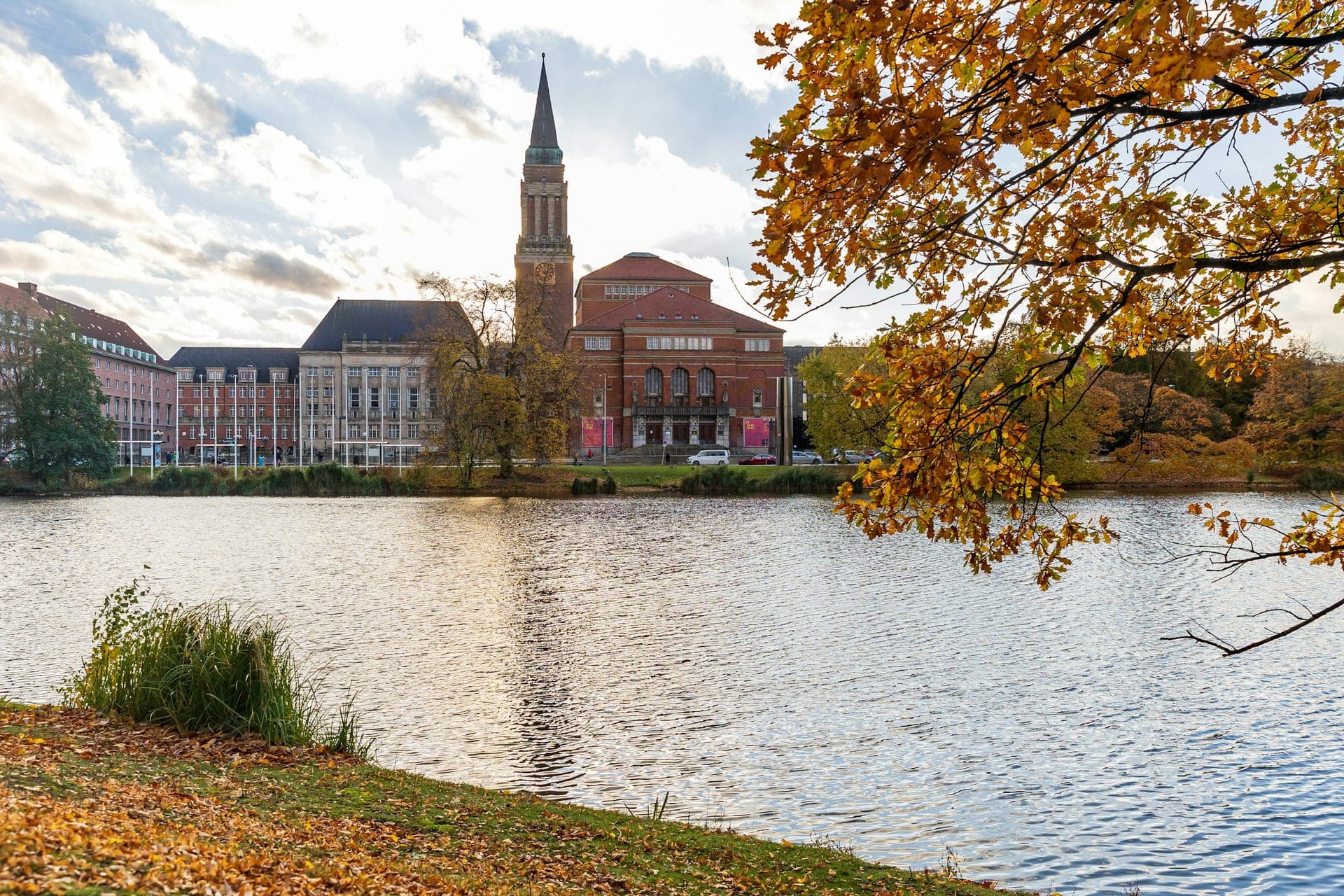
A port city of tenants
Kiel grew around a naval harbour and its shipyards, and the city's housing still carries that history. Allied bombing destroyed 72% of the central residential districts, so much of the rented stock dates from the fast rebuilding decades that followed. Today the state capital of Schleswig-Holstein is home to 251,842 people. It is a university town, a ferry port to Scandinavia and a navy base again, and all three keep a steady queue of students, officers and civil servants looking for small flats.
Kiel is overwhelmingly a city of tenants. Only 24% of homes are lived in by their owners, and 76% are rented. Cooperatives hold an estimated 12% of the stock, around 16,500 homes, spread across a handful of long-established societies. Homes owned by the city itself are the thinnest slice. The catalogue estimates 2.5%, but the new municipal company reported only about 500 homes at the end of 2023, well under 1% of the city's 138,000 dwellings. Private landlords let the rest, roughly 61.5% of homes. The largest of them is the listed group Vonovia, which manages around 23,000 homes in the Kiel region.
- Owners
- Owner-occupier24.0%
- Renters
- Public & non-profit rental2.5%
- Cooperative12.0%
- Private rental61.5%
Social housing in Germany is a covenant, not a tenure. A landlord who takes state subsidy accepts a Sozialbindung (a cap on rent and a rule on who may move in) for a fixed number of years. After that the flat returns to the open market. About 6% of Kiel's homes carry one today. The 2025 housing-market profile of the state development bank, Investitionsbank Schleswig-Holstein (IB.SH), counted 6,502 bound homes at the end of 2024. On current contracts only 43% of them will still be bound in 2034. The erosion is not new: 3,280 bindings expired in a single month in 2014.
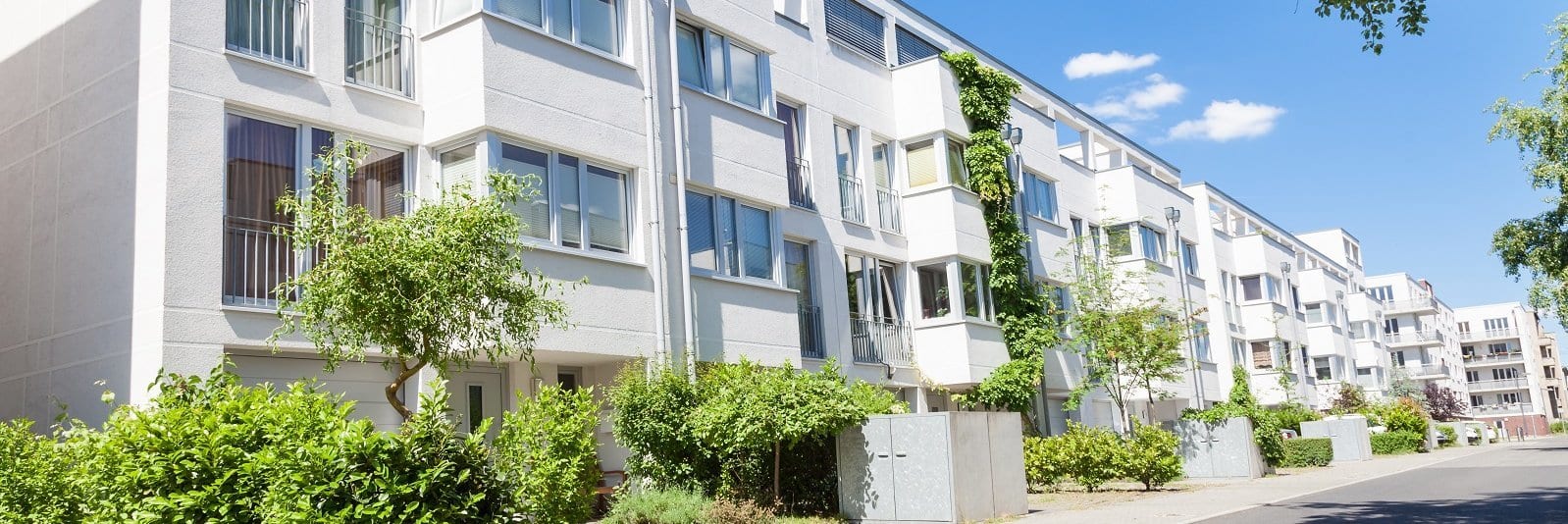
Rents climb steeply above that regulated floor. Municipal and subsidised flats let at around €6.50/m² net cold, that is, before heating and service charges. Households on basic income support were paying €8.82/m² on their existing leases in December 2024. The median asking rent for a re-let flat reached €10.05/m² that year, and new contracts are advertised near €11.69/m². A brand-new flat asks €15.37/m². At the top sits the furnished market for stays of about six months, estimated at €19.90/m² with bills included.
- Public/municipal housing
- Existing leases, income-support households
- Re-let asking rent (median)
- New contracts
- New-build asking rent
- Furnished / serviced (gross)
Monthly rent per square metre by tier, net cold except the furnished tier, which includes bills and furniture. Kiel has no published cooperative average, so the regulated municipal rent is the baseline.
Slack is scarce. The 2022 census found 2.5% of dwellings empty, and only 1.5% were on the rental market, well below the level at which tenants have real choice. That is around 3,500 empty homes, many between tenants or waiting for works. Offices offer little room either. An estimated 3.5% of office floor space stands empty, roughly 0 m², though both figures rest on a regional benchmark rather than a Kiel survey. Short-term letting is a seasonal irritant more than a structural drain, with a whole one-bedroom flat renting for a median of about €90 a night.
After a flat decade Kiel is growing again. Net migration added 1,610 residents in 2024, out of around 20,000 people who move to the city each year. Builders completed 1,387 homes that year, almost double the recent average of 746. Permits, though, fell back to 1,019, and the city's own 2015 masterplan had set a floor of more than 800 new homes a year. Schleswig-Holstein does not apply the federal rent brake on new lettings, so asking rents are set freely and only rises within a running tenancy are capped.
The hardship starts at the bottom. Kiel counted 14,852 households on basic income support in 2024, and the rent paid for them rose 19.4% in four years. But the shortage now reaches ordinary earners. Around 40% of residents are entitled to a Wohnberechtigungsschein (the certificate that qualifies a household for subsidised housing), according to a budget motion by Kiel's Greens. The head of the municipal housing company has put the gap at about 9,000 homes in the lower and middle price bands. The Kieler Mieterverein, the city's tenants' association, warns that affordable homes are getting ever scarcer. Local politics treats it as the defining issue. Marcel Schmidt, who leads the SSW (the party of the Danish minority) on the council, calls the lack of affordable homes one of the biggest social problems in Kiel.
When rents rise enormously, even northern German composure reaches its limits. Housing is, after all, a basic need.In that picture the cooperative societies, holding roughly one home in eight, are the largest landlord in the city that is not trying to make a profit from rent. Taken together, homes held outside the speculative market come to about 14.5%.
Member landlords on the Förde
Kiel's cooperatives are rental cooperatives. Members buy Genossenschaftsanteile (member shares, paid back when they leave) and in return get a lease for life at a cost-based rent and a vote at the general meeting. Nobody owns a flat, and the society cannot sell one for profit. One of the biggest in the state is the Wankendorfer Baugenossenschaft für Schleswig-Holstein, based in Kiel and building from the city to the edge of Hamburg. Alongside it stand the WOGE Wohnungs-Genossenschaft Kiel, the Wohnungsbau-Genossenschaft Kiel-Ost on the eastern shore and GEWOBA Nord. Three of the four helped draft the city's housing masterplan.
The form came north with industrialisation. Schleswig-Holstein's housing cooperatives marked 130 years in 2013 with an exhibition in the state parliament, where 18 societies showed a combined stock of 70,000 homes. In a city of shipyard and harbour workers the model found fertile ground. The WOGE celebrates its 100th year in 2026. The sector is still dominated by those older societies, and newer self-organised groups are few.
Today the sector splits into two groups with different problems. The century-old societies own 1950s and 1960s blocks that are costly to insulate, and new building is squeezed by prices. Kiel-Ost shaved its costs from about €4,400 to €4,000 per square metre on a new block, well above the typical €2,450 benchmark for residential building. The WOGE has concluded that one of its blocks on Lornsenstraße cannot be repaired and will replace its 40 flats with 80. The second group is small and new: the ALTE MU eG, formed from a grassroots creative centre, has a site and plenty of energy but must raise capital from scratch. Both groups need cheap land and long-term finance; only the older one can borrow against a paid-off stock.
The city says it wants more of them. Its 2015 masterplan named cooperatives among the locally rooted landlords it meant to strengthen, against international investors it judged to have little interest in their stock. It even floated co-founding a citizens' cooperative before choosing a municipal company instead. A federal study of cooperatives as partners of municipalities describes the pacts that such a choice can lead to: land for rent guarantees and allocation rights in exchange for public support.
Buying back, building up, handing over
Three levels of government share Kiel's housing levers, and each has moved in the last two years. In the city, Samet Yilmaz of the Greens won the mayoral run-off in December 2025 with 54.1% of the vote, the first Green to hold the office. He has promised to put empty buildings back to use and to convene a housing conference of investors, private owners, cooperatives, tenants and the municipal company. The council's Green–SPD cooperation has made strengthening the Kieler Wohnungsgesellschaft (KiWoG), the city-owned housing company re-founded in 2020, a stated priority. Its mandate is 1,000 homes, built or bought, within ten years.
The re-founding repairs an old decision. In 1999 Kiel sold its previous company, the KWG, with more than 10,000 flats, to ease its debts. Mayor Ulf Kämpfer presented the new company as the correction of a historical mistake. The municipal lever that remains is land: on city plots, 30% of new homes must be subsidised. In January 2026 the council postponed a proposal to soften that quota after protests that it would signal the end of social housing in Kiel.
The goal of bringing more homes into the company's stock can be seen as 'tax waste by design'. How is that to be achieved without pushing other, economically more successful players out of a tight market?Social housing must not become an empty phrase. If the federal and state governments deliver too little, Kiel must act itself, with its own funds, new cooperation models and a strong municipal housing sector.The state holds the tenancy dials. The rent brake on new lettings has been off in Schleswig-Holstein since the previous CDU–Green–FDP coalition abolished it on 30 November 2019, and opposition motions to restore it have not passed. The Bundestag has extended the federal rent brake to 2029, but it applies only where a state designates tight markets. Instead, since May 2024 rent rises in running tenancies are capped at 15% over three years in 62 municipalities, Kiel among them. The state's social housing programme, run through the IB.SH, made more than €1 billion available up to 2026. The federal government, finally, has added a fast-track planning law, the Bauturbo, which lets councils approve housing outside the usual zoning steps.
For cooperatives, the city's toolkit is thinner than in some German peers. The masterplan promises support for group-building projects and shared housing, and subsidised quotas favour landlords who hold for the long term. It does not commit to ground leases (Erbbaurecht, land let for decades rather than sold) or to concept tenders, in which plots go to the best social plan rather than the highest bid. A federal study of common-good housing policy documents how German cities use exactly those two tools to lock in affordability.
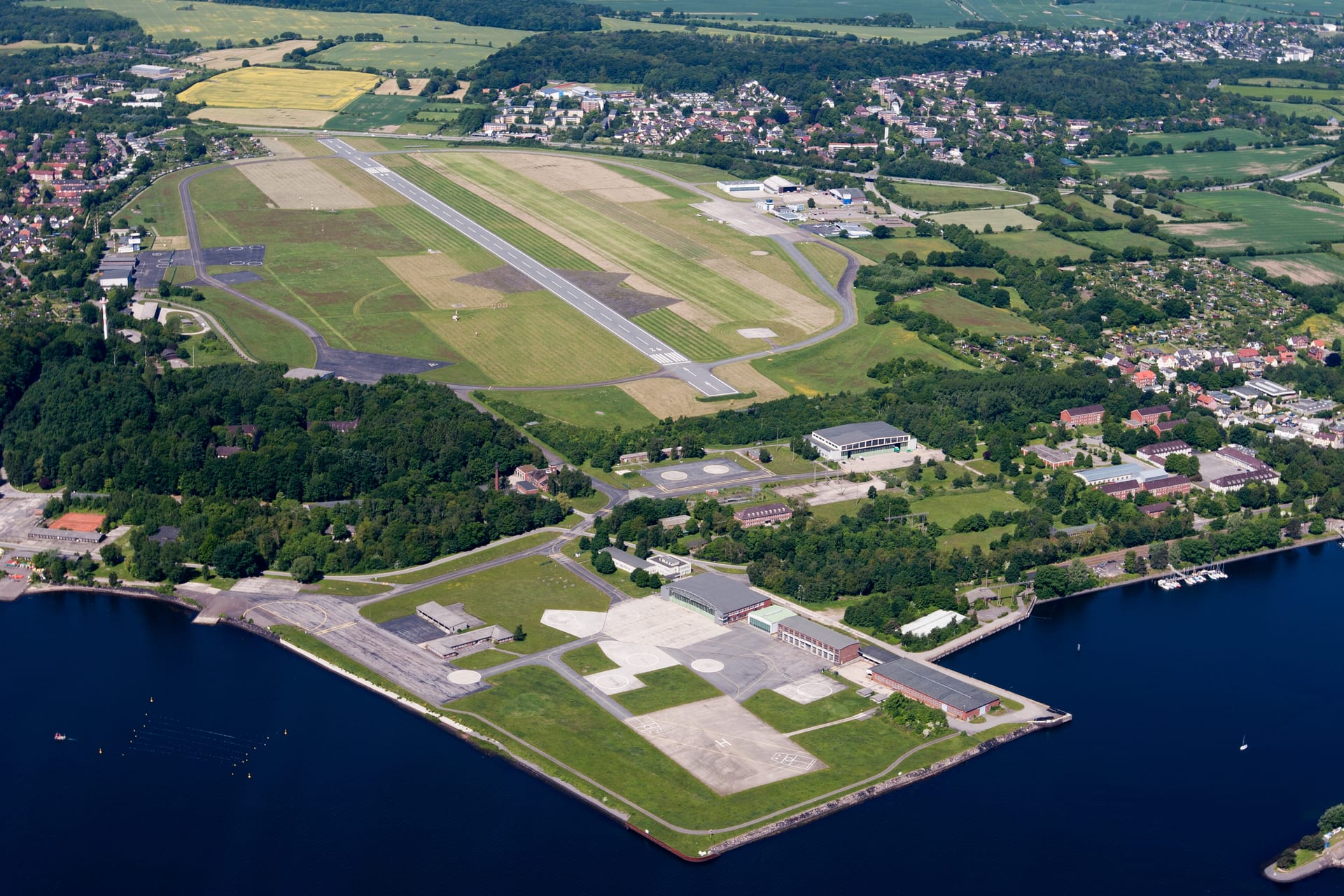
Empty space has a policy answer too, and in Kiel it is mostly about the military. In November 2020 the city paid €30 million for the former naval airfield at Holtenau Ost to build a new district. In July 2025 the navy asked for it back to house its expanding sea battalion. A letter of intent signed in April 2026 swaps it for barracks land in Wik, a site in Meimersdorf and a research campus, where the planned 2,250 homes are to be built instead. Nationally, a written report from the federal building ministry (BMWSB) puts vacant office space at 11 million m² and earmarks €360 million for a commercial-to-housing conversion programme due to start in 2026.
Climate targets run through all of it. Schleswig-Holstein's energy transition law now aims for climate neutrality in 2040, five years ahead of the federal goal, and requires solar panels on every new building. Large towns such as Kiel must also draw up a municipal heat plan. The municipal and cooperative landlords are the natural vehicles. KiWoG's block in Dietrichsdorf, for instance, meets the KfW 55 efficiency standard set by KfW (the German state development bank) and runs on district heating.
- 1999[source]
Municipal landlord sold
Kiel sells its housing company KWG and more than 10,000 flats to cut its debts.
- Mar 2015[source]
Masterplan Wohnen
The city sets a floor of more than 800 new homes a year and a 30% subsidised share on city-owned plots.
- Nov 2019[source]
Rent brake abolished
Schleswig-Holstein's CDU–Green–FDP government ends the rent brake on new lettings statewide.
- May 2020[source]
KiWoG starts work
The new municipal housing company begins operating with a mandate for 1,000 homes in ten years.
- Nov 2020[source]
Holtenau Ost bought
Kiel pays €30 million for the former naval airfield to build a new waterfront district.
- May 2024[source]
Rent-rise cap tightened
Rises in running tenancies are capped at 15% over three years in 62 municipalities, including Kiel.
- Jul 2025[source]
Navy wants the airfield back
The navy seeks the Holtenau site for its sea battalion, putting the new district in doubt.
- Dec 2025[source]
First Green mayor
Samet Yilmaz wins the run-off with 54.1% of the vote.
- Apr 2026[source]
Land swap agreed
A letter of intent moves the planned 2,250 homes to barracks land in Wik, Meimersdorf and a research campus.
- 2029[source]
Rent caps up for renewal
The federal rent brake's extension runs to the end of 2029, and the state's 15% cap ordinance expires the same year.
- 2034[source]
Social stock at 43%
Without new subsidy, only 43% of the homes bound at the end of 2024 will still be bound.
- 2040[source]
State climate neutrality
Schleswig-Holstein's statutory target for climate neutrality, five years ahead of the federal goal.
From the sale of the municipal landlord to its re-founding, the loss of a planned district to rearmament and the targets the city and state are now steering towards.
From art school to airfield
ALTE MU began in 2013, when a beekeeper got the keys to the empty Muthesius art school, a late-1950s building the college had vacated. Artists, makers and activists followed, and the city granted them a sublease in 2016. The group has since become a registered cooperative and plans up to 4,600 m² of homes, including cluster flats and student rooms, plus 4,100 m² of workspace. It wants 70% of the homes to be socially subsidised and budgets €30 million. Thirteen years after the beehive, the first applications for homes closed in September 2026, and the money still has to come together from loans, subsidy and members' shares.
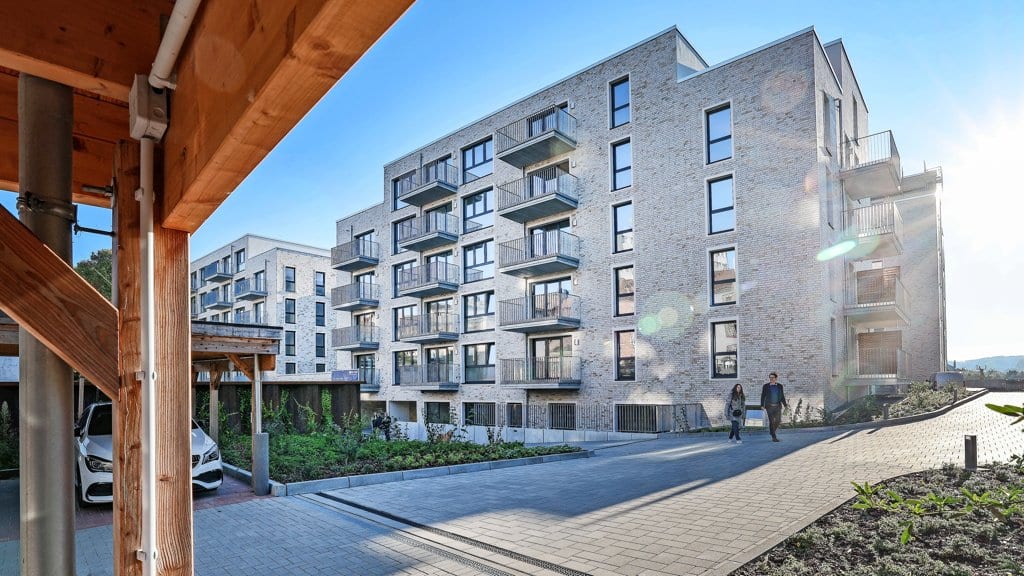
Marthas Insel was the first project of the new municipal company: about 100 subsidised flats in the city centre, handed over in 2022. Before a single tenant moved in, the Bund der Steuerzahler (the German taxpayers' association) had listed the company in its annual 'black book' of wasted public money, calling it just another bidder for scarce plots. The company's next move showed a different tactic. In Dietrichsdorf it took over an eight-storey block of 63 flats being built as private condominiums and had them redesigned as subsidised homes, let from €6.80/m².
Willy-Jacob-Weg is the Kiel-Ost cooperative's test of whether plainer building can keep rents down. Its 36 new homes use thinner outer walls and cantilevered balconies, and 15 of them are subsidised, mostly for older members. The saving is real but modest: the unsubsidised flats still let at around €12.50/m², above the city's advertised average for new contracts.
Lornsenstraße shows the older cooperatives' harder choice. The WOGE judged a 1950s block beyond structural repair and is replacing it with twice as many, mostly subsidised flats. Its existing tenants had to be rehoused first, and the project's backers say every effort was made to soften the hardship. The regional federation expects more 1950s and 1960s blocks to go the same way.
Anscharpark proves that Kiel's military heritage can also become housing. The former naval hospital, a campus of pavilions built as the imperial fleet expanded, has been turned into a residential quarter. One pavilion that last housed a neurosurgery ward now holds nine flats, a studio and the offices of the architects who converted it. It needed a new staircase, balconies and a bicycle cellar, a reminder that conversion is careful, slow work rather than a quick source of volume.
I do not want to give up, without further ado, the vision of a new residential quarter 'Holtenau Ost' with 2,250 homes, businesses, nurseries, sport and leisure facilities and green space.Holtenau Ost is the project that got away. A waterfront district for about 5,000 residents was planned on the old airfield until the navy returned. The VNW federation of northern German housing companies argued against giving it up. The swap now sends those homes to other former barracks. Kiel sold a municipal landlord once and is rebuilding another. Whether it can now give its cooperatives the land to grow is the question the lost airfield leaves behind.
References
Statistics16Click on any number to see the source
Housing market
Cooperative, social & public
Adaptive reuse & vacancy
Population & migration
From our library7
- Wohnungsmarktprofil 2025 – Landeshauptstadt Kiel (IB.SH Wohnungsmarktbeobachtung) — Knowledge
- Bündnis für bezahlbares Wohnen und Bauen – Wohnungsgenossenschaften als Partner der Kommunen — Knowledge
- Bundestag: Mietpreisbremse verlängert — Knowledge
- Einfacher und schneller Bauen: Hilft der Bauturbo zur Lösung der Wohnungskrise? — Knowledge
- Gemeinwohlorientierte Wohnungspolitik - eine Studie — Knowledge
- Schriftlicher Bericht des BMWSB zum deutschlandweiten Büroleerstand — Knowledge
- Bundeswehr zurück in Kiel: Militärstützpunkt statt Wohnungen — Knowledge
Further sources23
- Kiel — Wikipedia
- KiWoG kauft 63 geförderte Wohnungen — Kieler Wohnungsgesellschaft · 2023-05
- Vonovia kauft 1.000 Wohnungen in Kiel — Vonovia SE / dpa-AFX · 2020-12
- Masterplan Wohnen für Kiel — Landeshauptstadt Kiel · 2015-03
- Haushaltsantrag „Vorfahrt für den Wohnungsbau 2024-2027“ — Bündnis 90/Die Grünen Kiel · 2023
- Wohnungsmarkt in Kiel: Mehr Initiative und klare Prioritäten — SSW-Ratsfraktion Kiel · 2024-08
- Sozialer Wohnungsbau: Kiel darf sich nicht aus der Verantwortung stehlen — SSW-Ratsfraktion Kiel · 2026-01
- 130 Jahre Wohnungsbaugenossenschaften in Schleswig-Holstein — wohnungswirtschaft heute · 2013-03
- Neubau-Offensive: WOGE Kiel schafft mehr bezahlbaren Wohnraum — verbandsbüro / VNW · 2025-08
- Kiel wählt grünen Oberbürgermeister — taz · 2025-12
- Haus & Grund Kiel setzt auf Dialog, Interessenvertretung und Wachstum — Haus & Grund Kiel · 2026-08
- Zensus zeigt: Kiel wächst — SSW-Ratsfraktion Kiel · 2024-06
- Nicht jede Rechnung geht auf — municipal housing sales — Bundeszentrale für politische Bildung · 2007
- Haus & Grund Kiel sieht in geplanter Stärkung der KiWoG „Steuerverschwendung mit Ansage“ — Haus & Grund Kiel · 2023-06
- Haus & Grund zum Antrag der SPD-Landtagsfraktion — Haus & Grund Schleswig-Holstein · 2022-09
- Kappungsgrenze: 15 Prozent in 62 Kommunen — Haus & Grund · 2024
- Haus & Grund zur sozialen Wohnraumförderung — Haus & Grund Schleswig-Holstein · 2022-12
- Seebataillon soll neue Liegenschaft in Kiel erhalten — defence-network.com · 2025-07
- Aufwuchs Bundeswehr Kiel: Bund und Stadt einigen sich — Bundesministerium der Verteidigung · 2026-04
- Haus & Grund Kiel begrüßt Einigung zum MFG-5-Gelände — Haus & Grund Kiel · 2026-04
- Schleswig-Holsteins Landtag verabschiedet novelliertes Energiewendegesetz mit Solarpflicht — pv magazine · 2025-01
- From Empty Buildings to Creative Cities — ALTE MU — Metropolis
- Kiel braucht bezahlbaren Wohnraum: Chance für Holtenau Ost — verbandsbüro / VNW · 2025-08