After the pits: a renters' city under strain
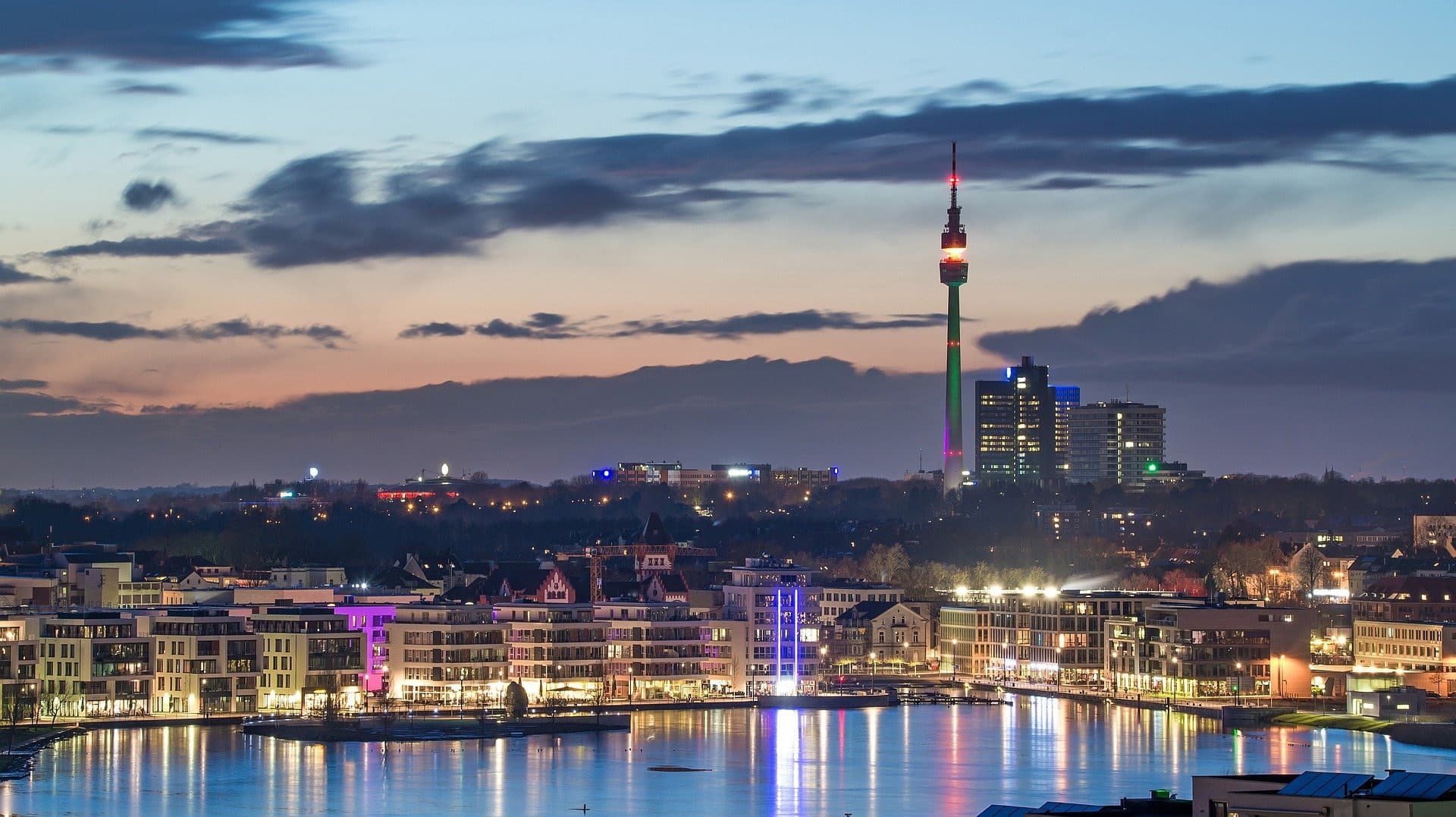
Dortmund mined coal for almost 700 years, from the first recorded pit to the closure of Zeche Minister Stein in Eving in 1987. Steel and beer grew up beside the shafts, and every one of those industries needed workers housed within walking distance. Colliery estates, company flats and the savings societies that miners founded for themselves still decide who owns a Dortmund home today. The city of 600,880 people now lives from universities, logistics and services, yet its housing map is an industrial inheritance.
Ownership has never been the Dortmund norm. The 2022 census counts owner-occupiers at 27% and renters at 73%. Cooperatives hold 4.7% of dwellings, some 15,000 homes across 4 large societies and a string of small ones. Public housing, meaning stock the city itself owns, adds 5.1%: the 16,403 flats of DOGEWO21, the municipal housing company. Private landlords let the remaining 63.2%. At the top of that private tier sit two listed groups, Vonovia with more than 20,000 flats in the city and LEG with 13,860. Taken together, the cooperative and municipal homes form a non-market tier of 9.8%.
- Owners
- Owner-occupier27.0%
- Renters
- Public & non-profit rental5.1%
- Cooperative4.7%
- Private rental63.2%
Social housing is a rule attached to a building, not a kind of owner. About 6.6% of dwellings carry a Mietpreis- und Belegungsbindung, a rent cap and income test that lasts only as long as the public loan behind it. That layer runs through municipal, cooperative and private stock alike, so it overlaps the tenure slices rather than adding to them. At the end of 2025 the city counted 19,871 such flats, 894 fewer than a year earlier. The entitled population is far larger: around 50% of households could obtain a Wohnberechtigungsschein, the certificate that opens the door to a subsidised flat.
By German big-city standards the rent spread is narrow, and it is widening. DOGEWO21's price-bound flats average €5.39 per square metre cold, and cooperative members pay about €5.50. The qualified Mietspiegel, the city's official rent index, puts the all-stock median at €7.20. A flat advertised on the open market asks €9.54, and a furnished let reaches €19.54 gross. Asking rents for re-let flats have climbed 24% since 2020. Research on the big post-war estates of Germany's major cities asks whether such stock is the last bastion of affordable renting as privatisation spreads.
- Public housing (DOGEWO21, price-bound)
- Cooperative
- All-stock median
- New contracts
- Furnished (gross)
Monthly rent per square metre by tier: net cold, except furnished, which is gross and all-in. Price-bound municipal and cooperative flats sit close together; a new open-market lease costs roughly 75% more, and furnished lets more than three times as much.
Empty homes are scarce, though not absent. The census recorded 10,623 vacant dwellings, a rate of 3.3%, much of it the ordinary gap between one tenancy and the next. Offices tell a different story from Frankfurt's glut. Only 4.8% of office floor stood empty in 2024, about 0 m². That is still enough to matter at the edges, in dated 1970s blocks that tenants have left behind.
Pressure comes from both directions at once. Roughly 30,000 people move into Dortmund every year, while building has collapsed. Only 898 homes were completed in 2025, a fall of 43.5%, and permits dropped to 992. Both are ten-year lows, far below the city's goal of 2,000 new homes a year. Since 1 March 2025 Dortmund has also been the only Ruhr city under the Mietpreisbremse, the federal cap on rents when a flat is re-let.
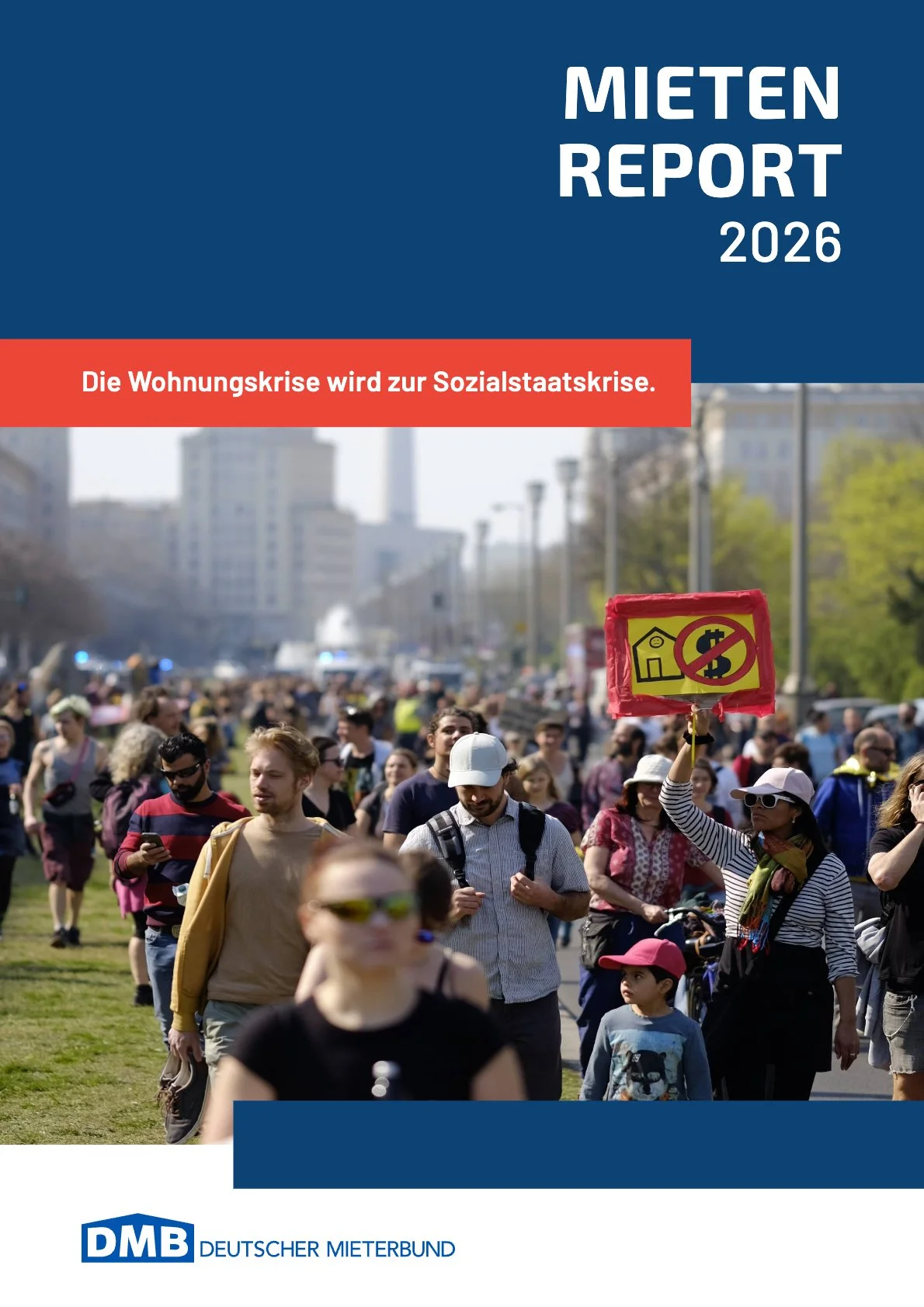
Who feels it depends on income, and the circle is widening. An estimated 24% of households carry an excessive housing-cost burden. The Dortmund region has the highest poverty-risk rate in North Rhine-Westphalia at 20.9%. The queue for subsidised flats grew by 22% to about 2,600 households in 2025, while only about 900 were housed. Middle earners are caught differently: moves fell to a record low of 57 per 1,000 residents, because leaving an old lease now costs too much. Residents noticed early. In the city's 2020/21 resident survey the supply of affordable homes scored a grade of 4, merely 'adequate' on the German school scale, and satisfaction with housing had fallen sharply. Nationally, the tenants' federation's Mietenreport 2026 finds energy and rent costs weighing hardest on low earners.
Housing belongs right at the top of the local political agenda. Anyone standing in the municipal election has to say how they will secure affordable housing.Between the open market and the waiting list stands an older answer, one the miners wrote themselves: homes owned collectively by the people who live in them.
Miners' self-help, 130 years on
Dortmund's cooperatives are rental cooperatives of the classic German kind. A household joins by buying Genossenschaftsanteile, member shares that are repaid at face value on leaving. In return it gains a lifelong right to rent at cost-covering prices, and no member can sell a flat on. Spar- und Bauverein eG is the largest society. It managed 11,849 flats in 2025 at an average rent of €5.67 per square metre, with vacancy of just 0.1%.
The tradition was born in a pub. On 4 March 1893 miners, railway workers and postal staff met in the inn Zum Schwarzen Raben and founded Spar- und Bauverein as self-help against the housing shortage. GWG Hombruch-Barop followed in 1896 and the Hörder Spar- und Bauverein, today gws-Wohnen Dortmund-Süd, in 1897. Pit owners built alongside them. The Alte Kolonie Eving of 1898 housed recruited miners in 270 flats, and in the 1970s a tenant initiative stopped its half-begun demolition. Most company housing took another road. Colliery estates passed to Ruhrkohle, and Hoesch's steelworks flats followed when Krupp took over Hoesch, a chain that ends in today's listed portfolios. A history of German housing co-operatives shows how such member-owned societies came through Nazi suppression, division and reunification.
Today the sector falls into two clusters with different problems. The century-old societies, Spar- und Bauverein, gws, GWG Hombruch-Barop and the Gemeinnützige Wohnungsgenossenschaft Dortmund, own most of the city's cooperative flats, as the tenant association's overview notes. Their bind is money. Franz-Bernd Große-Wilde ran Spar- und Bauverein until 2025. He told a trade journal that Dortmund's 'comparatively low rent level' makes even €13 to €14 per square metre too little for new build to pay. Decarbonising his society's stock by 2045 would cost €900 million to €1 billion, against €300 million to €350 million it could finance. The second cluster is small and young. Resident groups such as FörderturmWohn eG, which took its terraced houses into ownership on an Erbbaurecht (a long ground lease), are listed in the city's register of community housing projects. Their bottleneck is land. The Syndikat-style group Buntes Wohnen, modelled on the Mietshäuser Syndikat federation that takes houses permanently off the market, lost a former vocational school on Sckellstraße to an investor.
The city treats cooperatives as partners rather than as a programme. It passes on state subsidy, occasionally sells or leases a plot to a group with a strong concept, and works with the societies on inclusive projects. A federal study of cooperatives as partners of municipalities maps the wider German toolkit of land, guarantees and alliances. Lessons from Germany's shared-housing models show what cities add when they go further, with cheap land and incubator support. Dortmund has so far done this case by case, and the question of how far to go is now political.
A new mayor, a Bau-Turbo and a shrinking social stock
Dortmund's politics shifted in autumn 2025. Alexander Kalouti of the CDU won the mayoral run-off with 52.92% and became the first Oberbürgermeister (lord mayor) from outside the SPD since 1946. The council has no coalition, so housing measures pass on shifting majorities. On his first day Kalouti called growth a sign of an attractive city, adding that 'of course we must also create the housing for these people'. His administration's headline instrument is the Bau-Turbo, a federal fast-track for permits. The council wrote it into local rules on 27 March 2026, asking for agreements that replace a full land-use plan within three months. Early projects already account for 350 homes.
Each level of government holds a different key. Berlin sets the tenancy framework and most of the money. The Bundestag extended the Mietpreisbremse to the end of 2029 and on 9 October 2025 added the Bau-Turbo to the Baugesetzbuch, the federal building code. The BMWSB, the federal ministry for housing, urban development and building, is committing a record €23.5 billion to social housing up to 2029. North Rhine-Westphalia decides where caps apply. Its Mieterschutzverordnung, the state tenant-protection ordinance, has covered Dortmund since March 2025 and limits in-tenancy rises to 15% in three years. The city then turns state money into buildings. Its housing office started 2025 with a €40 million allocation and secured €109.5 million for 604 subsidised homes.
Help aimed at cooperatives is modest but concrete. In 2020 the city offered two municipal plots, including the former Hörde fire station, to housing-project initiatives, project cooperatives and Baugemeinschaften, groups that build together for their own use. Buyers could choose purchase or Erbpacht, a ground lease that keeps the land in public hands. For larger developments the city proposed in 2021 to raise the share of subsidised homes from 25% to 30%. The 2026 housing report shows why that matters. Without new subsidy, the price-bound stock could fall to about 11,700 flats by 2035, and holding it steady would take about 800 new subsidised homes a year.
Empty offices are the first place the Bau-Turbo is being used. The pilot case is an investor's plan for about 200 homes in a 1970s office block beside the Westfalenpark, the former VEW energy headquarters. A first register of vacant building plots lists 640 gaps with room for 3,300 homes. A 2012 ban on Zweckentfremdung, the misuse of homes for other purposes, makes long vacancy and demolition subject to permission, and short-term lets have needed a Wohnraum-Identitätsnummer (a registration number) since 2022. The Nordstadt, the dense district north of the station, is the hard case. The city counted 130 neglected 'problem properties' there in May 2026 and wants a purchase fund seeded with €865,000; the council decides in November. A federal study of reusing post-war office blocks for housing argued years ago that such conversions are cheap and save embodied carbon.
Climate targets run through the same buildings. The council has set climate neutrality for 2035 and is drawing up its kommunale Wärmeplanung, the municipal heat plan, in a city where about 76% of heat still comes from natural gas. Germany's reshaping of its housing and heating rules pushes owners towards renewable heat. Non-market landlords are the vehicle. DOGEWO21 spent €20.1 million on energy measures in 2025, and in neighbouring Hagen the Wohnungsverein has shown how a cooperative can renovate serially across its stock.
- 1893[source]
Spar- und Bauverein founded
Miners, railway and postal workers found a savings and building society as self-help against the housing shortage.
- 1918[source]
Municipal housing company founded
The Dortmunder Gemeinnützige Siedlungsgesellschaft, today DOGEWO21, is established.
- 1987[source]
The last colliery closes
Zeche Minister Stein in Eving shuts, ending centuries of coal mining in the city.
- 2011[source]
PHOENIX See opens
The lake dug on the former Hermannshütte steelworks site in Hörde opens to the public.
- 2012[source]
Ban on misusing housing
A Zweckentfremdungsverbot makes demolition, conversion or vacancy of homes subject to permission.
- 1 March 2025[source]
Rent brake reaches Dortmund
Dortmund joins North Rhine-Westphalia's tenant-protection ordinance, the first Ruhr city under the Mietpreisbremse.
- 26 June 2025[source]
Mietpreisbremse extended
The Bundestag extends the federal rent brake to the end of 2029.
- 28 September 2025[source]
CDU wins the town hall
Alexander Kalouti wins the mayoral run-off, the first non-SPD mayor since 1946.
- 9 October 2025[source]
Bau-Turbo passed
The Bundestag adds §246e to the federal building code, allowing faster departures from planning law.
- 27 March 2026[source]
Council adopts Bau-Turbo rules
The council sets local criteria and backs a first project of about 200 homes in a former office block.
- 3 September 2026[source]
Completions hit a ten-year low
The housing report records 898 completed homes in 2025, down 43.5%.
- November 2026[source]
Vote on the problem-property fund
The council decides whether to create a municipal fund to buy neglected buildings in the Nordstadt.
- 2029[source]
Federal horizon
The rent brake expires and the federal €23.5 billion social-housing commitment runs to its end.
- 2035[source]
Climate-neutral target
Dortmund's target year for climate neutrality, the goal its heat plan is built around.
- 2035[source]
Social-stock projection
Without new subsidy the price-bound rental stock could shrink to about 11,700 flats.
From miners' self-help and the municipal company through the end of coal to rent caps, the Bau-Turbo and the city's climate and social-housing horizons.
The argument over how far the city should go is loud. The Mieterverein Dortmund, the city's tenant association, and the local trade unions want 50% of homes on municipal land to be social housing, and they oppose any sale of DOGEWO21 stock.
A quota of 50 per cent is necessary, because many social homes will lose their rent controls in the coming years. It is also completely unacceptable to consider partly selling the municipal stock.Property owners read the same figures the other way. Thomas Bach is chief executive of the landlords' association Haus & Grund Dortmund. When the rent brake arrived, he argued that it 'prevents urgently needed investment in the housing stock and worsens the housing shortage in the long run'. The city's own planning chief, Stefan Szuggat, locates the bottleneck in the balance sheet instead. Presenting the 2026 housing-market report, he said simply that 'financing is a problem for building'.
A steelworks lake, a police station and the miners' heirs
Spar- und Bauverein still builds the way the miners intended, for members rather than buyers. Its Klimaschutzsiedlung Ewige Teufe in Hombruch, named after the miners' word for depth, was planned with 37 new flats and €7.8 million of public subsidy, for completion by summer 2024. In 2025 the society turned a former evening school in the Unionviertel into 22 flats. A new chief executive, Christian Jaeger, formerly a board member of Bremen's GEWOBA, took over on 1 October 2025.
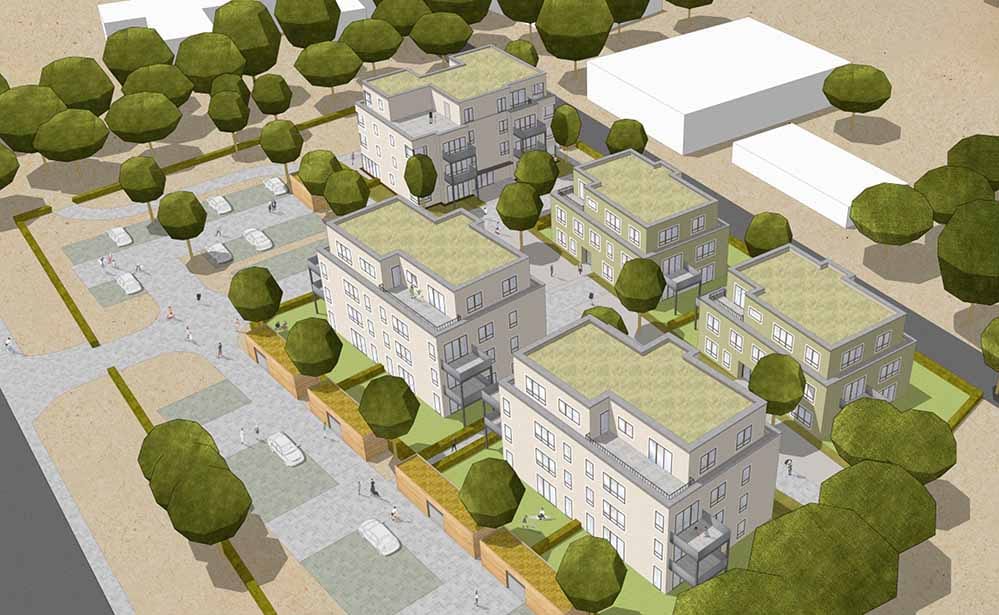
DOGEWO21 is the municipal counterweight, founded in 1918. New tenants pay €7.47 per square metre, against a city average for re-lets of €8.97, and 3,061 of its homes are subsidised. Its own pipeline is thin, with 12 subsidised flats at Am Sattel in Huckarde due in 2026. Tenant groups want the city's company to build far more.
PHOENIX See is the city's most visible reinvention. The Hermannshütte steelworks in Hörde became a 24-hectare lake, opened in 2011, and around 2,000 homes now line its shores. Social housing was written into the development plan only in 2013. On the lake's edge, the multigenerational group WIR auf Phoenix rents 20 flats from gws-Wohnen under a cooperation agreement, proof that the new waterfront has room for cooperative living.

WIR aufm Revier shows what a small cooperative can do with a building nobody wanted. Hörde's old police station, rebuilt in the 1960s and later a refugee shelter, has belonged to the Ko-Operativ eG since 2019. It opened 23 flats, 11 of them subsidised, in 2023. MOSAIK eG, from the same register, is creating 17 flats for residents with and without support needs. These are the project cooperatives that the 2020 plot tender was designed to attract.
The Karlsquartier on the Westfalenhütte, which the city calls Europe's largest industrial brownfield, is the next test of scale. It plans 800 homes, 200 of them subsidised, around a new green ring on former steelworks land. Whether any go to cooperatives is still open.
Dortmund, then, has pieces that many cities lack: century-old societies with low rents, a municipal landlord of its own, land still in the plan and a steelworks turned into a lake. What the miners of 1893 built by pooling savings now needs pooling on a larger scale, because a society's balance sheet alone no longer pays for new homes at Dortmund rents.
References
Statistics18Click on any number to see the source
Housing market
Tenure & affordability
Cooperative, social & public
Adaptive reuse & vacancy
Population & migration
From our library16
- DOGEWO21 — Organisation
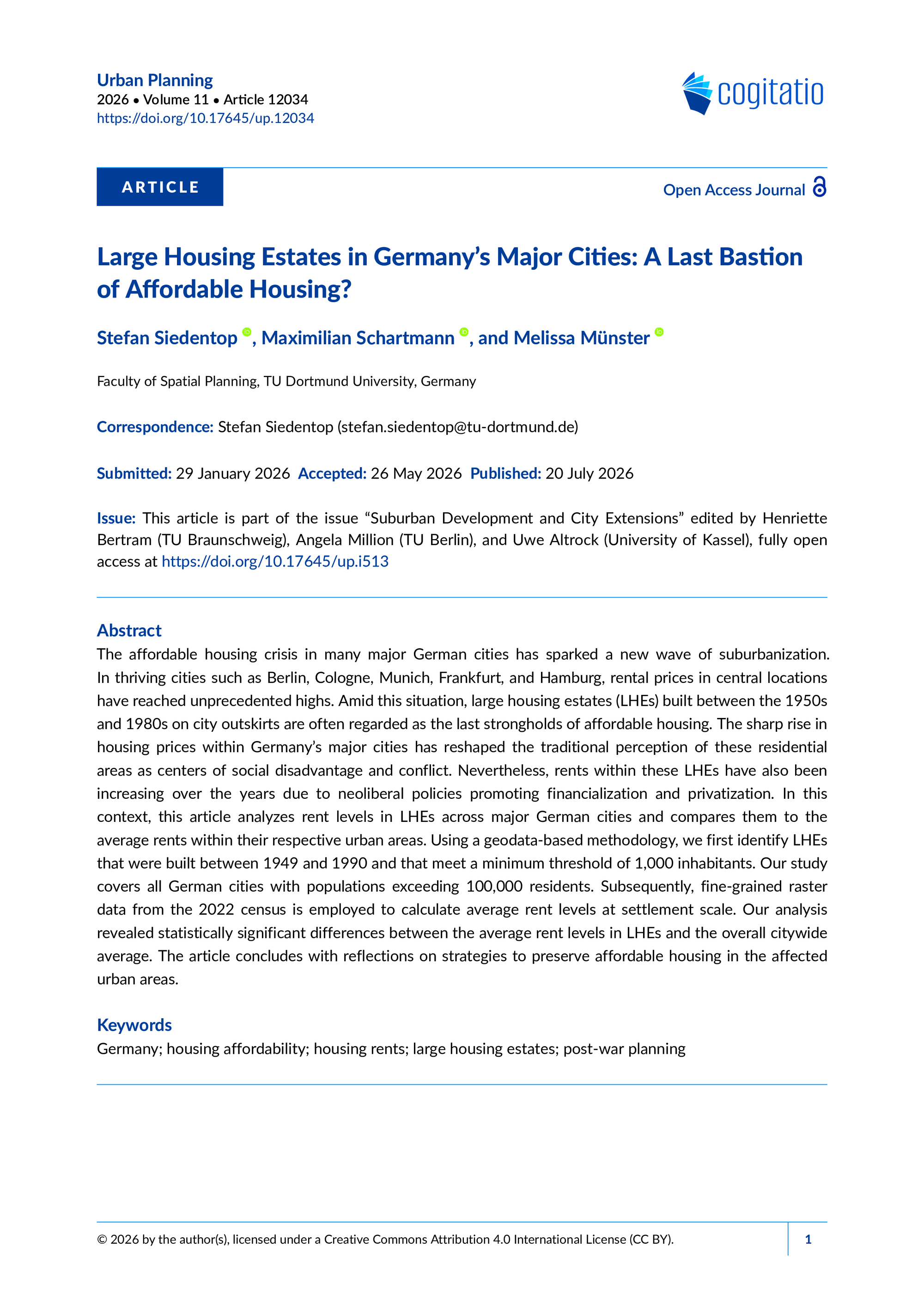
- Large Housing Estates in Germany's Major Cities: A Last Bastion of Affordable Housing? — Knowledge
- Mietenreport 2026 - Deutscher Mieterbund — Knowledge
- Spar- und Bauverein eG Dortmund — Organisation
- GWG Hombruch-Barop eG — Organisation
- gws-Wohnen Dortmund-Süd eG — Organisation
- Housing co-operatives in Germany: 160 years of evolution and resilience — Knowledge
- Bündnis für bezahlbares Wohnen und Bauen – Wohnungsgenossenschaften als Partner der Kommunen — Knowledge
- Lessons from Germany's Shared Housing Models: Expanding Ownership Opportunities and Improving the Built Environment — Knowledge
- Bundestag: Mietpreisbremse verlängert — Knowledge
- REDEVELOPMENT - Reusing unprofitable and functionally deficient 1950s to 1970s inner-city office buildings for residential purposes – possibilities and chances — Knowledge
- Germany reshapes housing and heating (as of 15 December 2025) — Knowledge
- Renovating Homes the Cooperative Way in Germany: Serial Renovation at Wohnungsverein Hagen — Knowledge
- Mieterverein Dortmund und Umgebung e.V. — Organisation
- Klimaschutzsiedlung Ewige Teufe — Project
- WIR aufm Revier — Project
Further sources38
- Liste von Bergwerken in Dortmund — Wikipedia
- Vonovia in Dortmund — Mieterverein Dortmund
- LEG in Dortmund — Mieterverein Dortmund
- Wohnungsmarktbericht 2026: Mieten steigen, Neubau auf tiefstem Stand seit zehn Jahren — Nordstadtblogger
- Mietrecht: Mieterschutzverordnung in Dortmund — Stadt Dortmund
- NRW: 3,2 Millionen Menschen waren 2025 armutsgefährdet — IT.NRW
- Dortmunds Wohnungsmarkt: Bauturbo und Flächen als Lichtblicke — Stadt Dortmund
- Bürgerbefragung: Wie lebt es sich in Dortmund? — Radio 91.2
- Wohnungskrise in Dortmund spitzt sich zu — DGB NRW
- Sparbau präsentiert solide Zahlen für 2025 — Nordstadtblogger
- Spar- und Bauverein Dortmund — Wikipedia
- Alte Kolonie Eving — Wikipedia
- Vivawest — Wikipedia
- Genossenschaften in Dortmund — Mieterverein Dortmund
- Genossenschaften, schließt euch zusammen! — IVV immobilien vermieten & verwalten
- Gemeinschaftliche Wohnformen: Projekte in Dortmund — Stadt Dortmund
- Wohnprojekte in Dortmund — Mieterverein Dortmund
- Politisches Erdbeben: Die SPD Dortmund verliert erstmals seit 1946 den Chefsessel im Rathaus — Nordstadtblogger
- OB Alexander Kalouti zieht ins Dortmunder Rathaus ein — Wir in Dortmund
- Bauturbo, Brückviertel und ein neuer Beigeordneter: So hat der Rat entschieden — Stadt Dortmund
- Wohnungsbau-Turbo beschlossen — Deutscher Bundestag
- Verwaltungsvereinbarung sozialer Wohnungsbau 2026 — BMWSB
- Stadt Dortmund schreibt Grundstücke für Wohnprojekt-Initiativen aus — Wir in Dortmund
- Bezahlbares Wohnen: Anteil von öffentlich gefördertem Bauen soll auf 30 Prozent steigen — Nordstadtblogger
- Baulückenkataster Dortmund: gut 3.300 Wohnungen könnten auf Brachflächen entstehen — Nordstadtblogger
- Wohnraumschutz und Zweckentfremdungsverbot — Stadt Dortmund
- Die Stadt Dortmund plant einen kommunalen Fonds gegen Problemimmobilien in der Nordstadt — Nordstadtblogger
- Wärmewende für Dortmund — Stadt Dortmund
- Kommunale Wärmeplanung Dortmund — cleanthinking.de
- Erfolgreiches Geschäftsjahr für DOGEWO21 — Nordstadtblogger
- DOGEWO21 — Wikipedia
- Phoenix-See — Wikipedia
- Bundestag verlängert Mietpreisbremse — Deutscher Bundestag
- Wohnungskrise in Dortmund spitzt sich zu (Mieterverein/DGB) — Mieterverein Dortmund
- Mietpreisbremse in Dortmund ab März 2025 — Nordstadtblogger
- Spatenstich für die Klimaschutzsiedlung Ewige Teufe — Nordstadtblogger
- Dr. Christian Jaeger wird Vorstandsvorsitzender der Spar- und Bauverein eG — Nordstadtblogger
- Dortmund bekommt ein Karlsquartier — Stadt Dortmund