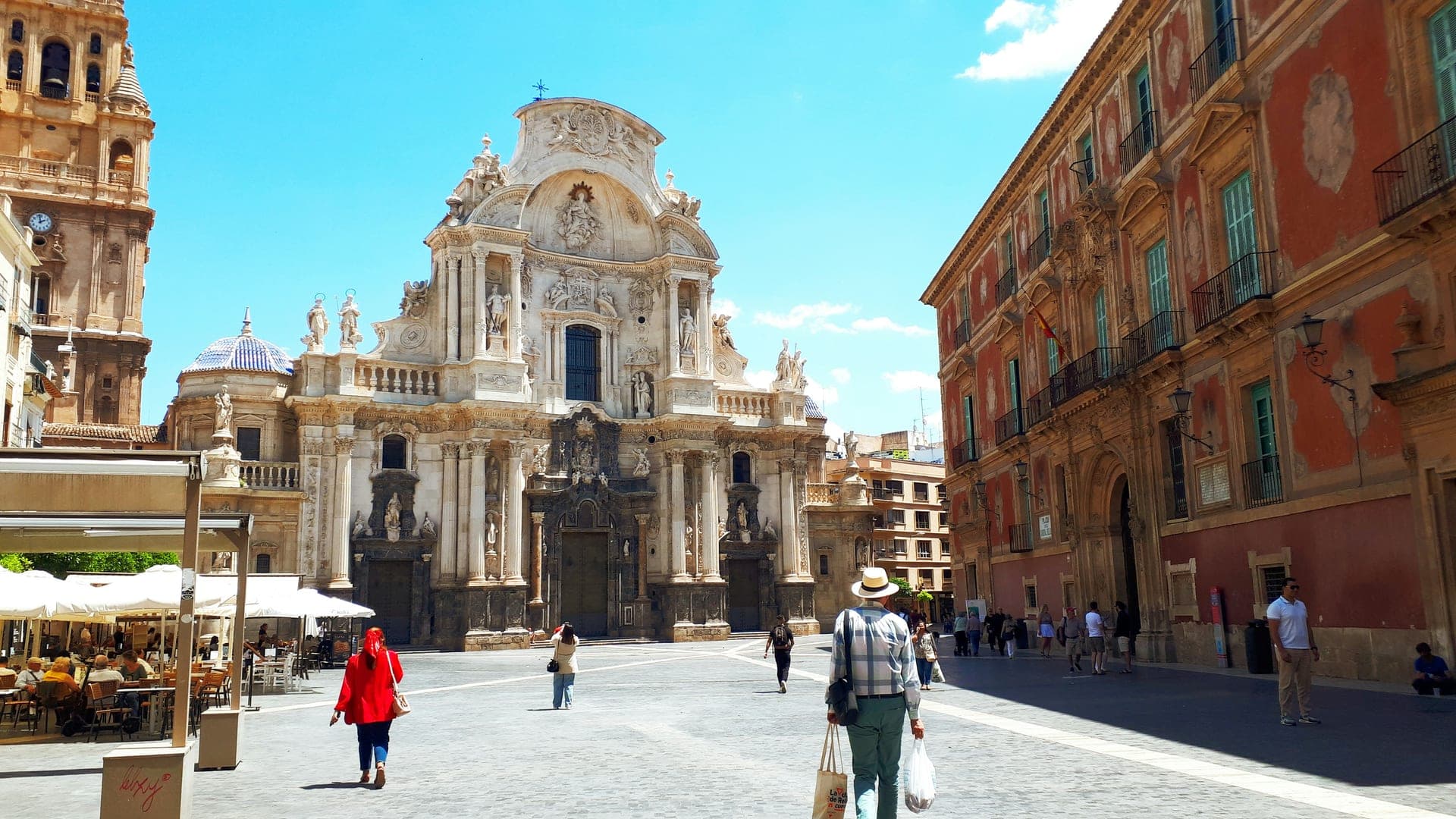
An orchard city that owns its homes
Murcia was built around water long before it was built around property. The emir Abd al-Rahman II founded the city on the river Segura in 825, and the irrigation channels of the huerta, the orchard plain that surrounds it, still shape the map. The municipality covers 881.8 km² and takes in 55 pedanías, the outlying villages that make up most of its territory. Families built on their own plots here for generations, and owning a home became the local default.
The 2021 census counted 219,740 dwellings, for a population that has since reached 479,405. Owner-occupiers hold 74% of homes and tenants 16%. Nearly all of those tenants rent privately, a share of 15.5%. Public housing, meaning homes the council itself owns, amounts to 0.5%, or 1,082 flats. Cooperatives do not show up as a tenure at all. A Spanish ownership cooperative hands each flat to its member once the building is finished, so the census files those homes as owner-occupied. The catalogue records just one cooperative organisation in the city. The remaining 10% or so is mostly cesión gratuita, a home lent free of charge: across the region 7.0% of households live that way.
- Owners
- Owner-occupier74.0%
- Renters
- Public & non-profit rental0.50%
- Cooperative0.00%
- Private rental15.5%
- Other10.0%
- Rent-free use (cesión gratuita) / other10.0%
Social housing in Spain is a legal label rather than a landlord. A vivienda protegida (VPO, a home sold or let at a capped price to households under an income limit) keeps that status only for a set protection period. Many such flats in Murcia were sold to their occupants and have since returned to the open market. No current city count of protected homes exists in the catalogue, so none is given here. Where the label survives, it sits inside the owner-occupied and public slices above, not beside them.
Each step away from the council's own stock costs a tenant more. A municipal tenant pays about €3.50 per m² a month. The average across all existing leases is €6.60, while a new contract costs €9.20. Furnished lets reach €10.60 and serviced flats €16. With only 2% of rental homes free at any moment, anyone who moves pays the new-contract price.
- Public/municipal housing
- All-stock median
- New contracts
- Furnished (gross)
- Serviced / mid-stay
Monthly rent per square metre by tier; furnished and serviced are gross, all-in. A new private lease costs more than two and a half times the council’s rent.
Empty property is plentiful all the same. The 2021 census found 12% of dwellings unoccupied, and the catalogue counts 15,321 empty residential buildings. Offices are emptier still: 11.8% of office space stands vacant, about 64,000 m² across 12 empty office buildings. Another 0 m² of shops and commercial premises lies idle.
Newcomers arrive faster than homes are built. 41,072 people moved into the municipality in 2024, and about 12,000 residents stay between three and twelve months. Building to sell barely pays. Construction costs about €1,280 per m², almost exactly what a flat sells for at €1,309, before any land is bought. A one-bedroom holiday let fetches a median €111 a night. Across Spain, leases of a month to a year have become a way to let homes outside the protections of tenancy law. And because the regional government has declared no stressed-market zone, no rent cap applies anywhere in the city.
Measured against the coast, the squeeze is moderate, but it is tightening. In 2025 tenants in the Region of Murcia spent 36% of an average gross salary on rent, the highest share since 2019, according to Murciadiario's analysis of InfoJobs and Fotocasa data. That is still well below the Spanish figure of 50%. The young carry the heaviest load. Only 14.3% of 16- to 29-year-olds in the region lived away from their parents in the first half of 2024, after the sharpest one-year fall of any Spanish region. The catalogue estimates that 33.7% of households are overburdened by housing costs, a share too large to be confined to the poorest. Nationally the issue now leads every other. In April 2026, 41.3% of Spaniards named housing the country's main problem in the barometer of the CIS (the state's sociological research centre).
Cooperatives may be invisible in the census, yet they are where Murcia is now placing some of its bets.
Cooperatives that build, then step aside
Most housing cooperatives in Murcia are ownership cooperatives. Members act as socios-promotores (member-developers): they pool savings, buy land and build at cost, which removes the developer's margin. The legal basis is Spain's national cooperatives law, Ley 27/1999. A gestora (a management company hired by the members) usually runs the project. When the keys are handed over, each member owns a flat outright and the cooperative's work is done. A second model is newer here. In a cooperativa en cesión de uso (a grant-of-use cooperative), the cooperative keeps the building for good. Members pay an entry contribution to its share capital, then a monthly fee, and the council's youth housing service notes that both come in below market prices.
The ownership model suits a country whose housing policy favoured buying over renting for decades. Protected homes were mostly built for sale, and a cooperative was simply one more route to a deed at cost price. Grant-of-use reached Murcia much later, carried from Catalonia. Research on the Catalan buildings finds stronger neighbourly trust, more communal participation and lower energy use than in comparable housing.
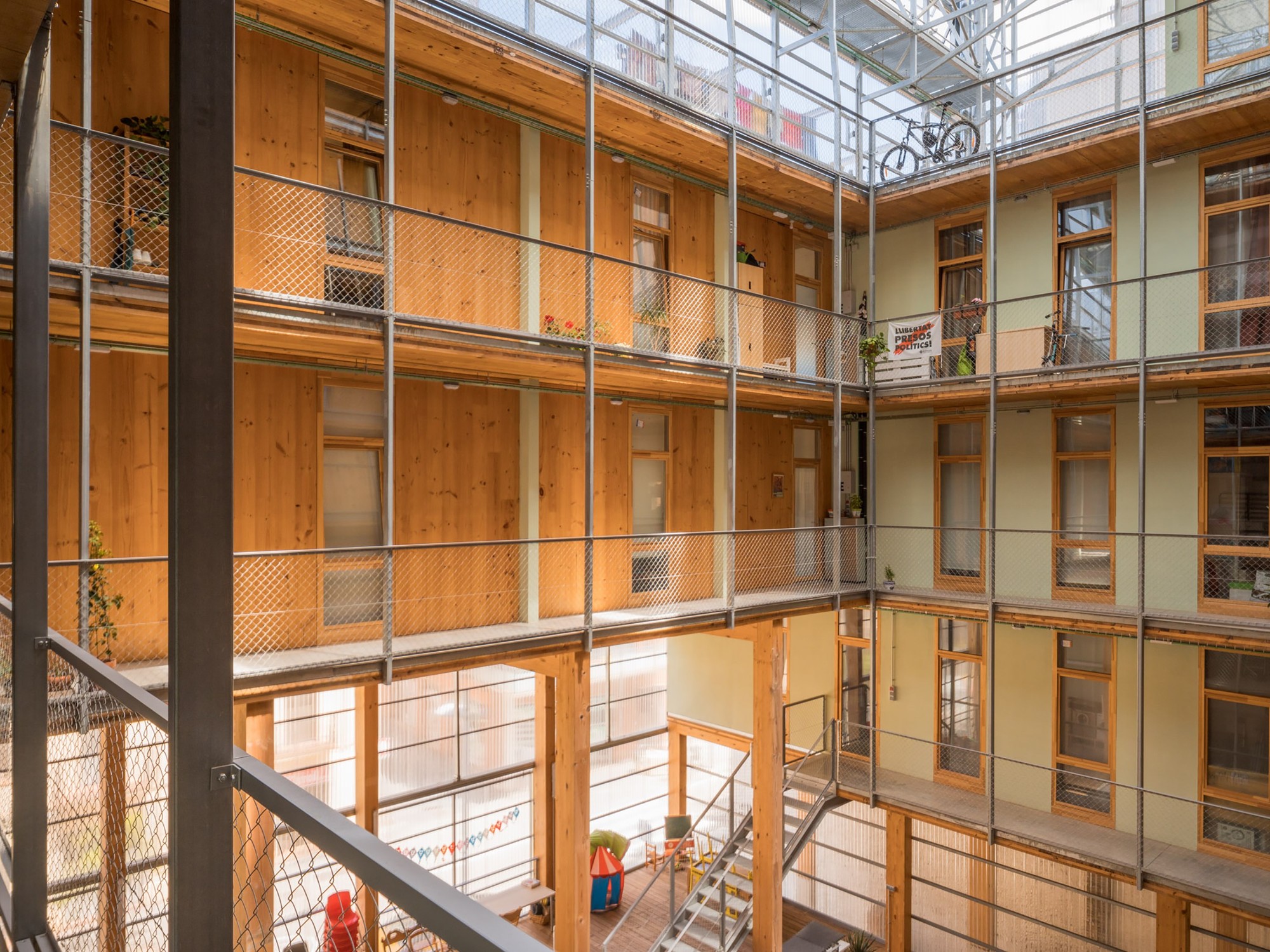
Today the sector falls into three camps. The largest is municipal. Urbamusa, the council's urban-development company, now forms and manages ownership cooperatives on public land under Murcia Crece, the programme of Mayor José Ballesta. Private gestoras run the same kind of ownership cooperative on market land for buyers who want a new flat at cost. The third camp is small and self-organised. Murcia Cohousing gathers groups that want to live together in grant-of-use buildings, and it represents the region in Spain's national network of such cooperatives. The camps face different obstacles. Ownership cooperatives meet land prices and building costs that leave little saving on a market sale. Grant-of-use groups struggle to raise entry capital, and to borrow for a building no member will ever own individually. A review of research in English and Spanish links cooperative living to better health and less isolation, though mostly on small studies.
Government now counts both forms as part of its affordable offer. Since 2023 the regional government has granted more than €4 million to 132 cohousing homes in Murcia, Cartagena, Lorca and Caravaca de la Cruz. It has also promised to write the model into its affordable-housing law. The city goes further on paper, pledging publicly managed cooperatives for the final phase of its 2030 housing strategy.
Supply first, caps refused
In Spain, housing power is split three ways. The state in Madrid sets the tenancy framework and co-funds a national housing plan. The regions hold most housing and planning law. Councils own land and can build on it. In Murcia the three levels pull in different directions. The city and the region, both governed by the People's Party (PP), have taken the supply-first side of a national argument that Madrid and Barcelona now embody.
Spain's 2023 right-to-housing law lets a region declare zonas tensionadas (stressed-market zones) in which rents can be capped. The regional government of Murcia has declared none. The state answers with money and a landlord of its own. Its 2026-2030 housing plan will channel €308 million into the region by 2030, at least 40% of it for building or buying homes. In December 2025 the state land agency SEPES became CASA47, a national public housing company that aims to keep rents below 30% of household income.
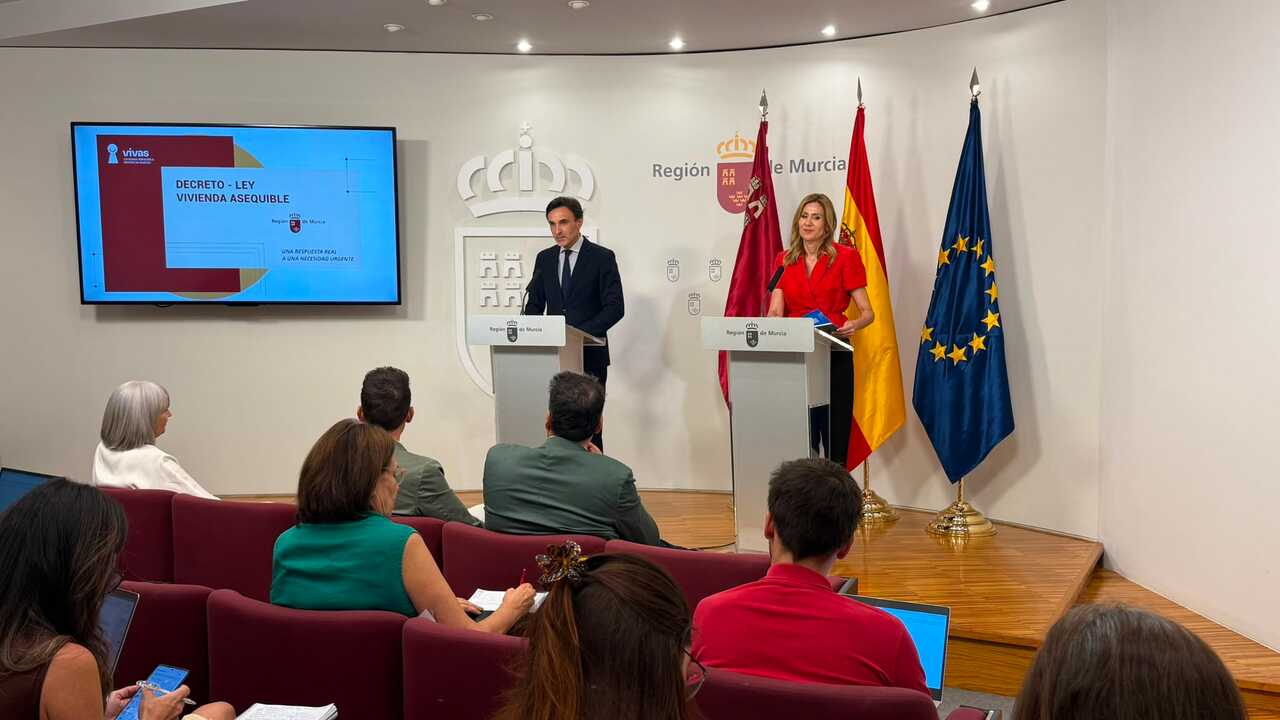
The regional reply came in July 2026 with Decree-Law 3/2026. It creates a new protected category, Vivienda Asequible de la Región de Murcia, open to households earning up to 5.5 times the IPREM (the state's benchmark income index), or €46,200 a year. Every procedure for such homes is declared urgent. Developers may add up to 40% more floor area, or 50% for protected housing, and buyers pay a super-reduced 4% VAT. Buyers under 40 pay a 3% transfer tax.
The main housing problem today is the lack of supply.At city level the PP holds a majority. In November 2025 it voted down a motion from the Socialists (PSOE) to declare Murcia a stressed zone, and passed its own alternative instead. That text asked Madrid for a new state plan, asked the region for legal changes, and pledged council land for public housing. Four months later the council presented its Municipal Housing and Land Strategy 2030. It releases 66 council plots, more than 125,000 m² of land, for 2,366 homes in 26 neighbourhoods and villages. Of these, 1,136 are to be sold or let with an option to buy, and 1,230 will be public rentals. Prices are meant to sit 40% to 70% below market, and no household should pay more than 30% of its income.
Prices have risen 260% since 2015; rents have doubled. Housing today is an emergency.Cooperatives get instruments of their own. Urbamusa has hired advisers to locate plots and form new cooperatives. It also guarantees 20% of the price for members under 40 or with children, so that a bank will lend the rest. The council reserves €1 million a year for that guarantee, enough for more than 30 homes. The regional cohousing grants open a second route, for groups that let homes to their members instead of selling them.
The decree also reaches for the city's empty space. It lets offices and ground-floor commercial premises change use to housing. It revives unfinished buildings and half-built estates, provided at least half of each project becomes protected housing. A FEANTSA study of reusing vacant buildings argues that conversions of this kind can house people faster than new construction.
Retrofit is where housing policy meets climate policy. Next Generation EU money funds a programme for about 450 homes in two renovation areas. Some 375 sit in the city's older neighbourhoods, with a target of cutting energy use by 30%, and 75 are council flats in the villages. The council finished that second part in 2026. Its 75 retrofitted flats in Beniaján, Javalí Nuevo, Churra and Monteagudo now use more than half less energy. The European Commission's research magazine links unaffordable rents to cold homes, which is why public and cooperative landlords, able to renovate a whole block at once, are the natural carriers of these targets.
- 825[source]
A city on the Segura
Emir Abd al-Rahman II founds Murcia on the river; its irrigated huerta shapes settlement for the next twelve centuries.
- May 2023[source]
Right-to-housing law
Spain passes Law 12/2023, letting regions declare stressed-market zones with rent caps. The Region of Murcia declares none.
- Mar 2024[source]
First council-backed cooperative
Cooperativa Aire puts 26 homes on sale in Puente Tocinos from €110,000, on land supplied by the council and managed by Urbamusa.
- Jan 2025[source]
Cohousing enters regional policy
The regional government says its grants since 2023, more than €4 million, fund 132 cohousing homes, and promises to include the model in its affordable-housing law.
- Mar 2025[source]
Guarantee for young members
Urbamusa approves a guarantee of 20% of the price for first-time buyers in its cooperatives, with €1 million a year reserved.
- Nov 2025[source]
Stressed zone rejected
The PP majority on Murcia City Council votes down a PSOE motion to declare the city a stressed-market zone.
- Dec 2025[source]
CASA47 created
The state land agency SEPES becomes CASA47, a national public housing company aiming to keep rents below 30% of household income.
- Mar 2026[source]
Housing and Land Strategy 2030
The council releases 66 plots for 2,366 affordable homes, 1,230 of them public rentals, with publicly managed cooperatives in a later phase.
- May 2026[source]
State plan allocation
The 2026-2030 state housing plan assigns €35.2 million to the region for 2026 and €308 million by 2030.
- Jul 2026[source]
Decree-Law 3/2026
The region creates Vivienda Asequible de la Región de Murcia for incomes up to €46,200, and allows offices and ground-floor premises to become homes.
- Aug 2026[source]
Council flats retrofitted
75 council flats in four villages complete a €1.49 million Next Generation EU retrofit, cutting energy use by more than half.
- 2030[source]
Strategy horizon
The date by which the council aims to have mobilised its 66 plots for 2,366 affordable homes.
From an irrigation city founded by an emir to a municipal land programme and a new regional category of protected housing.
Council land, cooperative hands
Urbamusa is the engine behind almost everything the city is trying. The council's urban-development company has been active since 1986, and on its housing schemes it works without a profit motive. Instead of selling plots to developers, it now builds through cooperatives, recruits their members and administers the guarantee for young buyers. That makes a municipal company, rather than a private gestora, the developer of last resort for Murcia's ownership cooperatives.

Cooperativa Aire in Puente Tocinos was the first test of that approach. Its five-storey block on Calle Mayor holds 26 homes of one to four bedrooms around an inner courtyard with a pool. The council supplied the land, and sales opened in March 2024 from €110,000. Deputy mayor Rebeca Pérez presented it as a project with high social returns. Its members will own their flats, so Aire's affordability ends with its first generation of owners.
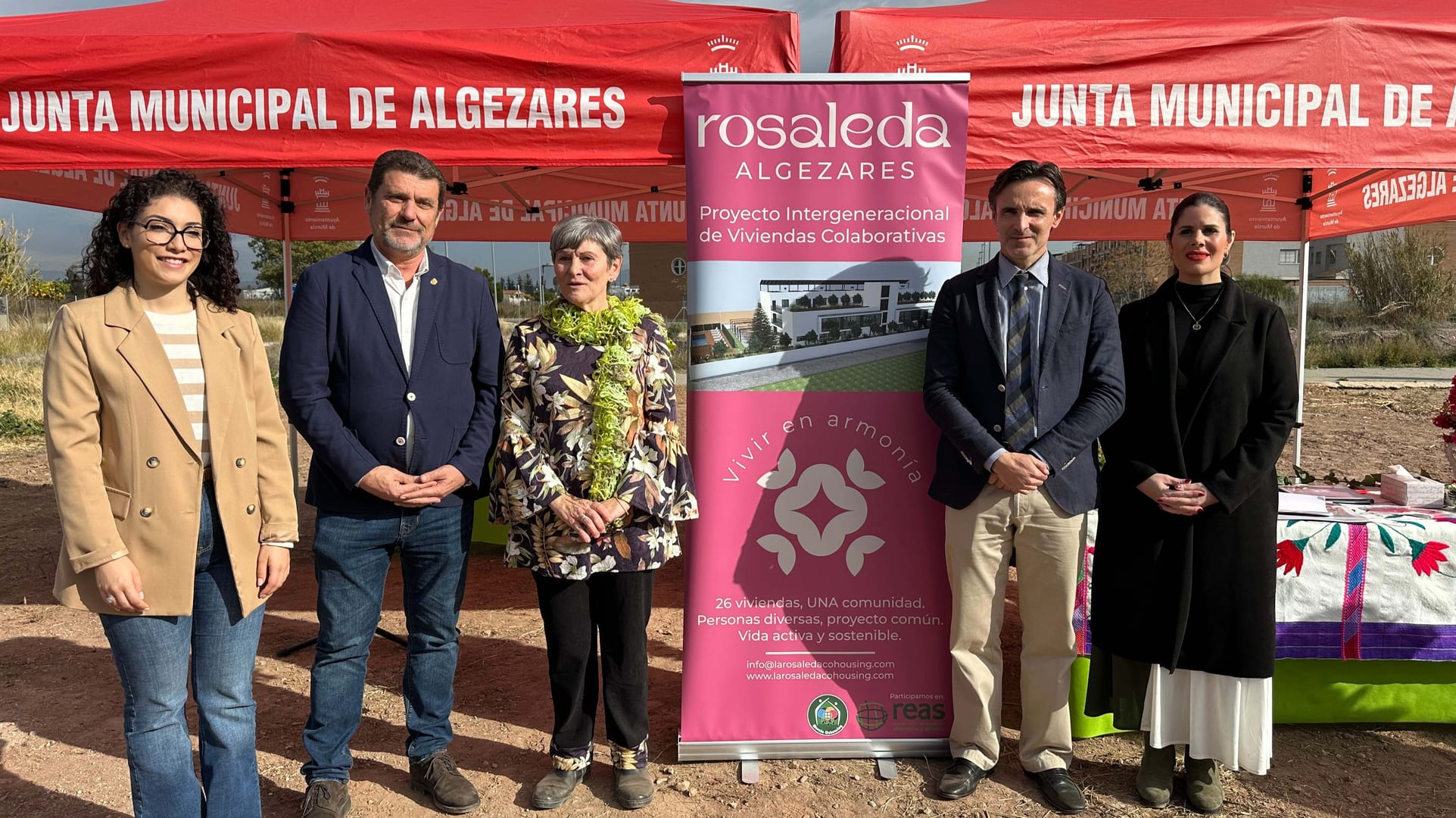
La Rosaleda Cohousing takes the opposite route. The group formed in 2022 with members of different ages. On a plot of almost 2,000 m² it plans 26 one- and two-bedroom homes of 50 to 60 m², with shared gardens, a pool and storage. A regional grant of €858,383 covers part of the cost. In return the homes must go to households earning less than five times the IPREM.
Murcia Cohousing does the slower work that such projects depend on. The association runs workshops for people who want to live in a grant-of-use building, helps them form groups and links them with the national network. It is the nearest thing Murcia has to a cooperative federation for the grant-of-use model.
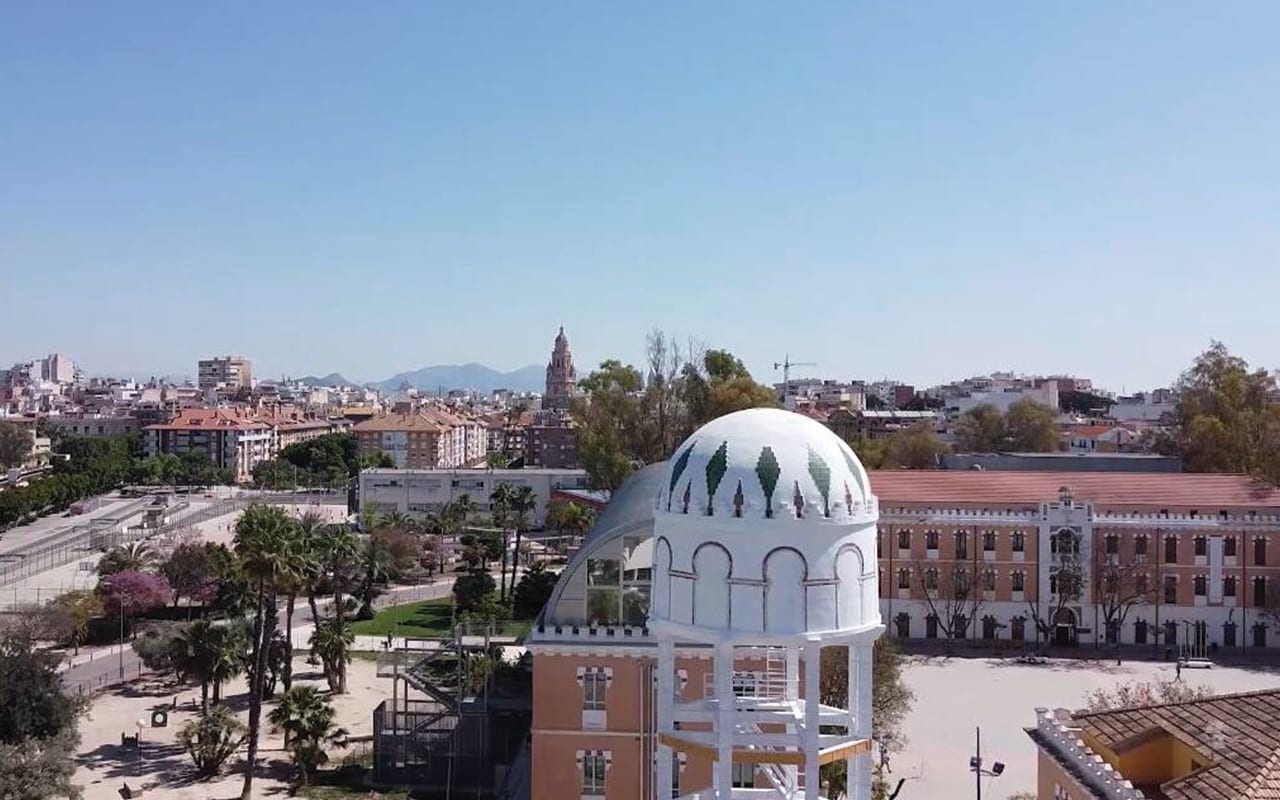
The retrofitted council blocks in Beniaján and Javalí Nuevo show that the public stock can be modernised in place. 35 flats in Beniaján and 23 in Javalí Nuevo received new windows, heat pumps and repaired roofs and facades as part of a €1.49 million programme funded by the EU. Energy use in the Javalí Nuevo flats fell by almost 68%.
The 66 plots of the 2030 strategy are the test still to come. Spain has shown it can build well on public land: its recent protected housing has won international design prizes. A comparison of affordable cooperative housing systems in eight countries shows what turns such plots into lasting affordability: land kept in public hands, non-profit rules and supportive public finance. Housing Europe's State of Housing in Europe 2025 makes the same case continent-wide.
For twelve centuries the huerta's water has been shared by rule rather than sold to the highest bidder. Since 2009 UNESCO has recognised the Consejo de Hombres Buenos, the elected farmers' council that settles its disputes. Murcia now holds the land, the company and the first groups needed to share homes in the same spirit. Whether the cooperatives of the strategy's last phase rent to their members or sell to them will decide how long that affordability lasts.
References
Statistics19Click on any number to see the source
Housing market
Tenure & affordability
Cooperative, social & public
Adaptive reuse & vacancy
Population & migration
From our library18
- 'Mid-term rentals': the new haven for investors to keep ahead of housing regulations — Knowledge
- Los murcianos destinaron el 36% de su sueldo al pago del alquiler en 2025 — Knowledge
- La odisea de emanciparse en la Región: solo el 14% de los jóvenes logra independizarse — Knowledge
- Effects on Social Cohesion of the Grant of Use Cooperative Housing Model in Catalonia — Knowledge
- Urbamusa — Organisation
- Murcia Cohousing — Organisation
- Cooperative housing: A catalyst for health and wellbeing? A scoping review of English and Spanish literature (2004–2024) — Knowledge
- La modalidad 'cohousing' formará parte del nuevo decreto de vivienda asequible de la Región de Murcia — Knowledge
- Barcelona and Madrid have very different ideas on tackling Spain’s housing crisis. Which will succeed? — Knowledge
- El Decreto Ley de Vivienda Asequible de la Región ya es una realidad: estas son las claves — Knowledge
- El Pleno se crispa por la vivienda: Murcia admite la urgencia del problema, pero rechaza ser una zona tensionada — Knowledge
- El Ayuntamiento de Murcia impulsa la mayor estrategia de vivienda de la historia para construir cerca de 2.400 hogares a precio asequible — Knowledge
- Reclaiming Vacant Spaces to Tackle Housing and Homelessness Crises in Europe — Knowledge
- Murcia culmina la rehabilitación energética de 75 viviendas con criterios de sostenibilidad — Knowledge
- The hidden link between Europe's housing crisis and energy poverty — Knowledge
- Why Is Spain’s Social Housing So Well-Designed? — Knowledge
- Affordable Cooperative Housing: An International Typology, Supportive Institutions and Public Policies — Knowledge
- The State of Housing in Europe 2025: Trends in a Nutshell — Knowledge
Further sources13
- Ayuntamiento de Murcia — Murcia 1200 — Ayuntamiento de Murcia
- Murcia en cifras (Ayuntamiento de Murcia) — Murcia en cifras (Ayuntamiento de Murcia)
- CREM — households by tenure of main residence (INE Living Conditions Survey) — CREM
- CIS barometer, April 2026 — CIS barometer, April 2026
- Informajoven, Ayuntamiento de Murcia — housing cooperatives — Informajoven, Ayuntamiento de Murcia
- Informajoven, Ayuntamiento de Murcia — cohousing — Informajoven, Ayuntamiento de Murcia
- BOE — Ley 12/2023, por el derecho a la vivienda — BOE
- MurciaEconomía — MurciaEconomía
- MurciaEconomía — MurciaEconomía
- Murcia Plaza — Murcia Plaza
- Región Online Murcia — Región Online Murcia
- Ayuntamiento de Murcia — citizens’ portal — Ayuntamiento de Murcia
- UNESCO Intangible Cultural Heritage — UNESCO Intangible Cultural Heritage