Sunshine, newcomers and a rental squeeze
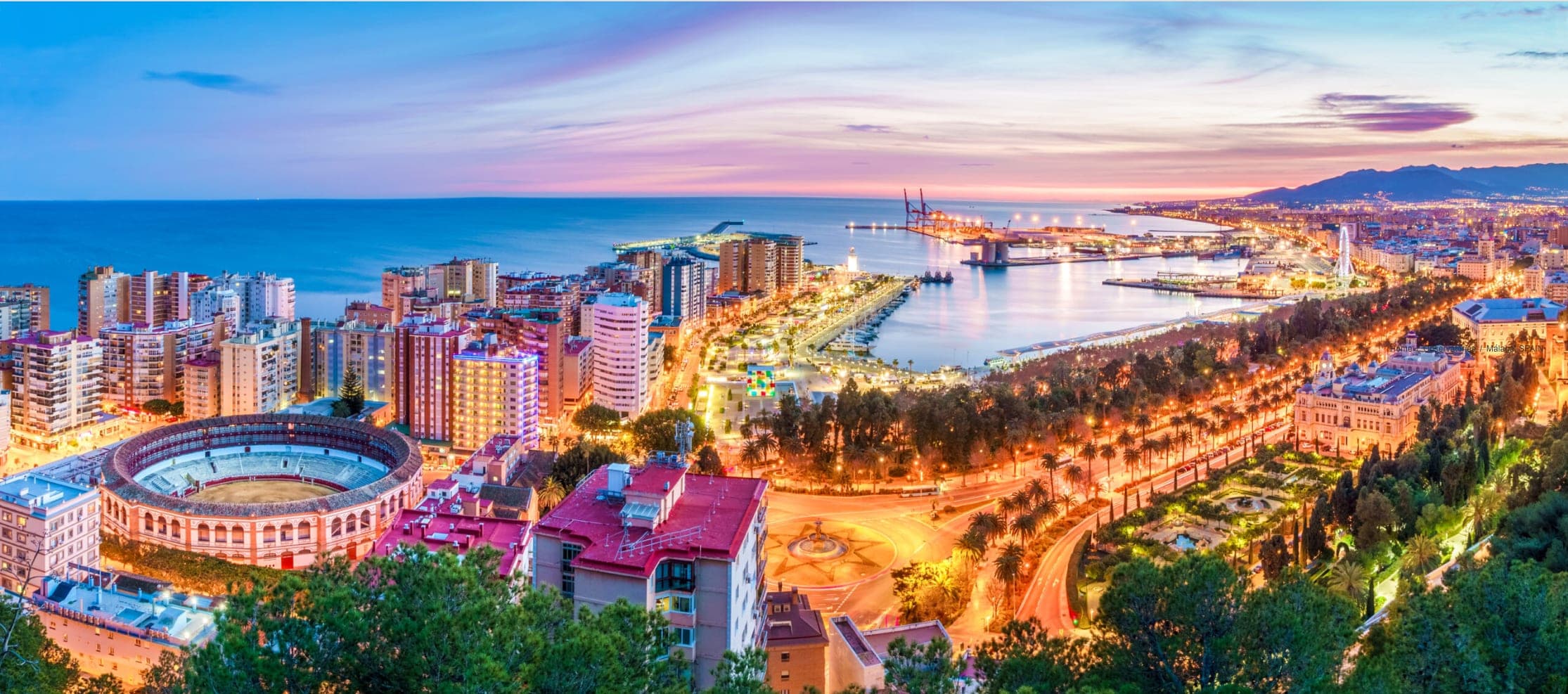
Málaga has been a city of arrivals for some 2,800 years. Phoenician traders from Tyre founded it as Malake around 770 BC, and Romans, Moors and Castilians followed. For the last half-century the newcomers have been sun-seekers from northern Europe, and more recently remote workers, students and short-stay visitors. They now compete with local families for the same flats in a city of 603,144 people. The housing question here is who a sunlit, successful city is actually for.
Ownership is the Spanish default, and Málaga follows it closely. Some 82% of households own their home and 16% rent, which leaves about 2% living rent-free or in other arrangements. Almost every tenant rents from a private landlord, so private renting accounts for roughly 16% of households on its own. Cooperatives barely register as a tenure. A traditional Spanish housing cooperative builds a block and then hands each member the deeds, so its finished flats are counted as owner-occupied. Municipal rental is similarly thin. The catalogue holds no separate cooperative or public-housing share for the city, and both sit inside the slices shown below.
- Owners
- Owner-occupier82.0%
- Renters
- Public & non-profit rental0.00%
- Cooperative0.00%
- Private rental16.0%
- Unclassified2.0%
- Unknown / Other2.0%
Social housing in Spain is a legal label rather than a landlord. A vivienda protegida (a price-capped 'protected' home built with public support) can be sold to an owner, let by a private developer or let by the city. Nationally about 1.5% of the stock is let as social housing, a Spain-wide proxy since no city figure exists. That layer overlays the tenure slices rather than forming one of its own. On income alone, around 30% of households would qualify. Until the 2026 state housing plan, protection on many of these homes could lapse after a set term.
Rents show how far newcomers pay above sitting tenants. The median across all existing leases is €10.6 per square metre a month. A new contract signed in spring 2026 averaged €16.3, more than half as much again. Furnished and serviced flats, priced with bills and furniture included, reach €18.7. Even the newest protected rentals on municipal land are capped at about €10.06 per usable square metre, barely below what a long-standing private tenant pays.
- Protected rental cap (new municipal plots)
- All-stock median
- New contracts
- Furnished / serviced (gross)
Monthly rent per square metre by tier. Net cold, except furnished/serviced, which is gross and all-in. The protected cap is per usable square metre, so it slightly understates the gap with the market tiers.
The squeeze now reaches well beyond the poorest households. El Salto's June 2026 report on the city set a year's average rent at €15,341 against an average salary of €26,966. The Olive Press found couples earning €1,200 a month each living in campervans in Teatinos, and around 100 people in motorhomes on a former industrial plot in Sacaba. Across Spain, 41.3% of people named housing as the country's main problem in April 2026, far ahead of the economy at 24.9%. In Málaga that worry has moved onto the streets. Police counted more than 4,500 marchers in June 2026, two years after the first mass protest against tourist flats.
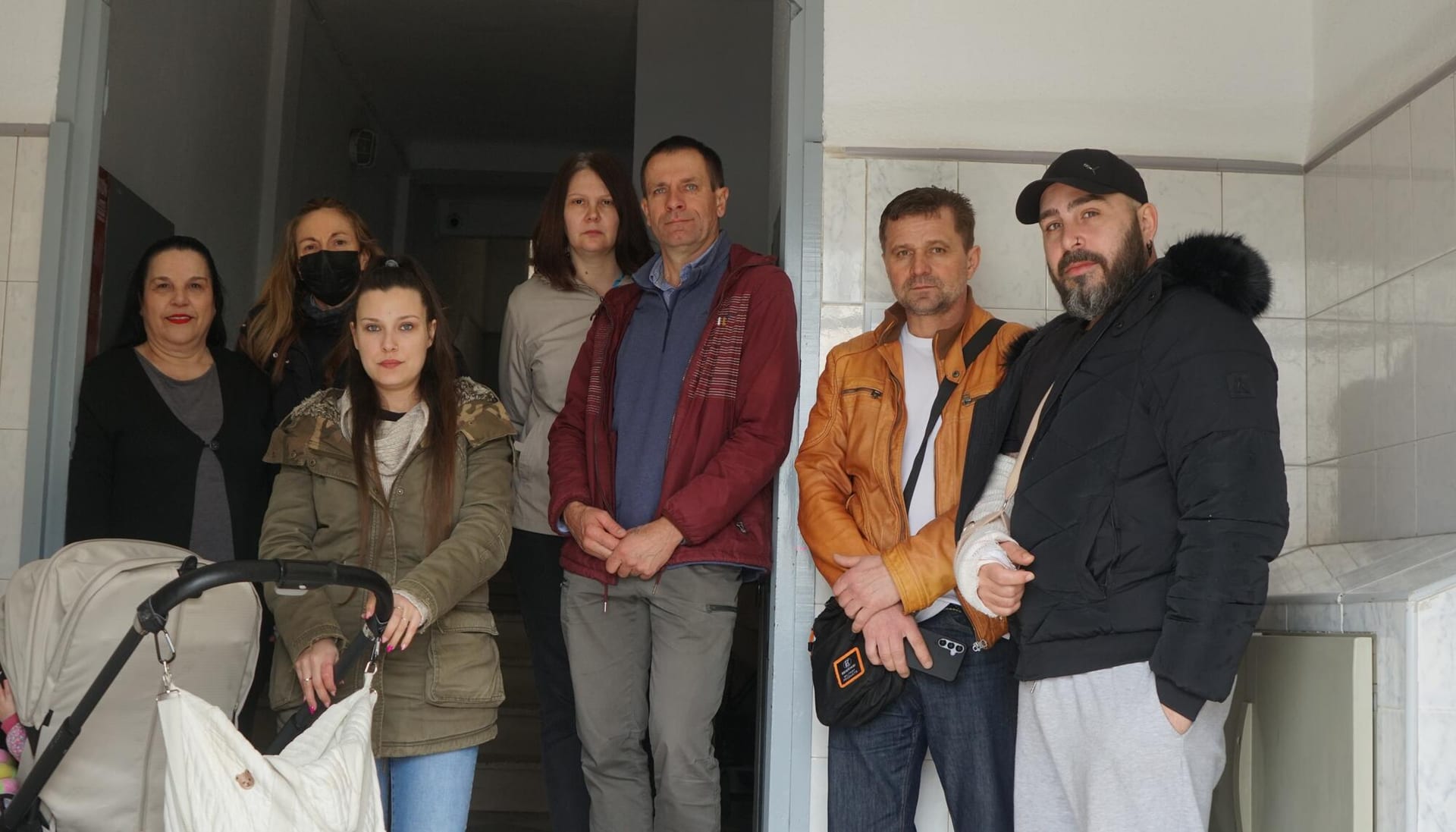
We were already warning about this in 2018. Something could have been done then, because the mayor had the power, had the rules and the duty to apply them. Now let's see how it can all be reversed, because tourist housing is the key that opened the door to mass tourism.Empty homes are a smaller part of the picture than in many Spanish cities. The 2021 census found 5.1% of dwellings vacant, some 16,638 homes. Holiday lets drain more. The regional tourism register listed 12,748 tourist flats in Málaga in February 2026, and an estimated 4,686 dwellings run as full-time Airbnb lets. A University of Málaga study found that tourist flats explain 54% of the variation in local rents. Offices sit idle too: an estimated 5.0% of office floor space, about 28,006 m², is vacant.
Newcomers keep coming. The city gained 5,971 residents in 2025, and 93.5% of that growth came from abroad. Construction trails behind. Across the province, new building met only 52% of the 55,500 households formed between 2021 and 2025, a shortfall of 26,375 homes. Of the 6,667 homes completed in 2025, just 142 were protected. No rent cap cushions the gap, because the regional government has not declared any stressed-market zone under Spain's 2023 housing law.
Against that backdrop, a cooperative sector with no measurable tenure share has started to look like part of the answer.
Cooperatives that build, and cooperatives that stay
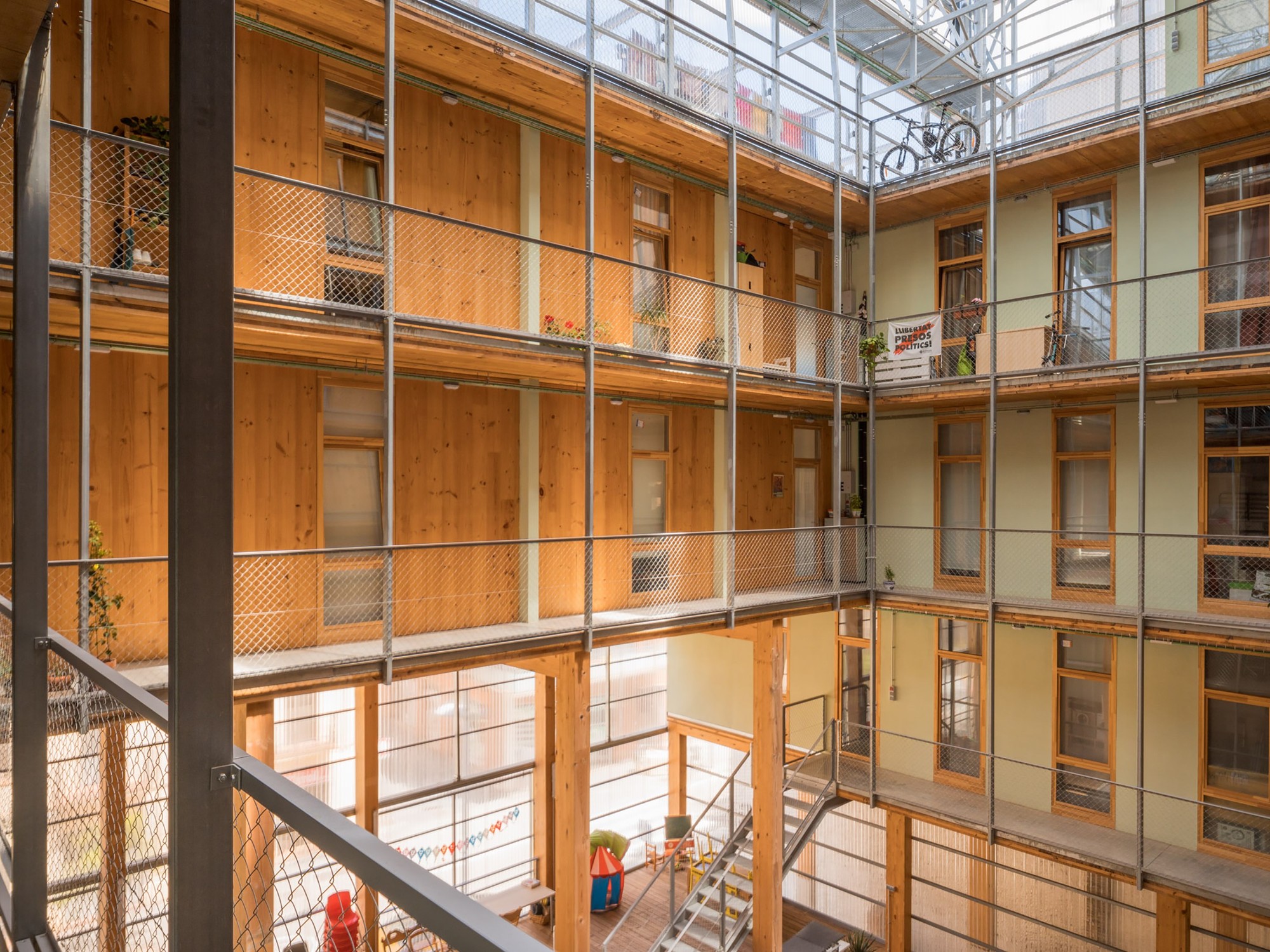
Spanish housing cooperatives come in two forms. The older one is a development vehicle. Members pool deposits, the cooperative buys land and builds, and each member receives the deeds once the block is finished. Professional gestoras (cooperative-management firms) run most of these schemes, and some now bid for prime plots against ordinary developers. The newer form is cesión de uso (grant of use). Here the cooperative keeps the building for good, and members hold a lifelong right to live in their home in return for an entry share and a monthly fee. Research on the Catalan grant-of-use projects links them to stronger ties between neighbours.
The tradition reaches back to Spain's 1911 cheap-housing law. Its reputation collapsed in the 1990s, when the failure of the PSV cooperative scheme left some 20,000 members without the homes they had paid for. Málaga's own turning point came in those years. In 1991 a group of friends founded the Cooperativa Los Milagros on the slopes of the Montes de Málaga, after nine years of saving to buy the land. Often described as Spain's first cohousing, it now holds 76 apartments for members aged 50 and over, with a garden, pool and care on site.
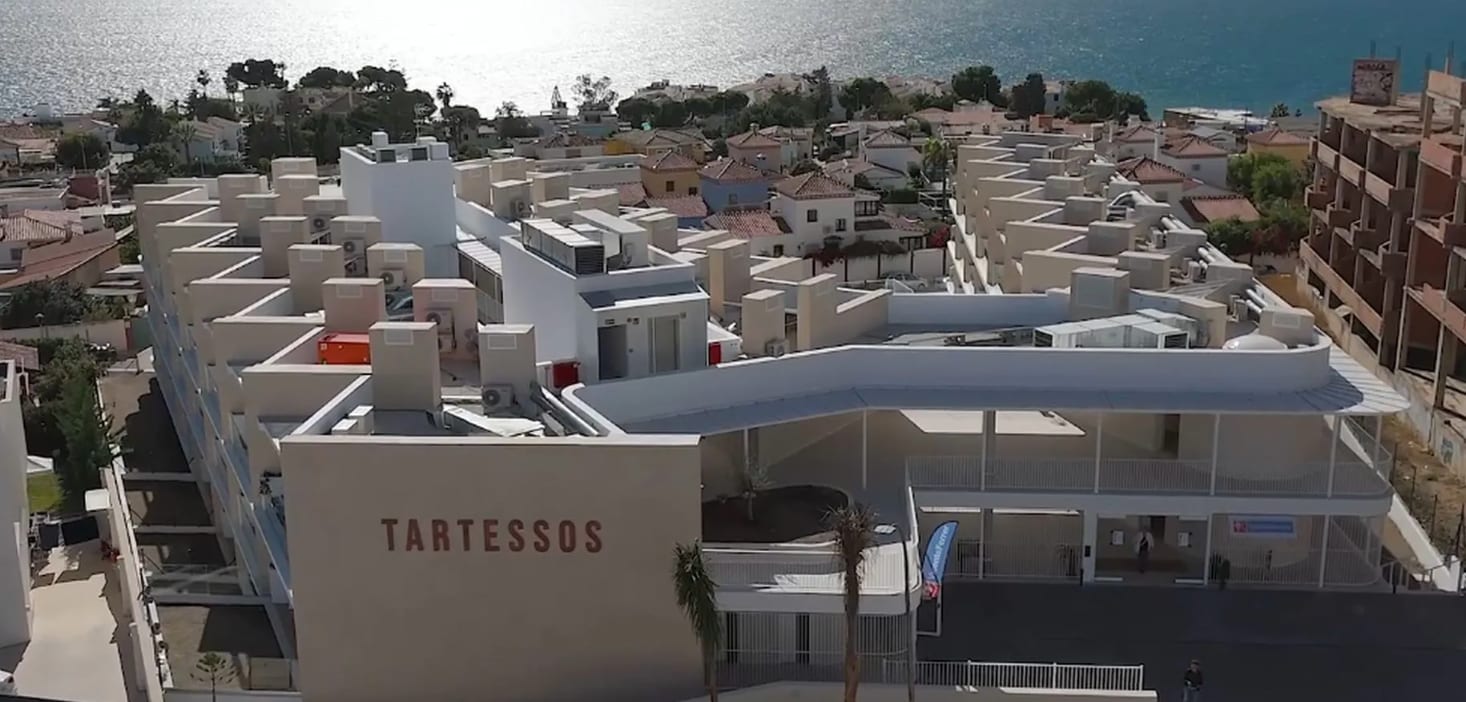
Today the sector falls into three clusters. The largest is still the ownership cooperative, now often used to deliver protected homes on municipal plots. The second is senior cohousing on the grant-of-use model, led by Los Milagros and the newer Tartessos Málaga in neighbouring Rincón de la Victoria. The third is an advocacy layer. FAECTA (the Andalusian federation of cooperative enterprises) and AGEVIAND (an association of housing-cooperative managers based in Málaga) spent 2026 arguing that the model can scale. All three clusters meet the same obstacle, which is land. Ownership cooperatives compete with developers for plots, while grant-of-use projects need long leases on public land that the city has not yet offered them.
Housing cannot be understood solely as a market good. Cooperatives offer a model whose main aim is to guarantee the right to a home, while also building more cohesive and participatory communities.Public bodies have only just begun to take notice. The regional employment ministry funded FAECTA's April 2026 conference on grant-of-use housing in Málaga. AGEVIAND answered with a proposed city pact for 50,000 cooperative homes on long-term concessions of public land by 2036. Whether that offer is taken up depends on how the city chooses to use its own plots.
Three governments, one queue
Three governments shape housing in Málaga, and they are not run by the same party. In Madrid, the Ministry of Housing and Urban Agenda under Isabel Rodríguez approved the State Housing Plan 2026-2030 in April 2026. It carries €7,000 million and reserves 40% of it for building or buying public homes, which must then stay public for good. The state has also turned its land agency into Casa 47, a national housing company. It lets homes at no more than 30% of local median income, on leases of up to 75 years.
Seville, seat of the regional government, takes a different line. The Junta de Andalucía (the regional government, led by the Partido Popular) passed its own housing law, in force since January 2026. It bets on supply: more protected homes, faster permits and land reserves for over 40,000 protected homes in the region's largest municipalities, with a housing budget of €740 million. It has declined to use the national law's rent-cap mechanism, even though a 2026 analysis found every district of Málaga above the income-effort threshold that defines a stressed market. A 2026 comparative study of housing-stress zones across the EU shows how much depends on which level of government holds that switch.
The city council, led since 2000 by Mayor Francisco de la Torre of the Partido Popular, works through its housing agency, the Instituto Municipal de la Vivienda (IMV). Its framework is the Plan Municipal de Vivienda y Suelo 2023-2027, the city's five-year housing and land plan. The newest lever is land set aside for public facilities. In December 2025 the city tendered 14 such plots for up to 1,414 affordable rental homes, backed by municipal grants of up to €18,000 per home.

Cooperatives have a foothold in this system but no programme of their own. The IMV transfers municipal plots to cooperatives building protected homes, and grants 75-year derecho de superficie (a long-term building lease on public land) to rental developers. What Málaga lacks is a grant-of-use land programme of the kind Barcelona and other Catalan towns run. That is precisely what AGEVIAND and FAECTA are now asking for.
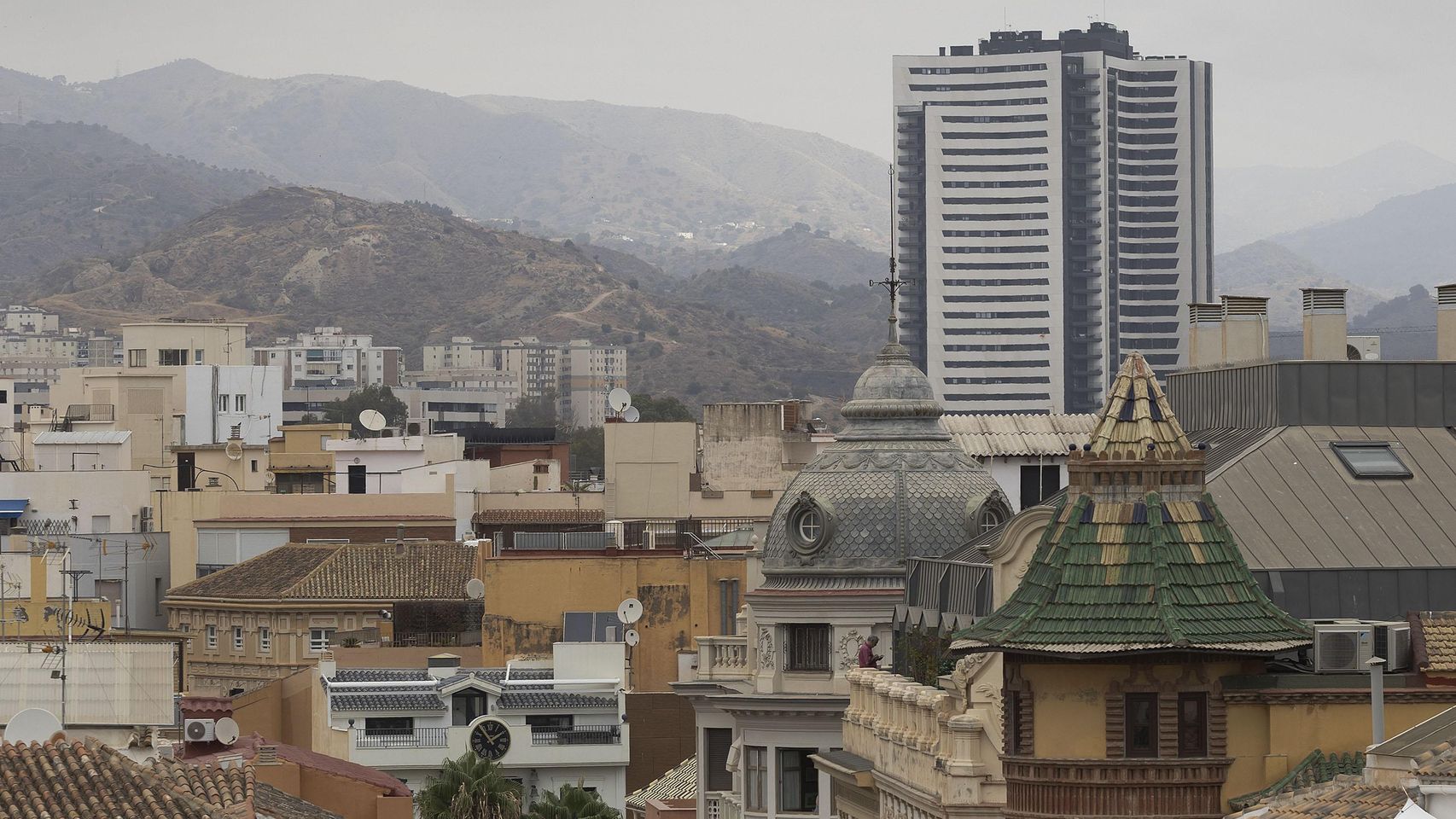
The city's answer to lost homes has two sides. It has closed the tap on tourist flats, first in 43 neighbourhoods in January 2025 and then city-wide in August 2025. Six months into the moratorium, the register had shrunk by only about 120 flats, and owners have filed hundreds of court appeals. At the same time Málaga let shops become homes, with about 460 premises turned into more than 670 dwellings in 2024. In July 2026 it began restricting those conversions on main streets and squares, citing poor light and ventilation. Office-to-home conversion is the obvious next step, and a 2025 study for the European Commission found it far less carbon-intensive than demolition and rebuilding.

We are not going to allow any home registered after the agreements to remain in force.Climate goals run through the same programmes. The Andalusian law ties rehabilitation aid to energy and water efficiency, and EU recovery funds paid €25.6 million towards 377 protected rental homes in the Universidad district. Heat is the pressing risk here. The European federation of public, cooperative and social housing ranks southern Europe's heat and water scarcity among the sharpest threats to an ageing stock. The tenant movement frames the same crisis in ecological terms and has called for a general strike over housing.
The crisis reaches every part of life, it wrecks the territory, the ecological footprint is terrible, and in the face of the big investors, residents are being pushed out.- Dec 2022[source]
Municipal housing plan
The city adopts its Plan Municipal de Vivienda y Suelo 2023-2027, run by the municipal housing agency.
- Jun 2024[source]
First mass protest
Thousands march against tourist flats; police count more than 5,000, organisers 25,000.
- Jan 2025[source]
Neighbourhood ban
New tourist-flat registrations are barred in 43 neighbourhoods where holiday lets exceed 8% of homes.
- Aug 2025[source]
City-wide moratorium
A three-year freeze on new tourist flats and hotels in residential zones takes effect across the city.
- Dec 2025[source]
Casa 47 and the equipment-land tender
The state land agency becomes Casa 47, a national housing company; Málaga tenders 14 municipal plots for up to 1,414 affordable rental homes.
- Jan 2026[source]
Andalusian housing law
The Junta de Andalucía's housing law comes into force, backed by a €740 million housing budget.
- Apr 2026[source]
State Housing Plan 2026-2030
Madrid approves a €7,000 million plan, with 40% reserved for expanding the public stock.
- Aug 2026[source]
The protected-housing lottery
8,067 people apply for 377 protected rental flats in the Universidad district.
- 2027[source]
Municipal plan horizon
The current municipal housing and land plan runs to the end of 2027, when its successor is due.
- Aug 2028[source]
Moratorium expires
The three-year freeze on new tourist flats ends unless a revised general urban plan replaces it sooner.
- 2030[source]
National plan closes
The State Housing Plan ends, with the homes it funds shielded from future privatisation.
- 2036[source]
Cooperative ambition
AGEVIAND's agenda targets 50,000 cooperative homes on public land in Málaga.
From the municipal housing plan and the first tourist-flat protests to the regional housing law, the national plan and the targets now set for the next decade.
Cohousing pioneers and the lottery for public flats
Tartessos Málaga is the clearest sign that grant-of-use housing has reached the Costa del Sol. Set up in 2024 in Rincón de la Victoria, just east of the city, the cooperative gathers 65 members who hold lifelong use of their homes. They share a dining room, laundry and on-site care. The project represents €10 million of private investment and more than 20 local jobs, and a quarter of its activity spaces are open to neighbours. It follows the path of Barcelona's Can 70, the first senior cooperative on public land in Spain, which a 2025 study links to residents' autonomy and mutual care.
The Universidad district shows what the city's rental model can deliver, and where it runs out. On two municipal plots held on 75-year building leases, the build-to-rent firm Lagoom Living is providing 377 protected flats. Rents run from €446 to €624 a month. When the lists closed in August 2026, 8,067 people had applied, more than 21 for every flat. The scheme is fast and uses public land, but it can house fewer than one in twenty of the people who applied.
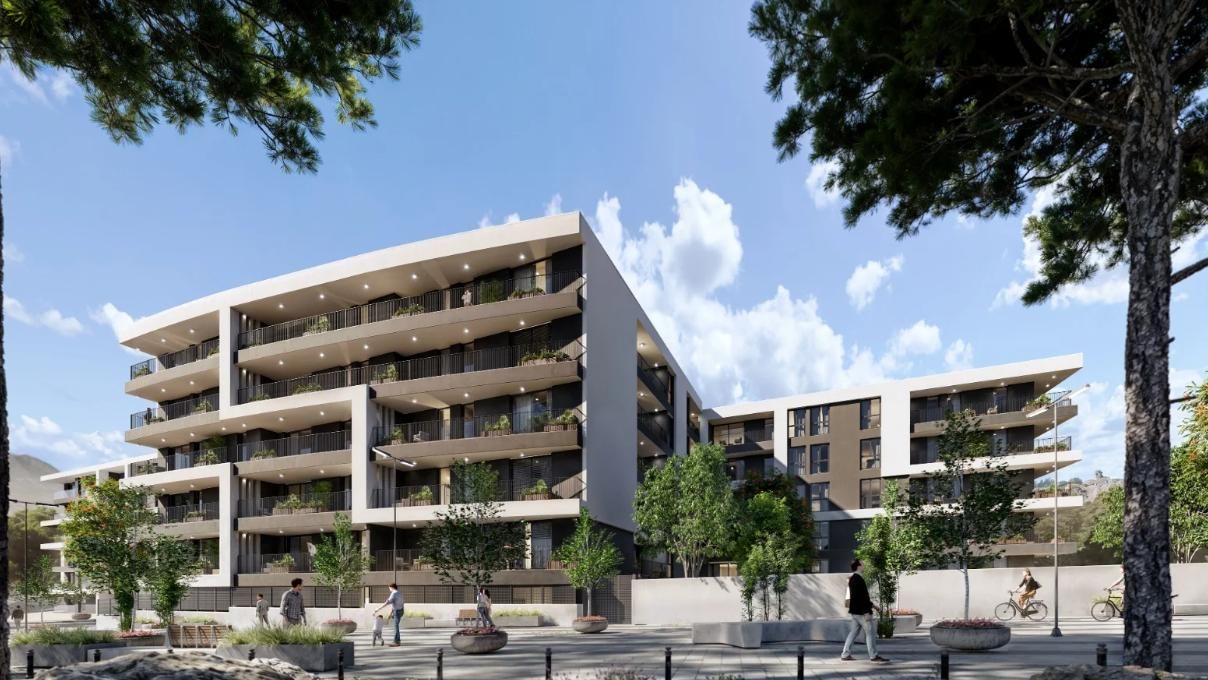
The Instituto Municipal de la Vivienda's equipment-land tender goes further in design. Its homes are small one- and two-bedroom flats, with 15% of usable floor area set aside for shared rooms. At least 60% are reserved for people under 35 on rotating leases of up to 7 years, while tenants over 65 can stay for life. It is the closest the city has come to building shared living into public rental.
Soliva shows the agency using a quieter tool. In February 2026 the property firm InmoCaixa moved to sell 75 rental flats there to an investor. The IMV used a tanteo y retracto (right of first refusal) written into the original 2006 land sale and bought them for €2,980,000. A clause signed two decades earlier kept the flats in public hands.
Galivivienda Distrito Z brings the ownership cooperative into the same logic. On three municipal plots in Sánchez Blanca, the cooperative is promoting 320 protected homes. Of these, 278 will be let for at least 20 years before members can buy. It is a hybrid, and a sign that the city's cooperative tradition is already bending towards long-term rental.
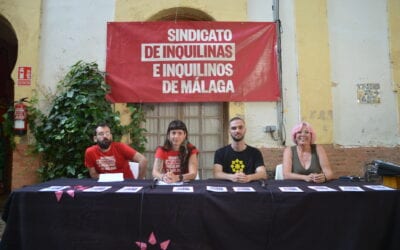
The Sindicato de Inquilinas e Inquilinos de Málaga (the city's tenants' union) and the Málaga para Vivir platform keep pressure on all of these schemes from outside. They have turned rent into a street issue for three summers running. The University of Málaga's I-INGOT research programme supplies the evidence base on tourist flats. Beyond the city, Housing Europe's 2026 review of collaborative housing tracks the same move from pilots to scale, citing the €31 million that Barcelona's Sostre Cívic borrowed from the Council of Europe Development Bank.

References
Statistics11Click on any number to see the source
Housing market
Tenure & affordability
Adaptive reuse & vacancy
Population & migration
From our library20
- Málaga, al borde de la rebelión por la vivienda: el alquiler se come el 75% del salario — Knowledge
- Málaga's housing crunch drives growing number of residents into life in motorhomes — Knowledge
- El turismo expulsa de la ciudad: miles de personas reivindican Málaga para el derecho a la vivienda — Knowledge
- El impacto mínimo de la cruzada contra la vivienda turística en Málaga — Knowledge
- Impactos de la vivienda turística en Málaga (I-INGOT boletín de investigación nº 5) — Knowledge
- ¿Está Málaga en zona tensionada de alquiler? Precios y mapa por distrito en 2026 — Knowledge
- Effects on Social Cohesion of the Grant of Use Cooperative Housing Model in Catalonia — Knowledge
- El cooperativismo de vivienda gana protagonismo en Málaga como respuesta al reto del acceso a un hogar — Knowledge
- Europe under Housing Stress – Housing-stressed Areas in Europe: Comparative Approaches and a Proposal for a European Housing Stress Index — Knowledge
- Plan Municipal de Vivienda y Suelo de Málaga 2023-2027: documento programa de actuación — Knowledge
- Affordable Cooperative Housing: An International Typology, Supportive Institutions and Public Policies — Knowledge
- La vivienda turística se rebela en Málaga: el Ayuntamiento recibe una avalancha de recursos judiciales — Knowledge
- Málaga pisa el freno cuando el boom de los apartamentos y los cambios de locales a vivienda impactan ya en toda la ciudad — Knowledge
- Conversion of offices into affordable housing — Knowledge
- Climate adaptation in public, cooperative, and social housing in Europe — Knowledge
- Alquileres por las nubes, salarios por los suelos: Málaga grita en las calles contra la crisis de vivienda — Knowledge
- Housing as community infrastructure: an analysis of senior cooperative housing using the capability approach — Knowledge
- Avalancha por la vivienda protegida en Málaga: 8.067 aspirantes para solo 377 pisos — Knowledge
- Málaga licita 14 parcelas para construir hasta 1.414 viviendas de alquiler asequible — Knowledge
- From pilots to scale: Collaborative housing and the push for long-term affordability — Knowledge
Further sources14
- Málaga — Wikipedia — Wikipedia
- La vivienda se mantiene como principal problema para el 41,3 % de los españoles — Centro de Investigaciones Sociológicas
- Las dos caras de las cooperativas de vivienda — elDiario.es
- El primer cohousing de España está en Málaga — 65 y más
- Málaga da el primer paso hacia la vivienda cooperativa (Agenda AGEVIAND 2026-2036) — Revista Valle del Guadalhorce
- El Gobierno aprueba el Plan Estatal de Vivienda 2026-2030 — La Moncloa
- What is CASA47? — CASA47
- La Ley de Vivienda de Andalucía entra en vigor — Junta de Andalucía
- Instituto Municipal de la Vivienda — Ayuntamiento de Málaga
- Málaga congela las licencias turísticas durante tres años — Brains RE News
- FAECTA apoya la constitución de Tartessos Málaga — FAECTA
- Málaga inicia los trámites para incorporar al parque de vivienda municipal 75 residencias en Soliva — Málaga Actualidad
- La web del IMV publica la información para formar parte de Galivivienda Distrito Z — Málaga Actualidad
- Sindicato de Inquilinas e Inquilinos de Málaga — Sindicato de Inquilinas e Inquilinos de Málaga
Written · last revised