A city of owners, and of students looking for a room
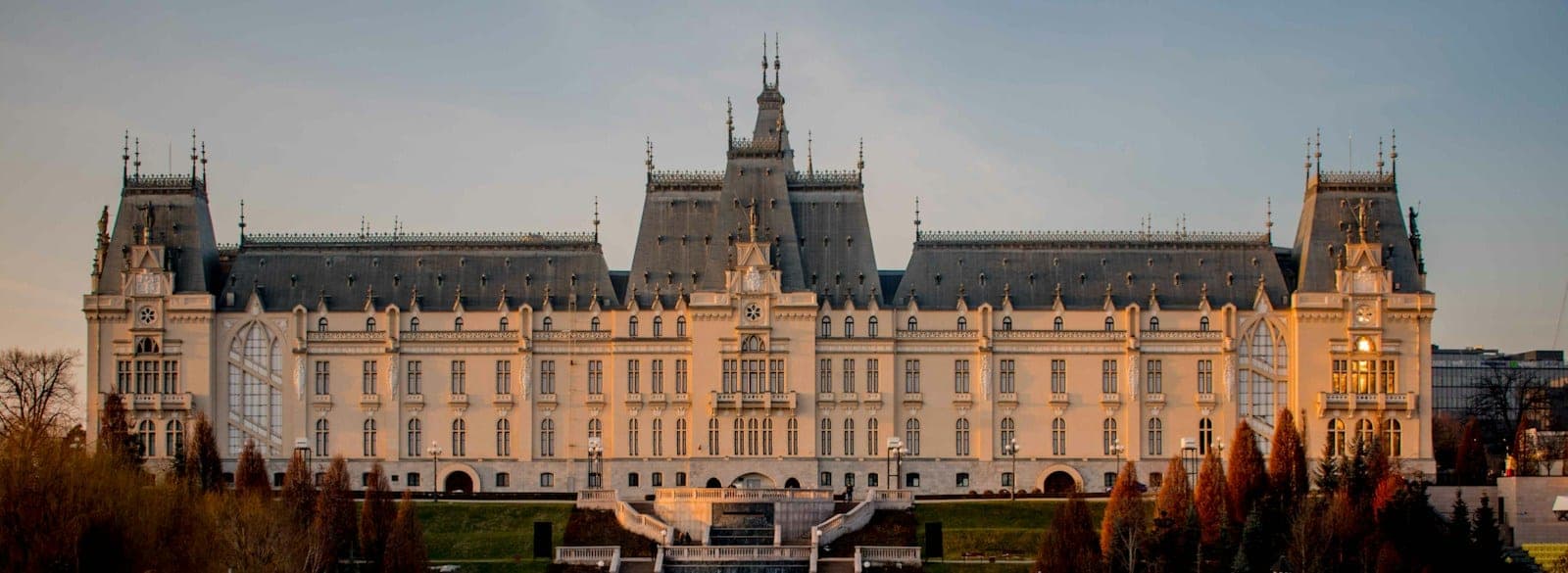
Iași was the capital of Moldavia for almost three centuries and gave Romania its first modern university in 1860. The university town still sets the city's rhythm. Every October tens of thousands of students arrive in a place where almost every flat already has an owner. That is the housing question here: not how many homes exist, but who can get into one.
The ownership is near total. At the 2021 census 95% of households owned their home and only 5% rented. Public housing, meaning flats owned by the municipality or the state, accounts for 1.5% of the stock, or about 2,200 units. Private rental makes up the remaining 3.5%. There is no cooperative tenure to count. Romania has no functioning housing-cooperative sector today, so that slice of the chart is empty. The census figure for renting almost certainly understates reality: many student lets are informal and never appear as a tenancy.
- Owners
- Owner-occupier95.0%
- Renters
- Public & non-profit rental1.5%
- Cooperative0.00%
- Private rental3.5%
Social housing is a narrower thing again. Under Romanian law a locuință socială (social dwelling) is a municipal flat let at a subsidised rent to households that cannot afford the market. It is an allocation rule rather than a separate tenure. In Iași it covers 0.6% of the stock, a subset of the public slice. Demand dwarfs it. The Direcția Fond Locativ (the city hall's housing department) holds 3,974 requests for social housing, while it manages 727 social homes, enough for 18% of the list.
The rent ladder is short at the bottom and steep above it. Municipal and ANL tenants pay around €0.55 per m² a month. The all-stock median is €4.8, and a new contract costs about €7. Furnished and serviced flats, priced with utilities and furniture included, reach €8. The top of the market follows the academic year. A report on the 2025 student season found rents rising by 10–20% as term approached, with Copou, the university quarter, the dearest district.
- Public/municipal housing
- All-stock median
- New contracts
- Furnished / serviced (gross)
Monthly rent per m² by segment. Public and ANL rents are set by the municipality; the furnished tier is gross, with utilities and furniture priced in.
Buying has moved faster still. Market data for spring 2026 put new flats at €2,053/m², up 15% in a year, while listings fell by 30%.
Yet the city is not short of buildings. Of 152,971 dwellings counted in 2021, 53,438 (35%) had no usual resident. The census counts people where they are registered, so a flat let to a student from another county can appear empty. Offices tell a similar story. Iași has around 290,000 m² of modern office space, and 15% of it, some 43,500 m², stood vacant in 2025.
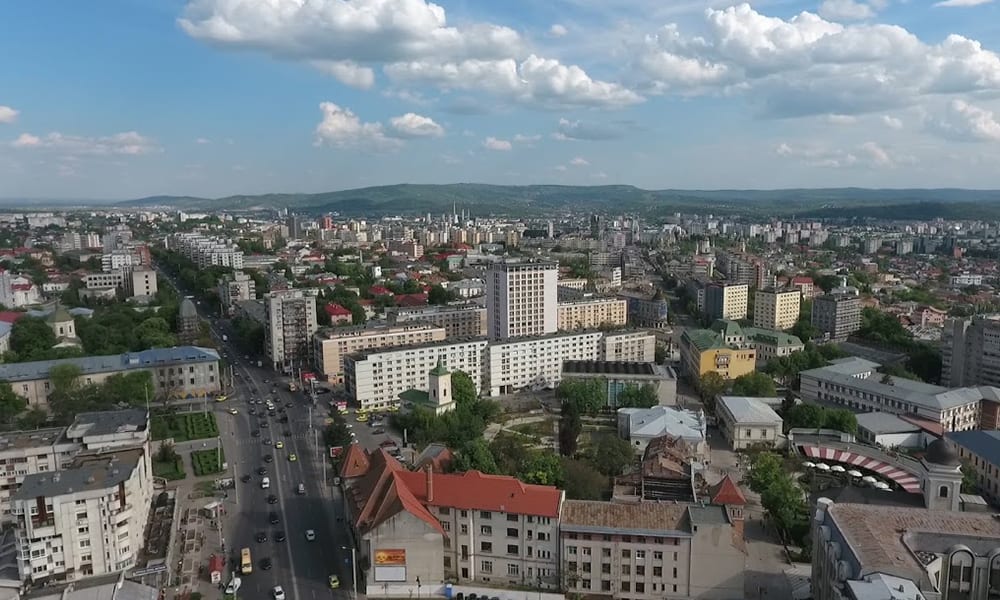
Growth has gone to the edges. The 2021 census found the municipality 18,730 residents smaller than in 2011, while Miroslava on the south-western edge reached 28,534 people and Valea Lupului almost trebled. Roughly 6,500 people move into the city each year, and about 12,000 stay for three to twelve months, mostly students and trainees. Iași county issued just over 2,000 residential permits in 2025. There is no rent cap of any kind.
Rents have gone up, and what pushes them up is not only the crowd of clients at this time of year but also the fact that VAT has risen, and many who wanted to buy now turn to renting.The strain shows less in cost than in space and time. Romania had the EU's highest overcrowding rate in 2024, at 41%, as Euronews' breakdown of who the crisis hits shows. Among 15-to-29-year-olds it reached 58.3%. Poorer households carry the cost burden: 16.9% of people at risk of poverty spend more than 40% of income on housing, against 2.3% of everyone else. The squeeze reaches the middle through delay. Young Romanians leave home at 27.4 on average, and in a 2026 Deloitte survey 85% of Romanian millennials said they could not afford to buy. An analysis of housing across Central and Eastern Europe by three Cluj-based academics links that high-ownership, low-access paradox to the region's cost-of-living politics.
A housing tradition built on individual ownership leaves little room for a collective model. Iași's cooperative share is effectively zero, although the form has existed here before and is still on the statute book.
A cooperative law with no cooperatives
Romanian law still recognises the housing cooperative. The 2005 cooperation law lists societăți cooperative de locuințe (housing cooperative societies) among its forms: associations formed to build, buy, renovate and manage homes for their members. None of any size operates in Iași. What each block does have is an asociație de proprietari (owners' association), the non-profit body that Law 196/2018 requires in every condominium. It manages stairwells and roofs, not affordability or membership.
The cooperative idea arrived in socialist form. A 1973 housing law let citizens form cooperation associations to build flats as personal property, financed through CEC, the state savings bank. After 1990 the state sold its flats to sitting tenants, and Law 85/1992 made the sale routine. Public ownership fell from around 30% to below 2% of the national stock. The blocks of Tătărași, Nicolina and Alexandru cel Bun became thousands of individually owned flats.
Today the cooperative sector is a set of conversations rather than buildings. The strongest signal came from Bucharest in May 2026. The World Bank and the European Commission, with the MDLPA (the ministry of development, public works and administration), held a workshop on housing cooperatives as a tool for social and affordable housing. It looked at international models, legal fit, financing and the role of local government. Civil society works on rights rather than delivery. The Frontul Comun pentru Dreptul la Locuire (Common Front for the Right to Housing) campaigns in Bucharest, and Cluj-Napoca's metropolitan association took part in the NETCO network of cities for collaborative housing. The regional pioneers sit further west. A study of MOBA, the Central and South-Eastern European network of new housing cooperatives, finds members in Budapest, Prague, Belgrade, Zagreb and Ljubljana. None of them is Romanian. Every one of them names finance as the main obstacle, and that would apply equally in Iași.
For now the state positions the non-market tier as public rental, not cooperative ownership. National policy talks of social housing, homes for young people and service flats for doctors and teachers, all built and let by public bodies. Whether a member-owned model can join that list is the open question the May workshop put on the table.
Recovery money, local allocation and an old plan
Romania's current answer to the crisis runs through three national levers. The National Housing Strategy 2022–2050 sets the direction: inclusive housing, affordable homes, a green transition and stronger local administration. The PNRR (Romania's national recovery and resilience plan) paid for the building, with a Fondul Local (local fund) line for near-zero-energy flats for young people and service homes for health and education staff. Its last milestones fell due on 31 August 2026. The third lever is credit. Noua Casă (New Home, formerly First Home) guarantees mortgages for first-time buyers, which keeps the system pointed at ownership.
Fiscal policy has pulled the other way. From 1 August 2025 the reduced VAT rate on new homes was abolished, so buyers pay 21% instead of 9%. Estate agents in Iași link the change directly to the rise in rents.
The municipality holds the delivery levers: land, allocation and its own housing department. Mayor Mihai Chirica, in office since 2016 and re-elected in 2024, has leaned heavily on the recovery plan. Iași drew about €133 million from it across 25 projects. ANL (the Agenția Națională pentru Locuințe, Romania's national housing agency) builds the youth flats, but allocation is entirely a local competence. The council adopts yearly priority lists; the 2026 lists passed unanimously.
Although this investment was marked by some bad luck, since the first contractor went bankrupt and did not meet its obligations to us, what matters is that we are on the home stretch and can allocate the homes to the beneficiaries.No programme yet singles out cooperatives. There is no land set aside for them, no ground-lease model and no dedicated credit line. The legal form exists, and the ministries have now started to discuss it. Any Iași pilot would need the city to offer land. That is a decision the council has never been asked to take.
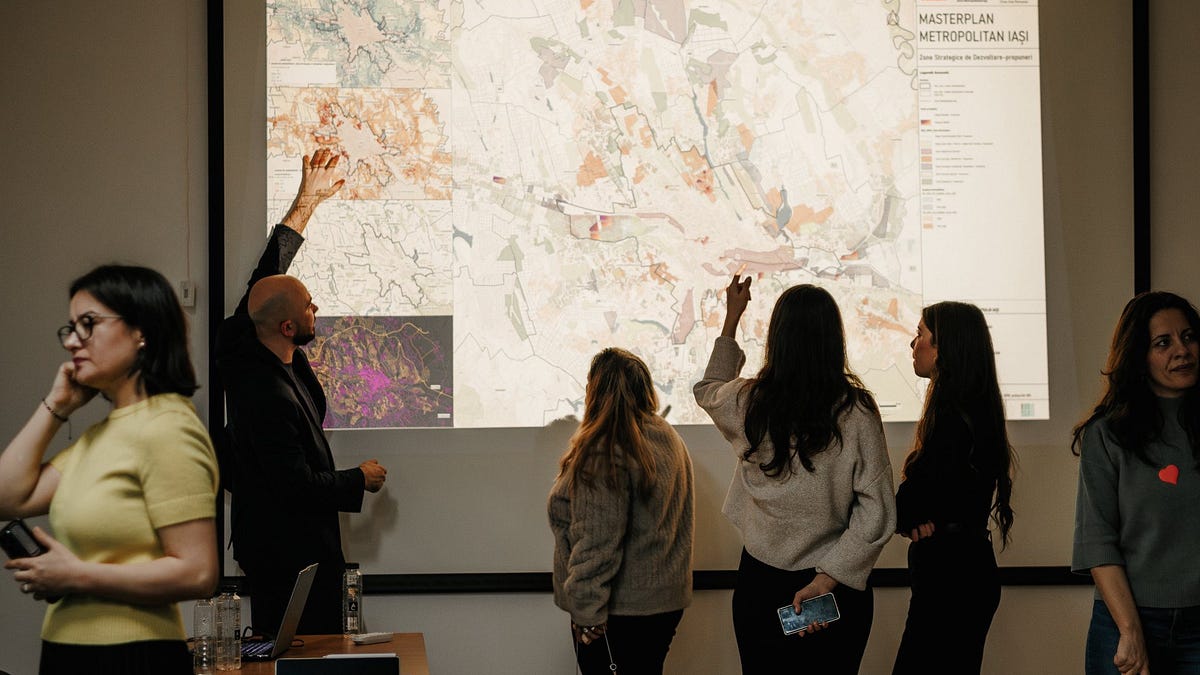
The planning frame is old. Iași still builds under a general urban plan approved in 1999, and a new one was only due to go to tender in August 2026. Meanwhile growth has spread across municipal borders. A consultant on the metropolitan masterplan, the mobility expert Adrian Covăsnianu, calls Iași "an unplanned or unfinished city". The city's reply to empty property is fiscal. Since January 2025 companies owning neglected buildings pay a higher building tax. The rule targets neglected buildings owned by companies, not empty flats. Romania has no national scheme for converting offices to homes.
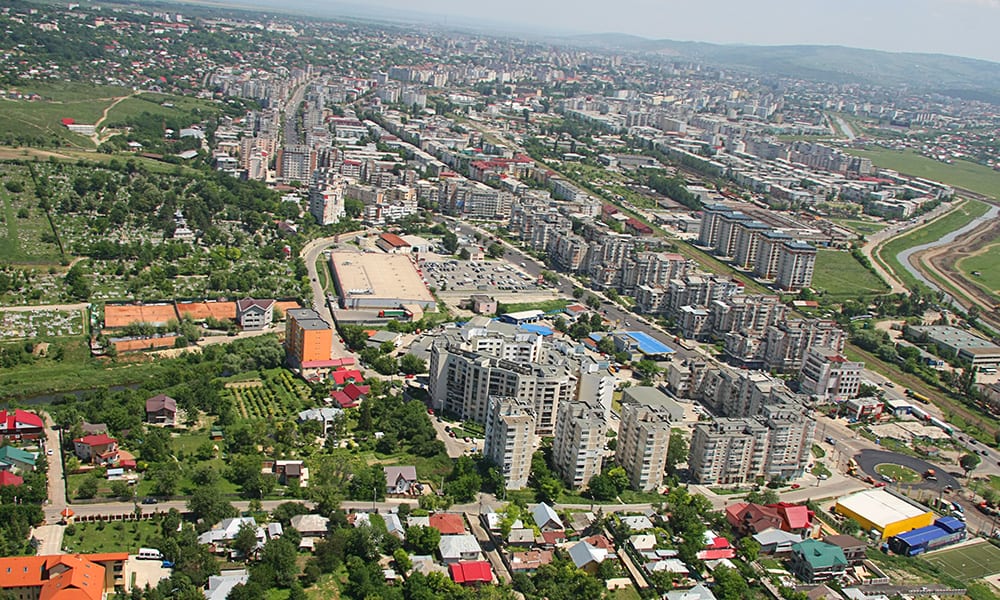
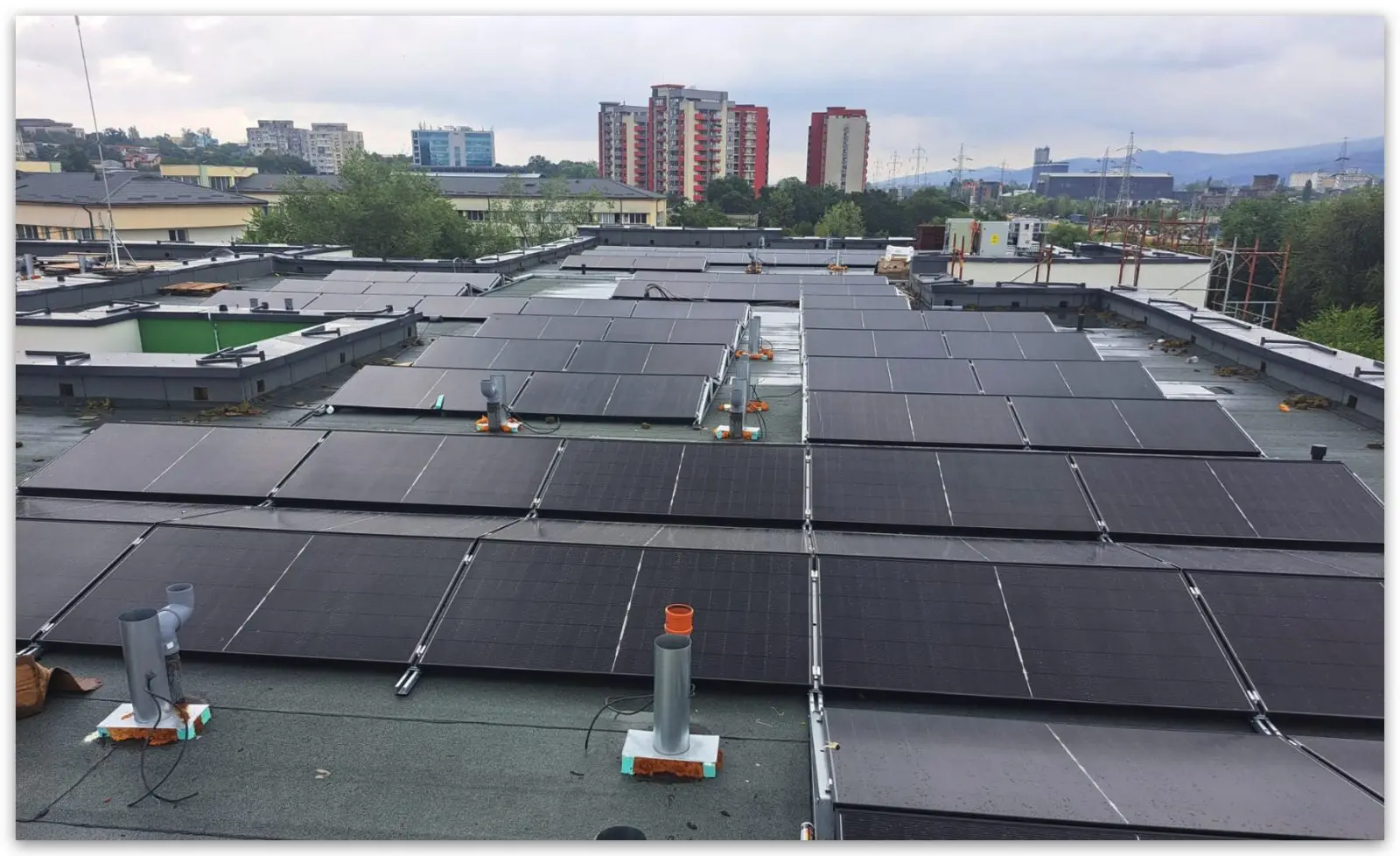
Climate goals arrive through renovation. The recovery plan paid for the thermal renovation of five blocks of flats worth 36.93 million lei, including S4 on Ciurchi Street and B3 on Ștefan cel Mare Boulevard. The EU's revised buildings directive (EPBD) had to be transposed by 29 May 2026. It requires member states to cut the energy used by their housing stock, most of which in Iași is concrete blocks built before 1989. New public flats, such as those in Grădinari, are built to the nZEB (near-zero-energy building) standard, so the public tier is already where the climate target is being met.
Add to this the precarity of the first years of a career (unstable work contracts, starting salaries closer to the minimum wage, internal migration for work), as well as the lack of consistent housing policies for young people.The debate therefore runs between delivery and design. The mayor speaks of blocks finished despite setbacks. The sociologist sees a generation for whom living with parents is an economic safety net. The EU youth housing review adds that Romania's youth-specific measures are rare: plots of land for young people to build on, and support for young people leaving care. The working examples are few, and all of them are in Grădinari and on the campuses.

- 1992[source]
State flats sold to their tenants
Law 85/1992 lets tenants of state-built flats buy them outright or on credit, completing the privatisation begun in 1990.
- 1998[source]
National Housing Agency created
Law 152/1998 sets up ANL, whose rental flats for 18-to-35-year-olds become the main new public rental in Romanian cities.
- 1999[source]
Iași's general urban plan approved
The plan that still governs where the city may build is adopted; later growth spills into neighbouring communes.
- 2019[source]
Grădinari social blocks stall
The first contractor on two municipal social blocks goes bankrupt and the site is abandoned for several years.
- Jun 2022[source]
National Housing Strategy 2022–2050
The government adopts its first housing strategy, built on inclusive housing, affordability, the green transition and administrative capacity.
- Dec 2024[source]
72 Grădinari flats allocated
The city allocates its first new municipal flats in a decade after 7,351 applications, of which 547 met the criteria.
- Aug 2025[source]
Reduced VAT on new homes ends
The 9% VAT rate on new homes is abolished and the standard 21% applies, with transitional cover for advance-payment contracts.
- Sep 2026[source]
188 nZEB plus youth flats completed
The city lists its Recovery-Plan housing complex in Grădinari-Metalurgie as finished; allocation is still to come.
- Dec 2026[source]
Deadline for a new urban plan
The legal extension of pre-2003 general urban plans runs out; the tender for a new Iași plan was scheduled for August 2026.
- 2050[source]
National housing strategy horizon
The end date of the national strategy, which commits Romania to social housing, homes for young people and energy renovation of the pre-1989 stock.
National decisions and their local delivery, with the dated horizons the city is working towards.
Grădinari's blocks and the pieces around them
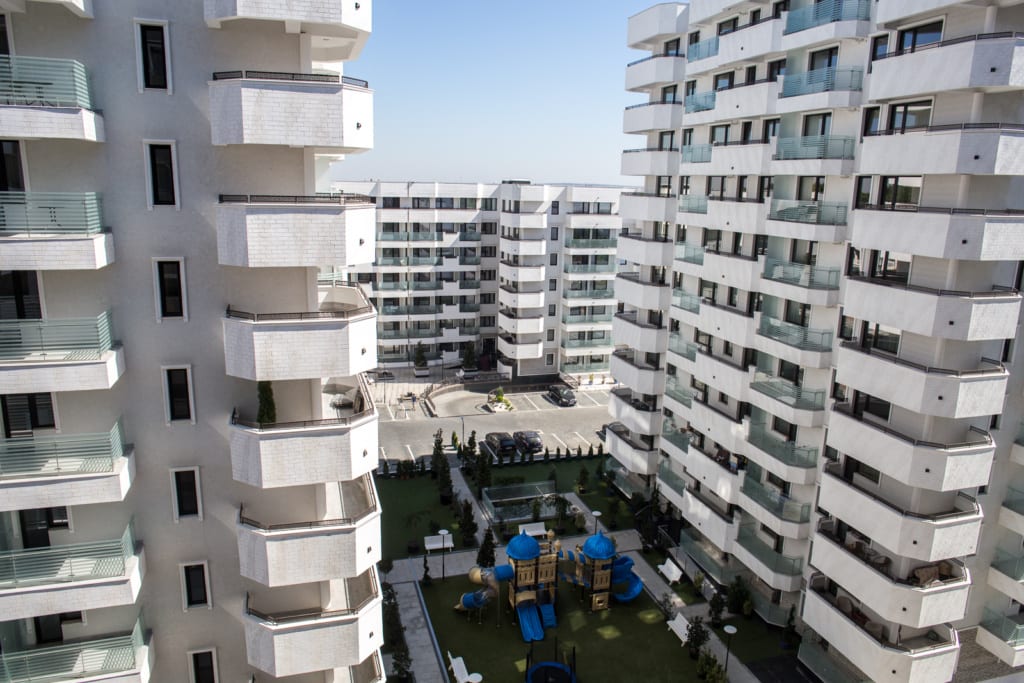
Grădinari's two social blocks, C1 and C2, show how slowly public housing is rebuilt here. The contract was signed in 2017 and the first builder, Elitconstruct, went bankrupt in 2019. The 72 flats were finally finished in November 2024, after a new tender and seven years. The waiting list shows what they were up against. The city received 7,351 applications across its rental schemes and found 547 eligible, so fewer than one eligible applicant in seven could be housed.
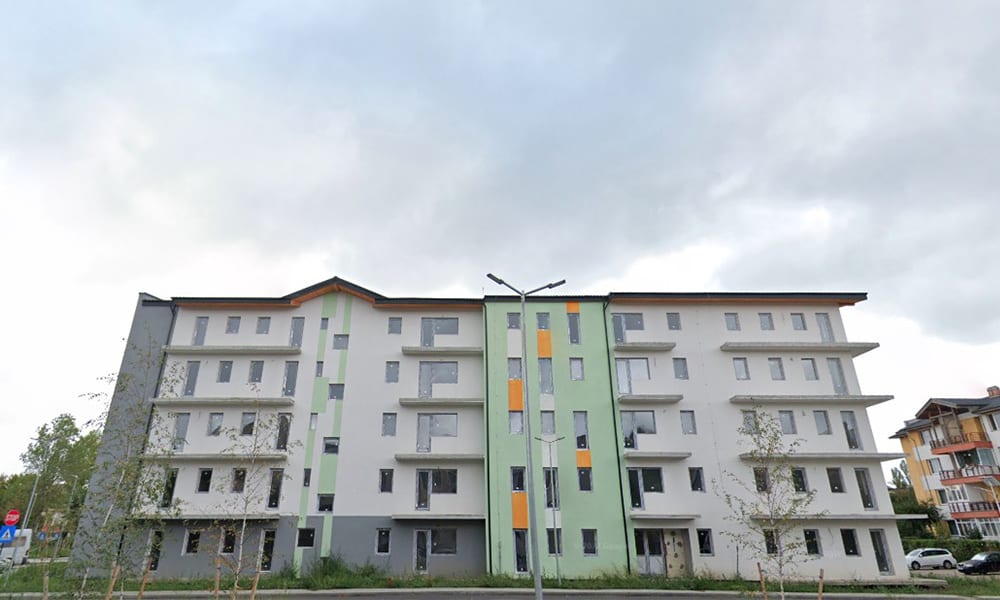
The Grădinari-Metalurgie complex next door is the city's largest public rental build in a generation. It has 188 flats in 10 block sections for young people aged 18 to 35 at social risk, built to the nZEB plus standard with recovery-plan money. The tender drew a single bid, from a consortium led by the local builder Conest. The city put the build cost at about €705/m² of floor area. In September 2026 the city marked it finished, but it has not yet published an allocation date. Thousands of households on the city's lists will be watching.
The Tudor Vladimirescu campus of the Gheorghe Asachi Technical University (TUIASI) tackles the student side. Its recovery-plan renovation modernised three halls with 720 beds, lifting them from energy class C to A. It reserves 40% of places for disadvantaged students. The scale problem remains. A Cushman & Wakefield Echinox study counts about 57,000 students and 16,500 beds in public and private halls. That is the best ratio of Romania's big university cities, and still leaves most students in the private rental market.
The MILI project of DGASPC Iași (the county directorate for social assistance and child protection) shows a different kind of housing. It will house 50 adults with disabilities in small community homes in Târgu Frumos, Bogdănești and Popricani between 2026 and 2028. It sits outside the city and at a small scale. It also moves people out of institutions and into ordinary streets, which Iași's larger programmes do not attempt.
Silk District, one of the estates rising on Iași's former industrial land, is the private market's version of regeneration. Its developer, Prime Kapital, is adding 1,250 flats to the 1,500 already built. The old Țesătura textile mill, the Terom synthetic-fibre plant and the Tudor Vladimirescu brewery have all gone the same way. The factories were demolished rather than converted. Local reporting criticises the new estates as concrete with almost no green space. The land came back into use without the public keeping any share of it.
FONSS, the federation of social-service NGOs, shows how thin emergency provision is. In 2020 it and the Emmaus foundation ran a container shelter for homeless people with medical and social offices for 108 people. The city's affordable housing still comes almost entirely from public blocks, one tender at a time. What Iași does not yet have is a vehicle that lets residents hold and steward housing together, one that would keep the next Grădinari affordable after its first tenants move on.
References
Statistics9Click on any number to see the source
Housing market
Adaptive reuse & vacancy
Population & migration
From our library13
- Chiriile din Iași, mai scumpe cu până la 20% odată cu venirea studenților — Knowledge
- Piața imobiliară din Iași în 2026. Prețuri tot mai mari și cumpărători tot mai prudenți — Knowledge
- Recensământ 2021: principalele informații și concluzii din Iași — Knowledge
- Who's most affected by Europe's housing crisis? — Knowledge
- Housing Crisis Threatens to Fracture Central and Eastern Europe — Knowledge
- Schimb de experiență: Cooperativele de locuințe ca instrument pentru locuințe sociale și accesibile ca preț în România — Knowledge
- NETCO Network of Cities for Collaborative Housing - 2023-2024 Peer Exchanges Policy Recommendations — Knowledge
- Cooperative Housing Pioneers in Central and South- Eastern Europe: Mainstreaming Alternatives through Translocal Networks — Knowledge
- Fără PUG nou în 2026, Iașul riscă un blocaj urbanistic major — Knowledge
- Masterplanul metropolitan — Knowledge
- Youth access to affordable and quality housing: A comparative analysis of national policies — Knowledge
- Primăria finalizează lucrările la două blocuri sociale după 7 ani: vor fi predate 72 de locuințe — Knowledge
- TUIASI finalizează investiția de 58,5 milioane de lei în campusul Tudor Vladimirescu — Knowledge
Further sources36
- its first modern university
- Arena Construct, June 2025 — Arena Construct, June 2025
- Click! / Ziarul de Iași, citing the 2021 census — Click! / Ziarul de Iași, citing the 2021 census
- Apix, February 2026, citing the county statistics office — Apix, February 2026, citing the county statistics office
- Eurostat, Young people – housing conditions — Eurostat, Young people – housing conditions
- Eurostat ilc_lvho07a, 2025 — Eurostat ilc_lvho07a, 2025
- Eurostat yth_demo_030, 2025 — Eurostat yth_demo_030, 2025
- Capital.ro, July 2026, reporting the Deloitte Gen Z and Millennial Survey 2026 — Capital.ro, July 2026, reporting the Deloitte Gen Z and Millennial Survey 2026
- societăți cooperative de locuințe
- Legea nr. 196/2018 privind înfiinţarea, organizarea şi funcţionarea asociaţiilor de proprietari
- 1973 housing law
- Law 85/1992
- Housing Rights Watch, citing Vincze & Florea (2020) — Housing Rights Watch, citing Vincze & Florea (2020)
- Frontul Comun pentru Dreptul la Locuire
- National Housing Strategy 2022–2050
- 31 August 2026
- Noua Casă
- Avocatnet, July 2025 — Avocatnet, July 2025
- TeleM, August 2026 — TeleM, August 2026
- allocation is entirely a local competence
- unanimously
- neglected buildings pay a higher building tax
- transposed by 29 May 2026
- Quote: Romeo Asiminei, sociologist and Dean of the Faculty of Philosophy and Social-Political Sciences, Alexandru Ioan Cuza University of Iași
- National Housing Agency created — ANL
- 72 Grădinari flats allocated — BZI
- 188 nZEB plus youth flats completed — Primăria Iași newsletter
- Deadline for a new urban plan — Apix
- National housing strategy horizon — UDMR
- 188 flats in 10 block sections
- a single bid
- Apix, November 2023 — Apix, November 2023
- Curierul Național, September 2026, citing Cushman & Wakefield Echinox — Curierul Național, September 2026, citing Cushman & Wakefield Echinox
- It will house 50 adults with disabilities
- Ziarul de Interes, September 2025 — Ziarul de Interes, September 2025
- ran a container shelter for homeless people