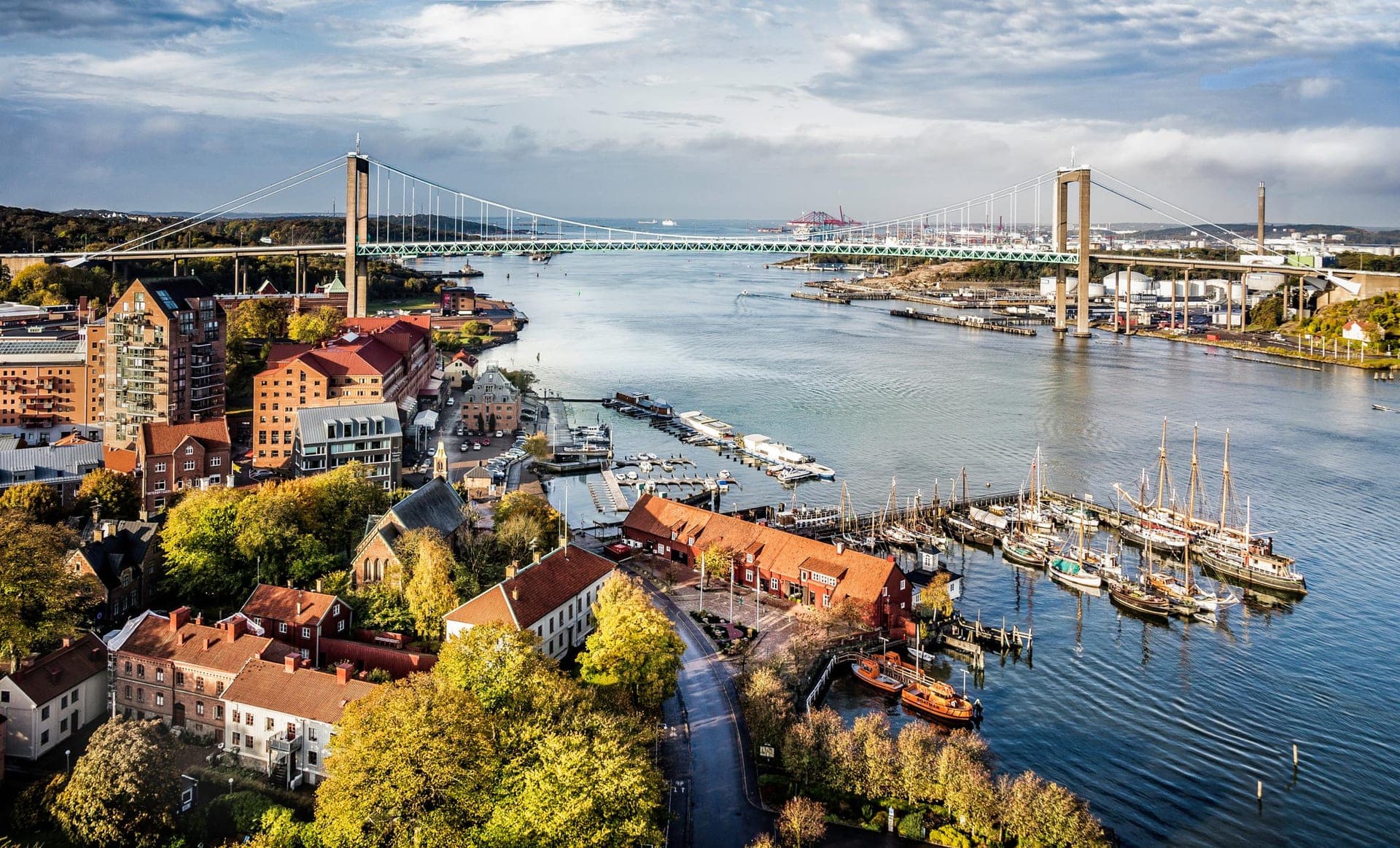
Stone below, wood above: a city that queues for its homes
Gothenburg was chartered in 1621 and laid out by Dutch engineers around a web of canals. Its housing signature came later, and it came from a loophole. A building rule banned wooden houses above 2 storeys outside the old moat, because of the fire risk. From 1875 builders answered with the landshövdingehus (the "governor's house"): a stone ground floor with 2 wooden floors on top. By the 1940s about half the city lived in one, and around 1,300 still stand. That habit of housing a port and factory workforce at scale, by whatever legal means worked, still shapes how the city is owned.
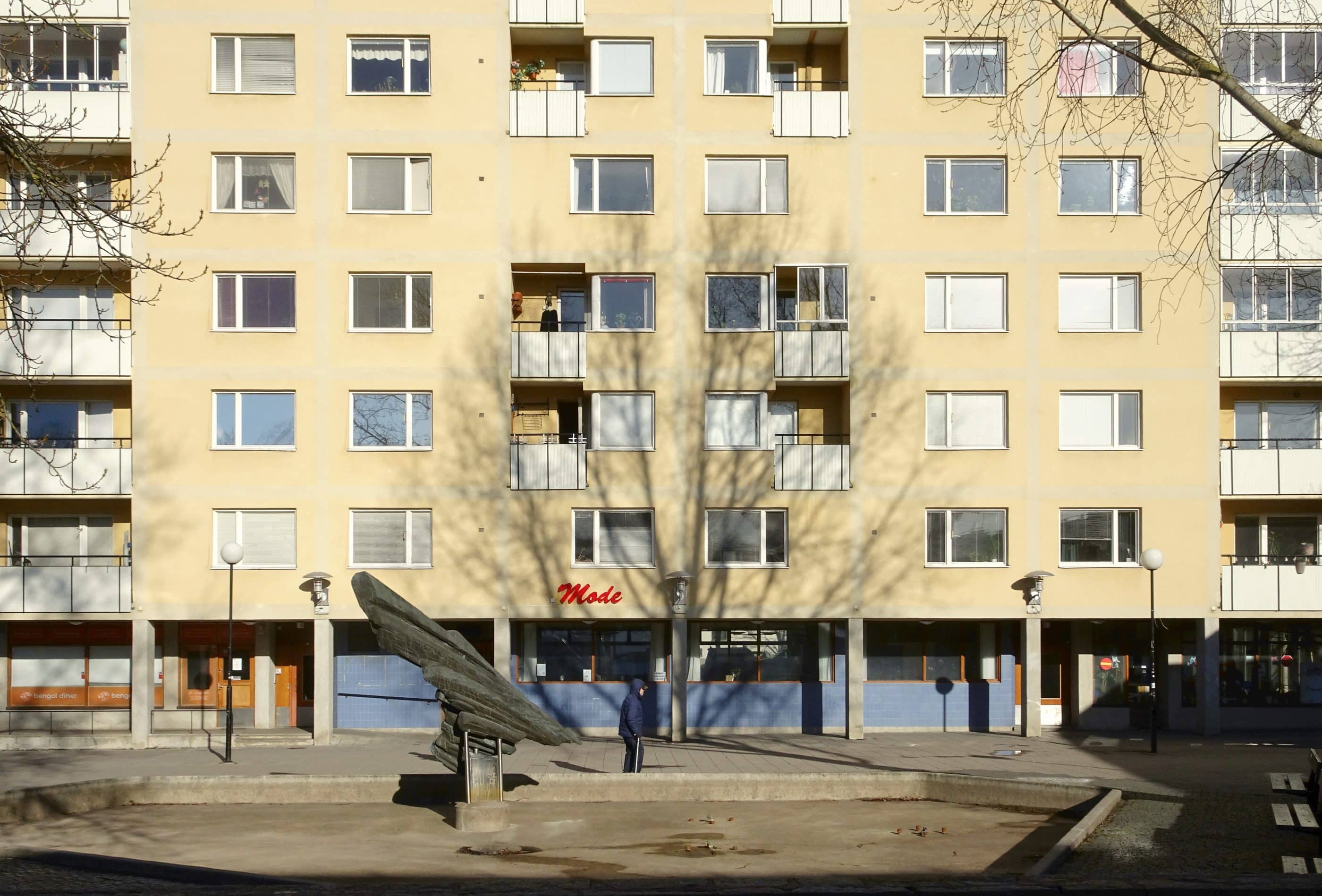
Statistics Sweden counts 312,429 homes in the municipality. Of these, 51% are rented and 30.4% are bostadsrätt (tenant-ownership: members buy a share in an association that entitles them to one flat). The remaining 18.6% are owned outright, mostly as houses. Almost half of the rented stock is public. Förvaltnings AB Framtiden, the city-owned housing group, holds over 76,000 flats, about 24% of all homes, and says one in four Gothenburgers lives with it. Private landlords own the rest of the rental half, roughly a quarter of the stock. The tenant-owned homes are spread across 1,832 associations (bostadsrättsföreningar).
- Owners
- Owner-occupier15.0%
- Cooperative23.0%
- Renters
- Public & non-profit rental24.0%
- Private rental38.0%
Share of dwellings by tenure, resolved live from the geographic catalogue.
That is why this profile shows no social-housing share. Allmännyttan (the municipal housing companies) is universal by design: anyone may queue and no income ceiling applies. Rents across regulated stock follow the bruksvärdessystem (use-value system), which ties a flat's rent to comparable flats rather than to what the market would bear. Hyresgästföreningen (the national tenants' union) negotiates those rents with landlords every year. Households who cannot pass a landlord's income test get help through municipal social contracts and the national housing allowance, not through a separate stock.
The rent ladder is short, because negotiation compresses it. Swedish rents are quoted warm, with heating included. A cooperative rental such as Riksbyggen's Futura costs around €11 per m² a month. Municipal flats and the whole rented stock both average about €11.6. A new lease in Greater Gothenburg costs €12.4. The real premium sits outside the queue: a furnished second-hand flat runs to about €17.5 per m². In Gothenburg money buys less than time does.
- Cooperative rental (kooperativ hyresrätt)
- Public housing (Framtiden)
- All-stock median
- New contracts
- Furnished (gross)
Monthly rent per m², warm (heating and water included, as Swedish rents are quoted). The regulated tiers sit within about €1.5 of each other; the jump comes on the furnished second-hand market.
Almost nothing stands empty. Only 0.1% of rental flats in the region were free to let in September 2024. Statistics Sweden counts about 5,600 uninhabited dwellings, or 1.8% of the stock, most of them between tenants or under renovation. Offices tell a different story. Office vacancy reached 13.2% at the end of 2024, leaving roughly 315,000 m² of empty floor space. Short-term letting adds some pressure at the edges: a one-bedroom Airbnb costs a median €105 a night.
People keep arriving. About 18,500 move into the city each year, and around 48,000 students, researchers and contract engineers stay for 3 to 12 months. Building has slowed as interest rates rose. The city completed only about 2,000 homes in 2025, against an estimated need of 4,000–5,000 a year until 2030. A new block costs about €2,850 per m² to build, which regulated rents repay only slowly.
The queue is where the shortage becomes visible. Boplats Väst, the regional lettings service, had 307,593 registered searchers at the end of 2025. It let 6,853 flats that year, 89% of them public, and the average successful applicant had queued for 2,493 days, close to 7 years. Young adults feel it first. The tenants' union branch Hyresgästföreningen Region Västra Sverige found in 2025 that 25% of Greater Gothenburg's 20–27-year-olds still live with their parents, and that 90% of them would rather move out. A third say housing makes them hesitate to start a family. Emma Johansson, an analyst at the union's western region, put it plainly: "We have seen it for a long time, that young people are forced to put their lives on pause because of the housing shortage."
The squeeze reaches well into the middle class. Without years of queue time, a newcomer on a good salary chooses between buying a bostadsrätt at market price and paying the furnished premium. Employers now make the point in public: the property owners' federation argues that people in the region turn down jobs because they cannot find a home. Nearly a third of the city's homes are tenant-owned, and that sector is where the cooperative story begins.
From HSB's savings society to the self-built block
Cooperative housing in Gothenburg comes in three legal forms. The dominant one is the bostadsrätt. A member pays an insats (a one-off purchase of the association share) and then a monthly fee that covers running costs and the association's debt. The right to the flat can be sold at market price, so the form behaves much like ownership. The building, though, stays collectively governed by an elected board. The second form is the kooperativ hyresrätt (cooperative rental). Members pay a smaller deposit, cannot sell, and get the deposit back when they leave. Riksbyggen's Futura Clara at Lindholmshamnen uses it for 40 flats reserved for 18–35-year-olds. The third form, the kollektivhus (collective house), layers shared kitchens and duties on top of either tenure.
The tradition grew out of the labour movement. HSB Göteborg (the tenants' savings and building society) was founded in 1925 by tenants who saved together in order to build. Riksbyggen, set up by the building-trade unions, followed in 1940. Both built at scale through the postwar decades, including the city's share of the Million Programme (Sweden's 1965–1974 drive to build a million homes). Over the same years the form drifted from movement to market. Bo Bengtsson's study The changing role of cooperatives in the Swedish housing regime shows how the deregulation of 1968–1969 let shares trade freely. A social tenure became a marketised one, and that shift has proved hard to reverse.
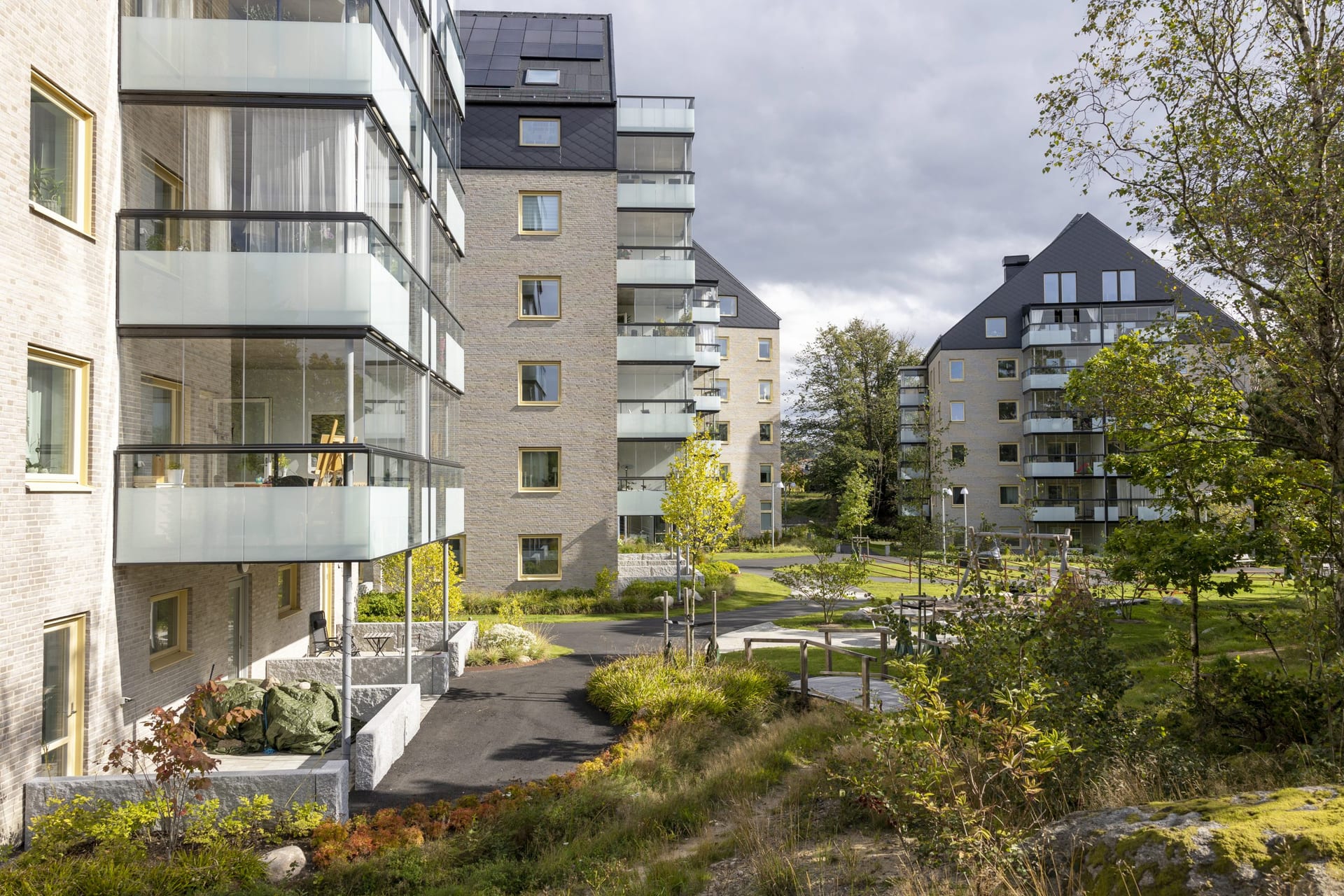
Today's sector falls into three clusters, and they face different problems. The federations are the largest. HSB Göteborg alone has 75,000 members and manages about 38,000 tenant-owned flats in nearly 400 associations. Their pressure points are ageing 1960s and 1970s buildings, costly energy retrofits and association debt that became expensive when interest rates rose. A 2024 Shelterforce essay, Sweden's Housing Co-ops Offer a Model for Moderate-Income Housing, notes that member savings schemes still help fund new building. The second cluster is the independent associations, many of them former rental blocks. The third is small and self-organised: cooperative rentals, collective houses and byggemenskaper (self-build groups that act as their own developer). They do not need retrofit capital first. They need land and patient finance.
The city uses these forms on purpose. Its own developer, Egnahemsbolaget, builds tenant-owned flats and small houses in districts where renting is almost the only option, so residents can change tenure without changing neighbourhood. In 2015 the property office opened targeted land allocations (markanvisningar, grants of building rights on city land) for byggemenskaper. The first larger group, Byggemenskapen Ärlan in Majorna, received its site in 2013 and moved in only in September 2022. The gap between those dates shows how long the self-organised route still takes.
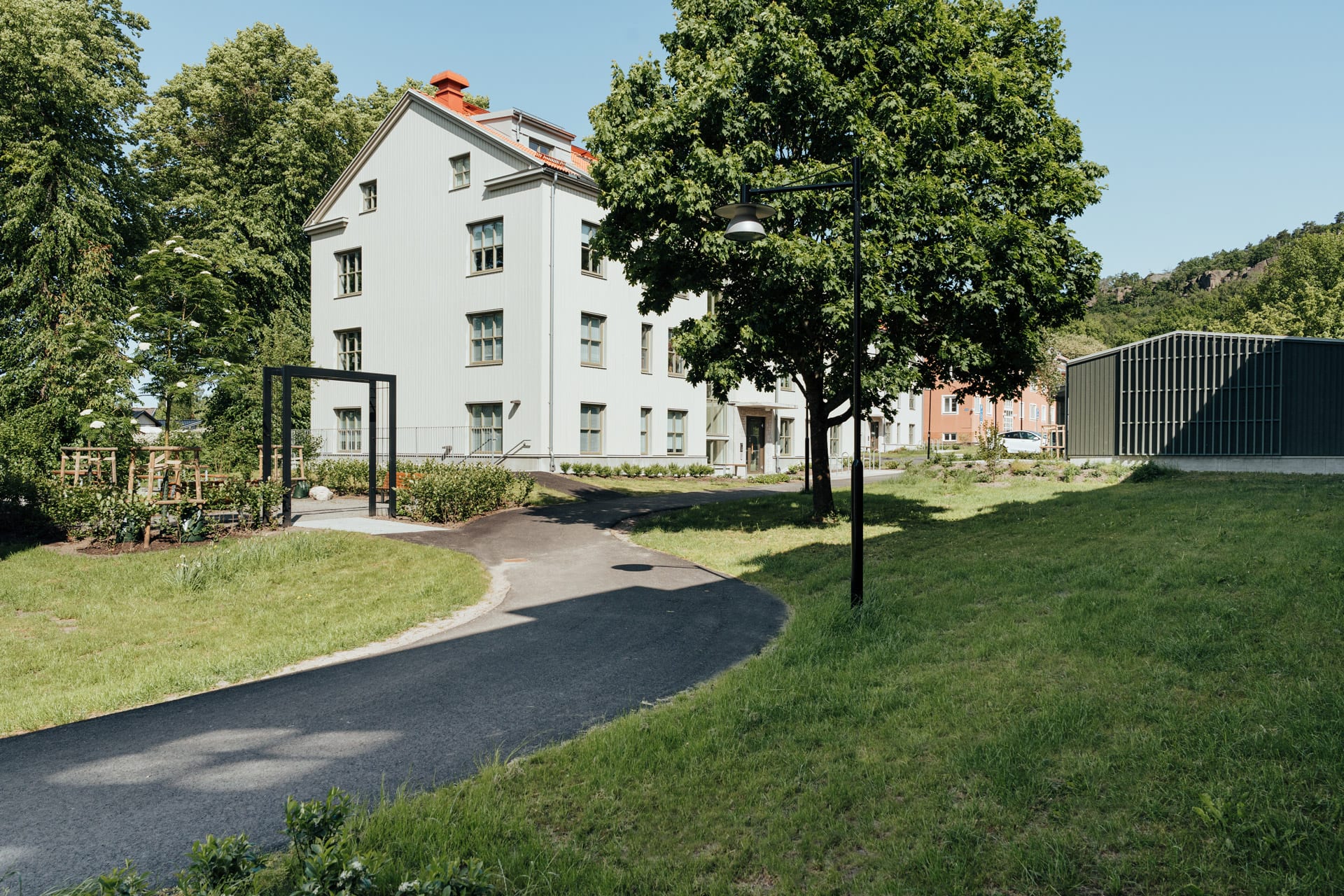
Sell, keep or build: the politics of who owns the flat
Tenure is the city's political fault line. In October 2021 the centre-right majority of the day voted 38 to 36 to push the conversion of municipal rentals into tenant-owned associations. "We cannot have areas with only rental flats," argued Axel Josefson, then chair of the city executive board, for the Moderates. The red-green coalition that took over in November 2022 set out to stop every conversion it could. By then 31 requests covering about 1,700 flats had been lodged, and a single sale of 58 flats in Tynnered had gone through. The coalition also gave Framtiden a delivery target: 2,300 completed homes a year from 2025, including 1,700 rentals.
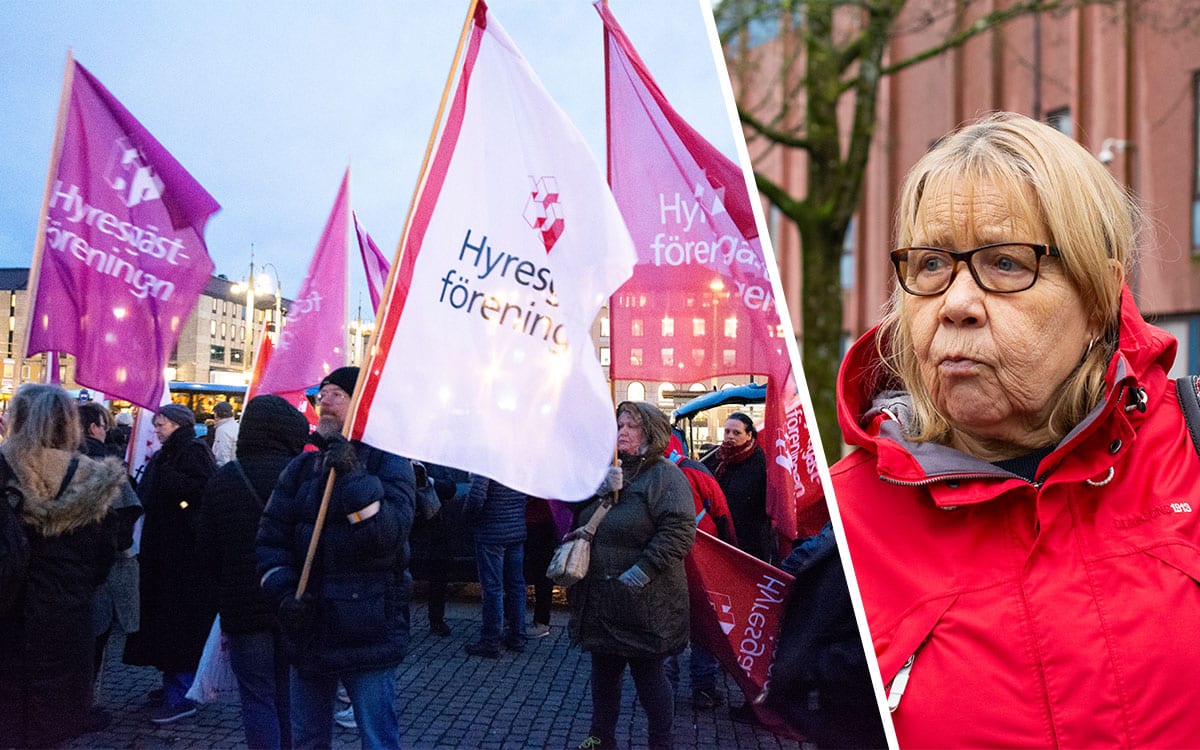
Wherever it is at all possible for us to stop a process, we will do so, however far along it is.The September 2026 election widened that mandate. The Social Democrats, the Left Party and the Greens won 43 of the council's 81 seats, a majority of their own. Nationally, the four opposition parties won 176 of 349 seats in the Riksdag (the Swedish parliament). Prime Minister Ulf Kristersson resigned, and Magdalena Andersson is negotiating a new government.
Each tier of government holds a different tool. Parliament writes tenancy law. The outgoing Tidö government is the centre-right coalition built on the 2022 Tidö agreement. It ended state investment support for new rental housing from 1 January 2023, arguing that costly subsidies could not solve the shortage. From 1 January 2026 it also made presumtionshyra more flexible. That is the negotiated first-let rent on a new building, which now rises with general rent settlements during its 15-year term. The city holds the land, the planning monopoly and Framtiden. Its rent talks set the pace: Framtiden's two largest companies agreed a 2.9% rise for 2026. Private landlords, organised in Fastighetsägarna GFR (the Gothenburg property owners' federation), left local talks for the third year running and sent 26,500 flats to an arbitrator.
More predictable conditions and a reformed model for rent setting are needed, especially in new construction.The new majority's first test is the rent itself. In June 2026 the Left Party and Demokraterna (a local protest party founded in Gothenburg) proposed freezing municipal rents for 2027. Marie Brynolfsson, the Left Party's group leader, called the freeze "a breathing space" for tenants. Framtiden's chief executive, Terje Johansson, warned that it could "provoke the system", because the companies must be run on business-like terms. The tenants' union objected as well. Ronny Bengtsson, chair of Hyresgästföreningen Region Västra Sverige, said: "Rents must not become a pawn in a political game where the levels change sharply from year to year." Private landlords pull the other way. GFR asked for a 4.90% rise from January 2027, and in July it asked the rent tribunal to appoint an arbitrator for the fourth year running.
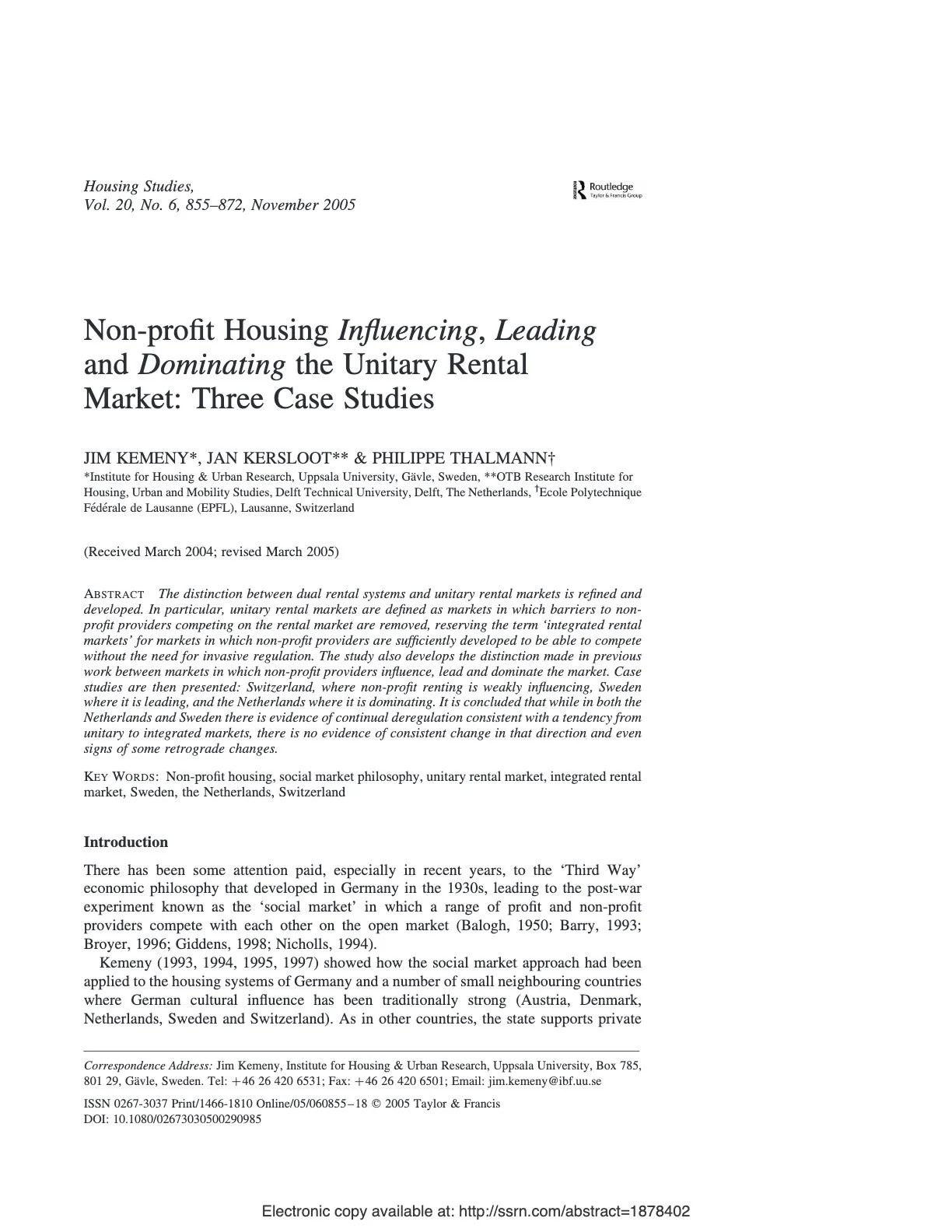
Swedish rent-setting has a long academic defence. Jim Kemeny, Jan Kersloot and Philippe Thalmann compared unitary rental markets in 2005, in Non-profit Housing Influencing, Leading and Dominating the Unitary Rental Market. They found Sweden's non-profit sector the strongest price-setter of the three countries studied, because municipal companies lead the whole market. Gothenburg's annual talks still work that way. Cooperative-specific tools are thinner. The city can earmark land for byggemenskaper and use Egnahemsbolaget to mix tenures. It has no dedicated funding line or ground-lease pact for cooperatives of the kind Zurich and Munich use.
Conversion is the obvious answer to empty offices, and it has been slow. Wallenstam turned more than 8,000 m² of central commercial space into 85 flats as early as 2013. Nationally, Boverket (the national board of housing, building and planning) had 77 million kronor in 2024 to help municipalities convert premises into homes. Only 1.5 million kronor was used.
Climate targets run through the same companies. Gothenburg is one of the cities in the EU mission for climate-neutral and smart cities, and received its Mission Label on 22 October 2024, with neutrality targeted for 2030. Climate-neutral construction is one of its priorities, and public building projects are meant to lead it. In practice the burden falls on Framtiden's retrofits of Million Programme estates and on the energy experiments of the cooperative federations.
- 1925[source]
HSB Göteborg founded
Tenants form a savings and building society to build their own homes, the start of the city's tenant-owner cooperative tradition.
- 1997[source]
Gårdstensbostäder created
The city sets up a company to renew the Million Programme estate of Gårdsten with its residents, taking over 2,252 flats.
- 2015[source]
Land for self-build groups
The property office opens targeted land allocations for byggemenskaper, groups that develop their own buildings.
- Oct 2021[source]
Council votes to push conversions
A 38–36 vote directs municipal companies to offer tenants the chance to convert their blocks to tenant ownership.
- Nov 2022[source]
Red-green majority stops conversions
The new coalition halts conversions and sets Framtiden a target of 2,300 completions a year from 2025.
- Jan 2023[source]
State investment support ends
The national government phases out investment support for new rental and student housing.
- Oct 2024[source]
EU Mission Label
Gothenburg's climate-neutrality plan is recognised by the EU cities mission.
- Jan 2026[source]
Presumption-rent reform in force
First-let rents on new buildings may rise with general rent settlements during their 15-year term.
- Jul 2026[source]
2027 rent talks stall
Private landlords ask for a 4.90% rise and seek an arbitrator for the fourth year running, while the Left Party proposes a municipal rent freeze.
- Sep 2026[source]
Red-green majority returned
S, V and MP win 43 of 81 council seats; nationally the opposition wins 176 of 349 Riksdag seats.
- 2030–2035[source]
Climate neutrality and the river city
Climate-neutrality target year for the city (2030); Älvstaden's 25,000 homes are planned by 2035.
From a tenants' savings society to the riverside build-out, with the conversion fight in between.
Sun houses, collective kitchens and bus batteries
Gårdstensbostäder is the city's proof that a stigmatised estate can be renewed with its tenants rather than around them. The municipal company was founded in 1997 to take over 2,252 flats in Gårdsten, then one of Sweden's most troubled Million Programme areas. It cut average rents by 5.8% in 1999 and wrapped blocks in its Solhus (sun house) retrofits. Those won the World Habitat Award in 2005. In 2019 the police took Gårdsten off their list of particularly vulnerable areas.
Kollektivhuset Stacken in Bergsjön began as an experiment in a half-empty 1969 tower. In 1980, led by architect Siv Carlsson, residents turned it into Sweden's first cooperative rental building, with a shared kitchen, workshop and play space. The 35-flat community bought the building in 2002. A 2015 renovation took it towards passive-house standard behind a solar facade.
Brf Viva, Riksbyggen's 132-flat association in Guldheden, is the federations' sustainability showcase. Completed in 2019, it stores rooftop solar power in retired electric-bus batteries and swaps parking spaces for shared electric cars. Its concrete was chosen for a lower climate impact, and the scheme earned a gold rating under Sweden's Miljöbyggnad (green building) standard. Studios for young residents sold for 95,000 kronor, a rare low-cost entry into tenant ownership.
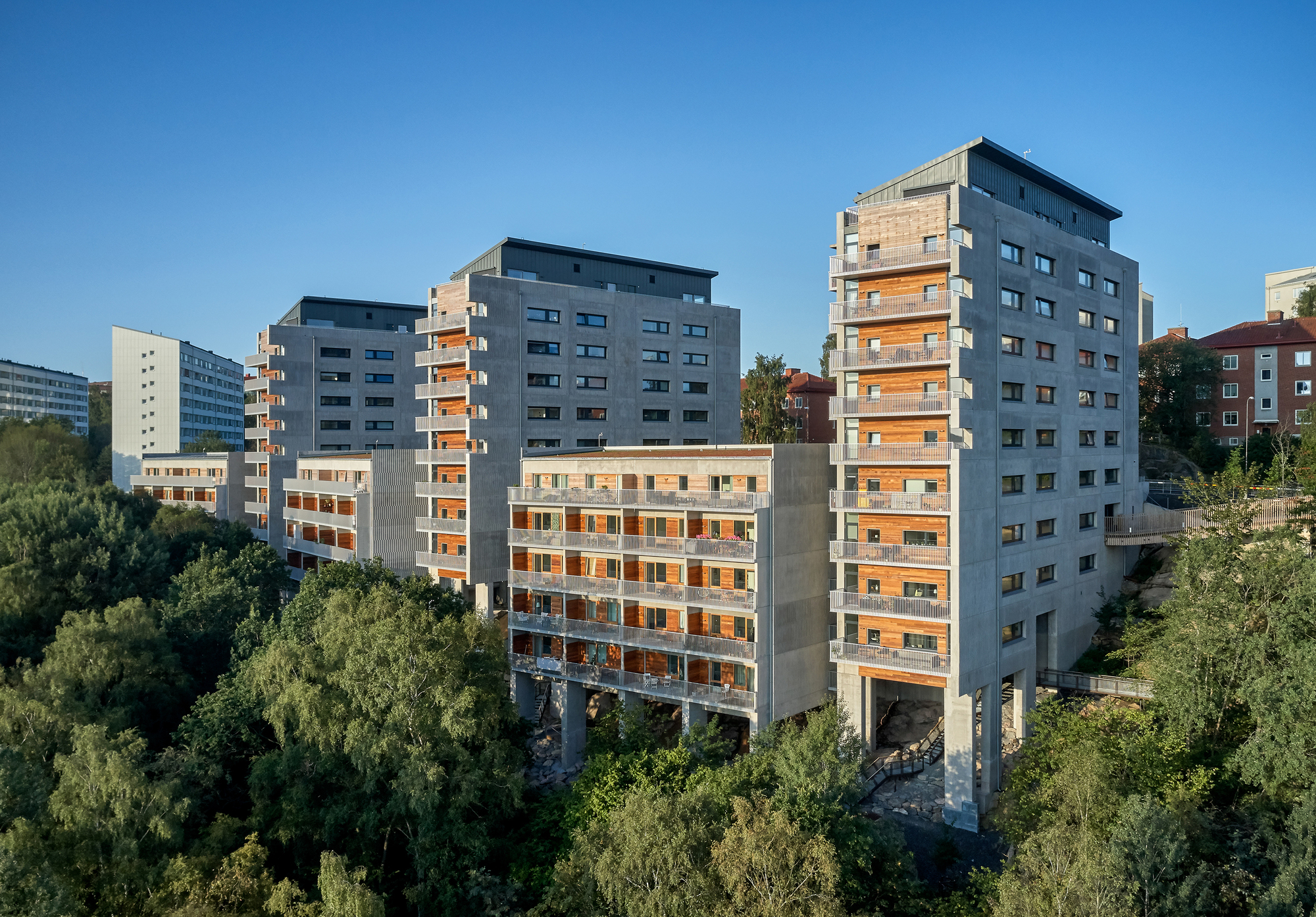
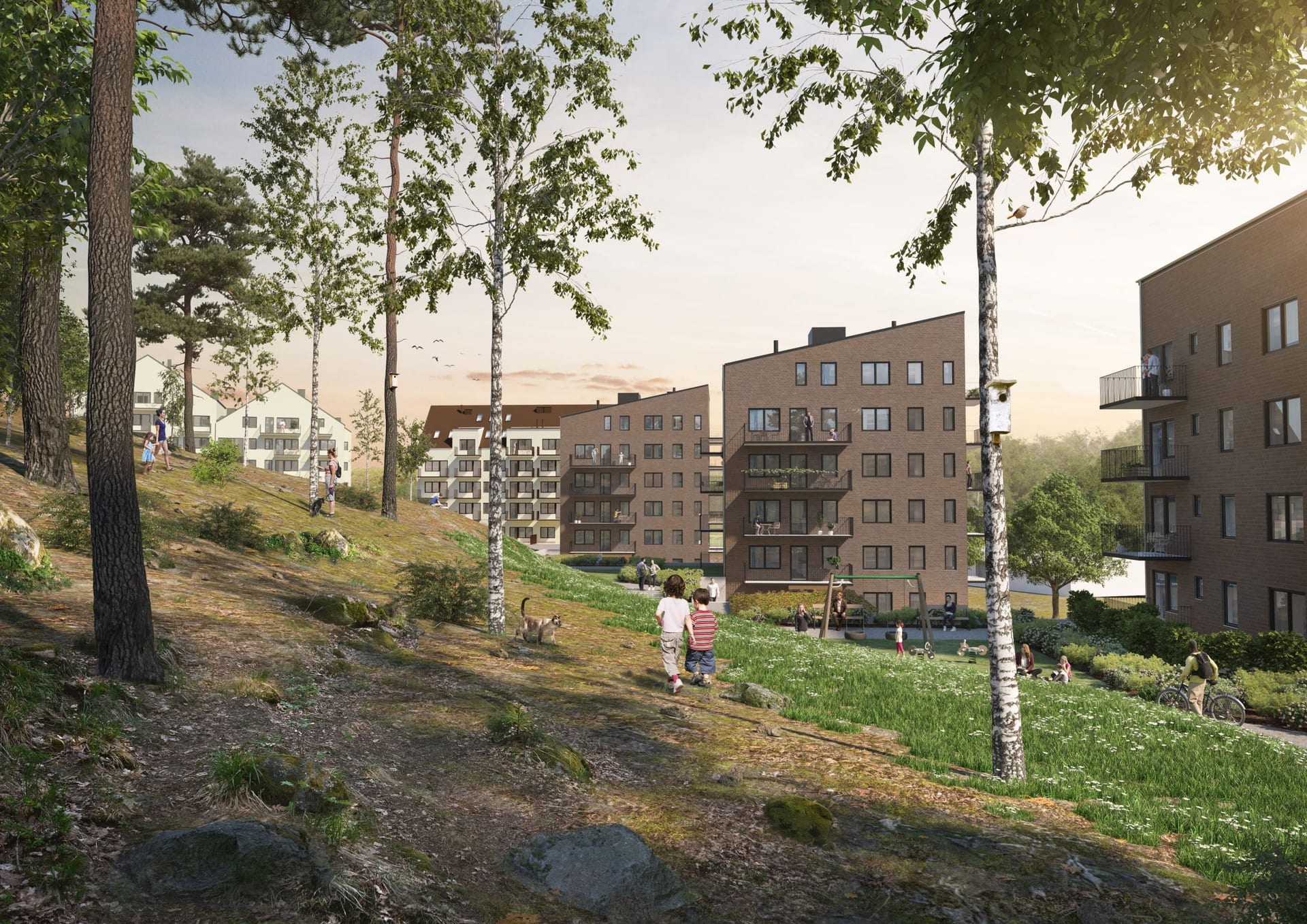
HSB Living Lab, on Chalmers University of Technology's Johanneberg campus, turns a cooperative federation into a research partner. Students and visiting researchers live in its modular flats while sensors record energy, water and daily habits, in a decade-long programme with industry partners. Kanozi Arkitekter, a Gothenburg practice with a long list of residential commissions, shows the mainstream side of the same market: the everyday association blocks where most new members will actually live.
Frihamnen, the old free port across the river, is the next test. It is planned for 9,000 homes as part of the Älvstaden programme, which aims for 25,000 homes by 2035. Whether its tenure mix leaves room for cooperative rentals and self-build groups, alongside tenant-owned and municipal flats, will show which of the city's traditions shapes the next district.
References
Statistics15Click on any number to see the source
Housing market
Cooperative, social & public
Adaptive reuse & vacancy
Population & migration
From our library14
- Förvaltnings AB Framtiden — Organisation
- Hyresgästföreningen Region Västra Sverige — Organisation
- Futura Clara — Project
- HSB Göteborg — Organisation
- The changing role of cooperatives in the Swedish housing regime — Knowledge
- Sweden's Housing Co-ops Offer a Model for Moderate-Income Housing — Knowledge
- Egnahemsbolaget — Organisation
- Byggemenskapen Ärlan — Project
- Maktskifte stoppar ombildningar i Göteborg — Knowledge
- Non-profit Housing Influencing, Leading and Dominating the Unitary Rental — Knowledge
- Gårdstensbostäder — Organisation
- Brf Viva — Project
- HSB Living Lab — Project
- Kanozi Arkitekter — Organisation
Further sources27
- Hela Hisingen: Landshövdingehusen firar 150 år
- SCB BO0104T03 via Kommunio, Göteborg housing stock 2025
- Framtidenkoncernen: Om oss
- Altinget, Anders G Johansson (Fastighetsägarna GFR), March 2026
- Boplats Väst: Boplats i siffror
- Hyresgästföreningen Region Västra Sverige, Unga vuxnas boende 2025
- Riksbyggen: Futura Clara, Lindholmshamnen
- HSB Göteborg: Om HSB Göteborg
- https://vartgoteborg.se/p/fler-mojligheter-for-goteborgare-som-vill-bo-tillsammans/
- https://inobi.se/projekt/byggemenskap-arlan/
- Hem & Hyra, 29 October 2021
- Hem & Hyra, 25 November 2022
- SVT Valresultat 2026, Göteborg
- 2026 Swedish general election
- https://www.regeringen.se/pressmeddelanden/2022/11/bostadspolitiken-laggs-om/
- https://www.riksdagen.se/sv/dokument-och-lagar/dokument/betankande/en-forbattrad-modell-for-presumtionshyra_hd01cu5/
- Framtidenkoncernen, 1 October 2025
- Hyresgästföreningen Region Västra Sverige, 3 October 2025
- Fastighetstidningen, 29 May 2013
- Arkitekten
- https://goteborg.se/wps/portal?uri=gbglnk%3A20241125144347869
- Gårdstensbostäder: Milstolpar & utmärkelser
- Älvstranden Utveckling, 16 November 2018
- Sweden Ecosystem Directory: Stacken
- Riksbyggen press release, 31 May 2019
- Bostadspolitik.se: Hyresgästföreningen säger nej till politiskt hyresstopp (30 June 2026)
- Hyresgästföreningen Region Västra Sverige: Hyresförhandlingar 2027