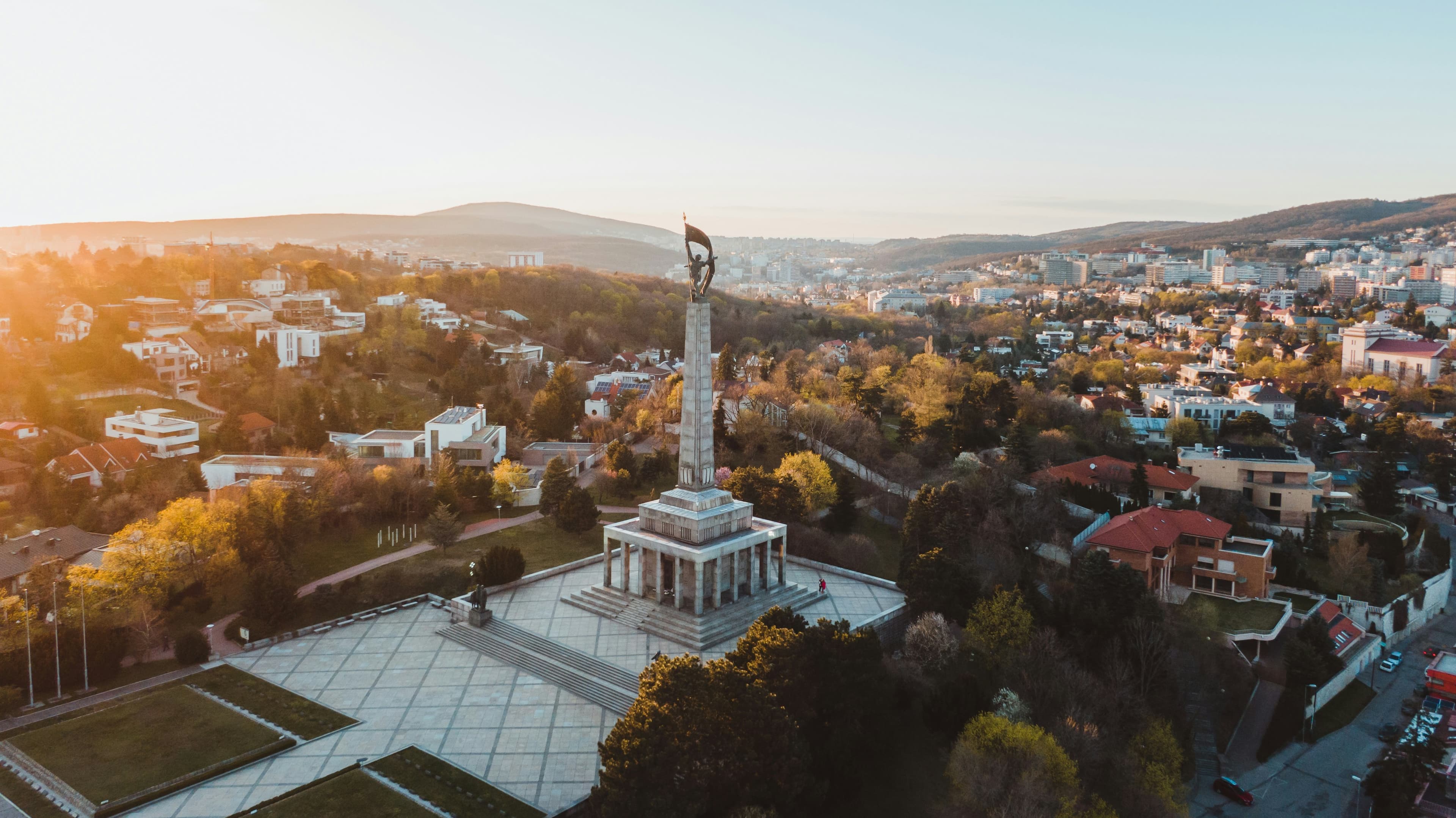
The capital that owns itself
Bratislava sits where the Danube meets the foothills of the Small Carpathians, the only national capital that borders two other countries. It is small for a capital — around 480,902 residents — but it carries almost all of Slovakia's economic weight and its sharpest housing pressures. After 1989 it did what most of the country did, only more so: it handed nearly its entire housing stock to private owners, faster and more completely than almost anywhere in Europe.
Count the tenures and the privatisation reads like a one-way door. Outright owners make up 83.7% of households, leaving around 7% to rent. Only a sliver of that rental share is on a formally-registered contract — about 1,407 flats, 0.6% of the city's 248,199 dwellings — and the rest is a large grey, undeclared market. Cooperative housing is now a rounding error as a tenure: just 0.1% of dwellings, some 256 flats across about 7 surviving cooperatives, after almost the entire družstevné stock converted to ownership in the 1990s. Municipal landlords hold barely 1.1% — about 2,680 flats. The rest of the stock shows up as unoccupied — vacant or second homes, though some is quietly let off the books.
- Owners
- Owner-occupier83.6%
- Cooperative0.10%
- Renters
- Public & non-profit rental1.1%
- Private rental6.1%
- Other9.1%
- Vacant / unoccupied9.1%
There is no real social-housing tenure here, only a label on a handful of flats. Just about 0.7% of Bratislava's dwellings carry a social-housing rule — a targeting layer that sits on top of the small municipal stock rather than forming a tenure of its own. The city sets income limits for these flats, and roughly 30% of households would qualify on income. Slovakia built almost no dedicated social housing after the war and kept almost none after privatisation, leaving the country with one of the smallest non-market rental sectors in the European Union.
What protected housing survives can be read straight off the rent. Tenants in the city's regulated municipal flats pay around €3.50 per square metre, and members of the old cooperatives about €4.50. Open-market rents run several times higher: a newly-let flat asks a median €15 per square metre, furnished and serviced lets around €16 gross. Because so much of the rented supply is small, central and let furnished, the all-stock median climbs higher still, to €17.02. The jump from the regulated floor to a market lease is more than four to one — the affordability problem stated in a single number.
- Public/municipal housing
- Cooperative
- New contracts
- Furnished / serviced (gross)
- All-stock median
Net-cold monthly rent per square metre by tier (furnished is gross, all-in). The regulated municipal and old cooperative floor sits far below the open market; a market lease runs several times the municipal rate. The all-stock median sits above new asking contracts because much of the rented stock is small, central and let furnished.
Even a city this tight leaves homes standing dark. At the 2021 census about 9% of dwellings were vacant, roughly 15,000 unoccupied flats, much of it inherited, unmodernised or held as a second home. Offices sit emptier still: around 253,616 square metres stand vacant, about 14.41% of the office stock, a frontier the reformed rental law now lets the state convert into homes. Short-term letting sharpens the pinch in the historic core, where an entire-place flat lets for a median €72 a night and quietly thins the long-term supply on the streets most visitors see.
The pressure is arithmetic: far more people arrive than homes get built. Jobs and universities pull in a net roughly 14,000 people a year, against only about 2,200 housing permits a year the city issues. House prices in Bratislava sit far above the national level, and the city now counts around 1,200 homeless residents and roughly 500 residential evictions a year. The strain has climbed into the middle class: applicants for a municipal flat in Bratislava once waited around 60 months, and young first-time buyers are the group most clearly priced out. Owner-occupation feels universal until you try to enter it.
Whoever had trouble buying housing in 2023 or 2024 had an even harder time of it in 2025.The družstvo that privatised itself away
The Slovak cooperative is the bytové družstvo, a housing cooperative whose member holds a družstevný podiel — a transferable share that secures the use of a specific flat and, in practice, behaves much like ownership. That is the key difference from the rental cooperatives of Vienna or Zurich. A Slovak cooperative member was always closer to an owner than a tenant, which is exactly why the form dissolved into private ownership so easily once the right to buy arrived.
The tradition is real but its expansion was late-socialist. Cooperatives built apartment blocks between the wars, but the decisive wave came in the 1960s to 1980s, when the stavebné bytové družstvá — construction housing cooperatives — became the main semi-private route to a flat. They built a large share of the panelák estates that still define districts like Petržalka, the vast prefabricated quarter across the Danube. After 1989 the right to buy hollowed the form out. Members converted their shares to individual ownership en masse, and for three decades the cooperative all but vanished as a way to build anything new.
Today the sector clusters into two very different groups with little in common. The first is the legacy societies — only about seven still operate in the city — which mostly manage and energy-retrofit the ageing panelák blocks their members own, a slow and capital-hungry task that a study of Slovak condominium renovation traces in detail. The second is brand new and privately led: in 2024 a market developer revived družstevné bývanie as a financing product, signing up around 40 members for a block in under two months. The two clusters barely overlap. The legacy coops wrestle with retrofit cost and ageing membership; the new ones are less a non-market movement than a clever route around a mortgage market that locks out the over-40s and the self-employed.
The honest reading is that Bratislava has cooperative finance without cooperative housing. The revived model is genuinely useful. It lets a household pay around 20% of the price upfront and rent-to-own the rest through the cooperative, opening a door the banks had shut. But the flats are sold at full market value, so the model widens access to ownership rather than creating affordable homes. A genuinely non-market cooperative tier, the kind that funds the cooperative city across the continent, does not yet exist here. How the city and the state decide to treat the form — as a finance trick or as an affordable-housing channel — is the question its politics now has to answer.
Rebuilding a tier the country gave away
Bratislava's housing politics is the politics of rebuilding what was sold. Mayor Matúš Vallo, an architect re-elected in 2022, has made housing availability a signature theme, and his clearest result is concrete. In 2025 the city completed 103 municipal rental and replacement flats at Muchovo námestie in Petržalka — the first residential building built directly under city management in fifteen years. Deputy mayor Lenka Antalová Plavuchová called it a milestone for rental housing, and the city has seven further projects in the pipeline that could add more than 400 flats.
Housing development has been one of my key topics from the start, and I am glad that together with my team we are managing to take concrete steps to increase the availability of housing in Bratislava.City hall and the ministry pull on different ends of the problem. The city owns land, runs its Municipal Housing Agency and negotiates with developers; the national government writes the law and holds the money. Bratislava is the only Slovak city to agree a transparent rule that developers hand over 5% of the flats they build in exchange for denser zoning, a quiet way to grow the municipal stock without a budget line. The national frame is newer: Act 222/2022 on štátom podporované nájomné bývanie — state-supported rental housing — created a dedicated agency and an investor-and-employer model to build the non-market rental tier the country never had.
The money runs mostly through one old institution and one new programme. The Štátny fond rozvoja bývania — the State Housing Development Fund — lends below market rates for municipal building and, above all, for the panelák renovation that dominates Slovak housing policy, advancing nearly €380 million in 2025 alone. The state-supported rental programme is the new vehicle, and in 2026 the government widened it to seniors, single parents, large families and recent graduates, dropping the income ceiling for these priority groups. Cooperatives, by contrast, still have no dedicated non-profit funding line — the gap §2 leaves open.
Those vacant offices from §1 finally have a law pointed at them. Act 77/2025 amended the rental law so that converted offices and other non-residential buildings count as eligible stock, and lifted the old 20-flat minimum — a direct response to a city with a large stock of vacant offices and a thin pipeline of new homes. There is no vacant-homes tax, and slow permitting remains the binding constraint, so the supply answer is as much about administrative capacity as about money. The European Parliament's own mapping of EU housing need flags exactly this municipal-capacity gap across Slovakia.
Decarbonising the panelák is now part of the same housing question. Bratislava's housing stock averages around 45 years old, only about 13% of dwellings count as energy-efficient, and the renovation rate crawls at roughly 0.9% a year — far short of the EU's deep-retrofit goals. The panelák retrofit programmes the condominiums run, funded through the state fund's revolving loans, are the main vehicle for cutting the sector's carbon. That ties the climate goal directly to the post-socialist ownership model, a pairing a wider European review of integrated city responses shows is rare to get right.
Nobody in Bratislava argues against building; the quarrel is over whether it can move fast enough. Mayor Vallo frames municipal building as the route out of the crisis, pointing to the Muchovo flats as proof that the city can deliver. Róberta Mecková, who directs the mortgage brokerage FinGO reCloud, reads the market from the other side and warns that affordability kept worsening through 2025, with young would-be buyers hit hardest. Neither denies the non-market tier has to expand; where they part is whether a handful of city blocks a year can outrun prices that rise faster than wages.
- 1991[source]
The great sell-off
After 1989, state and municipal flats are transferred to their tenants at preferential prices, and the late-socialist stavebné bytové družstvá convert almost all their flats to individual ownership — the start of one of Europe's most complete housing privatisations.
- 2013[source]
Stará Tržnica reopens
A civic alliance reopens the long-closed Old Market Hall as a self-funded mix of Saturday market, cultural venue and cafés — an early model for community-led adaptive reuse in the city.
- 2018[source]
Matúš Vallo elected mayor
An architect and a founder of the Stará Tržnica alliance becomes mayor, putting housing availability and public-space revival near the centre of the city programme.
- 2020[source]
Housing First pilot
Bratislava becomes one of the first Slovak cities to launch a Housing First pilot, working with several NGOs to move homeless families and individuals into stable rental flats with attached support.
- 2022[source]
State-supported rental-housing law
Parliament passes Act 222/2022 on state support for rental housing, creating a dedicated agency and an investor-and-employer model intended to build a non-market rental tier the country never had.
- 2024[source]
Cooperative housing returns
A market developer revives družstevné bývanie in Bratislava, signing up around 40 cooperative members for a block in under two months — a financing route around the mortgage market rather than a non-market tenure.
- 2025[source]
First city-built rental block in 15 years
Bratislava completes 103 municipal rental and replacement flats at Muchovo námestie in Petržalka — the first residential building built directly under city management in fifteen years.
- Apr 2025[source]
Rental law widened
Act 77/2025 amends the rental-housing law to count converted offices and other non-residential buildings as eligible stock, and lifts the 20-flat minimum, opening adaptive reuse to the state-supported programme.
- Mar 2026[source]
Eligibility widened again
The government broadens the state-supported rental programme to seniors, single parents, large families and recent graduates, and drops the income ceiling for these priority groups.
From the post-1989 mass privatisation to the revived cooperative-finance pilots, the first city-built rental block in fifteen years and the national state-supported rental-housing programme.
From the Old Market Hall to the panel estates
Bratislava's working examples are not, for the most part, housing schemes. In a city that privatised its homes almost completely, the most instructive projects are the civic spaces and the social-rental experiments that show what a non-market sector could look like — and the new cooperative-finance blocks that show what it should not be mistaken for. They are set out below in descending order of stability — from the self-sustaining commons to the most precarious — before the actors trying to make the model repeatable.
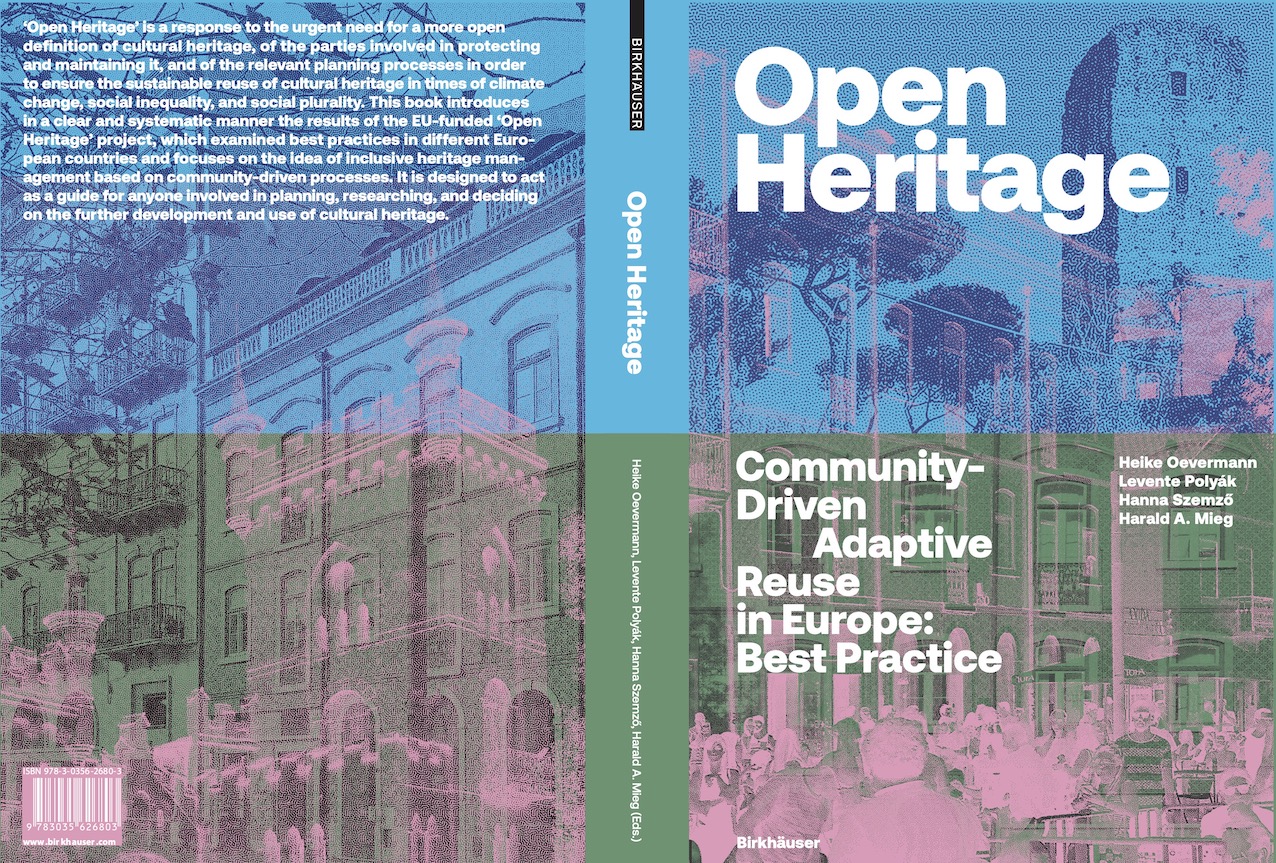
Stará Tržnica, the Old Market Hall in the city centre, is the clearest proof that a community can run a public building better than a passive owner. After the market closed and the municipality failed for years to revive it, the Alianca Stará Tržnica reopened it in 2013 as a self-funded blend of Saturday market, concerts and cafés — a model a European study of community-driven adaptive reuse documents as a rare case that pays for its own renovation. The friction is structural rather than dramatic: the model depends on a constant blend of commercial and non-commercial uses, and on a single dependable income stream, which is hard to replicate and harder to protect from over-commercialisation.
Nová Cvernovka shows the cost of doing it without the city behind you. When developers pushed an artists' community out of the old thread factory downtown, the group took over a derelict chemical-school complex and rebuilt it into 132 studios, a public reading room, a park and a stage. The founders financed it personally and precariously — one borrowed against his own flat — and the early years were, by the founders' account, a bumpy ride full of uncertainty. It is now the city's largest creative commons, but its survival rests on private guarantees rather than public support, which is exactly the vulnerability a stronger non-market framework would remove.
It is not widely known that we mortgaged our own flats to take out the loan for the renovation of the building.The revived cooperative blocks sit at the opposite end — well-financed, but private. The 2024 družstevné bývanie pilots filled a block of around 40 cooperative flats in under two months and have since extended to a second site, proof that the appetite for an alternative to the mortgage is real. Their limit is the one §2 names: the flats sell at full market value, so they widen access to ownership without adding a single affordable home. They answer the financing question, not the affordability one.
The social-rental experiments are where the affordability answer is actually being tested. Bratislava's Housing First pilot, launched in 2020 with several NGOs, moved homeless families and individuals straight into stable flats with attached support, and held most of them there — a retention story the European overview of housing exclusion corroborates against a thin overall scale. The Municipal Housing Agency now runs the city's social-rental-agency model, the first in Slovakia, leasing private flats and re-letting them at controlled rents. Both are small and dependent on continued political will, but they are the only parts of the system delivering genuinely affordable homes at any scale.
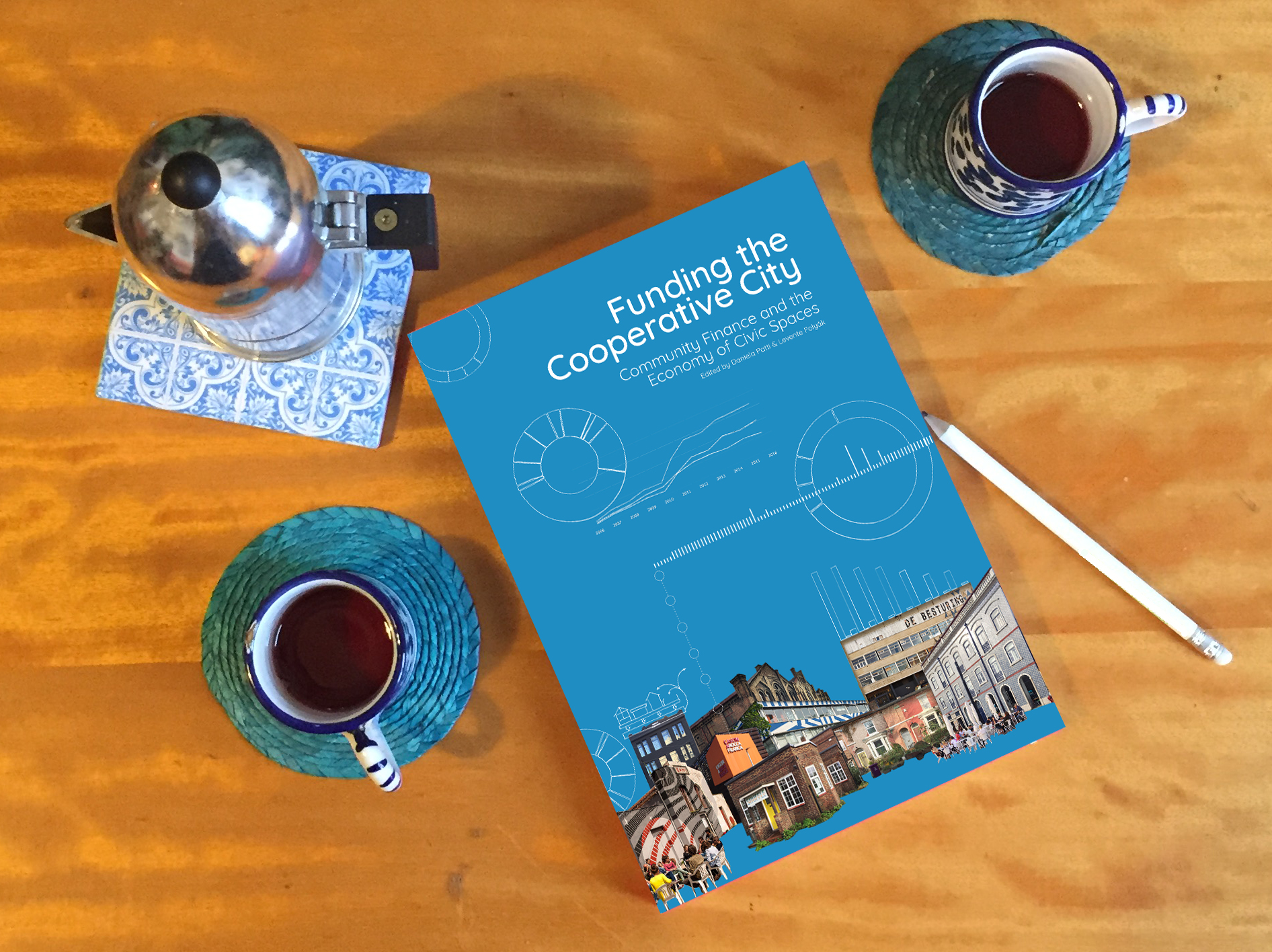
Underpinning these projects is a civic scaffolding that is slight but genuine. The networks that funded the cooperative city across Central Europe ran their Bratislava workshops through exactly these places, and the EU's broader work on housing exclusion and on integrated municipal responses gives the city a frame to learn from peers. It is a thinner institutional layer than Vienna's or Prague's, and almost everything here is recent or improvised. But it rests on one foundation the privatisation could not sell: a Danube city full of empty halls, surplus offices and panel estates, all waiting to become something more than private assets.
References
Statistics19Click on any number to see the source
Housing market
Tenure & affordability
Cooperative, social & public
Adaptive reuse & vacancy
Population & migration
From our library10
- Housing policies in the European Union — Knowledge
- Unaffordable and inadequate housing in Europe — Knowledge
- Youth access to affordable and quality housing: A comparative analysis of national policies — Knowledge
- Access to Affordable and Quality Housing for All People — Knowledge
- Funding the Cooperative City: Community Finance and the Economy of Civic Spaces — Knowledge
- Part 2: Mapping the housing needs in the EU, assessing the impacts of scarcity and providing an overview of relevant EU legislation — Knowledge
- Cities addressing the housing crisis: Innovative and integrated approaches — Knowledge
- Untaxed - How governments lure capital into real estate and feed the housing crisis — Knowledge
- Open Heritage - Community-Driven Adaptive Reuse in Europe: Best Practice — Knowledge
- Tenth Overview of Housing Exclusion in Europe — Knowledge
Further sources14
- 68% of people in EU households own their home (Slovakia 93%) — Eurostat
- Bratislava completes 103 city rental flats at Muchovo námestie — Mesto Bratislava
- Development of housing projects — Mesto Bratislava
- Municipal Housing Agency — Mesto Bratislava
- Act 222/2022 on state support for rental housing — Zbierka zákonov
- Act 77/2025 — rental-housing law amendment — Slov-Lex
- Agency widens state-supported rental housing eligibility — Agentúra ŠPNB
- State Housing Development Fund lent nearly €380m in 2025 — SME
- YIT continues cooperative housing in Bratislava — Property Forum
- Housing affordability worsened, prices to rise — Mecková — Bratislavské noviny
- Nová Cvernovka — artists mortgaged their property — The Slovak Spectator
- Nová Cvernovka — creative and cultural centre — Cooperative City
- Stará Tržnica — the Old Market Hall — Visit Bratislava
- Mayor Matúš Vallo — changes for Bratislava in 2025 — Bratislavské noviny