A city of arrivals — and the rent that follows them
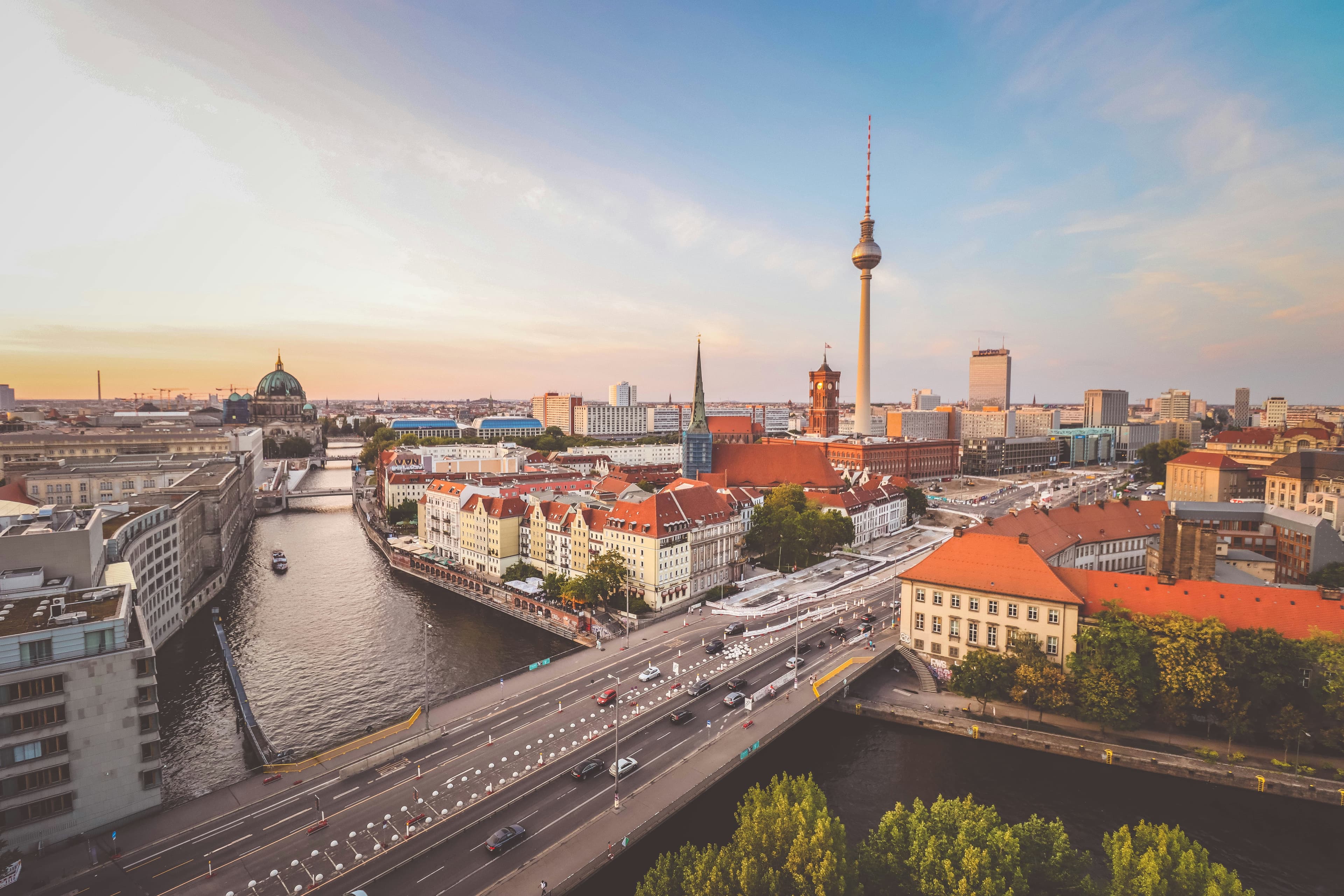
Berlin has always been a city of arrivals. The eight-decade arc from divided capital to reunified metropolis, from squatter Kreuzberg to Mitte's renovation boom, has been driven by people moving in: from East Germany after 1989, from southern Europe after 2008, from Syria and Ukraine in two more recent waves. The thread that ties those arrivals together runs through a single fact about the city — most Berliners rent, and most rent from someone else. The housing market is where the city's history of reinvention meets the long-running question of who gets to stay.
The tenure mix tells the rest of the story. Roughly 84% of the city's nearly 3.9 million residents are tenants — the highest renter share of any European capital. Of the city's tenure base, around 16.4% are owner-occupied, 17.90% are public housing (municipal/state-owned outright by the six Landeseigene Wohnungsbaugesellschaften — the municipal housing companies, or LWUs for short), 9.7% are cooperative — about 186,000 apartments held by some 80 housing cooperatives — and the remaining 56.0% are private rental. The non-market segment (cooperative + public, both owned outside the speculative market) accounts for close to 27.6% of all dwellings, an unusually large share for a Western European capital. The social-housing regulatory layer cuts across the pie above — see below.
- Owners
- Owner-occupier16.4%
- Renters
- Public & non-profit rental17.9%
- Cooperative9.7%
- Private rental56.0%
Social housing in Berlin is a regulatory layer, not a tenure — a Sozialbindung covenant that sits on top of the tenure system rather than next to it. About 4.7% of the city's total stock currently carries the binding, and it spans three tenures rather than belonging to any one. The largest share sits inside the LWU portfolio: the six landeseigene Wohnungsbaugesellschaften — degewo, HOWOGE, Gewobag and three smaller bodies — own around 365,161 apartments outright (the 17.90% public-housing tenure share shown on the pie), and most of their stock carries the binding. A smaller share sits in privately-owned buildings financed under the Sozialer Wohnungsbau programme, where rents are capped and tenant eligibility means-tested for the typical 15-30 years of the binding period before reverting to the open market. A still smaller share sits on cooperative new-build delivered under Konzeptverfahren tenders with affordability strings attached. Cooperative housing as a whole sits alongside all three social-housing tracks rather than inside any of them: members hold an equity share, rents cover financing rather than profit, and cooperative stock cannot expire back into the speculative market.
The rent spread shows the difference. The Mietspiegel, Berlin's regulated rent index, places the all-stock average at around €7.10 per square metre cold. Cooperative rents sit lower at €6.27, LWU public-housing rents at €6.76, and asking rents for newly let private apartments on ImmoScout24 reach €15.78 per square metre on the median figure. The furnished/serviced segment — mid-term and longer-term offerings with utilities and furniture priced in — sits higher again at around €24 per square metre gross (for context: a furnished one-bedroom rents at a median €1,300 per month, a furnished three-bed for a family of four at €2,600). The dedicated short-term-rental tier sits on a different time horizon entirely, with a nightly median of €118 for a one-bed. The gap from cooperative or LWU rents to new private contracts and the furnished/serviced tier is the city's defining housing fact: long-standing tenants, cooperative members, and LWU residents pay one price, newcomers pay another, and the same buildings can hold both.
- Cooperative
- Public housing (LWU)
- All-stock median
- New contracts
- Furnished (gross)
Net-cold monthly rent per m² for cooperative + public + all-stock + new-contract tiers. The furnished/serviced tier (mid-term + longer-term furnished + serviced apartments) is gross all-in — utilities and furniture premium included.
Underused stock sits alongside the rent pressure. Berlin's residential vacancy rate runs at about 1.97% — exceptionally tight by European standards, far below any healthy-market threshold. Office vacancy tells the opposite story: roughly 6.9% of the city's office stock, or about 1.94 million square metres of vacant office floor, is currently unused, with an additional pool of empty older buildings (the Senate's empty-buildings register tracks roughly 45,000 entries across various property types). The mismatch — almost no spare housing alongside two million square metres of unused offices — is the supply-side question the policy section returns to.
In conclusion, we need effective protection against impermissibly high rents with only very few exceptions.On the demand side, net migration into Berlin runs at roughly 186,222 inbound moves per year, well ahead of construction completions in the high-teens of thousands. The Senate's stated 20,000-unit annual target sits above recent delivery. The federal Mietpreisbremse, the rent-brake legislation extended in March 2025 through 2029, caps new-let rents to the local Mietspiegel plus ten per cent — though enforcement leans on tenants to assert the right. The Vonovia–Deutsche Wohnen merger at the end of 2021 consolidated roughly 140,000 Berlin apartments under a single listed landlord. A case study on how listed landlords consolidated stock through the 2010s traces where that left the city when the 2021 referendum arrived.
That 9.7% cooperative share — the third pillar between owner-occupation and the rental market — sits on a tradition older than the unified state and broader than any single cooperative form. It is the part of the housing landscape with the deepest local roots.
Cooperatives: 130 years of shared roofs
Cooperative housing in Berlin is, in its dominant form, an ownership-cooperative tradition. Members buy an equity share in their building society — a Genossenschaftsanteil, typically a few thousand euros — and gain the right to a long-term home at cost rent. Resale of the share is capped; speculation on a member's flat is structurally not the point. A smaller number of cooperatives operate closer to the limited-equity model, capping member-side value growth more tightly so the gap between member and open-market rent stays open even as the building ages. The dividing line between rental cooperative and ownership cooperative is softer in practice than in legal definition: the member's equity at risk in the unit itself is modest, and the right of permanent occupancy is the real economic asset.
The roots run deep. Berliner Bau- und Wohnungsgenossenschaft von 1892 eG, the city's oldest still-active cooperative, predates the first World War. The Weimar Republic's 1924 Hauszinssteuer programme added dozens of new societies. East Berlin's GDR-era Wohnungsbaugenossenschaften (WBG) ran roughly half the eastern stock by 1989; most survived reunification by reorganising as cooperatives under federal law — the long string of WGLi Lichtenberg, Berolina, Treptow-Nord, Wuhletal, Wilhelmsruh and Amtsfeld societies in the city's east all trace to that lineage. A newer generation of project cooperatives — Möckernkiez eG, urban coop berlin eG, Am Ostseeplatz eG, Dachgenossenschaft Wohnen Berlin eG — has built from scratch since the 2000s, often on concept-led Erbbaurecht plots from the Liegenschaftsfonds.
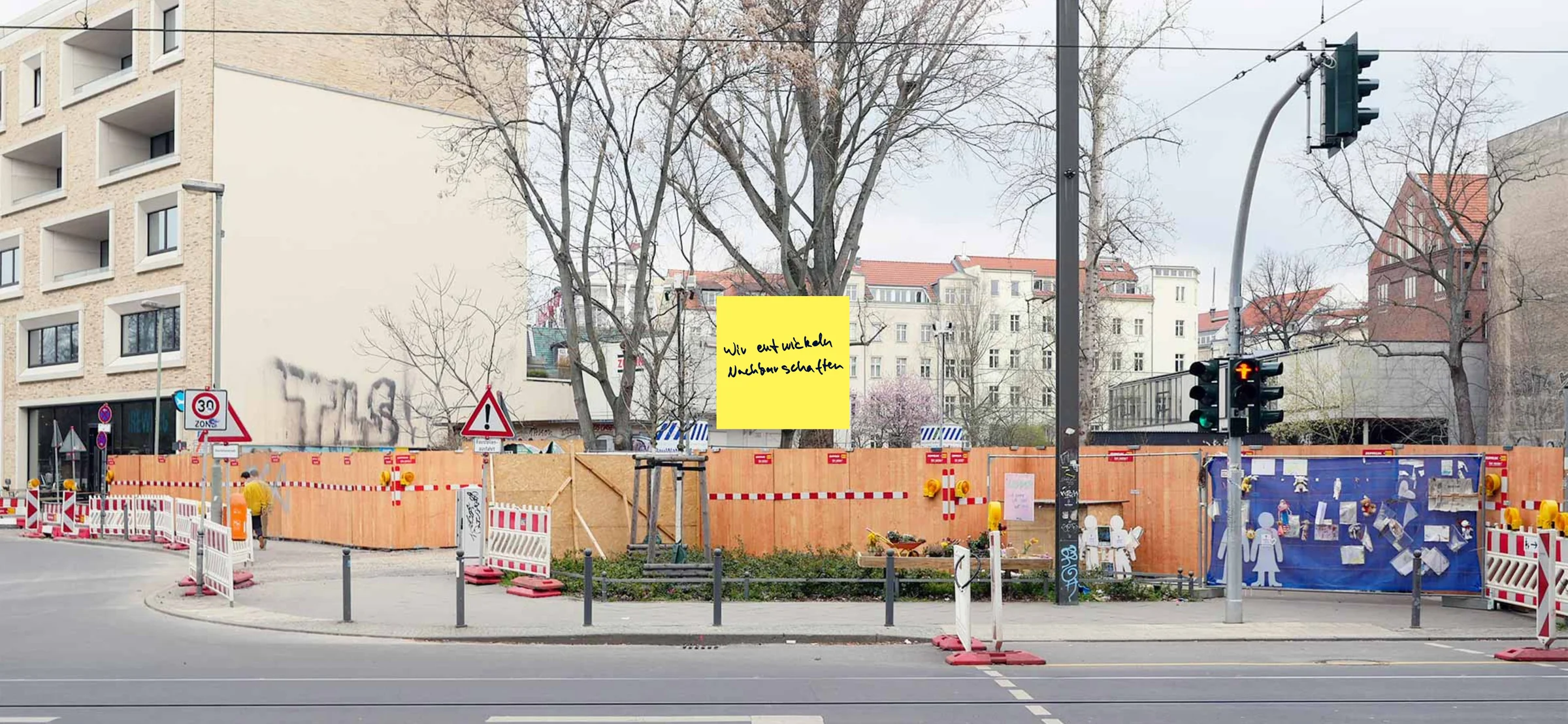
The contemporary ecosystem is broad. Selbstbaugenossenschaft Berlin sits at the self-build end of the spectrum, where members take part in commissioning and finishing their own buildings. The Mietshäuser Syndikat federates dozens of buildings into a non-resale covenant network parallel to the cooperative form. Forum für gemeinschaftliches Bauen und Wohnen e. V. coordinates the broader Baugruppen scene that often gradates into cooperative form. Bündnis junger Genossenschaften (BjG), the network of newer project cooperatives founded since the 2000s, runs the policy and member-recruitment conversation for the post-2000 generation. The Genossenschaftsforum e. V. keeps the entire sector publicly legible through publications, lectures, and the annual Berliner Genossenschaftstage. A recent study on the sector's internal expansion factors maps where the growth potential currently lies — and where the legal and land-cost constraints bite hardest.
What's distinctive about the contemporary Berlin frame is that the city government has begun positioning cooperatives as a delivery vehicle for affordable + sustainable housing alongside the LWUs. Konzeptverfahren — the concept-led tender process that awards land below market value to bidders with the strongest social and sustainability proposals — has steered a growing share of public plots to project cooperatives over the last decade. The Bündnis für bezahlbares Wohnen, signed in 2022, includes the cooperative federation as a named partner. The cooperative form is no longer a self-organised parallel system; it is now part of how the city plans to deliver the next decade's affordable housing.
Programmes, pacts, and the answer to two million empty square metres
Berlin's housing politics moves on several parallel tracks. The federal Mietpreisbremse, extended in March 2025 to 2029, caps new-let rents. The Senate's Bündnis für bezahlbares Wohnen, signed in 2022 between the city government, the BBU (the Verband Berlin-Brandenburgischer Wohnungsunternehmen, which represents both the LWUs and larger private landlords), and the cooperative federation, set a target of 100,000 new units over five years; completions are tracked publicly. The federal Bauturbo legislation, in force since 2024, fast-tracks planning approvals and rewards affordable construction with density bonuses. Wohngeld+, the 2023 federal housing-allowance reform, expanded eligibility to roughly two million households nationwide and applies in Berlin alongside the local instruments.
The cooperative sector sits inside that programme deliberately. The 100,000-unit Bündnis target is allocated across LWUs, cooperatives and private developers; the Senate's Konzeptverfahren tenders favour cooperative bidders on around half the awarded plots. The Bauturbo's affordable-construction density bonus applies to cooperative new-build the same way it applies to LWU schemes, and federal Wohngeld+ extends to cooperative-tenant members at parity with private-rental tenants. The path from the 1892 BWV to the 2026 cooperative-tendered Bauturbo project is, on paper, continuous policy support.
The vacancy gap from the housing landscape has its own policy answer. The 2024 Umnutzungsverordnung simplified office-to-residential conversion approvals, addressing the city's 1.94 million square metres of vacant office floor by making the regulatory path shorter rather than the financing easier. The Land's adaptive-reuse strategy bundles the conversion path with the IBA 2034-37 framework — the Internationale Bauausstellung adopted by the Senate in March 2026, which sets up a state-owned IBA company to curate affordable-housing demonstrators across the Berlin region through the next decade. The empty-buildings register the Senate maintains is a lever neither the previous coalition nor the current one has used at scale; activists have asked for a Leerstandsgesetz that would allow the city to temporarily commandeer long-vacant residential property, but no such law is on the table.
The largest open question dates from September 2021, when 59.1% of Berlin voters approved a non-binding referendum calling for the socialisation of large private landlords under Article 15 of the Basic Law. The Senate's expert commission, chaired by Sebastian Diringer, reported in spring 2023 that the measure was constitutionally available to the Land. A draft bill followed in late 2025 setting activation thresholds the original campaign — Deutsche Wohnen & Co. enteignen — has called high; the campaign returned to the streets in early 2026. The Berliner Mieterverein, the city's main tenant union, has described the bill as a continuation of the referendum work. The BBU has framed the thresholds as workable safeguards for investment certainty. Tagesspiegel and Berliner Zeitung have followed the back-and-forth in detail.
- Feb 2020[source]
Mietendeckel takes effect
Berlin freezes rents at June 2019 levels — the most aggressive municipal rent control in Germany.
- Apr 2021[source]
Federal Constitutional Court strikes down the Mietendeckel
The court rules municipalities lack the competence to set rent ceilings; the law is retroactively void.
- Sep 2021[source]
DW & Co. enteignen referendum passes with 59.1%
Berliners vote yes to drafting a law to socialise large private rental portfolios. The Senate is not legally bound.
- Nov 2025[source]
Mietpreisbremse extended through 2029
Senate renews the federal rent brake; rent inspection office stands up.
- Mar 2026[source]
Vergesellschaftungsrahmengesetz passed
SPD-CDU coalition translates the referendum into a framework law; implementation paused pending Constitutional Court review.
- Mar 2026[source]
Senate adopts IBA 2034-37 framework
A state-owned IBA company will curate affordable-housing demonstrators across the Berlin region.
- 2034-2037[source]
IBA Berlin
Curated international building exhibition — Berlin's structural answer to the affordability question.
Six years that turned rent control from a local experiment into a constitutional question, and Berlin's housing politics from defensive to ambitious.
The 2014 Tempelhof referendum prohibited construction on the former airfield by a margin of 64.3%; the prohibition has held through three subsequent Senate coalitions. The Mietendeckel of 2020, struck down by the Federal Constitutional Court in 2021 on competence grounds, settled one question — a Land cannot legislate rent levels — but explicitly left the socialisation route under Article 15 open. What the IBA 2034-37 framework is meant to do, in essence, is build the next decade's demonstrators around those legal and political constraints. Some of the demonstrators are already standing.
After Tegel: where the alternative is already standing
Berlin's cooperative-housing wave of the last two decades has produced a portfolio of demonstrators that go from single building to small district. Some test architecture, some test governance, some push the cooperative form into harder ground like adaptive reuse and circular construction. The IBA 2034-37 framework draws on this portfolio for the next round of curated demonstrators — what follows is the catalogue it inherits.
At the largest end sits Möckernkiez, the 471-apartment cooperative completed in Kreuzberg in 2018 — fourteen passive-house blocks around a car-free courtyard, the biggest cooperative new-build of the post-reunification period and the one most often invoked as proof that the form can scale. The design vocabulary it works in — passive-house construction, member-led commissioning, a Quartiersrat that runs the courtyard — was set a decade earlier on the Spree near Mitte at Spreefeld, the cohousing-cooperative experiment whose three buildings, shared cluster apartments and ground floor have hosted the same neighbourhood breakfast for over a decade. The template for member-led commissioning that newer cooperatives have followed was set at R50 in Kreuzberg, an early Baugruppe project completed in 2014; urban coop berlin eG is the youngest of the major project cooperatives, currently developing across multiple sites.
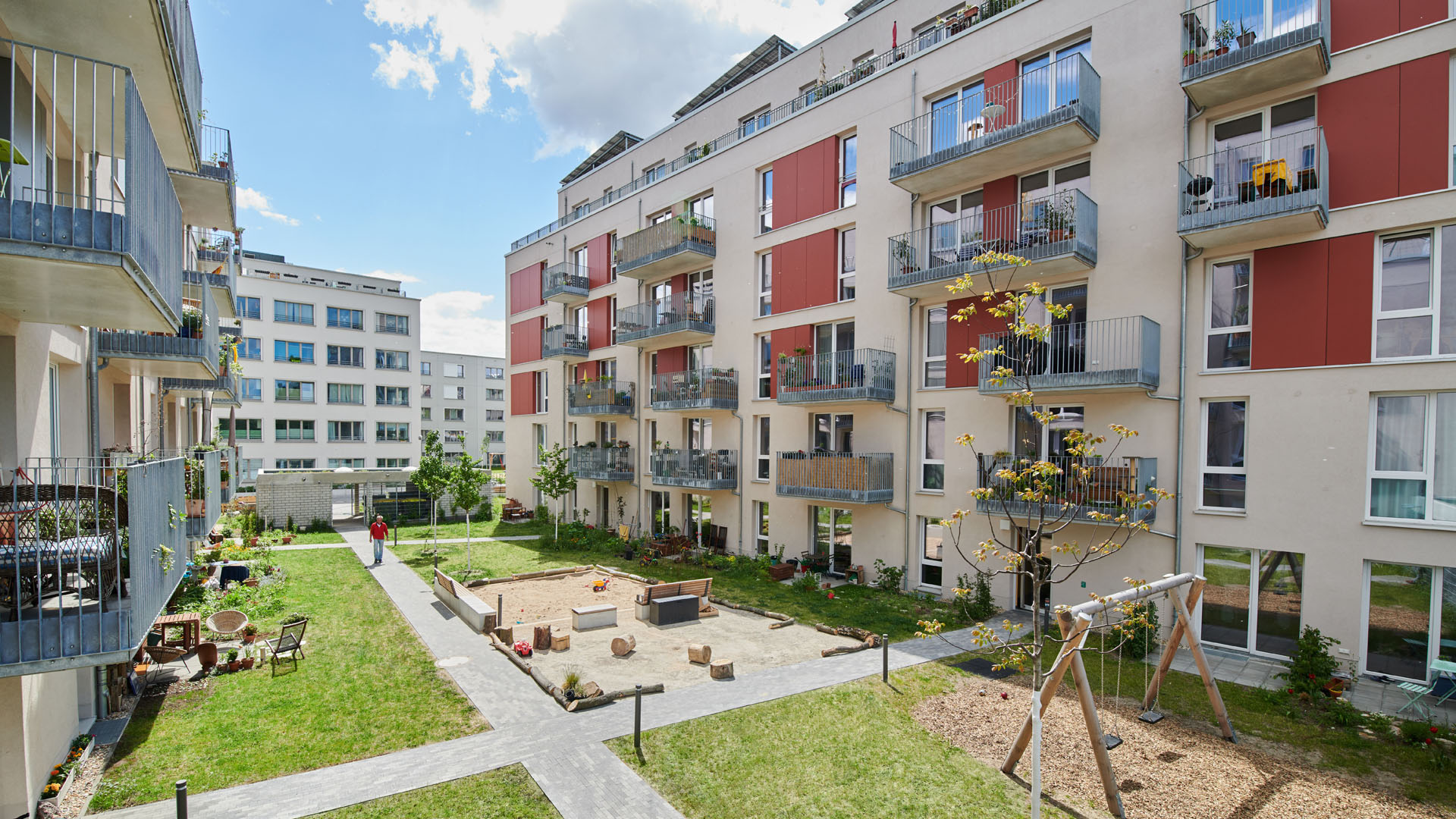
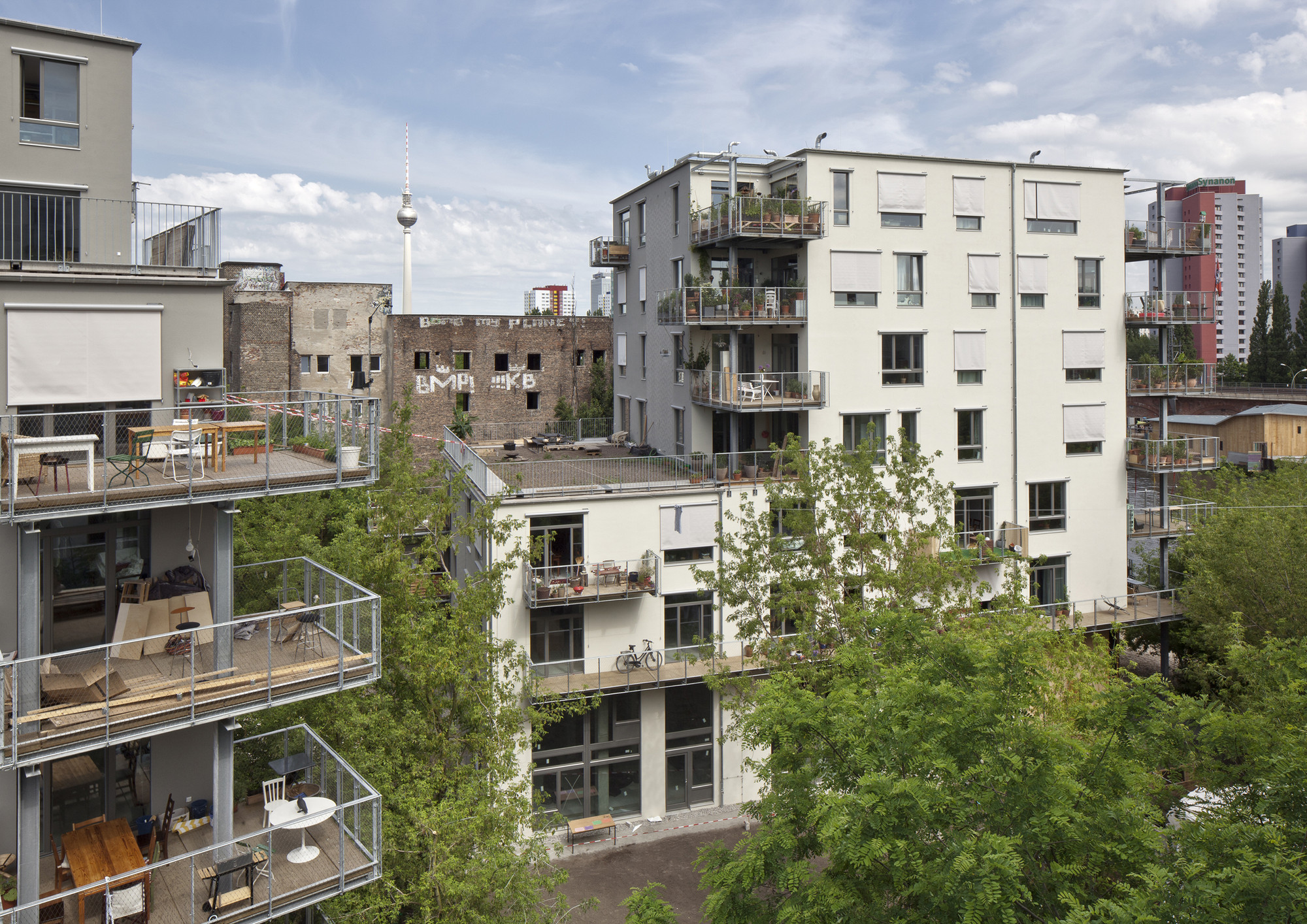
Where Möckernkiez and Spreefeld test the building, Quartier WIR in Weißensee tests the quarter. Five timber blocks around two courtyards form a cooperative-led mixed-tenure neighbourhood — closer to a small district than a single development. Forum Kreuzberg works the same logic across a Wilhelmine block, combining workspace, residential and community use under a cooperative long-lease, and Wallensteinstrasse turns 22,000 square metres of former railway land into 190 apartments and a day-care centre — single-cooperative-led where elsewhere the same site would have gone to a private developer. ZusammenKUNFT Berlin sits at the cooperative-civic seam, behind several of the Mitte–Wedding adaptive-reuse projects that come next.
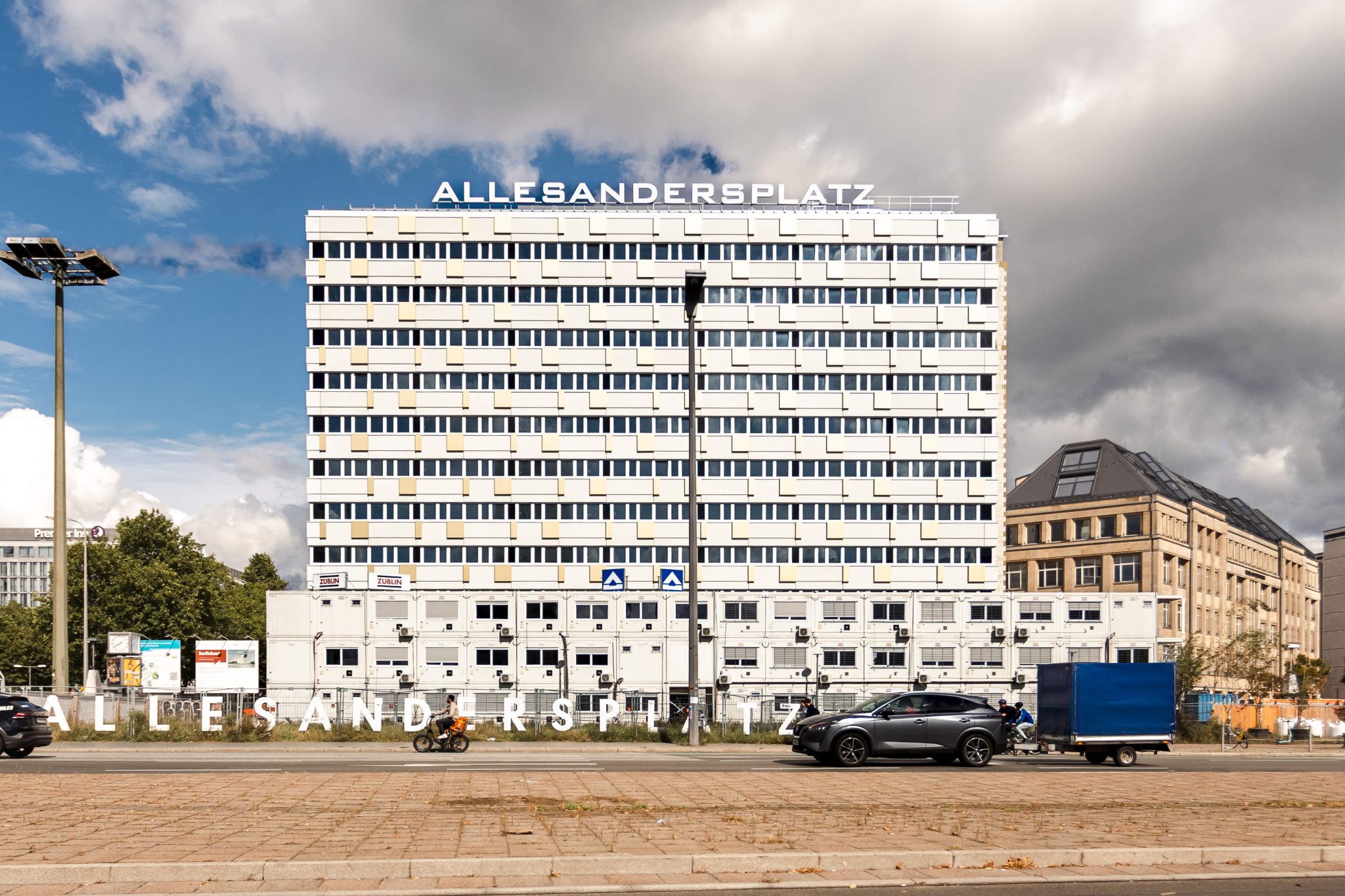
The most public face of cooperative-civic Berlin is Haus der Statistik, a 40,000-square-metre former GDR statistics office near Alexanderplatz. Since 2015 an alliance of artists, the Bezirk Mitte and a cooperative has been transforming it into a hybrid of cultural, administrative and affordable residential space — one of Europe's larger ongoing civic-reuse projects. CRCLR House in Neukölln pushes the same idea into circular construction: a defunct brewery whose windows, fire doors and structural elements have been reused to become Berlin's first certified circular-economy building, with Concular — the Berlin-based circular-materials marketplace — coordinating the salvaged-component sourcing. The pattern repeats at smaller scale at IBeB on the former Blumengroßmarkt site, where cooperative apartments, artist studios and gallery space form a Baugruppe-cooperative hybrid, and at Lobe Block in Wedding. The DGNB sustainable-building certification, headquartered in Berlin, has shaped the standards much of this work meets; HouseEurope! is the European advocacy network now coordinating the push for EU-wide adaptive-reuse policy.
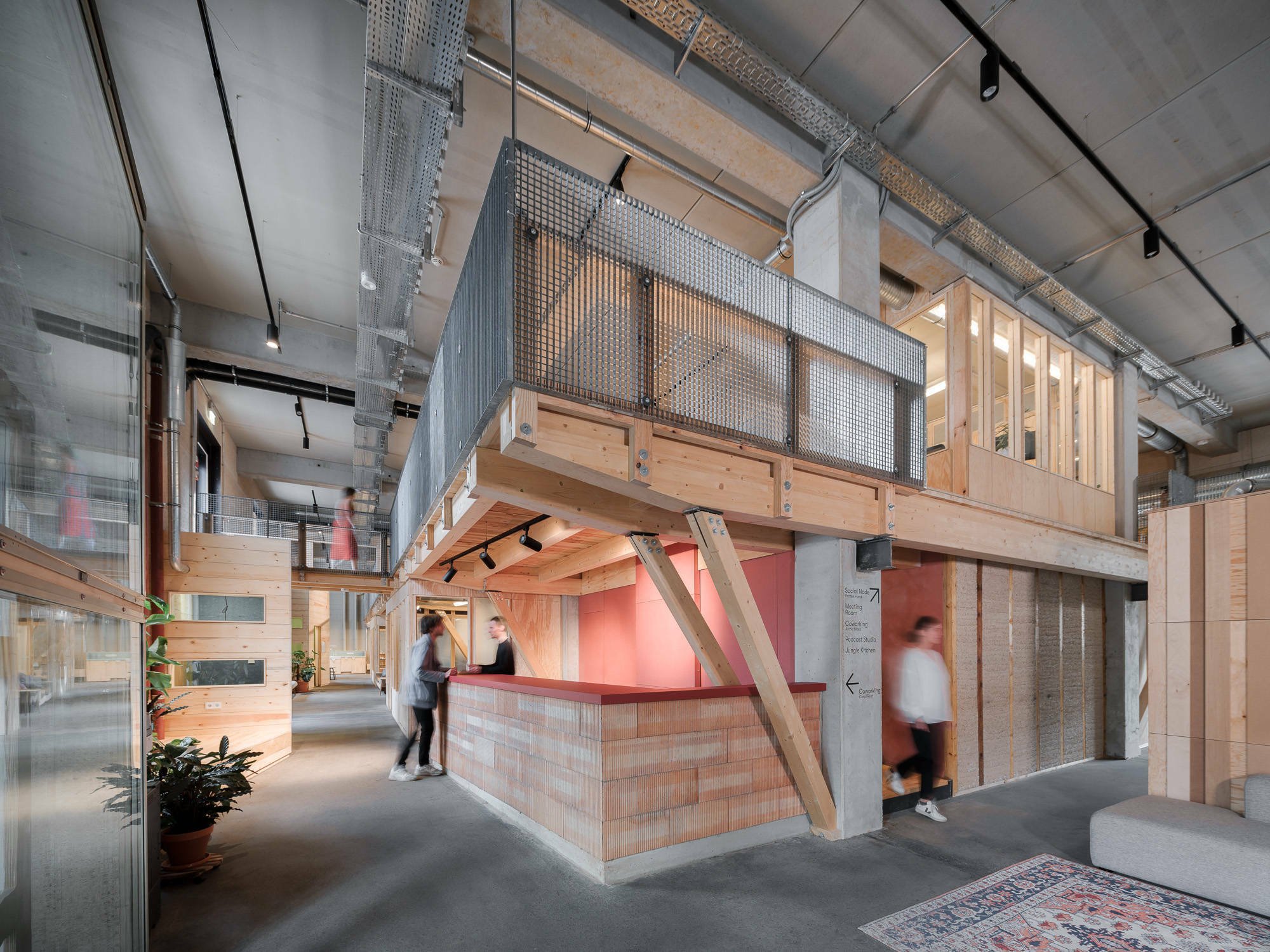
Behind the portfolio sits a small network of design practices that have shaped Berlin's cooperative-architecture vocabulary. ifau (Institut für angewandte Urbanistik) and Heide & von Beckerath are the architects behind much of the early Baugruppen and cooperative new-build — R50, IBeB, BIGyard. raumlabor has worked at the experimental edge of post-industrial reuse and urban research, ZRS Architekten Ingenieure pioneer clay, straw and rammed-earth residential construction, and DMSW Architektur und Landschaft sit at the cooperative-landscape intersection. GRAFT has carried the cooperative design language into the wider Berlin practice scene. The discourse that keeps these studios in conversation runs through Aedes Architecture Forum; the longer connections to climate-and-construction policy run through Bauhaus Earth and Stiftung Klimawirtschaft.
The IBA 2034-37 aims to address global tasks of urban development in the local context — through exemplary projects that show how Berlin can develop sustainably and future-proof.The institutional layer beneath all of this is small, slow, and decisive. Stadtbodenstiftung, the Berlin land-trust foundation, buys plots out of the speculative market and holds them in trust for housing cooperatives on Erbbaurecht leases — the local equivalent of the Swiss Stiftung Edith Maryon model. STATTBAU Berlin, the cooperative project-development consultancy founded in 1981, has been the institutional midwife for many of the projects above. Netzwerk Immovielien coordinates the broader civic-property movement from a Berlin base, and Bündnis für eine gemeinwohlorientierte Stadtentwicklung holds the policy-advocacy line at the city level. Together with Genossenschaftsforum e. V. — the publication-and-lecture body that keeps the cooperative tradition publicly legible — they form the connective tissue that turns isolated projects into something that reads as a sector, and the connective tissue the IBA 2034-37 will draw on for its demonstrators.
Long-form catalog anchors for Berlin: deeper context comes from Transdisciplinarity for Affordable and Sustainable Housing (Edicions La Salle, Universitat Ramon Llull, 2026-03), Adaptive Reuse for Housing (Delft University of Technology, 2025), EIB Investment Report 2024/2025 (European Investment Bank, 2025), Social Innovations in the Urban Context (Springer International Publishing AG, 2016), and Part 1: Mapping the housing needs in the EU, assessing the impacts of scarcity and providing an overview of relevant EU legislation (European Parliament, 2025-12).
References
Statistics19Click on any number to see the source
Housing market
Cooperative, social & public
Adaptive reuse & vacancy
Population & migration
From our library18
- Genossenschaftsforum e. V. — Organisation
- urban coop berlin eG — Organisation
- Growth for people, not for profit: the internal factors behind the expansion of housing cooperatives in Berlin — Knowledge
- Housing: A Case Study of Berlin — Knowledge
- Berlin will dritte IBA ausrichten: Bauklötzchen staunen — Knowledge
- Einfacher und schneller Bauen: Hilft der Bauturbo zur Lösung der Wohnungskrise? — Knowledge
- Möckernkiez — Project
- Spreefeld — Project
- Forum Kreuzberg — Project
- Quartier WIR — Project
- Haus der Statistik — Project
- CRCLR House — Project
- Wallensteinstrasse — Project
- R50 — Project
- IBeB (Blumengroßmarkt) — Project
- Lobe Block — Project
- ufafabrik — Project
- Klimafestival für die Bauwende 2026 — Event
Further sources14
- Mietpreisbremse extended until 2029 — Berlin Senate
- Deutsche Wohnen & Co. enteignen — DW Enteignen Campaign
- Vergesellschaftungsrahmengesetz — Tagesspiegel — Tagesspiegel
- Berlin Wohnungsmarktbericht — Investitionsbank Berlin (IBB)
- Bauturbo Bundestag textarchiv — Deutscher Bundestag
- Vonovia–Deutsche Wohnen merger — Bundeskartellamt — Bundeskartellamt
- Mietendeckel ruling — Press release 28/2021 — Bundesverfassungsgericht
- IBA 2034-37 framework — Senatsverwaltung für Stadtentwicklung Berlin
- Tempelhofer Feld referendum — Berlin Senate
- Berliner Mieterverein — Berliner Mieterverein
- Wohngeld+ — federal housing-allowance reform — BMWSB
- Bündnis für bezahlbares Wohnen — Senate — Senatsverwaltung für Stadtentwicklung Berlin
- Zensus 2022 — Amt für Statistik Berlin-Brandenburg — Statistisches Bundesamt
- Umnutzungsverordnung — Berliner Bauordnung — Berlin Senate