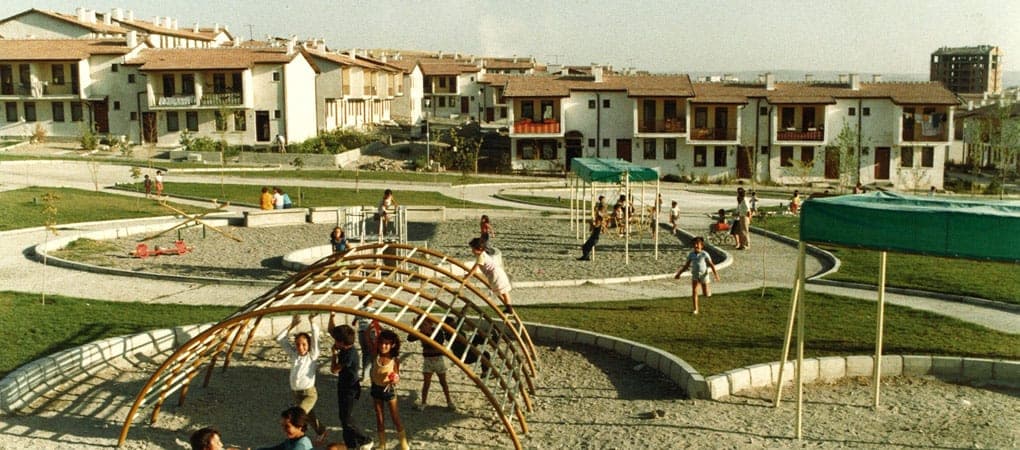
The Batıkent Project is a large cooperative housing development in Ankara, Turkey, planned to provide 50,000 homes for lower- and middle-income households. It was recognised as a World Habitat Award winner in 1986. 1
Preparations began in 1974, with Ankara Municipality and housing cooperatives working together on a model for developing the new settlement. 2 The Kent-Koop housing cooperative union was established on 17 October 1979 by 13 founding members to carry out the project, with the municipality’s leadership and participation from trade unions, professional groups, and organisations representing tradespeople and artisans. 23 The sources identify Kent-Koop as the project’s cooperative organiser; they do not name a single private developer. 23
The homes were to be produced cooperatively, drawing on residents’ participation and government support. World Habitat described the project as an alternative to the spread of informal settlements, and highlighted the involvement of different community groups, including young people. 1 The project’s scope was substantial: Kent-Koop describes Batıkent as a 1,034-hectare development about 13 kilometres from Ankara’s city centre. 4 Its institutional model also informed further cooperative housing initiatives: Kent-Koop reports contributing to 39 projects across Turkey, though these were not all part of Batıkent itself. 2