What the capital pays to live in itself
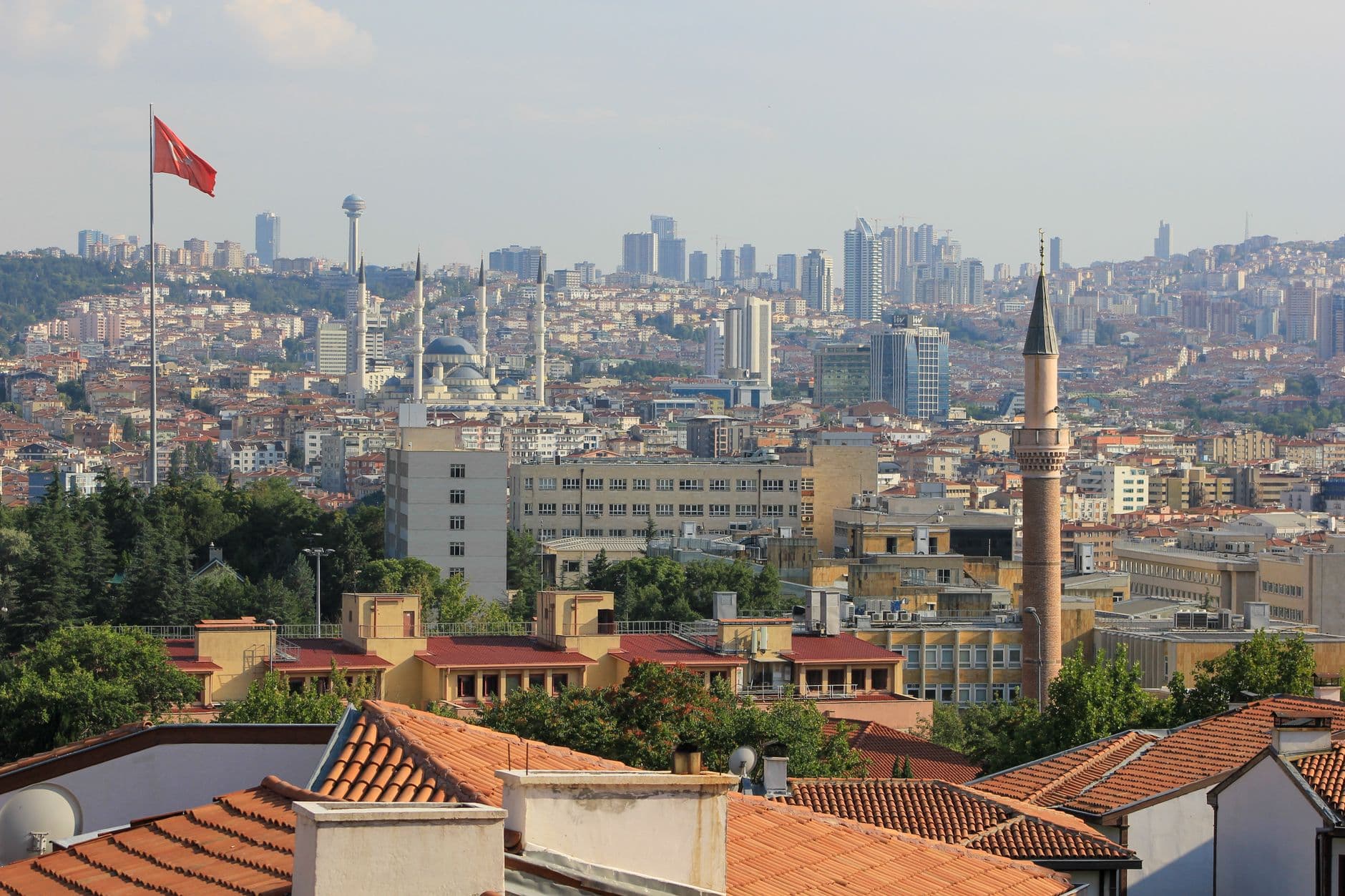
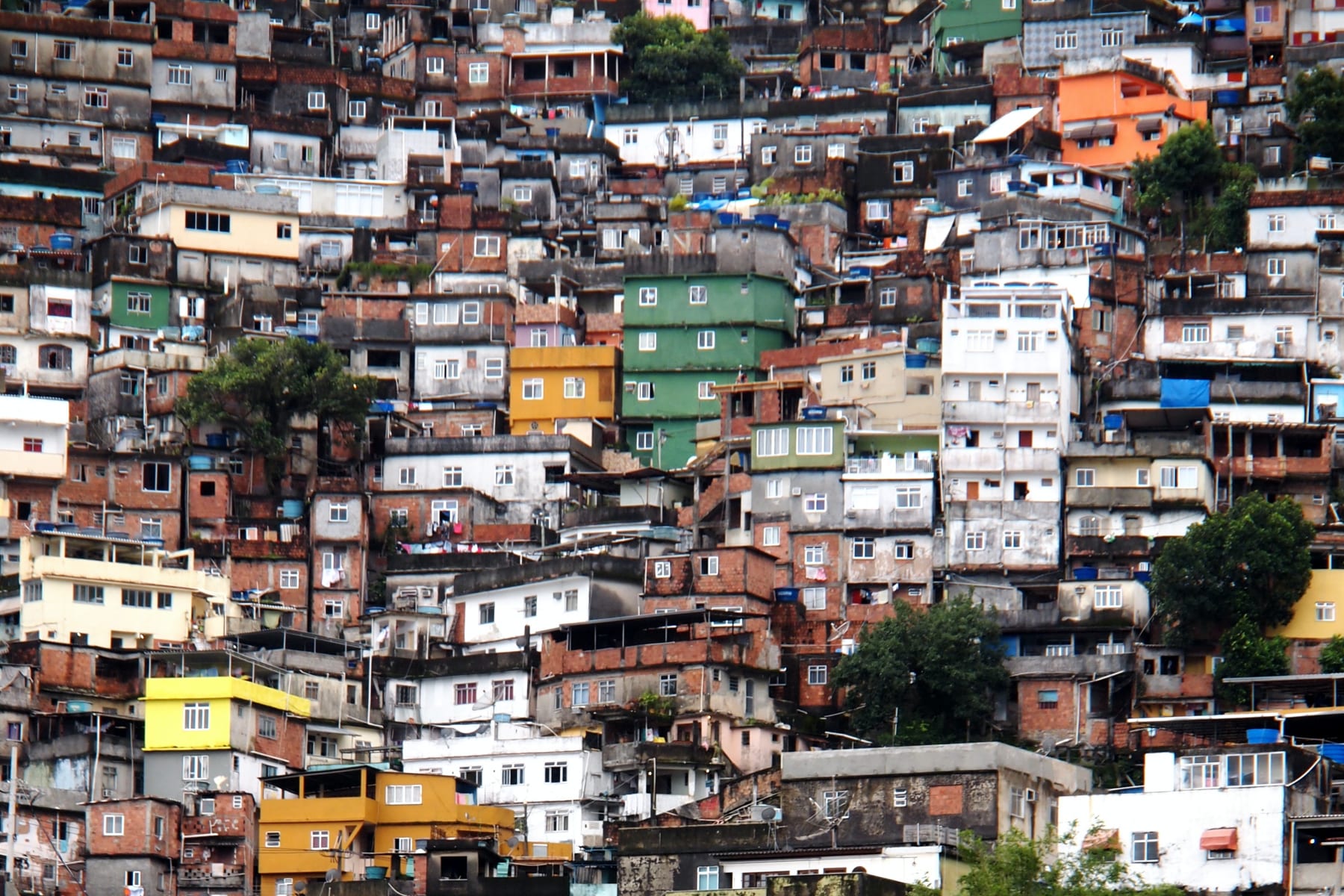
Ankara was a steppe town on the Anatolian plateau when the Republic chose it over Istanbul in 1923. Everything since has been an argument between the drawn city and the built one. Planners set out ministries, boulevards and a green belt. Arriving families set out neighbourhoods of their own on the hillsides, overnight, in what Turkish calls gecekondu (a house “landed by night”, put up without permission on land the builder did not own). By 1980, 72% of Ankara’s residents lived in one, as an essay on informal settlements as “social policy by other means”. The metropolitan municipality now covers the whole province, a single unit of 5,910,320 people. Its housing question has never been only about price. It has always also been about who is allowed to build.
Türkiye publishes no tenure table for Ankara on its own, so the national frame is the honest one. As Türkiye Today’s account of the mounting housing crisis reports from TÜİK’s income and living conditions survey, in 2024 56.1% of households owned the home they lived in and 28% rented it. Another 15% occupied a property they did not own and paid no rent for, usually a relative’s. Ownership is slipping: the same series read 59.7% in 2016. Cooperative housing does not appear as a slice at all, because Turkish building cooperatives dissolve once they finish and their flats become ordinary freehold. Public housing barely appears either. TOKİ, the state mass-housing administration, sells almost everything it builds.
- Owner-occupier56.1%
- Private rental28.0%
- Rent-free, family or employer housing15.0%
“Social housing” in Türkiye names a price, not a lasting status. A TOKİ flat is sold on a 10% deposit with 240 monthly instalments. Once it is paid off it is simply a flat, free to be sold or let at whatever the market will bear. No affordability condition travels with the building. There is no expiry date to argue over because nothing was ever locked. That is the difference between subsidised delivery and a standing non-market stock, and Ankara has a great deal of the first and almost none of the second.
Rents read differently depending on which number is used. Across the whole stock the median is about €8.56 per square metre a month. A one-bedroom flat in the centre asks €641.67 and the same flat outside the centre €449.22; three bedrooms run from €704.55 to €1,043.45. Direction matters more than level. Ankara’s new-tenant rent index stood 28.3% above a year earlier in August 2026, while its house-price index rose 24.8%, both real falls once inflation is taken out. Meanwhile the rent increase rate for a sitting tenant renewing in September 2026 was capped at 31.79%, the twelve-month average consumer price index. Sitting tenants are therefore squeezed harder than people signing a fresh lease. Listing data points the same way. Endeksa put Ankara’s average asking rent at 34,440 lira in August 2026, up 20.5% in a year but 8.5% lower in real terms. This is not a rent spike. It is a long grind in which every renewal still costs more than the last.
- 1-bed, outside centre
- 1-bed, city centre
- 3-bed, outside centre
- 3-bed, city centre
Asking rents, 2026. The spread here is between the centre and the outer districts, not between tenures: Ankara has no cooperative or public rent tier to compare against.
Vacancy is where the data runs out. Türkiye publishes no residential vacancy rate for Ankara, and no office vacancy rate either, so the city-level story cannot be told with numbers at all. The national picture has to stand in, and it is startling. In a column on the country’s empty homes, the economics writer Naki Bakır put the unoccupied stock at 8.5 million dwellings at the end of 2024, against a total stock of roughly 31 million. Emptiness on that scale is not a shortage problem. It is a distribution and pricing problem, and Türkiye has neither a vacant-homes tax nor an empty-buildings register with which to touch it.
Ankara gained 31,172 more residents than it lost in 2025, a net figure 40.1% smaller than the year before. Demand pressure on the capital is easing at the exact moment its supply pipeline lands. TOKİ has allocated 30,823 of the national programme’s units to Ankara province, and the Ankara Büyükşehir Belediyesi (Ankara Metropolitan Municipality) unveiled 47,970 homes of its own in April 2023. Whether those two pipelines land where the pressure actually sits is the open question of the next three years.
The squeeze is measurable and it is not confined to the poor. Housing is now the single largest item in the Turkish household budget. In TÜİK’s Hanehalkı Tüketim Harcaması (household consumption expenditure) survey, housing and rent took 29.3% of all household spending in 2025. The split by income is sharper than the average suggests. The poorest fifth of households spend 38.7% of everything they spend on housing, while the richest fifth spend 25.7%. People living alone spend 41%. The squeeze now reaches the middle of the distribution, and not merely its floor. It has reached the street too. 84.8% of households reported budget strain in 2024, and student housing protests have become a fixture of the autumn term. A 2026 study of student renting in Ankara by Samaneh Sohrabi Akkoç and Funda Yirmibeşoğlu describes an “adaptive studentification” in Ankara, in which rent levels and tenancy security are settled house by house between landlord and tenant, with nothing institutional in between.
Cooperatives were once how this city answered all of that. Their share of licensed housing production in Türkiye fell from 36% in 1986 to 1% in 2020.
The town 275 cooperatives built, and the sector that followed it
The Turkish cooperative is a construction vehicle, not a landlord. A yapı kooperatifi (building cooperative) is formed by a group of households under the Cooperatives Law of 1969. It buys or is allocated land, collects instalments from its members, builds, hands over the flats and then winds itself up. Members hold a share in the cooperative while it exists. When it dissolves they hold kat mülkiyeti (condominium freehold) in an ordinary block. There is no continuing equity ring-fence, no limited-equity resale formula and no permanent rental tier. Everything the model achieves, it achieves during construction.
The movement grew out of the same pressure that produced the gecekondu. Municipalities could not build fast enough, the state would not, and households organised to do it themselves with legal title instead of without it. The result was enormous before it thinned out. Cooperative Housing International’s profile of the Turkish sector counts nearly 70,000 housing cooperatives registered in Türkiye between 1935 and 2002. In 1988 alone they completed 167,514 units, 35% of all building permits issued that year. Between 1979 and 2011 cooperatives accounted for 1,601,289 permitted dwellings, and as late as 2011 there were still 54,996 of them carrying 1,985,076 members. Ankara was the centre of gravity for all of it, because Ankara was where the land and the municipal will happened to coincide.
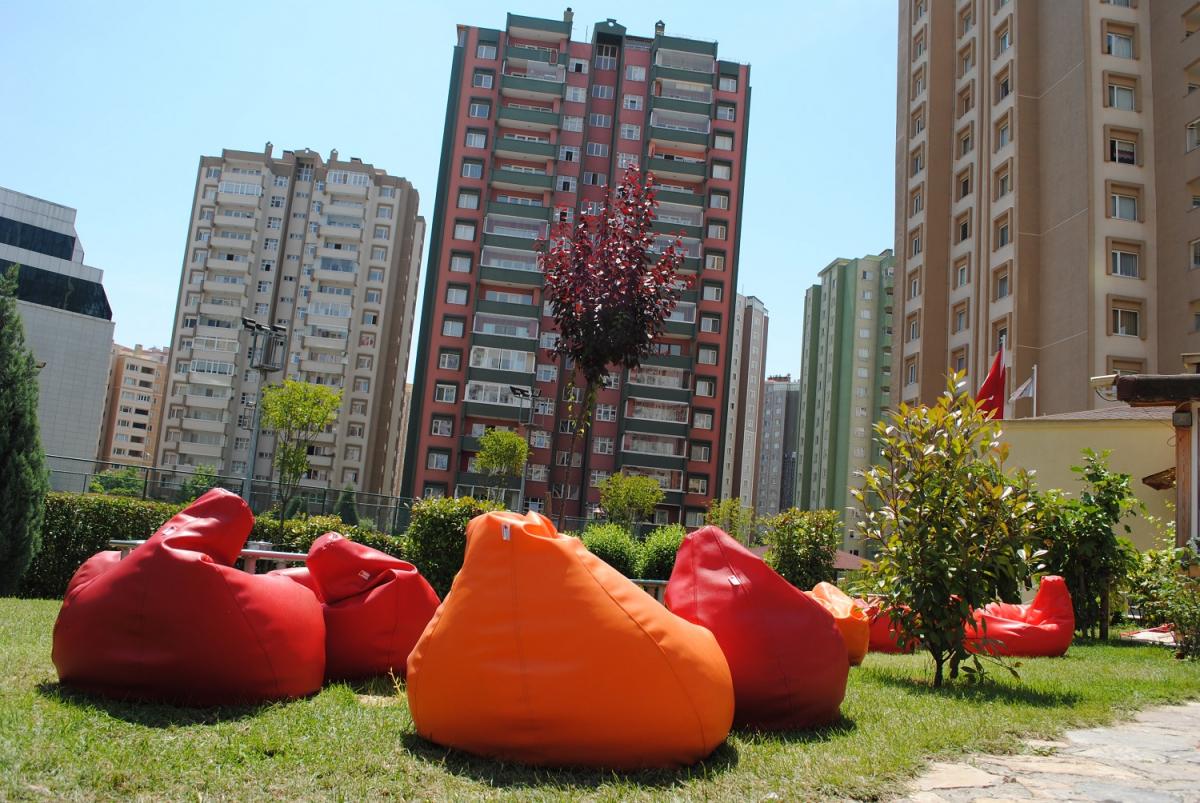
What survives clusters into three kinds, and they do not share a problem. The legacy unions still hold land, records and members: Kent-Koop in Ankara coordinates around 600 cooperatives across 37 projects, with sites at Balıkuyumcu, Bağlum, Dikilitaş and Çamlıdere. Above them sit the national central unions TÜRKKENT and TÜRKKONUT and some 383 local unions. A second group is dormant: shell cooperatives kept alive on paper for land they can no longer finance. The third is new and small, a policy-advocacy wave arguing the model back into relevance from outside government. Their problems differ. The legacy unions have land and no finance; the dormant ones have title and no members; the advocates have arguments and neither.
Because cooperatives do not pursue profit, they offer access to housing at lower cost than commercial developers.Building cooperatives are supervised by the Ministry of Environment, Urbanisation and Climate Change, the national ministry responsible for planning, building standards and climate policy. That places them under the same roof as the urban-transformation programme that displaced them, and it is about the extent of the relationship. Where cooperatives sit in current housing policy is easy to state: nowhere. The programme now under way is state-built and state-sold, with no cooperative channel in it.
Five hundred thousand homes, and who holds the levers
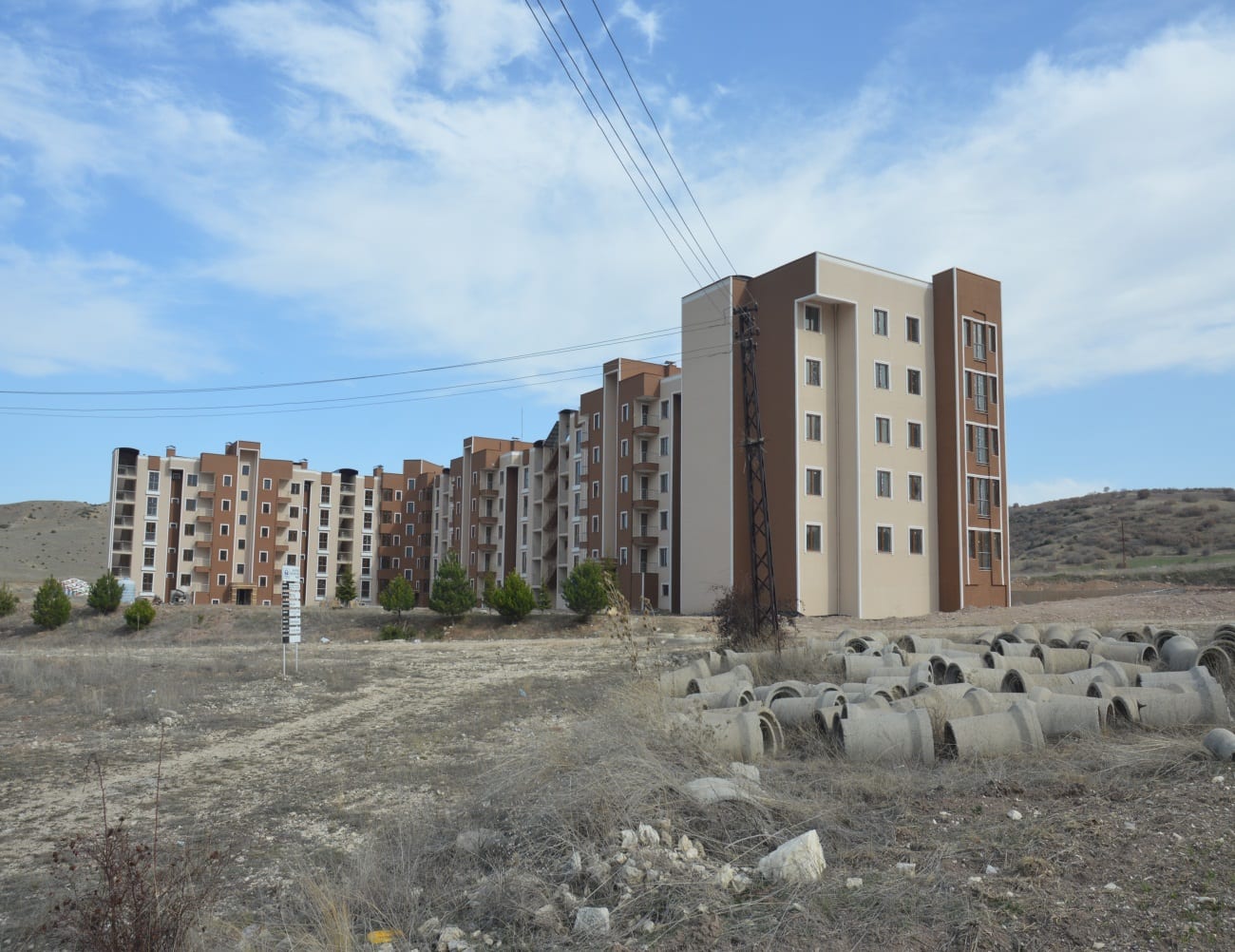
In October 2025 the government opened the Yüzyılın Konut Projesi (the Century’s Housing Project), the largest state housing push in the Republic’s history. TOKİ promises 500,000 units across all 81 provinces, with 100,000 in Istanbul. Appetite outran supply everywhere. Nationally 5,242,000 valid applications chased the half-million homes. Ankara alone filed 287,094, second only to Istanbul. The capital’s lottery, by then covering 31,037 homes, was drawn before a notary on 3 March 2026. Roughly nine applicants stood behind every flat. The first 1+1 and 2+1 homes are promised for March 2027. One element is genuinely new. TOKİ will let 15,000 flats in Istanbul at half the local going rent on three-year contracts. It is the first standing public rental tier the country has attempted at scale. Ankara gets none of it.
As of this month we have reached the figure of 1,740,000 homes, having built safe, planned and quality buildings and made people homeowners.Three tiers of government each hold part of the answer, and the fault line between them is partisan. National government sets subsidy, owns TOKİ and writes tenancy law, which is where the renewal ceiling comes from. The Ministry of Environment, Urbanisation and Climate Change signs off urban-transformation boundaries. The Ankara Büyükşehir Belediyesi, run by Mansur Yavaş of the opposition CHP since 2019, holds municipal land and that pipeline of its own. The friction between the levels is not theoretical. The municipality’s largest scheme, 39,000 homes at Gölbaşı Hallaçlı, had already waited a year for ministry approval of its transformation boundary when it was unveiled. Delivery in Ankara depends on two administrations that disagree about most other things.
We will keep spending the money taken from the people of Ankara on the people of Ankara. We will keep producing projects for the people, not for rent-seeking.For cooperatives there is no instrument to name. Türkiye has no Konzeptverfahren-style concept-led land tender, where public land goes to the best proposal rather than the highest bid. It has no Erbbaurecht-style ground lease that keeps the land itself in public hands. Municipal land in Ankara is developed by the municipality or sold. State land is developed by TOKİ. A cooperative that wants to build in the capital today bids for land at market price with no subsidised finance behind it. That, more than any loss of appetite, is what ended the model.
On empty buildings the reply has been demolition rather than reuse. Law 6306 of 2012, on the regeneration of areas under disaster risk, is the main urban instrument, and it works by clearing and rebuilding. It carries no vacancy trigger of any kind. The country’s one great adaptive-reuse argument is being had in the courts instead. Saraçoğlu Mahallesi, the Republic’s first mass-housing scheme, was designed by the German architect Paul Bonatz and finished in 1946. It holds 75 low-rise blocks, 642 flats and a further 435 staff units, shaded by registered trees, a short walk from Kızılay. The Ankara branch of the Chamber of Architects has fought its restoration for years. Its chair, Tezcan Karakuş Candan, called the neighbourhood “the apple of our eye” and asked the conservation board to stop the works.
Sustainability arrives here through the building code rather than through housing policy. Türkiye’s revised Energy Performance of Buildings Regulation took effect on 1 January 2023. New buildings above 5,000 m² had to be near-zero-energy. The threshold fell to 2,000 m² on 1 January 2025, minimum energy class rose to B, and the on-site renewable share went from 5% to 10%. Above the code sits a net-zero target for 2053, announced in 2021 and restated in the long-term climate strategy. Neither instrument says anything about who owns the building. Yet new state-built and cooperative stock are the only places where a standard can be set at scale. Everywhere else it is negotiated block by block. That is the quiet argument for a non-market tier, and nobody in Ankara is currently making it.
- 1944–1946[source]
Saraçoğlu Mahallesi, the Republic’s first mass housing
Paul Bonatz designs a low-rise neighbourhood of civil-servant flats beside Kızılay. Eighty years on, its restoration is still contested in court.
- 1979[source]
Kent-Koop begins Batıkent
Ankara’s municipality, the central government and a union of housing cooperatives agree a model that will place 275 cooperatives on 1,035 hectares west of the city.
- 1988[source]
Kooperatif production peaks
Housing cooperatives complete 167,514 units, 35% of all building permits issued in Türkiye that year. The share never returns.
- July 2024[source]
Türk Borçlar Kanunu article 344 resumes control of rent rises
The emergency ceiling on residential renewals lapses and increases return to the twelve-month average consumer price index.
- October 2025[source]
TOKİ opens the Yüzyılın Konut Projesi
500,000 homes are announced across 81 provinces, among them 100,000 in Istanbul and 15,000 rental flats let at half the local going rent.
- March 2026[source]
Ankara’s social-housing lottery is drawn
287,094 Ankara households applied; a notary-supervised lottery allocates the province’s 31,037 homes.
- March 2027[source]
First Yüzyılın Konut Projesi handovers fall due
The first 1+1 and 2+1 flats are promised to lottery winners, Ankara’s among them.
- 2053[source]
Türkiye’s net-zero target year
Every building standard written between now and then is measured against the 2053 goal set in 2021.
Batıkent and the afterlife of the self-built city
Batıkent is the reason Ankara belongs in any European conversation about cooperative housing. From 1979 the municipality, the central government and Kent-Koop, a union of housing cooperatives, built a new town west of the city on 1,035 hectares. Roughly 70,000 homes went up for about 250,000 people, organised through 275 separate cooperatives. It took the World Habitat Award in 1986, when the citation counted 50,000 completed units. The award was for showing that a new town could be built quickly, on the self-help effort of the people who would live in it.
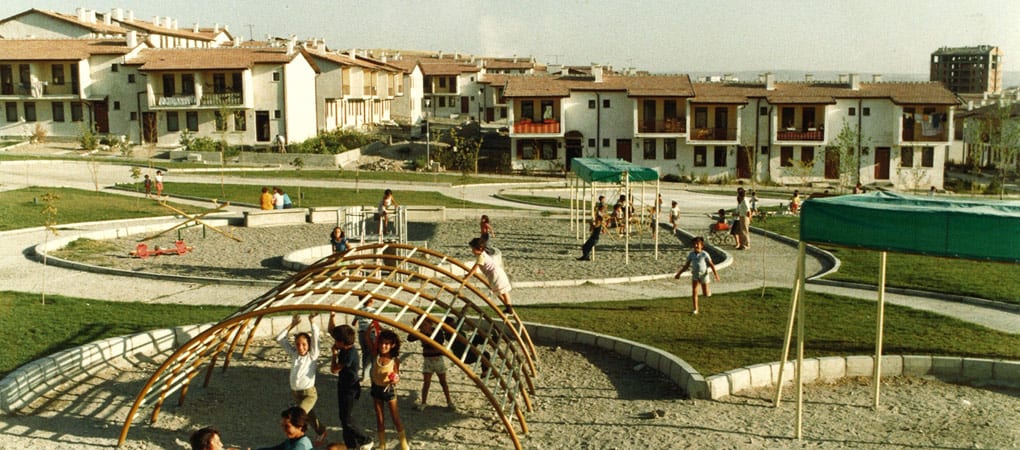
The greatest factor in the Batıkent Project’s success as an alternative solution model is the civil and democratic participation that forms the backbone of the structure.Kent-Koop did not stop there. It describes its own trajectory as a move from housing cooperativism to urban cooperativism. That is a precise claim rather than a slogan. The ambition is to produce a district, with its schools, workshops and transport, instead of a block. The union kept its registers, its staff and its land through four decades of collapsing production. That institutional survival is the most underrated asset in Ankara’s housing system.
Dikmen Vadisi was Türkiye’s first urban-transformation project, begun in 1989 under Mayor Murat Karayalçın, who had run Kent-Koop before he ran the city. It cleared gecekondu from a valley running into central Ankara and rehoused the same families in flats set among parks and public buildings. It is also the cautionary tale. The municipality’s own project page records that rights-holders in the final stage have now been waiting 17 years for the homes they were promised.
Eserkent in Mamak is the smallest thing named here and among the most instructive. The metropolitan municipality took 156 social flats that had stood idle for 18 years. It renovated them and let them by public ballot to residents over 65 and to newly married couples, at 100 lira a month. It is adaptive reuse of public stock, it is permanent rental, and it is the closest thing in the city to a European social tenancy. It is also tiny, which is the point worth sitting with.
Saraçoğlu Mahallesi is the argument about what Ankara already owns rather than what it might build. Low-rise, publicly owned and green, it has spent two decades as a court case instead of as housing. Nobody has proposed simply putting people back into it, which is what the estate was designed for and what the city most needs.
TÜRKKENT and TÜRKKONUT, the two national cooperative central unions, still stand above the local structure. Founded in 1988, TÜRKKENT alone has supported the construction of more than 250,000 units. Ankara’s universities, meanwhile, keep documenting what the policy leaves out. The Akkoç and Yirmibeşoğlu study of student renting is a careful account of what a city looks like when the non-market tier is missing. Every tenancy is negotiated one flat at a time.
Ankara does not need to learn cooperative housing. It did this at the scale of a whole town, and the unions, registers, members and land are all still there. What it has lost is the one thing a cooperative cannot manufacture for itself: land on terms it can afford, and money that does not need to earn a market return. Those are policy choices, not facts of nature, and they can be made differently.
References
Statistics10Click on any number to see the source
Housing market
Tenure & affordability
Population & migration
From our library8
- Informal Urban Settlements and Social Policy by Other Means — Knowledge
- From Regulation to Negotiation: Adaptive Studentification in Ankara, Turkey — Knowledge
- Housing cooperatives in Türkiye — Knowledge
- Kent-Koop — Organisation
- Batıkent Project — Project
- A home of one's own: can Türkiye tackle the mounting housing crisis? — Knowledge
- Ülkede 8,5 milyon konut boş tutuluyor — Knowledge
- Mimarlar Odası Ankara Şubesi (Chamber of Architects, Ankara Branch) — Organisation
Further sources27
- Can Türkiye tackle the mounting housing crisis? — Türkiye Today
- Informal Urban Settlements and Social Policy by Other Means — Social Policy Worldwide
- Housing cooperatives in Türkiye — Cooperative Housing International
- Batıkent Project, Ankara — World Habitat
- Kent-Koop: message from the president — Kent-Koop
- Türkiye Yüzyılı'nda 500 bin sosyal konut seferberliği — TOKİ
- Ankara'da yapılacak sosyal konutların yeri belli oldu — Ekonomist
- Rent increase rate calculation in Turkey — CBH Hukuk
- Eylül 2026 kira artış oranı ve Türk Borçlar Kanunu m. 344 — Ayboga Hukuk
- TCMB açıklandı: konut ve kiralarda ağustos hareketliliği — Ekonomi Ankara
- Ankara 2025'te 176 bin 833 kişi göç aldı — Ekonomi Ankara
- Ülkede 8,5 milyon konut boş tutuluyor — Dünya
- Konut ve kira harcamaları 2025 yılında ne oldu? — Taşınmaz Haber
- Konut krizine karşı kooperatifçilik — Gazete Kadıköy
- Mansur Yavaş 47 bin 970 konuttan oluşan 7 projeyi tanıttı — Ankara Büyükşehir Belediyesi
- Dikmen Vadisi Son Etap Kentsel Dönüşüm Projesi — Ankara Büyükşehir Belediyesi
- Aylık 100 TL kira ile verilecek Eserkent sosyal konutları — Ankara Büyükşehir Belediyesi
- Mimarlar Odası Ankara Şubesi: Saraçoğlu'na dokunmayın — Cumhuriyet
- Saraçoğlu Mahallesi — Vikipedi
- Energy Performance Regulation in Buildings has been revised — İzocam
- Türkiye net zero targets — Climate Action Tracker
- From Regulation to Negotiation: Adaptive Studentification in Ankara — Critical Housing Analysis
- Ankara — Wikipedia
- A Brief History of METU Forest — bianet
- 500 bin sosyal konutta en yüksek başvuru İstanbul’dan — NTV
- TOKİ Ankara kura sonuçları — Halk TV
- Eylül 2026 İstanbul, Ankara ve İzmir ortalama kira fiyatları — Milli Gazete
Funding & land tenure
What a housing cooperative could actually build on hereLand tenure has not been assessed for Turkey yet — that is a gap in the research, not a finding.