The city that put its mayor on the ballot again
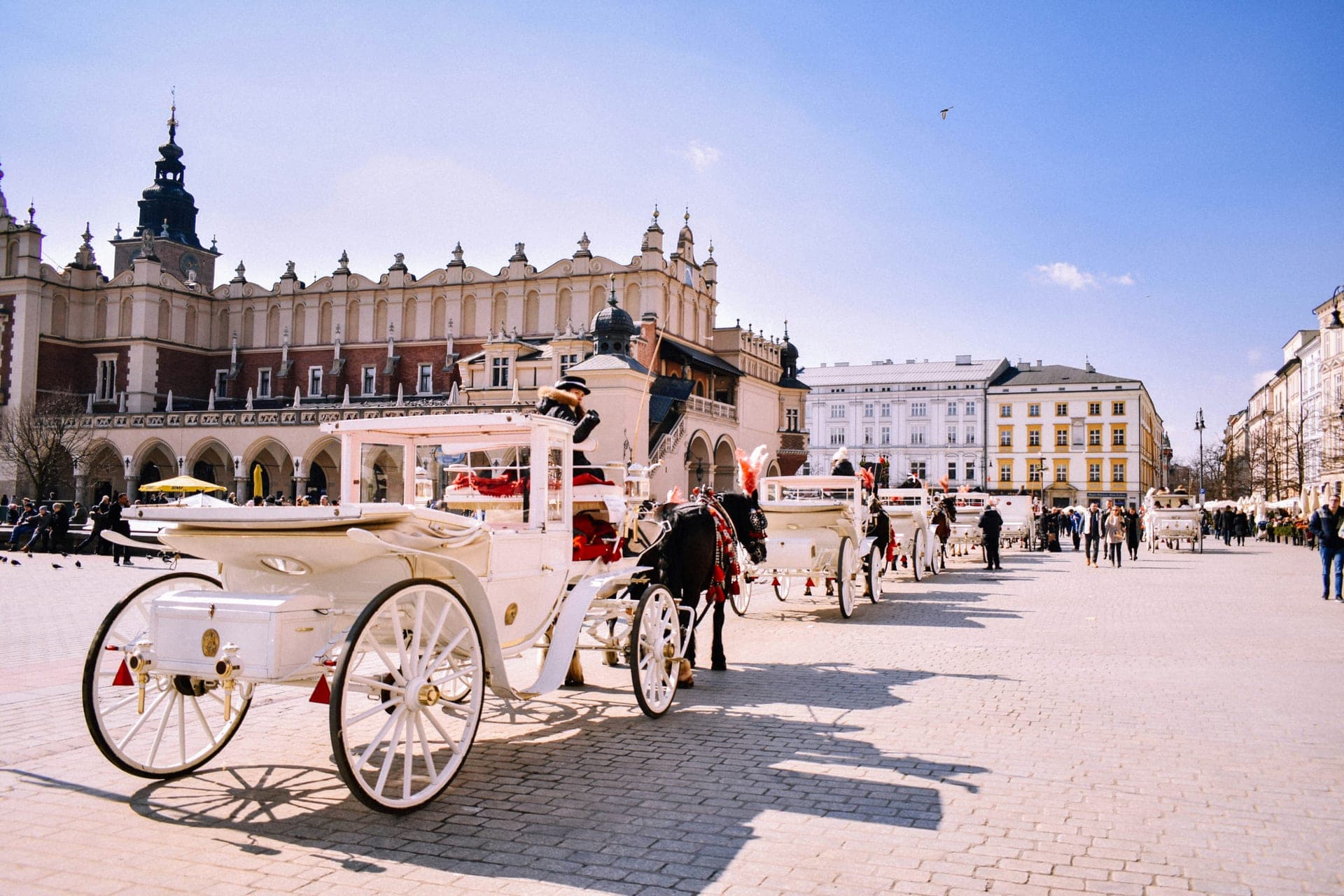
Kraków runs on two clocks. The first was set in 1257, when the city charter laid out a market square of 3.79 hectares. It has barely shifted since, and it still keeps time through a trumpet call sounded from St Mary's tower on the hour. The second clock was set in 1949. That year the state planted Nowa Huta, a steel town now holding more than 200,000 people, on farmland east of the old core. How this city houses itself is the argument between those two clocks: a conserved centre the world visits, and a modernist east built at speed for workers.
The argument is unusually live this week. On 24 May 2026 Kraków recalled its mayor, Aleksander Miszalski, in a referendum, with 97.8% of votes cast in favour on a turnout of 29.99%. It was the first successful recall of a Kraków mayor. A government-appointed commissioner, Stanisław Kracik, has run the city since, and on 27 September voters choose a replacement from eight candidates. Short lets, a tourist levy and the pace of municipal building are what the campaign keeps circling back to.
Start with who owns what. Counting cooperative title as ownership, which is how Polish statistics treat it, 58.1% of Kraków households own the home they live in. Cooperatives hold 13.2% of the city's dwellings through 94 registered societies. The municipality owns very little: 3.2% of the stock, or 14,726 flats out of 466,649. Private landlords let 38.7%, almost certainly an understatement, because much Polish letting is never registered.
- Owners
- Owner-occupier44.9%
- Cooperative13.2%
- Renters
- Public & non-profit rental3.2%
- Private rental38.7%
Social housing in Poland is a rule rather than a tenure. Some 3.5% of Kraków's dwellings carry a social-housing entitlement, layered on top of the municipal stock rather than beside it. Poland built its post-war affordable homes through cooperatives, not through a dedicated social landlord, so there is no separate non-profit rental sector to point at. The municipal tier is also shrinking. Across the last mayoral term the city sold 736 flats for more than 118 million złoty.
Price a square metre across the tenures and the ladder is steep. A municipal tenant pays about €1.56 a month and a member of an older cooperative about €2.12 in administrative charges. On the open market a new private letting asks a median €11.74, the rented stock as a whole averages €14.84, furnished flats reach €18.24 and serviced, all-inclusive lets run to €32. The two lowest tiers are maintenance charges set by landlords with no profit motive, which is why they read as almost free. The distance from that floor to a market contract is a factor of seven to nine.
- Public / municipal housing
- Cooperative
- New contracts
- All rented stock€14.84
- Furnished
- Serviced / mid-stay
Monthly cost per square metre by tenure. The two controlled tiers are administrative charges rather than rents, which is what makes the gap to a market contract so wide.
Empty space in Kraków is mostly a commercial story. Registered residential vacancy sits at 0.34%, roughly 1,584 dwellings, a count that says more about Poland's weak recording of idle stock than about supply, as an Investigate Europe inquiry into Europe's empty homes found. Offices are the opposite case. The city holds 1,831,400 m² of modern offices, the largest market outside Warsaw, of which 17.8% stood empty on the 2024 count, about 325,989 m². Brokers put it at 19% in the first half of 2026, at 21.9% outside the centre against 10.3% in the core.
People keep arriving, and not all of them are counted as residents. Kraków registers about 10,790 new arrivals a year and carries roughly 55,000 medium-stay residents who stay three to twelve months, mostly students, exchange cohorts and posted workers, all competing for the same small flats. Above them sits the short-let market, the sharpest local dispute of all. The city register listed 2,712 licensed objects with 37,327 bed spaces in March 2026, while the candidate campaigning hardest on the issue puts the flats actually in tourist use above 10,500. A median night costs €99. European Parliament research on short-term rental regulation treats that data gap as the first obstacle to acting.
Touristification is spilling into one district after another, taking a quiet place to live away from families, and the centre of Kraków is sadly beginning to resemble a funfair that overwhelms its residents.The squeeze long ago stopped being confined to the poorest households. Deloitte's annual survey of European residential markets found that Kraków prices rose 28.1% during 2024. That was more than any other city it tracks, driven by a national mortgage-subsidy scheme that lifted demand without adding supply. A rent-to-income estimate for the city puts housing costs at 63.3% of a typical local income. That is a modelled figure rather than a survey result, and every other local measure points the same way. Harmonised city-level affordability work places Polish cities among the hardest in Europe for a median earner to buy in, and the European Commission's diagnosis of the crisis reaches the same finding regionally. Research on the financialisation of Polish housing describes a country that became a homeownership society with almost no regulation, and now has to rebuild a non-market tier from nothing. The cooperative sector, which built much of this city, is where that would have to start.
From officers' villas to the panel blocks
The Polish housing cooperative is the spółdzielnia mieszkaniowa, and a member's right to a flat comes in two legal forms. The older is spółdzielcze lokatorskie prawo, a tenancy-style right of occupancy that cannot be sold. The more common, dominant since the 1970s, is spółdzielcze własnościowe prawo, an ownership-style cooperative right that a member can sell, mortgage and leave to a child. Joining means paying a wkład, the capital contribution that converts into that right. Living there means paying a czynsz administracyjny, a monthly administrative charge that covers upkeep and carries no profit margin. The second form is the whole explanation for Kraków's tenure numbers. A cooperative member here stands much closer to an owner than to a tenant.
Kraków's cooperative story begins in the villa belt rather than the tower block. From 1909 a society for building cheap housing for civil servants laid out the Kolonia Urzędnicza at Salwator, on ground the city reclaimed from Austrian fortifications. From the early 1920s the Oficerska Spółdzielnia Mieszkaniowa, an officers' housing cooperative, did the same on the old fort belt east of Rondo Mogilskie, and kept building until the war. Then the scale changed completely. After 1949 the cooperative became the state's delivery vehicle for Nowa Huta and the estates that now ring the city, and it stayed that way until 1989. The right to buy hollowed the form out from inside over the two decades that followed. Members converted their shares toward individual ownership, and new cooperative building all but stopped.
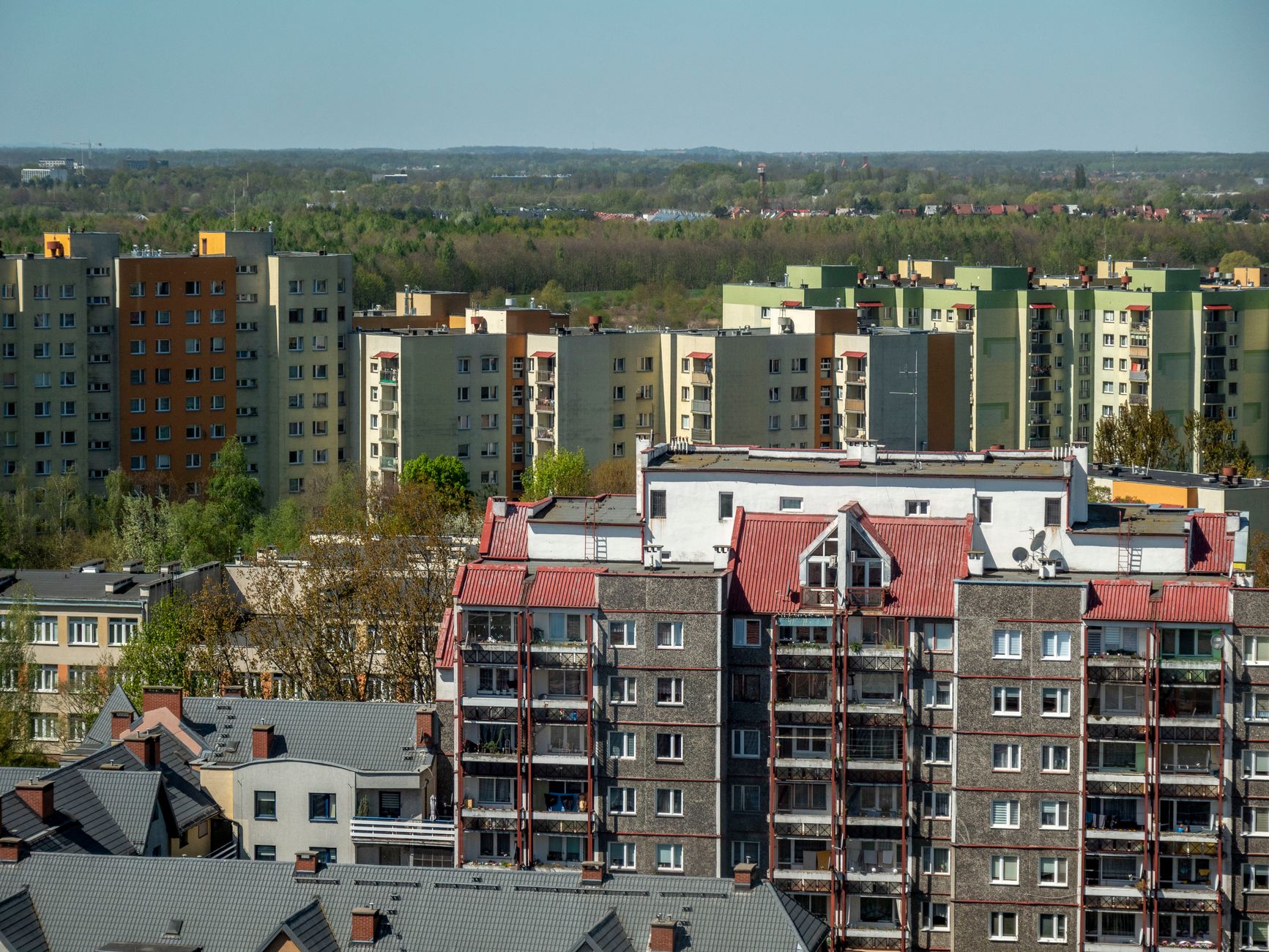
Today the sector splits into clusters with genuinely different problems. The legacy giants sit east of the river. SM Hutnik, SM Bieńczyce and their neighbours manage panel-era estates raised for the steelworks. Their working agenda is lifts, district heating and insulation rather than new homes. A second cluster is the older inner-city society. The Zwierzyniecka cooperative, founded in 1959, spent a decade thermally upgrading 37 of its buildings, and now manages private housing communities for a fee to steady its income. A third cluster is the resident-led kooperatywa mieszkaniowa, a small group of future neighbours commissioning one building. A 2022 national law was written to enable it, and Kraków has so far only piloted it. The old cooperatives are capital-poor with ageing memberships. The new ones cannot get land. A study of Polish housing cooperatives in the property market names the same three constraints across the country: financing, planning procedure and professional management.
Kraków's administration has begun treating the cooperative and the resident group as delivery channels rather than heirlooms. The city's housing programme lists a kooperatywa pilot alongside its new rental company, and asks the state to loosen the rules that made the model stall in Wrocław and Gdynia. Comparative European work on cooperative housing and its resilience keeps arriving at the same precondition. Research on participation in the sector adds the governance half of it. The form grows where land and patient finance are organised for it, and stays a curiosity where they are not. The OECD's comparison of Czech and Polish housing reform puts the missing piece bluntly, as a stable legal and financial framework for not-for-profit providers. Whether Kraków builds one is now a question for its politics.
Land is the binding constraint, and everyone knows it
Kraków's answer now has a company attached to it. In December 2025 the council created a municipal społeczna inicjatywa mieszkaniowa, or SIM, a council-owned developer building flats let at moderate, regulated rents. Its first scheme, 148 flats at ul. Padniewskiego, went to detailed design in May 2026, with about 150 more at ul. Dekerta and 73 at ul. Wielicka behind it, both put to architectural competition in August 2026. The multi-year housing programme for 2026 to 2030 commits the city to 613 SIM dwellings and 527 further units bought in. A społeczna agencja najmu, a social rental agency leasing from private owners and subletting below market, runs on 7 million złoty of EU money with 50 flats occupied. Around 800 empty municipal flats have been renovated and re-let in two years, against a target of 2,000 by 2029.
Three levels of government hold different parts of the toolkit, and the city holds the weakest one. The national government writes tenancy law and controls the money. Bank Gospodarstwa Krajowego, the Polish state development bank, runs the Fundusz Dopłat, a grant fund covering up to 80% of a municipal housing investment under the state programme for social and municipal construction. The Małopolska municipalities and the Krajowy Zasób Nieruchomości, the national land agency, jointly own KZN SIM Ziemia Krakowska, the vehicle building at Padniewskiego. Kraków controls land allocation, its own company and its planning documents. Land is the lever it says it lacks. The city's housing programme names the shortage of larger multi-family sites as the main barrier to building anything, and sets a target of assembling five to ten hectares.
Two planning instruments are moving. The zintegrowany plan inwestycyjny, an integrated investment plan, lets a developer negotiate extra density in exchange for an urban contract carrying obligations to the city. Kraków adopted its first on 16 September 2026, at Bronowice Małe. The investor takes additional building rights in return for 23 million złoty of works and payments, including a public park and the purchase of municipal flats. The second is the planning reform underneath it. Every Polish municipality had to adopt a plan ogólny, a binding general plan replacing the old advisory study, by 31 August 2026, and every investment plan has to sit inside it. For the kooperatywa the lever is simpler and still barely used. The 2022 law lets a city sell or lease municipal land to a resident group on preferential terms.
The vacancy reply is, for now, almost entirely municipal. The city renovates its own pustostany, or vacant council flats, rather than building new. The Mieszkanie za remont programme hands a wreck to a tenant who repairs it in lieu of rent, and demand is brutal. Several hundred people queued overnight outside the town hall to lodge an application in one recent round. Office conversion is the frontier the city has hardly touched. Its own market supplies the raw material, because the vacancy sits in exactly the older, peripheral class-B stock that European work on office obsolescence identifies as convertible. Dutch work on adaptive reuse puts it at between a tenth and a seventh of new supply where regulation allows, and six-city evidence on office-to-residential conversion finds residential demand is the decisive variable. Kraków has that in abundance. It has no vacant-homes tax and no register of empty private flats, so nothing presses on private vacancy at all.

Kraków's best-known climate measure is a housing measure. On 1 September 2019 the city became the first in Poland to ban coal and wood burning for domestic heating, moving tens of thousands of households onto district heat, gas or electricity. The next phase is harder and lands on the cooperatives. The panel estates of Nowa Huta and Czyżyny need deep retrofit to meet the recast EU energy performance of buildings directive. Extending emissions trading to heating fuels will fall hardest on the households least able to absorb it. European work on climate adaptation in public, cooperative and social housing treats those landlords as the delivery vehicle, because they are the only owners where one decision covers thousands of flats. EU-wide mapping of housing need adds the procedural point: permitting speed, not ambition, is what limits delivery in this part of Europe.
- 1909[source]
Civil servants' colony at Salwator
A society for building cheap housing for officials lays out the Kolonia Urzędnicza on land reclaimed from the Austrian fortifications, the first organised non-market housing scheme in modern Kraków.
- 1920s[source]
Oficerska Spółdzielnia Mieszkaniowa builds the fort belt
An officers' housing cooperative develops the old fortification ground east of Rondo Mogilskie, building until the war and creating what becomes the largest villa development of interwar Kraków.
- 1949[source]
Nowa Huta founded
The state begins a planned socialist-realist town for the Lenin steelworks east of Kraków. Cooperatives, not a social landlord, deliver most of the housing that follows.
- 1 September 2019[source]
Solid-fuel heating banned
Kraków becomes the first Polish city to prohibit burning coal and wood for domestic heating, tying its air-quality policy directly to the energy systems of its housing stock.
- June 2024[source]
The scale of the sell-off is put on the record
Councillors review the previous administration's disposals: 736 municipal flats sold for more than 118 million złoty across the term, alongside some five hundred plots of land.
- 17 December 2025[source]
Council creates a municipal SIM company
Kraków resolves to establish a single-shareholder social housing initiative company to build and let moderate-rent flats, its first purpose-built rental developer.
- 24 May 2026[source]
Voters recall the mayor
A referendum removes Aleksander Miszalski with 97.8% of votes cast in favour on a 29.99% turnout, the first successful recall of a Kraków mayor. The council survives the same ballot.
- 31 August 2026[source]
Deadline for the binding general plan
Poland's planning reform requires every municipality to adopt a plan ogólny by this date, replacing the advisory study and setting the frame every integrated investment plan must fit inside.
- 16 September 2026[source]
First integrated investment plan adopted
At Bronowice Małe the city grants extra building rights in exchange for an urban contract worth 23 million złoty, including a public park and the purchase of municipal flats.
- 27 September 2026[source]
Early mayoral election
Eight candidates contest the vacancy left by the recall, with short lets, a tourist levy and the pace of municipal building at the centre of the campaign.
- 2029[source]
Target: 2,000 vacant municipal flats back in use
The city aims to raise the number of renovated and re-let pustostany from about 800 in two years to 2,000, the cheapest route it has to new municipal tenancies.
- 2030[source]
Target: 613 SIM dwellings and 527 acquired units
The multi-year housing programme for 2026 to 2030 sets the city's first quantified rental-building commitment, financed through BGK grants, preferential credit and tenant participation.
Cooperative beginnings, a planned steel town, a sold-off municipal stock, and the targets the city has now written down.
Nobody in Kraków argues against building. The quarrel is over who the new homes belong to, and whether ownership is still the point. One camp wants the city to stop selling what it has left and hold it as rental stock, a position argued from the right as much as the left.
The conclusion is this: housing policy in Kraków needs a thorough change, a change starting now. The sale of flats also needs to be stopped.The other camp accepts that a growing share of Krakovians will rent for life, and wants the city to make renting secure instead of chasing ownership for everyone. Put plainly by the deputy mayor holding the housing brief, it set off a national row.
Who said that everyone has to own their flat? Young people relate to ownership differently. They value freedom and mobility more.Both camps want the non-market tier to grow, and disagree on what it is for. One reads municipal housing as a ladder people should step off and buy. The other reads it as a permanent tenure that has to be good enough to want. That distinction decides whether Kraków builds a few hundred flats or a system, and Sunday's vote will not settle it.
Second lives for a mill, a foundry and a hospital quarter
Nowa Huta remains the largest housing experiment Poland ever ran, and it is still standing. Built from 1949 for the steelworks, its socialist-realist core of arcaded blocks around plac Centralny entered Kraków's heritage register in 2004, and the district is now among the most populous parts of the city. The flats are largely cooperative, the blocks have mostly been insulated, and the green space per resident beats anything the private market has produced since. What Nowa Huta demonstrates is unfashionable and useful. A city can build a complete neighbourhood in one move, with schools, clinics and trams arriving on the same day as the homes.
Lofty w Młynie turned Kraków's first serious industrial conversion into housing. A nineteenth-century mill in Zabłocie became 57 apartments and took the national Modernisation of the Year award in 2010. The district around it has since absorbed the MOCAK contemporary art museum, the Cricoteka centre for Tadeusz Kantor's work and Oskar Schindler's Emalia factory. Zabłocie is this city's proof that adaptive reuse works here, and equally its warning. Almost every new home in it is market-rate, and the conversion arrived alongside the price rises rather than ahead of them. OpenHeritage's survey of community-driven reuse across Europe finds the same fork in city after city, and sets out what it takes to keep residents in the frame.
Wesoła is the most ambitious thing the city is attempting, and it is not yet a housing scheme. Kraków bought nine hectares of the former university hospital campus in the city centre from the Jagiellonian University in 2019. It handed the site to Agencja Rozwoju Miasta Krakowa, the municipal development agency, to work out what a public quarter should contain. Culture arrived first, in the shape of Biblioteka Kraków and the KBF culture office, with a programme of several hundred events a year. Housing is written into the brief and has not been built. The city has been comparing notes with Vienna on converting a post-hospital site without simply selling it, which is both the right comparison and a demanding one.
KZN SIM Ziemia Krakowska is the least photogenic entry here and probably the most consequential. It is a company rather than a building: the Małopolska municipalities and the national land agency together, with a balance sheet that can carry construction debt and a mandate to let below market. Padniewskiego, beside the Łąki Nowohuckie meadows, is its first Kraków scheme, and the specification is deliberately not minimum-standard. Underground parking, storage, a green courtyard, turnkey finish and step-free access throughout are all in the brief. That choice matters more than it sounds. Polish municipal housing carries a reputation earned over thirty years, and a rental tier that looks like a punishment will never grow.
SM Hutnik and SM Bieńczyce hold the stock that the transition forgot. Between them and their neighbours across Nowa Huta they manage tens of thousands of flats raised between the 1950s and the 1980s, with ageing memberships and renovation bills no members' meeting enjoys approving. They are also the only institutions in Kraków that already own non-market housing at scale. Any credible plan for this city's carbon or its affordability has to run through them, which is why the barriers facing Polish cooperatives are not a sectoral footnote here. They are the affordability question in another form, and the European cooperative literature is consistent about what unlocks it.
Osiedle Oficerskie and the Salwator civil servants' colony close the loop. Cooperative societies built both of them for people on modest fixed salaries. Both are now among the most expensive addresses in Kraków, and both show how long a well-made non-market scheme lasts once the market catches up. Between those villas and Padniewskiego sits a century. Kraków built a cooperative stock, sold much of it, and is now assembling a small rental tier out of municipal land, EU grants and a company created last December. Its research layer is thinner than Vienna's or Berlin's, resting on a handful of Polish academic studies and the OECD's regional comparison. What it does have is land it already owns, an office stock nobody has counted as housing, and a cooperative tradition older than the Republic. Work on adaptive reuse suggests the second of those is worth far more than Kraków currently books it at.
References
Statistics16Click on any number to see the source
Housing market
Tenure & affordability
Cooperative, social & public
Adaptive reuse & vacancy
Population & migration
From our library17
- Property Index - Overview of European Residential Markets — Knowledge
- Unequal housing affordability across European cities. The ESPON Housing Database, Insights on Affordability in Selected Cities in Europe — Knowledge
- Understanding the housing crisis: Staff Working Document accompanying the European Affordable Housing Plan — Knowledge
- The empty house: a window into Europe’s vacant property problem — Knowledge
- The regulatory aspects of short-term rentals in the EU — Knowledge
- Housing policy under the conditions of financialisation - The impact of institutional investors on affordable housing in European Cities — Knowledge
- Spółdzielnie mieszkaniowe na rynku nieruchomości w Polsce w XXI w.: Bariery i szanse rozwoju — Knowledge
- Housing Cooperatives in Europe - Resilience and Adaption to Changing Need — Knowledge
- Review of the participatory and community-based approach in the housing cooperative sector — Knowledge
- Housing Reforms in Czechia and Poland — Knowledge
- Rethinking European Offices 2030 - Risks and Opportunities from Obsolesence — Knowledge
- Adaptive Reuse for Housing — Knowledge
- Understanding office-to-residential conversion — Knowledge
- Climate adaptation in public, cooperative, and social housing in Europe — Knowledge
- Heating Up Inequality? Socio-spatial impacts of ETS2 on European housing and cohesion — Knowledge
- Part 2: Mapping the housing needs in the EU, assessing the impacts of scarcity and providing an overview of relevant EU legislation — Knowledge
- Open Heritage - Community-Driven Adaptive Reuse in Europe: Best Practice — Knowledge
Further sources28
- Main Market Square, Kraków — Wikipedia
- St Mary's Trumpet Call — Wikipedia
- Nowa Huta — Wikipedia
- Jagiellonian University — Wikipedia
- Kraków UNESCO City of Literature — Wikipedia
- Referendum on recalling the Mayor of Kraków, 2026 — Wikipedia · 2026
- Kraków recalls mayor Aleksander Miszalski in referendum — Rzeczpospolita · May 2026
- Early election for Mayor of Kraków called for 27 September 2026 — Krajowe Biuro Wyborcze · 2026
- Nearly one office in five stands empty in Kraków — PropertyNews / AXI IMMO · August 2026
- Łukasz Gibała on short-term letting and touristification in Kraków — Wszystko co Najważniejsze · August 2026
- Rental homes at ul. Padniewskiego: how Kraków is growing social housing — Urząd Miasta Krakowa · May 2026
- Competitions launched for new municipal housing schemes in Kraków — Urząd Miasta Krakowa · August 2026
- Programme of social and municipal housing construction — Ministerstwo Rozwoju i Technologii
- Maria Klaman on ownership and renting — Wirtualna Polska · June 2024
- Kraków sold thousands of flats under the previous mayor — LoveKraków · June 2024
- Kraków adopts its first integrated investment plan — LoveKraków · September 2026
- Ban on the use of solid fuels in Kraków from September 2019 — LIFE Małopolska · 2019
- Municipalities have until 31 August 2026 to adopt a general plan — Infor · 2026
- Osiedle Oficerskie — Wikipedia
- Kolonia Urzędnicza at Salwator — Szlak Modernizmu — housing estates of Kraków
- History of the Zwierzyniecka housing cooperative — Zwierzyniecka Spółdzielnia Mieszkaniowa
- Warsaw now more expensive than Rome as Poland sees Europe's fastest house price rises in 2024 — Notes from Poland · September 2025
- Zabłocie: from factories to lofts — LoveKraków
- Revitalising post-hospital areas: Kraków and Vienna in conversation — Urząd Miasta Krakowa
- Wesoła — Krakowskie Biuro Festiwalowe
- KZN SIM Ziemia Krakowska — KZN SIM Ziemia Krakowska
- Spółdzielnia Mieszkaniowa Hutnik — SM Hutnik
- Spółdzielnia Mieszkaniowa Bieńczyce — SM Bieńczyce