Palaces, empty flats and rising rents
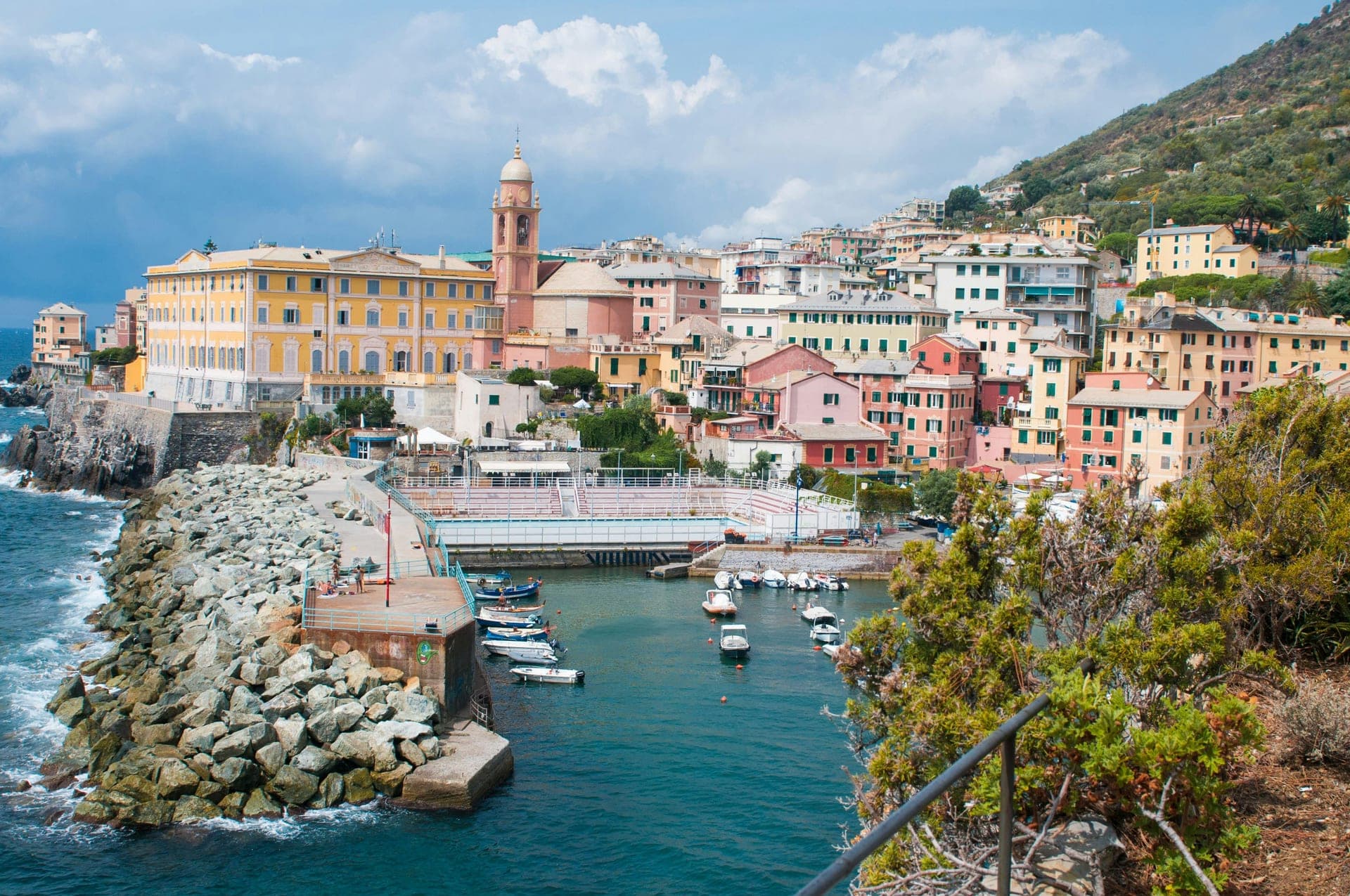
Genoa grew rich as a maritime republic and spent that wealth on stone. Its bankers lined the Strade Nuove with palaces, and its port pulled workers up the steep valleys behind the harbour. The city's population peaked at 816,872 in 1971 and has been falling ever since. In the words of the mayor, Genoa was built to hold a million people, and today it holds half that. That legacy explains much of its housing story: plenty of buildings, too few of them in use, and rents that still outrun local pay.
Most Genoese own their homes. Around 68% of households are owner-occupiers and 26% rent. Public rental housing, the ERP stock (edilizia residenziale pubblica, homes owned by the state and let at income-linked rents), counts 10,444 homes. That is about 4% of the stock, most of it owned and managed by ARTE Genova, the regional public-housing company. Private landlords let the remaining 22%. A further 6% of households live under the census category "altro titolo" (other title), mainly usufruct or a home lent free by relatives. Cooperative rental housing has no measured share of its own in Genoa. Most homes built by cooperatives here were sold to their members and now count as owner-occupied.
- Owners
- Owner-occupier68.0%
- Renters
- Public & non-profit rental4.0%
- Cooperative0.00%
- Private rental22.0%
- Other6.0%
- Usufruct / free use (altro titolo)6.0%
Social housing in Genoa is a rule about rent and allocation, not a separate kind of landlord. About 4.2% of homes carry such a rule. Nearly all of them are the same ERP flats counted above, allocated by ranking on the ISEE (the national means test of household income and assets). A thin extra layer comes from the fund-financed "housing sociale" of the last decade, let at capped rents to households that earn too much for ERP but too little for the market. Demand far outstrips that layer: a single allocation call draws about 4,000 applications, of which roughly half qualify.
Rents climb steeply from that public floor. ERP tenants pay around €1.30 per square metre a month. Cooperative rents in Italy's undivided-ownership cooperatives average about €5.20 nationally. The median across all of Genoa's private leases is €10.40, and a new contract costs about €12. Furnished and serviced flats, priced with utilities and furniture included, reach €15.57. The city's own figures put average rent growth at 8% a year.
- Public/municipal housing
- Cooperative
- All-stock median
- New contracts
- Furnished / serviced (gross)
Monthly rent per square metre by tier (net cold; the furnished tier is gross, all-in). The cooperative tier is a national benchmark for undivided-ownership cooperatives, as Genoa has no local series.
At the heart of Genoa's housing story sits a paradox of emptiness. The 2021 census found 26.3% of the city's dwellings without a resident household, some 74,000 homes. Many are second homes or holiday lets, and many are simply too run-down to let. The public stock shares the problem: of the city-managed ERP flats, 1,006 stood empty in early 2026, and more than 80% of those released by tenants needed major repairs first. Offices are emptying too. An estimated 13.5% of office space is vacant, around 271,088 m², though that figure is apportioned from national data. Short-term letting adds pressure: the council counts about 3,500 short-term rentals, concentrated in the medieval caruggi (the narrow alleys of the old town).
Genoa is not short of people arriving so much as short of homes fit for them. The city has lost 29% of its residents in 45 years. Yet the port, the university and shipbuilding bring in an estimated 14,000 mid-term residents a year, who compete for the same furnished flats. New building barely registers. Italy was expected to complete just 1.6 homes per 1,000 residents in 2025, the lowest rate in Europe.
Young people will no longer be able to afford a home, because rents keep reaching impossible figures.The crisis falls hardest on the young and on the renting minority. Welfare councillor Cristina Lodi told the new housing table that young tenants in Genoa spend more than 40% of their income on rent. Nationally, some 350,000 families wait for a public home. The squeeze now reaches well beyond the poorest. In Ipsos's 2025 Housing Monitor, 70% of Italians under 35 said buying or renting was harder for them than for their parents, and 58% said national housing policy was heading the wrong way. Genoa's own reporting, such as Genova24's count of empty public flats, frames the problem as waste as much as scarcity.
Almost all of Genoa's non-market housing is public, and its cooperative tradition is harder to see. That tradition is real, and it is older than the Italian state.
A cooperative tradition hidden inside ownership
Italian housing cooperatives come in two main forms. In a cooperativa a proprietà indivisa (undivided-ownership cooperative), the cooperative keeps the building and members hold a lifelong right of use. They pay a charge set by costs, not market value, which Legacoop Abitanti describes as well below market rents. In a cooperativa a proprietà divisa (divided-ownership cooperative), members pool resources to build and then each buys their own flat outright. Mixed schemes combine the two. The national federation Legacoop Abitanti represents both, and so does its regional arm, Legacoop Liguria.

Genoa's cooperative story began in its industrial west. Sampierdarena, Cornigliano and Sestri Ponente grew around the shipyards and steelworks, and their workers founded some of Italy's earliest mutual-aid societies in the mid-19th century. Legacoop Liguria traces the region's cooperative history back to 1856. After 1945, building cooperatives helped house the families who crowded into the valleys behind the port. Most chose the divided form. Members built together, then became owners, and their homes dissolved into Genoa's large owner-occupied majority. That is why a cooperative tradition this old leaves so little trace in today's tenure figures.
Today's cooperative landscape falls into three loose clusters. The first is the legacy of post-war building cooperatives, now mostly condominiums of owners with an ageing membership and little new development. The second is a small collaborative-housing scene. GE-COH (Genova Cohousing), founded in 2012 at the Circolo Arci Zenzero, promotes cohousing and self-organised groups across Liguria. The third is a group of social cooperatives and foundations that manage homes rather than own them. Fondazione Impact Housing, based in Genoa, designs and evaluates "impact housing" projects that tie private investment to measurable social outcomes. The clusters face different problems. The old cooperatives have buildings but few new members; the new groups have members but no land or finance. Both share the city's steep terrain and old stock, which make retrofit expensive. Research such as Housing Europe's study of cooperative resilience suggests these gaps are common across southern Europe.

Policy treats cooperatives as partners on the margins rather than as a delivery channel. Neither Genoa nor Liguria has a dedicated cooperative land programme. Instead, cooperatives appear in the city's new housing agenda as one of several "new living models" to explore, beside co-housing, co-living and public-private partnerships. Comparative work on international policies to promote cooperative housing shows how far that is from cities that reserve land for them.
Zero vacancy, three governments
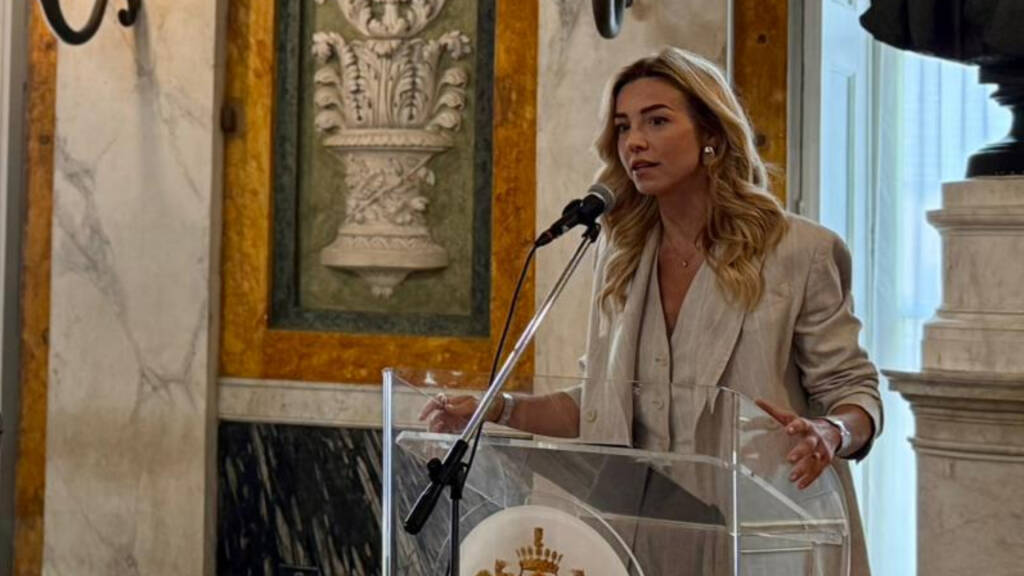
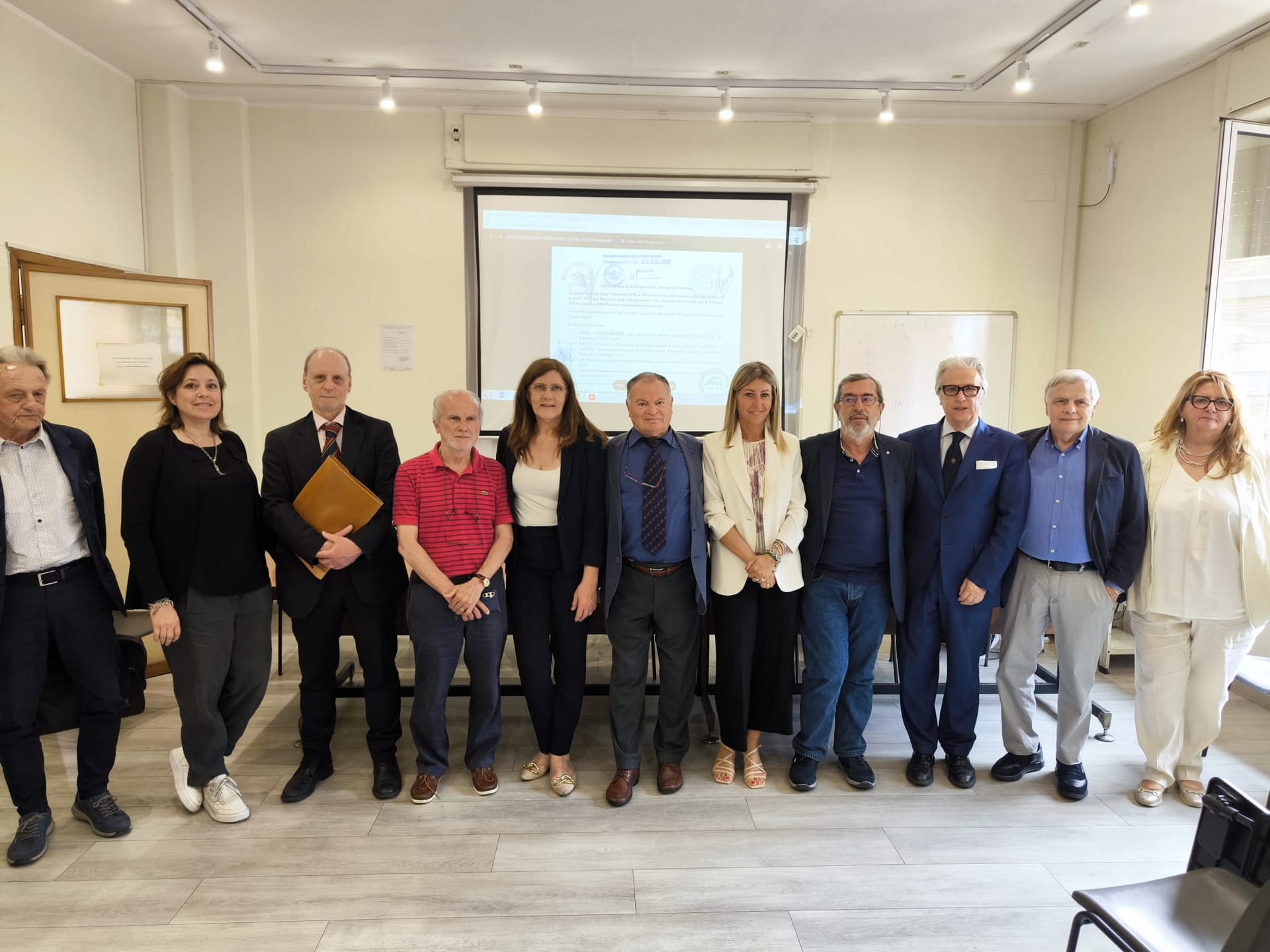
Genoa changed political direction in May 2025. Silvia Salis, a former Olympic hammer thrower, won the mayoralty for a centre-left coalition in the first round with 51.48% of the vote. Her administration has made housing a headline issue. In March 2026 it set up a municipal Housing Observatory and a permanent housing table of unions, tenant and owner associations, foundations and housing providers. The table met in June and adopted a plan to renovate almost 600 public homes in 35 buildings, an investment of nearly €36 million drawn largely from the PNRR (Italy's post-pandemic recovery plan). Its stated goal for ERP is "zero vacancy".
The levers are split between three tiers of government. Rome sets tenancy law, tax breaks and national funding. In July 2026 Parliament passed the government's Piano Casa (national housing plan). It promises about 100,000 homes over ten years, 60,000 of them recovered from empty public stock. Private developers can build faster if they offer 70 of every 100 homes at least 33% below market. The Council of Ministers' communiqué channels the money through regional compartments of a single national fund. Liguria's regional government, led by former Genoa mayor Marco Bucci, owns the public stock through ARTE Genova and runs the Fondo Housing Sociale Liguria with Cassa Depositi e Prestiti (CDP, Italy's state investment bank). The city allocates homes, manages its own ERP flats and sets planning rules.
ARTE Genova
The regional public landlord that owns Genoa's ERP stock.
Read more →That split produces friction. In March 2026 the government froze national funds for public-housing renovation, which cost Genoa €13 million earmarked for 600 empty flats. Salis called the cut "disconcerting". Valentina Pierobon, president of the small-landlords' association ASPPI, greeted it with "strong concern", a rare point of agreement between owners and the council.
We decided to knock down what had become the symbol of an urban and social failure, to give dignity and safety back to an entire neighbourhood.The opposition reads the Piano Casa differently. Pierfrancesco Majorino, who leads housing policy for the Democratic Party, called it "a mockery of a plan". He argued that its funding of €970 million over five years would take 15 to 20 years to repair Italy's deteriorated public homes. The four national tenant unions called the law inadequate to the emergency. Supporters answer that recovering empty public flats is faster and greener than building new ones. The two sides agree on the diagnosis, then split over money and over how much to rely on private developers.
Cooperative housing gets no ring-fenced instrument in any of these plans. The nearest tools are the regional social-housing fund, which has financed schemes run by social cooperatives, and the city's housing table, whose fifth working group covers co-housing and collaborative living. The Agenzia Sociale per la Casa (the city's social lettings agency) promotes canone concordato leases (agreed-rent contracts with capped rents and lower taxes). Genoa's new territorial agreement for those leases took effect in June 2025, signed by ten landlord and tenant associations.
The same agreement is part of the answer to empty homes. It hopes to lure owners of short-term lets back to long leases. A regional bill tabled by the AVS (Green and Left Alliance) group would go further, letting municipalities limit or freeze new short-term-rental permits in pressured areas. For the public stock, the answer is repair. The city put €1.5 million into recovering empty ERP flats over 2024–26, and the Piano Casa budgets around €16,000 per home for refurbishment. Housing Europe's toolkit for dealing with vacant housing and BPIE's study of office-to-housing conversion describe the wider set of tools. So far Genoa has used conversion only project by project.
Climate goals run through the same buildings. The EU's recast buildings directive requires member states to cut the average primary energy use of homes by 16% by 2030 and 20–22% by 2035, and Italy had to transpose it by May 2026. Public and social landlords carry much of that task, because they own the oldest and least efficient stock. New public homes in Genoa are built to NZEB (nearly-zero-energy building) standards, and reusing empty buildings rather than building on fresh land spares the steep hillsides above the city. ULI's work on decarbonising affordable housing sets out the financing gap this creates.
- 1971[source]
Population peaks
Genoa counts 816,872 residents, its all-time high. Four decades of decline follow.
- Aug 2018[source]
Morandi bridge collapses
The Polcevera viaduct falls, killing 43 people; 566 residents of the homes beneath pillar 10 are evacuated and their buildings later demolished.
- 2020–21[source]
Begato "Dighe" demolished
After 274 families are rehoused, the two slab blocks of the Begato estate, 476 flats, are pulled down.
- May 2022[source]
Ex-Boero opens
The Housing Sociale Liguria fund opens 140 social homes on a former paint factory site in Molassana.
- May 2025[source]
Salis elected mayor
Silvia Salis wins for the centre-left with 51.48% in the first round.
- Jun 2025[source]
New agreed-rent deal
Ten landlord and tenant associations sign Genoa's new territorial agreement for canone concordato leases, now zoned by OMI market areas.
- Mar 2026[source]
Funding cut, observatory founded
A national freeze on public-housing renovation costs Genoa €13 million; the city creates a Housing Observatory and a permanent housing table.
- Jun 2026[source]
Housing table adopts its plan
Nearly €36 million to renovate almost 600 public homes in 35 buildings, with a goal of zero vacancy in ERP.
- Jul 2026[source]
Piano Casa becomes law
Parliament passes the national housing plan: 60,000 empty public homes to recover and 100,000 homes in all over ten years.
- Oct 2026[source]
First Begato residents move in
The new NZEB blocks at Begato, 40 public and 20 social homes, welcome their first tenants.
- 2030[source]
EU homes energy target
Average primary energy use of residential buildings must fall by 16% under the recast buildings directive.
- 2035[source]
Second EU milestone
The reduction deepens to 20–22%, a target that falls heavily on old public stock like Genoa's.
From peak population to a shrinking city with too many empty homes, and the recovery, fund-built and EU-driven targets that now shape its housing policy.
The clearest evidence of what works in Genoa is already standing, from a demolished estate in the Valpolcevera to converted offices and old-town palazzi.
From the Dighe to the caruggi
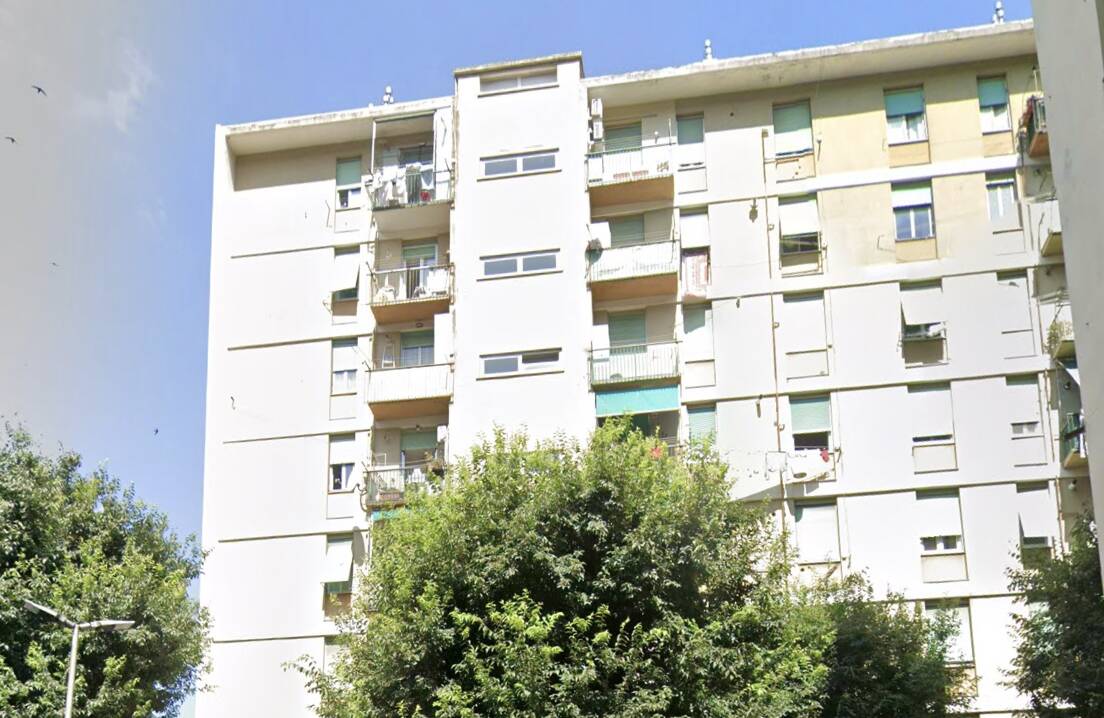
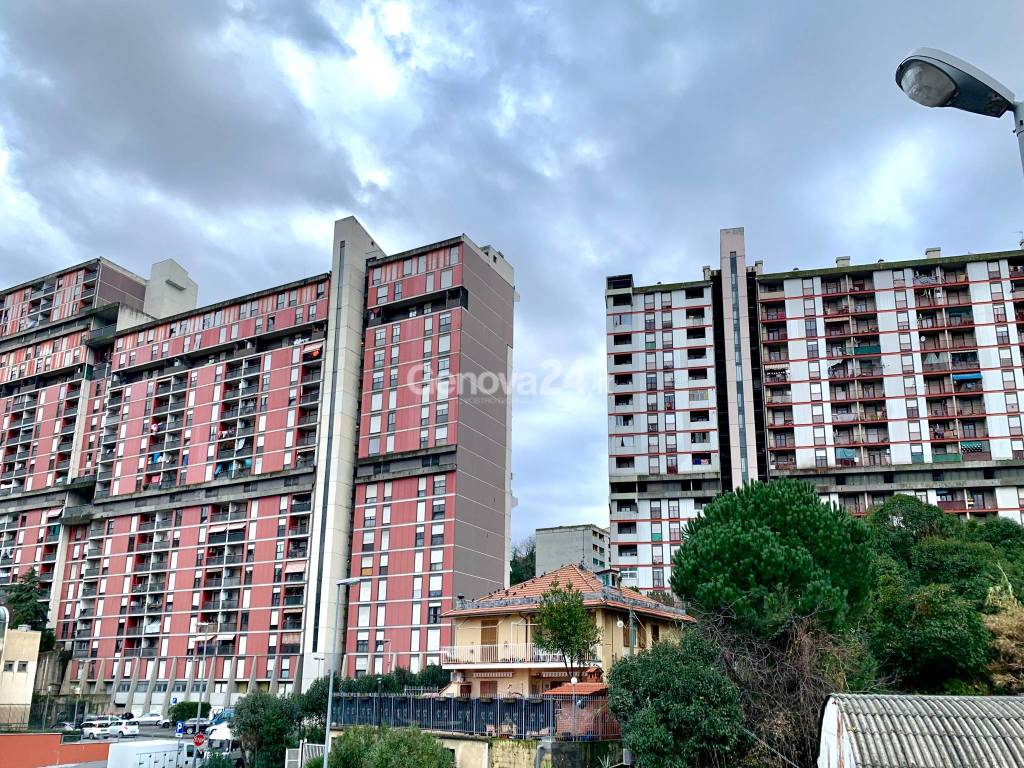
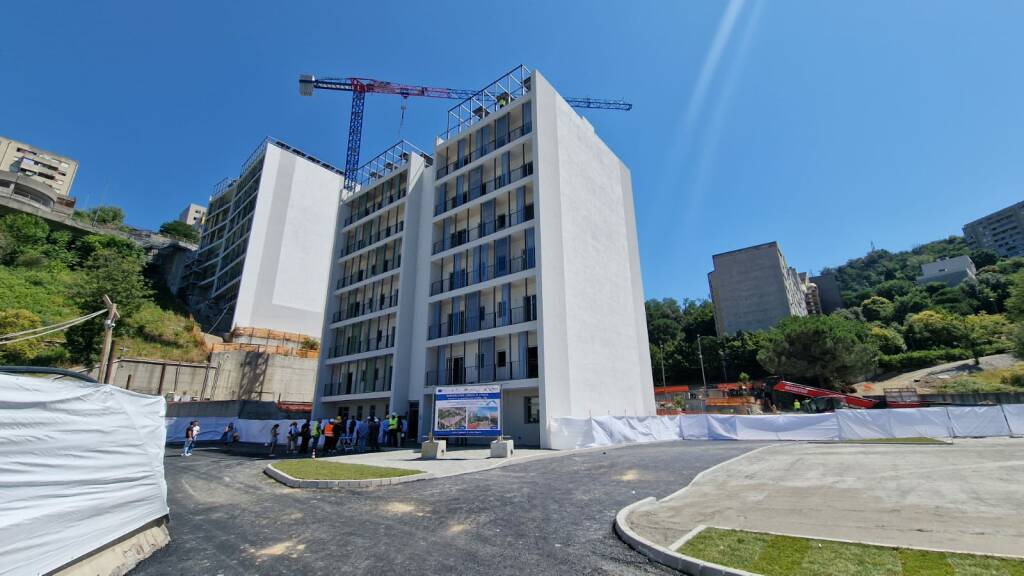
The Begato regeneration is Genoa's boldest public-housing project. The "Dighe", two vast slab blocks of the 1980s, had become notorious for leaks and broken lifts. The city and region first rehoused 274 families in recovered empty flats, then demolished 476 apartments. In their place, ARTE Genova has built three NZEB blocks with 40 public and 20 social homes, a €35 million programme part-funded by PINQuA (the national programme for housing quality). The first residents move in during October 2026, as Genova24 reported. It is a costly answer, but it is the one Genoans point to when they argue that failed estates can be undone.
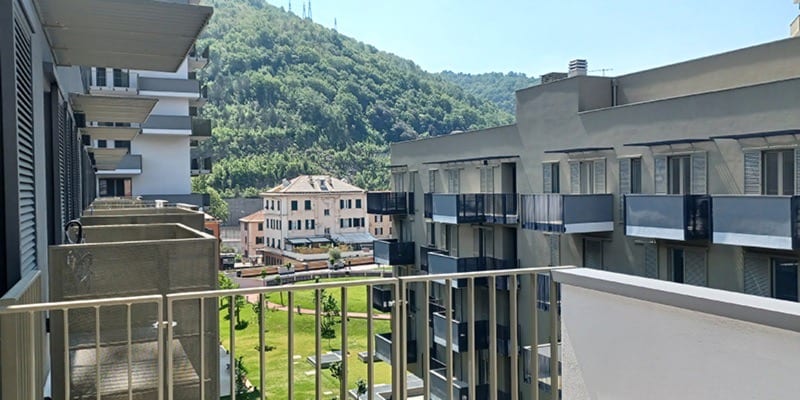
Housing sociale Ex-Boero shows the fund model at neighbourhood scale. On the site of a former paint factory in Molassana, the Housing Sociale Liguria fund built 140 social homes and 27 market penthouses without taking any new land. Cassa Depositi e Prestiti was the main investor, alongside Fondazione Compagnia di San Paolo and other foundations. The Milan-based Fondazione Housing Sociale advised on the social side, and a cooperative took on day-to-day community management. Barreca & La Varra designed two towers and two low blocks around a public park, with a nursery on the ground floor. Families moved in from May 2022.
The Sampierdarena conversion turns one of the city's empty offices into homes. The same fund converted a former office building near Sampierdarena station into 27 flats, keeping a bank branch on the ground floor. Tenants can rent at capped levels from €356 a month, rent to buy, or purchase at agreed prices. The scheme is small, but it is a working template for the empty office space the city carries. Studies such as BPIE's report on converting offices suggest many more buildings could follow.
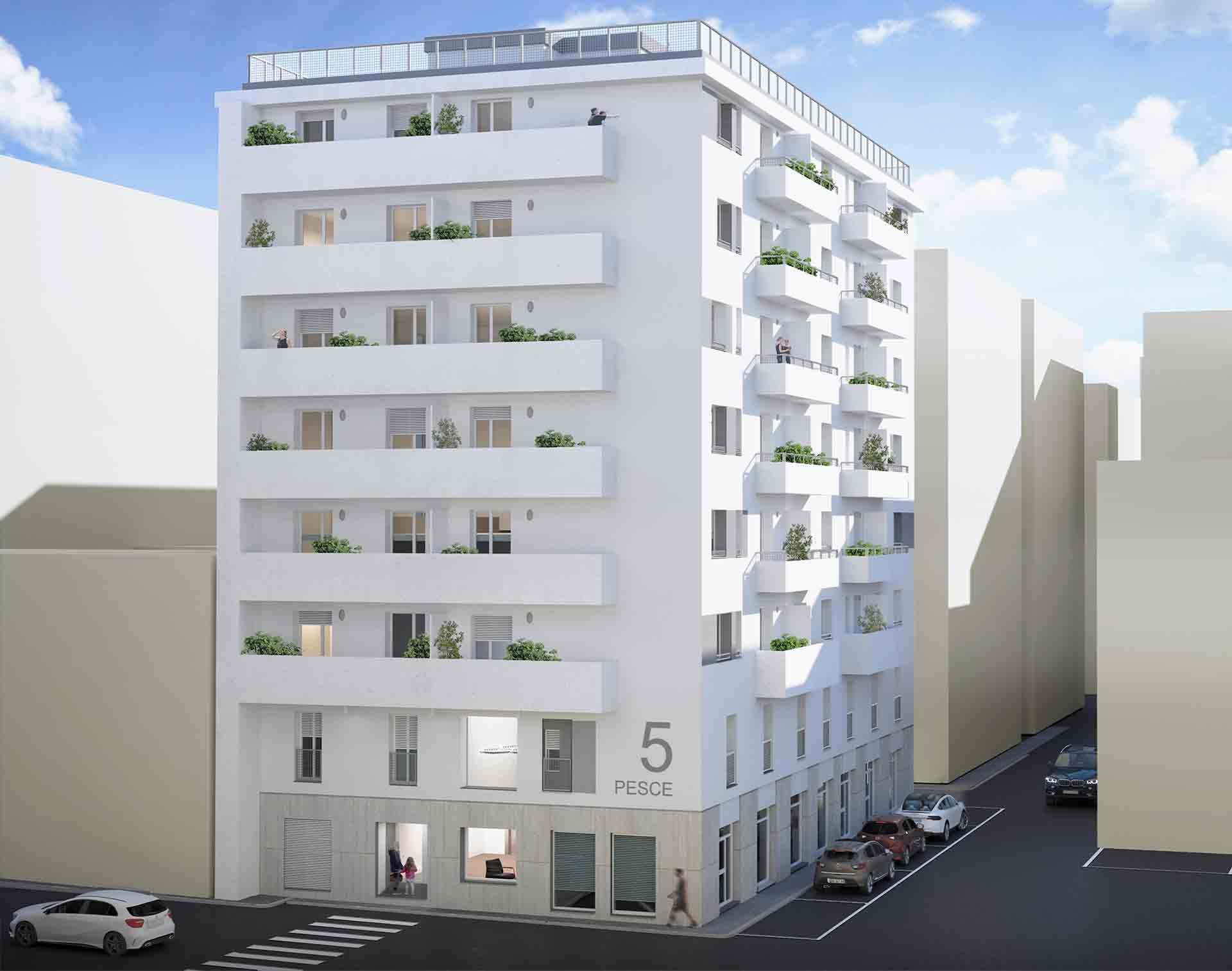
The Piano Caruggi (the city's integrated plan for its historic centre) brings the same logic to the old town. In 2021 Fondazione Housing Sociale helped the city prepare a €16 million PINQuA bid for Prè, via Balbi, the Ghetto and Maddalena, with homes for residents under 40, students and social tenants. Its largest piece is via Balbi 9, where the city is buying and restoring a building to create 26 flats with 45 beds and a public study floor, with €8.67 million of PNRR money. The method echoes community-led reuse elsewhere, collected in Open Heritage's survey of adaptive reuse in Europe.
Fondazione Impact Housing works on the social side of the same buildings. Founded in 2021 by the social-housing start-up Homes4All with three social organisations, among them Genoa's CEIS solidarity centre, it designs pilots where private money is tied to measurable outcomes for vulnerable households. It then turns those pilots into tools and training for local partners. Its board is chaired by the architect Matteo Robiglio.
GE-COH carries the collaborative strand. Since 2012 the association has gathered would-be cohousers, run working groups on social and rural cohousing, and lobbied the city for support. None of its projects has yet reached the scale of Begato or Ex-Boero. Yet the housing table's fifth working group now names co-housing and collaborative living as policy goals, and co-habitat's guide for cities shows how other councils have turned such groups into built homes. Genoa has the empty buildings, the funds and a mayor who has put housing first. What remains to be seen is whether its cooperative tradition, so long invisible inside home ownership, can return as a way of renting.
References
Statistics9Click on any number to see the source
Housing market
Adaptive reuse & vacancy
Population & migration
From our library26
- ARTE Genova — Organisation
- Prezzi delle case, caro affitti e le sfide per i giovani in Italia: il nuovo Ipsos Housing Monitor — Knowledge
- A Genova sono 622 gli alloggi Erp sfitti da recuperare — Knowledge
- Legacoop Abitanti — Organisation
- Legacoop Liguria — Organisation
- GeCoh – Genova Cohousing — Organisation
- Fondazione Impact Housing — Organisation
- Housing Cooperatives in Europe - Resilience and Adaption to Changing Need — Knowledge
- International policies to promote cooperative housing — Knowledge
- Piano Casa: comunicato del Consiglio dei Ministri n. 173 — Knowledge
- Cassa Depositi e Prestiti S.p.A. — Organisation
- Case popolari, giunta Salis all'attacco: "Sconcertanti i tagli del governo" — Knowledge
- Il Piano Casa è legge con la fiducia. Salvini: 'Ora si deve correre'. Le organizzazioni degli inquilini: 'Inadeguato all'emergenza' — Knowledge
- Contratti a canone concordato a Genova, firmato il nuovo accordo — Knowledge
- Una legge-freno agli affitti brevi, ecco la proposta di legge di Avs in Liguria — Knowledge
- Tools to Deal with Vacant Housing — Knowledge
- Conversion of offices into affordable housing — Knowledge
- Accelerating decarbonisation of current and future affordable housing in Europe — Knowledge
- Quartiere Diamante (ex Dighe di Begato) — Project
- Begato, svelate le nuove palazzine al posto dell'ex Diga: "A ottobre entrano i primi abitanti" — Knowledge
- Housing sociale Ex-Boero — Project
- Fondazione Compagnia di San Paolo — Organisation
- Fondazione Housing Sociale (FHS) — Organisation
- Housing Sociale Liguria – Sampierdarena — Project
- Open Heritage - Community-Driven Adaptive Reuse in Europe: Best Practice — Knowledge
- Why and how cities can promote affordable and sustainable Collaborative Housing — Knowledge
Further sources20
- Genova, -29% popolazione in 45 anni — ANSA Liguria
- Politiche abitative, al via il tavolo in Comune — Genova24
- A Genova sono 622 gli alloggi Erp sfitti da recuperare — Genova24
- Housing crisis in Europe: Italy ranks last in new dwellings completed — Eunews
- Il Piano Casa è legge con la fiducia — Il Fatto Quotidiano
- Ipsos Housing Monitor 2025 — Ipsos Housing Monitor
- Le cooperative di abitanti — Legacoop Abitanti
- Legacoop Liguria — Chi siamo — Legacoop Liguria
- L'associazione Ge-Coh — GE-COH / Circolo Arci Zenzero
- Silvia Salis — Wikipedia
- Comunicato stampa del Consiglio dei Ministri n. 173 — Governo Italiano — Consiglio dei Ministri n. 173
- Case popolari, giunta Salis all'attacco — Genova24
- Energy Performance of Buildings Directive — European Commission — EPBD
- Begato, svelate le nuove palazzine al posto dell'ex Diga — Genova24
- Inaugurato il nuovo complesso residenziale di Genova Molassana — Cassa Depositi e Prestiti
- Housing Sociale Liguria — Sampierdarena — Housing Sociale Liguria
- Genova, progetto da 16 mln per rigenerare il centro storico — Fondazione Housing Sociale
- Edificio via Balbi 9: acquisizione e recupero alloggi per social housing — Comune di Genova — PNRR
- Crollo del viadotto Polcevera — Wikipedia (it)
- Contratti a canone concordato a Genova, firmato il nuovo accordo — Liguria Business Journal