A surplus of homes in a country short of them
Gelsenkirchen was built by coal. In 1955 more than 50,000 miners worked its pits, and the mining companies housed many of them in colliery rows beside the shafts. The pits have closed, but the houses stayed. Most of the city's buildings predate the insulation rules of the late 1970s, and many belong to small owners who stopped investing long ago. That legacy is why housing here runs against the German grain: the problem is too many worn homes, not too few.
This is a renters' city. The 2022 census counts 76.3% of households renting and only 23.7% owning their home. The municipal company ggw manages around 5,000 homes, which is 3.6% of the stock. No official count of cooperative homes is published. The Bauverein Gelsenkirchen, the oldest of the locally rooted cooperatives, holds 1,108 flats, a small fraction of the city's 137,189 dwellings. That leaves private landlords with an estimated 72.7% of homes. They range from Vivawest, heir to the mining companies' housing and headquartered on the old Nordstern colliery site, to thousands of individual owners and heirs.
- Owners
- Owner-occupier23.7%
- Renters
- Public & non-profit rental3.6%
- Cooperative0.00%
- Private rental72.7%
Social housing here is a rule attached to a building, not a type of landlord. A flat counts as social while its owner repays a subsidised state loan and accepts a Sozialbindung. That covenant caps the rent and reserves the flat for holders of a Wohnberechtigungsschein (the income-tested housing permit). The platform's catalogue estimates that 8.4% of dwellings carry such a covenant, spread across municipal, cooperative and private stock. The city's own count is falling. Its 2024 housing-market report records 10,690 subsidised homes in 2024, down from almost 28,000 around 2000. Meanwhile an estimated 55% of households would qualify for one.
Rents are low by any German yardstick. The reference rent (the ortsübliche Vergleichsmiete, the local benchmark courts use to judge rent increases) stands at €7.42 per m², the second-lowest among Germany's 40 largest cities after Chemnitz. Subsidised ggw flats let for about €5.50 net cold, and the average across all rented flats was €5.64 in 2023. Advertised new lets average €7.56. Only furnished mid-stay flats, priced with bills included, climb to around €12.90.
- Public housing (ggw, subsidised)
- Average across rented flats (2023)
- Local reference rent (Mietspiegel)
- New contracts
- Serviced / mid-stay (gross, all-in)
Monthly rent per m². Net cold rents for the first four tiers; the mid-stay tier is gross, with utilities and furniture included.
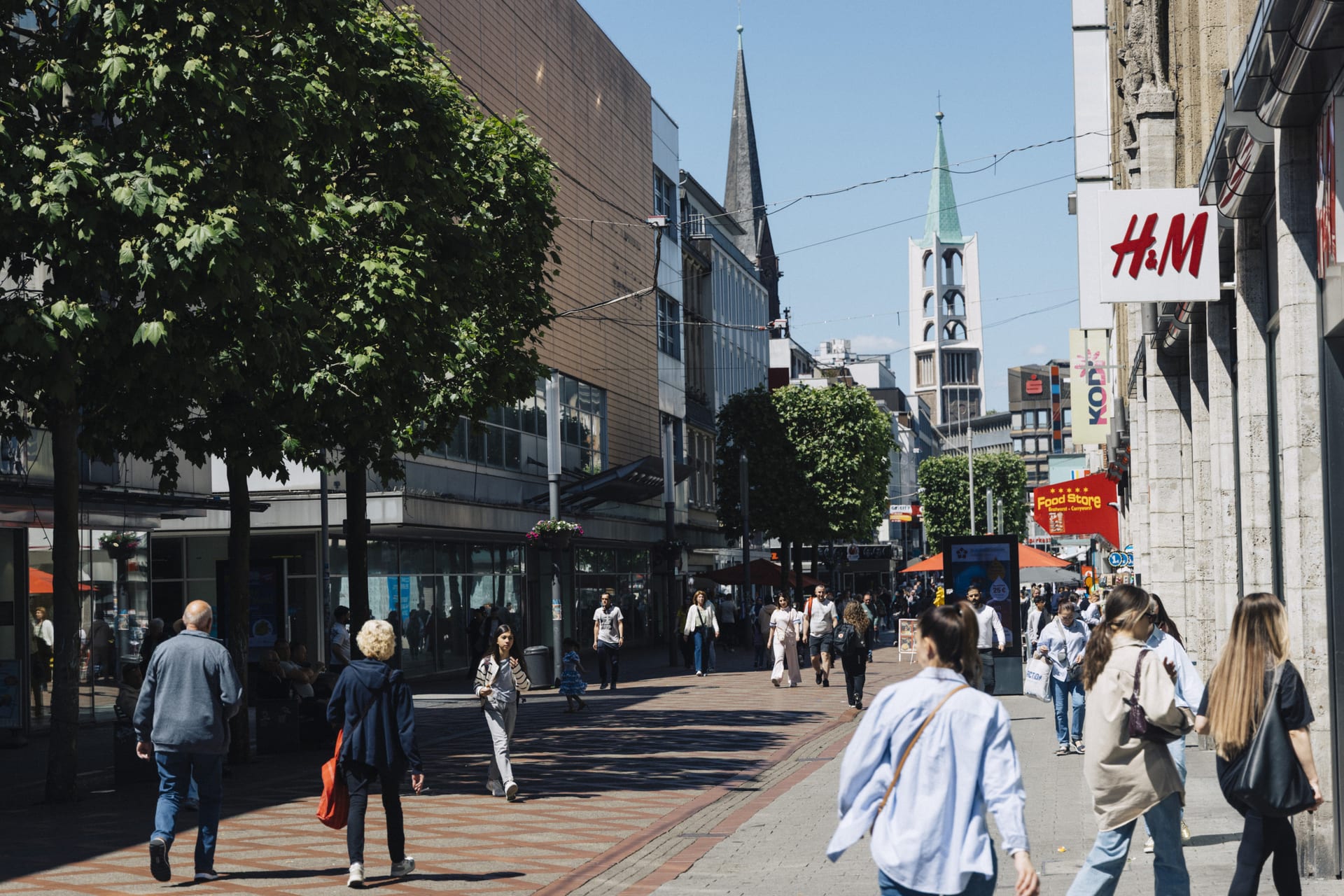
Vacancy is the defining number. The 2022 census found 5.4% of dwellings empty, well above the 3% reserve needed for moves and repairs. The city's electricity-meter survey counts around 9,200 empty flats, with the highest rates in Schalke-Nord and parts of Ückendorf and Horst. Most are not a reserve at all but worn post-war flats nobody wants. Commercial space tells a similar story. An estimated 5.8% of office space, about 0 m², stands empty on a figure apportioned from national data, and the shuttered Kaufhof and Primark stores on Bahnhofstraße are the centre's most visible gaps.
Demand has not collapsed. The population grew by about 5.3% between 2014 and 2023, almost entirely through migration from abroad. The largest gains came from Syria and from Bulgaria and Romania, which added 7,749 residents. Building has been slow. The housing stock grew by only 2,430 dwellings in that decade, and in 2024 the state money allotted to the city funded 29 new rental flats. Rent regulation is not the lever here, because the shortage is one of quality rather than quantity.
The scope of the crisis is set by income more than by rent. Residents have the lowest disposable income of Germany's 40 largest cities, €1,526 a month per person against €2,025 on average. 22.1% of residents live on minimum-income benefits and unemployment stands at 15.7%, both the highest in that ranking. Cheap rent is therefore not the same as affordable housing. The hardest hit are families with children, newly arrived EU migrants and older tenants in unmodernised blocks. Middle-income households meet the problem as decline next door, and struggle to find large family flats or small barrier-free ones, the city's planning department observes. In public debate the issue is framed as neglect. A Correctiv analysis of the 2025 local election linked the far right's strong result to derelict streets and to landlords who crowd Romanian and Bulgarian families into rotten houses and take much of their benefits.
People are being exploited and ripped off.Beside the landlords and the problem houses sit the cooperatives, a small group of member-owned landlords with no published city-wide share.
Member-owned, and older than the city limits
Gelsenkirchen's cooperatives are rental cooperatives. Members buy a Genossenschaftsanteil (the refundable share that makes a tenant a co-owner of the cooperative) and in return gain a lifelong right to stay. There is no deposit, no agency fee and no eviction for the owner's own use, as the GWG puts it to prospective members. Rents follow costs rather than the market, and surpluses go back into the buildings. Members elect the supervisory board at a general meeting, one member, one vote, whatever the size of their holding.
The tradition is older than the city's present borders, which date from 1928. The Bauverein has let flats in the southern districts for more than 120 years. The GWG began on 18 January 1926, when workers met in the trade-union house to found the Baugenossenschaft Vorwärts, and its first 12 flats rose at Markgrafenhof in Ückendorf that year. Its own history records a merger with a Wattenscheid building society in 1938 and 125 flats destroyed in the war. Most miners, though, never lived in a cooperative. They rented from their employer, and that dependence produced the city's most famous act of housing self-help. In 1974 the owner of the 1868 Flöz Dickebank settlement planned to replace it with blocks of up to 12 storeys. Residents fought for two years and won a careful renovation instead, a story told in full by the Citego housing archive.
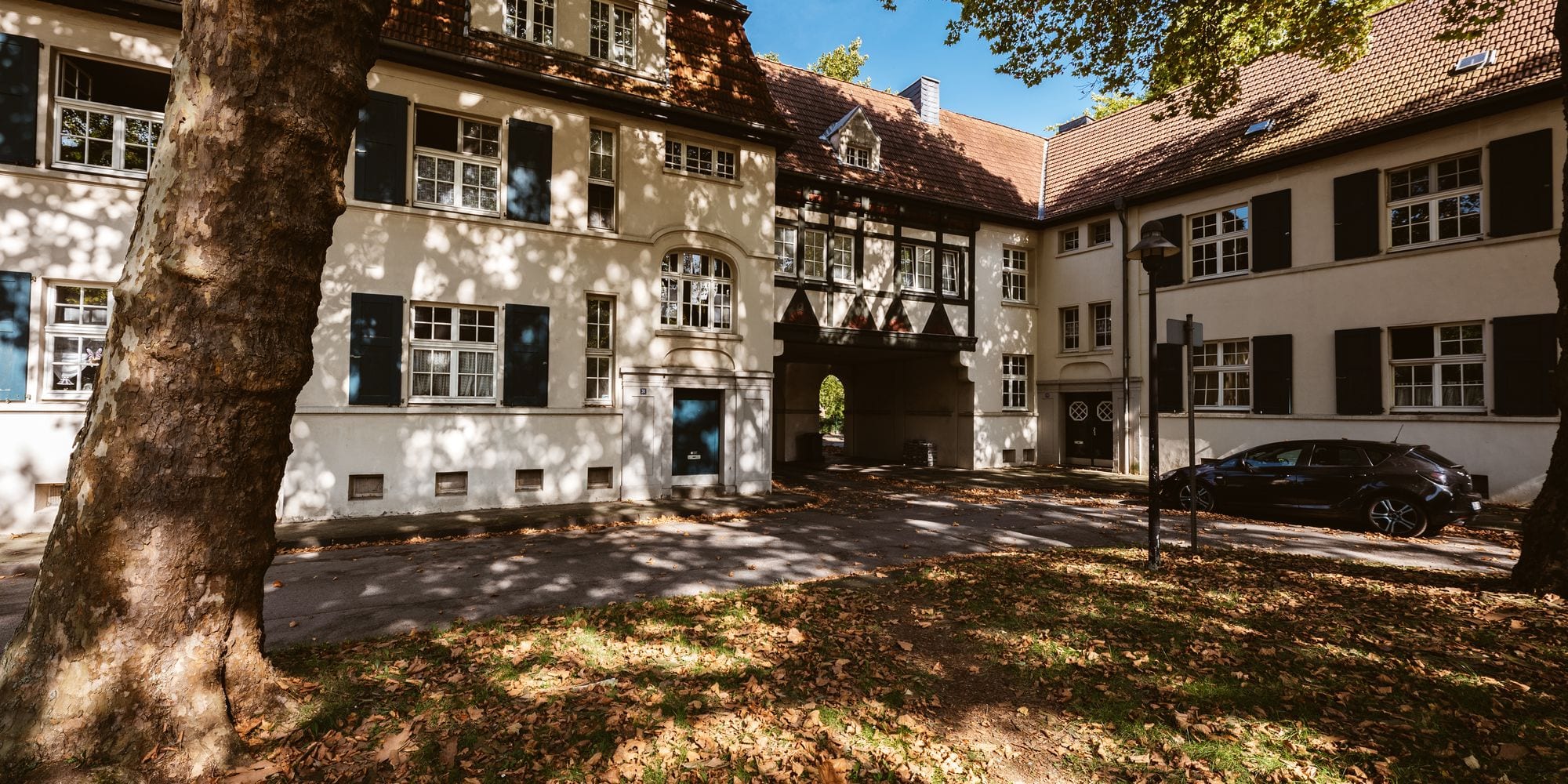
Today the sector falls into two clusters with different problems. The traditional cooperatives, the Bauverein with flats across nine districts and the GWG with homes in Gelsenkirchen and Wattenscheid, are modernising ageing stock and adding small new buildings. The GWG is building barrier-free flats of 40 to 80 square metres on sites such as Hirschweg and Am Hottenborn, aimed at older members and larger families. Their constraint is money. Retrofit costs are the same as anywhere in Germany, but rents are among the lowest in the country, so every heat pump must be paid for out of very thin margins. The second cluster is self-organised but owns nothing. The tenants' association Mieterhaus Flöz Dickebank, founded in 1979, still runs the Heini-Wettig-Haus, a former wash house its members rebuilt by hand as a neighbourhood centre. As a tenants' association rather than a cooperative, it can organise and advise but does not own the houses. There is little sign here of the newer project cooperatives and collectively owned houses found in Cologne or Leipzig.
The city's own strategy does not yet give cooperatives a named role. Its renewal programme works through the municipal ggw and the urban-renewal company SEG, and its new income-independent housing subsidy is open to any owner willing to modernise. Cooperatives therefore compete for that support like everyone else, in a market where the city is busy buying buildings rather than handing out land.
Buying the problem: a city that shrinks its own market
Gelsenkirchen's answer to its housing problem is to take homes off the market. In November 2022 the city and North Rhine-Westphalia signed the Zukunftspartnerschaft Wohnen (the Future Partnership for Housing), a ten-year pact backed by a special state grant of about €10 million a year until 2032. Its targets are explicit. The city will deal with about 500 problem properties and demolish some 3,000 of its roughly 9,000 empty flats. A special funding area covers most of the city south of the Rhine-Herne Canal, plus Horst and parts of Scholven.
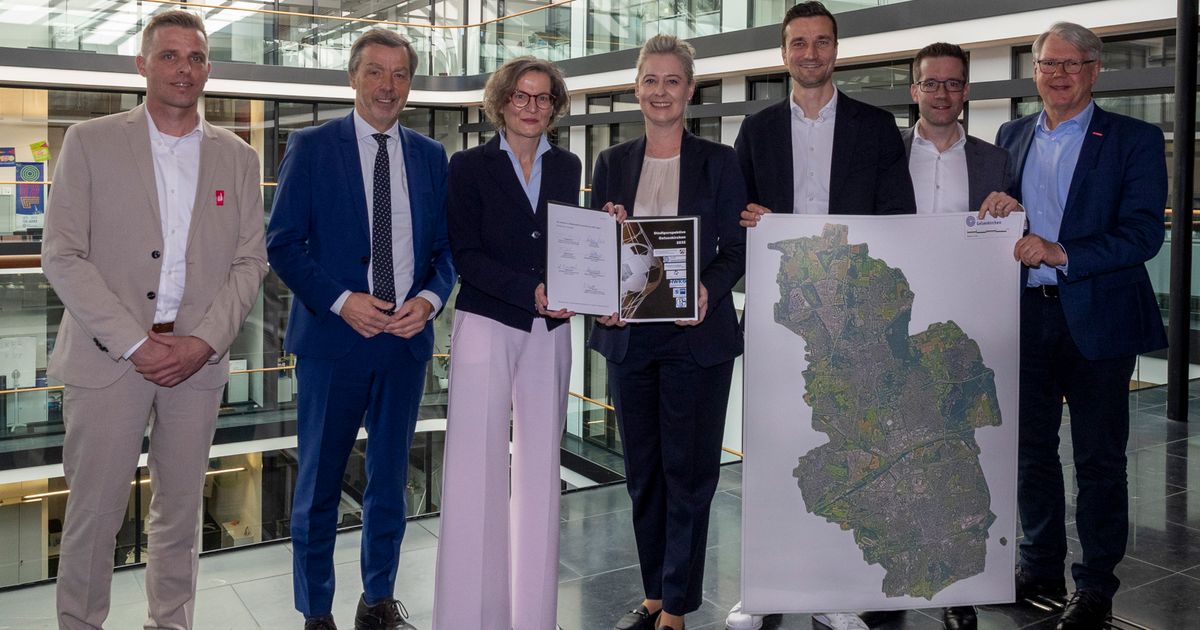
In April 2026 the pact grew into the Stadtperspektive Gelsenkirchen 2032 (the City Perspective 2032), with FC Schalke 04, the chambers of commerce and crafts and the regional employers' association as partners. The launch announcement reported €30 million spent since 2022, 73 buildings with 380 homes bought and 14 buildings demolished, including a notorious row at Ahlmannshof. Freed land is now meant for firms and craft businesses as well as for housing, and a digital register of development sites is being built to market it.
Above all, young housing for students and trainees is to be developed further, and owners are to be supported in upgrading their existing buildings specifically for trainees and students and making them available.Each level of government holds a different lever. The federal government writes the planning code and the benefit rules; Bärbel Bas, the federal labour minister, has made benefit fraud in derelict houses a priority. The state holds the money and the building code. Ina Scharrenbach runs the MHKBD (the state ministry for home affairs, local government, building and digitalisation), which funds the partnership. The state building code also lets a city order the demolition of empty, decaying buildings. On 21 April 2026 the administrative court in Gelsenkirchen upheld such an order against the owner of two century-old houses. The city itself does the buying. A dedicated unit in the planning department steers the work, the SEG acquires, manages and clears buildings, and ggw builds on the freed sites. Formal renewal areas on Bochumer Straße and in Schalke-Nord give the city extra control over sales, and the municipal right of first refusal lets it step into private deals.
The debate is about how far public power should reach into private property. Supporters of the programme see buying and demolition as the only way to break a spiral of disinvestment in which one neglected house drags down the street. Business leaders want the cleared land for jobs. Michael Grütering of the employers' associations Emscher-Lippe argues that the fight against problem properties must continue with a sustainable use of the freed sites, including staff and trainee flats. The city's own planners go further and ask for new law, because owners can simply refuse to cooperate. The planning code's strongest tool, the urban development measure, applies only where demand is high, not where buildings rot.
The current legal position strongly protects individual property, which limits the possibility of using private land in the public interest.None of these instruments is reserved for cooperatives. There is no concept-led land tender (Konzeptverfahren, where public land goes to the best plan rather than the highest bid) and no ground-lease pact. The most useful tool for member-owned landlords is the special housing subsidy inside the funding area, which is not tied to tenants' incomes.
Vacancy and climate policy meet in the same streets. The heat plan presented in January 2026 found that 74% of non-industrial heat still comes from fossil fuels. 77.6% of buildings predate the first thermal-insulation rules of 1979, and only 34% are fully renovated. The GEG (the federal Buildings Energy Act) will require new heating to run on at least 65% renewable energy once the plan is adopted, and the national target is climate neutrality by 2045. Demolition feeds this agenda too. In Scholven cleared blocks become a green buffer between housing and industry, while new flats are built to efficiency standards the old stock cannot reach.
- 1974[source]
Flöz Dickebank residents resist demolition
Tenants of the 1868 colliery settlement fight plans to replace it with high-rise blocks and win a renovation instead, from 1979.
- 1993[source]
IBA Emscher Park extends Schüngelberg
The International Building Exhibition adds around 200 new miners' flats by Rolf Keller and refurbishes 310 older ones.
- 2014[source]
Free movement for Bulgaria and Romania
Full labour mobility begins; by 2023 the city counts 7,749 more residents from the two countries.
- November 2022[source]
Zukunftspartnerschaft Wohnen signed
City and state agree a ten-year pact with about €10 million a year to tackle 500 problem properties and demolish 3,000 surplus flats.
- December 2024[source]
Pilot on problem properties ends
The federal-state model project closes after buying 31 buildings; the partnership continues the work.
- September 2025[source]
Andrea Henze elected Lord Mayor
The SPD candidate wins the run-off against the AfD candidate, who took 33% of the vote.
- April 2026[source]
Stadtperspektive Gelsenkirchen 2032 launched
Business partners join; 73 buildings with 380 homes bought and €30 million spent since 2022.
- 21 April 2026[source]
Court upholds a demolition order
The administrative court backs the city under the state building code, ruling 6 K 4422/23.
- 2032[source]
Target: up to 3,000 homes off the market
The partnership aims to remove up to 3,000 surplus units and clear the worst problem properties.
- 2045[source]
Target: climate-neutral heat
The municipal heat plan works towards the federal goal of climate neutrality.
Milestones in Gelsenkirchen housing policy, including the targets the city has set for itself.
From colliery rows to learning flats
Siedlung Schüngelberg in Buer shows how a colliery settlement can be renewed rather than razed. Built between 1897 and 1919 at the foot of a spoil heap, it became one of the showpieces of the IBA Emscher Park, the 1989–1999 building exhibition that remade the Emscher valley. From 1993 the Swiss architect Rolf Keller added around 200 new flats for miners around a square with a day-care centre and shops, while 310 older homes were refurbished under heritage rules. Paths now lead from the streets up the Rungenberg heap, so the waste of the mine became the settlement's park.
The Flöz Dickebank settlement in Ückendorf remains the city's reference point for tenant power. Protected as a monument since 2008, it hosted a congress on saving workers' settlements as early as 1976. Its tenants' house still runs breakfasts and advice sessions for neighbours, proof that a residents' movement can outlast the fight that created it.
The Heilig-Kreuz-Kirche is the landmark of the renewal of Bochumer Straße, once the street people avoided. A listed brick-expressionist church of 1927–1929, it closed for worship in 2007. The city bought it and turned the nave into an event hall for around 700 people, kept free of fixed installations, with rooms for the neighbourhood in the side wing. The SEG has meanwhile bought and cleared the worst houses on the street. Nearby, the SEG is reviving the hall behind Bochumer Straße 134 after demolishing the derelict front building, and the street's creative quarter now hosts a festival of the independent arts each September.
Tausche Bildung für Wohnen turns empty flats into a trade. Since February 2019 young volunteers have lived rent-free in a shared flat on Breilstraße, in an SEG building, and in return each mentors up to eight children in the neighbourhood, the city's renewal office explains. The idea started in Duisburg-Marxloh in 2012. It fills a vacant flat, brings young adults into a district many leave, and gives children a steady adult outside school.
The ggw, founded in 1950, is the city's main public builder. It has added 440 new homes since 2010 and in 2025 finished energy retrofits in Feldmark and Erle. In April 2026 it laid the foundation stone for three urban villas with 21 flats in the Waldquartier, an investment of €12.3 million. The buildings meet the Efficiency House 55 standard, with heat pumps and solar panels on green roofs, and are due in autumn 2027.
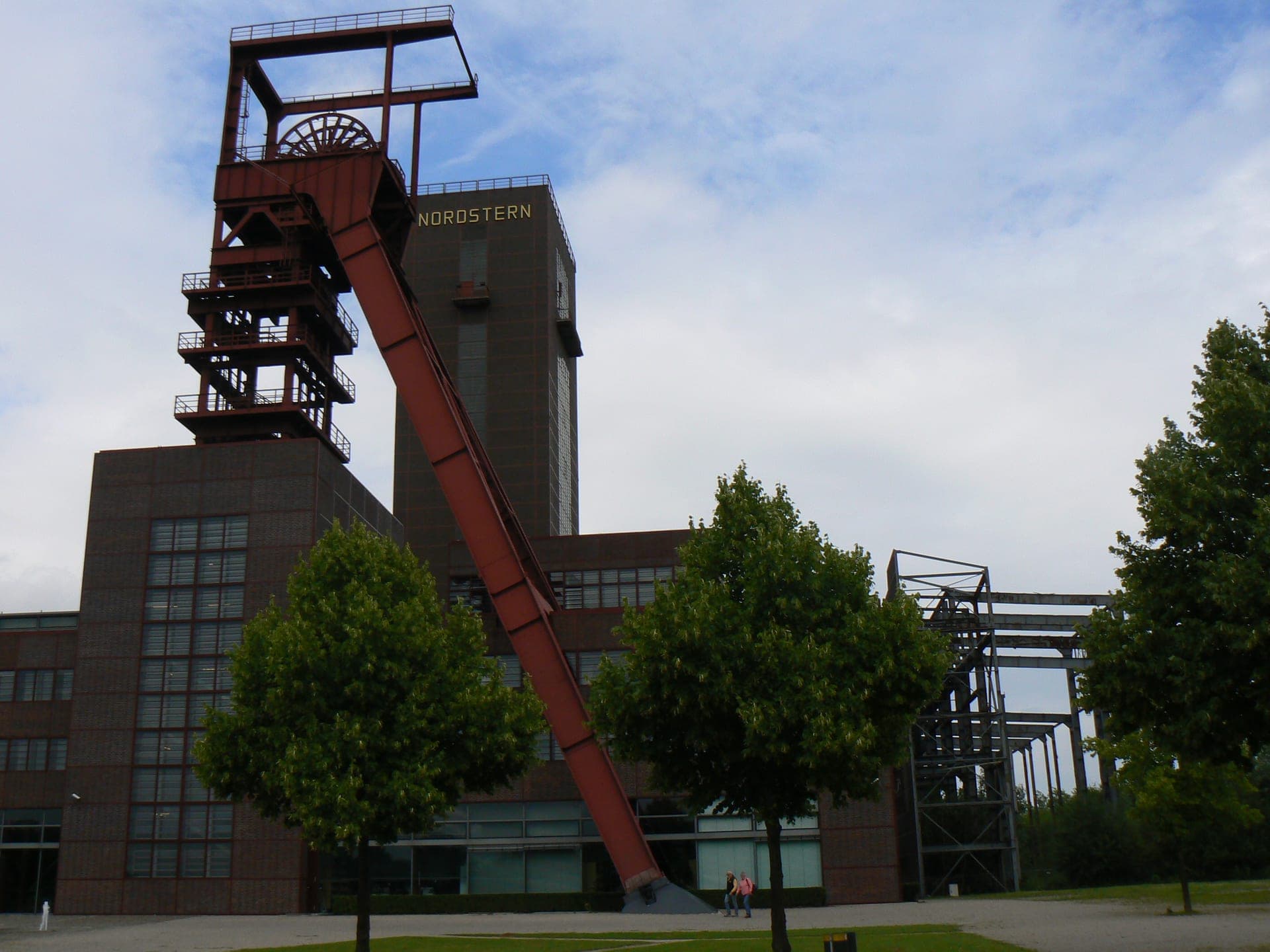
The Nordstern colliery completes the arc from coal to living. The 1997 federal garden show turned its pithead into the Nordsternpark. Today Vivawest has its head office on the site, so the landlord that inherited much of the miners' housing works from a former pithead. For Gelsenkirchen the lesson of its lighthouses is consistent. Renewal succeeds where someone with a long horizon, a city company, a cooperative or an organised group of tenants, takes responsibility for a whole street rather than a single house.
References
Statistics10Click on any number to see the source
Housing market
Tenure & affordability
Adaptive reuse & vacancy
Population & migration
From our library6
- Wohnungsmarktbericht Gelsenkirchen 2024 — Knowledge
- Wie es zum Wahlerfolg der AfD in Gelsenkirchen kommen konnte — Knowledge
- The struggle of the tenants of Gelsenkirchen in Germany (Flöz Dickebank) — Knowledge
- Anstoß für die Stadtperspektive Gelsenkirchen 2032 — Knowledge
- Kommunale Wärmeplanung Emscher-Lippe: Öffentlichkeitsinfo Gelsenkirchen (14.01.2026) — Knowledge
- Gelsenkirchen sieht Fortschritt bei Schrottimmobilien (dpa) — Knowledge
Further sources14
- Glücksatlas Städteranking 2026: Gelsenkirchen — SKL Glücksatlas / Universität Freiburg · 2026
- Ein Pakt für die Zukunft zur qualitätvollen Innenentwicklung — vhw Forum Wohnen und Stadtentwicklung · 2024
- Strukturwandel — Stadt Gelsenkirchen
- Bauverein Gelsenkirchen eG: Wohnungsbestand — Bauverein Gelsenkirchen eG · 2026
- Die GWG: Geschichte — Die GWG eG
- Die GWG: Neubau — Die GWG eG
- Heini-Wettig-Haus — Stadt Gelsenkirchen
- Abriss einer "Schrottimmobilie" zu Recht angeordnet — Verwaltungsgericht Gelsenkirchen · 22 April 2026
- Kommunalwahlen 2025: Stichwahlen — kommunal.de · 2025
- SEG projects on Bochumer Straße — SEG Gelsenkirchen · 2026
- Tausche Bildung für Wohnen — Stadt Gelsenkirchen
- Grundsteinlegung für Neubauprojekt Im Waldquartier — ggw Gelsenkirchen · 21 April 2026
- ggw Gelsenkirchen — ggw Gelsenkirchen · 2026
- Die blaue Stadt — Stadt Gelsenkirchen