A cheap city that is not an easy one
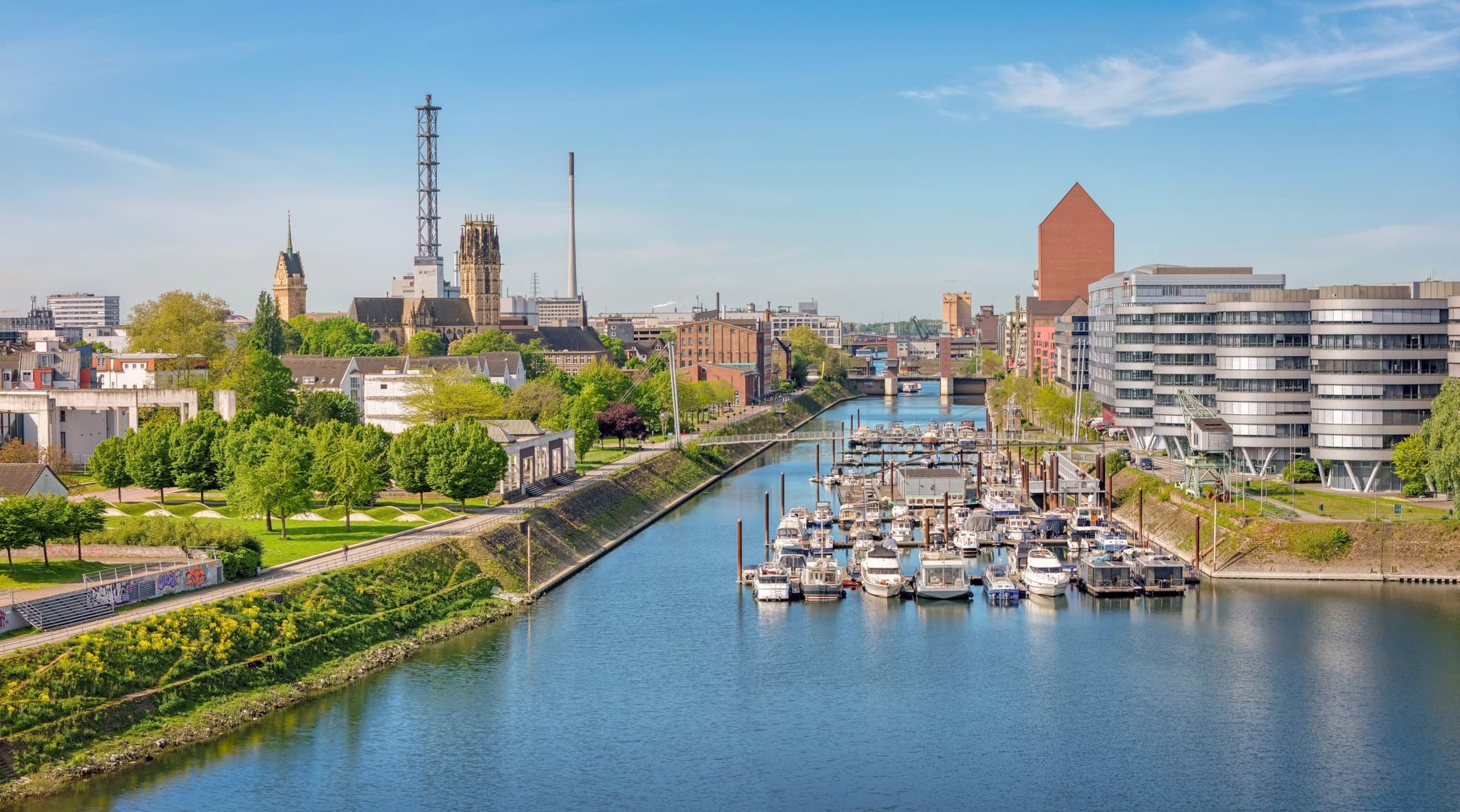
Duisburg grew where the Ruhr flows into the Rhine, and it grew on coal, steel and shipping. Its port still handled 50.8 million tonnes of cargo in 2025, and thyssenkrupp describes the city as Europe's largest steel location. Those industries also built the housing: works estates, miners' settlements and cooperative blocks for railwaymen and civil servants. When the jobs went, so did the people. The population fell from 591,635 in 1975 to 487,839 in 2014. For decades the housing question here was about too many homes, not too few.
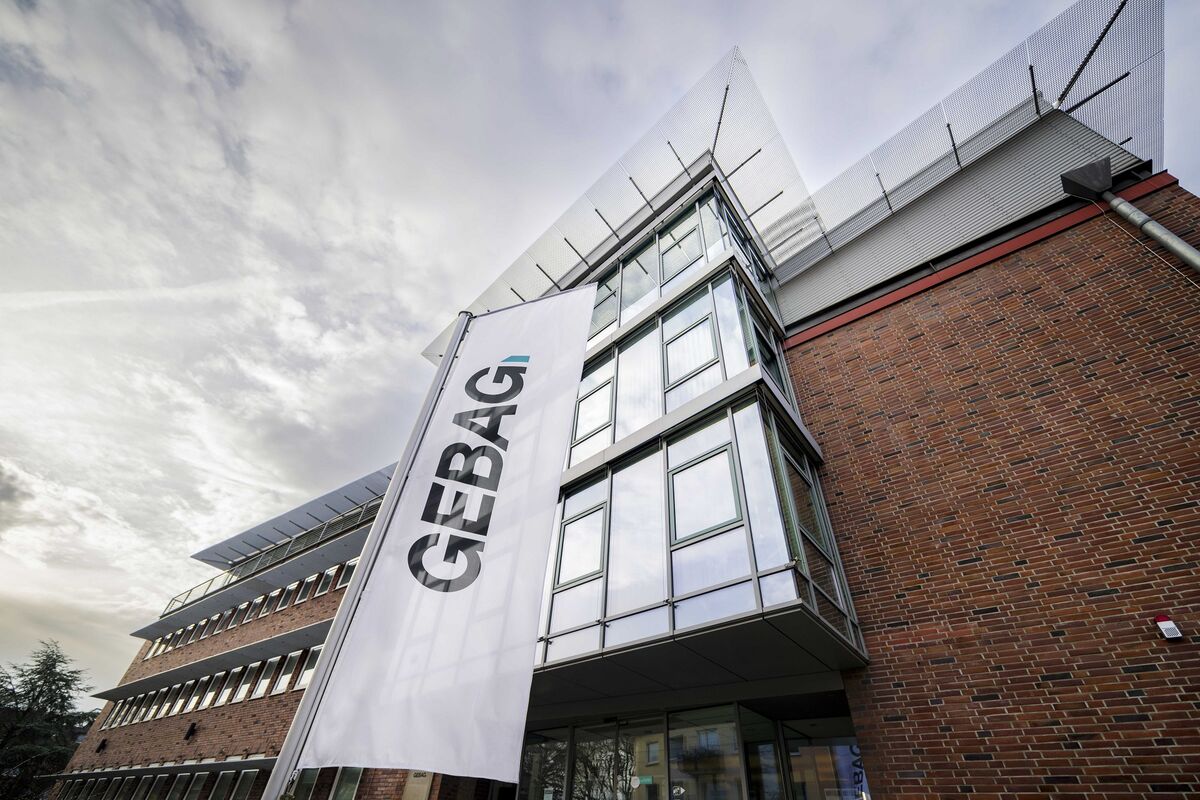
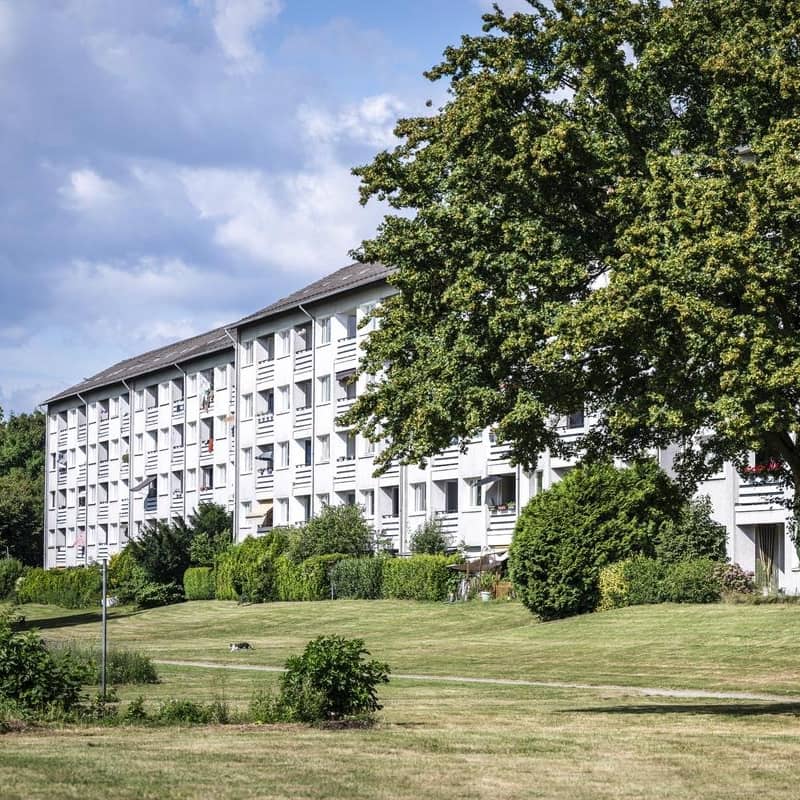
Tenure still carries that industrial history. The 2022 census counted 258,348 dwellings. Only 26.6% are lived in by their owners, while 70.7% are rented. The 8 partners of the city's cooperative alliance offer about 15,000 homes, around 5% of the stock. GEBAG, the municipal housing company, owns 12,650 homes, or 4.9%. Private landlords hold the rest of the rented stock, roughly 60.8% of all dwellings. Cooperative and municipal homes together form a non-market tier of about 9.9%, a fraction of Vienna's.
- Owners
- Owner-occupier26.6%
- Renters
- Public & non-profit rental4.9%
- Cooperative5.0%
- Private rental60.8%
- Unclassified2.7%
- Unknown / Other2.7%
Social housing is a rule attached to a home, not a kind of landlord. About 6.5% of Duisburg's dwellings carry a Mietpreisbindung (the rent and income cap that comes with a subsidised loan). That figure is separate from the municipal share, and the restricted homes are spread across municipal, cooperative and private buildings. The layer is thinning as old loans are repaid. The city's 2024 social report shows the restricted stock falling from 11.6% of all homes in 2008 to 7.3% in 2021. Meanwhile roughly 50% of households earn little enough to qualify for a Wohnberechtigungsschein (the income-tested pass to a subsidised flat).
Rents are among the lowest of any large German city. Cooperative members pay around €5.90 per m² net cold, and GEBAG tenants about €6.50. The all-stock median sits at €6.20, while advertised new lets reach €8.88. Furnished and serviced flats, priced gross with utilities and furniture included, ask around €18.88. The ladder is short, but it is getting taller. The 2026 rent index (Mietspiegel, the official local rent benchmark) lifted the average base rent from €6.26 to €6.54 per m². The city's property market report puts the average new-build rent at about €12.00 per m².
- Cooperative
- All-stock median
- Public/municipal housing
- New contracts
- Furnished / serviced (gross)
Net-cold monthly rent per square metre by tier (furnished is gross, all-in). Cooperative, municipal and average rents sit within about a euro of each other; the real jump comes with a newly signed private contract and, above all, with furnished lets.
Empty homes are still part of the picture. The census put residential vacancy at 4.3%, and around 11,837 dwellings stand empty. Many are in post-war blocks or neglected older houses that the market has given up on. Flats are also small, at 77.6 m² on average against 92.7 m² across the state. Offices are fuller: vacancy stands at 4.7%, about 0 m² of empty floor space.
Newcomers have reversed the long decline. Duisburg passed 500,000 residents again at the end of 2022, largely through immigration. Around 26,000 people from Bulgaria and Romania live in the city, more than in any other NRW city relative to population. About 28,000 people move in each year. Building has not kept up. Completions fell to about 29,000 m² of new living space in 2024, a ten-year low, and to about 20,700 m² in 2025. Duisburg is not on the state's list of tight markets. NRW's Mieterschutzverordnung (the tenant-protection ordinance that switches on the rent brake and lower caps on rent rises) covers 57 municipalities from March 2025, and Duisburg is not one of them.
The strain is about income more than rent. In 2021, 17.9% of households lived on minimum-income benefits, and 1,681 households were threatened with losing their home, most of them people living alone. Radio Duisburg reported that the number without a home of their own rose from about 700 to more than 4,400 in 2022, mostly refugees from Ukraine in public shelters. A Hans-Böckler-Stiftung study of 77 large cities found Duisburg's rent burden rising but still comparatively low. The pressure therefore falls on low-income tenants, single people and newcomers, often in the worst-kept buildings. It has not yet become the middle-class squeeze familiar in Düsseldorf or Cologne.
Against that backdrop, the steadiest landlords in the city are also the least discussed: its old cooperatives.
A safe harbour, by its own description
Duisburg's cooperatives are rental cooperatives of the classic German type. A household joins by buying a Genossenschaftsanteil (the refundable member share that makes a tenant a co-owner) and then rents at a cost-covering fee. At Wohnungsgenossenschaft Duisburg-Süd, the city's largest, the share costs €750 and currently earns a small dividend. Wohnungsgenossenschaft Duisburg-Hamborn asks for three shares of €260 each and promises that its fee will not exceed the middle of the city's rent index. Bauverein Rheinhausen sets its share at €850. The stake stays modest, and the rent follows costs rather than the market.
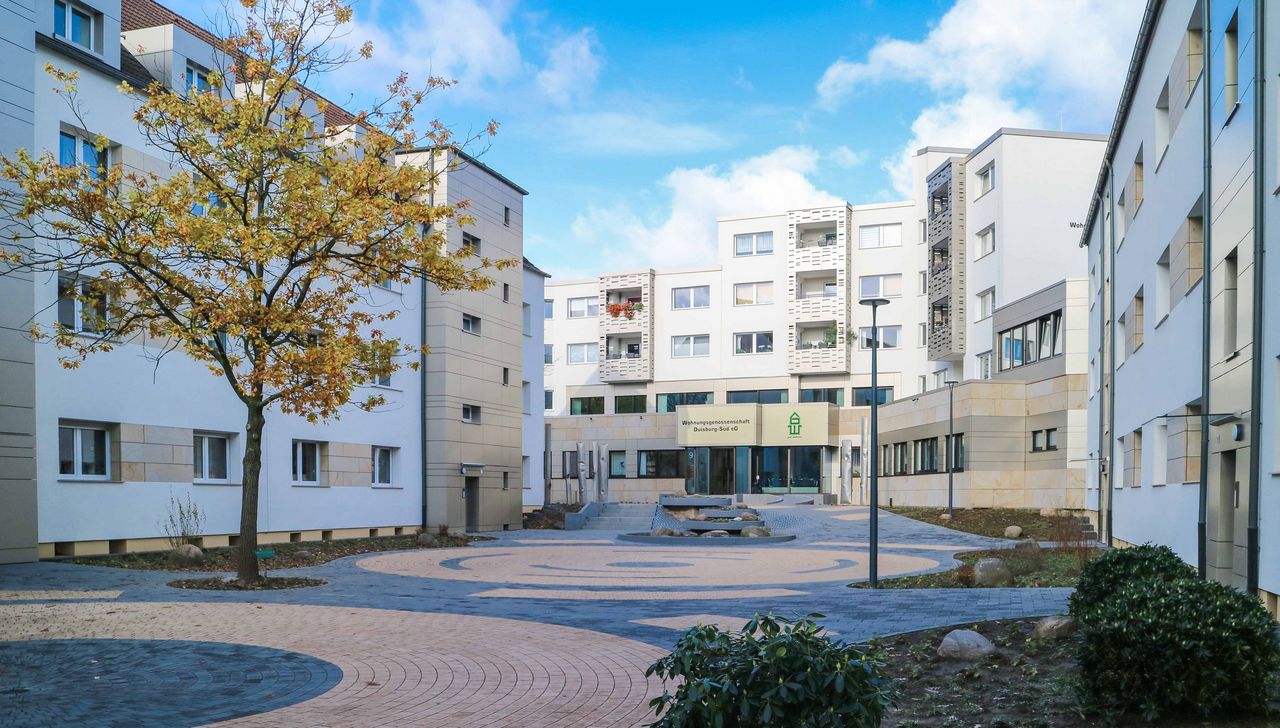
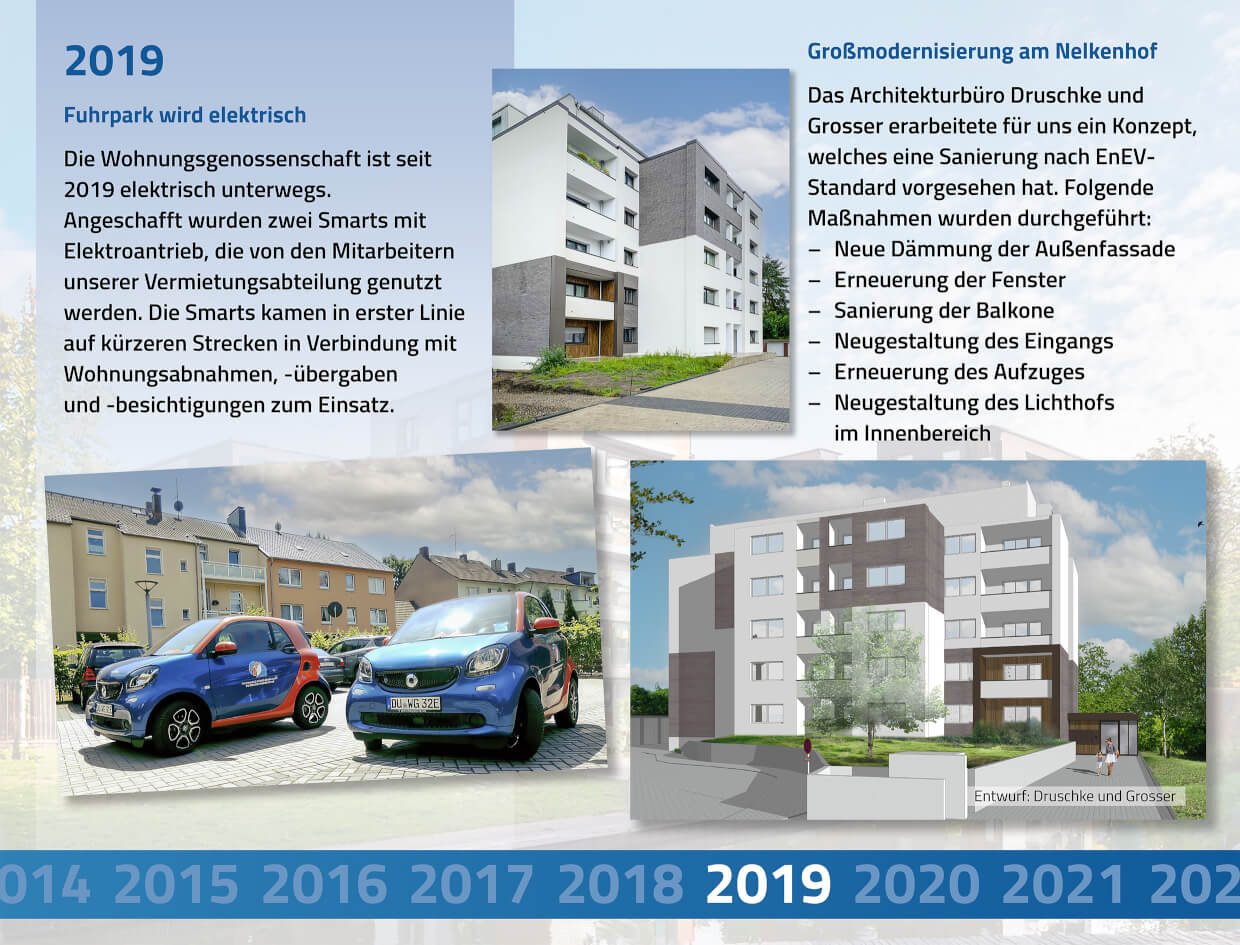
The tradition is as old as the industrial city. GEWOGE Duisburg-Ruhrort was founded in Ruhrort's port district on Christmas Eve 1896, and Wohnungsgenossenschaft Duisburg-Mitte dates back to 1895. Duisburg-Süd began in 1905 as a civil servants' housing society, the Beamten-Wohnungsverein. The Second World War destroyed 777 of its homes, and rebuilding took until 1955. The boldest chapter came later. In 1979 residents of the Rheinpreußen miners' settlement in Homberg held an 18-day hunger strike against demolition. The city bought the remaining 403 homes with state money, and in 1984 the residents founded a cooperative to run them themselves.
Today the sector presents itself as one brand. Since 2003 eight partners have marketed their homes together as Die Duisburger Wohnungsgenossenschaften, under the slogan 'a safe harbour'. Behind the brand sit two clusters. The first is the large traditional societies, from Süd, Rheinhausen and Hamborn to Mitte, Friemersheim and GEWOGE, each with between one and four thousand homes. The second is the self-governed Rheinpreußensiedlung, a residents' estate rather than a landlord. A third cluster is absent. The city has no project in the Mietshäuser Syndikat (a network of collectively owned rental houses) and no wave of new, self-built cooperatives like Munich's or Hamburg's. Demand is not the problem. Vacancy runs at 1.1% at Duisburg-Süd and 0.1% at Hamborn.

Both clusters face the same two pressures: cost and age. Duisburg-Süd stopped new building in 2023, because interest rates and construction costs implied rents that the local market cannot bear. Its older blocks often need a full refit before a flat can be let again. At Hamborn, deaths and moves into care homes are among the most common reasons a flat falls free. Public policy has so far treated cooperatives as one landlord among many. The city's 2010 housing strategy, the WohnVision, named no instrument reserved for them, so they compete for subsidy on the same terms as GEBAG and private investors.
Clearing, rebuilding, retrofitting
Mayor Sören Link (SPD) won a third term in September 2025, beating the AfD's Carsten Groß with 78.57% in the runoff. His administration works on three fronts: clearing derelict buildings, developing new quarters on old industrial land and modernising the municipal stock. The 2010 WohnVision has been replaced by a social report with a housing action plan, drawn up by the consultancy GEWOS in 2024 and analysing the market district by district.
The most visible front is the Task Force Problemimmobilien, a joint squad of building, fire and social services. Its legal basis is the Wohnraumstärkungsgesetz (NRW's 2021 housing-supervision law), which lets a municipality declare a dwelling uninhabitable and requires at least 10 m² of living space per person. In March 2026 the squad closed three buildings in Marxloh and rehoused 23 people, Radio Duisburg reported. Critics see a pattern aimed at Roma families. The left-wing monthly ak counted at least ten operations in Hochfeld since 2021, affecting 500 or more people, over half of them children. The Zentrum für Kultur Hochfeld calls the evictions a humanitarian catastrophe.
The money comes mostly from the state and federal governments. NRW's building ministry (MHKBD, the ministry for home affairs, local government, building and digitalisation), led by Ina Scharrenbach (CDU), raised its 2023-2027 programme to €12 billion. In 2025 it committed a record €2.4 billion for 13,356 homes. In Berlin, the BMWSB (the federal ministry for housing, urban development and building) under Verena Hubertz has pledged €23.5 billion for social housing to 2029. The Bau-Turbo (a fast-track clause in the Building Code, §246e BauGB) took effect on 30 October 2025 and lets councils approve housing without a new zoning plan. The federal rent brake now runs to the end of 2029, but it does not apply in Duisburg.
For cooperatives, the tools are loans rather than land. NRW's 2026 funding directive treats a cooperative flat exactly like any subsidised rental. It adds a flat €60,000 loan per home, but only for newly founded, resident-run cooperatives. The federal KfW (the state development bank) lends individuals up to €150,000 to buy cooperative shares. Duisburg has not added concept-led land tenders (Konzeptvergabe, plots awarded on quality rather than price) or long ground leases (Erbbaurecht) for cooperatives, as Munich and Hamburg have. The regional federation VdW Rheinland Westfalen (the association of cooperative and social landlords) says its members, who manage over 1.1 million homes, completed 30% fewer homes in 2025 than a year earlier.
What is not approved will certainly not be built. Approved projects are postponed or never started. The reason: with building costs this high, VdW members simply cannot deliver new homes at affordable rents.Duisburg's reply to empty homes has been demolition and renewal rather than conversion. In Homberg-Hochheide the city blew up three of six 1970s tower blocks, in 2019, 2021 and July 2025, with the state's Soziale Stadt programme carrying most of the cost. The last tower held 160 flats and makes way for a 6.5-hectare park. In Marxloh and Alt-Hamborn, the Stark im Norden programme puts €50 million of federal, state and city money into climate-proof renewal. With offices relatively full, office-to-housing conversion has so far played little part.
Climate deadlines now shape the stock as much as vacancy does. The city administration and its companies aim to be climate-neutral by 2035, and in May 2026 the council adopted a municipal heat plan aiming for climate-neutral heating by 2045. At the steelworks, thyssenkrupp's hydrogen-ready direct-reduction plant, backed by €2 billion in public funding, is now due to start from the end of 2027. In housing, the tool is retrofit. In September 2026 the state granted €51.1 million to modernise GEBAG's City Wohnpark in Hochfeld. The work covers 421 flats and should save nearly 15,000 tonnes of CO₂. Duisburg-Süd has already moved more than 90% of its homes onto district heating, as the Gebäudeenergiegesetz (GEG, Germany's building energy law) forces old boilers out.
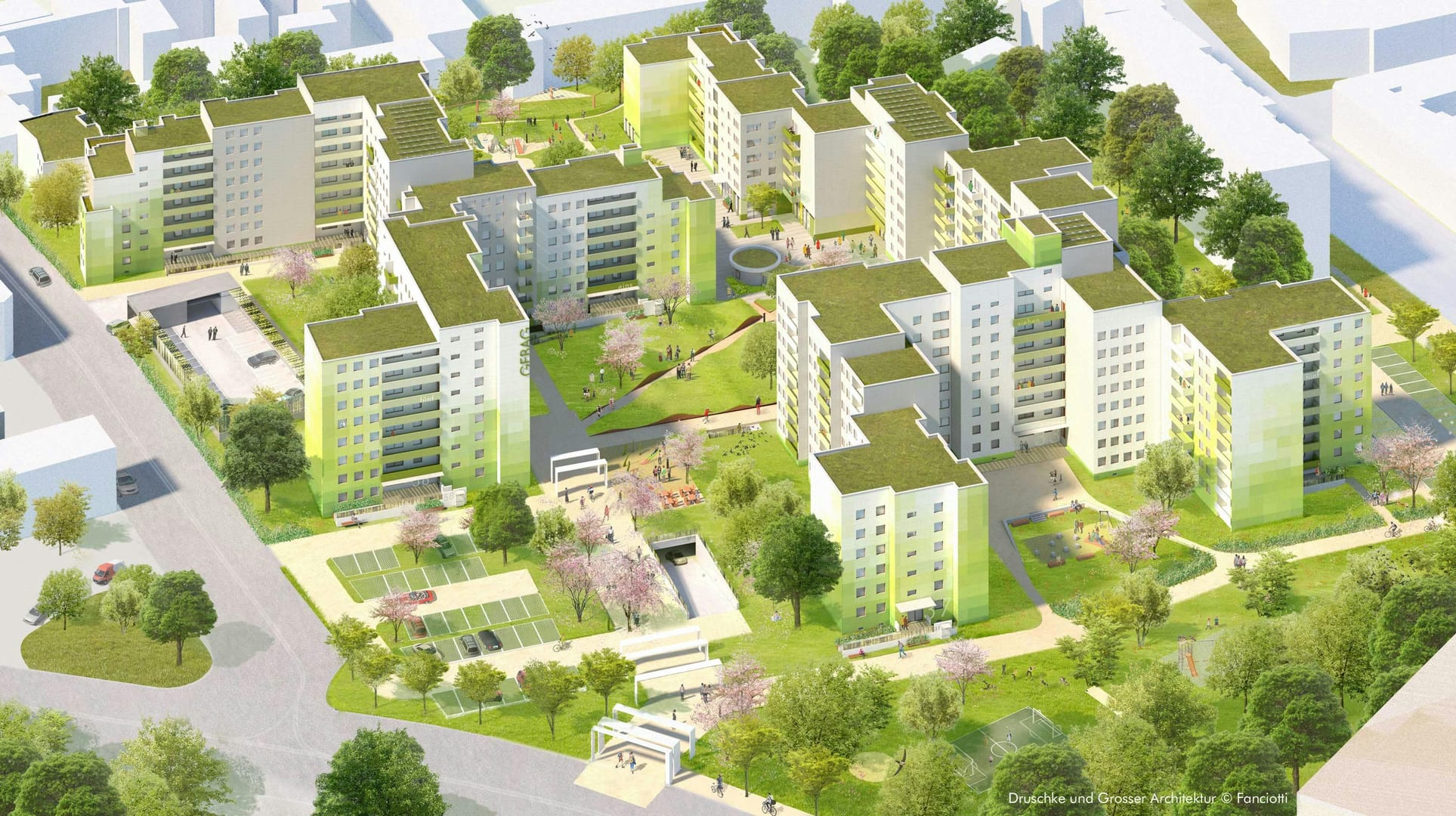
Modernising the City Wohnpark is an investment that benefits the people here in Hochfeld directly.- 1872[source]
Municipal building company founded
The Duisburger Gemeinnützige Baugesellschaft is founded; as GEBAG it remains the city’s own landlord today.
- 1979[source]
Hunger strike saves a miners’ settlement
An 18-day hunger strike ends with the city buying the remaining 403 homes of the Rheinpreußen settlement; residents form a cooperative in 1984.
- Oct 2010[source]
WohnVision adopted
The council adopts the WohnVision, its first housing action plan, geared to attracting residents and young families.
- Mar 2019[source]
First "white giant" demolished
The first of the Homberg-Hochheide tower blocks is blown up; a second follows in September 2021.
- Dec 2019[source]
GEBAG buys the Wedau railway land
The municipal company acquires the former railway site that becomes 6-Seen-Wedau, planned for about 3,000 homes.
- Jul 2021[source]
NRW housing-supervision law in force
The Wohnraumstärkungsgesetz lets municipalities declare dwellings uninhabitable; it becomes the Task Force’s main legal tool.
- Jul 2025[source]
Third tower block demolished
The 160-flat tower at Ottostraße 54–56 comes down, making room for a 6.5-hectare park.
- Sep 2025[source]
Sören Link re-elected
The SPD mayor wins a third term with 78.57% in the runoff against the AfD’s Carsten Groß.
- Oct 2025[source]
Federal Bau-Turbo in force
A new clause in the Building Code lets municipalities approve housing without a new zoning plan until the end of 2030.
- Sep 2026[source]
City Wohnpark retrofit funded
NRW grants €51.1m to modernise 421 GEBAG flats in Hochfeld, saving nearly 15,000 tonnes of CO₂.
- 2027[source]
Green-steel plant ramps up
thyssenkrupp plans to start its direct-reduction plant from the end of 2027, replacing two blast furnaces.
- 2035[source]
City group climate-neutral
Target year for the administration and its companies, including GEBAG, to reach climate neutrality.
- 2045[source]
Climate-neutral heating
The municipal heat plan adopted in May 2026 aims for climate-neutral heat supply across the city.
From the founding of the municipal building company to demolition, renewal and the city’s climate deadlines.
From works estates to lakeside quarters
GEBAG is the city's main building arm. It was founded in 1872 as the Duisburger Gemeinnützige Baugesellschaft and today manages over 12,700 homes under managing director Winand Schneider. It builds for low incomes: its 46 new homes on Halener Straße in Homberg are all publicly subsidised and open only to holders of a housing pass. It also does the city's hardest property work. Together with the Entwicklungsgesellschaft Duisburg, the city's neighbourhood-renewal company, it had bought 13 problem properties by 2021 to take them off the market or clear them.
6-Seen-Wedau is the largest bet on Duisburg's future. On 60 hectares of former railway land beside the southern lakes, GEBAG and the city are laying out a district for about 3,000 homes. Vivawest's Wedauer Gärten is building 194 of them, 81 publicly subsidised. GEBAG's own Quartier Am Wasserturm plans about 150 homes, up to 60% of them subsidised. Designed by the Duisburg architects Druschke und Grosser, it mixes shared flats for older residents with co-living in a largely car-free layout.
The Rheinpreußensiedlung is the proof that residents can run their own estate here. Four decades after the hunger strike, the self-governed cooperative counts 798 members and still manages the former miners' houses without an outside landlord. It remains the only resident-founded cooperative in the city, and the most direct local precedent for a new one.
The Mercatorviertel brings housing back to the centre. Next to the town hall, on the site of a demolished school complex, GEBAG is rebuilding a quarter on the medieval street lines, with a car-free interior. Its zoning plan has applied since June 2020, and about 280 homes are planned alongside a hotel and offices.
The Innenhafen showed how a port can become a place to live. Norman Foster's masterplan, drawn up for the IBA Emscher Park exhibition, turned the inner harbour's mills and warehouses into museums and offices from 1994. Housing followed as new build along the water: canal-side terraces by Auer + Weber in 1998, and over 200 flats by GEBAG, which also converted the Werhahnspeicher warehouse.
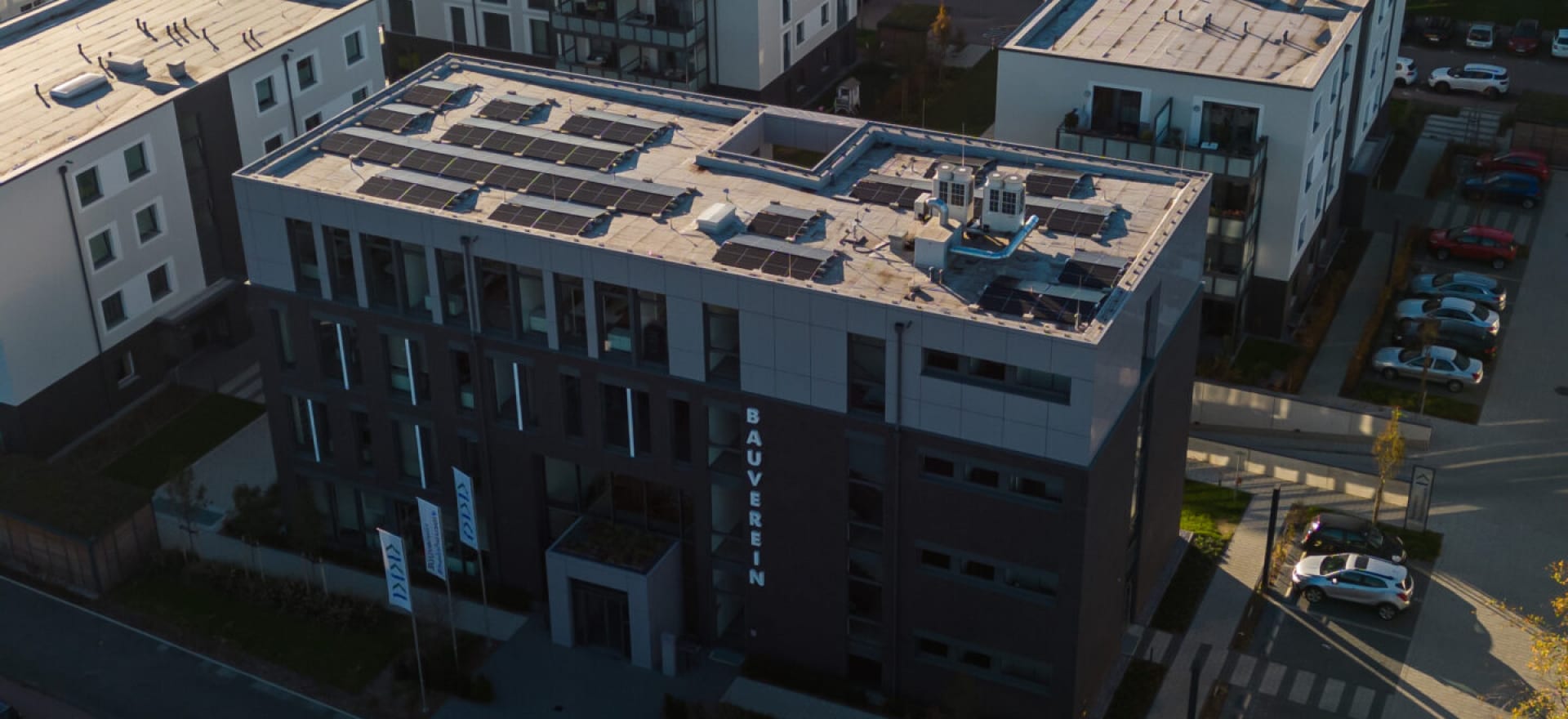
Bauverein Rheinhausen is one of the few cooperatives still building. At Kapellener Straße in Rumeln it is putting up 28 homes with a heat pump, due in autumn 2027. Wohnungsgenossenschaft Duisburg-Süd took a lighter route before its building stop. It added a timber storey of 14 flats on top of existing blocks on Innsbrucker Allee in 2022, and 12 more in 2023. Nearby, the Krupp company's Margarethensiedlung of about 700 garden-city homes, now largely owned by its residents, recalls the works-housing tradition all of this grew from.
References
Statistics16Click on any number to see the source
Housing market
Tenure & affordability
Cooperative, social & public
Adaptive reuse & vacancy
Population & migration
From our library8
- GEBAG Duisburger Baugesellschaft mbH — Organisation
- Neuer Mietspiegel für Duisburg: Mieten steigen um 4,55 Prozent — Knowledge
- Immobilienmarktbericht Duisburg 2025 — Knowledge
- Wohnungsgenossenschaft Duisburg-Süd eG — Organisation
- Wohnungsgenossenschaft Duisburg-Hamborn eG — Organisation
- Bauverein Rheinhausen eG — Organisation
- VdW Rheinland Westfalen Jahrespressekonferenz 2026 — Knowledge
- Bezahlbares Wohnen hat Bestand: 51 Millionen Euro für Duisburger City Wohnpark — Knowledge
Further sources59
- duisport annual results 2025
- Europe's largest steel location
- Wikipedia: Duisburg
- Stadt Duisburg, Sozialbericht 2024, Anlage 2
- Regionalverband Ruhr, Zensus 2022
- passed 500,000 residents again
- Stadt Duisburg, Neue Zuwanderer:innen
- Duisburg Business & Innovation, Immobilienmarktbericht 2024
- Mieterschutzverordnung
- Radio Duisburg reported
- Hans-Böckler-Stiftung study
- Wohnungsgenossenschaft Duisburg-Süd, membership
- Wohnungsgenossenschaft Duisburg-Hamborn, membership
- Bauverein Rheinhausen, membership
- GEWOGE Duisburg-Ruhrort
- Wohnungsgenossenschaft Duisburg-Mitte
- began in 1905
- 18-day hunger strike
- Wohnungsgenossenschaft Rheinpreußensiedlung
- Die Duisburger Wohnungsgenossenschaften
- Mietshäuser Syndikat
- Wohnungsgenossenschaft Duisburg-Süd, Geschäftsbericht 2025
- Wohnungsgenossenschaft Duisburg-Hamborn, Geschäftsbericht 2025
- WohnVision
- Radio Duisburg, 28 Sep 2025
- social report with a housing action plan
- declare a dwelling uninhabitable
- Radio Duisburg reported
- ak counted
- Zentrum für Kultur Hochfeld
- Land NRW, 12 Dec 2025
- Land NRW, 2 Feb 2026
- BMWSB, 28 Nov 2025
- Bau-Turbo
- rent brake
- 2026 funding directive
- NRW.BANK, KfW 134
- blew up three of six 1970s tower blocks
- Radio Duisburg, 27 Jul 2025
- Stark im Norden
- climate-neutral by 2035
- municipal heat plan
- Industriemagazin, updated 17 Jun 2026
- manages over 12,700 homes
- 46 new homes on Halener Straße
- bought 13 problem properties
- 6-Seen-Wedau exposé, 04-2025
- GEBAG and the city
- Wedauer Gärten
- Quartier Am Wasserturm
- GEBAG is rebuilding a quarter
- Radio Duisburg, 29 Jul 2024
- masterplan
- canal-side terraces
- over 200 flats by GEBAG
- Kapellener Straße in Rumeln
- a timber storey of 14 flats
- 12 more in 2023
- Margarethensiedlung