Nine million guest nights, 360,000 residents
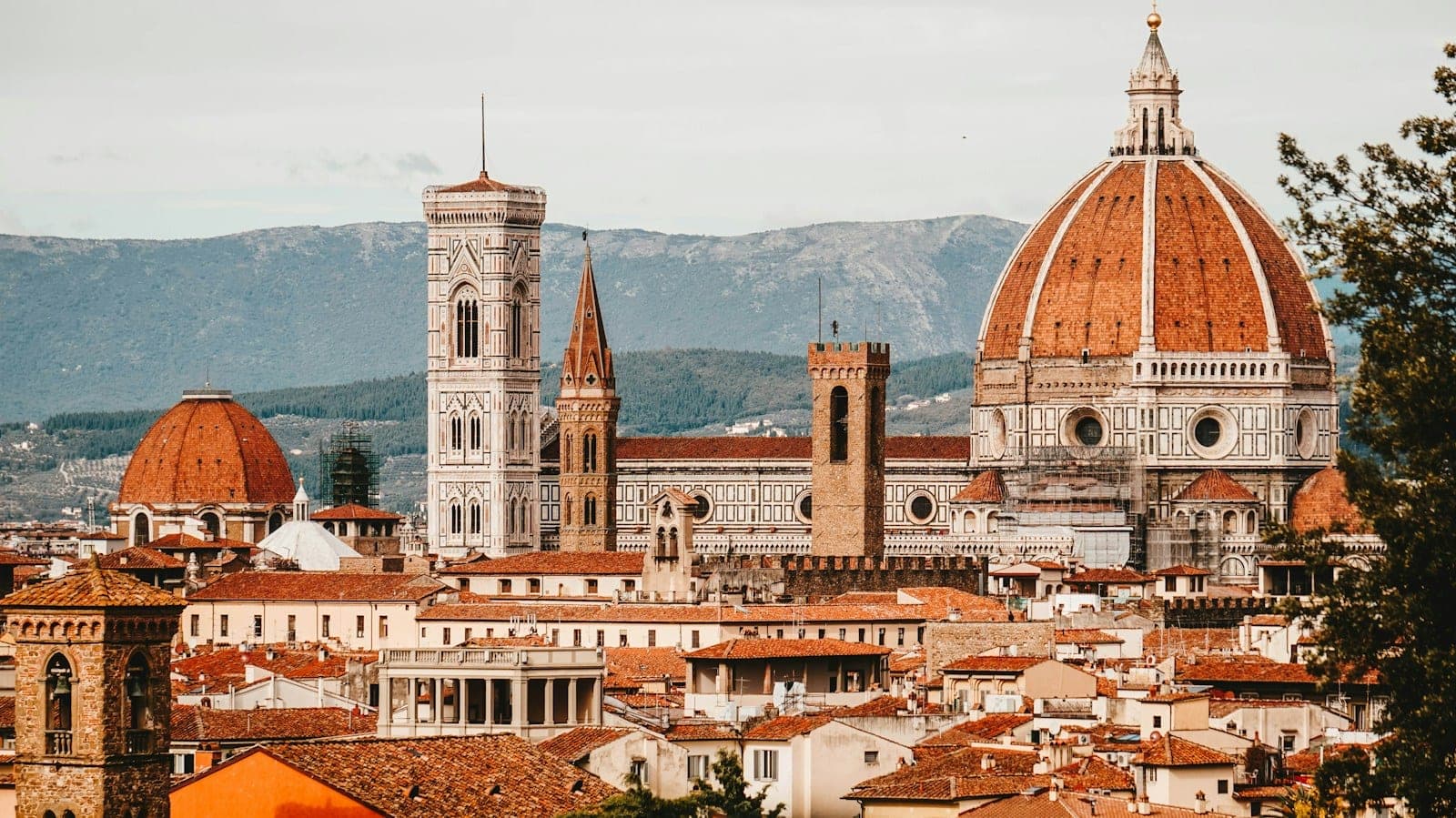
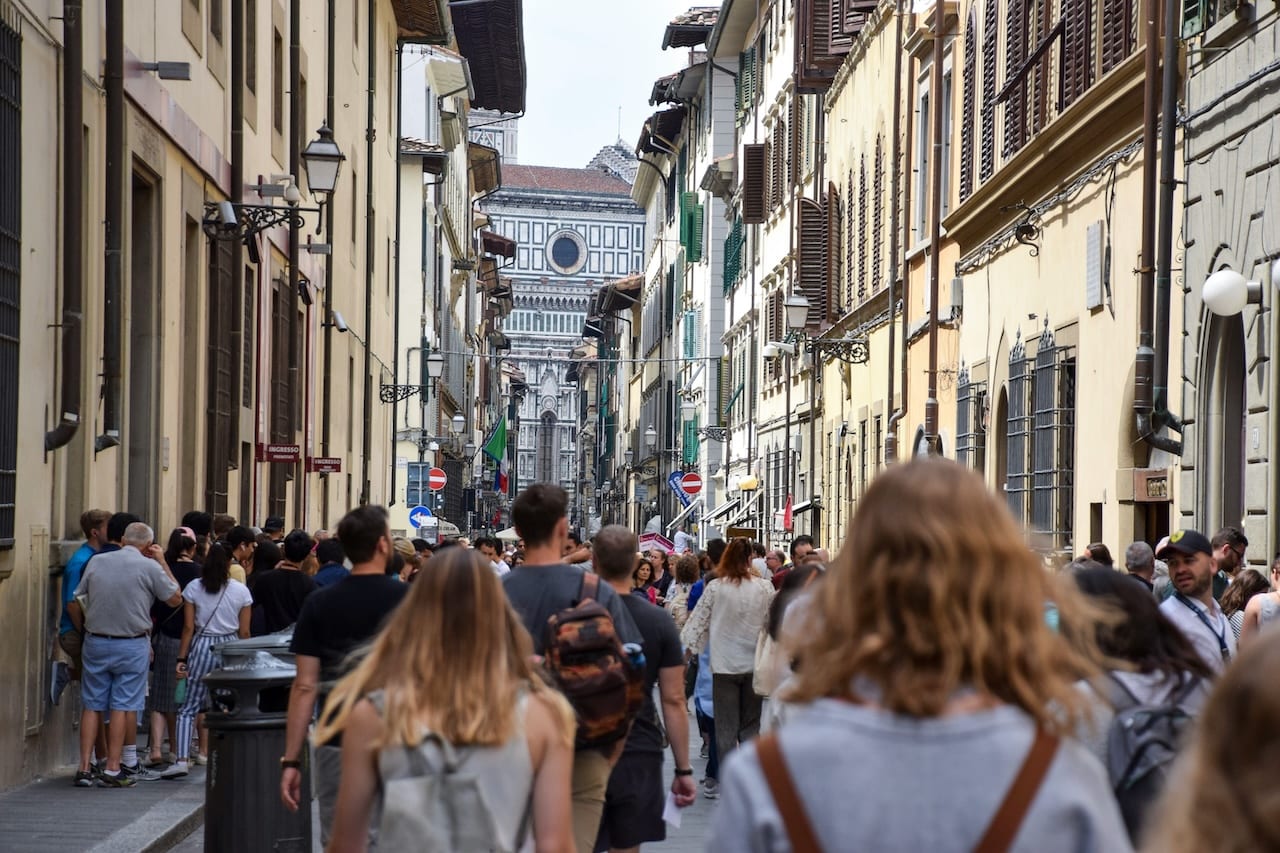
Florence taught Europe how to build a city around the artisan's workshop, the merchant's palazzo and the parish square, all packed inside a ring of medieval walls. That compact centre is still lived in, and still protected by its UNESCO listing. What has changed is who fills it. In 2024 the city counted 8,987,979 tourist overnight stays for a population of 360,930 people. Housing here is shaped less by industry or migration than by the pull of visitors on a small, old and heavily protected stock.
Ownership is the default. Around 67% of households own their home and 28% rent, city estimates derived from ISTAT's national survey. Public housing is thin. Casa SpA, the publicly owned company that runs the city's council homes, manages about 8,000 ERP homes (edilizia residenziale pubblica, Italy's means-tested public rental housing). That is 4.5% of occupied dwellings. Cooperative rental is not counted separately, because most Italian housing cooperatives sell their flats to members, who then appear as owners. Private rental accounts for about 23.5% of households. A further 5% of households live under usufruct or rent-free, a census category ISTAT puts at 6.5% across central Italy.
- Owners
- Owner-occupier67.0%
- Renters
- Public & non-profit rental4.5%
- Cooperative0.00%
- Private rental23.5%
- Other5.0%
- Free use / usufruct5.0%
Social housing is a rule, not a tenure. About 5% of dwellings carry a social-housing condition, almost all of it the ERP stock, with a few capped-rent schemes on top. The label overlays the tenures above rather than adding a slice. Eurocities' comparative study, Cities addressing the housing crisis, groups Florence with Barcelona and Braga as cities where such housing is "only a small fraction of total dwellings". Affordability there is "largely determined by market forces". Price-controlled homes outside the social category add only about 3%, the same study finds.
Rents climb steeply once a home leaves the public sector. An ERP tenant pays about €2.40 per square metre a month, or €153 a month on average. Cooperative rental, measured nationally by the Legacoop federation, sits near €6.20. The median across all rented stock is €18.90, and new private contracts ask €22.20. Furnished and serviced lets, priced with bills and furniture included, reach €25.53.
- Public/municipal housing
- Cooperative
- All-stock median
- New contracts
- Furnished / serviced (gross)
Monthly rent per square metre by tier, net cold except the furnished tier, which is gross and all-in. A new private contract costs about 9 times the public ERP rate.
Plenty of that stock sits unused. The 2021 census recorded 14.9% of Florence's dwellings as unoccupied, a count that mixes second homes, flats awaiting sale and homes let only to visitors. Even the public stock has gaps. In mid-2026, 837 ERP homes stood empty, most of them waiting for repairs between tenants. Offices add more idle floor space: an estimated 13.5% of office space, around 183,760 m², is vacant, though that figure is scaled down from national data rather than counted locally.
The visitor economy absorbs much of what is left. An estimated 6,600 homes operate as full-time short-term lets. Airbnb listings rose from 10,867 in 2023 to 12,211 in 2026, about 85% of them in the historic centre. EUobserver's investigation into mid-term rentals reports that 25% of the historic centre is listed on the platform. Demand does not come from a growing population, which has fallen from 403,294 in 1991. It comes from visitors, students and temporary workers: about 30,000 people a year stay between 3 and 12 months.
The burden falls on renters, and increasingly on renters with jobs. IRPET, Tuscany's regional institute for economic planning, finds that renting households spend 34% of their income on rent, above the 30% affordability line. Under-35s spend more than 60%. La Nazione's report on the study, Il verdetto dell'Irpet, puts about 15,000 Florentine households in need of a public housing answer. A single student room costs €606 a month, the third highest in Italy, according to Il Tirreno's survey of student rents. Eviction orders ran at 627 in 2024, and more than 70% of them followed arrears that tenants could not avoid.
Today, having a job does not guarantee access to a home.The squeeze is national as well as local. The Ipsos Housing Monitor finds that 58% of Italians think housing policy is heading the wrong way. Among under-35s, 70% say buying or renting is harder for them than it was for their parents. Housing has become a middle-class worry, not only a problem at the margins.

In that picture one form is almost missing: the cooperative that keeps its homes off the market for good.
Cooperatives that built to sell
Italian housing cooperatives come in two forms. In a cooperativa a proprietà divisa (divided ownership), members pool money to build and each then takes the deed to a flat. In a cooperativa a proprietà indivisa (undivided ownership), the cooperative keeps the building and members hold a lasting right of use, paying rent to their own organisation. Members join by buying a quota sociale (the membership share) and often lend their savings to the cooperative. The divided form dominates by a wide margin. Legacoop Abitanti, the national federation of housing cooperatives, counts 40,000 homes built in undivided ownership between 2017 and 2022, against 400,000 sold to members.
Florence's tradition grew from the post-war emergency. The city's public housing institute dates from March 1909, but the turning point came under Giorgio La Pira, the Catholic reformer then serving as mayor. On 21 February 1953 he requisitioned empty homes for evicted families. The next year INA-Casa, the national post-war housing programme, handed over the keys to about 1,000 flats in Isolotto, the "satellite city" La Pira opened on 6 November 1954. The Sorgane plan followed in 1957, drawn up by 37 designers under the architect Giovanni Michelucci. From the 1960s the PEEP zones (municipal land set aside for low-cost housing) gave cooperatives cheap plots on condition that they sold at capped prices. Most sold, and their flats passed into private hands.
Today's sector falls into three clusters with very different problems. The older building cooperatives are still settling accounts. Unica, once a leading Florentine housing cooperative, is in compulsory administrative liquidation. In 2021 a court upheld sanctions against it for selling PEEP homes at Badia a Settimo above the agreed price. A second cluster works through funds. The Fondo Housing Toscano was promoted by local cooperatives and construction firms and is managed by InvestiRE SGR, with Abitare Toscana acting as social manager. The third cluster is young and small. MuSt, a student cooperative active since 2022, opened Florence's first cooperative student house in viale Belfiore. The European Alliance for Collaborative Housing's paper on the European housing challenge cites it among the continent's student cooperatives.
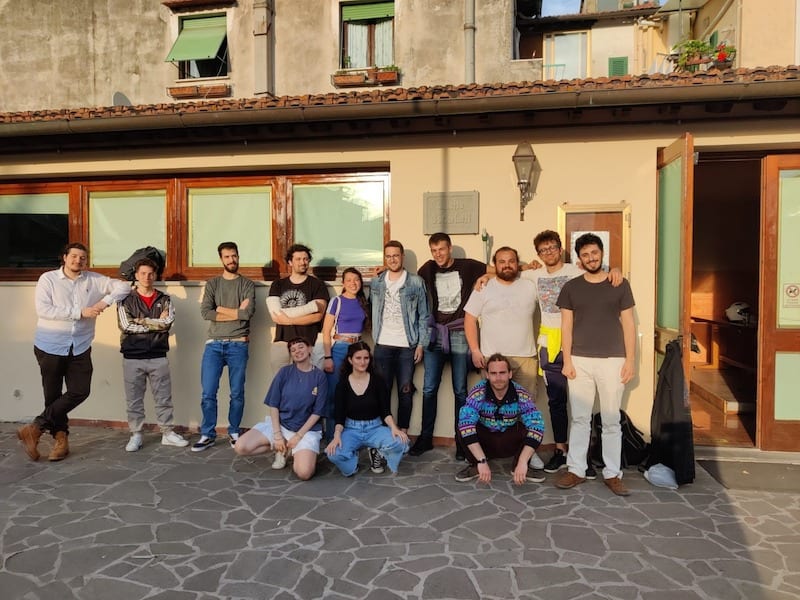
Self-organised living exists, but at the scale of a single stairwell. At Cohousing Le Torri, a council-owned building in via delle Torri, 12 residents chosen in 2012 under a regional self-build programme renovated it themselves into seven reduced-rent flats and one shared flat. The clusters want different things. The old cooperatives need legal and financial clean-up. The fund model depends on investors accepting capped returns. The newcomers mostly need a building they could never afford to buy.
Policy treats cooperatives as partners in mixed schemes rather than as a sector with its own pipeline. According to the Eurocities study, the town plan requires part of every new residential project over 2,000 m² to be subsidised, including homes for older people, students or collaborative housing. The city also grants long surface-right concessions on public land, the model chosen for the Lupi di Toscana barracks. Neither tool is reserved for cooperatives.
Palazzo Vecchio against the lockbox
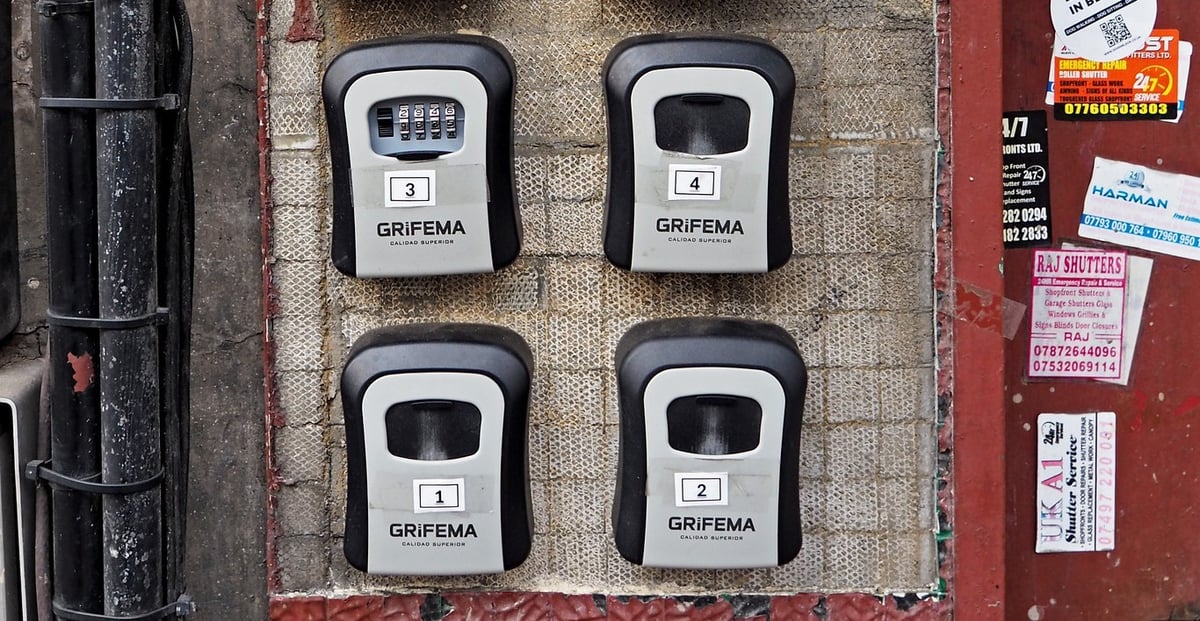
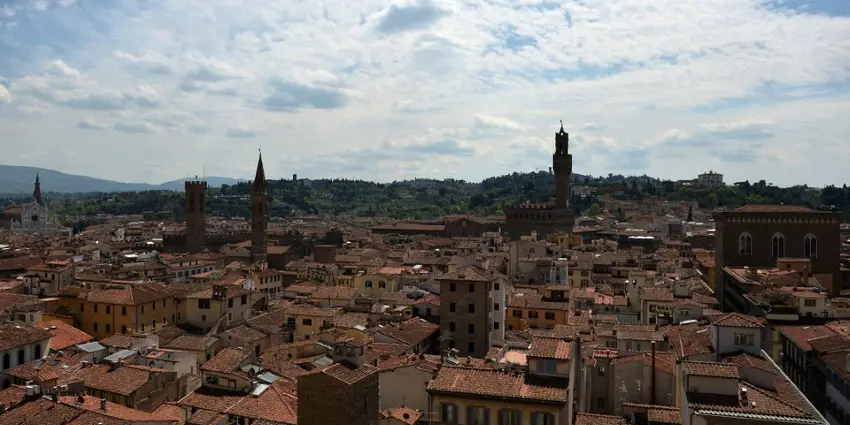
Mayor Sara Funaro, elected in June 2024, has put tourist lets at the heart of her housing policy. Her predecessor's 2023 freeze had lapsed in court. The council approved a new regulation on 5 May 2025. It froze new short-term-let permits in the UNESCO area, limited permits elsewhere to 5 years and set a minimum of 28 m² per flat. A ban on key boxes followed. On 14 May 2026 the TAR (Tuscany's regional administrative court) rejected 18 appeals against the rules. In June 2026 the freeze was extended to 67,780 more dwellings in nine residential districts beyond the centre. The Local's report on the extension counts 504 streets and a regime that runs until 2028.
The second strand is public housing. Nicola Paulesu, the councillor for housing, runs a €20 million three-year programme to repair empty ERP flats. More than 600 homes have been renovated and reallocated since the start of the term. Demand is still climbing: the latest ERP call drew 3,790 applications, up from 3,237 in 2021. The city also spends about €4 million a year on rent support, after the national government stopped refinancing its own fund.
Each tier of government holds a different key. Tuscany's regional tourism law 61/2024 gave municipalities under tourist pressure the power to limit short-term lets. The Constitutional Court upheld it in ruling 186 of 16 December 2025, holding that letting to tourists is not an essential part of the right to property. Rome holds the money. The national Piano Casa (housing plan), set by a decree of 7 May 2026, commits €970 million over 2026-2030 through Invitalia, the state development agency. Funaro, who speaks on housing for ANCI (the association of Italian municipalities), says that does not cover even 10% of the repair backlog in Italy's public housing. Brussels has now joined in. The European Commission's Affordable Housing Act, proposed on 9 September 2026, would place 28 of Florence's 33 housing-market zones above its stress threshold, according to Florence Daily News.
- Mar 1909[source]
Public housing institute founded
The Comune founds the Istituto per le Case Popolari, the body that later becomes Casa SpA.
- 21 Feb 1953[source]
La Pira requisitions empty homes
Mayor Giorgio La Pira orders empty homes requisitioned for evicted families, citing a grave public necessity.
- 6 Nov 1954[source]
Isolotto opens
INA-Casa hands over the keys to about 1,000 flats in the new Isolotto district.
- 1982[source]
Historic centre listed by UNESCO
The historic centre joins the World Heritage List; a 2021 extension brings it to 532 hectares.
- Jul 2024[source]
First short-let freeze lapses
The TAR declares the 2023 freeze in the historic centre lapsed; Mayor Funaro promises to reinstate it.
- 5 May 2025[source]
Short-term-let regulation approved
No new tourist-let permits in the UNESCO area, 5-year permits elsewhere and a 28 m² minimum size.
- 16 Dec 2025[source]
Constitutional Court backs Tuscany
Ruling 186 upholds the regional tourism law that lets municipalities limit short-term lets.
- 14 May 2026[source]
TAR upholds the regulation
The regional administrative court rejects 18 appeals against the regulation, the key-box ban and the planning variant.
- Jun 2026[source]
Freeze extended beyond the centre
Limits extend to 67,780 more dwellings in nine residential districts, taking effect on 21 June.
- Jul 2026[source]
National Piano Casa becomes law
Law 116 of 2 July 2026 converts the housing decree, with €970 million for 2026-2030.
- 9 Sep 2026[source]
EU Affordable Housing Act proposed
The Commission's proposal would put 28 of Florence's 33 housing-market zones above its stress threshold.
- 2027[source]
Lupi di Toscana construction begins
Building work on 236 capped-rent homes is due to start once demolition is complete.
- 31 May 2028[source]
Transitional exemption ends
Grandfathered tourist lets lose their exemption under the regional law.
- 2030[source]
Climate-neutrality and Piano Casa horizon
Florence's EU Mission target for climate neutrality, and the end of the national Piano Casa funding period.
From the first public housing institute and La Pira's requisitions to the short-term-let freeze, the national Piano Casa and the targets still ahead.
On empty homes, the city prefers counting to seizing. In July 2026 Funaro rejected calls to requisition flats left empty by large owners. She proposed a survey with the Agenzia delle Entrate, Italy's tax agency, instead. It is a pointed contrast with La Pira's requisitions of 1953. The main lever for bringing private homes back is the Agenzia Sociale per la Casa, a social letting agency run by Casa SpA. It matches households on moderate incomes with owners who agree to let at regulated rents. The town plan adds two supply rules. It bans converting buildings in the historic core to tourist accommodation, and it reserves 20% of rooms in new private student halls for students in need.
Climate targets run through the same buildings. Florence holds the EU Mission label for climate-neutral cities, with a 2030 neutrality goal. Its "zero volumes" planning principle steers new homes into existing buildings rather than onto open land, as the Eurocities study notes. Italy missed the 29 May 2026 deadline to transpose the EPBD, the EU buildings directive, which requires residential energy use to fall 16% by 2030. Converting disused barracks and factories serves both goals at once: new homes, and no new land taken.
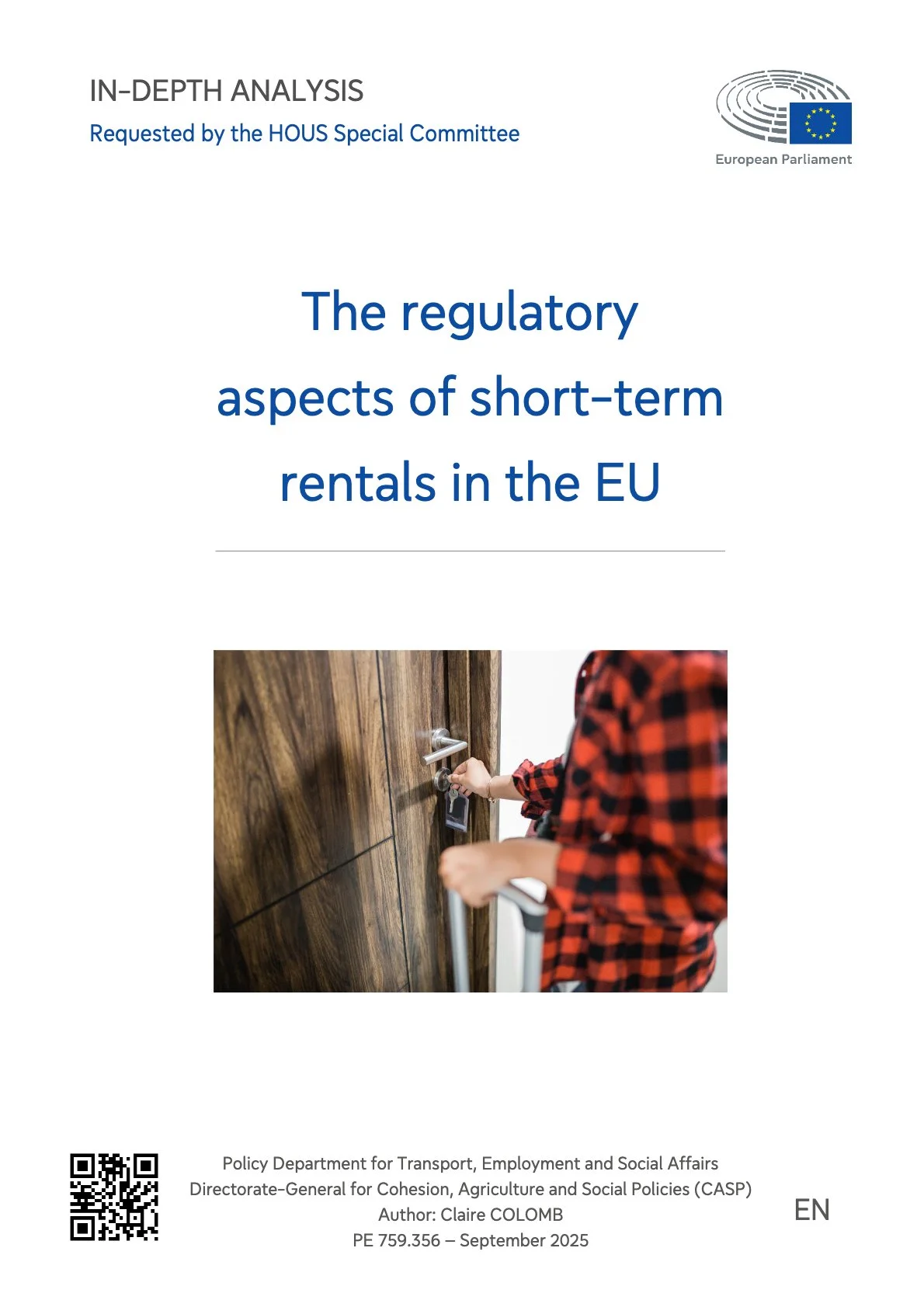
The tourist-let rules split the city's debate in two. Marco Celani, president of AIGAB, the Italian association of short-term rental managers, says Florentine owners used to letting at €2,000 or more a month will not accept €1,000 from a resident. His association is appealing the TAR ruling to the Council of State, Italy's highest administrative court. The mayor's office answers that the courts have now sided with residents. A 2025 European Parliament study on the regulation of short-term rentals frames the same trade-off at EU level.
The TAR rulings clearly affirmed a fundamental principle: the city's collective interest and the right to housing come before any other interest.When you stop Italians from doing short-term lets in the big cities, what happens is that Italians either leave the homes empty or sell them.From barracks and tobacco halls to homes
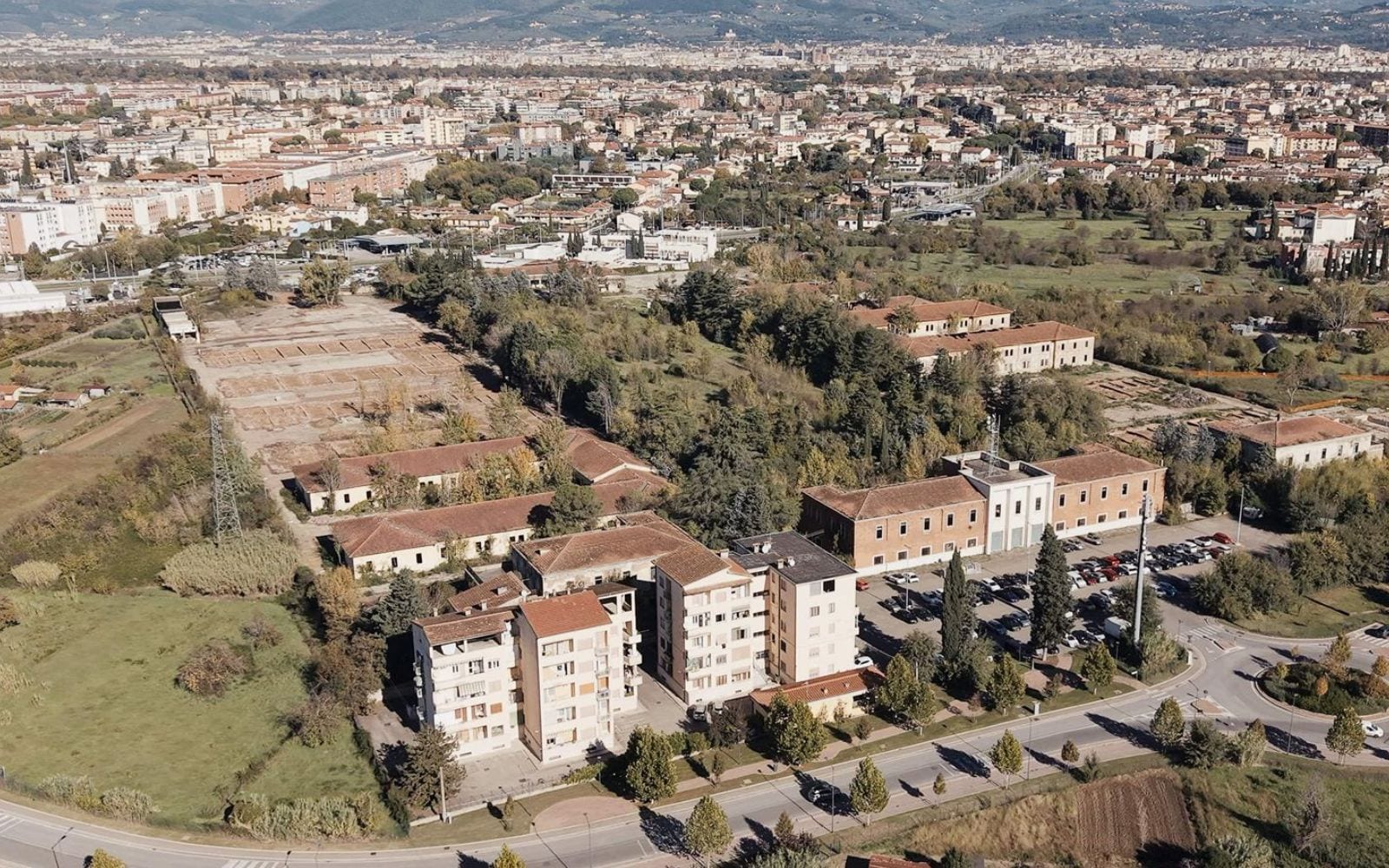
Ex Caserma Lupi di Toscana is the city's biggest bet. The former army barracks is becoming 236 homes at capped rents of about €8 per m², roughly €600 a month for 75 m². Rents stay capped for at least 15 years. The Abitaequo fund, managed by Investire SGR, won the tender. Its roughly €55 million comes from the national housing fund run by CDP Real Asset (€35 million), Fondazione CR Firenze (€15 million) and €4 million in municipal land. Casa SpA will run a 114-bed public student hall on the same site, beside a park of about 5.5 hectares. Critics on the council's left say handing the homes to an investment fund has ended hopes of public housing there.
Manifattura Tabacchi shows what private capital does with a vast industrial shell. The former tobacco factory covers 110,000 m² and was about 70% complete in late 2025, with the last buildings due in 2028. Most of its new flats sell from around €4,000 per m². A student residence and hostel adds 520 beds, and the Polimoda fashion school fills 12,000 m². Inside that market scheme sits a 39-home capped-rent block that started in 2026, backed by CDP Real Asset and the Fondo Housing Toscano.
The Casone scheme on Via Pistoiese is the Fondo Housing Toscano's quieter template. Its 66 homes cost about €10 million, and rent may not exceed 30% of a household's gross income. Abitare Toscana acts as the scheme's social manager. It is the closest thing Florence has to cooperative rental at scale: capped, mixed-income and managed with residents in mind.
Casa SpA's backlog programme is the least glamorous project and perhaps the most important. More than 600 empty council flats have been repaired and reallocated since 2024, at €25,000 to €30,000 each. Yet the stock of empty flats is refilling as fast as it drains. Dmitrij Palagi, a councillor for the left-wing group Sinistra Progetto Comune, has described the effort as a warehouse that fills as fast as it is emptied. Every returned flat is a home that exists already, which is why the national funding row matters so much.
The former Vittorio Veneto barracks on Costa San Giorgio shows the other road. The hilltop complex above the Oltrarno is heading for a luxury resort, still at the stage of an informal review of its building-site plans. Florence has other barracks, convents and offices to decide on. Whether they become homes like Lupi di Toscana or hotels like Costa San Giorgio is the city's real housing question.
Florence is not facing that question alone. Paulesu took the city's case to Brussels in April 2026 with the Mayors for Housing alliance, whose 16 member cities include Barcelona, Ghent, Lisbon, Bologna, Milan and Rome. They share the argument Florence has been making in court: that a home is first a place to live.
References
Statistics9Click on any number to see the source
Housing market
Population & migration
From our library12
- Casa SpA — Organisation
- Cities addressing the housing crisis: Innovative and integrated approaches — Knowledge
- 'Mid-term rentals': the new haven for investors to keep ahead of housing regulations — Knowledge
- Il verdetto dell'Irpet: il lavoro non basta più per avere una casa — Knowledge
- Firenze, boom degli affitti per studenti: una singola costa più che a Roma — Knowledge
- Prezzi delle case, caro affitti e le sfide per i giovani in Italia: il nuovo Ipsos Housing Monitor — Knowledge
- MuSt – Mutualità Studentesca — Organisation
- How Collaborative Housing can respond to the European housing challenge — Knowledge
- How Florence has banned new tourist lets beyond the historic centre — Knowledge
- EU housing proposal could strengthen Florence's case for limits on short-term rentals — Knowledge
- The regulatory aspects of short-term rentals in the EU — Knowledge
- Fondazione CR Firenze — Organisation
Further sources41
- ISTAT — Abitazioni occupate, anni 2021-2023 — ISTAT · 2026-02
- Firenze: turismo, dati 1861-2025 — italiainnumeri.it · 2025-10-23
- Il piano casa del Comune — La Nazione · 2025-10-29
- Case popolari sfitte: il recupero non tiene il passo dei rientri — Sinistra Progetto Comune · 2026-06-18
- Primo anno di Regolamento affitti turistici brevi — Comune di Firenze · 2026-05-26
- Casa a Firenze: sfratti, affitti alle stelle e redditi in bilico — CGIL Toscana · 2025-10-07
- Cooperativa di abitazione: cos'è e come funziona — Oltro · 2023-12-22
- Legacoop Abitanti lancia il manifesto per la casa — Legacoop · 2024-09-26
- Firenze, quando era il sindaco santo La Pira a requisire le case — Il Fatto Quotidiano · 2016-08-04
- Isolotto: dalle prime case — storiadifirenze.org
- Complesso di case popolari a Sorgane — Wikipedia
- Archivio delle case popolari di Firenze — Archivi in Toscana
- Unica Società Cooperativa di Abitazione in liquidazione coatta amministrativa — Unica
- Case popolari di Badia, confermata la stangata — La Nazione · 2021-07-27
- Fondo Housing Toscano — Fondazione Housing Sociale
- Autocostruzione e cohousing: a Firenze si può — Terra Nuova · 2017-10-07
- Affitti brevi a Firenze, il Tar dichiara decaduto lo stop voluto da Nardella — Firenze Post · 2024-07-10
- Come Firenze sta provando a regolare e limitare gli affitti brevi — Il Post · 2025-05-06
- Affitti turistici brevi, il TAR dà ragione al Comune — Comune di Firenze · 2026-05-14
- Casa, al via piano per ristrutturare alloggi ERP — Comune di Firenze · 2025-03-22
- Casa, pubblicata la graduatoria provvisoria del bando ERP — Comune di Firenze · 2026-09-23
- Casa, da domani possibile richiedere il contributo affitto 2026 — Comune di Firenze · 2026-09-16
- La Corte costituzionale e la legge della Regione Toscana 61/2024 — SUNIA
- Corte costituzionale: legittimi i limiti toscani agli affitti brevi — Il Post · 2025-12-17
- Decreto Piano Casa 2026: struttura e destinatari — FiscoeTasse · 2026-07
- Sara Funaro: il Piano casa è da rifare — La Nazione · 2026-06-24
- Case sfitte, Funaro dice sì al censimento e no alle requisizioni — Controradio · 2026-07-17
- Agenzia Sociale per la Casa — Casa SpA
- Piano operativo e piano strutturale 2023, via libera del Consiglio — Comune di Firenze · 2023-03-13
- Firenze col marchio Missione neutralità climatica — Regione Toscana · 2024-06-10
- Direttiva case green: cosa prevede la EPBD — Edilportale · 2026-05
- Affitti brevi, l'allarme di Celani (Aigab) — Adnkronos · 2026-07-22
- Abitaequo, 236 alloggi a Firenze — MilanoFinanza · 2026-03-07
- Ex Lupi di Toscana, nel 2026 i cantieri — Nove da Firenze · 2025-11-14
- Ex Lupi di Toscana: addio all'housing sociale pubblico? — La Firenze che vorrei · 2026-02-26
- Manifattura Tabacchi, completamento entro il 2028 — Lungarno · 2025-10
- CDP, Manifattura Tabacchi Firenze: al via 39 alloggi a canone calmierato — MonitorImmobiliare · 2026-03-02
- Housing sociale, un bando per assegnare 66 alloggi al Casone — Fondazione CR Firenze · 2020-01-27
- Resort nell'ex caserma di Costa San Giorgio — La Nazione · 2026-06-11
- Casa, l'assessore Paulesu a Bruxelles con l'alleanza europea dei sindaci — Comune di Firenze · 2026-04-30
- Florence World Heritage Office — Comune di Firenze