
Main homes, summer keys and a thinning rental market
Alicante has lived facing the sea since the Castle of Santa Bárbara went up on Mount Benacantil. Every June it builds monuments for the Fogueres de Sant Joan and burns them around the shortest night. From around 1960 the city also grew into a resort, and the city's own population and housing study dates its modern expansion to that turn towards tourism. Today 366,221 people share it with a summer population that comes and goes. That double life is the housing question here.
The 2021 census counted 187,658 dwellings in the municipality. Only 72.4% are anyone's main home. Among those households, 104,010 own their flat and 21,801 rent it, a renter share of 16.1%. The rest live in homes lent to them or held on other terms. Public housing is a sliver: the city's housing authority manages 746 rental homes, about 0.46% of the stock. Cooperative housing leaves no separate mark, because Spanish cooperatives build flats for their members to own, so their output is counted with owner-occupiers. Almost every rented home is therefore a private let.
- Owner-occupied76.6%
- Rented (private and municipal)16.1%
- Lent free or other tenure7.3%
Social housing sits over those tenures as a rule rather than a slice. The rule is Spain's protected-housing system. Vivienda de protección pública (VPP, publicly protected housing) is a price cap attached to a flat, whoever builds or owns it. Much of it was sold, and the protection can lapse. No city-level count of protected homes is published for Alicante, so no social-housing share is given here. What can be counted is municipal: besides its own homes, the housing authority lets 542 private flats at capped rents through a mediation programme.
Rent climbs steeply by tier. A municipal tenant pays about €4.30 per square metre a month. The median across all existing leases is €8.50. A contract signed today asks €12.10, a furnished let €13.90 and a serviced flat €21 all-in. Rents rose 7.3% in the year to August 2026 and 85% in five years.
- Public / municipal rental
- All-stock median
- New contracts
- Furnished long-let
- Serviced / mid-stay (gross)
Monthly rent per square metre by tier. Net of bills, except the serviced tier, which is gross and all-in.
Much of the stock is not lived in all year. The census found 15,733 empty dwellings, 8.4% of the total against 14.4% for Spain. A later water-consumption study puts real vacancy nearer 5.2%. Seasonal use takes a large share instead. In 2023 the national statistics office counted 3,153 tourist flats, and the regional register listed 3,842. Offices are emptier, with an estimated 11.8% of floor space vacant, some 49,504 m².
Demand keeps arriving. The province recorded 84,657 arrivals from abroad in 2024 and has gained 146,000 residents since 2021. The city plans for students, remote workers and seasonal staff who are not on the register: counting them, its load reaches 138.4% of the resident population. On listing data reported locally, long-term rental supply fell 8% in a year while seasonal lets grew 41%, reaching 22% of the rental market.

The squeeze reaches well beyond the poorest households. A rent-to-income estimate puts the housing-cost overburden rate at 44.3%. A room now costs more than €380 a month, and over 800 low-income families wait for a municipal flat. Coapi Alicante, the provincial college of estate agents, reports that landlords now screen out young people, vulnerable families and middle-income earners alike. Spain as a whole ranks housing its first problem, named by 37.5% of respondents in September 2026. In Alicante, residents' groups have called five marches on housing and tourism since July 2024.
Between owning and renting privately there is almost nothing, and the cooperative tier in particular barely registers in the census at all.
Cooperatives that build to sell, and a few that build to share
The Spanish housing cooperative is a way to build, not a way to rent. A cooperativa de viviendas (a members' development cooperative) buys land, builds, hands each member a flat to own and usually winds up. Cutting out the developer saves members 20-30%, which is why the form has long delivered protected housing. The newer model is cesión de uso (grant of use). Here the cooperative keeps the building for ever and members buy a returnable share plus a monthly fee. The region's Ley 3/2023 de viviendas colaborativas (the Valencian collaborative-housing act) gives it a statute, with shared space of at least a fifth of the floor area. Research on the Catalan grant-of-use projects looks at what the form does for social cohesion.
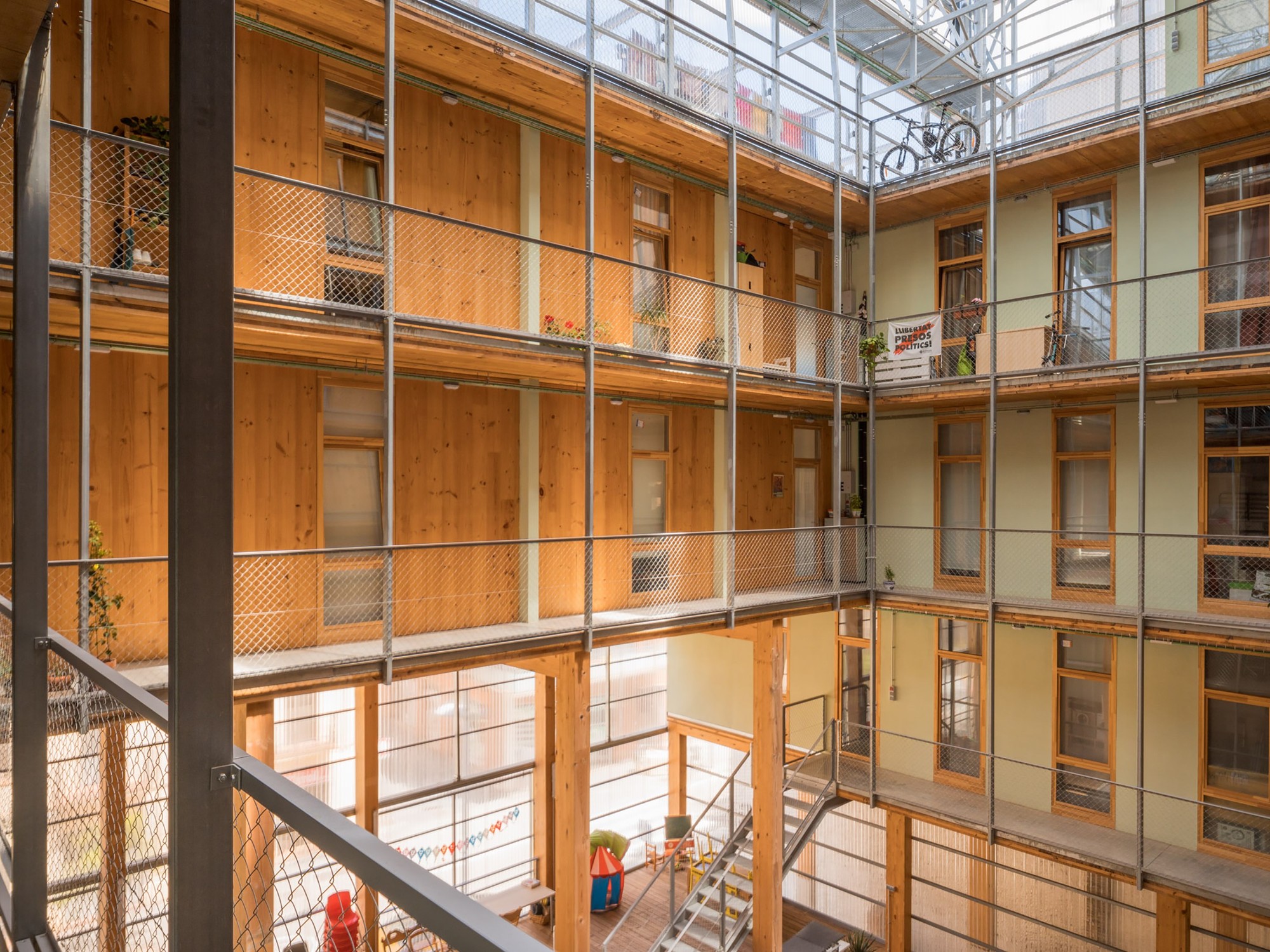
Alicante's tradition is the first kind. The Unión Sectorial de Cooperativas de Viviendas de Alicante, the provincial cooperative union, co-founded FECOVI (the Federation of Valencian Housing Cooperatives) in 1988. Its busiest years came between 2003 and 2010, when cooperatives in Alicante and Valencia built at scale. The sector outlived the crash. The Valencian Community had 160 housing cooperatives by 2021, and Alicante province formed 6 of the 9 founded that year.
Today the sector splits into two clusters with different problems. The build-to-own cooperatives face scrutiny over who gets the flats. The Les Naus case is the local example: a cooperative formed in 2018 was awarded a municipal plot in 2022 for 140 protected homes, and relatives of council officials ended up among the buyers. A judge has been investigating the award since January 2026. The grant-of-use groups have the opposite problem, a model without finance. Ágora Cohousing in Rabasa is one such group. Alicante ConVivencia, an over-55s cooperative, asks each member for €36,300 before it can buy land, which it has found in inland Castalla rather than the city.

Government now treats cooperatives as useful partners on public land rather than a sector to build up for its own sake. The regional government has said it will favour them when it auctions plots in the city. That fits the international pattern in which land, more than subsidy, decides whether a cooperative sector grows.
Land, licences and the rent cap left to Madrid
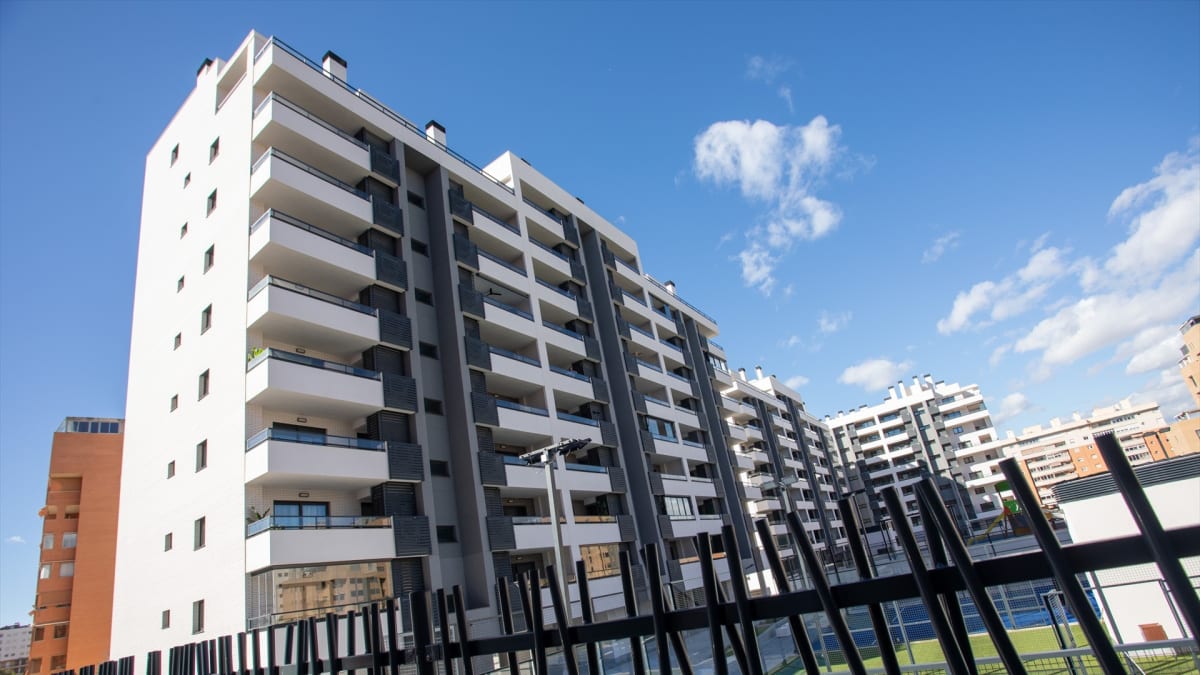
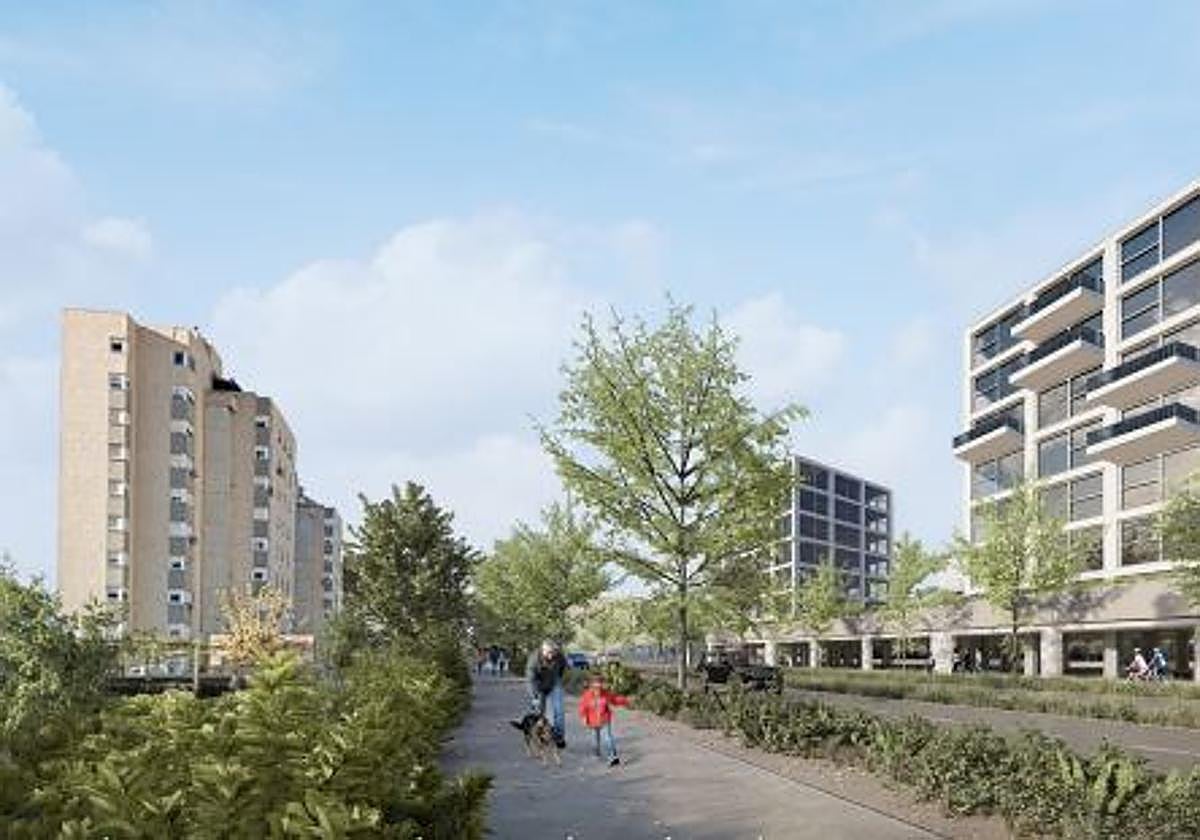
The sitting council has answered the shortage with land and building rather than rent rules. Luis Barcala of the Partido Popular has been mayor since 2018 and was re-elected in 2023 with 14 of the 29 seats. In May 2026 the city presented a Municipal Affordable Rental Network of about 1,300 rental-only homes on 10 municipal plots, with 40% of homes in new sectors to be protected. New districts add more: 1,000 homes at Nueva Albufereta, 930 at Lomas del Garbinet and 550 at La Torreta, of which 100, 400 and 275 are protected. The housing authority adds rent aid of up to €250 a month for tenants aged 18 to 35.
Each level of government holds a different lever. The state's Ley 12/2023 (Spain's right-to-housing law) lets a region declare a stressed rental market and cap rents inside it. The previous regional government opened that procedure for Alicante and 85 other municipalities in May 2023. Its successor has put the emphasis on supply: its Plan Vive has activated 4,800 protected homes against a target of 10,000 this term. The council has taken the same line. In December 2025 the Partido Popular and Vox voted down a motion asking Madrid for extraordinary rent measures.
Cooperatives enter mainly through that regional land. EVha (the Valencian housing and land agency) plans a new round of plot auctions in Alicante covering about 220 homes on five municipal sites. It is weighing surface rights, concessions and price-capped transfers, with preferential access for cooperatives, according to Sebastián Fernández, the regional secretary for housing.
On empty and seasonal space the city has chosen licensing over taxation. A moratorium on tourist-flat licences, approved in January 2025, was extended to whole apartment blocks and hostels and runs until January 2027. A planning amendment approved in December 2025 caps tourist beds at 0.187 per resident in each census section. Enforcement began in 2026, with 57 investigations and 9 activities suspended by September. The approach follows the European debate on regulating short-term rentals.
Climate goals reach housing mainly through retrofit money. EU recovery funds are paying for the energy renovation of older blocks in Virgen del Remedio. That makes the public and municipally managed stock the main vehicle for adapting existing housing to a hotter climate and to lower energy use.
- 1987[source]
General plan approved
The city's general urban plan is approved. It still governs land use while a new structural plan is prepared.
- 1988[source]
FECOVI founded
The Alicante and Valencia cooperative unions create a single regional federation of housing cooperatives.
- 2008[source]
Plaza de América opens
The municipal intergenerational block opens with 72 flats, 56 for older people and 16 for young people.
- 2023[source]
Two housing laws
The Valencian collaborative-housing act (April) and Spain's right-to-housing law (May) take effect. The regional government opens the stressed-zone procedure for 86 municipalities.
- 2025[source]
Tourist-licence moratorium
Licences for tourist flats are suspended in January and the suspension is extended to whole blocks and hostels in July.
- 2026[source]
Les Naus investigation and a public rental network
A court opens an investigation into the award of 140 protected cooperative homes. The city presents a network of about 1,300 municipal rental homes.
- 2027[source]
Moratorium ends; Nueva Albufereta starts
The licence moratorium reaches its legal limit in January, and works on the 1,000-home Nueva Albufereta district are due to begin.
- 2028[source]
Virgen del Remedio retrofit deadline
The EU-funded retrofit of the remaining Virgen del Remedio blocks must be finished by 30 June 2028.
- 2050[source]
A city of 466,000
The structural plan projects 466,000 inhabitants by mid-century.
From the planning rules still in force to the targets the city has set itself.
The argument on the street is about the tourism model as a whole, not only the flats. Alicante, dónde vas, a citizens' platform, called a march for 19 September 2026 with the neighbourhood housing unions of Carolines and the Zona Nord, under the slogan "Alacant al límit" (Alicante at its limit).

We want it to focus not only on criticising tourist apartments, but on everything this predatory model is doing to our city.The council's reply is that rent control belongs to Madrid, not to a city hall. Carlos de Juan, the councillor for housing, put it to the left-wing opposition in the December 2025 plenary debate.
What are you doing asking Alicante City Council for what you can do and legislate from the central government?Two generations in one block, a ceded plot and a renovated north
Viviendas Intergeneracionales Plaza de América is the project Alicante is known for abroad. The Patronato Municipal de la Vivienda (the municipal housing authority) opened it in 2008: 72 small flats above a health centre and a day centre. Of these, 56 are let to people over 65 and 16 to people aged 18 to 35. Each young tenant signs a good-neighbour agreement to spend time with older residents. Rent was €225 a month at its tenth anniversary. The design answers the loneliness that research across Europe ties to old age, and the city plans to repeat it in Benalúa Sur.
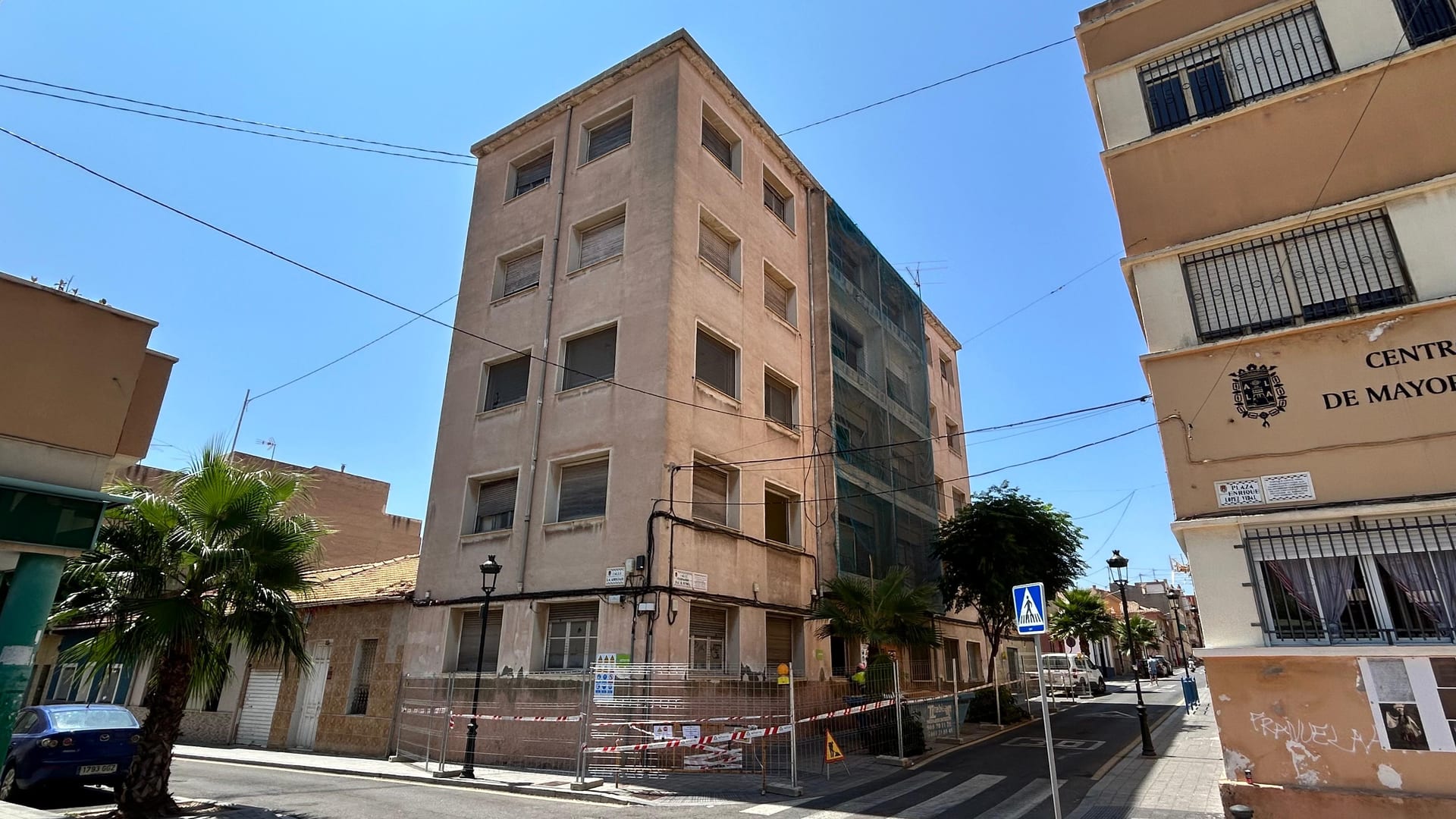
The housing authority is also the city's steadiest builder of small schemes. It is finishing 15 flats for young people at El Portón in the old town and 14 in San Gabriel, an investment of €625,880. Its councillor describes it as the only municipal body of its kind in the Valencian Community, and the planned rental network is to stay under municipal management.
Ágora Cohousing is the city's first grant-of-use cooperative. Its 18 intergenerational homes are planned on a plot in Rabasa ceded by EVha. Members pay an entry share of €25,000 to €45,000 and a monthly fee of €500 to €700. The group lost years to a financing rule: it could not mortgage land it did not own. EVha has since resolved that obstacle. Studies of senior cooperative housing in Barcelona treat such buildings as community infrastructure, where residents organise care and company among themselves.

Plan Vive's Rabasa scheme, a few streets away, shows the regional alternative. Urbania-Vivasal is building 34 affordable rental homes on public land, with rents from €580 and 40% of them reserved for young people and single-parent families. Side by side, the two projects show a private build-to-rent developer and a members' cooperative, each on public land.
Virgen del Remedio is where the city is renovating rather than building. The northern district's older blocks are being retrofitted with EU recovery money. The latest round covers 192 homes and €4,986,154, with energy upgrades, new electrical systems and two new lifts. The authority's mediators first win owners' consent, block by block. The scheme is a working example of the EU toolkit for funding social housing.
The housing unions of Carolines and the Zona Nord are the newest actors. Neighbours organised by them on Pascual de la Mata street have spent months resisting pressure to leave their homes. Their demands mirror what the projects above already do in miniature: rents tied to income, and more homes held permanently outside the market.
References
Statistics8Click on any number to see the source
Housing market
Tenure & affordability
Population & migration
From our library15
- Estudio de población y vivienda — Plan General Estructural de Alicante — Knowledge
- Why Is Spain’s Social Housing So Well-Designed? — Knowledge
- Rental Housing Supply in Alicante Declines as Prices Reach Historic Highs — Knowledge
- Effects on Social Cohesion of the Grant of Use Cooperative Housing Model in Catalonia — Knowledge
- 'Caso VPO de Alicante': el turbulento recorrido de un expediente que terminó repartiendo pisos protegidos a cargos del PP — Knowledge
- Ágora Cohousing (Rabasa Cooperativa) — Organisation
- International policies to promote cooperative housing — Knowledge
- Alicante Embraces Public Rental: 1,300 New Homes to Curb Price Surge — Knowledge
- The regulatory aspects of short-term rentals in the EU — Knowledge
- Climate adaptation in public, cooperative, and social housing in Europe — Knowledge
- Alicante, dónde vas — Organisation
- Patronato Municipal de la Vivienda de Alicante — Organisation
- Loneliness in Europe — Knowledge
- Housing as community infrastructure: an analysis of senior cooperative housing using the capability approach — Knowledge
- Social housing and beyond -Operational toolkit on the use of EU funds for investments in social housing and associated services — Knowledge
Further sources25
- Viviendas, garajes y locales en Alicante: precios y rentabilidad del alquiler — OCU Fincas y Casas · September 2026
- Government's Housing Law Leaves 'Thousands of Flats Off the Market' for Rent in Alicante — TodoAlicante · 11 July 2026
- Alicante Takes to the Streets Over Housing — TodoAlicante · June 2026
- El Ayuntamiento de Alicante rechaza comprar las VPO de Les Naus — Moncloa.com · 31 July 2026
- La vivienda es el primer problema de los españoles en el CIS — Que.es · 15 September 2026
- Alicante Dónde Vas y los sindicatos de vivienda convocan una protesta contra el modelo turístico — Diario de Alicante · 2 September 2026
- El Patronato de la Vivienda refuerza su apuesta por el alquiler social joven en 2026 — Ayuntamiento de Alicante · 2025
- Las cooperativas de viviendas se afianzan en la Comunitat — Valencia Plaza · 2022
- Historia de FECOVI — FECOVI
- Ley 3/2023, de 13 de abril, de viviendas colaborativas de la Comunitat Valenciana — BOE · 2023
- La cesión de uso: un nuevo modelo económico y de propiedad — Alicante ConVivencia
- Ley 12/2023, de 24 de mayo, por el derecho a la vivienda — BOE · 2023
- La Generalitat valenciana inicia el procedimiento para limitar rentas en zonas de mercado tensionado — idealista/news · 26 May 2023
- Camarero subraya que el Plan Vive avanza — El Periòdic · 25 May 2026
- Alicante aprueba la nueva regulación de los pisos turísticos y rechaza instar a frenar el precio del alquiler — Diario de Alicante · 18 December 2025
- El Pleno aprueba la extensión de la moratoria a los bloques turísticos — Ayuntamiento de Alicante · 22 July 2025
- Alicante intensifica su presión sobre los pisos turísticos — El Español · 24 September 2026
- Vivienda perfila otra hornada de subastas para VPP en Alicante y da cancha a las cooperativas — Alicante Plaza
- Los nuevos barrios de Alicante toman forma — TodoAlicante · 31 August 2026
- "Alicante, dónde vas" pone fecha a la protesta — COPE · 2 September 2026
- Luis Barcala — Wikipedia
- Alicante reactiva la rehabilitación de 192 viviendas en Virgen del Remedio — TodoAlicante · 18 August 2026
- Ágora, el primer 'cohousing' intergeneracional de Alicante en suelo público — El Español · 29 August 2024
- Alicante acoge en Rabasa la promoción de viviendas de alquiler asequible del Plan Vive — Ayuntamiento de Alicante · 4 April 2025
- El Ayuntamiento celebra el X Aniversario de Viviendas Intergeneracionales Plaza de América — Ayuntamiento de Alicante · 2018