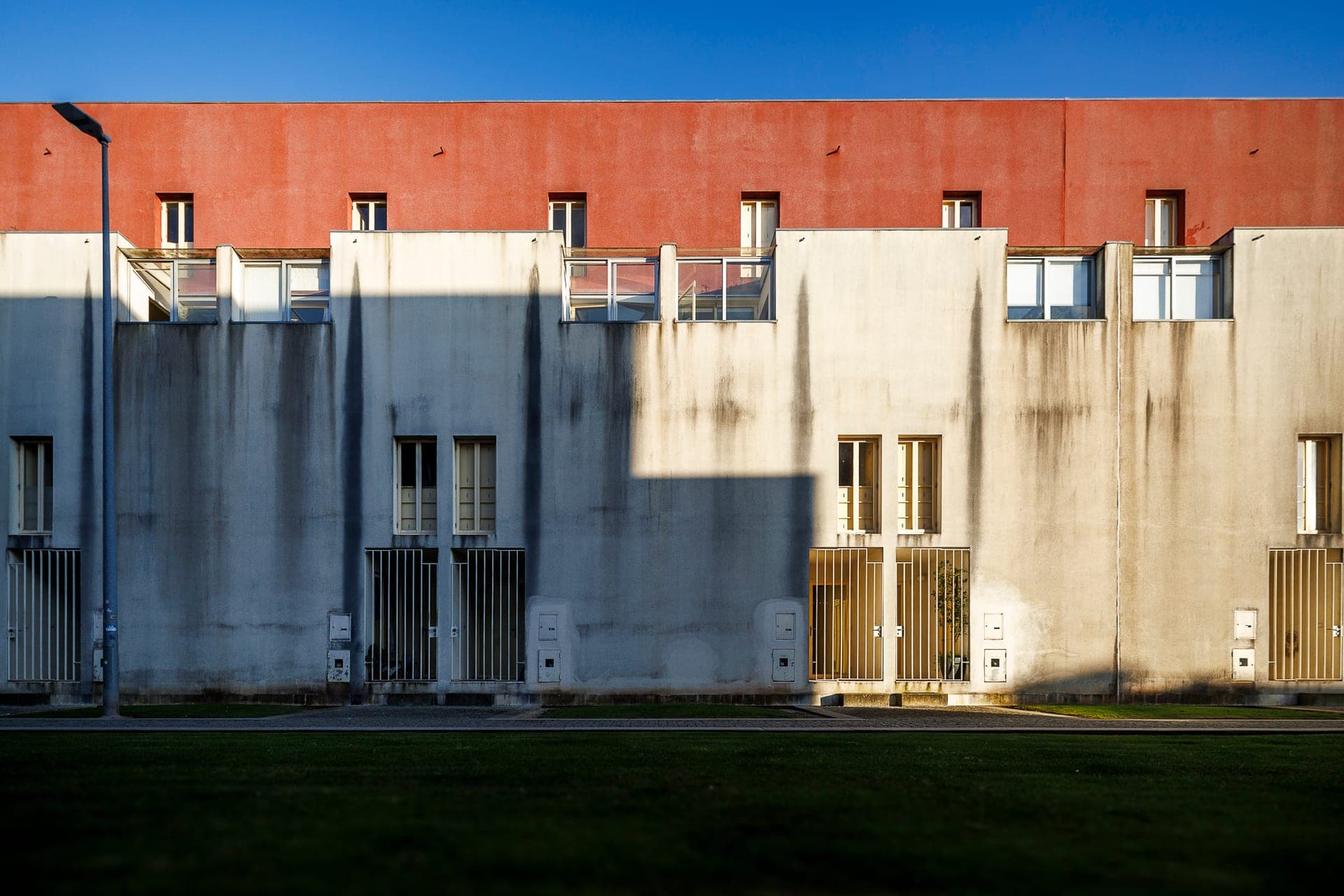
Bairro da Bouça, also known as Cooperativa das Águas Férreas, is a social-housing neighbourhood in Porto, Portugal, designed by architect Álvaro Siza Vieira. 1 The scheme grew out of efforts to improve housing conditions through Portugal’s Local Ambulatory Support Service (SAAL), which brought architects and other specialists into direct contact with residents’ committees. 1
The project predates the 25 April 1974 revolution: it was initially developed under the Housing Development Fund and later incorporated into a SAAL operation in 1975. 1 Residents took part in discussions about the works, and the plan proposed four housing blocks. 1 Only two were built in the first phase; when SAAL ended in 1976, construction stopped with 56 of the 128 planned homes complete. 1
The site extends from Rua da Boavista towards Lapa metro station and backs onto a railway embankment. 1 Siza addressed the railway noise with a substantial double wall, while the arrangement of the blocks and their end volumes connects the development to the surrounding urban fabric. 1
Work resumed in April 2004, combining rehabilitation of the existing blocks with construction of the remaining 72 homes; the project was completed in 2006. 1 The neighbourhood’s development involved residents, and the later rehabilitation was carried out with residents living on site. 12 The Cooperativa das Águas Férreas is identified as the neighbourhood’s cooperative, and a heritage-register record lists it as the constructor of the second phase. 36
Bairro da Bouça is one of eight works by Siza Vieira in Portugal included in a UNESCO World Heritage nomination submitted in 2023. 1