Overview of the Study and Its Sponsors
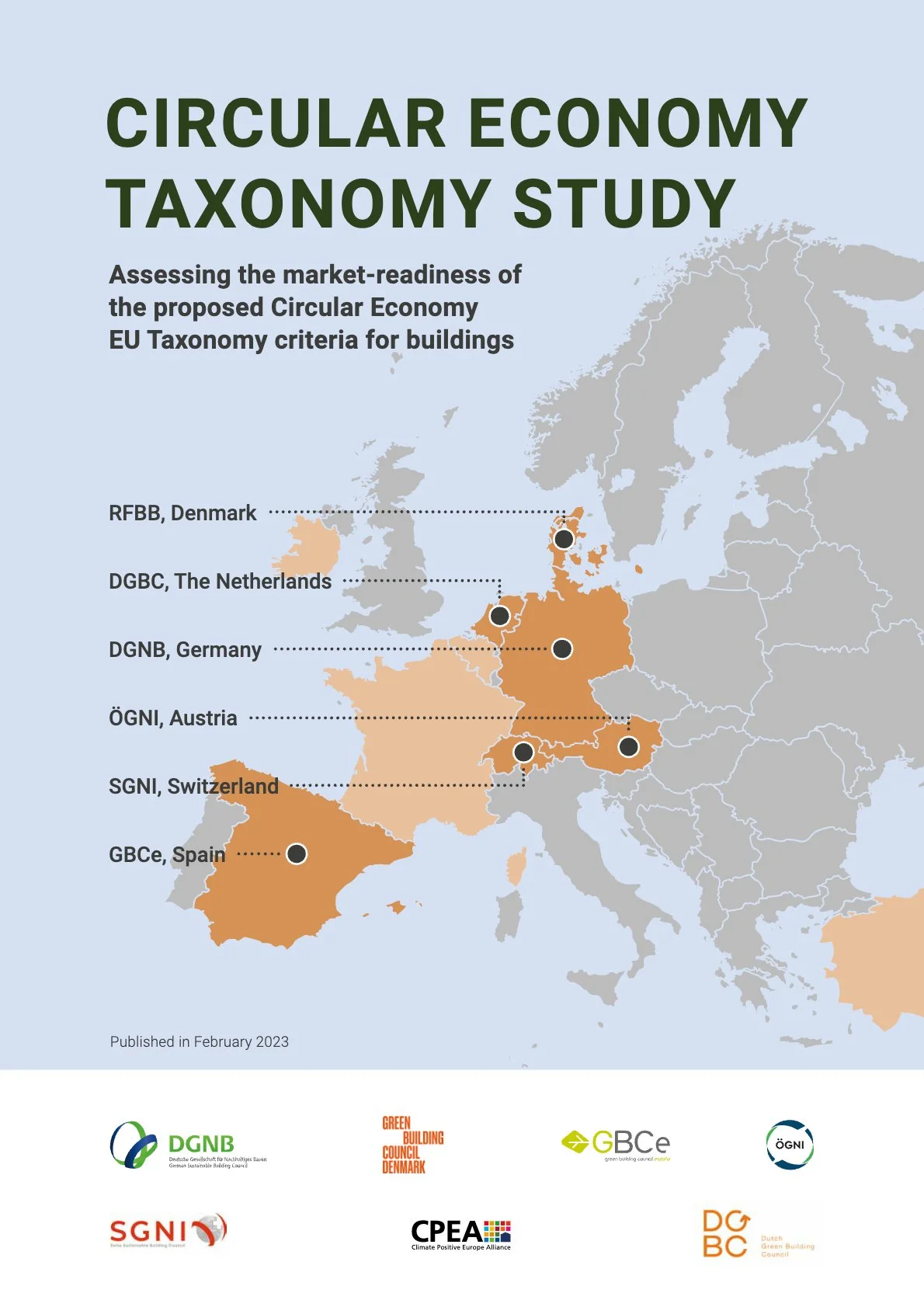
The Circular Economy Taxonomy Study was coordinated by the Climate Positive Europe Alliance (CPEA) and authored by a consortium of experts including Seema Issar, Vincent Ostermeyer, Anna Braune, Christine Lemaitre, Julia Manzano, Alfons Ventura, Bruno Sauer, Amal El‑Kaswani and numerous others. The participating organisations represent major Green Building Councils across Europe—DGNB (Germany), GBCe (Spain), RFBB (Denmark), ÖGNI (Austria), SGNI (Switzerland), among others—providing a broad pan‑European perspective on circular‑economy readiness in the building sector.
Scope and Methodology
The study examined 38 real‑world building case studies (35 new constructions and 3 renovations) from Austria, Belgium, Denmark, France, Germany, Ireland, Spain, Switzerland, the Netherlands and Turkey. Researchers applied the proposed EU Taxonomy criteria for circular economy to each case, using detailed questionnaires that covered waste treatment, recycling targets, life‑cycle assessment (LCA), design for adaptability and dismantlability, material composition, hazardous‑substance compliance, and use of digital tools. Data reliability was graded on a three‑point scale (low, medium, high) based on documentation quality.
Key Findings – Waste Management
Approximately 90 % of projects complied with the EU Demolition and Construction Waste Protocol for treating waste. However, only around 40 % met the ambitious 90 % recycling/reuse target required for substantial contribution, while about 70 % achieved the less stringent 70 % DNSH benchmark.
Life‑Cycle Assessment Results
Roughly 90 % of the buildings performed a full LCA, but only 20 % made the results publicly available, reflecting limited transparency. The LCA data were generally reliable due to the involvement of certification schemes (DGNB, BREEAM, LEED) that require such assessments.
Design for Circularity
Around 70 % of the case studies incorporated design features that support resource efficiency, adaptability, flexibility and dismantlability. Implementation of these features was documented through certification criteria and expert declarations.
Material Composition and Renewable Content
Only about one‑third of projects met the combined quota for re‑used, recycled or responsibly sourced renewable materials. The study noted that while 15 % re‑used and 15 % recycled content were common, the remaining 20 % renewable‑material target was achieved in a minority of cases. Weight‑based calculations were more frequently used than surface‑area metrics.
Hazardous Substances Compliance
Nearly 90 % of the buildings confirmed that no asbestos or substances of very high concern (SVHC) were present, complying with REACH regulations.
Digital Documentation and Building Material Passports
Electronic tools (BIM models, material passports) were employed by roughly 70 % of the projects to store and share information on materials, maintenance, and end‑of‑life pathways. Nonetheless, about 60 % lacked detailed guidance on future reuse or recovery, limiting the full potential of digital documentation.
Overall Market‑Readiness
The study concluded that none of the 38 buildings could be classified as fully aligned with the Circular Economy criteria of the EU Taxonomy. The majority aligned with less than 50 % of the proposed requirements. Market‑readiness is hampered by data gaps, limited availability of circular‑material supplies, insufficient knowledge of implementation processes, and the absence of clear, harmonised frameworks across countries.
Recommendations for Policy and Practice
Key recommendations include:
- Clarifying and simplifying criteria to reduce bureaucratic burden.
- Developing common digital standards (e.g., Building Material Passports linked to digital twins).
- Enhancing data transparency through mandatory public LCA publication.
- Supporting the supply chain for reusable and recycled building materials.
- Providing targeted training and capacity‑building for market participants, especially on waste‑treatment protocols and material‑tracking tools.
Implications for Sustainable Housing Across Europe
For a pan‑European audience interested in sustainable housing, the study highlights both the potential and the current limitations of applying circular‑economy principles at scale. While strong expertise exists within Green Building Councils and a high level of certification engagement, substantial gaps remain in meeting ambitious recycling targets, documenting renewable‑material use, and ensuring data reliability. Addressing these gaps through harmonised standards, policy incentives, and digital infrastructure will be essential to unlock the circular‑economy transition for the European building stock.