Little Berlin, getting smaller and dearer
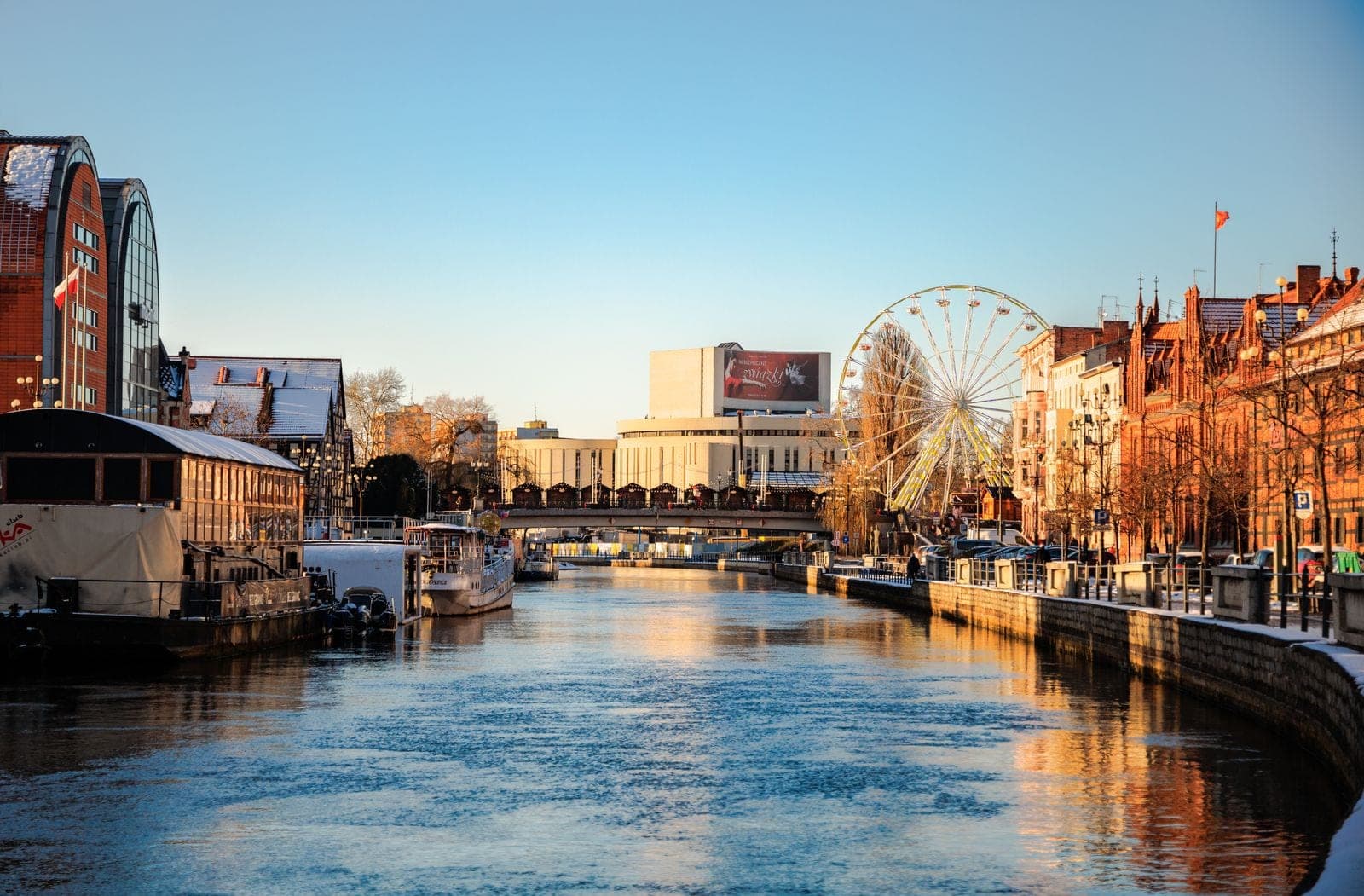
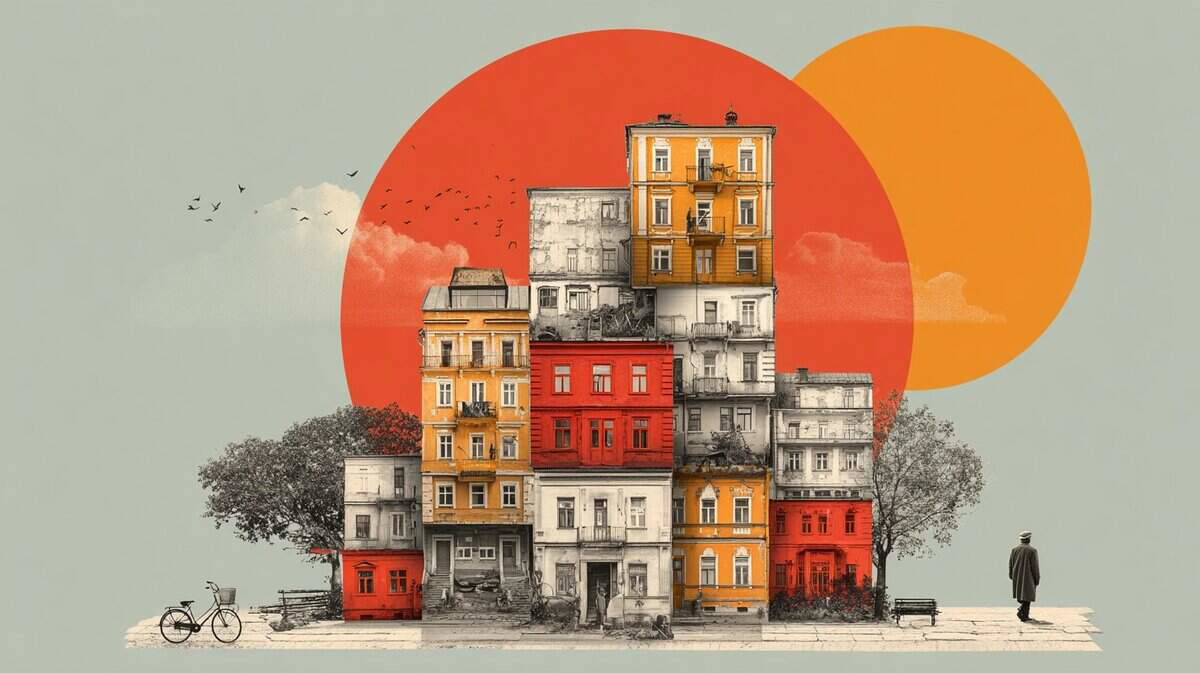
Bydgoszcz grew on water. The Bydgoszcz Canal opened in 1774 and made the town a port between the Vistula and the Oder. Prussian administrators then rebuilt its centre in brick and stucco, which is why Poles still call it "Little Berlin". Railway officials from that era also founded a housing cooperative in 1890. It still manages 28 of its pre-1914 tenements. Tenement, cooperative block and developer estate still divide the city between them.
The city counts 161,359 homes for 324,984 people. On the official register, 92.7% are owner-occupied, a figure that folds in cooperative flats held as a sellable right. Cooperatives manage 28,704 of those flats, or 17.8% of the stock. The city itself owns 9,191 flats, 5.7% of homes. Only 6.6% appear as tenants, and that means tenants of the city or of its social landlord. Private renting is not recorded at all. A flat let by an individual landlord stays inside the owner-occupied share, so the pie below understates renting. Poland as a whole shows the same pattern: ownership reaches 87.3% of households, as an essay on housing in Central and Eastern Europe in Social Europe notes.
- Owners
- Owner-occupier74.9%
- Cooperative17.8%
- Renters
- Public & non-profit rental5.7%
- Private rental0.90%
- Unclassified0.70%
- Unknown / Other0.70%
Social housing here is a set of rules rather than a tenure. About 6.6% of homes fall under them. That is more than the public share because it adds the moderate-rent flats of Bydgoskie Towarzystwo Budownictwa Społecznego (BTBS, the city-owned social housing company), which owns 1,463 flats. At the bottom sits najem socjalny (a social tenancy for the poorest, often after an eviction ruling). Its rent is 1.23 PLN/m² a month.
The rent ladder is steep. Cooperative members pay about €1.42/m² for running costs, since the flat itself is already paid for. Tenants of Administracja Domów Miejskich (ADM, the city company that manages council flats) pay €2.54/m². The market median across all lets is €9.66/m², and new lets sit near €8.91/m². That new-let figure comes from a thinner commercial source, so the two market numbers are best read as one band. Furnished and serviced flats, priced gross with bills and furniture, reach €13.86/m². A one-bed let by the night fetches a median €63.
- Cooperative
- Public/municipal housing
- New contracts
- All-stock median
- Furnished / serviced (gross)
Monthly rent per square metre by tier. Cooperative, municipal, all-stock and new-let figures are net cold rents; the furnished tier is gross, with utilities and furniture included.
Who does it hurt? A 2025 survey by Habitat for Humanity Poland found that the share of Poles spending more than half their income on housing rose from 8% in 2022 to 14% in 2025. It places about a third of the population in a "rent gap": unable to buy or rent a suitable home, yet ineligible for help. Young adults feel it first. 53% of Poles aged 25 to 34 live with their parents, according to Eurofound data reported by Notes from Poland. Reporting from the European Economic Congress in 2026 noted that the squeeze now reaches the middle class, not only the poorest. Locally the queue is long. 3,989 households are waiting for a BTBS flat, and 2,920 council households receive an income-linked rent reduction.

We earn too little to buy or rent a flat that fits our needs, and at the same time too much to qualify for state housing support, such as a municipal flat.Empty homes are part of the picture. The 2021 census found about 8,900 uninhabited dwellings, roughly 5.5% of the stock. The council stock is emptier still. At the end of 2024, 2,162 municipal flats stood empty, 23.7% of the total. Only 442 were ready to let, while 1,720 were judged unfit for repair or letting. An Interia report on Łódź's empty council flats puts Bydgoszcz just behind Łódź, alongside Gdańsk. Offices add less certain slack: an estimated 17.5% vacancy, or 0 m², scaled down from national data.
Unusually, the pressure comes without population growth. The city registered 2,512 new permanent residents in 2024 but still lost 1,091 people to net out-migration. The city's own forecast falls to 246,919 by 2050. Building has not stopped. Developers delivered 96% of the 1,513 homes completed in 2024, and 1,828 more were started. Building costs about €1,850/m², on land at around €46/m². Private rents face no price cap.
Between the developer estates and the council queue sits the cooperative stock, a tenure Bydgoszcz helped invent for Poland.
Cooperatives since 1890, owners since 2007
Polish cooperatives offer two rights. The spółdzielcze lokatorskie prawo do lokalu (a tenant-member right: the member lives in the flat, the cooperative owns it) cannot be sold. The spółdzielcze własnościowe prawo do lokalu (a cooperative ownership right) can be sold, inherited and mortgaged. The second right arrived only in 1972, as a 2023 study of Polish housing cooperatives by Hanna Milewska-Wilk records. Today most members in Bydgoszcz hold it or full title. The cooperative stays on as manager, and members pay it a monthly fee for upkeep.
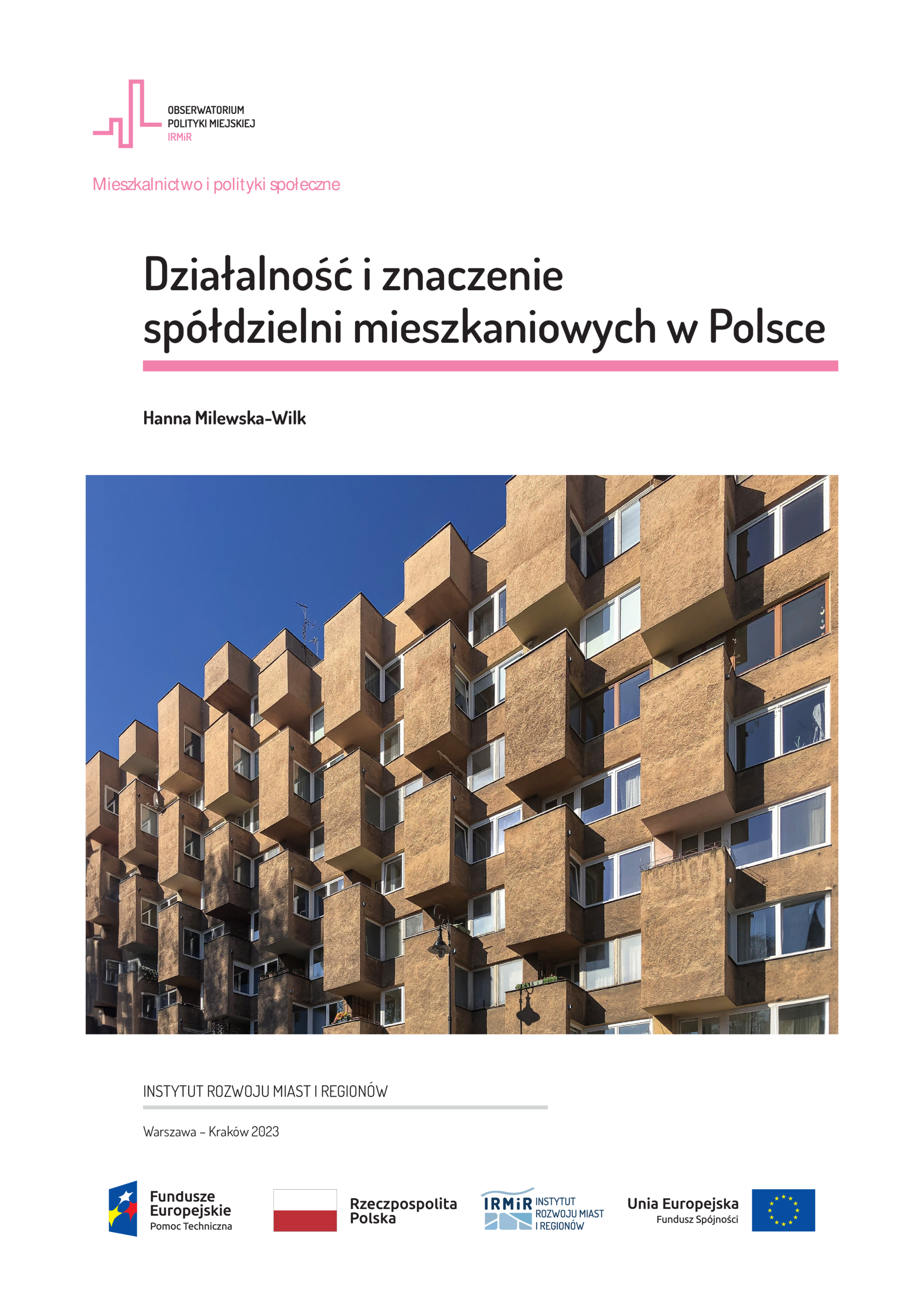
The tradition began here. German railway officials founded the Beamten-Wohnungsverein on 13 June 1890, and Milewska-Wilk dates Poland's first housing cooperatives to Bydgoszcz and Poznań that year. By 1914 it had built 33 tenements. Polish members took it over in 1920. The mass era came after 1961, when cooperatives became the main housebuilders nationally. In Bydgoszcz they laid out the Błonie estate on a former cavalry exercise ground of 60 ha. Its "anthill" tower at Okrzei 2 held 239 flats, then the largest building in the region. The 2007 amendment let members buy their flats for a token sum. The Constitutional Tribunal struck it down in 2008, but sales ran on to the end of 2009.
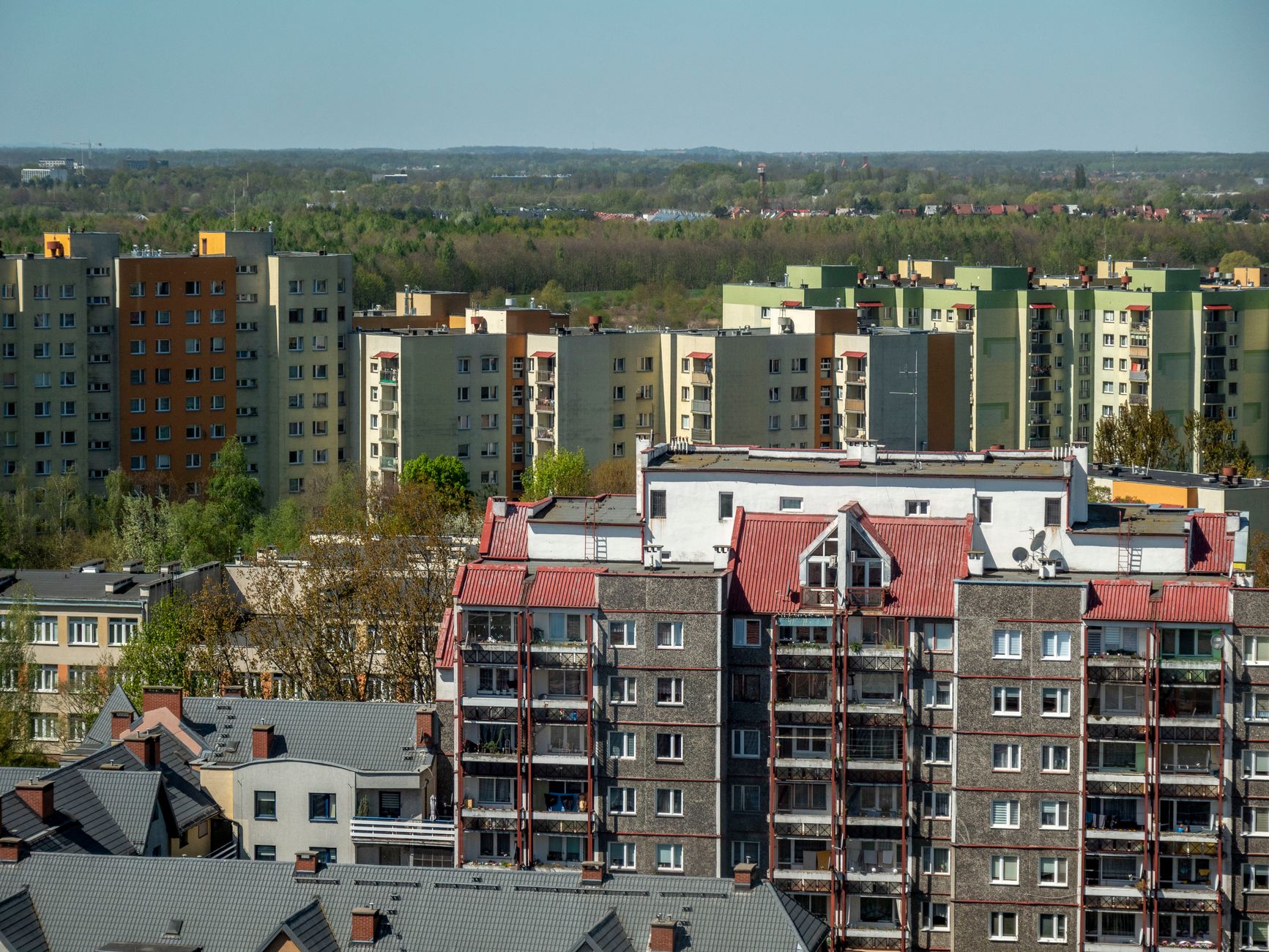
The sector today is large, old and mostly managerial. The city has 20 housing cooperatives. Two giants dominate. Bydgoska Spółdzielnia Mieszkaniowa (BSM), the 1890 lineage, manages 248 residential buildings across the centre, Błonie and Szwederowo. Spółdzielnia Mieszkaniowa "Budowlani", founded in 1958 by 24 members, manages more than 13,000 flats, largely on Wyżyny. Their challenges are shared: ageing panel blocks, retrofit bills and members who now think like owners. New-build group cooperatives, visible in Pomerania and Warsaw, have not appeared here. Michał Sobczak's 2023 paper on cooperative barriers explains why their role in new construction has become marginal nationwide.
The state has started to reopen a door. Cooperatives may again build tenant-member flats, Milewska-Wilk notes, and they can borrow from the same state social rental credit as public companies. In Bydgoszcz, though, new affordable supply comes from the city's own company, not from its cooperatives. That choice shapes the city's politics.
Warsaw's billions and the city's empty flats
Warsaw has turned towards renting. In April 2024 the Ministry of Development and Technology (MRiT, the national ministry responsible for housing) proposed raising the annual budget for social and municipal housing from 1 bn to 5 bn PLN, and to 10 bn PLN by 2030. The same draft banned selling off flats built with the state social rental credit. In July 2026 deputy minister Tomasz Lewandowski went further in an interview with Zero.pl. He described a draft law for 250,000 social and 128,000 municipal flats over 10 years. At the European Economic Congress in 2026, the government spoke of 45 bn PLN for social housing.
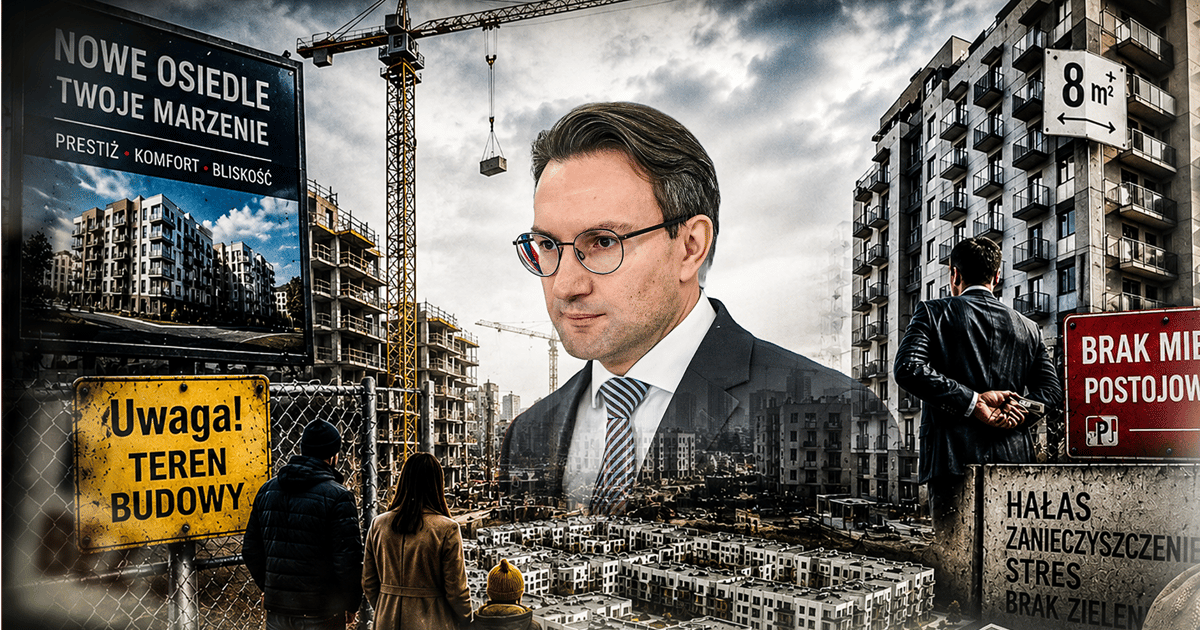
The levers are split. Warsaw writes the laws and funds credit through BGK (Bank Gospodarstwa Krajowego, the state development bank). The region brokers new vehicles. In February 2026 the voivode's office (the central government's regional arm) briefed officials from more than 20 municipalities on social rental agencies. These agencies lease private flats and sublet them at lower rents. A regional SIM "KZN-Bydgoski" (a social housing initiative company co-owned by the national land agency) builds in suburbs such as Białe Błota and Koronowo. Bydgoszcz itself is not a partner. Mayor Rafał Bruski, in office since 2010, works through BTBS and ADM instead. In 2024 the city adopted two local plans with 20.95 ha reserved for housing. It also relaxed its local rules on distances to schools and stops.
No instrument in the city targets cooperatives directly. The support on offer is generic: state credit, grants for municipal housing and city land put into BTBS schemes. A cooperative that wanted to build rental homes would compete for the same credit, without a municipal land pipeline behind it.
The answer to the empty council flats has been to sell, and to let tenants renovate. In 2024 the city sold 148 flats to sitting tenants for 5.2 million PLN. Another 852 empty flats sit in buildings being cleared for sale. Only 81 vacant flats were prepared for new tenants, for 2.7 million PLN. ADM also advertises flats in poor repair that applicants may take faster if they pay for the works. One mother told Nasze Miasto her offer would cost more than 90,000 PLN to make habitable. Habitat for Humanity Poland argues the other way: renovate the roughly 1.8 million empty units nationwide and let them as affordable homes.
Climate policy arrives through the boiler. ADM is removing tiled coal stoves from old tenements. In 2024 it fitted gas heating in 27 flats, retiring 37 stoves, and connected one building to district heating. It insulated four buildings, including Rycerska 5 and 7. Tenants who install clean heating themselves get a 50% rent cut, though only 9 did so in 2024. Public and cooperative landlords are the practical route to cleaner air, because they control whole buildings.
The national argument is sharp. Lewandowski wants renting treated as normal, not as failure. Zbigniew Juroszek, chief executive of the developer Atal, answered at the same 2026 congress that policy should not get in investors' way. He added that flats bought as investments end up rented. Bydgoszcz tests both claims. Developers build almost all its new homes, while rents have climbed and the population has fallen.
The state should use different forms of support: strengthen the rental market and bet on social housing aimed at a broad group of citizens. Not everyone has to own a flat.- 1890[source]
Railway officials found a housing cooperative
The Beamten-Wohnungsverein, forerunner of BSM, is founded in Bydgoszcz on 13 June.
- 1958[source]
SM Budowlani founded
Twenty-four founders start the cooperative that later builds much of Wyżyny.
- 1972[source]
Cooperative ownership right created
Members can now buy a sellable right to their flat.
- 2007[source]
Conversion "for a złoty"
An amended cooperative law lets members take ownership for a token sum; the Constitutional Tribunal strikes it down in 2008.
- 2021-09[source]
Regional SIM founded
SIM "KZN-Bydgoski" is set up by the national land agency and regional municipalities; Bydgoszcz is not a partner.
- 2022[source]
Municipal housing programme to 2030
Bydgoszcz adopts a multi-year programme for managing its housing stock over 2022-2030.
- 2024-04[source]
Social housing budget raised
The ministry proposes lifting the annual state budget for social and municipal housing from 1 bn to 5 bn PLN, rising to 10 bn PLN by 2030.
- 2025-01[source]
Rycerska topped out
BTBS finishes the structure of 127 social rental flats near the main station, built for 54 million PLN.
- 2026-02[source]
Social rental agencies pitched to the region
The voivode's office in Bydgoszcz briefs officials from more than 20 municipalities on social rental agencies.
- 2026-07[source]
A ten-year social housing target
Deputy minister Tomasz Lewandowski outlines 250,000 social and 128,000 municipal flats built or renovated over 10 years.
- 2026 Q4[source]
Posłusznego due
BTBS plans to complete 68 flats in Fordon.
- 2027 Q4[source]
"Londynek" due
BTBS plans about 48 flats at Pomorska 88.
- 2030[source]
Budget and programme horizon
The social and municipal housing budget line is set to reach 10 bn PLN a year, and the city's housing stock programme ends.
- 2050[source]
A smaller city
The city forecasts 246,919 residents, about 24% fewer than in 2024.
Milestones in the city's cooperative history and the programmes now shaping its rental supply.
From railway officials' tenements to Rycerska Street
Bydgoska Spółdzielnia Mieszkaniowa's tenements are the oldest cooperative homes in Poland still run by their founding society. Its 28 pre-1914 buildings on streets such as Cieszkowskiego and Chrobrego hold 278 flats. The Błonie estate shows what came next: parks, a shopping centre and the "wave" block at Waryńskiego 51. Since 2004 residents have run property councils that review the board's decisions. It is a working model of member control at scale.
Spółdzielnia Mieszkaniowa "Budowlani" built the other half of the story. Its large-panel estates on Wyżyny housed the factory workers of the 1970s. Today its task is maintenance and retrofit rather than growth. That task decides whether 1970s blocks remain decent, affordable homes for another generation.
The Rycerska and Zygmunta Augusta scheme is the city's clearest statement of intent. BTBS is building 127 social rental flats beside the main station, with shared courtyards and green space. Construction by Ebud-Przemysłówka cost 54 million PLN. Deputy mayor Mirosław Kozłowicz promised the keys within the year, and tenants were chosen before completion. Next come 68 flats on Posłusznego in Fordon and about 48 at Pomorska 88, known as "Londynek".
ADM's tenement programme is less visible but touches more homes. The company manages council flats in 1,739 buildings, many of them pre-war. It insulated Graniczna 13, Rycerska 5, Rycerska 7 and Dworcowa 54 in 2024. It also lets future tenants renovate empty flats in exchange for a lease. Each recovered flat is one less on the list of the empty.
Lofty Farbiarnia shows that old industrial buildings can become homes. The brick dye works of Wilhelm Kopp, built in 1903 on the Brda millrace, is being converted into flats by NK Polska. It is a market-rate scheme, with a penthouse terrace and pool. Its lesson is the building, not the price: the city's industrial shell can take residents.
Rothera Mills on Mill Island closes the circle. The city turned the 19th-century mill and its two granaries into a science and culture centre. The first renovation and fit-out cost 95 million PLN, including 25 million PLN of EU funds. The island has become the city's shared front room. Bydgoszcz has shown it can give an empty industrial landmark a public life. Doing the same for its empty council flats would be the natural next step.
References
Statistics18Click on any number to see the source
Housing market
Cooperative, social & public
Adaptive reuse & vacancy
Population & migration
From our library7
- Housing Crisis Threatens to Fracture Central and Eastern Europe — Knowledge
- Co trzeci Polak zbyt biedny na najem lub kupno mieszkania, a za bogaty na wsparcie — Knowledge
- Over half of Poles aged 25-34 live with parents — Knowledge
- 10 tysięcy pustych mieszkań czy raczej ruin do wyburzenia? Łódź skupia wyzwania mieszkaniowe Europy — Knowledge
- Działalność i znaczenie spółdzielni mieszkaniowych w Polsce — Knowledge
- Spółdzielnie mieszkaniowe na rynku nieruchomości w Polsce w XXI w.: Bariery i szanse rozwoju — Knowledge
- Wiceminister Lewandowski: Nie każdy musi być właścicielem mieszkania — Knowledge
Further sources12
- Raport o stanie miasta Bydgoszczy za 2024 rok — City of Bydgoszcz · 2025
- Historia Bydgoskiej Spółdzielni Mieszkaniowej — Bydgoska Spółdzielnia Mieszkaniowa
- Rewolucja w budownictwie społecznym – jest projekt ustawy — Ministry of Development and Technology · 2024-04-08
- Rząd chce ingerować w rynek mieszkaniowy. Mocne deklaracje na EEC 2026 — Portal Samorządowy · 2026
- Społeczne agencje najmu nowym instrumentem polityki mieszkaniowej w województwie kujawsko-pomorskim — Kuyavian-Pomeranian Voivodeship Office · 2026-02-06
- SIM "KZN-Bydgoski" — SIM KZN-Bydgoski
- Coraz bliżej końca budowy budynków BTBS przy Rycerskiej — Metropolia Bydgoska · 2025-01-29
- W Bydgoszczy mieszkanie komunalne z portalu, do tego z przyspieszeniem? — Bydgoszcz Nasze Miasto · 2021-05-11
- Revitalization of Rother's Mills is nearing completion — City of Bydgoszcz
- SM Budowlani — SM Budowlani
- Bydgoszcz Canal — Wikipedia
- Bydgoszcz — Wikipedia