Owners on paper, crowded in practice
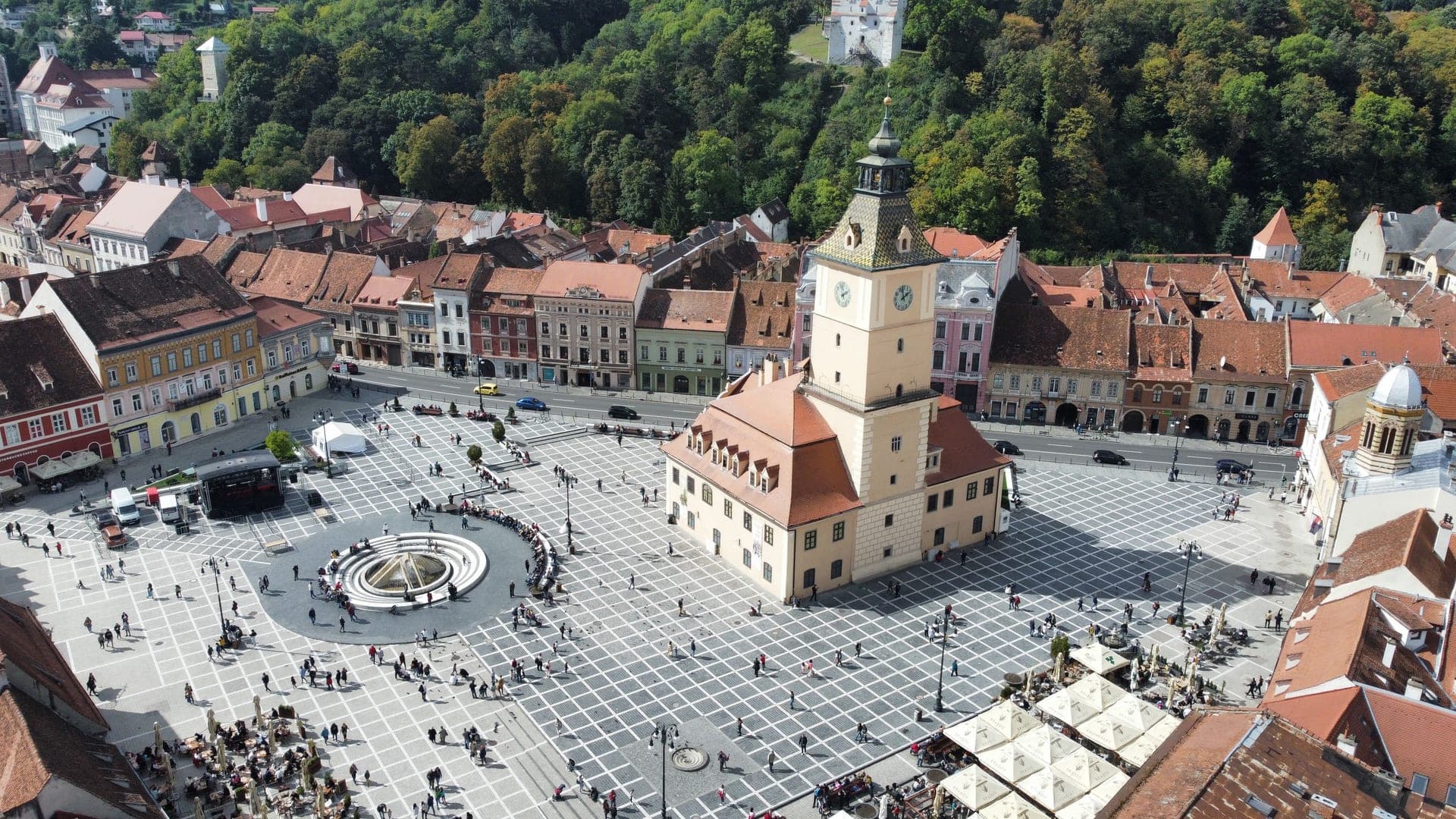
Brașov has changed its name more often than most cities change mayors. It was Kronstadt to its Saxon founders, Brassó in Hungarian and, for a decade, Orașul Stalin. In November 1987 its truck-factory workers staged the first large revolt against Ceaușescu. That industrial past still shapes who lives where. The blocks built for factory workers are now owned by their residents, and the factories are being turned into neighbourhoods.
Almost everyone owns. 95% of Brașov's households live in a home they own, according to the 2021 census, and only 5% rent. Nationally the picture is the same, and an analysis in Social Europe calls it a paradox: the EU's highest ownership rate sits beside rising anxiety about the cost of living. There is no cooperative tenure in the statistics at all. Public rental is marginal: the whole country holds only 2.6% of its homes in public ownership. The residual private-rental slice is about 5%, though the formal count misses much of the market. Tenants' groups estimate informal lets at 15-20% of the stock in the big university cities.

- Owners
- Owner-occupier95.0%
- Renters
- Public & non-profit rental0.00%
- Cooperative0.00%
- Private rental5.0%
Social housing is a rule about who may rent, not a separate tenure. In Brașov it covers about 0.5% of dwellings, all owned by the city. Yet an estimated 36% of households would meet the income test. That test, set by Law 114/1996 (Romania's housing law), admits only those earning below the national average net wage. Romania as a whole holds just 0.17% of its housing stock as social housing, against more than 40,000 applications, according to a Friedrich-Ebert-Stiftung data brief. Brașov's criteria for 2026 give priority to, among others, the veterans of the 1987 revolt.
Rents are low by western standards but moving. A new two-room let asks about €9.5 per m² a month. In January 2026 Storia listed studios at €380, two-room flats at €530 and three-room flats at €650 a month. Studio rents rose 6% in a year while larger flats eased. A September 2026 survey of district rents found students driving the autumn peak. Furnished flats let for a few months cost an estimated €16.2 per m². Nationally, rents climbed fastest in Craiova at the end of 2025, a reminder that the pressure is spreading beyond Bucharest and Cluj.
- Studio (asking)
- Two-room flat (asking)
- One-bed, city centre
- Three-room flat (asking)
- Three-bed, city centre
Asking rents per month, early 2026. Neither a cooperative nor a public-rent tier is shown, because Brașov has no cooperative sector and publishes no average for its small municipal stock.
Empty homes are a bigger story than shortage suggests. The census counted 14% of the city's dwellings as unoccupied, many of them second homes near Poiana Brașov. Across the towns of Brașov county, a Storia reading of the 2011 and 2021 censuses found 25.4% of urban homes empty. Tourism absorbs part of the rest: flats let to visitors rose from 2,081 in 2024 to 2,527 in 2025. Brașov also led the region with 1,946 listed holiday rentals. Offices are not the issue here: vacant space equals about 3 whole buildings.
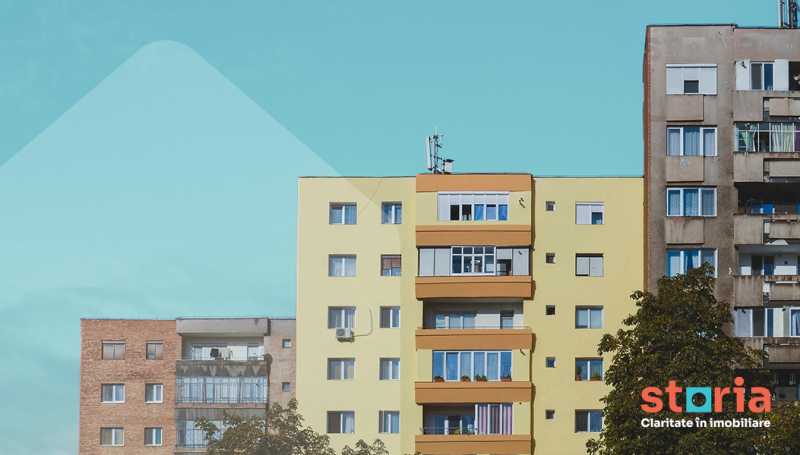
People keep arriving even as the city proper shrinks. The census fell from 253,200 to 237,589 residents in a decade, while about 4,800 people move in each year. Some 20,880 students and 10,000 mid-term residents need somewhere to stay. Many families settle outside the boundary: Sânpetru grew from 4,819 to 11,794 residents between 2011 and 2021. Supply inside the city is slowing. Almost 1,300 homes were finished in 2025, 29% fewer than a year earlier.
The strain falls on the young and the poor, and it now reaches middle earners too. Nationally, 40.7% of Romanians lived in overcrowded homes in 2024, against 16.9% across the EU, as Eurostat's housing overview also shows. Housing costs overburden 15.8% of the poorest fifth but only 0.6% of the richest. In Brașov, flat prices reached €2,355 per m² at the end of 2025, higher than Bucharest's. Local buyers are moving to Sânpetru, Ghimbav, Cristian and Hărman, according to Brașov property consultant Răzvan Calița. A national Storia survey found 76% of students pay their rent with their parents' help.
In the medium term, Brașov's main challenge remains finding a balance between its attractiveness as a tourist destination and the affordability of housing for the local community.So the question in Brașov is not whether people own, but whether the next generation can. The cooperative share, the obvious answer in Vienna or Zürich, stands at zero.
A cooperative law with no cooperatives
On paper, Romania allows housing cooperatives. Law 1/2005 on cooperation defines the societate cooperativă de locuințe (a housing cooperative society) as a group of people who build, buy, renovate and manage homes for their members. In practice the form is empty. The law was passed without the implementing rules needed to use it, as the 2016 draft housing strategy noted. No cooperative tenure appears in the census. The collective body every block does have is the asociația de proprietari (owners' association), set up under Law 196/2018. It maintains shared stairwells, roofs and heating. Each flat belongs to its owner, so it is a condominium, not a cooperative.
The tradition is older than the gap suggests. On 23 July 1921 Romania passed a law to encourage building. It let cooperative societies buy and divide land for cheap homes for workers, clerks and pensioners. In Bucharest it produced the "Munca" (Labour) Cooperative. Brașov's Saxons had a cooperative culture of their own, mostly in farming and credit. Karl Schnell, mayor of Kronstadt from 1911 to 1926, chaired the county's union of cooperatives before taking office. Communist planning then replaced member-led building with the state's panel blocks. After 1989 those flats were sold to their tenants. A Housing Europe country brief counts 2.2 million public rental dwellings, 27% of the national stock, transferred into private hands.
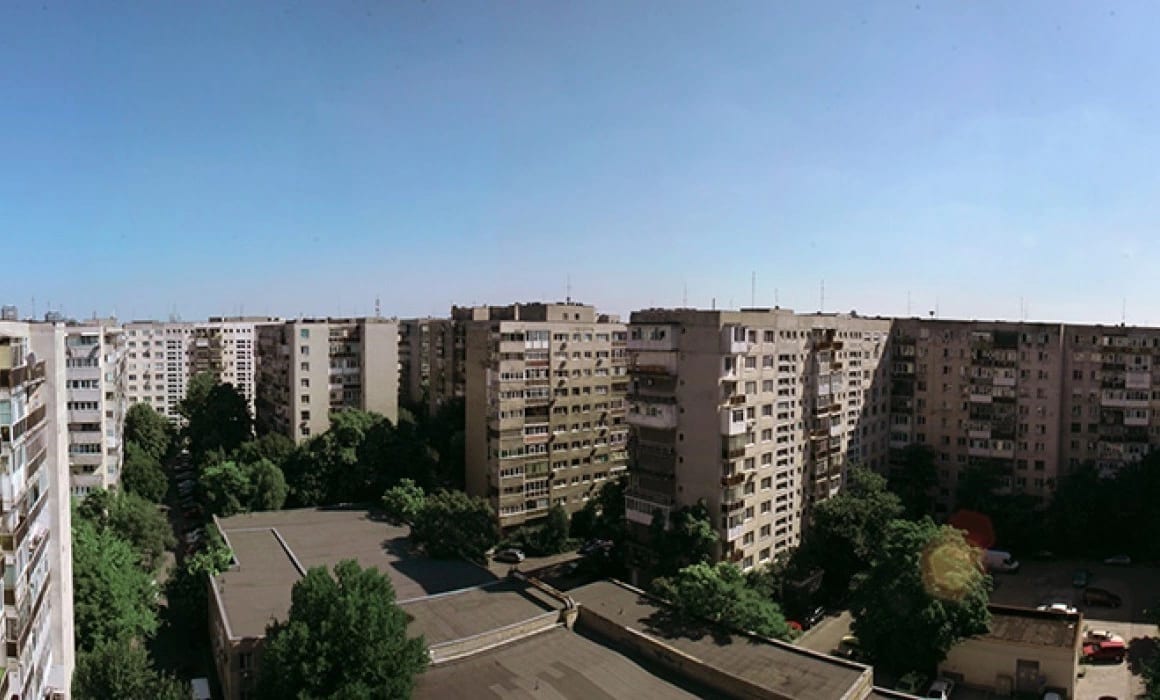
What exists today is a set of cooperative-like actors, not a sector, and they face different problems. The first cluster is the owners' associations running Brașov's panel blocks. Their challenge is money: they must co-finance insulation and repairs with ageing, often low-income members. The second is the heritage trusts working in the Saxon villages around the city. The Mihai Eminescu Trust has worked for 25 years across 45 villages, restoring houses with local craft and lime mortar. Its problem is scale and funding beyond grants. The third is a national policy conversation. In May 2026 the World Bank and the European Commission held a workshop on housing cooperatives as a tool for social and affordable housing with the development and labour ministries. Its problem is the missing legal and financial toolkit.
Government has so far kept cooperatives at the level of ideas. The 2016 draft strategy proposed an anti-speculation rule: a member selling a cooperative home would recover only what they had paid in. That draft was never turned into a working model. The national strategy adopted in 2022 speaks of inclusive, affordable housing but builds no cooperative vehicle. Whether one arrives depends on choices now being made in Bucharest and at Brașov's city hall.
Surtaxes, recovery funds and a strategy to 2050
Brașov's politics swung back in 2024. George Scripcaru of the centre-right PNL, mayor from 2004 to 2020, beat the reformist incumbent Allen Coliban of USR by 47.9% to 43.66%. Housing money soon became a point of dispute. In May 2026 Scripcaru said EU funding for some projects had been lost before the end of 2024. Coliban replied that the homes for young people were among the projects his successor had inherited. The recovery fund in question is the PNRR (Romania's National Recovery and Resilience Plan). The city's yearly lever is smaller: each autumn a committee ranks social-housing applications, under criteria signed for 2026 by deputy mayor Lucian Patrașcu.
Most of the levers sit in Bucharest. The MDLPA (the Ministry of Development, Public Works and Administration) owns the national strategy, adopted as HG 842/2022 with a horizon of 2050. ANL (the National Housing Agency) builds rental homes for young people under Law 152/1998. Since 2025 ANL rent may not exceed 30% of average net income per family member. Fiscal policy pulls the other way. VAT on new homes rose from 9% to 21% in August 2025, while the Noua Casă ("New Home") mortgage guarantee continues in 2026 with a ceiling of 500 million lei. At EU level, the Commission's December 2025 European Affordable Housing Plan put housing on the Union's agenda, as the Council's own overview sets out.
Raising VAT from 9% to 21% amounts to directly discouraging purchases. We are not talking only about a financial impact, but about a negative signal sent to a market that needs confidence, continuity and working partnerships between the private sector and the state.Housing-rights campaigners start from the other end, with the people the ownership figures hide. Ioana Florea of the FCDL (the Common Front for the Right to Housing) points out that many households span several generations, where one person owns and the others do not. For them, and for students and incoming workers, the rental market is informal and insecure.
The rental market is rather informal. It is estimated to be somewhere around 15-20% of the housing stock in big cities such as Cluj, Bucharest, Timișoara and Iași.Support for cooperatives is still at the discussion stage. There is no dedicated fund, no land tender and no federation. The nearest thing to a local model sits 270 km away: Cluj-Napoca prepared Romania's first municipal housing strategy for 2021-2030. For Brașov, the May 2026 cooperative workshop with the ministries is the opening that matters.
The city's answer to empty and decaying buildings is fiscal. A surtax of up to 500% applies to owners who neglect their façades. The city sent 7,000 notices in 2025 alone, after years of warnings. For 2026, 143 buildings are on the surtax list. City spokesman Sorin Toarcea said the city even had to close Strada Sforii after pieces of a cornice began to fall. The carrot is a façade programme in which owners repay 50% of the cost in instalments. The draft general urban plan, the PUG, aims to contain sprawl by regenerating brownfield sites and to enlarge the city's social stock.
The sustainability agenda runs through the same buildings. Brașov insulated 29 blocks housing low-income families, paid from its own budget. PNRR funds cover further energy renovation of apartment blocks and nZEB (nearly zero-energy) homes for young people. In December 2025 the EBRD (the European Bank for Reconstruction and Development) agreed €29.9 million to retrofit public buildings. It will also help write a Green City Action Plan, as the city bids to be recognised as Romania's green capital.
- 1921[source]
Law to encourage building
Office clerks and other groups may set up cooperatives to build homes for their own members.
- Nov 1987[source]
Brașov workers' revolt
Roughly 20,000 workers walk out of the Steagul Roșu truck works. Their veterans are later named a priority group for social housing.
- 1990-1992[source]
State flats sold to tenants
Decree-law 61/1990 and Law 85/1992 open the sale of state-built dwellings, the start of near-universal ownership.
- 1996[source]
Housing law defines social housing
Law 114/1996 sets the income test and priority groups that Brașov still applies each year.
- 2005[source]
Housing cooperatives written into law
Law 1/2005 defines housing cooperative societies, but no implementing rules follow.
- 2012[source]
Tractorul works sold for redevelopment
Immochan buys 100 of the site's 124 hectares to build the Coresi district.
- 2022[source]
National Housing Strategy adopted
Government decision HG 842/2022 sets a framework for inclusive, affordable housing up to 2050.
- Aug 2025[source]
VAT on new homes rises
The reduced 9% VAT rate on new homes ends and buyers pay the standard 21%.
- Dec 2025[source]
Brașov joins EBRD Green Cities
The EBRD lends up to €29.9 million to upgrade up to 20 public buildings and helps draft a Green City Action Plan.
- 2050[source]
National strategy horizon
The target year by which the strategy aims to secure affordable housing for all groups.
From Romania's first cooperative housing law to the horizon of the national housing strategy.
Factory land, Saxon farmsteads and the old town
Coresi is the city's biggest bet on recycled land. The Tractorul works built Romania's first aeroplane and later its tractors. In 2012 Immochan, now Ceetrus, bought 100 hectares of the site. By 2019 its partners had put 1,500 flats on the market, on the way to about 2,200 in 42 blocks. It proves that brownfield land can house a district. It also shows the limit of market-led reuse: new central projects favour studios and two-room flats suited to holiday lets.
The Nucului Street youth homes take the same idea into public hands. On land from the former Roman truck factory, the city plans 60 nZEB flats for young people in difficult circumstances. The PNRR grant is worth more than 25 million lei. In April 2025 the city was still looking for a builder, so the project is also a test of delivery.
Transilvania University shows how an institution can care for the old town. In 2020 alone it spent 5 million lei restoring its six historic-centre buildings, only 7% of it from the state. Its students are also the city's most mobile tenants, which ties heritage and rental pressure together.
Casa noastră Viscri ("Our House, Viscri") brings the Saxon countryside into the picture. The Mihai Eminescu Trust and Brașov County are converting a late-18th-century farmstead into a community centre. The project runs until 2027 with EU co-funding. It is the clearest local example of shared ownership of a building for a village's common use.
OAR Brașov-Covasna-Harghita, the regional branch of Romania's Order of Architects, works from the medieval Catherine's Gate tower. Its members design the renovations and conversions described here. The Brașov Metropolitan Agency for Sustainable Development joins the city to the communes where its young families now buy. Together they hold the design skills and the metropolitan reach that a new form of housing would need.
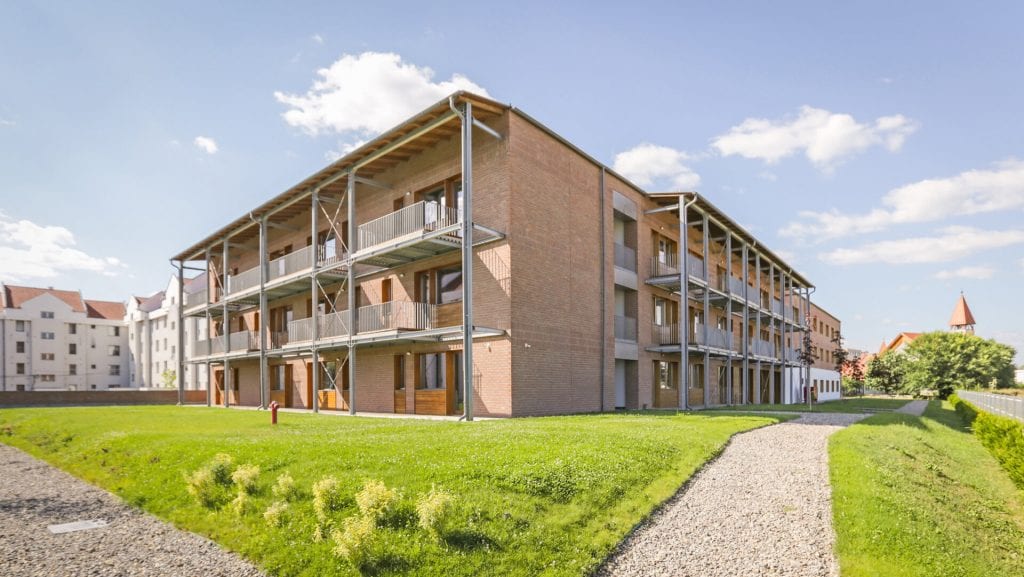
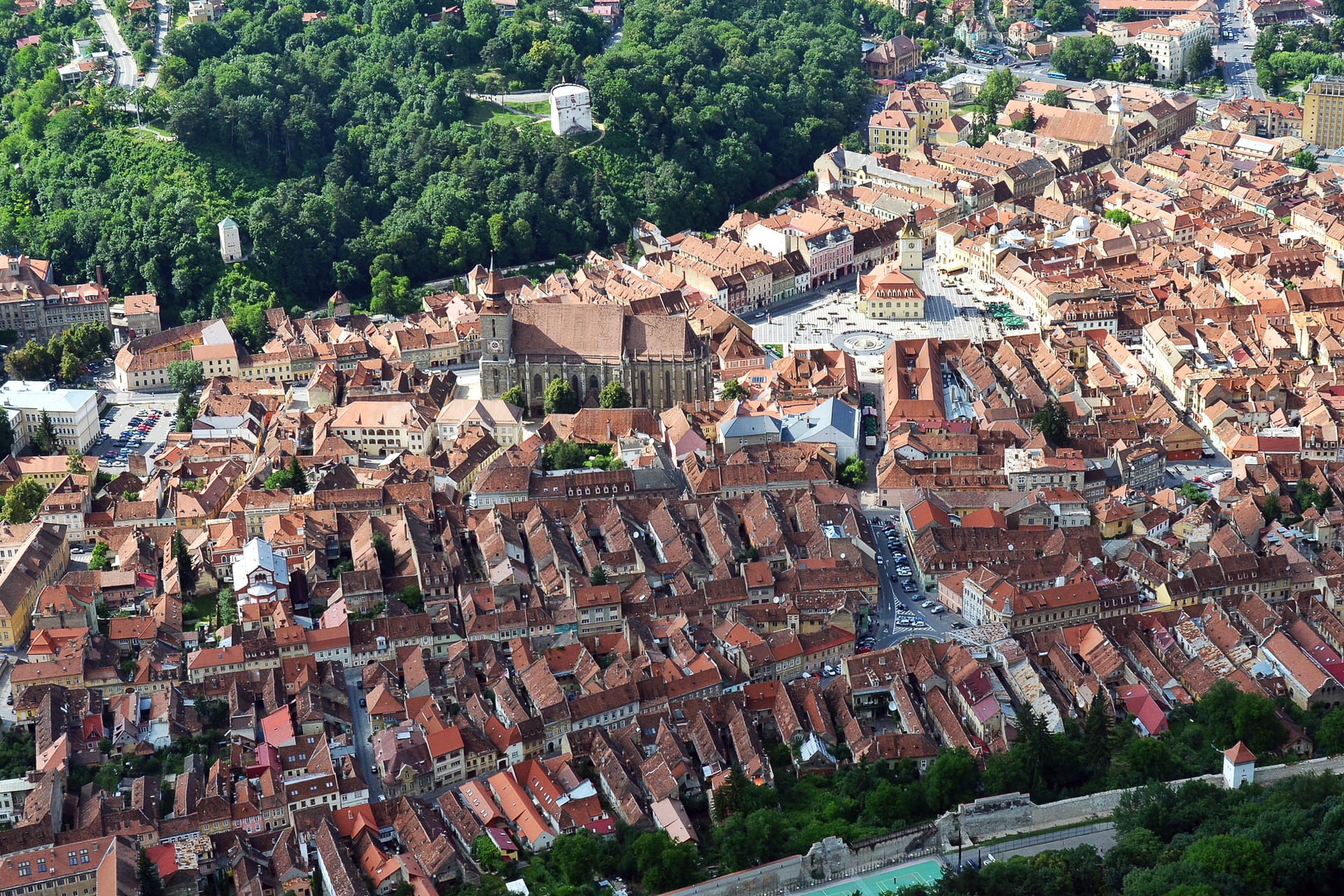
None of these projects is a cooperative. But the ingredients are here: factory land coming back into use, a university in the old town, trusts that know how to restore shared buildings, and owners' associations used to managing a block together.
References
Statistics8Click on any number to see the source
Housing market
Tenure & affordability
Adaptive reuse & vacancy
Population & migration
From our library12
- Housing Crisis Threatens to Fracture Central and Eastern Europe — Knowledge
- Problema locuirii în România: Cererile de locuințe sociale sunt de 2,5 ori mai mari decât fondul locativ social existent — Knowledge
- Cât au ajuns chiriile în Brașov în această toamnă. Ce zone sunt mai accesibile — Knowledge
- Chirii în creștere la final de 2025: Craiova, campioana scumpirilor — Knowledge
- Analiza Storia: numărul de locuințe din București care nu sunt locuite a crescut de 2,4 ori în 10 ani — Knowledge
- Housing in Europe – 2024 edition — Knowledge
- Social and Public Housing in the EU & UK – Romania — Knowledge
- Schimb de experiență: Cooperativele de locuințe ca instrument pentru locuințe sociale și accesibile ca preț în România — Knowledge
- The EU's housing crisis — Knowledge
- Ce-și asumă primarul Emil Boc în prima strategie de locuire din România pregătită la Cluj pentru 2021-2030 — Knowledge
- OAR Brașov-Covasna-Harghita — Organisation
- Agenția Metropolitană pentru Dezvoltare Durabilă Brașov — Organisation
Further sources41
- romania.europalibera.org — romania.europalibera.org
- www.brasovcity.ro — brasovcity.ro
- agerpres.ro — agerpres.ro
- economedia.ro — economedia.ro
- actualdecluj.ro — actualdecluj.ro
- hotnews.ro — hotnews.ro
- en.wikipedia.org — en.wikipedia.org
- www.citypopulation.de — citypopulation.de
- startupcafe.ro — startupcafe.ro
- economedia.ro — economedia.ro
- ec.europa.eu — ec.europa.eu
- www.capital.ro — capital.ro
- legeaz.net — legeaz.net
- www.capital.ro — capital.ro
- media.hotnews.ro — media.hotnews.ro
- revistacalitateavietii.ro — revistacalitateavietii.ro
- asz.ro — asz.ro
- www.deutsche-biographie.de — deutsche-biographie.de
- agerpres.ro — agerpres.ro
- newsweek.ro — newsweek.ro
- www.g4media.ro — g4media.ro
- www.avocatnet.ro — avocatnet.ro
- www.avocatnet.ro — avocatnet.ro
- adevarul.ro — adevarul.ro
- www.capital.ro — capital.ro
- euperspectives.eu — euperspectives.eu
- www.zf.ro — zf.ro
- newsweek.ro — newsweek.ro
- newsweek.ro — newsweek.ro
- stirileprotv.ro — stirileprotv.ro
- www.brasovcity.ro — brasovcity.ro
- litera9.com — litera9.com
- www.ebrd.com — ebrd.com
- en.wikipedia.org — en.wikipedia.org
- legeaz.net — legeaz.net
- www.economica.net — economica.net
- www.economica.net — economica.net
- ziare.com — ziare.com
- Peste 25 de milioane de lei, în cadrul PNRR: Construirea a 60 de locuințe nZEB destinate tinerilor vulnerabili din Brașov — InstalFocus
- unitbv.ro — unitbv.ro
- startupcafe.ro — startupcafe.ro