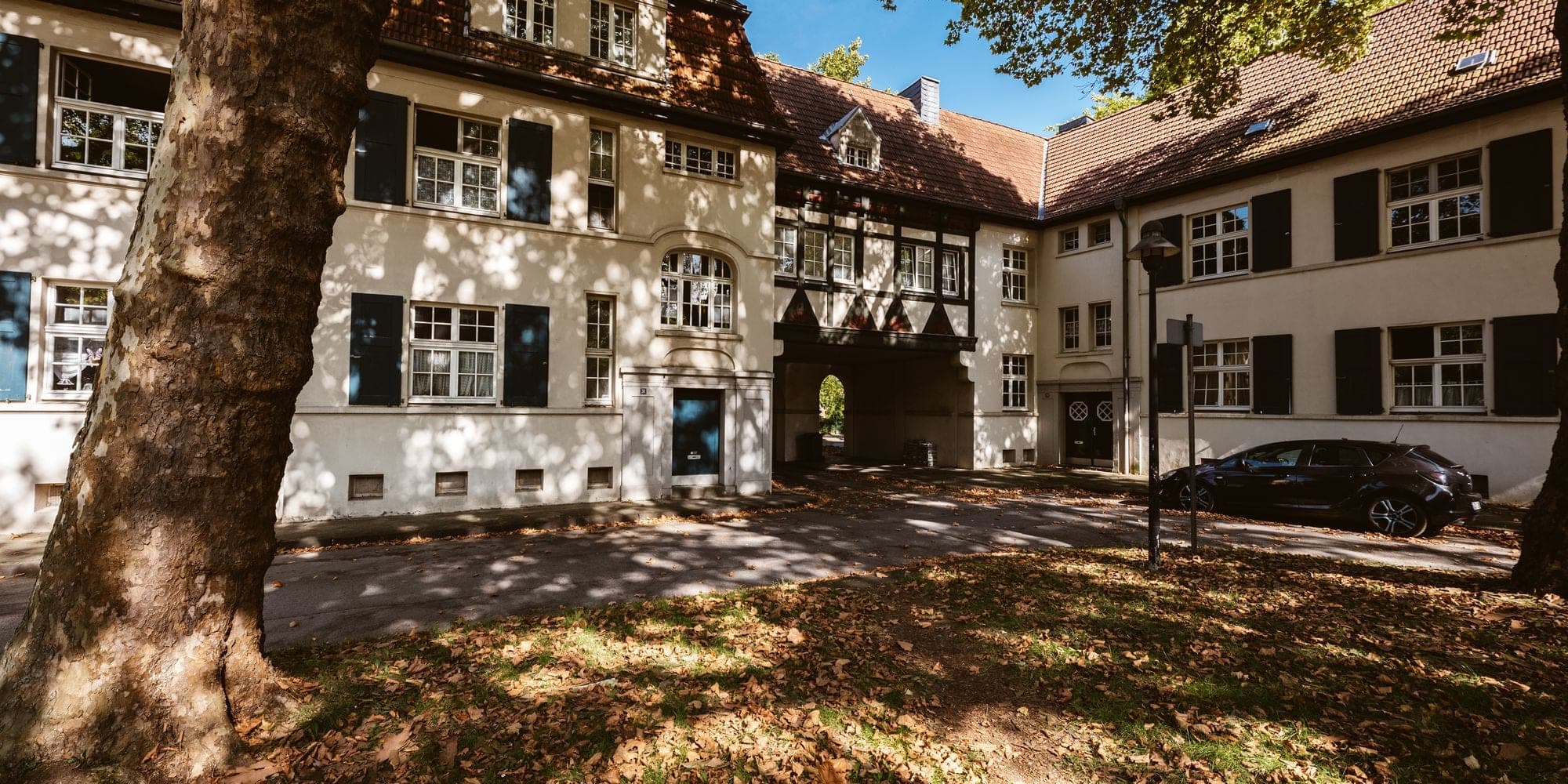
Siedlung Flöz Dickebank is a historic workers’ settlement in Gelsenkirchen, in Germany’s Ruhr area. Built from 1868 as the Ottilienaue colony, it provided housing for colliery workers; the Route Industriekultur page identifies the Alma colliery as its original workforce. The mine operators Détillieux, Frères et Cie. arranged the housing amid a shortage caused by mining-related migration to the city. 1
The settlement developed in several phases. Its early homes were modest, generally one-and-a-half-storey colliery houses. A later phase, beginning in 1906, introduced a more varied layout influenced by the garden city movement, including a market square and two-storey corner buildings arranged around courtyards. 1
The settlement became nationally known in the 1970s when residents resisted plans to demolish it. In 1974, the city administration and Rheinisch-Westfälische Wohnstätte AG decided to replace it with buildings of three to twelve storeys. Following two years of resident protests, renovation was announced and carried out from 1979. 1 The struggle helped establish Flöz Dickebank as a regional center for initiatives opposing the demolition of workers’ settlements, and a Congress for the Preservation of Workers’ Settlements was held there in 1976. 1
The settlement has been listed since 2008. It is located at Virchowstraße and Flöz Sunshine, in Gelsenkirchen. 1 The source identifies the historic mine operators and the city and housing company involved in the 1974 demolition decision, but does not name a current developer or a single project founder. 1