
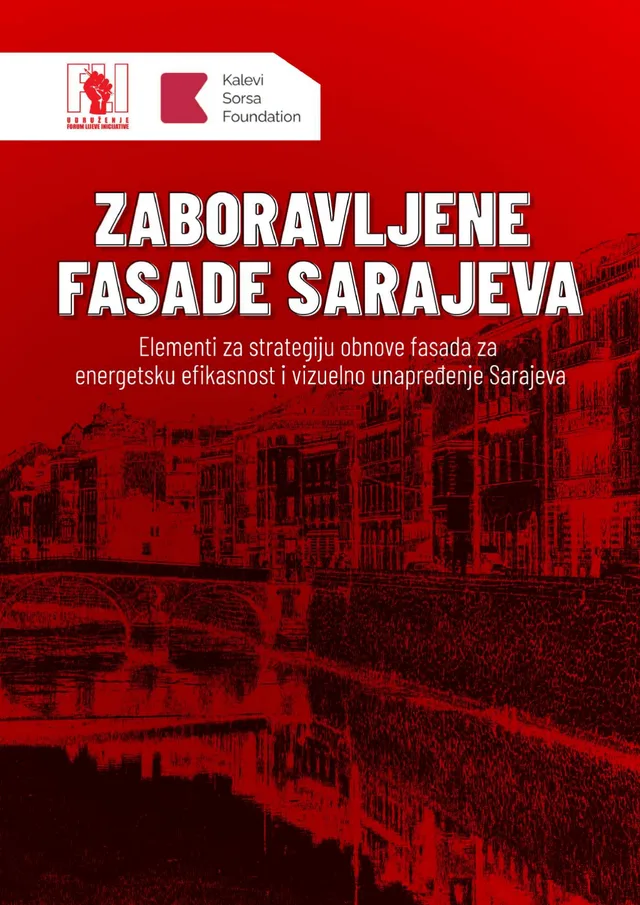
Overview of the Initiative
The report “Zaboravljene fasade Sarajeva (The forgotten façades of Sarajevo)” is a 2024 study authored by Lamija Džomba‑Mešić and published by the Faculty of Law, University of Sarajevo (FLS). It examines the condition, heritage value and energy‑efficiency challenges of façades in Sarajevo’s collective residential blocks, many of which suffered war damage, neglect and inadequate maintenance. The document is publicly available and has been processed automatically by the EHC profile routine.
Heritage Context and Scope
Sarajevo’s urban fabric combines Ottoman, Austro‑Hungarian and socialist architectural styles. The study identifies a large number of façades that are structurally compromised, aesthetically degraded and energy‑inefficient. Historic façades, especially in the old city centre and Baščaršija, require specialised restoration to preserve cultural significance while improving thermal performance.
Key Findings on Façade Condition
- Over 75 façades were renovated between 2000‑2024; an additional 81 were repaired under a municipal programme and 32 under an energy‑efficiency scheme.
- Approximately 630 000 tourist arrivals and 1 400 000 overnight stays were recorded in the first nine months of 2024, highlighting the tourism relevance of façade quality.
- Energy losses due to deteriorated façades contribute to higher utility costs for residents and reduce overall city sustainability.
Financial Landscape
- Municipal budgets allocated KM 500 000 for façade renewal in Novi Grad (2024) and KM 300 000 for Novo Sarajevo, with a 30 % co‑payment required from owners.
- The report notes a total project budget of €4 500 for related activities, reflecting limited public financing and the need for additional subsidies or EU‑funded programmes.
- Sub‑regional funding mechanisms, including public‑private partnerships and EU structural funds, are proposed to bridge financing gaps.
Sustainable Restoration Strategies
The study recommends a three‑tiered approach:
- Mapping and prioritising façades using GIS and criteria such as historic value, damage level and energy‑saving potential.
- Implementing eco‑friendly materials (e.g., natural fibre insulation, recycled glass) and technologies (photovoltaic façade panels, reflective coatings).
- Establishing a dedicated Sarajevo façade renewal fund, supplemented by EU grants, private investment and municipal contributions.
Institutional Actors and Governance
Key stakeholders include the City of Sarajevo, Canton Sarajevo, municipal ministries (e.g., Ministry of Communal Economy, Infrastructure, Spatial Planning, Construction and Environment), local municipalities, owners’ associations, NGOs and banks. The report highlights the fragmented responsibilities across municipalities and calls for a unified governance body to coordinate planning, permits and funding.
Legal Framework and Recommendations
Current legislation defines façades as common parts of buildings, placing the financial burden on owners. The authors propose amendments to the “Law on Management of Common Parts of Buildings” to enable compulsory co‑financing, flexible payment plans and streamlined enforcement of arrears. They also suggest simplifying the enforcement process for managers to recover unpaid contributions.
Implementation Phases
- Phase 1: Data collection, GIS mapping, and prioritisation of high‑risk façades.
- Phase 2: Pilot projects in the most vulnerable municipalities, integrating energy‑efficient retrofits and community education.
- Phase 3: City‑wide rollout, monitoring through indicators such as number of façades renewed, energy savings (target 20‑30 % reduction), tourist growth and citizen satisfaction (>80 %).
Expected Outcomes for Sustainable Housing
If fully executed, the programme aims to:
- Reduce heating and cooling demand, lowering household energy bills and CO₂ emissions.
- Preserve and enhance Sarajevo’s cultural heritage, boosting tourism and property values.
- Create new construction and retrofit jobs, stimulating the local economy.
- Strengthen community engagement through public consultations, surveys and educational campaigns.
Practical Measures for Owners
The report outlines practical steps for property owners:
- Apply for municipal subsidies covering up to 50 % of renovation costs.
- Use approved eco‑materials and comply with technical guidelines to qualify for financial aid.
- Participate in training sessions on façade maintenance and energy‑saving practices.
Conclusion
“Zaboravljene fasade Sarajeva” provides a data‑rich, policy‑oriented roadmap for revitalising Sarajevo’s deteriorating façades. By combining heritage preservation with energy‑efficiency measures, the proposed programme aligns with broader European sustainable‑housing objectives and offers a replicable model for post‑conflict urban centres seeking to balance cultural identity with climate‑responsive building practices.