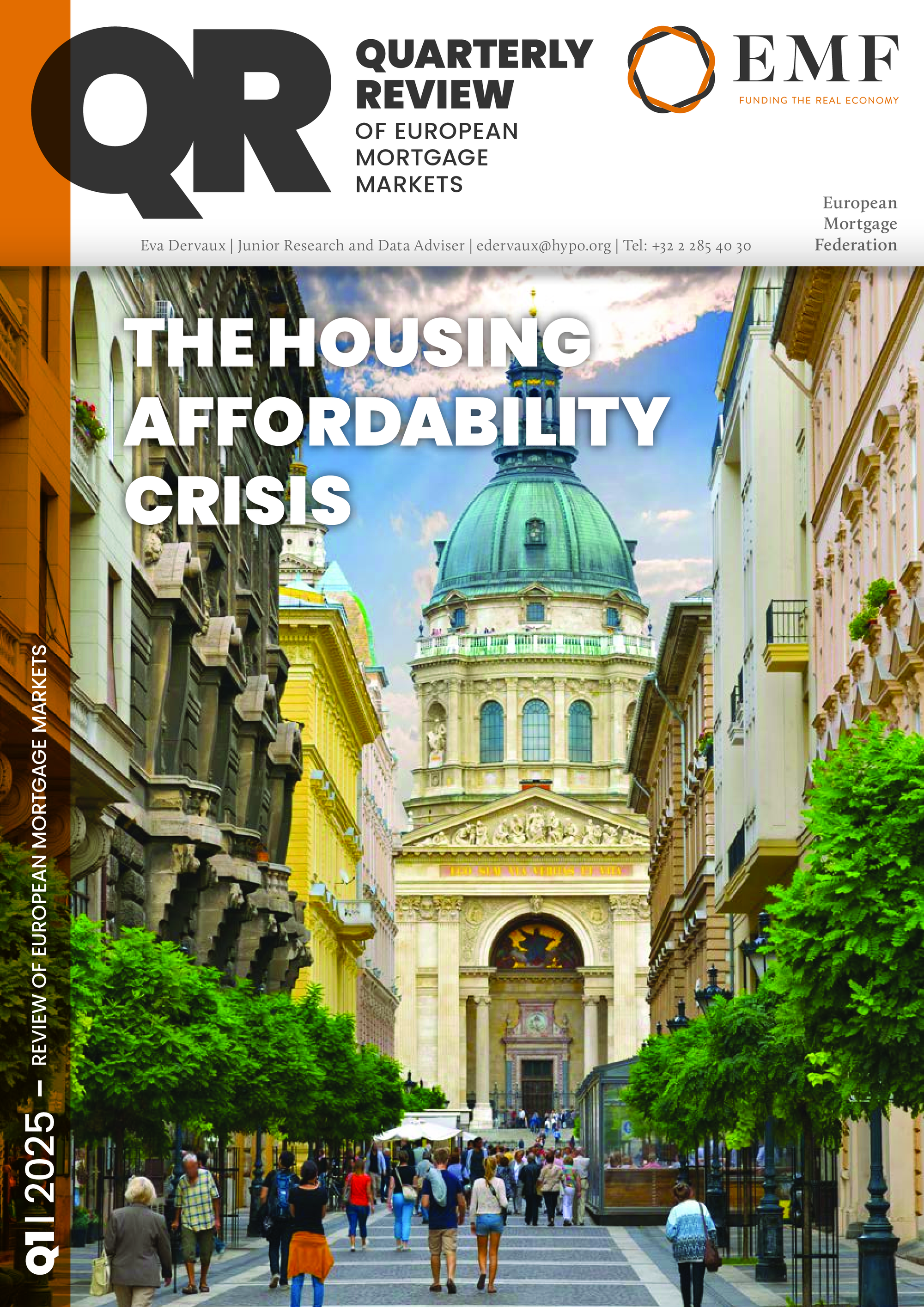
Overview of the Quarterly Review
The European Mortgage Federation (EMF) published its Q1 2025 Quarterly Review, a collaborative effort by senior researchers and data advisers including Luca Bertalot, Jennifer Johnson, Eva Dervaux and Richard Kemmish. The report continues a two‑decade tradition of analysing Europe’s housing and mortgage markets, drawing on contributions from national experts across 17 countries that together account for roughly 95 % of EU‑27 and UK mortgage lending. Its purpose is to track market developments, assess the ongoing housing affordability crisis, and evaluate policy responses.
Key Trends in Mortgage Lending
Across the sample, mortgage activity rebounded strongly in Q1 2025. Gross residential mortgage lending rose sharply in many markets, with Belgium, Italy, Czechia, Hungary and Portugal reporting year‑on‑year increases often exceeding 40 %. Refinancing activity also accelerated, notably in Belgium and Romania, as borrowers locked in lower rates. Overall, the EMF observed a broad‑based recovery driven by declining interest rates, improved borrower confidence and supportive macro‑economic conditions. However, the recovery was uneven, with some markets still constrained by limited housing supply.
Housing Supply Constraints
Limited new construction remained a central challenge. Several countries reported a persistent gap between housing supply and demand, exacerbated by structural issues, lengthy planning procedures and labour shortages. Sweden saw a near‑50 % drop in construction activity in 2023, only beginning to stabilise in 2024. Belgium, Germany and Portugal introduced regulatory reforms to reduce costs and delays. In Spain, a 20 % rise in building permits still fell short of demand due to land scarcity and administrative bottlenecks. The report highlights that, despite modest improvements, supply constraints continue to pressure affordability.
House‑Price Dynamics
House‑price growth was widespread but varied in intensity. Most EMF countries recorded year‑on‑year price increases, with moderate 2‑5 % gains in Germany, Sweden, Italy and the UK, while Hungary, Czechia and Spain experienced stronger 10‑15 % rises, especially in urban centres such as Budapest, Prague, Lisbon and Madrid. In the Netherlands, the housing market showed a 7.8 % quarterly increase in Q1 2025. The report notes that price growth outpaced wage growth in many regions, deepening affordability concerns.
Sustainable Housing Initiatives
Sustainability featured prominently in policy responses. Several nations promoted green construction and energy‑efficient retrofitting. The EMF highlighted Germany’s emphasis on climate‑friendly new builds and Hungary’s subsidised “green loan” products encouraging low‑energy housing. The Netherlands introduced incentives for “build‑to‑rent” projects with stringent energy standards. Portugal’s “Building Portugal” strategy combined public‑private partnerships with reduced VAT on eco‑friendly renovations. These measures aim to lower the carbon footprint of the housing stock while expanding affordable options.
Policy Measures to Tackle Affordability
Governments employed a mix of supply‑side and demand‑side tools. The UK introduced a £39 bn affordable‑housing programme targeting 300 000 new homes over ten years, with at least 60 % designated for social rent. Belgium expanded public housing investment and introduced tax incentives for moderate‑rent landlords. France increased social‑housing allocations and offered tax exemptions for first‑time buyers. Hungary provided housing allowances for employees under 35 years and launched the “Home Start” loan with a fixed 3 % rate for up to 25 years. Italy’s “First Home Guarantee Fund” extended public guarantees up to 80‑90 % loan‑to‑value for qualifying families.
Mortgage‑Market Adjustments
Interest‑rate trends continued downward across Europe, fostering loan growth. Weighted‑average mortgage rates fell to 3.57 % in the EMF’s aggregate data for Q1 2025, down from 3.78 % a year earlier. Variable‑rate products gained market share, especially in Hungary and Poland, where central‑bank rate cuts prompted borrowers to shift from fixed‑rate loans. Nonetheless, fixed‑rate mortgages remained dominant in most markets, reflecting cautious borrower behaviour amidst economic uncertainty.
Outlook and Recommendations
The EMF concluded that while the early‑2025 recovery signals positive momentum, structural supply shortages and rising prices pose persistent risks to housing affordability. Continued policy coordination, streamlined planning processes, and targeted green‑housing incentives are essential to achieve a balanced and sustainable European housing market. The report calls for ongoing monitoring of mortgage‑lending standards, affordability indices and the impact of climate‑related regulations to ensure long‑term market stability.