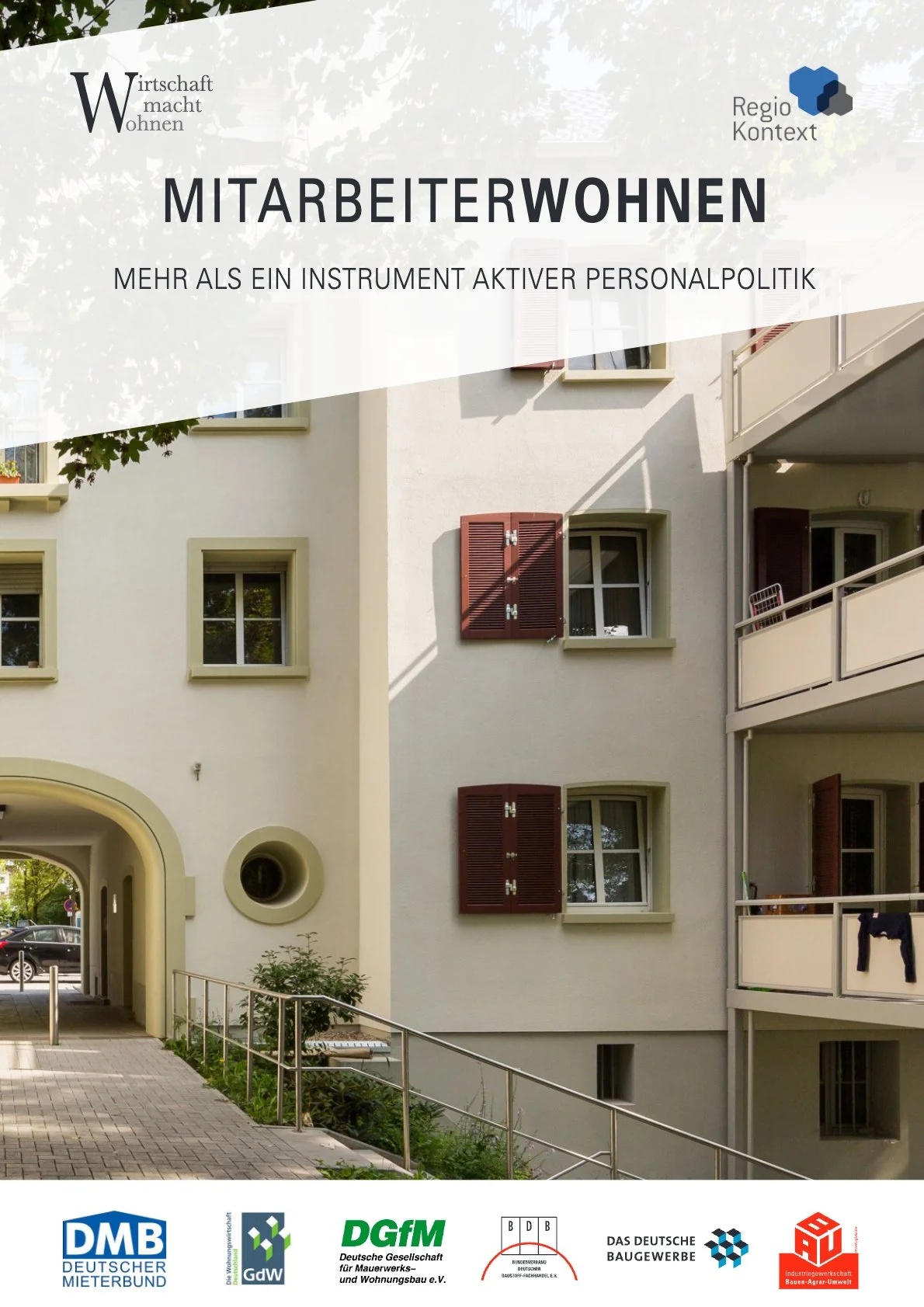
Overview of the Study
The document “Mitarbeiterwohnen – Mehr als ein Instrument aktiver Personalpolitik” is a research publication produced by RegioKontext GmbH for the German Association of Building Materials Trade (BDB) and other industry partners. It was authored by Simon Wieland (project lead), Paul Strobel and Arnt von Bodelschwingh. The study examines contemporary approaches to employee housing in Germany, presenting numerous case studies, statistical data and policy context to illustrate how corporate‑provided housing can support sustainable urban development and address labour market challenges.
Scope and Purpose
The work investigates how companies across sectors—from bakeries to automotive giants—use employee housing as a strategic tool for talent attraction, retention and social responsibility. It highlights the alignment of such initiatives with ecological goals, such as reducing commuting distances, lowering CO₂ emissions and revitalising under‑used urban sites. The publication serves policymakers, corporate housing managers and sustainability professionals seeking evidence‑based insights.
Key Quantitative Findings
- Total investment reported for selected projects exceeds €500 million, with individual initiatives ranging from €1.2 million (Bäckerei Häussler) to €140 million (Stadtwerke München).
- Approximately 35 million euros were allocated for new construction in the ÜSTRA case, yielding 139 new units at an average rent of €10 / m² net cold.
- Stadtwerke München plan 500 new units by 2021, adding to an existing stock of 600, with a total budget of €1.32 billion for the programme.
- The BASF Wohnen + Bauen portfolio comprises about 6 500 units, of which 70 % are occupied by BASF employees.
- In the GreenHouse project (Ingolstadt), 39 apartments were built, 30 reserved for Audi staff, each costing €410 per month inclusive of utilities.
- Social‑housing components account for roughly 20 % of new units in several projects, ensuring affordability for lower‑income employees.
Types of Housing Solutions
The study categorises solutions into:
- Traditional company‑owned apartments – fully financed and managed by the employer (e.g., Volkswagen Immobilien, Robert Bosch Wohnungsgesellschaft).
- Public‑private partnerships – collaborations with municipal housing firms or cooperatives (e.g., GEWOBA Nord with A‑Rosa Hotel, Stadtwerke Köln).
- Hybrid models – where companies provide land or subsidies while external developers handle construction and management (e.g., Schmid Alarm’s mixed‑use development).
- Co‑operatives – employee‑run housing associations that reinvest rents into maintenance and new builds (e.g., Stadtwerkschaft München).
Sustainability Impacts
- Reduced commuting: Employee residences located near workplaces cut average travel distances from 25 km to a few kilometres, saving an estimated 100 t CO₂ annually in the A‑Rosa case.
- Efficient land use: Projects repurpose former industrial sites, brownfield areas or underutilised office spaces, limiting urban sprawl.
- Energy‑efficient building standards: Several developments employ low‑energy construction, timber framing and modern insulation, aligning with Germany’s climate‑neutral targets.
- Social sustainability: By offering affordable rents tied to local Mietspiegel, the schemes support workforce stability and community cohesion, especially in high‑cost cities like Munich and Cologne.
Economic Rationale
Employers view housing as a “total‑cost‑of‑ownership” benefit: lower recruitment expenses, higher employee satisfaction and reduced turnover. The studies report that up to 85 % of newly built units are quickly occupied by staff, and vacancy rates remain below 5 % when external tenants are allowed. The financial model often separates capital expenditure (land acquisition, construction) from operational revenue (rent), with subsidies or tax incentives mitigating the monetary burden.
European Relevance
While the analysis focuses on German examples, the patterns mirror broader European trends where firms in the Netherlands, Scandinavia and the UK adopt similar housing strategies to meet sustainability mandates and address skilled‑labour shortages. The data illustrate that coordinated policy frameworks, coupled with corporate commitment, can scale employee housing as a viable component of sustainable urban ecosystems across the continent.