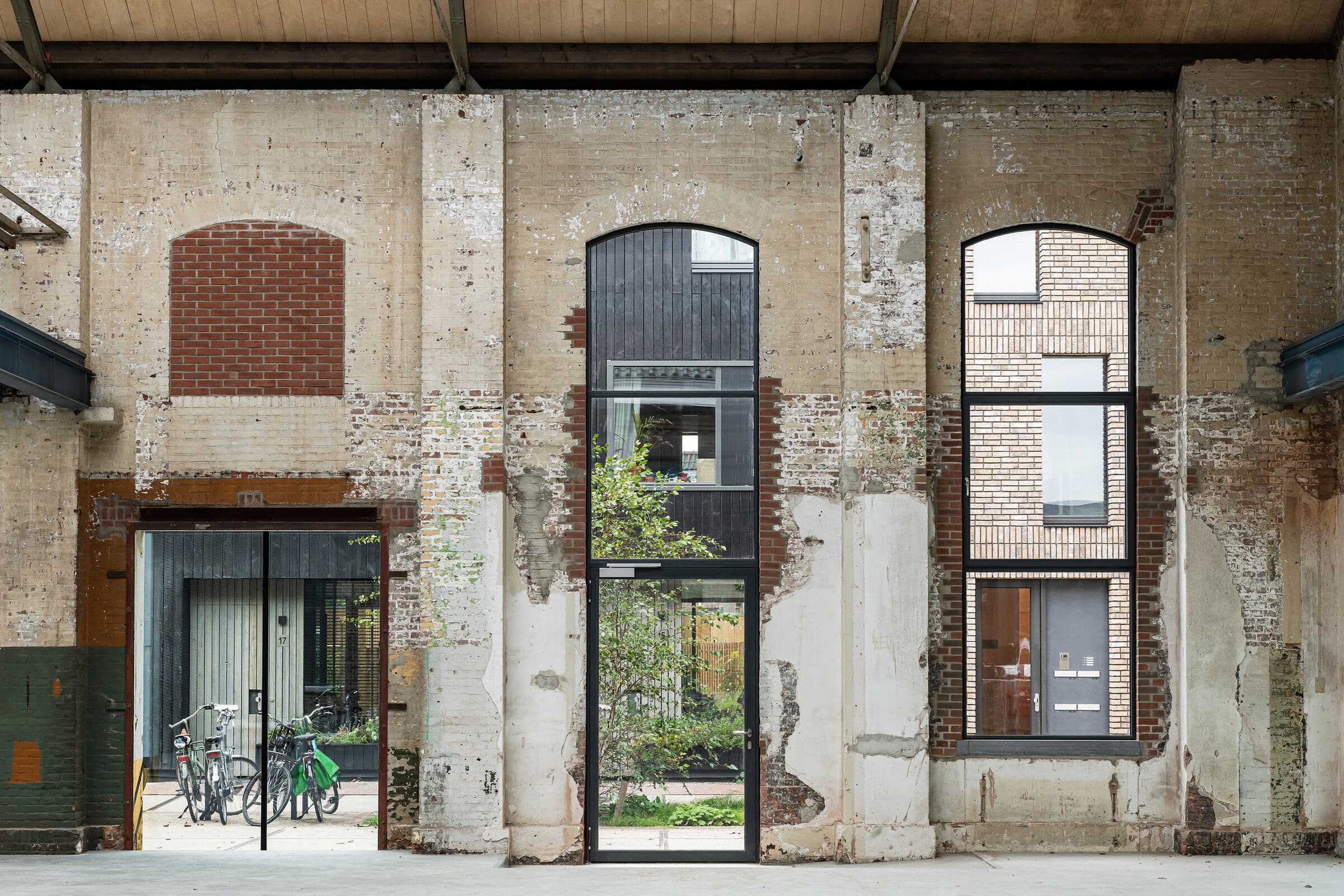

Overview of the Thesis and Its Origin
The thesis “Adaptive Reuse: A Multiphase Management Analysis of Existing Buildings in Urban Europe” is a Master’s dissertation completed in July 2025 by Fernanda Padierna Mena as part of the International Master of Science in Construction and Real Estate Management, a joint programme between Metropolia UAS (Finland) and HTW Berlin (Germany). Supervised by Professor Mika Lindholm and Professor Roode Liias, the study was submitted to the Theseus repository and is publicly available. It investigates how coordinated management across project phases can improve the adaptive reuse of heritage and existing buildings in European cities, with a particular focus on safeguarding cultural heritage in Germany and Austria.
Context and Rationale for Adaptive Reuse
The construction sector accounts for 37 % of global CO₂ emissions and over 30 % of raw‑material extraction, making the refurbishment of existing stock a critical lever for climate mitigation. Europe’s ageing urban building stock presents an opportunity: extending building lifespans reduces demolition waste, conserves embodied energy, and aligns with EU targets for circular‑economy transitions. However, many adaptive‑reuse (AR) schemes stall because of coordination bottlenecks between the Initiation, Design‑Planning, Execution, and Operation phases.
Research Methodology and Data Sources
A three‑step mixed‑methods approach was employed: (i) an integrative literature review to map common coordination barriers; (ii) a multiple‑case study of three European AR projects—Fenix I (Rotterdam, Netherlands), Montserrat Abelló Library (Barcelona, Spain), and Gasometer City (Vienna, Austria); (iii) synthesis workshops that merged theory and pattern analysis into a single framework. The outcome is the Adaptive‑Reuse Four‑Phase Coordination (AR‑4PC) model, which includes a colour‑coded timeline, a 26‑node workflow, and a phase‑aligned RASCI matrix.
Key Tools Integrated in the AR‑4PC Model
The model incorporates five analytical tools: (1) Adaptive Reuse Potential (ARP) assessment to gauge remaining useful life; (2) iconCUR evaluation linking building condition, utilisation, collective utility and stakeholder interest; (3) adaptSTAR scoring to rate design adaptability across seven categories; (4) an Interface Management System (IMS) that records interface points, agreements and action items throughout the project; and (5) a risk‑management plan using probability‑impact matrices and MoSCoW prioritisation. The tools are sequenced to provide decision‑gate evidence at each phase, reducing overlap, duplicated surveys and late‑stage redesign.
Findings from the Three Case Studies
All three projects achieved successful outcomes, yet each highlighted distinct coordination lessons. Fenix I benefitted from an early public‑private partnership that clarified roles before construction, allowing the project to remain viable through the 2008 financial crisis. The Montserrat Abelló Library demonstrated the value of built‑in flexibility, enabling design adjustments to meet BREEAM sustainability targets without compromising heritage. Gasometer City illustrated the risk of delayed interface clarification; although the development attracted €181.7 million in investment, several retail units remain vacant, underscoring the need for robust market analysis during the Execution phase.
Implications for Sustainable Housing Policy
The AR‑4PC framework offers a replicable roadmap for European municipalities, developers and financiers seeking to promote sustainable housing through adaptive reuse. By providing quantifiable screening (ARP > 50 % potential) and demonstrable risk mitigation (IMS logs, adaptSTAR scores), the model can satisfy EU taxonomy requirements and facilitate access to green‑bond financing. Moreover, the integrated RASCI matrix ensures clear accountability, addressing the “vague accountability” deficit identified in the literature.
Opportunities and Future Directions
The thesis recommends scaling the model to include deconstruction and material‑recovery pathways, integrating digital twins for real‑time interface monitoring, and adapting a “lite” version for small‑scale projects. Further research is suggested in non‑European contexts to test the model’s flexibility under differing regulatory regimes, and to expand the post‑operation phase to capture long‑term performance data.
Conclusion
Fernanda Padierna Mena’s work delivers a comprehensive, evidence‑based coordination framework that aligns environmental, social and economic objectives of adaptive reuse. By linking phase‑specific tools, stakeholder roles and risk management, the AR‑4PC model equips pan‑European audiences with practical guidance to accelerate sustainable housing retrofits and contribute to Europe’s climate‑neutral building agenda.