Loading...

🇵🇹Country profile
Portugal
Portugal taught itself to own — then watched its own cities price its children out. Can a revolution-era cooperative movement be revived in time to matter?
Read the profile
Loading...
Portugal arrived at its housing crisis from an unusual starting point: a country that taught itself to own. The post-1974 democracy folded a constitutional right to housing into a market that the state then largely withdrew from, leaving home-ownership — bought, inherited, self-built — to carry almost the entire social function of shelter. That history explains why the present squeeze lands so hard. There is little non-market cushion to fall back on, and the cushion that exists was never built to absorb a decade of tourism, foreign capital and short-let conversion all at once.
The tenure mix makes the imbalance plain. Some 74.5% of residents are owner-occupiers and 25.5% are tenants — one of the most owner-heavy profiles in Western Europe. Within that, public and non-profit rental is just 3.3% of stock, the housing cooperatives a further 0.4%, and private rental the remaining 21.8%. The non-market tier — public plus cooperative — comes to only 3.7% of all dwellings. There is no large social-rental sector standing between the owner-occupied majority and the open market; when prices move, almost everyone is exposed to them directly.
The social-rental layer is thin and tightly rationed. Public landlords — chiefly the IHRU at national level and municipal companies such as Lisbon's — hold about 125,000 units, roughly 3.5% of stock once the income-tested social designation is counted. Around 35% of households would qualify on income grounds, far more than the designated stock can house, so the safety net catches only a fraction of those who need it. Public rents sit at about €2.10 per square metre, a figure that exists almost outside the market it is meant to relieve.
The rent ladder shows how steep the climb out of that floor has become. Public housing runs at €2.10 per square metre, cooperative cost-rent at €6.50, the all-stock median at €7.20, newly-signed private contracts at €11.80, and furnished or serviced lets at €16.50. The all-stock median looks moderate only because it is dominated by long-standing, rent-controlled tenancies; a newcomer signing today faces the new-contract rate, more than five times the public-housing floor. That gap between sitting tenants and new entrants is the engine of the crisis.
Net monthly rent per m² by tier (national median; furnished is gross, all-in). Portugal's cooperative floor sits between the tiny public-housing rate and the open market, but the ladder's real story is the leap to new private contracts — a newly-signed lease runs more than five times the public rate, the squeeze that re-politicised housing after 2015.
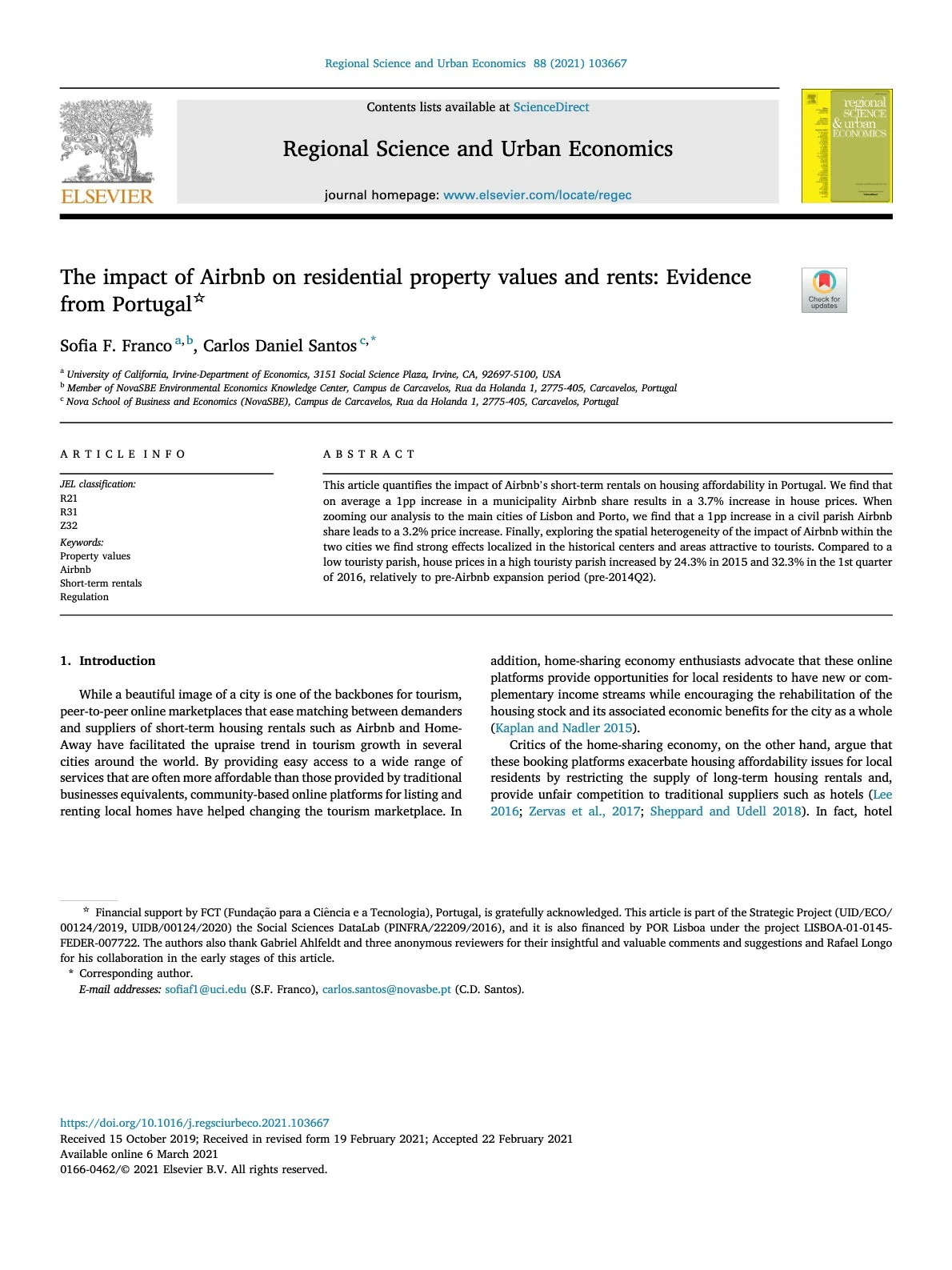
Vacancy and short-let conversion pull in opposite directions on the same stock. The 2021 census counted roughly 735,000 empty dwellings nationally, much of it in the depopulating interior rather than the booked-out coast. Residential vacancy runs at 12.5% on paper. Yet in the very cities where rooms are scarcest, homes have flowed the other way — into short-stay tourist lets. Inside Airbnb counts at least 19,188 full-time-equivalent listings across the two Portuguese cities it covers, a lower bound that captures only Lisbon and Porto. Studies of the Lisbon market trace how short-let conversion lifted both prices and rents in central neighbourhoods, and how a 2018 city ban dampened the effect where it bit. The empty interior and the over-let centre are two faces of the same misallocation.
Already at the start of this century, public financing for cooperative housing dried up — and without land that could meet the controlled-cost requirements, the cooperatives lost their capacity to build.On the demand side, the inflow is large for the country's size. Portugal recorded about 168,000 in-migrants in a recent year — returning emigrants, retirees, remote workers and a fast-growing foreign-born population — against roughly 25,000 residential building permits a year, spread across a total stock of about 3.9 million dwellings. Supply has not kept pace with the people, the capital or the nights booked.
The pain is concentrated among renters and the young, but it has climbed well into the working middle class. House prices rose 17.6% year on year in the most recent reading — among the fastest in Europe — while the median income sits near €17,000 a year, so a Lisbon or Porto salary buys progressively less of a home each quarter. About 6.3% of households are formally rent-overburdened, but that headline understates the strain in the cities, where new tenants commit far more than a third of income and many young adults simply stay in the family home into their thirties. Energy poverty compounds it: around 17.5% of people cannot keep their home adequately warm, a high rate for a mild climate, reflecting old, poorly-insulated stock and low incomes. A pan-European analysis of who the housing crisis hits hardest places Portugal's renters and low earners squarely among the most exposed. The country counts some 13,000 people without secure housing. The crisis is no longer an affordability footnote; it is a first-order political question.
Portugal's housing cooperatives are a child of the 1974 revolution. Where Switzerland's or Germany's date to the nineteenth century, the Portuguese Cooperativas de Habitação Económica (affordable-housing cooperatives) were largely built in the democratic opening that followed the Carnation Revolution, when decree-laws DL 730/74 and DL 734-A/74 gave the movement a governance and finance frame almost overnight. The sector that grew from it produced, over the following decades, somewhere near 200,000 homes — a remarkable run for a small country.
Most Portuguese cooperatives were built-for-ownership rather than cost-rent landlords. The classic model assembled members, accessed public land and soft finance, built blocks at custos controlados (controlled costs), and sold the flats to members at a price capped near construction cost — typically around 30% above it — with a reserve set aside for repairs. It was a route into ownership for the lower-middle class, not a permanent rental commons; once sold, a flat could in principle re-enter the market. That design is why the form delivered so many homes yet left only a small permanent rental footprint behind it.
Today the movement is small and uneven. The catalogue records the cooperative tier at 0.4% of stock — roughly 15,000 homes still in clearly cooperative tenure across about 45 organisations, with cost-rents near €6.50 per square metre and about 0.3% of citizens housed this way. FENACHE, the Federação Nacional de Cooperativas de Habitação Económica founded in 1980, federates the sector; by its own account it now groups around 31 regularly-active promoters, down from the more than 100 of the boom years, when production peaked near 8,000 homes a year. The Housing Europe survey of European cooperative housing places Portugal among the systems where the form proved resilient but never reached the scale of the Austrian, Danish or Swiss models.
What survives clusters into a few recognisable kinds. There is the historic FENACHE base — the long-standing promoters whose binding constraint is no longer demand but land and finance: FENACHE itself reports that a year after Mais Habitação recognised the sector, it still could not say what public land was actually available beyond a couple of plots repeatedly tendered without takers. Alongside it, a younger cohort is rebuilding the form for the rental age rather than for sale. Novacoop Habitação Cooperativa pursues cost-rent cooperative development; Rede Co-Habitar networks the emerging collaborative-housing and co-housing initiatives; and architecture-and-development practices like ateliermob, MASSLAB and the worker cooperative Oitoo carry the design-and-delivery craft, often working directly with residents and municipalities. The impact-finance side is thin but present — Maze Impact Investment channels social-impact capital toward exactly this kind of venture.
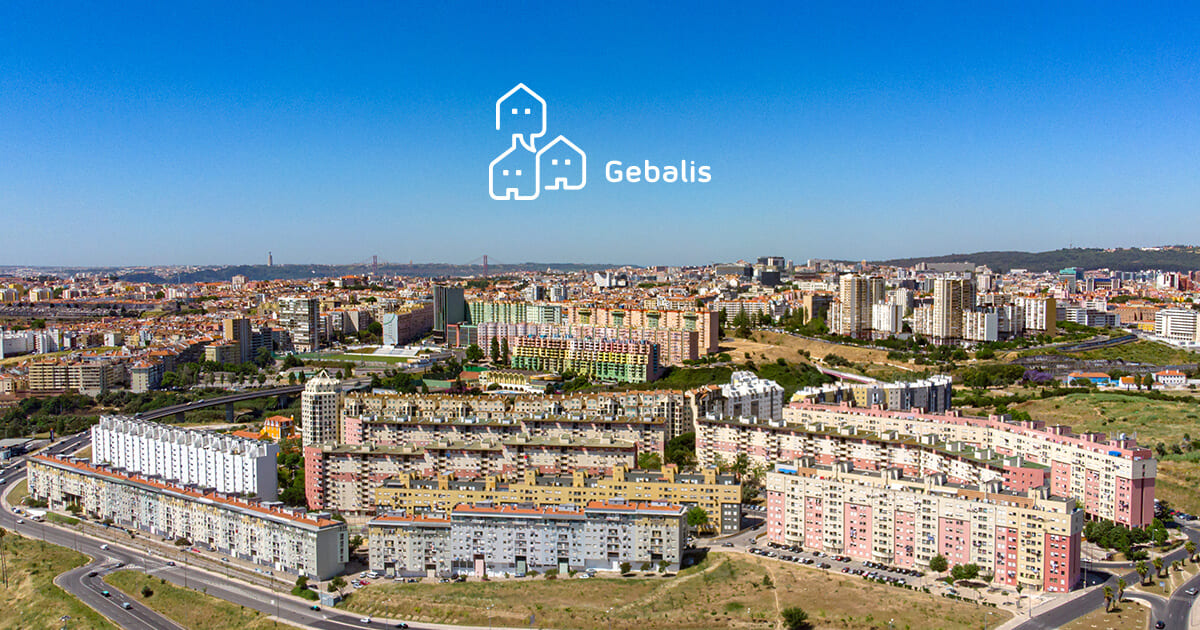
Public housing runs on a parallel, non-cooperative track. The IHRU sets national policy and finance, while municipal companies such as Lisbon's Gebalis manage the existing social estates day to day. The two systems rarely meet: the cooperative movement and the public-landlord system grew up separately, and one of the open questions of the present revival is whether municipal land and IHRU finance can finally be routed through cooperatives at scale, rather than each working alone.
Honesty about scale matters here. With cooperatives at 0.4% of stock, Portugal does not have a cooperative sector in the sense Vienna or Zürich do — it has a movement with deep historical roots, a real federation, and a handful of contemporary practitioners trying to convert revolution-era machinery into a rental answer for the 2020s. Whether that conversion happens depends less on enthusiasm than on the two things the federation has named for years: land and patient money.
The clearest fact about Portuguese housing policy is that the state is trying to re-enter a market it spent decades leaving. The 2023 Mais Habitação package was the pivot: it recognised cooperatives as eligible for public funding and tax relief, set rules on short-let licensing and rents, and announced a financing line for collective construction. The current strategy, Construir Portugal, bundles around 30 measures and revised the Recovery and Resilience Plan's original 25,000-home target upward toward roughly 59,000 new and rehabilitated homes by 2030, backed by some €4.2bn in PRR and state-budget money. The headline tools are youth tax relief, a reformed Porta 65 rent subsidy, public and affordable-rent construction, and a Land Law change letting rustic land carry controlled-cost housing.
Who holds which lever is the recurring friction. National government — through the IHRU and the state development bank, the Banco Português de Fomento — writes policy, sets eligibility and is meant to operationalise the cooperative financing line. Municipalities hold the asset that actually unlocks a cooperative project: land. Lisbon's Cooperativas 1.ª Habitação programme is the sharpest example of the latter working — the Câmara Municipal de Lisboa grants municipal plots under direito de superfície (surface rights, which keep the land in public hands) for non-profit cooperative construction, with a Carta Municipal de Habitação identifying sites for up to 500 cooperative homes by 2032. But a national programme only becomes housing once a city has found the site and the development bank has released the money, and the second half has lagged the first.
For cooperatives specifically, the support is now written down rather than improvised. Mais Habitação makes them eligible for public finance and tax relief; the surface-rights route channels municipal land to them at sub-market cost; and the affordable-rent framework gives cost-rent cooperative output a price band to aim at. The instruments exist. What the sector says is missing is delivery: FENACHE has repeatedly reported that the promised financing line was not operational and that almost no buildable public land had been identified a year after the law passed. The toolkit and the pipeline are not yet the same thing.
Vacancy and short lets are the other policy front. With the census counting hundreds of thousands of empty dwellings and the tourist centres stripped of long lets, governments have alternated between curbing alojamento local (short-stay rental) and courting the investment it brings. Mais Habitação tightened short-let licensing; the 2026 measures swung back, scrapping a short-let surcharge and a forced-letting rule and handing regulation to municipalities. The reversal captures the central tension: the same flat is, to one camp, a home wrongly converted to a tourist room, and to another, a private asset whose owner the state should not coerce.
Energy and sustainability increasingly frame the build-or-renovate choice. Portugal's housing renovation rate is only about 0.5% a year, and roughly 17.5% of people cannot keep their homes warm — a stock problem as much as an income one. EU recovery money and the Construir Portugal rehabilitation track push toward retrofit and reuse of the existing 3.9-million-dwelling stock rather than greenfield sprawl, with the empty interior reframed as latent supply rather than dead weight. Cooperative and public builders, with longer horizons than a flipper, are the obvious vehicles for deep retrofit — if the finance reaches them.
Underneath the programmes runs an old argument about what housing is for. One camp treats it as social infrastructure the state must supply directly: revive cooperatives and public building, keep land in public hands through surface rights, cap short lets, and measure success in homes delivered. The cooperative movement speaks for this side, and its frustration is concrete. Manuel Tereso, FENACHE's president, has put the diagnosis plainly — that public finance for cooperative housing dried up at the start of the century and that, without land meeting the controlled-cost rules, the cooperatives lost the capacity to build at all. The other camp treats housing primarily as a market to be unblocked: cut transaction taxes, deregulate short lets, speed permits and trust supply to follow demand and capital — the logic behind the 2026 rollback of the short-let surcharge and forced-letting rule. Both sides agree Portugal must build far more; they disagree on whether the builder of first resort is the state and its cooperatives or the private developer and the returning investor.
In the year of the Carnation Revolution, decree-laws DL 730/74 and DL 734-A/74 give the housing-cooperative movement its governance and finance framework, igniting the sector that would build some 200,000 controlled-cost homes.
Article 65 of Portugal's new democratic Constitution makes adequate housing a state duty — the legal anchor every subsequent programme has been measured against.
The Federação Nacional de Cooperativas de Habitação Económica is created at the movement's second congress, federating what would grow to more than 100 regular promoters in the 1980s–90s peak of roughly 8,000 cooperative homes a year.
After decades of retreat, a new generation of housing policy revives public and affordable instruments — the first sign the state was returning to a market it had largely left.
The Mais Habitação package formally recognises cooperatives as eligible for public funding and tax relief and announces a financing line — though FENACHE reports the line had not been operationalised a year on.
A new strategy bundles 30 measures and revises the PRR target upward toward roughly 59,000 homes by 2030; in parallel, Lisbon's council launches Cooperativas 1.ª Habitação, granting municipal land under surface rights for up to 500 cooperative homes by 2032.
The €1.4bn Recovery and Resilience Plan housing envelope must be spent by 2026 — the near-term test of whether the revived public and cooperative pipeline can actually deliver units, not just announcements.
The expanded strategy targets roughly 59,000 new and rehabilitated homes by 2030 across public, private and cooperative tracks, backed by some €4.2bn of PRR and state-budget funding — the horizon against which the cooperative revival will be judged.
From the post-revolution decrees that built the sector, through the long financing drought, to the Mais Habitação recognition and the Construir Portugal targets reaching 2030.
The argument for the Portuguese model is easier to see in the projects and practices reviving it than in the thin national numbers. The revival is being assembled in a few places at once — on small municipal plots in Lisbon, in the studios of architect-developers who work with residents rather than for them, and in the federations and finance vehicles trying to make the next cooperative home pencil out.
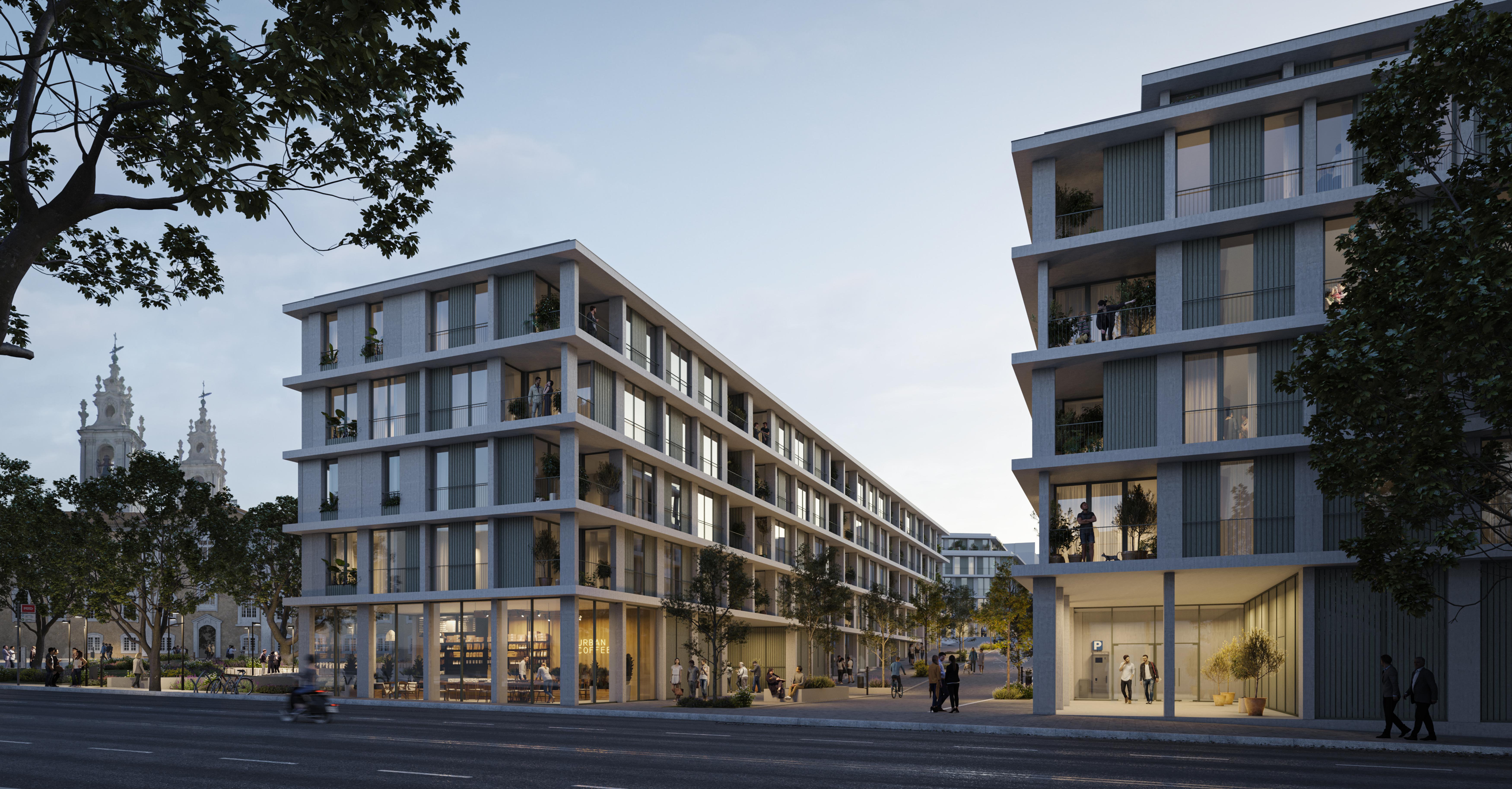
Lisbon is the clearest test bed. The Cooperativas 1.ª Habitação programme matches municipal plots, granted under surface rights, to cooperatives building non-profit homes at affordable-rent prices — the first cooperative construction the city has driven in a generation, with a pipeline aimed at 500 homes by 2032 and the first plots already in tender. Adro, a Lisbon cohousing and cooperative-development project, is among the contemporary initiatives trying to demonstrate the resident-led model on the ground rather than on paper.
Behind the plots sit the practices that actually deliver them. ateliermob — an architecture studio long associated with socially-engaged, participatory housing work in and around Lisbon — and MASSLAB bring the design-and-delivery craft; the worker cooperative Oitoo carries the same ethos in a cooperatively-owned practice. Novacoop Habitação Cooperativa develops cost-rent cooperative housing directly, while Rede Co-Habitar networks the scattered co-housing and collaborative-housing initiatives so they can learn from one another rather than each starting cold.
The connective tissue is federation, public landlord and finance. FENACHE federates the historic cooperatives and carries the sector's voice into national housing councils; Gebalis manages Lisbon's existing social estates and is the municipal partner any cooperative pipeline must work alongside; and Maze Impact Investment supplies the kind of patient, social-impact capital the federation has spent years saying the banks and the IHRU would not. The pattern documented across Europe — patient capital plus public land plus a federating body — is exactly what Portugal is missing pieces of, and exactly what the Lisbon experiment is trying to assemble.
What 1974 set in motion and the 2020s are trying to restart is a single question Portugal has not yet answered: whether a country that built its way into mass ownership can build a permanent, non-speculative rental tier alongside it — at the moment its cities most need one. The plots are being granted, the practices are ready, the federation is waiting. The unresolved part is whether the land and the money arrive together, and at a scale that registers in a tenure pie where the cooperative slice is still rounded to a fraction of one per cent.