
A republic of tenants, built on the 1889 cooperative law
Germany is, more than almost any other large European country, a republic of tenants. It has been one since the cooperative form was written into federal law. The 1889 Genossenschaftsgesetz (the Cooperative Society Act) gave Wohnungsbaugenossenschaften — the country's housing cooperatives — a durable legal shape just as the industrial cities were filling. The Weimar-era Hauszinssteuer rent tax funded the inter-war wave. Reunification folded over 1,100 East German societies back under the same statute. That long institutional memory is why housing here is argued over as a question of who builds and who governs, not simply who can afford to buy.
The tenure mix carries the rest of the story. Around 54.5% of Germany's residents are tenants — the highest renter share among the large Western European economies. Only 45.5% are owner-occupiers. Within the rental base, 5.1% of stock is cooperative: 2.2 million apartments across 2,237 Wohnungsbaugenossenschaften, the densest such federation in Europe by count. Another 6% is public housing, about 2.6 million apartments held by Landeseigene Wohnungsbaugesellschaften (the state-owned housing companies, or LWU) and municipal landlords. That leaves 43.2% in private rental. The non-market segment — cooperative plus public — comes to 11.3% of all dwellings. That is a smaller share than Austria's or the Netherlands', but it sits on a far larger absolute base.
- Owners
- Owner-occupier45.5%
- Renters
- Public & non-profit rental6.2%
- Cooperative5.1%
- Private rental43.2%
Social housing sits on top of that pie rather than beside it. The Sozialbindung is a public-affordability covenant: apartments built with public subsidy carry a 15-to-30-year binding that caps the rent and reserves the flat for eligible tenants. It covers about 2.3% of national stock, spread across the LWU, private-rental and cooperative slices rather than forming a tenure of its own. The federal Sozialer Wohnungsbau (subsidised social-housing) programme that produces it has shrunk for decades. Today roughly 50% of households would qualify for a subsidised unit on income grounds — far more than the binding stock can house.
The rent ladder shows why the cooperative floor matters. Public LWU rents run at €6.40 per square metre cold, cooperative rents at €6.80, the all-stock median at €8.90, newly-signed private contracts at €14.20, and furnished or serviced lets at €19.50. The cooperative and LWU tiers sit at roughly half what a new private contract costs — the structural reason the form is treated as affordable-housing infrastructure rather than nostalgia, much as Vienna and Zürich lean on their own cost-rent stock.
- Public housing (LWU)
- Cooperative
- All-stock median
- New contracts
- Furnished / serviced (gross)
Net-cold monthly rent per m² by tier (national median; furnished is gross, all-in). The cooperative + LWU floor sits well below the all-stock median; newly-let private contracts run more than double the public-housing rate — the gap that drives the post-2015 affordability debate.
Underused stock sits alongside the pressure. Residential vacancy runs at 4.3% nationally — much of it structural, in shrinking eastern and rural regions rather than the tight cities. Office vacancy, by contrast, has climbed to 5.8%. That is some 22.00 million square metres of empty floor, the largest such pool in Europe, concentrated in exactly the cities where housing is scarcest. Germany counts roughly 1.9 million empty buildings in total. The mismatch between where the vacancy sits and where the demand is is the puzzle the policy debate keeps circling back to.
The human right to housing is increasingly under threat in Germany, and it is forcing a radical rethink at every level of the state.On the demand side Germany absorbs the largest annual migration of any European country — about 1.46 million inbound moves a year — against roughly 290,000 residential building permits, a gap that has widened since 2022 across the country's 43.4 million dwellings.
The burden of all this falls unevenly, and it no longer spares the middle. The lowest-earning fifth of renter households spend around 36% of their income on rent, against roughly 22% for the highest earners. About 3.2 million tenant households — one in six — now pay more than 40% of income on rent, the level researchers treat as overload. The squeeze has reached the middle, too. A single person signing a new lease in Berlin or Munich now spends close to 42% of income on rent. The grey furnished-rental market makes it worse: a study of Berlin's furnished-let market finds such lets routinely double the asking rent by exploiting registration loopholes. The Hans-Böckler-Stiftung, a trade-union-linked research foundation, counts nearly half of big-city households carrying a precarious burden, with roughly 1.5 million affordable, adequately-sized flats missing. The worry is widespread. In the 2025 Ipsos Housing Monitor, 81% of Germans did not expect enough affordable housing to be built in the coming years. The Deutscher Mieterbund's Mietenreport 2025 found that 29% of tenants fear they will not be able to afford their home in future. Affordability now ranks among the country's most-named domestic concerns, alongside migration and the economy. Within all this, the cooperative share has the deepest roots and the clearest claim to scale, and it is the form the rest of this profile follows.
Wohnungsbaugenossenschaften: the cost-rent form, 135 years on
The German cooperative is, in the catalogue's terms, a rental-aligned form rather than an equity one. A member buys a Genossenschaftsanteil — a share worth typically a few thousand euros — and gains a Dauernutzungsrecht, an indefinite right to occupy the flat at cost rent. The share is repaid at face value on leaving, not at a market price, so there is no capital gain to chase and a member's flat cannot be sold out from under the society. Around 5% of Germans live in a cooperative home on this basis. The Gesamtverband der deutschen Wohnungs- und Immobilienunternehmen (GdW) federates the cooperative and municipal-housing sectors together at the federal level.
The tradition runs in a single line from 1889. The Genossenschaftsgesetz established the legal form; the 1924 Hauszinssteuer funded the inter-war societies; post-war reconstruction added hundreds more; and reunification integrated the East German Wohnungsbaugenossenschaften — which had run roughly half the eastern stock — under the federal frame in 1990. The continuity is the point: a Hamburg or Dresden society founded in the 1920s can still let a city-centre flat in the 2020s at a fraction of the market rate, because nothing in the form ever let the asset be repriced.
Today that single tradition resolves into four clusters, and they do not all face the same problem. The first is the established federation: several thousand century-old Wohnungsbaugenossenschaften, GdW-federated, holding the bulk of the 2.2 million cooperative apartments. Their pressing challenge is the energy-retrofit cost of ageing stock and an ageing membership, not finding land. The second is the post-2000 project cooperatives — KOOPERATIVE GROSSSTADT eG and wagnis eG in Munich, the Möckernkiez society in Berlin. They built the form into deliberate cohousing, and their binding constraint is the reverse: securing urban land and the patient upfront capital a first project needs. The third is the steward-ownership family that runs parallel to the statute. The Mietshäuser Syndikat federates hundreds of buildings into a non-resale covenant network, and Purpose carries the model beyond housing. Their challenge is scaling shared legal and financial machinery without losing the self-organised character. The fourth cluster is the institutional midwives. STATTBAU Berlin develops projects. The FORUM Gemeinschaftliches Wohnen and the Forum für gemeinschaftliches Bauen und Wohnen e.V. coordinate the Baugruppen (resident building-groups) scene. wohnbund e.V. carries the policy research, the Genossenschaftsforum e. V. keeps the history-and-future conversation, and the Dachgenossenschaft Wohnen Berlin eG provides an umbrella structure for small initiatives. eG21 - Institute for Cooperative Housing Future runs the forward research. What the clusters share is the two problems none can solve alone: access to land and access to long-term capital. The study Genossenschaftliche Projektentwicklung von Wohnraum-Commons maps how these instruments translate into commoning practice.

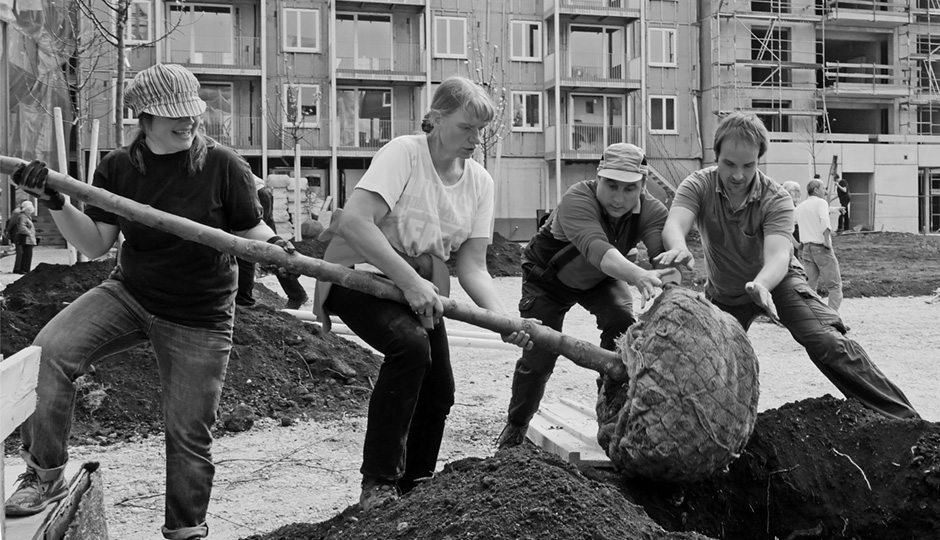
What is new is the cooperative's place in federal policy. The 2022 Bündnis für bezahlbares Wohnen (the alliance for affordable housing) named the cooperative sector a delivery partner, alongside the GdW and the tenant unions. Bundesländer increasingly allocate land to cooperatives in two ways. The first is Konzeptverfahren — concept tenders judged on the use proposed rather than the price bid. The second is Erbbaurecht ground leases, which keep the land itself in public hands. For the first time in a generation, the form is being treated as a way to deliver the next decade's affordable housing, not as a heritage sector to preserve.
Bau-Turbo, the Sozialbindung gap, and the Vergesellschaftung question
German housing policy runs through a federal stack. The government that took office in May 2025 has staked its answer on building faster. Its headline measure is the Bau-Turbo, the §246e Baugesetzbuch fast-track that lets municipalities wave housing projects through; the Bundestag passed it in October 2025. It is backed by a record €23.5bn of federal Wohnraumförderung (housing-construction subsidy) for 2025–2029, which the Bundesländer pledge to at least match. Two older tools sit alongside it. The Mietpreisbremse rent-brake was extended to 2029, and Wohngeld+, the 2023 housing-allowance reform, widened support to roughly two million households. Holding the programme together is the Bündnis für bezahlbares Wohnen, the pact convened by the BMWSB — the federal ministry for housing, urban development and building — with the GdW, the cooperative sector and tenant unions. It sets the annual delivery targets.
I want us to build more, and I want us to build more cheaply.Who pulls which lever matters as much as the programme itself, because German housing is governed across three levels. The Bund (federal government) writes the tenancy framework — the Mietpreisbremse, the Wohngeld+ allowance — and commits the headline subsidy. The Bundesländer (the sixteen states) double the construction funding, enforce tenancy law, and decide where the rent-brake actually applies: it is currently designated across 13 of them and more than 400 cities. The Kommunen (municipalities) hold the operational levers — they wield the new Bau-Turbo fast-track, allocate the land through Konzeptverfahren, and own the LWU companies outright. A federal euro only becomes an affordable flat once a Land has matched it and a city has found the site, which is why the same national programme produces very different results from Munich to Magdeburg.
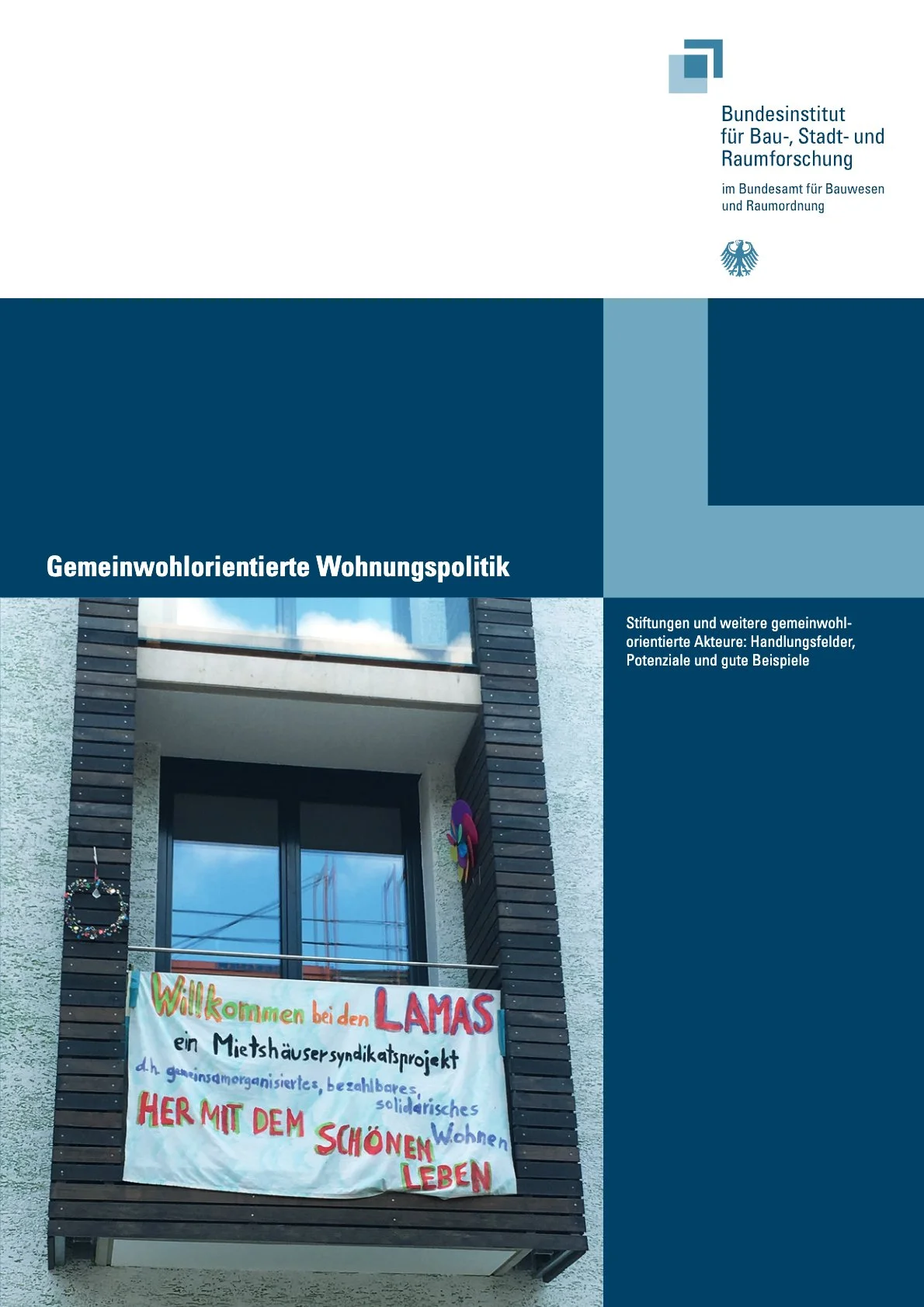
For cooperatives specifically, the support is now a set of named instruments rather than goodwill. The Bündnis targets are split across municipal landlords, cooperatives and private developers. The Bau-Turbo density bonus applies to cooperative new-build at parity with LWU schemes. Wohngeld+ reaches cooperative members on the same terms as private tenants. And Konzeptverfahren plus Erbbaurecht route public land to the sector at sub-market cost. The study Gemeinwohlorientierte Wohnungspolitik (common-good-oriented housing policy), published by the BBSR — the federal institute for building, urban and regional research — sets out the wider toolkit: foundations, syndicates and trusts that lock affordability through ground leases, endowments and concept-led allocation. The federal and Land programmes increasingly borrow from it.
Germany's empty-office pool is now an explicit supply lever. With 22.00 million square metres of vacant offices concentrated in the tight cities, federal strategy treats office-to-residential conversion as new affordable supply. BMWSB grants and KfW (the German state development bank) financing back cooperative and municipal conversion pilots. The research base argues the embodied-carbon and cost case for reusing a 1950s-to-1970s office block rather than demolishing it.
The climate frame increasingly sets the terms. The Gebäudeenergiegesetz (the Building Energy Act, the so-called Heizungsgesetz) requires new heating systems to run on at least 65% renewable energy. That pushes retrofit up the agenda for exactly the ageing cooperative and LWU stock. The national Nachhaltigkeitsstrategie (sustainability strategy) sets the other big target: cutting land take to under 30 hectares a day by 2030, against roughly 50 hectares a day today, on the way to a fully circular land economy by 2050. Both goals point the same way — less greenfield sprawl, more densification, adaptive reuse and timber construction. Cooperative and public housing, with their long horizons and no resale pressure, are increasingly the vehicle expected to deliver them.
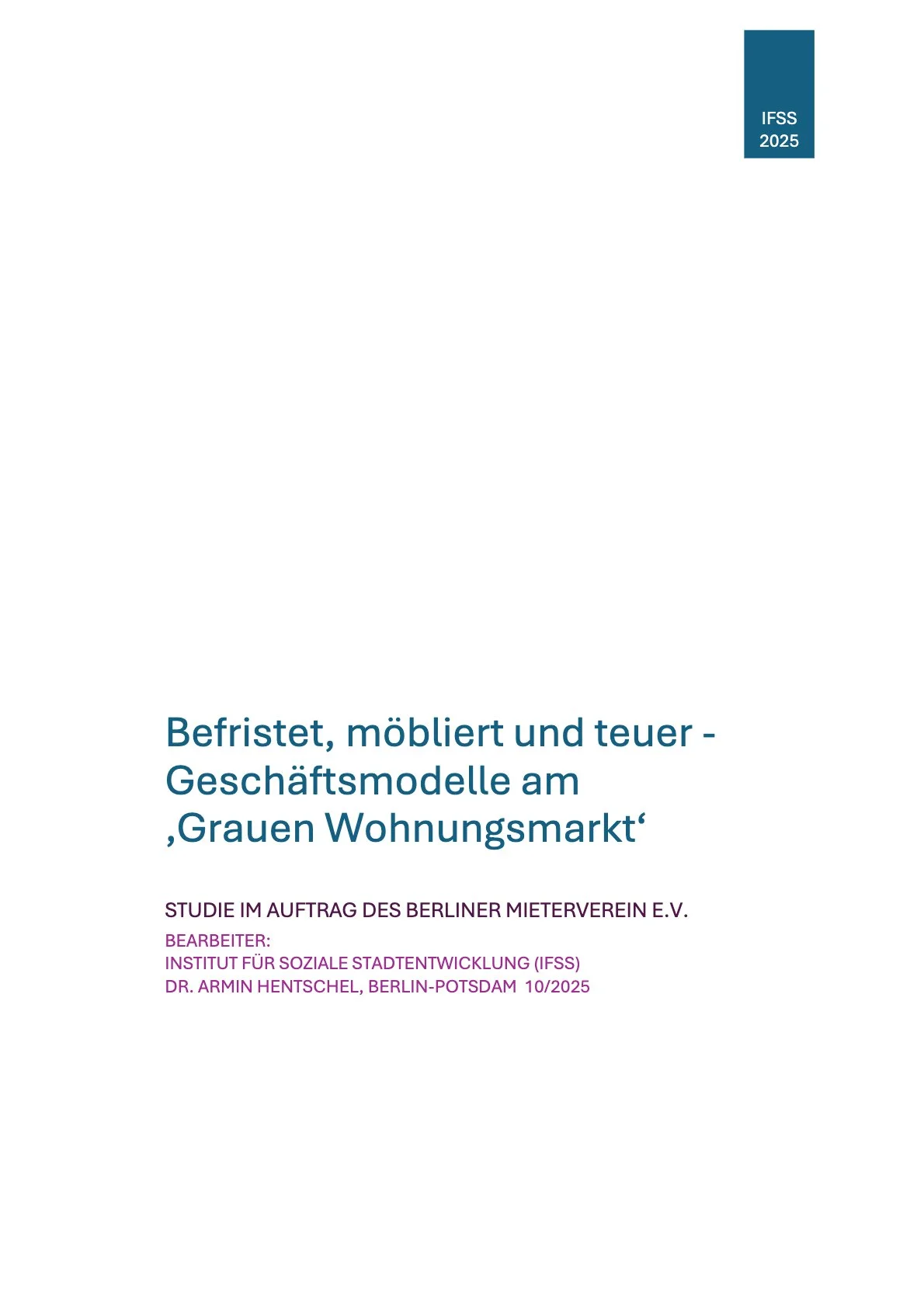
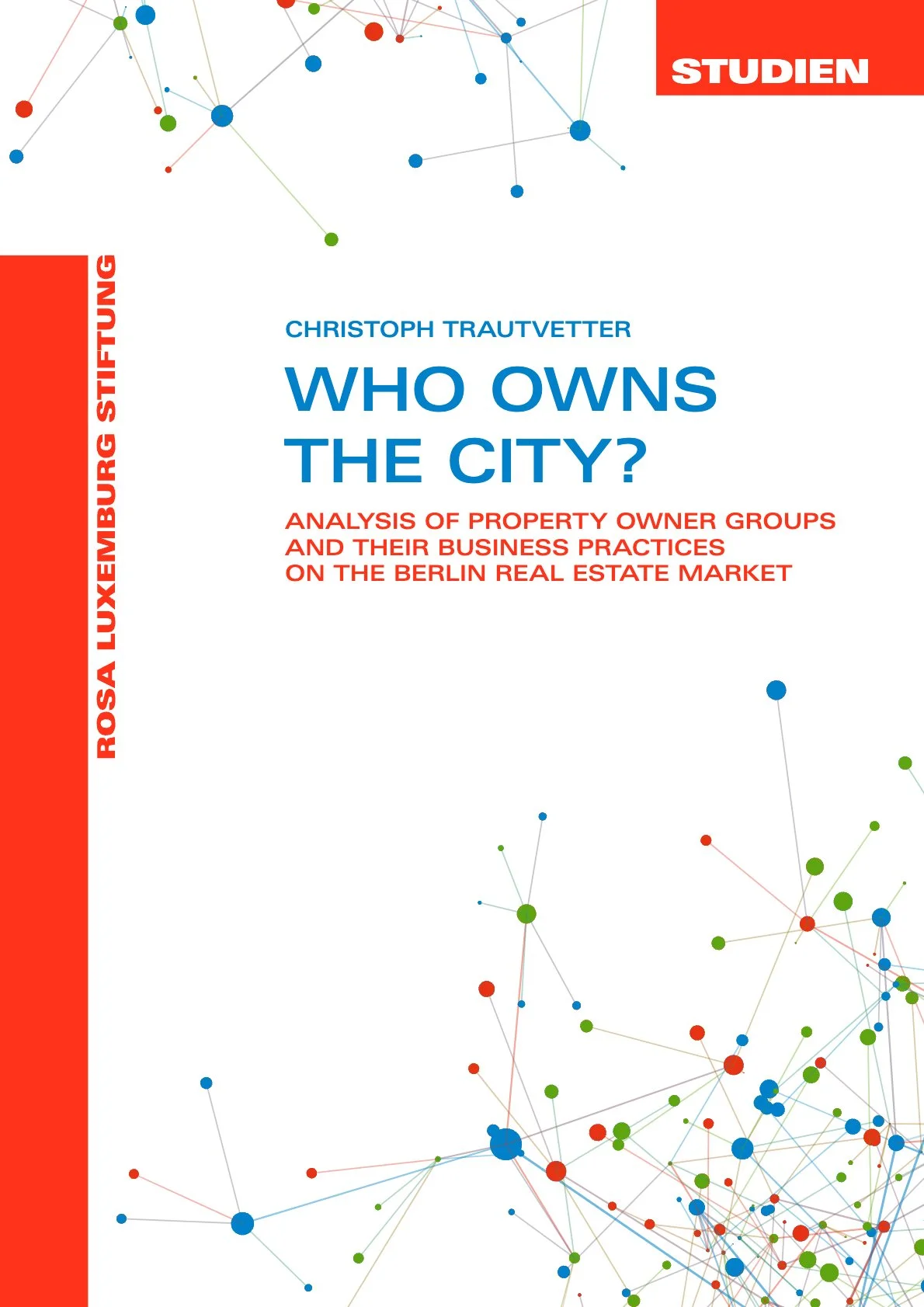
The sharpest edge of the debate is the Vergesellschaftung (socialisation) question. Berlin's 2021 referendum to socialise the portfolios of the largest private landlords, under Article 15 of the Basic Law, passed with 59%. In 2025 the Berlin Senate finally passed a Vergesellschaftungsrahmengesetz (a socialisation framework law). It takes effect only after a constitutional review, and is widely read as designed to slow socialisation rather than enable it. The campaign behind the referendum has tabled its own 37-paragraph draft, which would bring the roughly 220,000 apartments of landlords with more than 3,000 units into public ownership. The case rests on who actually owns the city. An analysis of Berlin's property-owner groups traces the offshore structures, share deals and equity firms that concentrate ownership and drive rents; a companion study argues the housing question has become, at root, a question of democracy. For the tenant camp, Lukas Siebenkotten, president of the Deutscher Mieterbund (the German Tenants' Association), argues that housing has become a poverty risk and that the rent-brake is more necessary than ever. The property-owners' associations and much of the governing coalition read the same numbers differently — as a warning against deterring the investment new supply needs. The argument is unresolved, and it is the backdrop against which every programme above is negotiated.
- 1889[source]
Genossenschaftsgesetz
The federal Cooperative Society Act establishes the legal form for Wohnungsbaugenossenschaften — share-based capital, member-tenant governance — and has held with periodic amendments ever since.
- 1924[source]
Hauszinssteuer programme
The Weimar-era rent tax funds dozens of new cooperatives across German cities — the inter-war expansion of the form.
- 1990[source]
Reunification + East-Bloc WBG integration
Over 1,100 East German Wohnungsbaugenossenschaften, which ran roughly half the eastern housing stock, integrate under the federal Genossenschaftsgesetz frame.
- 2015[source]
Mietpreisbremse introduced
Federal rent-brake legislation caps new-let rents in designated tight markets — now applied across 13 Bundesländer and over 400 cities.
- 2022[source]
Bündnis für bezahlbares Wohnen
A federal pact between the BMWSB, the GdW federation, the cooperative sector and tenant unions sets annual delivery targets across LWUs, cooperatives and private developers.
- 2025[source]
New federal government + Bau-Turbo
A CDU/CSU–SPD coalition takes office in May 2025; Housing Minister Verena Hubertz’s Bau-Turbo (the §246e Baugesetzbuch fast-track), passed that October, lets municipalities approve housing faster, while €23.5bn of federal Wohnraumförderung is committed for 2025–2029.
- 2029[source]
Mietpreisbremse horizon
The rent-brake, extended in 2025, is legislated to run until the end of 2029 — the date by which the supply measures are meant to have eased the pressure it caps.
- 2030[source]
Land-take + climate targets
Germany’s sustainability strategy targets cutting land take to under 30 hectares a day by 2030, while the Gebäudeenergiegesetz steers the building stock toward majority-renewable heating on the way to a climate-neutral stock by 2045 — horizons cooperative and public housing are expected to help deliver.
From the 1889 Genossenschaftsgesetz through the Mietpreisbremse and the 2025 Bau-Turbo to the 2029 rent-brake horizon and the 2030 land-take + climate targets.
From Möckernkiez to the Gröninger Hof: the form, built
The clearest argument for the German model is not in the statute but in the buildings. The 2,237-society federation, the 2.6-million-apartment LWU stock and the post-2000 project-cooperative wave have produced demonstrators in every Bundesland; a tour of the handful that the sector itself keeps pointing to is the best account of what the cooperative form can do at neighbourhood scale.
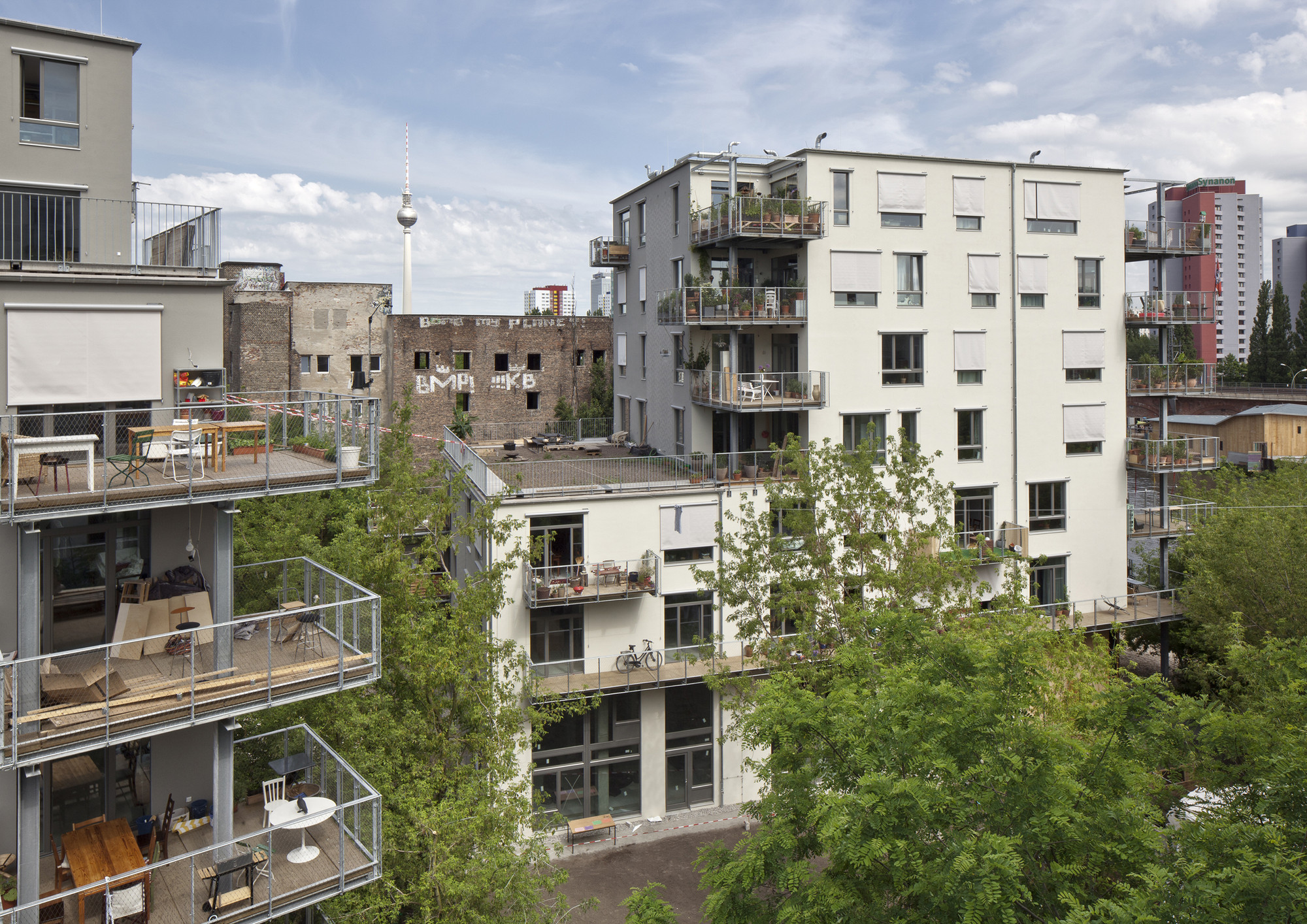
Möckernkiez is the one most often invoked as proof the form can scale: fourteen passive-house buildings around a car-free, barrier-free courtyard in Berlin-Kreuzberg, 900 residents in the largest cooperative new-build of the post-reunification period. Spreefeld, a little upriver, packs 140 residents into three wood-concrete hybrid blocks with shared roof gardens and ground-floor commons opened to the neighbourhood. R50 and the IBeB (Blumengroßmarkt) opposite the Jewish Museum show the Baugruppe variant — resident-commissioned buildings with interior streets and participatory layouts — while Quartier WIR and Forum Kreuzberg fold a daycare, a kindergarten and shared workspace into the cooperative block.
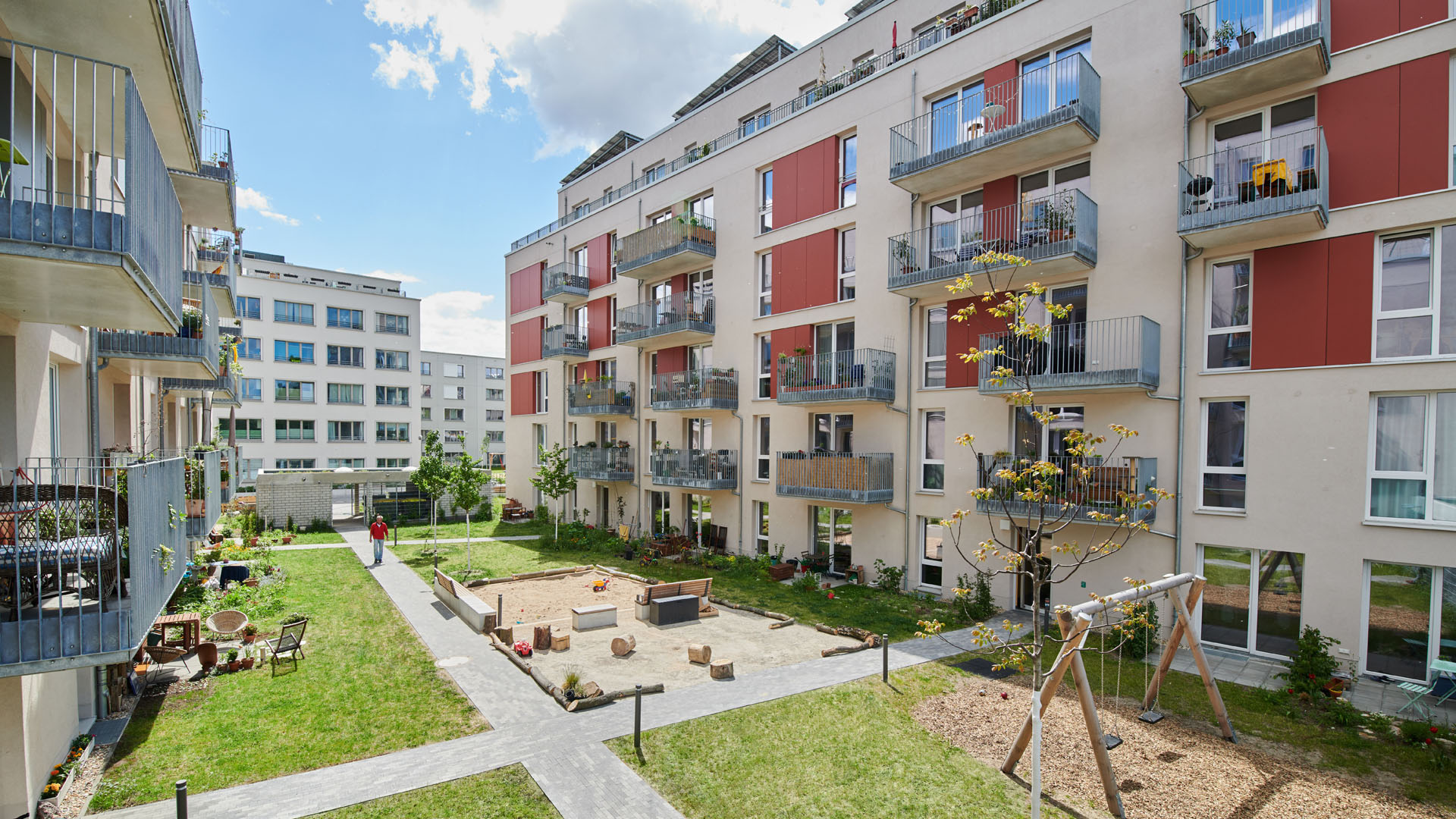
Haus der Statistik is where the vacancy story becomes a building: a 40,000-square-metre former GDR statistics complex on Alexanderplatz, vacant for years, now redeveloped by a public-cooperative coalition into affordable housing, studios, a new district town hall and culture. CRCLR House in Neukölln rebuilt a former brewery with recycled windows, salvaged fire doors and timber-concrete extensions to roughly 80% reused material — the circular-construction reference the embodied-carbon debate keeps citing. In Hamburg, the Gröninger Hof turns a seven-storey 1960s car park into 75 cooperative apartments around a green courtyard, the office-to-residential conversion case made physical.
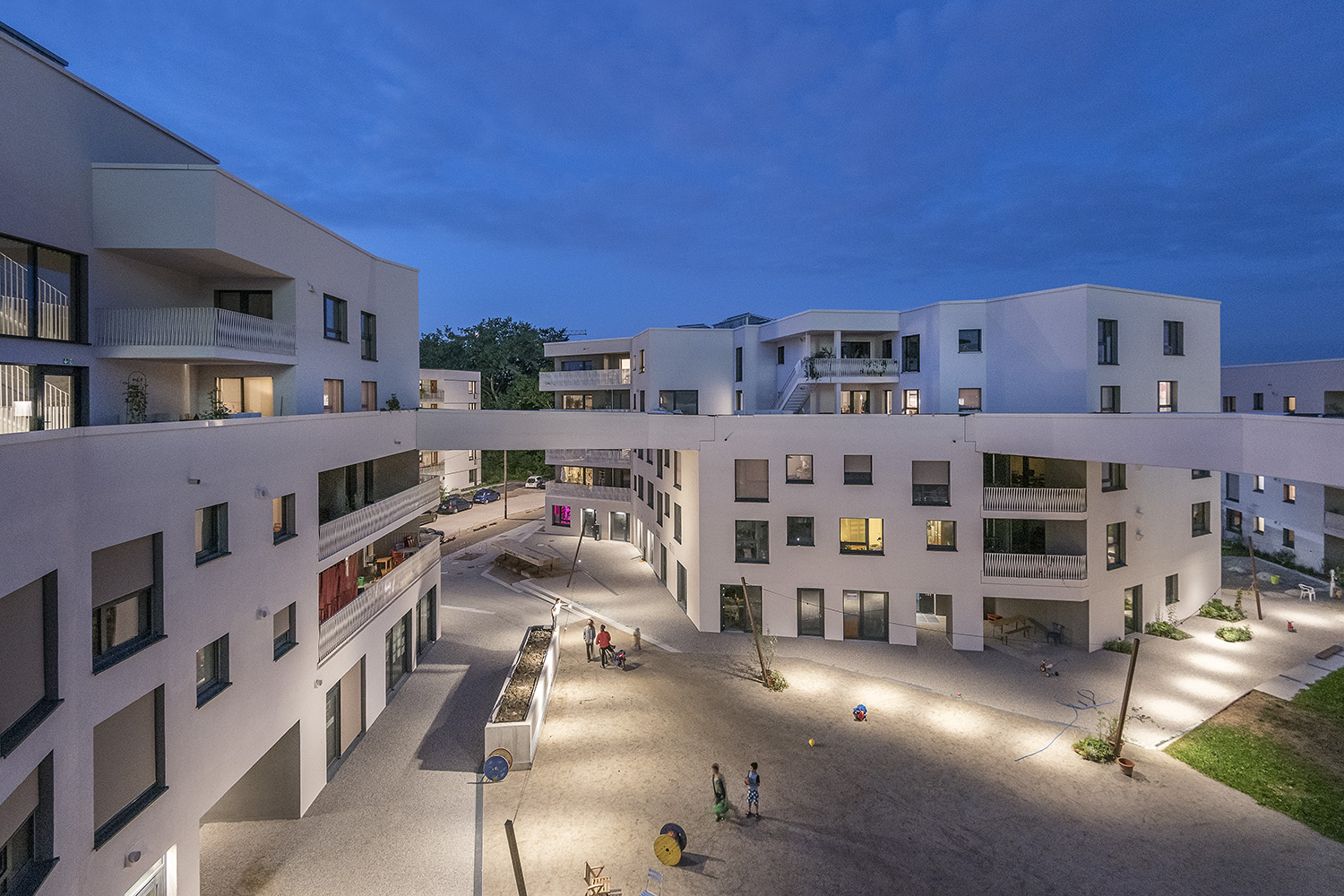
wagnisART carries the Munich strand: five interconnected passive-house buildings linked by roof-garden bridges, designed with the residents and widely awarded. Prinz Eugen Park nearby is the largest timber settlement in the country — 1,800 apartments, 570 of them timber-built — while San Riemo and DomagkPark test adaptable, car-light cooperative layouts on former barracks and industrial land. Further south, the Collegium Academicum in Heidelberg houses 176 students in a self-governed, timber-built residence reconfigurable by the people who live in it.
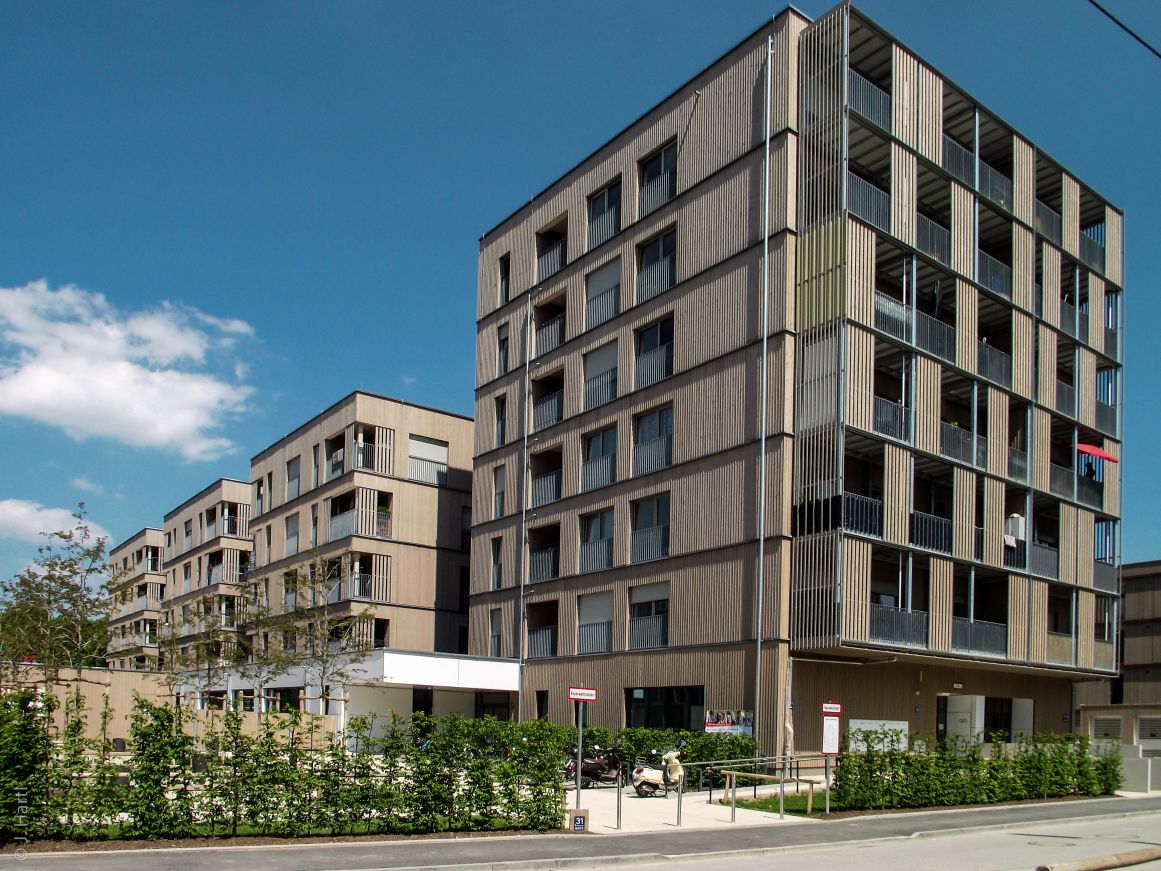
Behind the portfolio sits the connective tissue that makes it repeatable. The GdW federates the cooperatives and municipal landlords nationally; the Mietshäuser Syndikat provides the non-resale structure that lets small initiatives share legal and financial machinery; STATTBAU Berlin and the FORUM Gemeinschaftliches Wohnen develop and coordinate projects; and IBA27 in Stuttgart is curating the next decade's demonstrators for its 2027 international building exhibition. The pattern that Funding the Cooperative City documents across Europe — patient capital plus public land plus a federating body — is, in Germany, already institutional, in a way Denmark's almene sector and Switzerland's cooperatives would recognise.
What the 1889 Genossenschaftsgesetz set in motion, the post-2022 Bündnis institutionalises and these buildings demonstrate is a single proposition: that a country of tenants can keep a meaningful share of its homes permanently out of the speculative market, at cost rent, for over a century at a time. No European country holds that infrastructure at greater absolute scale — which is exactly why the question worth asking of Germany is not whether the model works, but how far it could still be stretched.
References
Statistics17Click on any number to see the source
Housing market
Tenure & affordability
Cooperative, social & public
Adaptive reuse & vacancy
Population & migration
From our library32
- Befristet, möbliert und teuer - Geschäftsmodelle am ‚Grauen Wohnungsmarkt‘ — Knowledge
- KOOPERATIVE GROSSSTADT eG — Organisation
- wagnis eG — Organisation
- Mietshäuser Syndikat — Organisation
- Purpose — Organisation
- STATTBAU Berlin — Organisation
- FORUM Gemeinschaftliches Wohnen — Organisation
- Forum für gemeinschaftliches Bauen und Wohnen e.V. — Organisation
- wohnbund e.V. — Organisation
- Genossenschaftsforum e. V. — Organisation
- Dachgenossenschaft Wohnen Berlin eG — Organisation
- eG21 - Institute for Cooperative Housing Future — Organisation
- Genossenschaftliche Projektentwicklung von Wohnraum-Commons — Knowledge
- Gemeinwohlorientierte Wohnungspolitik - eine Studie — Knowledge
- Who Owns the City? Analysis of Property Owner Groups and Their Business Practices on the Berlin Real Estate Market — Knowledge
- Macht der Immobilienkonzerne: Bei der Wohnungsfrage geht es um Demokratie — Knowledge
- Möckernkiez — Project
- Spreefeld — Project
- R50 — Project
- IBeB (Blumengroßmarkt) — Project
- Quartier WIR — Project
- Forum Kreuzberg — Project
- Haus der Statistik — Project
- CRCLR House — Project
- Gröninger Hof — Project
- wagnisART — Project
- Prinz Eugen Park — Project
- San Riemo — Project
- DomagkPark — Project
- Collegium Academicum — Project
- IBA27 in Stuttgart — Organisation
- Funding the Cooperative City: Community Finance and the Economy of Civic Spaces — Knowledge
Further sources20
- Genossenschaftsgesetz — gesetze-im-internet.de
- GdW — GdW
- GdW — Tag der Wohnungswirtschaft 2025 (Gedaschko) — GdW
- Bau-Turbo (§246e Baugesetzbuch) — Bundestag
- Ministerin Hubertz — Bau-Turbo in 100 Tagen — Bundestag
- Mietpreisbremse — Bundestag
- Wohngeld+ — BMWSB
- Bündnis für bezahlbares Wohnen — BMWSB
- Gebäudeenergiegesetz (GEG) — gesetze-im-internet.de
- Umweltbundesamt — Flächensparen — Umweltbundesamt
- Deutscher Mieterbund — Mietenreport 2025 (Siebenkotten) — Deutscher Mieterbund
- DIW Berlin — Mietbelastung (Wochenbericht 41/2024) — DIW Berlin
- bpb / Destatis — Sozialbericht 2024: Mieten und Wohnkosten — bpb
- Hans-Böckler-Stiftung — Mietbelastung Großstädte — Hans-Böckler-Stiftung
- Ipsos Housing Monitor 2025 (Deutschland) — Ipsos
- Immowelt — Mietbelastung Singles 2024 — Immowelt
- Haus & Grund — Haus & Grund
- taz — Berlin Vergesellschaftungsrahmengesetz (2025) — taz
- Verfassungsblog — DWE Vergesellschaftungsgesetz draft — Verfassungsblog
- Statistisches Bundesamt — Destatis