Loading...

🇦🇹Country profile
Austria
Austria houses more of its people in cost-rent cooperatives than almost any other country, yet finances them on costly private credit — can the surplus that builds them survive the squeeze?
Read the profile
Loading...
Austria made a choice most of its neighbours did not: it kept renting normal, and then it kept a large part of that rented stock priced at cost rather than at the market. The instrument is the Wohnungsgemeinnützigkeitsgesetz, the 1979 Limited-Profit Housing Act, which binds a whole class of landlords to cover their costs and no more. The result is a country where being a tenant is unremarkable and where a meaningful share of tenants pay rents the open market could never set. Housing here is therefore argued over less as a question of how to climb onto the ownership ladder and more as a question of how to keep the cost-rent floor intact under pressure.
The tenure mix carries that choice. Around 44.6% of Austrians rent rather than own, and 55.4% are owner-occupiers. Inside the rental base, 11.3% of all dwellings are cooperative — roughly 460,000 apartments across the cooperative members of the federation — and another 14.0% are public or non-profit rental, about 500,000 units, dominated by Vienna's municipal Gemeindebau. That leaves 19.3% in private rental. Cooperative and public rental together — the non-market segment — come to 25.3% of every home in the country, a share that few European states match outside the Netherlands.
The regulatory layer that holds it all together is the cost-rent rule itself. Both the cooperative and the public slices are let by gemeinnützige Bauvereinigungen — limited-profit housing associations — under the same statute, which fixes rents to cover land, construction, financing and upkeep, caps any surplus and forces it back into new building. Counting every limited-profit dwelling, cooperative and company-form alike, this regulated cost-rent stock reaches about 24% of all Austrian homes. It is an affordability covenant layered over the tenure split, not a separate tenure. Around 60% of households would qualify for it on income grounds — a far wider gate than the comparable English or French thresholds.
The rent ladder shows what the cost-rent floor is worth. Cooperative rents average €5.2 per square metre, Vienna's municipal Gemeindebau €5.8, the all-stock average €7.9, a newly-signed private contract €11.8, and a furnished or serviced let €17.5 all-in. A cost-rent cooperative flat runs at well under half of a fresh private contract — the structural reason the form is treated as housing infrastructure rather than heritage, and the gap the whole policy debate is built to defend.
Net monthly rent per m² by tier (national average; furnished is gross, all-in). The cost-rent cooperative floor sits at roughly two-fifths of a newly-signed private contract — the structural reason the limited-profit sector is treated as affordable-housing infrastructure, not nostalgia.
Empty space is tight rather than abundant. The rental vacancy rate sits at just 1.2%, and residential vacancy overall at 3.8% — much of it structural, in shrinking Alpine valleys rather than in Vienna or Graz. Office vacancy runs at 4.5%, about 1.17 million square metres of empty floor that conversion advocates eye for housing. Short-term lets are a smaller pressure than in the southern tourist capitals: across Austria's covered cities the full-time short-let count comes to at least 4,896 units, a lower-bound figure that nonetheless thins the long-term supply in the very districts where rents bite hardest.
On the demand side, Austria takes in about 196,000 people a year through migration against roughly 50,000 residential building permits, a gap that has widened since 2022 across a stock of 4.06 million dwellings. The capital absorbs the largest part of that inflow, and the cost-rent sector is the main thing standing between newcomers and the open-market rents.
The strain has not spared the cost-rent model itself. A combination of forces — the ECB refinancing rate climbing from 0% to 4.5% between mid-2022 and late 2023, construction costs up more than 20% since 2020, and the 2024–26 rent-break that caps even cost-rents at 5% a year — has squeezed exactly the limited-profit associations that fund roughly half of new development through bank loans. Where loan covenants set a construction-cost ceiling or a rent limit that can no longer be met, new building is set to slow, which threatens the floor the whole system rests on. The visible distress is real too: around 22,000 people are counted as homeless and roughly 11,000 court-ordered evictions run through the system each year, while the Momentum Institut and Statistik Austria track a rising cost burden among lower-income tenants. The Housing Europe survey of Austria and Vienna sets out the same diagnosis — a cost-rent system admired across Europe, now tested by financing and construction costs rather than by political will.
The Austrian cooperative is, in the catalogue's terms, a rental-aligned form. A member buys a Geschäftsanteil — a share worth a few thousand euros — and gains a secure, indefinite right to occupy a flat at cost rent. Some members rent from their cooperative; others hold their individual home outright; in both cases the cooperative manages the building, and residents pay a service charge for it. About 9.8% of Austrians live in a cooperative home on this basis. The defining feature is the Wohnungsgemeinnützigkeitsgesetz that governs them: it forces cost-recovery operation and reinvestment of any surplus into new affordable housing, which is why a cooperative built in the 1920s can still let a flat far below the market rate today.
The tradition runs unbroken from the late nineteenth century. Austria's oldest active cooperative dates to 1895, and the first limited-profit development company to 1907, both responses to the housing misery of the industrialising Habsburg cities. The cost-rent statute of 1979 codified what the sector had already practised for decades. The Housing Cooperatives in Europe - Resilience and Adaption to Changing Need survey of how European cooperative housing has weathered successive crises places Austria among the systems whose century of continuity is precisely what makes it resilient: nothing in the form ever allowed the asset to be repriced, so the affordability compounds across generations.
The present scale is large by any measure. The Housing Europe 2025 survey of the Austrian sector counts 97 housing cooperatives managing about 460,000 homes — roughly 320,000 for rent and 140,000 in individual ownership — so that more than one in ten Austrian households lives in a cooperative-managed home. Those cooperatives sit inside a wider limited-profit sector of 182 associations and nearly one million homes: the other 85 are company-form gemeinnützige Bauvereinigungen rather than cooperatives, but they answer to the same cost-rent statute. The average cooperative now manages about 4,700 homes, up from 1,500 in 1980, because the sector has added between 3,000 and 7,000 new homes a year for decades.
How the sector clusters today follows from that history rather than cutting against it. The bulk sits in the long-established federation members — large cooperatives and company-form associations like Sozialbau AG, Wien-Süd and the white-collar-union WBV-GPA — whose pressing problem is now the decarbonisation cost of ageing stock, not finding land. Alongside them a smaller but visible Baugruppen strand builds the cooperative form into deliberate co-housing: resident-initiated projects such as Wohnprojekt Wien and Gleis21 that win their plots through Vienna's Bauträgerwettbewerb developer competitions. A third, newer strand experiments with self-organised, low-cost models — the habiTAT syndicate behind Bikes and Rails locks buildings out of resale entirely — while research-and-coordination bodies like Habitat 2030 and the IBA Wien building exhibition connect the strands. What every cluster shares is the cost-rent rule that lets none of them cash out.
Governance and federation are unusually tight. Cooperative members are co-owners who vote in the annual general assembly and can write their own goals and obligations into the statutes, but the binding feature sits above the individual society: membership of the GBV (Österreichischer Verband gemeinnütziger Bauvereinigungen), the limited-profit federation, is mandatory for every non-profit association in the country, and the federation audits compliance with the cost-rent rules. That compulsory-membership design — unusual in Europe — is what the cooperative sector itself credits with keeping the statute enforced and the cost discipline real across more than a century.
GBV membership is mandatory for all non-profit housing associations in Austria — a structural feature that has held the cost-rent sector together for more than a century.The legal form deserves an honest accounting of its limits. Cost rent is not free rent: a cooperative flat still demands the upfront Geschäftsanteil, which can run to several thousand euros and screens out the poorest, and the indefinite tenancy works best for those already inside the sector. The Cost-based Social Rental Housing In Europe comparison of the Austrian, Danish and other cost-rent systems is candid that the Austrian model delivers breadth — a quarter of all homes priced below the market — rather than a residual safety net for the very poorest, and that the two jobs are not the same. The model's strength is its scale and its durability; its blind spot is the household that cannot raise the entry share at all.
Austrian housing policy in 2025 made one big move, and it is measurable. In December the Nationalrat passed the fifth inflation-relief rental law — the Mietpaket, or 5. MILG — the deepest tenancy reform since 2006. For the first time in the Second Republic the state reaches into the previously unregulated free-rent segment, where increases are now capped at full inflation up to 3% and only half of any excess beyond that. Regulated Altbau guide-rents are held to a 1% rise in 2026 and 2% in 2027 before the same formula applies from 2028, and the minimum lease term is extended from three to five years. The government estimates tenant savings of around €207 million in 2026 alone.
This rental package is a major breakthrough — for the first time the state is intervening in the previously unregulated free-rent segment, to relieve millions of tenants.Who pulls which lever runs across two levels, with the national level foregrounded for the first time in years. The Bund — the federal government — writes the tenancy framework, the Mietrechtsgesetz that the Mietpaket amends, and sets the cost-rent statute the whole limited-profit sector obeys. The Bundesländer, the nine states, run the Wohnbauförderung housing-subsidy programmes, set the construction and rent ceilings attached to their low-interest public loans, and decide where to channel land. Vienna sits in both roles at once — federal-state and municipality — which is why the capital can run both the country's largest Gemeindebau and its most ambitious Bauträgerwettbewerb land-allocation system. A federal rule only becomes an affordable flat once a Land has funded it and found the site.
For cooperatives specifically, the support is concrete and financial. The Wohnbauförderung routes low-interest public loans and the Annuitätenzuschuss interest subsidies to limited-profit construction. The tax-privileged Wohnbauanleihen — housing-construction convertible bonds running since 1993, around €23 billion issued and financing about every second limited-profit home — channel patient private money into the sector at below-market cost, and have grown more popular again since interest rates rose in 2023. Vienna's Bauträgerwettbewerb competitions allocate public land to the scheme judged best on quality, ecology and cost rather than on the highest bid, routing sites to cooperatives at sub-market terms. The Report of the HOUS mission to Vienna, Austria — a European Parliament committee's on-the-ground study of the Vienna model — sets out how these instruments lock affordability through subsidy, land policy and the cost-rent statute together.
Sustainability now sets the sector's other clock. A bit more than a third — 37% — of limited-profit homes still rely on fossil heating, mainly gas, and the sector has committed to converting all of it to district heat, heat pumps and renewables by 2040. The national renovation rate of about 1.5% a year is far below what that target needs. A second sustainability lever is the reuse of existing buildings and infrastructure, which several Bundesländer subsidy regimes now support or require in order to strengthen town centres and avoid sprawl, especially in rural areas. Both goals point cooperatives toward retrofit and adaptive reuse rather than greenfield expansion — at exactly the moment financing for new building is hardest.
The unresolved argument is the cost-rent dilemma at the heart of the 2025 reform. The tenant-protection camp, led by Vice-Chancellor Andreas Babler of the SPÖ, treats the Mietpaket's rent caps as overdue relief — a way to stop free-market rents detaching from incomes, and a defence of the affordability the cost-rent sector was built to provide. The limited-profit sector itself, speaking through the GBV federation, agrees the caps protect tenants but warns of a paradox the camps do not resolve: because its rents are already cost-based rather than market-based, a 5% rent-break does not skim excess profit — there is none — but cuts directly into the surplus the sector reinvests in new construction and decarbonisation. Both sides want the cost-rent floor to survive; they disagree over whether capping it protects it or starves it. That tension, not a left-right fight over whether to build, is the live question behind every instrument above.
Austria's oldest still-active housing cooperative is established; the first limited-profit development company follows in 1907 — the roots of a sector that now houses more than one in ten Austrians.
The Limited-Profit Housing Act codifies the cost-rent principle: gemeinnützige Bauvereinigungen must charge rents that only cover land, construction, financing, administration and maintenance, and must reinvest surpluses into new affordable housing.
Tax-privileged Wohnbauanleihen launch; over thirty years roughly €23 billion is issued, financing about every second home built by the limited-profit sector.
By end-2018 some 98 cooperatives manage about 425,000 units — 9% of national stock and 15% of multi-family housing; the federation now counts the cooperatives within a 182-association limited-profit sector of nearly one million homes.
The ECB refinancing rate climbs from 0% to 4.5% between July 2022 and September 2023, and construction costs rise more than 20% since 2020 — squeezing a sector that finances roughly half of new development through bank loans.
The government caps rent increases at a maximum of 5% per year for 2024–2026 to dampen inflation — but, given cost-rent operation, the cap also reduces the funds limited-profit landlords have for new construction and renovation.
In December 2025 the Nationalrat passes the fifth inflation-relief rental law — the deepest reform since 2006. For the first time the state caps increases in the previously free-rent segment (3% pass-through, then half of the excess), holds Altbau guide-rents to +1% in 2026 and +2% in 2027, and extends minimum lease terms to five years.
From April 2028 the general "3% plus half of the excess" formula applies across the regulated Altbau segment too — the point at which the staged 2025 reform reaches full effect.
The limited-profit sector commits to converting all fossil-based heating — gas still serves a bit more than a third (37%) of its homes — to district heat, heat pumps and renewables by 2040, the climate horizon the next decade of cooperative investment is built around.
From the oldest active cooperative (1895) and the 1979 Limited-Profit Housing Act through the 2024–26 rent-break and the 2025 Mietpaket to the 2028 full inflation-cap formula and the sector's 2040 decarbonisation target.
The most persuasive case for the Austrian model is not the statute but the addresses. Vienna is the obvious stage — it runs the largest municipal estate in Europe and the most developed land-allocation system on the continent — but the cooperative and limited-profit form shows up at every scale, from a single converted factory to a 240-hectare new district.
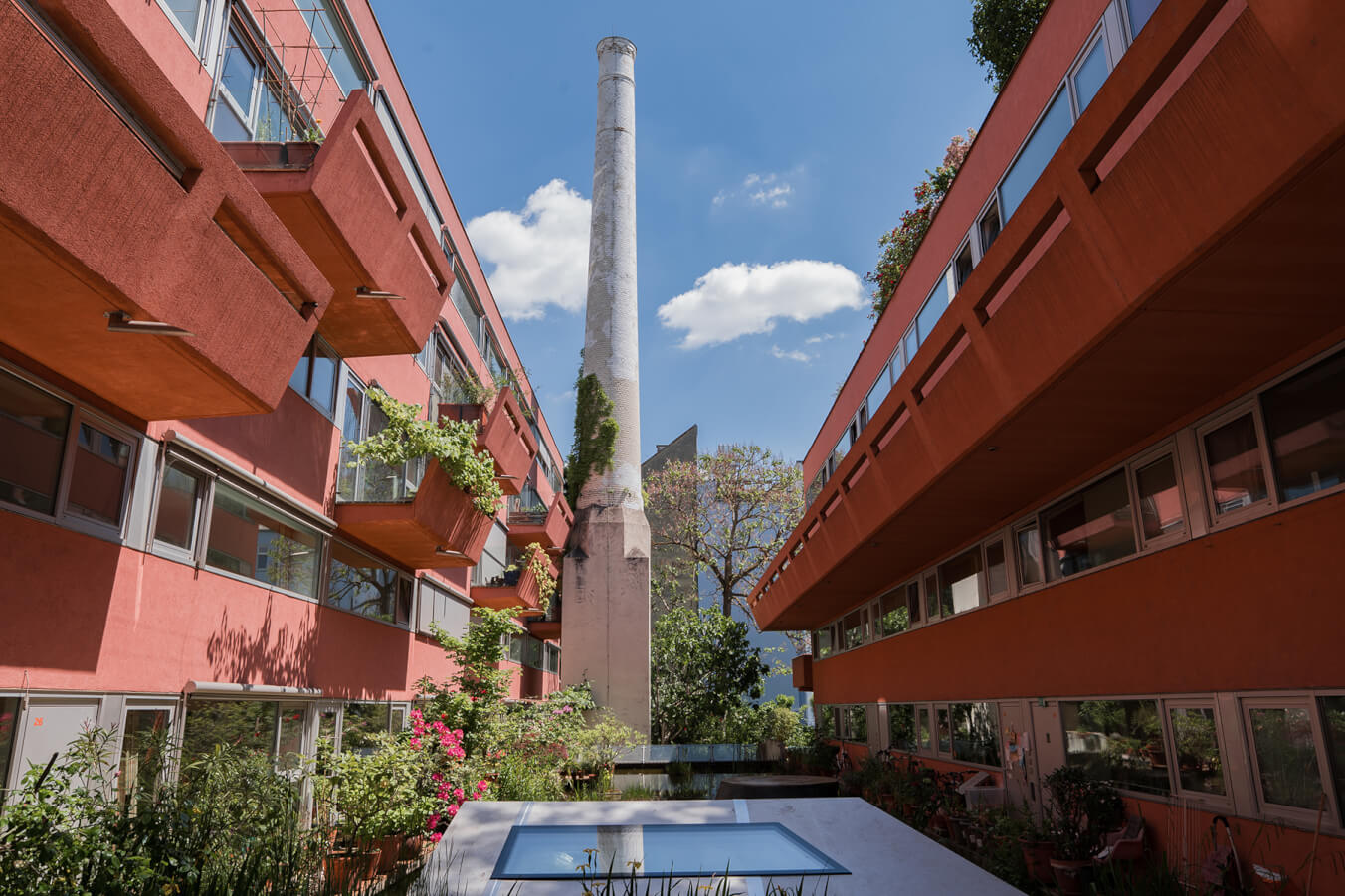
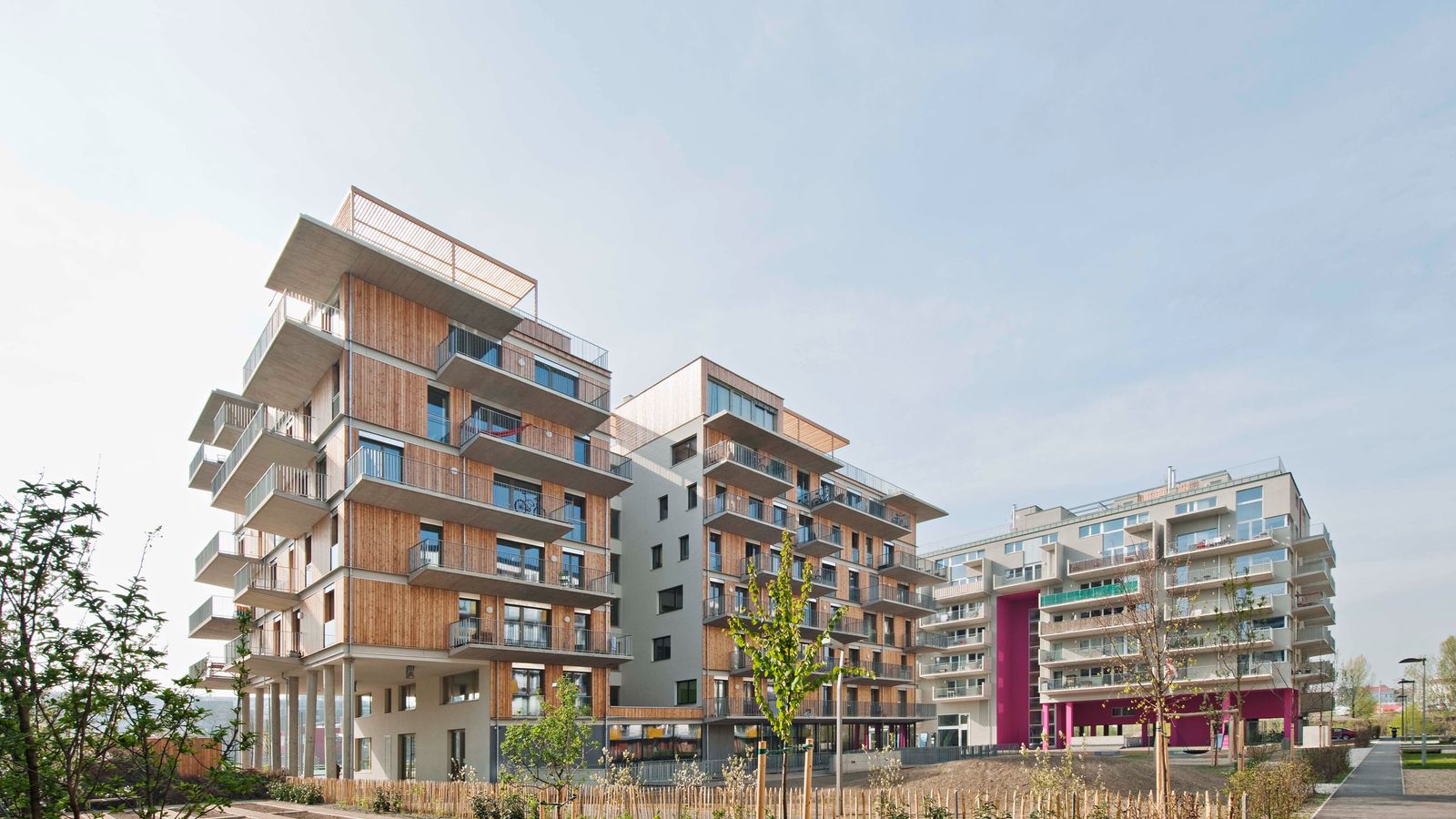
The Sargfabrik in Vienna's fourteenth district remains the reference point: a former coffin factory turned into a 1990s co-housing landmark of 73 flats with a shared bathhouse, a restaurant and a cultural stage open to the neighbourhood, the project that proved resident-led cooperative building could work in Austria. Wohnprojekt Wien on the Nordbahnhof brownfield carried the idea into the 2010s — a deliberately self-governed cooperative block organised around shared kitchens, workshops and a sociocratic decision-making model. Gleis21, in the Sonnwendviertel beside the new central station, built the same ethos as a wood-hybrid near-zero-energy house with a solidarity fund for residents in distress.
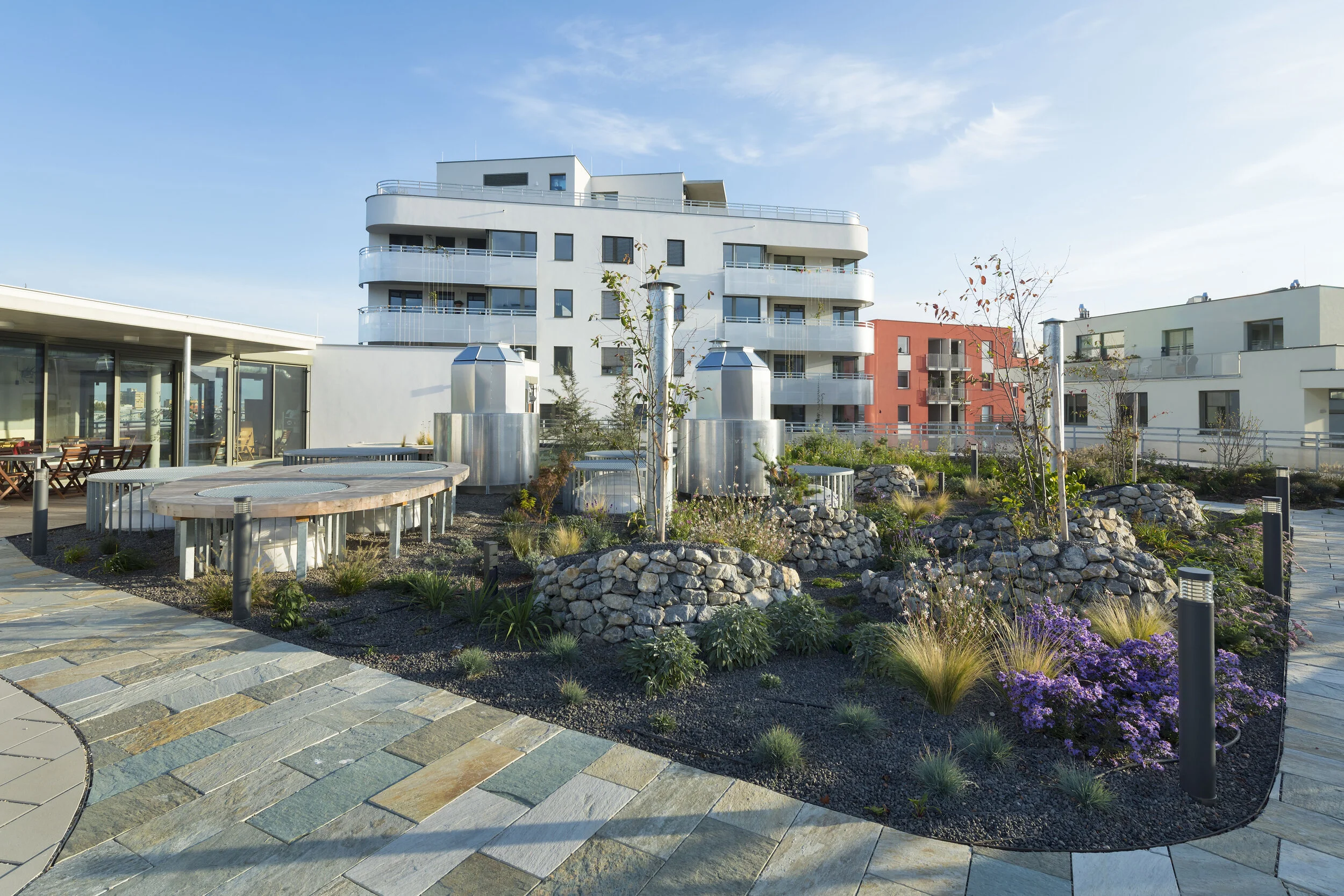
Bikes and Rails, on the same Nordbahnhof brownfield, folds a mobility-cooperative governance model into the building under the habiTAT non-resale syndicate — a deliberate test of fusing the transport-cooperative and housing-cooperative legal forms. Die Hauswirtschaft and MGG22 push the ecological and social-mix agenda in the same generation of Vienna projects, while SchloR Schöner leben… experiments with low-cost, self-built living on an interim site. Each is small, and each is a working argument that the cost-rent statute can carry genuine experimentation rather than only volume.
Scale is what Vienna adds. aspern Seestadt, the lakeside new district on a former airfield, is one of Europe's largest urban-development sites — tens of thousands of residents on land allocated overwhelmingly to limited-profit and cooperative developers through Bauträgerwettbewerb competitions, with Wohnen im Grünen Markt among its cooperative-tendered components. Here the cost-rent form stops being a single building and becomes city-making: a whole quarter delivered below market rent because the land was steered, not auctioned.
Behind the buildings sits the connective tissue that makes them repeatable. The GBV federates and audits every limited-profit association; the einszueins architecture practice and the Cooperative City Magazine document and spread the project models; and the IBA Wien building exhibition curates the next decade of demonstrators. The pattern that Funding the Cooperative City traces across Europe — patient capital plus steered public land plus a federating body — is, in Austria, already the default rather than the exception, which is why the country is studied as much for its plumbing as for its showpieces.
What the 1895 founders began, the 1979 cost-rent statute codified and these buildings demonstrate is a single proposition: that a high-rental country can hold a quarter of its homes permanently out of the speculative market, at cost, for over a century at a time. The open question Austria now faces is not whether the model works — a fifth of Europe studies it because it plainly does — but whether the cost-rent surplus can survive a decade of dear money and a rent-break that caps the very rents the surplus depends on.