
A city that bought its homes
Zaragoza sits on the Ebro, almost exactly halfway between Madrid and Barcelona. The Romans founded it as Caesaraugusta, and today nearly 693,091 people live there. It is a city of car plants, logistics parks and a large university. For decades a steady wage here could buy a flat, and the housing stock still carries that promise.
Ownership is the default tenure. About 80% of households own the home they live in, and 17% rent. The city's own landlord, Zaragoza Vivienda, the municipal housing company, holds just 0.6% of the stock, some 1,988 flats. No cooperative-rental share appears in the figures yet. Private landlords let the other 16.4%, so the whole non-market tier comes to 0.6%. The remaining 3% of homes fall outside the owner and renter categories, the space Spain's census leaves for homes lent free of charge or held on other terms.
- Owners
- Owner-occupier80.0%
- Renters
- Public & non-profit rental0.60%
- Cooperative0.00%
- Private rental16.4%
- Unclassified3.0%
- Unknown / Other3.0%
In Spain, social housing is a rule attached to a home, not a kind of landlord. A vivienda protegida (a protected home) has a capped price or rent and an income limit for whoever lives there. The rule lasts for a set protection period, and much of it was attached to flats sold to their occupants. A national proxy suggests about 1.5% of Zaragoza's dwellings still carry it, spread across the municipal stock and owner-occupied protected flats. Yet roughly 30% of households earn little enough to qualify.
Rents climb in clear steps. Municipal tenants pay a base of €4 per square metre, often less once income support is counted. The median across the whole rented stock is €7.40, according to the housing ministry's rent index. A new private lease asks around €10.60, and a furnished or serviced flat with bills included about €12.20 gross. By Spanish big-city standards the ladder is short. Still, a fresh lease costs more than two and a half times the municipal rate.
- Public/municipal housing
- All-stock median
- New contracts
- Furnished / serviced (gross)
Monthly rent per square metre by tier (furnished is gross, all-in). The municipal base rent sits far below the market; a new private lease costs more than two and a half times the municipal rate.
Empty homes exist, but they are not a hidden reservoir. The 2021 census counted about 4.6% of dwellings unoccupied, some 15,638 homes out of roughly 360,000. Many are old, small or awaiting inheritance and repair. Offices hold less slack than in Madrid: a national estimate scaled to the city suggests around 88,718 square metres of empty office floor, or 11.8% of the stock. Holiday letting weighs far less here than on the coast.
Supply is where both the city and the region now put their effort. Together they have 3,438 affordable rental flats in preparation across twelve districts, a large number next to a municipal stock of under 1,988. Buying remains within reach for many: a flat sells for around €1,672 per square metre, well below Madrid or Barcelona. The rental side is where the strain shows.
Young adults feel it first. Both the city's and the region's new rental schemes are aimed at people under 40, a sign of who is being shut out. Teresa Lajusticia of the Sindicato de Inquilinas de Zaragoza, the city's tenants' union, says rents have risen by about 80% in ten years. She adds that many tenants now spend more than half their salary on rent. That is no longer a problem only for the poorest. Across Spain, 41.3% of people named housing as the country's main problem in April 2026, the top answer in the CIS, the state polling institute. Against that pressure, the cooperative idea is coming back to Zaragoza in a new shape.
Because of its characteristics, not being on the coast and not being a big city like Madrid or Barcelona, Zaragoza had been somewhat less under pressure until now.Cooperatives that built to sell, and one that builds to stay
For most of the last century a Spanish housing cooperative was a way to buy. Members pooled their savings and the cooperative acted as developer. Once the flats were finished, each member took the title and the cooperative dissolved. The newer form is the cesión de uso (grant of use). Here the cooperative keeps the building for good, and members hold a long, secure right to live in it. They pay a monthly fee instead of a mortgage, and nothing can be resold, so the home never returns to the market.
Zaragoza used the first form at scale. From 2001 the city and the Aragonese government turned the old Valdespartera barracks into an eco-district of 9,687 homes, 96.9% of them protected. Housing cooperatives were among the bidders for its plots and helped allocate homes by lottery. The district housed tens of thousands of people at controlled prices. But most homes were sold, so their affordability lasted only as long as their protection period. The grant-of-use model arrived later and haltingly. A 2018 municipal pilot for cooperative homes under a grant of use drew too little interest and became a conventional block of 64 protected flats, as a study of socially oriented cooperative housing in Spain records.
Today three groups are active, and they face different problems. The ownership cooperative survives as a familiar vehicle for protected homes for sale; it needs cheap land and mortgage credit, and its homes leave the non-market tier once sold. The second group is Torrecillas Azucarera, an Aragonese cooperative building 23 grant-of-use homes in the Rabal district. Its obstacle is capital: the members' cooperative is paying 71.47% of the cost, some €2.1 million, with EU funds covering the rest. The third group is senior cohousing, which regional and local authorities have begun to support, the same study notes. Its members struggle to find land and lenders who understand collective ownership.
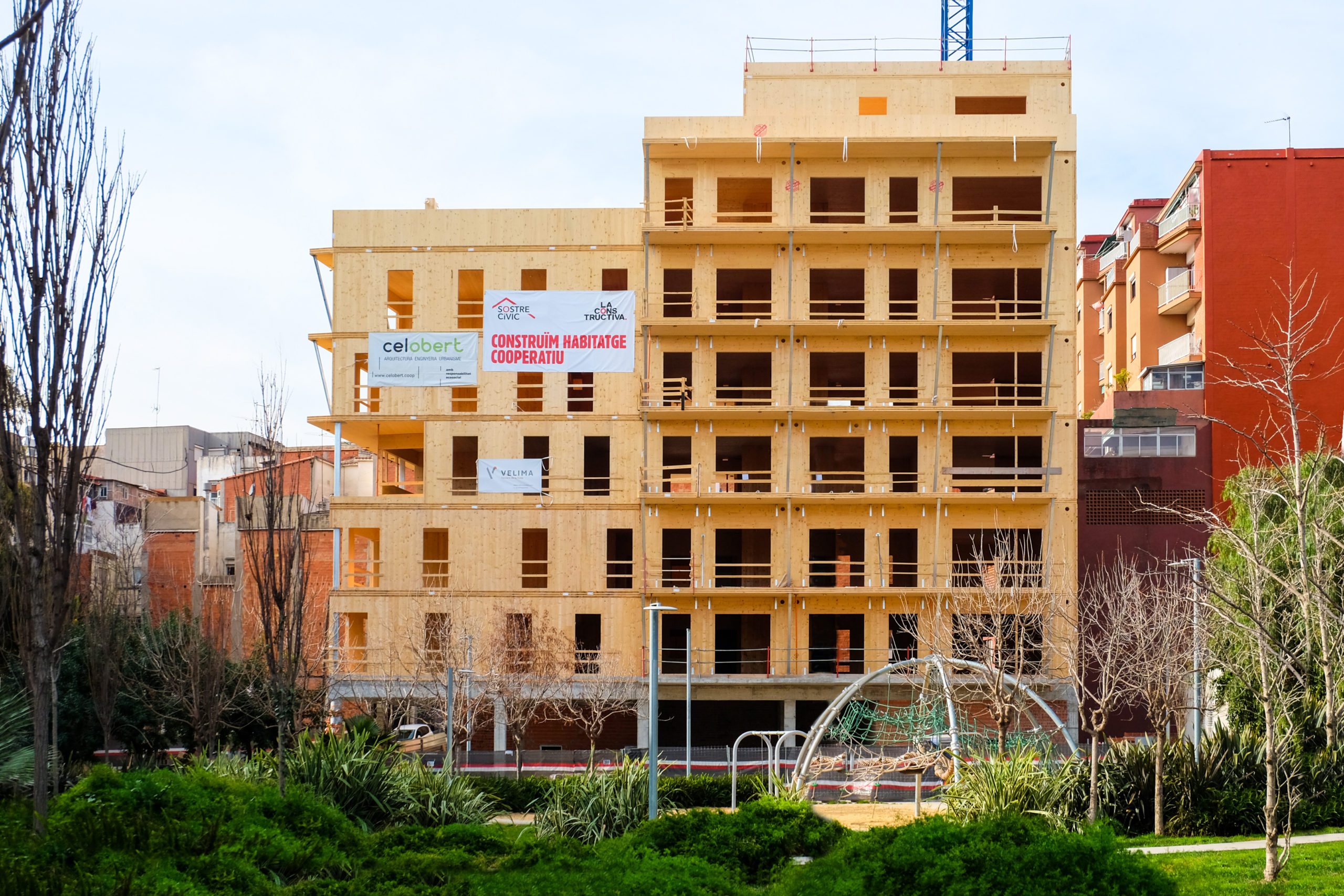
For finance and know-how, Zaragoza's newcomers look east. In Catalonia, federations such as Sostre Civic, technical advisers at La Dinamo Fundació and ethical lenders such as Coop57 and Fiare Banca Etica have made grant-of-use building routine, with La Borda in Barcelona the best-known result. A review of international policies to promote cooperative housing lists the public levers that made it possible: land on long leases, soft loans and guarantees. Zaragoza has started to use the first of these. In its housing plans the cooperative is one bidder among several for leased public land, not yet a programme of its own.

Leased land, lotteries and a fight over rent caps
Natalia Chueca of the centre-right People's Party has been mayor since June 2023, and calls housing the social pillar of her government. Her main tool is public land leased to private builders. The first 384 flats, in 11 buildings, used €15.5 million of EU recovery funds and are built on a derecho de superficie (a surface right, a long lease of public land) of 50 years, extendable to 75. Rents run around €7 per square metre and are capped at 30% of household income. The first 78 were allocated by public lottery in summer 2026.
Each level of government holds a different lever. The state sets the legal frame through Law 12/2023, the right-to-housing law, which lets regions declare zonas tensionadas (stressed-market zones) where rents can be capped. Its 2026-2030 housing plan adds €7 billion, 60% from the state and 40% from the regions. The Aragonese government under Jorge Azcón, Chueca's predecessor as mayor, re-elected in April 2026 with Vox, runs Plan Aragón Más Vivienda. It plans 2,784 affordable rental flats in the city at €300 to €500 a month, largely on land the council provides. The city itself runs Zaragoza Vivienda, which manages 2,640 homes, including 685 private flats let through its Alquila Zaragoza scheme for owners.
Cooperatives enter through the same door as private builders. The surface-right leases are open to them, and Torrecillas Azucarera is so far the only cooperative among the city's projects. When its 75-year term ends, the building returns to the council. The state plan pushes in the same direction, promising that homes it funds stay protected permanently rather than for a set period. For a grant-of-use cooperative, that rule fits naturally: its homes were never meant to be sold.
The city's answer to its empty homes is concentrated in the old town. The Zamoray-Pignatelli plan will create 125 public homes in the historic centre for €29.1 million, buying or expropriating vacant lots and unused buildings. Zaragoza Vivienda has also bought flats from banks, and the Alquila Zaragoza scheme pays incentives to owners who let empty flats at an affordable rent. Aragón's housing minister, Octavio López, has asked the state for its vacant land in the city to build around 2,000 more public homes.
Retrofit is the climate side of the same programme. In 2022 the European Commission chose Zaragoza as one of 100 cities aiming for climate neutrality by 2030. For 2026 and 2027 the council has set aside €8 million for home rehabilitation, €4.25 million of it for energy efficiency. Since 2019 more than 10,668 homes have received rehabilitation aid. Research on the just transition in building records Zaragoza's mayor presenting that progress as a mission city. A 2026 study of the EU's coming carbon price on heating fuels models its cost region by region, Zaragoza included, and warns that the poorest households will feel it most.

- Nov 2001[source]
Valdespartera agreed
The city and the Aragonese government agree to turn former military land in the south of Zaragoza into a bioclimatic district of 9,687 homes, 96.9% of them protected.
- 2008[source]
Expo on water
Zaragoza hosts the international exposition on water and sustainable development in a meander of the Ebro, a regeneration project that reshaped the riverbanks.
- 2018
Grant-of-use pilot stalls
A municipal attempt to build cooperative homes under a grant of use draws too little response and is turned into a conventional block of protected flats.
- Apr 2022[source]
Mission city
The European Commission selects Zaragoza as one of 100 cities aiming for climate neutrality by 2030, tying building retrofit to the city’s climate plan.
- May 2023[source]
Right-to-housing law
Spain passes Law 12/2023, its first national housing law, letting regions declare stressed-market zones with rent caps. Weeks later Natalia Chueca (PP) becomes mayor.
- Apr 2026[source]
State housing plan
Madrid approves the 2026-2030 state housing plan, worth €7 billion, financed 60% by the state and 40% by the regions.
- Jun 2026[source]
First lottery, first cooperative
The city opens the lottery for the first 78 of 384 EU-funded rental flats, and the Torrecillas Azucarera grant-of-use cooperative prepares to move in.
- Sep 2026[source]
Rent-cap refusal in court
The central government’s delegation in Aragón appeals to the regional high court against the Aragonese government’s refusal to process any request to declare a stressed-market zone.
- 2029[source]
Parque Goya youth homes due
The regional government’s 543 rental homes for 18- to 39-year-olds in Parque Goya are due for completion in the first half of 2029, under a 75-year concession.
- 2030[source]
Climate-neutrality target
The horizon of Zaragoza’s EU mission commitment, against which its rehabilitation grants and new-build standards are measured.
From an eco-district of protected homes built for sale to a rental pipeline on leased public land, a first grant-of-use cooperative, and a legal fight over rent caps.
The sharpest argument is about rent caps. The Aragonese government has refused to process any request to declare a stressed-market zone, citing Catalan evidence that caps shrink the rental supply. On 18 September 2026 Fernando Beltrán, the central government's delegate in Aragón, took that refusal to the regional high court, calling it a legal and political aberration. The tenants' union sees the council's flagship flats differently from the mayor. Its spokesperson Teresa Lajusticia says they are presented as affordable but are very small homes with rents of €450 to €500. In May 2026 around 1,500 people marched through the centre behind the banner “End the housing business”. The finished and half-built blocks are where that argument can be tested.
Housing policy has become the social pillar of my government.From Valdespartera to La Azucarera
Valdespartera is still Zaragoza's reference point, twenty years on. Planned on bioclimatic principles from the start, it oriented streets for sun, insulated to a higher standard and collected waste by pneumatic pipes. It proved the city could build protected housing at a scale few Spanish cities matched. Its limit was the tenure. Almost every home was sold, and as protection periods run out those flats can move to market prices. The district shows what Zaragoza can build, and why ownership alone does not keep a home affordable.
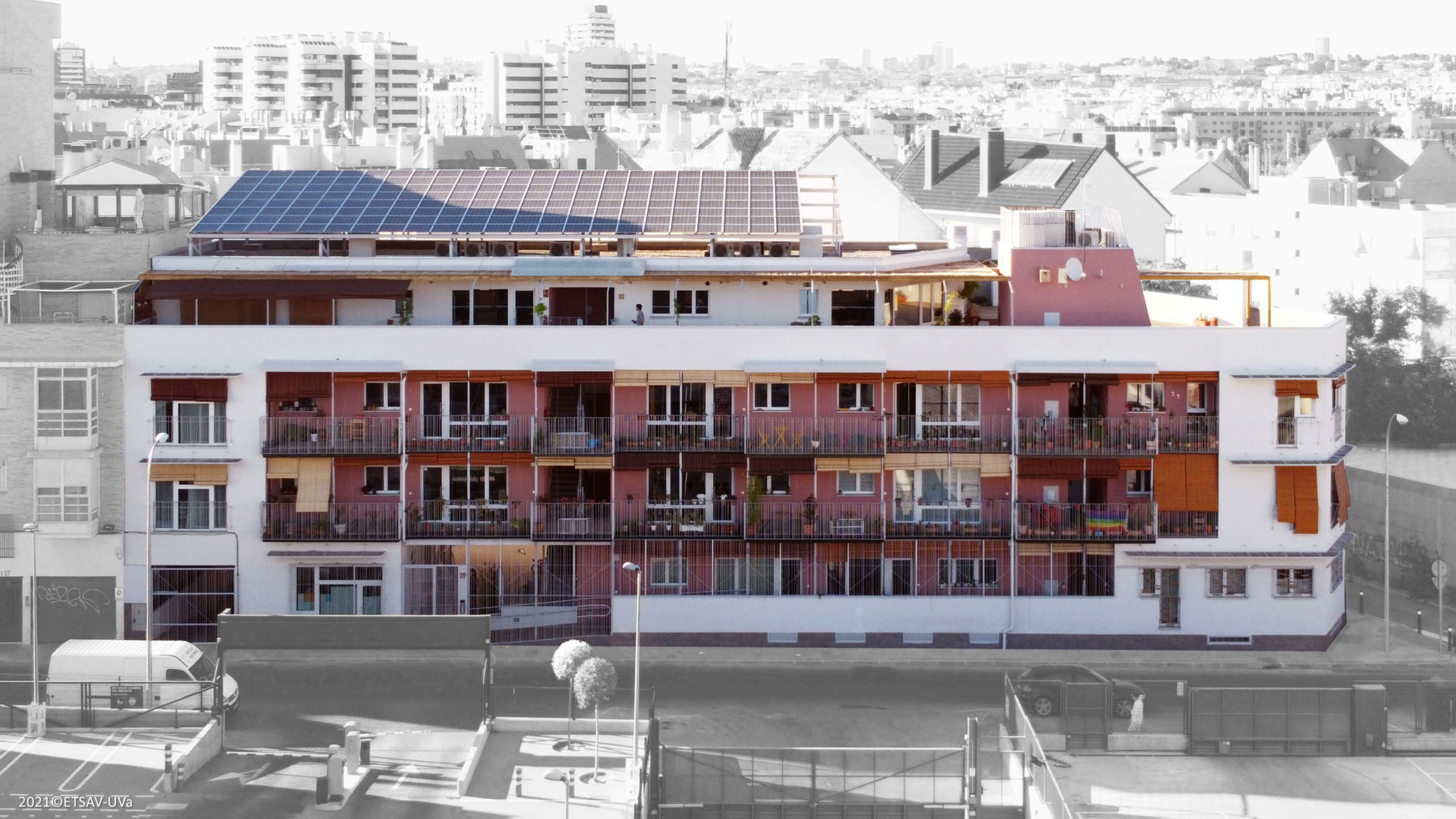
Torrecillas Azucarera is the other end of the scale. The cooperative's 23 homes on Camino de Torrecillas, in the Rabal district, range from about 49 to 81 square metres. The maximum rent is €4 per square metre, so monthly fees run from €341 to €566. Members hold a 75-year right of use, after which the building reverts to the city. It is Zaragoza's first grant-of-use cooperative, and a very small one. Its members carry most of the cost themselves, which is exactly the hurdle that keeps the model rare.
The council's 384 EU-funded flats are the largest recent public delivery. They sit in eleven buildings across San José, Las Fuentes, the Rabal and Valdefierro, and are let by lottery. Rents are held to 30% of income, a rule that protects low earners better than any fixed price. The friction lies in size and speed. The tenants' union calls the flats too small for the rent, and the scheme depended on a one-off EU recovery fund that ends in 2026.
Parque Goya will host the region's largest youth rental project in decades. The Aragonese government has awarded 543 homes for people aged 18 to 39 to a joint venture of Metropolitan House BCN and Genivs Insulae, which will build and run them for 75 years before they return to public hands. It shows how far public-private concessions can stretch a small public budget. It also shows their cost in time: building starts in 2027 and the keys arrive in 2029.
Pignatelli 43 is the old-town plan in miniature. The building was occupied, damaged by fire in 2023 and then expropriated by the city. Zaragoza Vivienda is now rebuilding it as 10 affordable rental flats with a shared ground floor and solar panels, for about €1.3 million. Each such building takes years of legal and technical work. That slowness is why the Zamoray-Pignatelli plan counts its gains ten flats at a time.
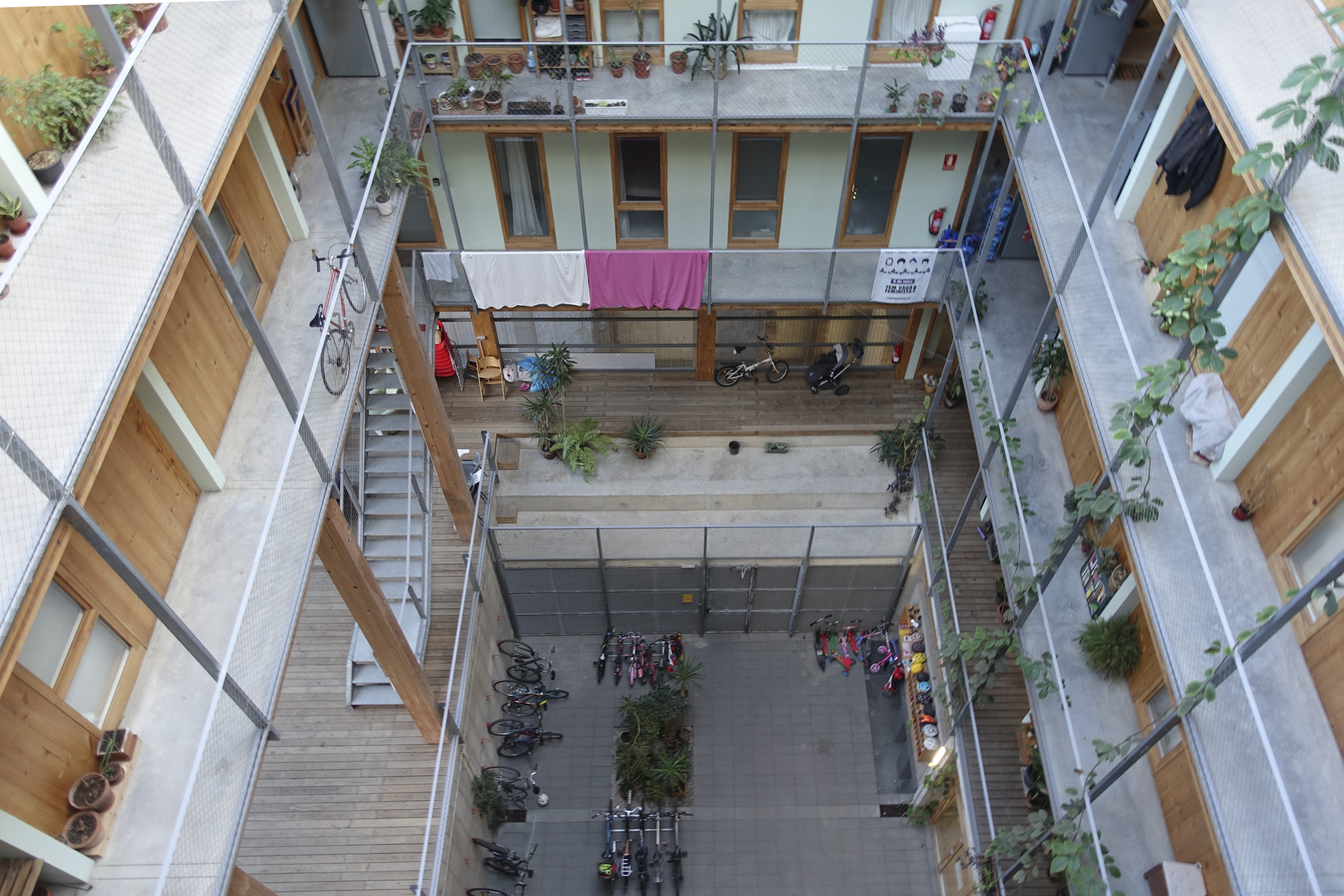
Zaragoza Vivienda holds this programme together, from rent collection to rebuilding and social support for about 6,000 residents. Beyond the city, the cooperatives Zaragoza could learn from are close at hand. Entrepatios built Las Carolinas in Madrid on a grant of use financed by ethical banks, and Barcelona's La Borda showed the model at a larger scale. A Eurocities review of how European cities are tackling the housing crisis, and an EU advisory committee's report on affordable sustainable housing, both point the same way: public land kept public, and patient finance. Zaragoza has the land and the lottery. The patient finance is still missing.
References
Statistics9Click on any number to see the source
Housing market
Tenure & affordability
Adaptive reuse & vacancy
Population & migration
From our library12
- Socially oriented cooperative housing as alternative to housing speculation — Knowledge
- Sostre Civic — Organisation
- La Dinamo Fundació — Organisation
- Coop57 — Organisation
- La Borda — Project
- International policies to promote cooperative housing — Knowledge
- Perceptions of a just transition in the built environment: Research Report — Knowledge
- Heating Up Inequality? Socio-spatial impacts of ETS2 on European housing and cohesion — Knowledge
- Entrepatios — Organisation
- Las Carolinas — Project
- Cities addressing the housing crisis: Innovative and integrated approaches — Knowledge
- Affordable Sustainable Housing in the EU — Knowledge
Further sources18
- 384 affordable rental flats and first lottery (June 2026) — Ayuntamiento de Zaragoza
- 600 more affordable rental flats; Torrecillas cooperative; Zamoray-Pignatelli (April 2026) — Ayuntamiento de Zaragoza
- Zaragoza Vivienda public rental park — 2,640 homes (July 2026) — Ayuntamiento de Zaragoza
- Zaragoza Vivienda — Sociedad Municipal Zaragoza Vivienda
- Ley 12/2023, por el derecho a la vivienda — BOE
- Plan Estatal de Vivienda 2026-2030 approved — La Moncloa
- Delegación del Gobierno appeals Aragón’s refusal to declare stressed zones — elDiario.es
- Sindicato de Inquilinas de Zaragoza interview (Paula Ríos, Teresa Lajusticia) — elDiario.es
- Housing march through central Zaragoza (May 2026) — Arainfo
- CIS barometer April 2026 — housing as main problem — CIS
- Octavio López asks the state for land for public housing — Gobierno de Aragón
- Aragón awards 543 youth rental homes in Parque Goya — Moncloa.com
- La EcoCiudad de Valdespartera — Construible
- Ecociudad Valdespartera — good-practice record — Ciudades para un Futuro más Sostenible (UPM)
- Torrecillas Azucarera — 23 grant-of-use homes — Obras Especiales
- Pignatelli 43 — 10 affordable rental flats — Hoy Aragón
- Zaragoza selected as an EU climate-neutral mission city — Ayuntamiento de Zaragoza
- €8 million rehabilitation aid 2026-2027 — Ayuntamiento de Zaragoza