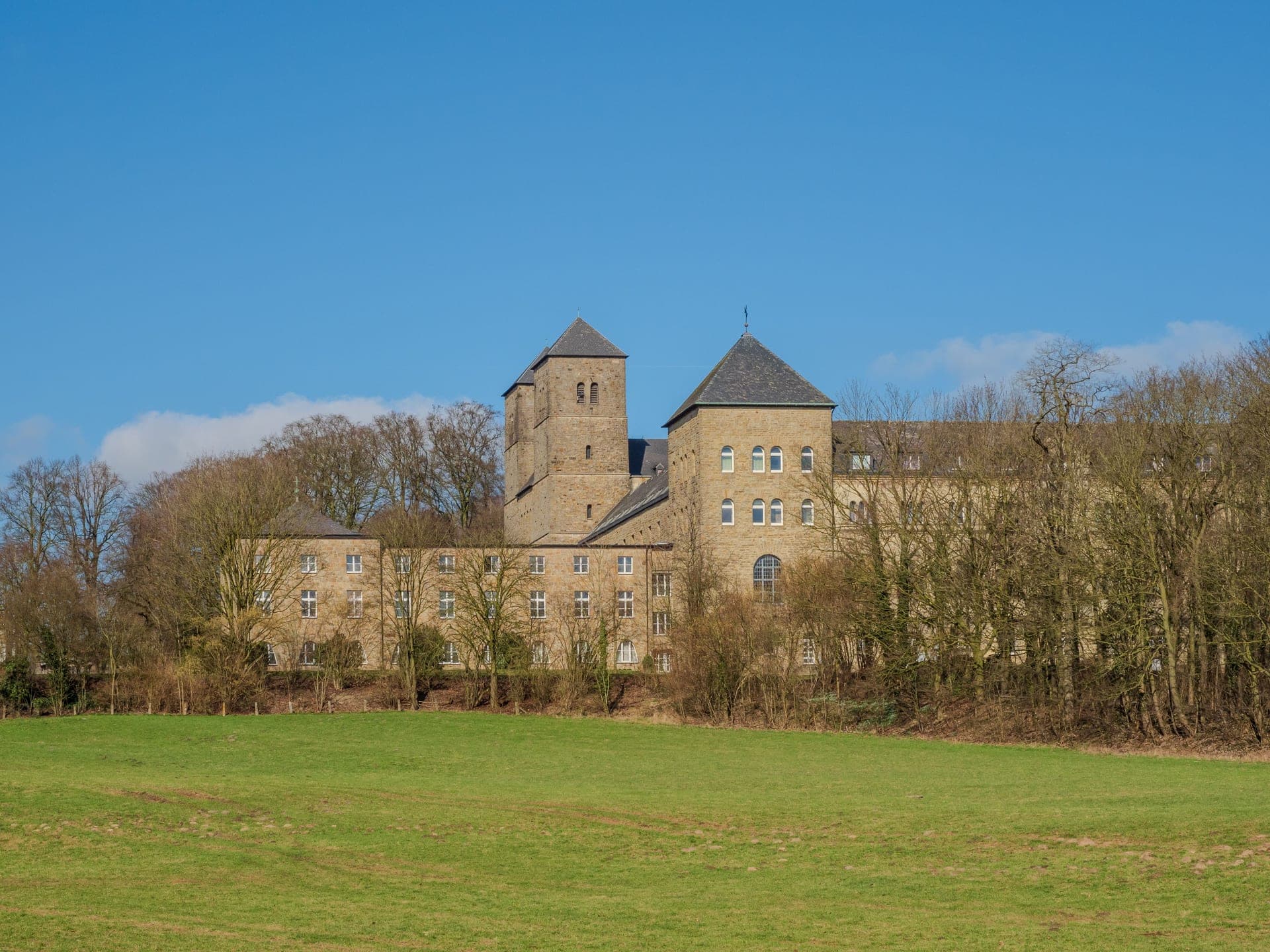
Growing again, on a thin non-market base
A century ago Mönchengladbach called itself the rheinisches Manchester (the Rhenish Manchester). Around 650 textile firms employed 55,000 people, and the workers they drew in needed somewhere to live. The mills are gone, but the city is growing again, partly on people leaving Düsseldorf's rents behind. How it houses them is now the city's defining question.
The tenure pattern still reads like a working town. About 38% of households own their home and 62% rent. Almost all renters deal with private landlords, since close to six in ten of the city's homes are let on the open market. The public share is small: WohnBau Mönchengladbach, the city-owned housing company, manages about 4,500 homes out of 141,000. The cooperative share is smaller still. GeWoGe 1897, the city's only housing cooperative, holds 1,172 flats, well under 1% of the stock.
- Owners
- Owner-occupier38.0%
- Renters
- Public & non-profit rental4.5%
- Cooperative6.0%
- Private rental51.5%
Social housing here is a set of rules, not a landlord. About 4.3% of dwellings carry a Sozialbindung, a time-limited cap on rent and tenant income that comes with state housing loans. The layer runs across WohnBau's stock and private buildings alike, so it is not a slice of its own. It is also shrinking. The city's subsidised rental stock fell to 6,082 homes in 2024, 26.7% fewer than in 2015. NRW.BANK (the state development bank) projects that it could fall to around 2,400 by 2035 without new building.
Rents climb steeply from that floor. WohnBau and other public landlords charge about €6.00/m². The Mietspiegel 2026 (the local rent index) sets a standard value of €7.01/m², although it is not a qualifizierter Mietspiegel (a court-grade index built to scientific standards). Asking rents reached €9.91/m² in early 2026, 65.4% more than in 2016. Advertised new lets now average €10.28/m². Heating bills add their own strain. Households on district heating saw running costs rise 33.6% in 2024.
- Public/municipal housing
- Rent index standard value (Mietspiegel 2026)
- Asking rents, median (early 2026)
- New contracts
- Furnished / serviced (gross)
From the public landlords' average to advertised new lets. The furnished tier is an EHC estimate and includes utilities and furniture.
There are empty homes, but few that anyone can rent. Zensus 2022 counted 4.5% of dwellings standing empty and 3.5% available to let. The city's own electricity-meter count put the market-ready vacancy at 3.1% in January 2025, barely enough for people to move. Office space is tighter than on the Rhine. Office vacancy fell from 4.9% in 2020 to 3.6%, against 10.5% in Düsseldorf, so conversion is a smaller lever here than in the big office cities. The vacancy that matters is a few landmark buildings, above all the empty Haus Westland tower by the Hauptbahnhof.
People keep arriving. The city's population rose to 276,340 at the end of 2024, with net migration of 2,526 that year and the largest single inflow from Düsseldorf. Building fell sharply at first: only 263 homes were completed in 2024. Then it rebounded. 758 homes were finished in 2025, the third-highest rate among North Rhine-Westphalia's 22 district-free cities, and 451 homes were permitted. Because Mönchengladbach is not covered by the state's tenant-protection ordinance, none of those new lets falls under a rent brake.
The pressure falls unevenly. A Hans-Böckler-Stiftung comparison of 77 large cities found the median household paying 27.1% of net income on rent, with 12.3% paying 40% or more. That was a moderate burden by German standards, but it was measured in 2014, before a decade of rising asking rents. Today the strain reaches working households too. A DGB union analysis of local rents argues that sales staff and train conductors can hardly afford them. At the sharp end, 1,995 households joined the waiting list for a subsidised flat in 2024 and 221 homeless people were recorded in 2025. Geography sharpens the divide. Coverage of the 2025 social report found 23.1% of Rheydt's residents relying on the basic income benefit, against 2.7% in suburban Hehn.
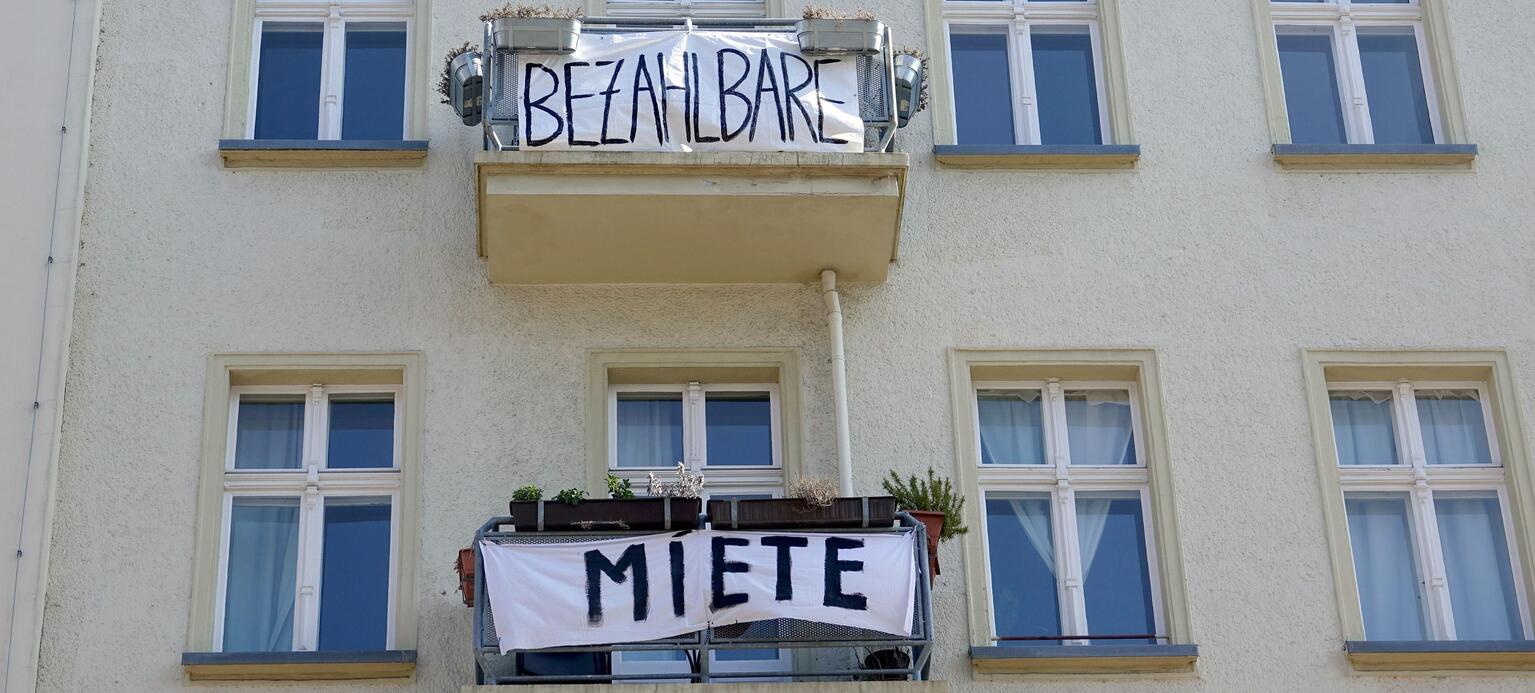
Against that backdrop the cooperative sector is almost invisible, a single Genossenschaft with little more than a thousand flats in a city of more than a quarter of a million people.
One cooperative, since 1897
Mönchengladbach's cooperative housing is the classic German rental model, in one institution. GeWoGe 1897 is a Wohnungsbaugenossenschaft (a member-owned housing cooperative) whose tenants are also its owners. Each member buys at least one Geschäftsanteil (the refundable share that pays for membership) and in return gets a permanent right to a flat at cost-covering rent. The cooperative counts 1,700 members holding 4,471 shares. Its homes cluster in Eicken and Windberg, with barely a presence in Rheydt. There are no individual flats to sell and no dividend to extract, so the stock cannot drift back into the market.
The tradition grew up alongside the mills. The Spar- und Bauverein (a savings and building society) was founded in March 1897, when the town was the centre of the Rhineland's cloth industry. Several building societies followed, including a civil servants' association and a small Rheydt cooperative called Unser Heim. In 1942 a Nazi decree forced three of them into one body. The merged cooperative emerged from the war with 135 buildings and 360 flats. From 1950 it even managed the city's own housing for 15 years, until the council set up a municipal company.
Today the sector is a single actor rather than a cluster. GeWoGe describes itself as the only housing company in the city with a cooperative legal form. It builds slowly, adding 10 to 20 homes a year, retrofitting old terraces and replacing worn-out blocks. Across the region the picture is different. The VdW Rheinland Westfalen federation represents around 480 member companies and cooperatives with 1.1 million homes in North Rhine-Westphalia and Rhineland-Palatinate. Its 2026 annual press conference reported that members completed more than 30% fewer homes in 2025. Newer forms have barely started. In 2022 a building group at the Maria-Hilf-Terrassen split in two, and one half set out to form a cooperative. Both old and new face the same obstacles: construction costs and land. GeWoGe says no municipal plot has been offered to it in 20 years.
On paper the state treats cooperatives as partners. North Rhine-Westphalia's housing ministry states that cooperatives and other resident-led projects can receive housing subsidies. NRW.BANK passes on a federal loan of up to €150,000 for households buying cooperative shares. The federal alliance's paper on cooperatives as partners of municipalities makes the same argument nationally. The city itself has rested its affordable-housing strategy on its own company, which leaves the cooperative route largely untested in local policy.
A municipal lever, and no rent brake
City hall's answer to the crisis runs through WohnBau. Lord Mayor Felix Heinrichs (SPD) was re-elected with 63.6% in September 2025, and his party governs in cooperation with the CDU for the 2025–2030 term. In 2023 the council launched a municipal housing offensive. The city gave up a €2.875m dividend from WohnBau so the company could build subsidised homes on its own land. In 2025 state housing loans for Mönchengladbach reached €43.2m for 218 homes, 86 of them new rental flats.
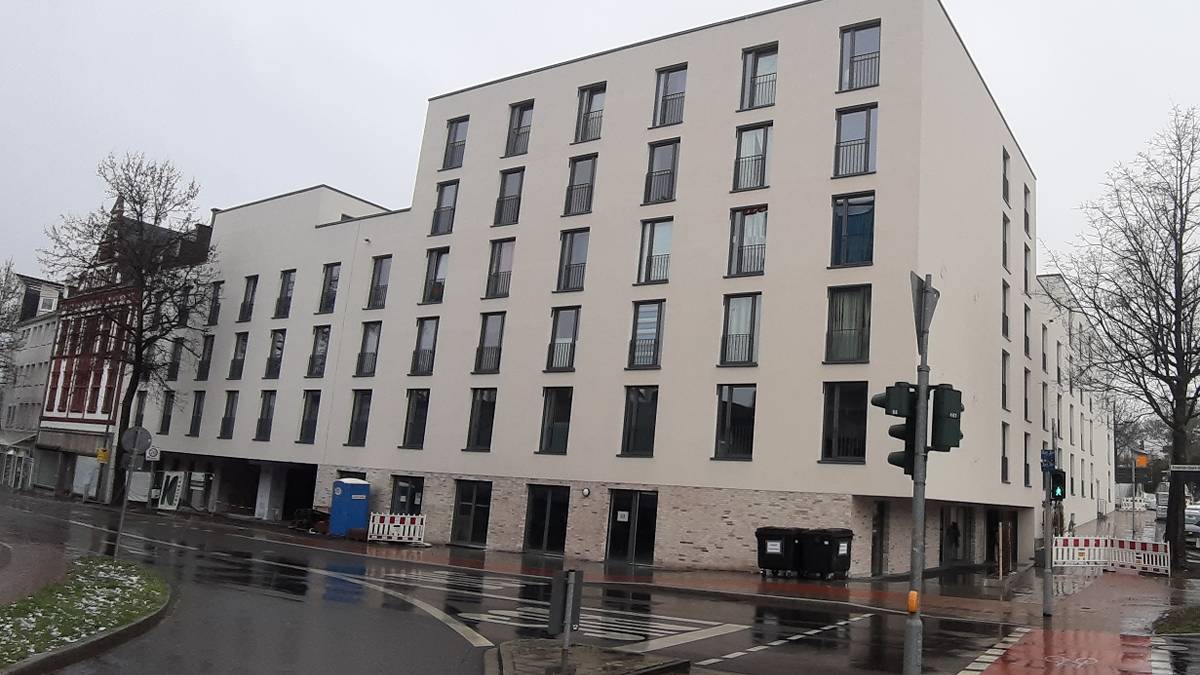
WohnBau is the decisive lever for the city to lead by example: to create more affordable housing in Mönchengladbach itself, and so pursue one of our central strategic goals.Most of the money and the rules come from above. The state raised its 2023–2027 housing programme to €12bn, and its record 2025 funding round backed 13,356 homes with about €2.4bn. Tenancy rules also come from Düsseldorf, the state capital, and here they bypass Mönchengladbach. The state's extended tenant-protection ordinance grew from 18 to 57 municipalities in March 2025, taking in neighbouring Krefeld, Neuss and Korschenbroich but not Mönchengladbach. The city therefore has no Mietpreisbremse (the cap on new-let rents) and no tighter cap on rent rises. Berlin, meanwhile, supplies speed. The federal Bau-Turbo (a fast-track clause in the Building Code, §246e) lets councils approve homes without a new local plan until the end of 2030.
Hardly any shop assistant or train conductor can still afford Mönchengladbach's rents.Patrick Stock, chair of the Mönchengladbach branch of the DGB (the German Trade Union Confederation)
The two camps agree the city needs more affordable homes. They disagree about whether building alone will do it. City hall points to completions, while the unions want Mönchengladbach added to the rent-brake list and rent gouging prosecuted. The city's land policy sits between them. EWMG (the city's development company) sells plots by Konzeptvergabe (a tender scored on the quality of the scheme, not just the price). At the Maria-Hilf-Terrassen the first lot requires at least 20% and at most 40% subsidised homes. Plots are still sold outright, however, rather than let on an Erbbaurecht (a long ground lease that keeps the land public). The city used that tool only to buy back a lease on Europaplatz for strategic reasons.
Vacancy is answered building by building. In October 2025 the council adopted the plan for ’19 Häuser’, a new block at the Hauptbahnhof that replaces Haus Westland. Former military land is not an option. The 471-hectare JHQ Rheindahlen base, handed back by the British in 2013, is planned without housing. Nationally, a federal ministry report on office vacancy counted 11.0 million m² of empty offices in 2024 and trails a commercial-to-housing funding line. Mönchengladbach's low office vacancy means it will mostly convert schools, hospitals and shops rather than towers.
Climate targets add a second agenda. The city aims for greenhouse-gas neutrality by 2045 and in December 2024 adopted an energy concept with municipal heat planning. Heat networks are judged viable in Gladbach, Rheydt and parts of Rheindahlen. The rented stock is where that plan succeeds or fails, and the VdW survey on building costs shows how tight the margins are for the landlords expected to deliver it. That makes WohnBau's serial retrofits and the cooperative's renewable-heated estate the test cases.
- 1897[source]
Spar- und Bauverein founded
Textile-era savings and building society founded in March; today's GeWoGe 1897.
- 2013[source]
JHQ Rheindahlen handed back
The British forces return the 471-hectare base; the conversion framework rules out housing.
- 2023[source]
Seestadt mg+ Südviertel completed
First phase of the new quarter beside the Hauptbahnhof: 248 flats.
- 2023[source]
Municipal housing offensive launched
The city waives a €2.875m WohnBau dividend so the company can build subsidised homes.
- 2025[source]
State tenant-protection ordinance extended
From March, 57 municipalities are covered; Mönchengladbach is not among them.
- 2025[source]
Heinrichs re-elected
Felix Heinrichs wins the September run-off with 63.6% of valid votes.
- 2025[source]
'19 Häuser' plan adopted
On 1 October the council adopts the local plan covering the Haus Westland site.
- 2026[source]
Record local subsidy round
€43.2m of state housing loans for 218 homes in 2025, announced in February.
- 2026[source]
Kreisbau and GWSG merge
The two municipal companies become WohnBau Mönchengladbach GmbH on 31 July.
- 2027[source]
GeWoGe replacement homes due
Two blocks with 14 heat-pump flats on Kärntner Straße, due in August.
- 2029[source]
State rent brake expires
NRW extends its rent brake to 31 December 2029, still without Mönchengladbach.
- 2030[source]
Bau-Turbo clause lapses
The federal fast-track clause, §246e of the Building Code, runs until the end of 2030.
- 2035[source]
Subsidised stock could fall to 2,400
NRW.BANK forecast for the city's subsidised rental stock without significant new building.
- 2045[source]
Climate-neutrality target
The city's goal of greenhouse-gas neutrality.
From rail yard to hospital hill
Seestadt mg+ is the city's biggest bet. On 14 hectares of former rail land next to the Hauptbahnhof, the developer Catella plans 2,000 homes, 40% of them regulated around an artificial lake. Its chief executive, Klaus Franken, says two-thirds of the tenants move in from outside the city, which is exactly the Düsseldorf overspill the city is courting. So far only the Südviertel stands, with 248 flats finished in 2023. Its tenants complained in 2025 of dirt, noise and rats instead of the promised lake view.
The Maria-Hilf-Terrassen turn a closed hospital into a neighbourhood of about 350 homes on 16 plots. Schleiff Denkmalentwicklung is converting the listed ensemble, while EWMG sells the new plots by concept tender with a subsidised quota. Some plots are reserved for building groups, and that is where a second cooperative could first get a foothold.
GeWoGe 1897's Klimaschutzsiedlung Am Wasserturm shows what the old cooperative can do. The state recognised it as a climate-protection estate, and since the first residents arrived in 2015 it has been heated entirely from renewable raw materials. The same cooperative is now replacing worn-out blocks on Kärntner Straße in Windberg with 14 heat-pump flats. It is modest in scale but shows the sector's patient, members-first way of working.
The former school on Friesenstraße is WohnBau's case for reuse. The municipal company is turning a listed school into barrier-free flats and adding new buildings beside it, with 13 homes in the first phase. Board member Christian Heinen calls heritage protection a new start, not a standstill. It is one of the offensive's first projects alongside Langer Weg and Knopsstraße.
RENOWATE brings factory methods to the post-war stock. With WohnBau it is refitting 48 flats in eight buildings on Heukenstraße and two 1950s blocks on Neusser Straße using serial, prefabricated renovation methods. Serial retrofit of this kind could make the city's heat plan affordable for tenants.
'19 Häuser' will replace the city's most visible void. Haus Westland, a former prestige tower now called ghostly, has stood empty at the station for two decades. With the plan adopted and a new bus station planned alongside, the gateway to Mönchengladbach is about to be rebuilt, though how much of it will be affordable housing is still open.
References
Statistics5Click on any number to see the source
Housing market
Population & migration
From our library11
- Datenblatt Mietbelastungsquoten in 77 Großstädten (Hans-Böckler-Stiftung) — Knowledge
- Mieten in Mönchengladbach in den letzten 10 Jahren um 65,4 Prozent gestiegen – DGB fordert Mietenstopp — Knowledge
- Schere zwischen Arm und Reich wächst (Sozialbericht Mönchengladbach 2025) — Knowledge
- VdW Rheinland Westfalen Jahrespressekonferenz 2026 — Knowledge
- Bündnis für bezahlbares Wohnen und Bauen – Wohnungsgenossenschaften als Partner der Kommunen — Knowledge
- Öffentliche Wohnraumförderung 2025: Budget hoch, Nachfrage höher — Knowledge
- Der Förder-Boom für bezahlbare Mieten und Eigentum geht weiter – Rund 2,4 Milliarden Euro für 13.356 Wohnungen bewilligt — Knowledge
- Aus 18 werden 57 – Nordrhein-Westfalen weitet Mieterschutzverordnung aus — Knowledge
- Schriftlicher Bericht des BMWSB zum deutschlandweiten Büroleerstand — Knowledge
- In Nordrhein-Westfalen: Baukosten bremsen Wohnungsneubau weiter aus — Knowledge
- Vorzeige-Wohnprojekt Seestadt: Mieter sind frustriert — Knowledge
Further sources19
- Wohnungsmarktbericht 2024 — Stadt Mönchengladbach · 2025-09
- 758 neue Wohnungen: Mönchengladbach baut deutlich mehr gegen den Landestrend — Stadt Mönchengladbach · 2026-05-29
- Mietspiegel Mönchengladbach 2026 — ArGe Mietspiegel Mönchengladbach · 2026-05-01
- Jahresbericht 2025 zur Unterbringung obdachloser Menschen — Stadt Mönchengladbach · 2026-04-24
- Daten & Fakten — GeWoGe 1897 eG · 2025-12-31
- Historie — GeWoGe 1897 eG
- Der Verband — VdW Rheinland Westfalen
- KfW-Wohneigentumsprogramm – Genossenschaftsanteile — NRW.BANK
- Bau- und Wohngruppenprojekte — MHKBD NRW
- Kommunalwahlen 2025 – Mönchengladbach — IT.NRW · 2025-09-28
- Wohnungsbauoffensive der Stadt nimmt Fahrt auf — Der Lokalbote · 2023-12-08
- Öffentliche Wohnraumförderung: Programm auf zwölf Milliarden Euro — Land NRW · 2025-12-12
- Erstinformation Maria-Hilf-Terrassen Los 1 — EWMG · 2025-05
- Wohnungsbau-Turbo — Bundesregierung · 2025-10-30
- Seestadt als Leuchtturmprojekt für Mönchengladbach — Seestadt mg+ · 2025-10-07
- Seriell sanieren, gemeinsam wachsen — WohnBau Mönchengladbach · 2026-04
- ZOB Mönchengladbach — NEW
- Konversion JHQ — Stadt Mönchengladbach
- Klimaschutz — Stadt Mönchengladbach