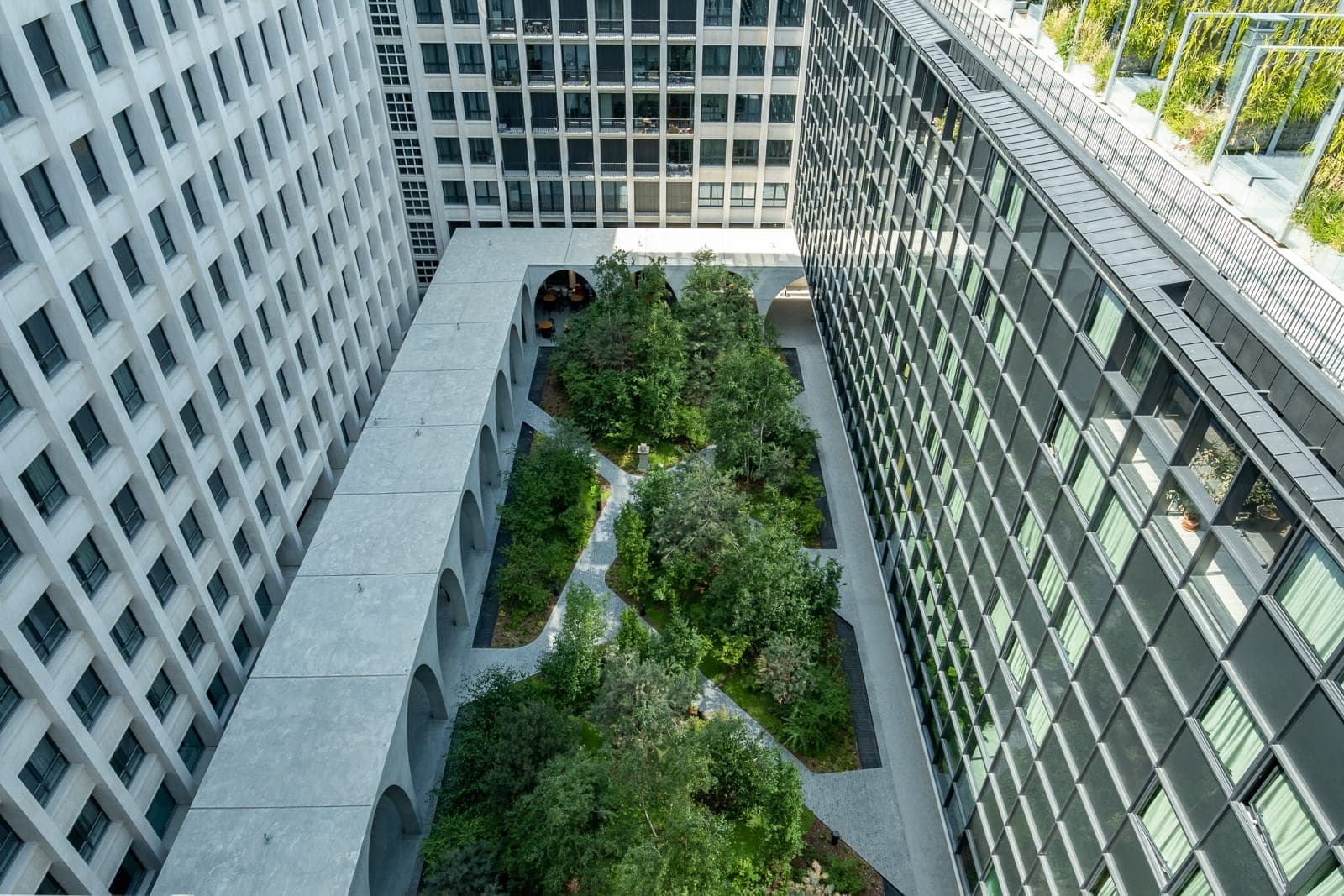
Morland Mixité Capitale, also known as La Félicité, is a mixed-use redevelopment of the former administrative complex on boulevard Morland in Paris Centre, France. The project repurposes the existing building as a “building-neighbourhood” combining homes, workplaces, accommodation, shops, cultural and leisure activities.
The project was led by developer Emerige and selected through the City of Paris’s Réinventer Paris call for innovative urban projects. The City’s article says the project came into being six years after its selection, but does not give an exact completion or opening date. It describes a redeveloped area of more than 40,000 square metres, at the corner of boulevard Morland and rue Agrippa d’Aubigné, facing the Seine.
The programme includes 209 homes: 90 social, 84 intermediate and 35 market-rate units. Other facilities include a 66-place nursery, a youth hostel with 400 beds, offices and coworking spaces, shops, a food market, an art gallery, a swimming pool and a fitness room. A hotel and rooftop restaurant occupy the upper floors; the article also describes 4,000 square metres of rooftop urban agriculture, with treated greywater reused for crops.
The former complex was architecturally reworked rather than replaced, with the project connecting residential and commercial uses to public-facing services and leisure spaces. The article identifies Danish artist Olafur Eliasson as the creator of kaleidoscopic mirrors in the rooftop restaurant, but does not name an architect or other project leaders.